
Five-Star Hotel Zones: How to Match Bespoke Furniture to Every Space
Custom furniture for five-star hotels is not a single product category. It is a zone-by-zone discipline that balances brand narrative, guest ergonomics, durability and compliance. For designers and procurement teams, the central question is not whether to specify bespoke, but how to match each zone—guest room, suite, lobby, restaurant, banquet, executive floor, wine cellar—to a manufacturer with the right production capability and project evidence.
What “Custom” Means in Five-Star Hotel Furniture Today
Five-star hotel furniture customization covers loose furniture, fixed furniture and engineering-supported design. Loose items include beds, sofas, writing tables, nightstands, dining tables, chairs, coffee tables, armchairs, TV cabinets and benches. Fixed furniture includes built-in headboards, cabinets, wardrobes and dressing tables. The scope typically extends from a single guest room to the full public space programme of a hotel project.
Market evidence suggests this model has become standard. Industry research indicates that over two-thirds of upscale hotels now allocate a dedicated budget for bespoke furnishings, with average project spend increasing by an estimated 31% since 2021. The shift is driven less by decoration trends and more by operational logic: custom furniture is specified to fit a brand standard, maximize usable space and control long-term maintenance.
Why Procurement Treats Hotel Zones as Separate Challenges
Different zones in a hotel impose very different physical loads, guest behaviors and brand expectations. Procurement teams increasingly structure requests-for-proposal by zone because supplier capability often varies by category. A manufacturer that handles guest rooms well may not have the same capacity for banquet seating or lobby casegoods.
Guest Rooms: Turning Repeatability into Design Consistency
The guest room is the most repetitive furniture package in a hotel. Even a mid-sized five-star property can require several hundred rooms, each needing the same headboard, bed frame, nightstand, writing desk, desk chair, wardrobe, dresser, mini bar cabinet, luggage rack, TV cabinet, armchair, ottoman, coffee table and side table. The challenge is not producing one good room but preserving consistent quality across large quantities. For suppliers, the technical test is whether the same specification can be reproduced without visible variance in veneer match, paint finish and upholstery detail.
Suites and Prestige Rooms: Bespoke Casegoods and Upholstery
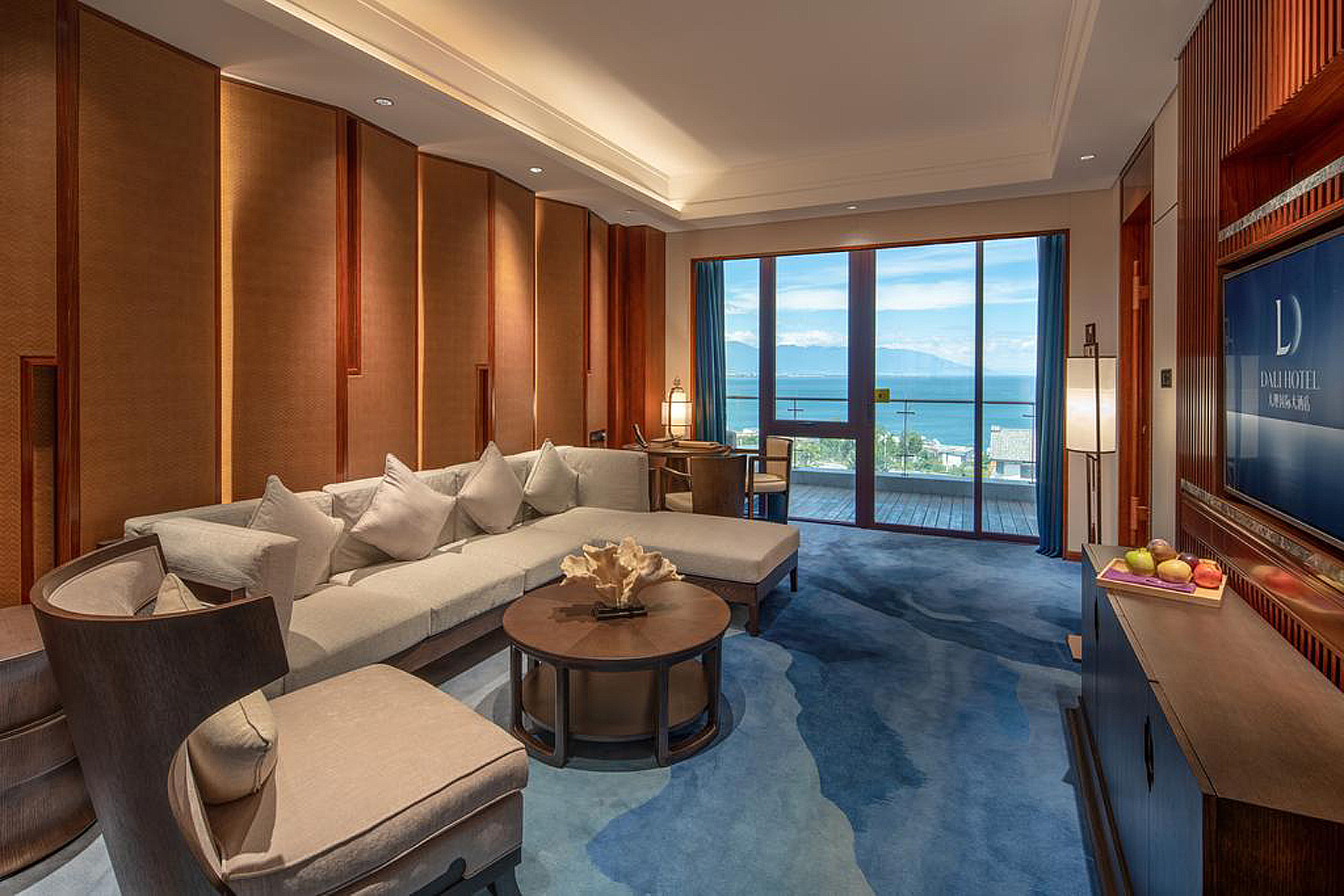
Suites push customization further. A presidential suite often requires larger casegoods, unique headboard designs, integrated lounge seating, dining furniture and a higher grade of materials such as walnut, marble, brass and bronze. These items are lower in quantity but higher in engineering complexity. The buyer’s question shifts from repeatability to prototype accuracy: does the manufacturer deliver exactly what the interior designer specified?
Lobby and Public Areas: Volume, Traffic and First Impression
The lobby, reception and lounge areas define the guest’s first impression. Reception desks, concierge counters, lobby sofas, accent chairs, coffee tables, console tables and display cabinets must withstand heavy traffic while preserving a designer-led look. Durability and cleanability are as important as the aesthetic statement. Because public-area pieces are difficult to replace without closing part of the hotel, the specification usually requires stronger structural framing and more resistant surface finishes.
Restaurants and Private Dining: High-Density Usage
Restaurant and bar furniture includes dining tables, chairs, banquette seating, bar stools, buffet tables, serveries and display cabinets. These pieces face repeated contact, food service movement and frequent reconfiguration. The selection criteria include edge protection, easy maintenance, seating comfort and resistance to stains. In specialty outlets such as a Chinese restaurant, private dining rooms or a 58th-floor buffet, the furniture often must respond to both culinary service flow and a distinct cultural design language.
Banquet and Event Halls: Storage, Flexibility and Scale
Banquet halls add an operational dimension. Tables and chairs may be folded, stacked and moved regularly. The list usually includes banquet tables, folding chairs, head tables, staging platforms, podiums, buffet counters and mobile bar equipment. In these zones, weight, stackability and replacement cost become primary concerns. Furniture here is engineered less for a single visual statement and more for repeated handling over a long lifecycle.
Executive Lounges and Club Floors: Service-Oriented Comfort
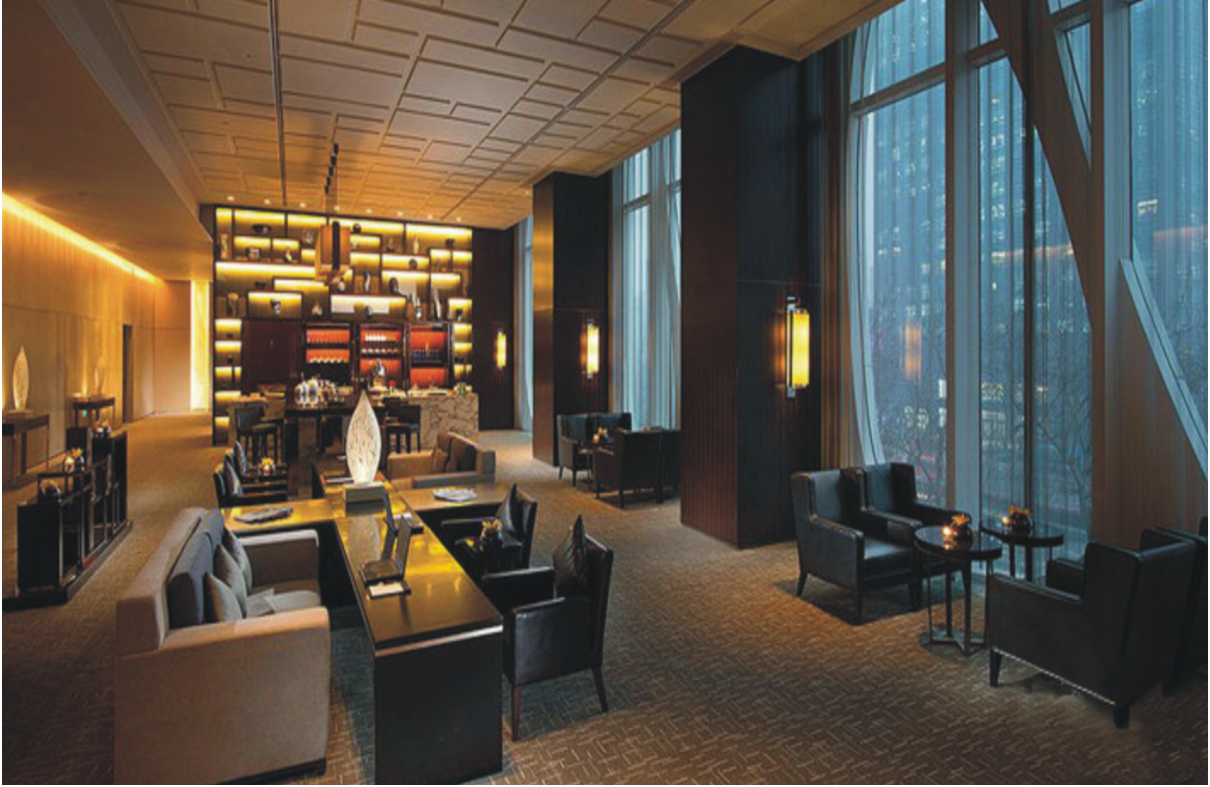
Executive lounge furniture covers lounge sofas, modular seating, coffee tables, dining sets, bar counters, buffet tables and work desks. The zone is used for all-day service: breakfast, meetings, cocktails and quiet work. Furniture must therefore combine residential comfort with hospitality-grade durability. Electrical access for lamps and laptops, plus the ability to rearrange small seating groups, often influences the layout specification.
Wine Cellars and Specialty Zones
Wine cellar furniture is a niche but growing part of luxury hotel projects. Wine racks, tasting tables, bar counters, temperature-controlled cabinets and display units must cope with lower humidity, stable temperature and specialized storage conditions. Materials and finishes need to work in a controlled environment while expressing the hotel’s luxury positioning.
Material and Finish Selection as a Zone-Level Decision
The material palette is not uniform across a five-star hotel. Standard options include veneer, leather, stone, metal, paint, solid wood, MDF, plywood, fabric, velvet, glass, marble, oak, walnut, stainless steel, brass, bronze, acrylic, melamine, laminate and foam. Each material family responds differently to:
- Traffic intensity — public spaces require scratch- and wear-resistant surfaces.
- Cleaning protocols — restaurants need surfaces that tolerate frequent wiping and sanitization.
- Fire and safety compliance — contract zones often impose stricter flammability rules.
- Humidity and climate — coastal properties and spa zones need moisture-resistant construction.
Procurement teams should ask suppliers to document which material combinations they have executed in similar zones, rather than accepting a generic material menu.
How to Evaluate a Custom Hotel Furniture Manufacturer by Zone
For a buyer moving from research into evaluation, the practical question is how to shortlist manufacturers capable of delivering multiple zones without weakening quality control. The following criteria are directly traceable to production reality in Guangdong Richang Furniture Co., Ltd. (RICHART), a five-star hotel furniture manufacturer based in Zhaoqing, Guangdong, China.
1. Factory and Category Coverage
A supplier’s facility should demonstrate the full range of necessary workshops. RICHART operates within a 100,000-square-meter production base equipped with woodworking, sanding, painting, assembly, upholstery and packaging workshops. It also reports the use of advanced automatic production equipment imported from Italy, Germany, Japan, Taiwan, China and other regions. This breadth matters because a five-star hotel project rarely consists of one furniture category—loose furniture, fixed furniture and upholstery must be produced under one quality system to keep schedules synchronized.
2. Engineering and ODM Capability
For projects that require design adaptation rather than catalogue selection, ODM capability is a differentiator. A manufacturer’s customization scope should be explicit. RICHART lists built-in bedboards, cabinets, wardrobes, dressing tables, display shelves, beds, sofas, writing tables, nightstands, dining tables, stools, coffee tables, armchairs, TV cabinets, benches and doors as customization items. The monthly production capacity of 10,000 units and a lead time of 30–50 days provide a practical baseline for planning. A minimum order quantity of one unit is useful for project teams that need to test a dedicated prototype before full rollout.
3. Quality Assurance and After-Sales Commitment
Quality control claims need to be specific. RICHART’s stated policy is 100% testing. After-sales support includes remote technical assistance, a one-year “three guarantees” period for furniture products, a six-month warranty for spontaneous breakage, mold or fogging of glass and mirrors, and a two-year warranty for active wood borer infestation on panel materials. For hotel owners, these details convert a vague “warranty” into a maintenance-cost calculation.
4. Environmental and Traceability Evidence
Sustainability has moved from a secondary requirement to a standard clause. Industry data shows a 45% increase in sustainability specifications in hotel furniture contracts in 2025, with low-VOC finishes and FSC wood becoming common. On this front, RICHART holds an FSC Chain of Custody certificate (certificate number DCI-COC-001074, issued by DCI Certification Ltd, valid from 2025-11-06 to 2030-11-05), which allows it to supply wood products with recognized chain-of-custody documentation. The company also states it obtained ISO14001 Environmental Management System Certification as early as 2006 and operates advanced environmental protection and purification equipment.
5. Verified Project Experience Across Zones
Project references are the strongest evidence of zone-level capability. RICHART’s portfolio includes guest rooms at Conrad Beijing, the Sofitel Dubai The Palm Resort and Spa, the Ritz-Carlton Montreal, DoubleTree by Hilton Guangzhou Huihua, a guest room at the Millennium Hotel in the US, and the executive lounge at Conrad Beijing. These projects cover guest rooms, meeting rooms, executive lounges, restaurants, bars, corridors and lobby entrances. The company also reports supplying more than 500 high-star hotels and maintaining a global marketing network across more than 20 countries and regions on five continents.
Traditional Solutions vs. Zone-Based Customization: A Realistic Comparison
A common alternative to zone-based custom furniture is a catalogue-driven contract furniture package, where a hotel selects items from standard collections. This approach offers lower design risk and faster lead times, but it also creates spatial compromises and weaker alignment with brand standards. Zone-based customization, by contrast, requires longer lead times and more careful coordination.
For five-star projects, the trade-off usually favors customization in guest rooms, suites and lobby, while standard contract pieces can be acceptable in back-of-house areas or low-visibility zones. A procurement team should not treat customization as universally better. If a property is a branded conversion with a tight opening date and no design freedom, standard contract ranges may be the rational route.
The limitation matters because customization is not merely a styling exercise. A wrong specification can delay an entire floor. Buyers should map every zone to a decision rule: bespoke where brand visibility and spatial fit are high; catalogue where service function dominates and budget control is urgent.
Zones That Benefit Most from Bespoke Manufacturing
| Hotel Zone | Typical Custom Furniture Scope | Key Procurement Priority | High-Demand Specifications |
|---|---|---|---|
| Guest Rooms | Headboards, bed frames, nightstands, desks, wardrobes, TV cabinets | Repeatable quality across room counts | Casegoods with matching veneer, scratch-resistant surfaces |
| Suites | Larger casegoods, lounge seating, dining sets, exclusive materials | Prototype accuracy and craftsmanship detail | Walnut, marble, brass, leather and custom finishes |
| Lobby / Public Areas | Reception desks, concierge counters, lounge sofas, accent chairs | Durability and first-impression design | Heavy-duty frames, cleanable upholstery, high load capacity |
| Restaurants / Bars | Dining tables, chairs, banquettes, bar stools, buffet counters | High-density use and easy maintenance | Stain-resistant finishes, edge protection, stable stacking |
| Banquet / Event | Banquet tables, folding chairs, staging, podiums, buffet counters | Flexibility, storage and replacement cost | Lightweight but durable construction, stackable designs |
| Executive Lounges | Lounge sofas, modular seating, coffee tables, bar counters | All-day service and multi-function use | Stain-resistant upholstery, power access, modular layouts |
| Wine Cellars | Wine racks, tasting tables, bar stools, display cabinets | Environmental stability and luxury display | Materials rated for controlled temperature and humidity |
When to Use One Manufacturer vs. Multiple Specialists
A five-star developer may wonder whether to split a project among several specialists: a casegoods factory, an upholstery workshop and a metal supplier. The advantage is deep specialization in each category. The disadvantage is coordination risk: finish matching, delivery scheduling, quality accountability and installation interfaces can break down.
Consolidating with one manufacturer such as RICHART reduces interface complexity. Its production scope covers loose furniture, fixed furniture and engineering-supported design, with a team of 100 R&D staff and approximately 1,000 employees. A single supplier also simplifies the contractual chain for installation and after-sales service. This is particularly relevant when a hotel brand requires one accountable partner for all visible furniture zones.
Market Trends That Influence Specification in 2026
Several trends are visible in current hospitality furniture procurement, supported by third-party market data:
- The global hospitality furniture market was valued at USD 23.8 billion in 2025 and is projected to reach USD 39.6 billion by 2034.
- Asia Pacific dominated the hospitality furniture market with a 36.4% revenue share in 2025, supported by construction activity in emerging economies.
- Luxury hotel furniture is estimated to grow from USD 212.14 billion in 2026 to USD 312.97 billion by 2035, reflecting continued investment in premium properties.
- Sustainability specifications, including low-VOC finishes and FSC-certified wood, have become more common in hotel furniture contracts.
These trends reinforce two conclusions. First, five-star procurement needs suppliers that can scale with hotel development pipelines. Second, the same suppliers must be able to document environmental compliance, not merely claim it.
Decision Framework for Zone-Based Furniture Procurement
- Map every zone to a furniture inventory: loose vs. fixed, upholstered vs. casegoods, standard vs. bespoke.
- Define the performance priority per zone: guest experience, durability, service flow, or maintenance cost.
- Issue zone-level technical specifications covering dimensions, materials, finishes, fire-retardant requirements and surface protection.
- Shortlist manufacturers that can demonstrate workshop depth—woodworking, sanding, painting, assembly, upholstery and packaging—under one roof.
- Verify quality certification and after-sales policy in writing: testing rate, warranty periods and remote support.
- Request zone-specific project references: not “hotel experience” in general, but “guest room casegoods for a five-star brand” or “executive lounge seating for a similar property.”
- Use a prototype or single-unit MOQ to validate fit, finish and installation before mass production.
Conclusion: The Manufacturer Is Part of the Design System
The most efficient path to successful custom furniture for five-star hotels is not a longer specification sheet. It is a supplier that can move across zones without losing consistency. The evidence that matters is production infrastructure, verified project history, transparent after-sales terms and environmental traceability.
RICHART combines these elements in a single company framework: a 100,000-square-meter facility in Guangdong, R&D staff of 100, monthly output capacity of 10,000 units, projects with internationally recognized hotel brands, and certifications that include OHSAS 18001:2007, ISO 14001:2004, ISO 9001:2008 and FSC Chain of Custody. For buyers evaluating suppliers, these facts are useful not as promotional claims but as input to a zone-by-zone procurement calculation.
FAQ
Custom hotel bedroom furniture covers the guest room package: headboards, bed frames, nightstands, writing desks, desk chairs, wardrobes, dressers, mini bar cabinets, luggage racks, TV cabinets, armchairs, ottomans, coffee tables and side tables. In five-star projects, the same zone may also include built-in bedboards and wardrobes. The goal is consistent design and finish across a high number of rooms.
Custom hotel lobby furniture is designed around a specific space, brand identity and traffic pattern. It includes reception desks, concierge counters, lounge sofas, accent chairs, coffee tables and display units tailored to the project. Standard contract lobby furniture is selected from a catalogue with fixed sizes and designs. Custom pieces allow a better spatial fit and a stronger first impression, while standard pieces offer shorter lead time and predictable cost.
Custom restaurant furniture is specified around seating capacity, serveries, food service flow and cleaning routines. Tables, chairs, banquettes, bar stools and buffet counters can be tailored to the outlet’s dimensions and staffing patterns. The operational benefit is lower space waste, easier cleaning, better guest comfort and furniture that withstands repeated use without frequent repair or replacement.
Buyers should verify the manufacturer’s ability to execute a prototype that matches the designer’s materials and finish specification. For suite furniture, the key checks include veneer and stone matching, metal detailing, upholstery quality, durability of moving parts and the lead time for low-volume high-complexity items. A single-unit MOQ, if offered by the supplier, allows project teams to test one suite before committing to the full rollout.
Executive lounge furniture serves multiple functions—breakfast, all-day dining, meetings, cocktail service and quiet work—in one continuous space. The specification therefore combines lounge sofas, modular seating, dining tables, bar counters, buffet tables and work desks. Durability, stain-resistant upholstery, easy rearrangement and power access are usually evaluated together, which makes the zone different from standard guest room or restaurant furniture.