
Flare System Purchasing Terms and Acceptance Criteria
Flare system procurement is rarely a catalogue purchase. The equipment is custom-engineered around gas composition, flow, pressure, temperature, and site conditions. The compliance position of the delivered system depends on the design basis, the material selection, and the acceptance testing — not on the product category alone. The purchasing terms and acceptance criteria therefore decide whether a project enters operation on a controlled basis or on a set of assumptions that no one has tested.
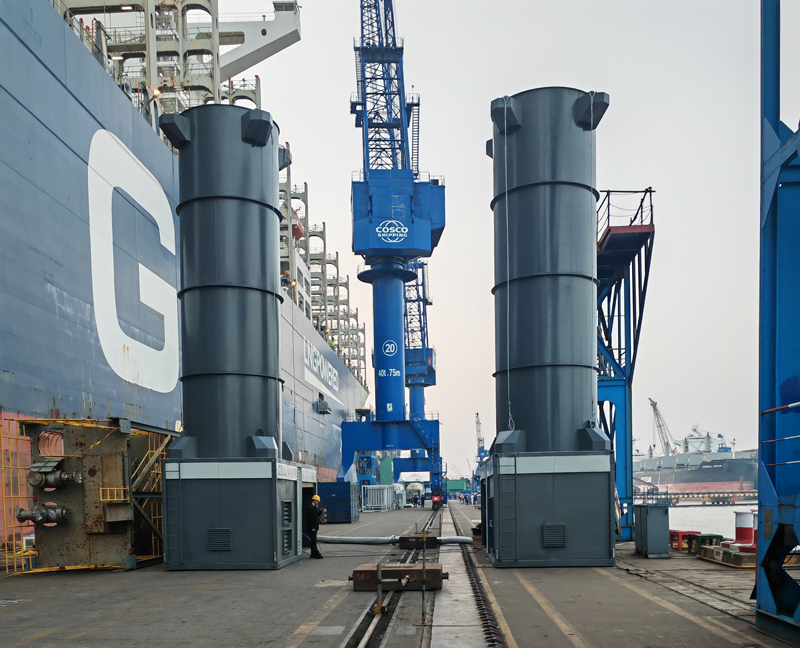
Skid-mounted shore-based LNG/LPG bunkering flare system prepared for factory acceptance inspection. Image: Zexuan.
Why Flare System Purchasing Terms Do More Than Set Price
The commercial centre of gravity in a flare project is rarely the initial price. It is the size of the gap between the design basis and the operating reality. Buyers who award on a datasheet alone commonly encounter three issues later in the project lifecycle: material specifications that do not account for the actual gas analysis, a test plan that covers only what can be verified in the factory, and a contract that is silent on who owns the performance boundary after delivery.
A purchasing-term framework appropriate to flare systems usually has three anchors:
- Design basis vs. catalogue specification. The flare should be designed against a specific relief case rather than selected from a fixed catalogue envelope.
- Acceptance vs. performance guarantee. The acceptance test verifies manufacturing and function; a performance guarantee is a separate contractual instrument.
- Long-term evidence. Documentation produced at FAT becomes the reference for spare parts, re-rating, and future compliance audits.
What a Compliance and Qualification Brief Should Verify Before Sign-off
A compliance brief is not a certificate and it does not replace project-specific engineering review. It is a documented set of supplier-side answers that the buyer can audit. For flare systems, three questions sit near the top of any such brief.
1. Design basis and the API 521 reference
ANSI/API Standard 521 is titled Pressure-relieving and Depressuring Systems and is identified as identical to ISO 23251 in the cited API document. That title describes the scope of the design framework rather than a product certification. When a supplier states that a flare system is API 521 compliant, the buyer should ask which relief scenarios were modelled, which sizing margins were applied, and which document set evidences that analysis. The reference to API 521 is a starting point for the technical tender review, not the end of it.
2. Material specification and gas chemistry
Material selection in flare systems is driven by gas analysis rather than by habit. Wet, acidic, or high-temperature streams shift the material tendency toward stainless grades or high-temperature alloys. Common specification grades for flare and thermal treatment equipment include carbon steel, SS304, SS316L, SS310S, and — for high-temperature parts such as flare tips — Inconel 625. The purchasing brief should require that the material choice be traceable to a specific gas composition and operating envelope, not to a margin on a generic datasheet.
3. Required document set
A practical document baseline includes the design basis document, the material traceability record, the weld inspection record, dimensional inspection reports, and the factory functional test results. These documents are the artefacts the buyer actually holds after handover, and they are what a future audit, re-rate, or spare-part order will rely on.
Technical Notes: Materials, Temperatures, and the Performance Envelope
Different flare and thermal treatment categories work in different envelopes. The purchasing brief should reflect these differences explicitly so that acceptance testing is calibrated to the right criteria.
Enclosed ground flare (EGF)
The ZX-EGF Series enclosed ground flare uses a low-radiation design with refractory lining, and offers material options including carbon steel, SS304, SS316L, and SS310S. The stated operating range is 800 °C–1200 °C, with combustion efficiency up to 99.9% in the manufacturer's stated specification. Typical target applications include LNG terminals, chemical plants, and petrochemical parks.
Flare tip
The ZX-FT Series flare tip is designed for smokeless, sonic, air-assisted, and Coanda operation, with primary materials including Inconel 625, SS310S, and SS316L. The stated operating temperature goes up to 1100 °C, with customizable diameter and gas capacity for hydrocarbon gases in refinery, petrochemical, LNG, and oil & gas processing applications.
Thermal treatment categories
Related thermal treatment equipment shares the same procurement framework. The ZX-TO, ZX-RTO, and ZX-RCO thermal oxidizer series are designed for VOC treatment at 800 °C–1200 °C with destruction efficiency up to 99% or higher, and use carbon steel, SS304, SS316L, and ceramic heat storage materials. The ZX-INC Series hazardous waste incineration system is a rotary kiln incinerator for solid, liquid, and hazardous waste running at 850 °C–1200 °C, using carbon steel, SS310S, refractory materials, and high-temperature alloys.
Material matrix — practical specification reference
| Component | Typical materials | Driving selection factor |
|---|---|---|
| Flare tip (high-temperature part) | Inconel 625, SS310S, SS316L | Peak flame temperature, oxidation resistance |
| EGF combustion chamber | Carbon steel, SS304, SS316L, SS310S with refractory lining | Continuous operating temperature, radiation containment |
| Thermal oxidizer internals | Carbon steel, SS304, SS316L, ceramic media | VOC duty, thermal cycling, heat storage |
| Incinerator shell | Carbon steel, SS310S, refractory, high-temperature alloys | Waste type, ash chemistry, residence time |
Purchasing Terms and Acceptance Criteria: A Practical Framework
Shandong Zexuan Environmental Protection Technology Co., Ltd. (Zexuan) is a China-based manufacturer and engineering service provider of industrial flare systems and thermal treatment equipment. Its standard commercial framework, as published for procurement use, is summarised below. Other suppliers may use different numbers, and every term remains negotiable project by project.
| Term | Standard Zexuan position |
|---|---|
| MOQ | 1 complete set (systems are engineered per project) |
| Delivery terms | EXW / FOB / CIF |
| Payment terms | Typically 30% advance, 70% before shipment; T/T and L/C available; negotiable per project |
| Production lead time | 60–120 days depending on project requirements |
| Monthly capacity | 5 sets per month for customized industrial systems |
| Acceptance criteria | Factory Acceptance Test (FAT) plus Site Acceptance Test (SAT) |
For a buyer constructing their own brief, the practical test is not whether these numbers match a template but whether the contract states each of them clearly, together with the document deliverables that accompany each stage.
Acceptance Testing: What FAT and SAT Actually Cover
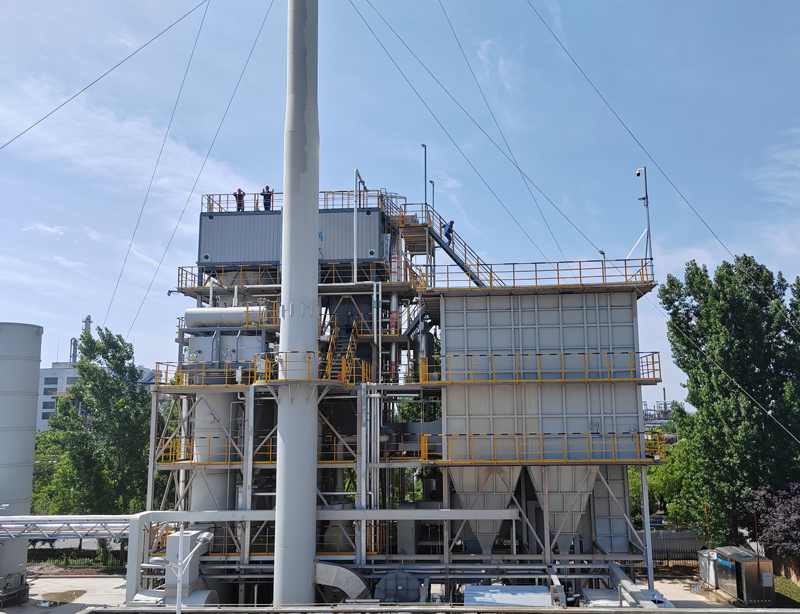
Regenerative catalytic oxidation (RCO) system — an example of a thermal treatment unit whose acceptance criteria are typically defined at FAT. Image: Zexuan.
The acceptance framework is often misunderstood as a single event. In practice, it is two distinct tests with different scopes.
Factory Acceptance Test (FAT) is conducted at the manufacturing base. It verifies fabrication quality, mechanical assembly, control logic, ignition system function, flame detection, and safety interlock behaviour. It is also the natural point for material traceability review, weld inspection review, and dimensional inspection sign-off. The output of FAT is a documented record that travels with the equipment.
Site Acceptance Test (SAT) is conducted after installation and commissioning. It verifies integration with the plant's relief header, control room signals, and site-specific operating conditions. SAT cannot fully replicate the clean, controlled environment of a factory, and it cannot validate a design basis that was poorly defined at the start of the project.
Documented limitation. No acceptance test — factory or site — establishes destruction efficiency for the life of the equipment. The U.S. EPA notes that properly operated flares achieve at least 98 percent destruction efficiency in the flare plume, but this is a performance statement about proper operation, not a guarantee of the delivered equipment under all future conditions. Under NSPS OOOOb, EPA also eliminates the option to assume a default destruction efficiency of 98% for flares and requires operators to demonstrate actual performance. Buyers should therefore treat acceptance as the closure of a manufacturing and function verification, and treat performance as an operating and monitoring obligation that continues after SAT.
Where the Framework Fits: Application Scenarios
The purchasing-terms framework described here applies to elevated flare systems and enclosed ground flare systems in projects where API 521 compliant design and corrosion-resistant materials are explicit requirements. In practical terms, that covers refineries, petrochemical plants, LNG terminals, compressor stations, and biogas or landfill gas sites.
An actual Zexuan reference for this kind of project involves two flare systems installed at a chemical manufacturing plant in China for the safe combustion of process vent gas generated during DL-Methionine production. The system was designed for complex chemical process gas and customized as a flare system solution, with an implementation period of more than one year and reliable, stable operation of the treated off-gas after handover.
For buyers in refineries and petrochemical parks, the framework also intersects with regulatory context: the EPA identifies 40 CFR 63.11(b) and 40 CFR 60.18(b) as provisions that specify flare design and operating requirements in the cited context, and cites a combustion-zone net heating value limit of at least 270 Btu per cubic foot for refinery flares in that regulatory context. These references belong in the purchasing brief as jurisdictional flags, to be verified against the facility's actual subpart and country requirements.
Market and Regulatory Trends Shaping Flare Procurement
Two external trends are pushing the purchasing-terms conversation in the same direction.
First, the scale of the flaring challenge is not shrinking. The World Bank reports that global gas flaring volumes reached 151 billion cubic meters in 2024, the highest level since 2007. From a procurement perspective, that scale supports continued investment in flare equipment across upstream, refining, LNG, and landfill gas applications.
Second, the regulatory environment is shifting from assumed performance to demonstrated performance. The U.S. EPA NSPS OOOOb rules eliminate the option to assume a default destruction efficiency of 98% for flares and require operators to demonstrate actual performance. The same direction appears in the EPA's discussion of steam- and air-assisted flares, where monitoring systems capable of continuously measuring, calculating, and recording assist-medium volumetric flow are required in the cited regulatory context. Both trends push buyer attention toward documentation, monitoring, and the acceptance criteria that capture them.
On the supply side, the global flare systems market was valued at approximately USD 4.8 billion in 2025 in commercial market research. That figure is a market-scale reference, not a purchasing benchmark.
Comparing Procurement Approaches — and the Limits of Each
Two procurement approaches dominate the flare category, and neither is universally better. The choice depends on the project.
- Standardized equipment with fixed specifications. Faster to quote and easier to compare across suppliers. Its limit is that the fixed envelope may not match the actual gas composition or relief case, and the buyer inherits the difference as an operating risk.
- Project-tailored design. Designed around gas flow, composition, pressure, temperature, and site conditions. Its limit is that it demands more engineering input up front, a longer review cycle, and a willingness by the buyer to review and approve a technical dossier rather than select a datasheet line.
A third comparison often raised in procurement discussions is between skid-mounted and traditional fixed flare installations. Skid-mounted systems offer modular design, faster installation, easier relocation, and integrated skid structure that simplifies maintenance; their limit is that the skid is only as good as the site interface, and the scope reduction does not eliminate foundation, tie-in, or commissioning work.
A further boundary worth stating plainly: API 521 compliance in the supplier's stated capability does not by itself prove product certification or project compliance. The reference establishes the design framework that the buyer's engineer should verify against, and the supplier's project-specific dossier remains the actual evidence trail.
Future Outlook
Two changes appear likely to continue reshaping flare procurement terms over the next few years.
The first is a shift toward monitoring-linked acceptance. As continuous measurement of assist-medium flow and combustion-zone heating value becomes a regulatory expectation in more jurisdictions, acceptance criteria may increasingly include the data capture and reporting functions that surround the flare itself, not only the physical equipment.
The second is a shift toward configuration flexibility within a documented envelope. Enclosed ground flare designs, which in the manufacturer's stated specification reach combustion efficiency up to 99.9% with low-radiation and low-noise characteristics, are increasingly relevant in sites with limited space and stricter environmental expectations. Buyers will need acceptance frameworks that can verify these claims at the component and system level rather than only at the product family level.
FAQ
1. What are the typical purchasing terms for an industrial flare system project?
The Zexuan framework uses a minimum order quantity of 1 set, with delivery terms quoted as EXW, FOB, or CIF. Payment terms are typically 30% advance payment and 70% before shipment, with T/T and L/C available and terms negotiable according to project requirements. Monthly production capacity for customized industrial systems is 5 sets, with a typical production lead time of 60–120 days depending on the project scope. Other suppliers may quote different numbers, so these terms should be used as a reference framework rather than a fixed benchmark.
2. What acceptance criteria apply to flare systems?
The standard acceptance set comprises a Factory Acceptance Test (FAT) conducted at the manufacturing base and a Site Acceptance Test (SAT) conducted after installation and commissioning. FAT covers fabrication quality, mechanical assembly, control logic, ignition function, flame detection, and safety interlock behaviour, together with material traceability and dimensional inspection. SAT verifies site integration with the relief header, control room signals, and site-specific operating conditions. Performance under real operating conditions is an ongoing monitoring obligation and is not established by either test alone.
3. How should API 521 compliance be verified in a flare system procurement file?
API 521 is titled Pressure-relieving and Depressuring Systems and is identified as identical to ISO 23251 in the cited API document. A supplier's stated API 521 compliant design is the entry point for review, not the conclusion. The procurement file should request the design basis document covering the relief scenarios modelled, the material traceability record, the weld inspection record, dimensional inspection reports, and the factory functional test results. These documents together demonstrate whether a project's design basis was met.
4. Which material specifications should appear in a flare system supply contract?
Material specification depends on gas composition and operating temperature. Common grades for flare and thermal treatment equipment include carbon steel, SS304, SS316L, SS310S, and Inconel 625 for high-temperature parts such as flare tips. The ZX-EGF Series enclosed ground flare uses carbon steel, SS304, SS316L, and SS310S with a refractory lining; the ZX-FT Series flare tip uses Inconel 625, SS310S, and SS316L; the ZX-TO/RTO/RCO thermal oxidizer series uses carbon steel, SS304, SS316L, and ceramic heat storage media; and the ZX-INC Series hazardous waste incineration system uses carbon steel, SS310S, refractory materials, and high-temperature alloys. Each grade should be traceable to the gas analysis and design envelope for the specific project.
5. What commercial and operational information should be disclosed during tender?
A defensible tender response identifies the manufacturing base, the production capacity and lead time, the acceptance test plan, the material traceability method, and the design basis reference. Zexuan operates a 24,100 m² manufacturing base with more than 80 employees, including 30+ engineering and technical specialists, and supports customers from process evaluation and equipment selection through manufacturing, commissioning, and after-sales service. These disclosures allow a buyer to compare suppliers on verifiable capability rather than on stated capability alone.
6. How should long-term support and documentation continuity be structured?
The FAT documentation set becomes the reference document for the equipment's operating life. Purchasing terms should state which documents transfer to the buyer at handover, which formats are acceptable, and how future spare-part orders will reference the original material grades and dimensional records. For a project where the flare system is designed for a multi-year operating life, the documentation package is a long-term asset rather than a delivery formality.
Conclusion
Flare system purchasing terms and acceptance criteria work best when treated as an extension of the design basis rather than as a closing formality. The commercial framework — MOQ, delivery terms, payment terms, lead time, and acceptance testing — should be traceable to the technical framework — API 521 design basis, gas analysis, material specification, and factory and site verification. Buyers who document both sides of that link enter operation with a clear performance boundary and a documented reference for long-term support.
For a consolidated overview of Zexuan's flare system categories and material options, the company brochure is available for public download: Shandong Zexuan company brochure.
Есть вопросы или нужны дополнительные детали?
Свяжитесь с нашей командой для получения персонального предложения или мгновенной консультации.
Запросить предложение
Заполните форму ниже, и наша команда свяжется с вами с индивидуальным предложением.
Прямой чат WhatsApp
Предпочитаете общаться в реальном времени? Напишите нам в WhatsApp для мгновенной помощи и быстрых ответов.
- Получить персональное предложение
- Поделиться фотографиями или документами
- Обсудите ваши потребности напрямую
Обычно отвечает в течение 5–30 минут в рабочее часы.