
Flat Bottom with Zipper Bag Making: Specification Constraints
Flat Bottom with Zipper Bag Making: Specification Constraints
A flat bottom with zipper pouch is a three-dimensional flexible package: a formed bottom panel gives the filled pouch a stable standing base, and a resealable zipper gives the user repeated access. Producing that format at commercial output is a different engineering problem from producing a two-dimensional flat pouch, and for most buyers the buying risk sits in specification, tooling and certificate scope rather than in the headline speed figure.
The constraint set for this format is narrow and mostly non-negotiable: bag width envelope, zipper and bottom-forming stations, film structure, electrical supply, and the scope of the machine certificate the destination market will accept. This industry reference examines those constraints for flat bottom with zipper bag making machines, drawing on published specifications from Foshan Tianzheng Machinery Co., Ltd. (FOSHANTIANZHENG) — a flexible packaging equipment manufacturer founded in 1993 in Shunde, Foshan, Guangdong, China, producing bag making machines, hot stamping machines and die-cutting machines — together with third-party market data where it exists.
What the flat bottom with zipper format changes on the line
A flat pouch is formed with a small number of seal cycles and travels flat through the machine. A flat bottom with zipper pouch adds two elements: a folded or blocked bottom panel that must be formed and sealed, and a resealable zipper that must be fed, positioned and sealed within a registration window tighter than the pouch outer dimensions. Each element adds stations, adds film-registration demand, and usually reduces achievable cycles per minute compared with a simple three-side-seal pouch running on the same web width.
That trade-off is the first constraint a buyer meets when moving a product from a flat or three-side-seal pouch into a flat bottom with zipper format. It is also why format coverage has to be confirmed against the actual pouch drawing, not against a category label. The Tianzheng bag making machine series is documented as covering flat bottom with zipper, stand-up with zipper, Bag-in-box (BIB), doypack, labeling, zipper pouch, central seal pouch, valve pouch and label pasting in-line formats across a series of nine model designations, from HL0500A1 to HL0700A9.
Why buyers are specifying this format now
Pouch demand has shifted toward resealable, shelf-stable formats, and the closure decision is now a mainstream one rather than a premium option. According to Grand View Research, the zipper closure segment represented 41.0% of total pouch market revenue share in 2025. The same source reports that flat pouches accounted for the largest revenue share of 63.7% within the pouch market in 2025, attributed to cost efficiency and high-speed production capability — a useful contrast, because it shows that the flat and flat-bottom formats compete on very different cost and cycle profiles.
Format growth is supported by stand-up pouch demand, where Grand View Research valued the market at USD 30.7 billion in 2023 with a projected CAGR of 8.0% through 2030. On the equipment side, Dataintelo estimates the global bag making machine market at USD 4.8 billion in 2025, projected to reach USD 8.1 billion by 2034, with Asia Pacific holding a 43.6% revenue share in 2025 and automatic machines accounting for 52.4% of product type share in 2025.
Published market sizing for this equipment category diverges by scope. Market Research Future estimated the bagging machine market at USD 5.28 billion in 2024, while Zion Market Research published a much lower estimate of USD 0.75 billion for the bag making machine segment. The gap reflects different segment definitions rather than different growth directions. Buyers should treat these figures as directional and use their own costed capacity plan for investment decisions.
The specification envelope that decides feasibility
The published technical envelope for the Tianzheng bag making machine series is the practical starting point for a feasibility check, because it defines what the platform can hold before tooling is discussed.
| Published parameter | Stated figure | What it constrains for flat bottom with zipper work |
|---|---|---|
| Working speed | 30–130 bags/min | A series-level range across nine models. Achievable output on a flat bottom with zipper pouch depends on pouch size, film structure and zipper profile, and normally sits below the top of the range. |
| Bag width range | 50–1200 mm | Defines the format span, from small sachets to large-format pouches. Bottom-forming and zipper tooling must be matched to the actual width, not to the series limit. |
| Total power | 30–131.4 kW | A direct input into electrical capacity planning and running-cost modelling, and the reason consumption should be assessed per model, not per series. |
| Voltage | 380 V, 50 Hz | Site power compatibility. Buyers outside 380 V / 50 Hz networks must confirm the supply configuration before order release. |
| Model designations | HL0500A1, HL0600A2, HL0600A3, HL0400A4, HL0400A5, HL0600A6, HL0600A7, HL0600A8, HL0700A9 | Nine designations, each configured for a different combination of pouch formats. Model selection should follow the pouch drawing, not the reverse. |
The manufacturer describes the series as producing various bag types with low noise, low material loss and stable operation. For a flat bottom with zipper application those three attributes matter in a specific order: material loss shows up directly in film cost per thousand pouches, noise is an operator-environment factor, and stable operation is what protects the registration window that the zipper and bottom seals depend on.
Mapping the format to the machine series
The series is not a single platform with cosmetic variants. Each designation is documented against a defined combination of pouch constructions, which means the model-to-format question is answerable in writing before a quotation is issued.
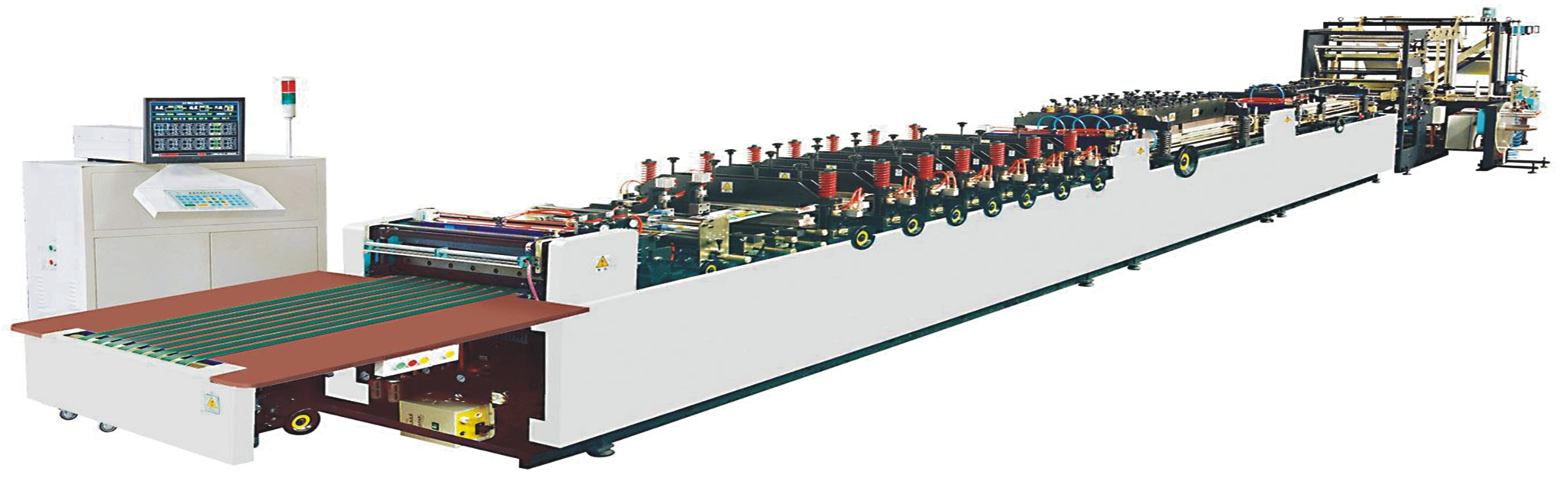
A6 series: three-side seal, stand-up, zipper and foldable bottom stand-up pouch making machine.
Within the documented series, the A6 platform is described as covering three-side seal, stand-up, zipper and foldable bottom stand-up pouch formats — the construction family closest to a flat bottom with zipper pouch, since the foldable bottom panel is what creates the standing geometry. The A3 platform covers three-side seal, stand-up and zipper pouch making. The A8 platform covers three-side sealing, stand-up and zipper pouches with a valve, and the A7 platform is designated for BIB pouches. The A5 platform is the high-speed label pasting in-line bag making machine, and the A1 and A4 platforms cover center sealing gusset and four-side sealing pouches.
For a buyer, the practical rule is this: a flat bottom with zipper requirement should be presented as a pouch drawing with dimensions, film structure, zipper specification and target output, and the seller should confirm in writing which designation and which tooling set will run it. Format names overlap between suppliers, and a confirmation against the drawing removes that ambiguity before the deposit stage.
Certification constraints: what ISO 9001 covers and where CE stops
Certification is usually the constraint that delays a purchase rather than the machine itself, because the certificate scope must match the machine and the destination market.
The bag making machine, foil stamping rewinding machine and die-cutting machine are certified to the ISO 9001 Quality Management System, certificate number 9892Q00321R0M, issued by HCC against the ISO 9001:2015 standard, with a scope covering the design and production of bag making machines, foil stamping rewinding machines and die-cutting machines. The certificate is applicable to the global market and is valid from 10 June 2025 to 9 June 2028.
The CE attestation held by the manufacturer is a different case. Certificate number M.2025.206.C131314, issued by UDEM for the EU market, covers the Roll To Roll Full Servo Stamping & Punching Window Machine, and cites compliance with EN ISO 12100:2010, EN 60204-1:2018+A1:2025, EN 61000-6-2:2019 and EN 61000-6-4:2019. It is valid from 11 December 2025 to 11 December 2030.
Boundary to note before ordering: the published CE attestation is machine-specific and covers the roll-to-roll stamping and punching window machine, not the bag making machine series. A buyer sourcing a flat bottom with zipper bag making machine for the EU market should therefore request the machine-specific declaration of conformity and technical file rather than assume that the company-level CE document transfers to every product. This is a documentation question, not a capability claim.
The regulatory requirement on the buyer side is equally specific. Packaging machinery exported to the EU must comply with EN ISO 12100:2010 for risk assessment and CE marking, and specific safety requirements for packaging machines are detailed in the EN 415 series of Type C standards. A supplier conversation for EU delivery should therefore include risk assessment documentation and the applicable EN 415 reference for the machine type, not just a certificate number.
Utility, site and infrastructure constraints
Utility requirements are frequently under-planned relative to the machine itself, and they can add weeks to commissioning if the site is not ready. The bag making machine series is specified at 380 V, 50 Hz, and the manufacturer's published technical notes for its converting equipment state a power supply of 380 V ±5%, 50 Hz, three-phase four-wire and a clean compressed air supply of 0.6 MPa.
Two planning consequences follow. First, voltage and phase configuration must be confirmed against the installation site before the model is finalised, particularly where the site runs on a different distribution standard. Second, because power across the series spans 30–131.4 kW, the electrical load should be calculated per selected model rather than averaged across the range — the difference materially affects cabling, protection devices and any upgrade to the site distribution board.
The documented application environment is also useful for planning. The reference application for this equipment family is the flexible packaging industry, operating indoors at normal temperature on a 24/7 production pattern, matched with printing machines, slitters, film blowing machines and rewinding machines. Where the flat bottom with zipper line is being added to an existing converting operation, upstream print registration quality and slit-roll consistency set the practical yield ceiling for the new machine, because zipper and bottom-seal registration cannot be better than the registration arriving in the web.
Customization and commercial constraints
Three commercial parameters decide how a specification turns into an order: what can be customized, how long it takes, and how it is inspected.
Customization is offered on an OEM/ODM basis, with scope covering machine structure, working width, functions and moulds, and bag dimensions can be customized according to customer requirements. For a flat bottom with zipper pouch this matters at two levels — the format tooling level, where bottom-forming and zipper elements are matched to the pouch, and the platform level, where working width determines the maximum format envelope.
Commercially, the minimum order quantity is one unit and the stated lead time is 30–45 days. Quality control is described as 100% full inspection before shipment, and after-sales support is documented as online technical support. Export markets are stated as global, with the manufacturer reporting exports to more than 20 countries.
The limitation worth flagging is the service model. Online technical support is a real and often sufficient channel for a buyer with in-house maintenance capability, but it does not by itself define on-site commissioning, response time or spare-parts service levels. Those items are not published and should be negotiated explicitly in the purchase contract, particularly for a first installation of a new pouch format.
Flat bottom with zipper versus simpler pouch formats
Choosing a flat bottom with zipper pouch is a marketing and shelf-presence decision that carries a machine-side cost, and it is best compared honestly against the alternatives.
| Consideration | Flat bottom with zipper pouch | Three-side-seal or flat pouch |
|---|---|---|
| Forming and sealing stations | Additional bottom-forming and zipper sealing operations | Fewer operations, simpler tooling |
| Registration demand | Higher, because zipper and bottom panel must align within the pouch | Lower, typically side seals only |
| Achievable cycles | Lower than a simple pouch at the same web width; the published 30–130 bags/min range is series-level | Generally higher, which is consistent with the 63.7% revenue share flat pouches held in 2025 |
| Consumer function | Resealing plus standing base | Single opening, no reclosure unless added |
| Market position | Aligned with the zipper closure segment that represented 41.0% of pouch revenue share in 2025 | Cost-driven, volume-oriented |
Two boundaries should be stated plainly. First, the 30–130 bags/min figure is a range across a nine-model series and not a guaranteed rate for any single flat bottom with zipper pouch; buyers should require a validated speed for their specific pouch dimensions, film structure and zipper before capacity planning. Second, tooling and changeover need to be costed as part of the project: moving between pouch formats on the same platform is a production-planning decision, and its cost is not captured in machine price alone.
Evidence a buyer can verify before ordering
The following verification items are supported by documented, cross-checkable information rather than by claims, and they can be requested as a package.
| Verification item | Documented basis |
|---|---|
| Manufacturing history and scale | Originated from Hongli bag-making in 1993; 6,000 m² plant area; 15-member R&D team; four CNC machining centers; 87% of components produced in-house |
| Output capacity | Stated monthly output of 40 die-cutting machines, 10 hot stamping machines and 5 bag making machines; 500 units annual output |
| Field reference | A flexible packaging manufacturer running 20 units producing plastic bags, in operation for more than 10 years, reported as stable operation with low noise |
| Quality system | ISO 9001:2015 certificate 9892Q00321R0M, issued by HCC, scope covering bag making machine design and production, valid to 9 June 2028 |
| EU compliance | CE attestation M.2025.206.C131314 issued by UDEM; scope limited to the roll-to-roll stamping and punching window machine — request the machine-specific declaration for the bag making model |
| Commercial terms | OEM/ODM customization of structure, working width, functions and moulds; MOQ 1 unit; lead time 30–45 days; 100% full inspection before shipment |
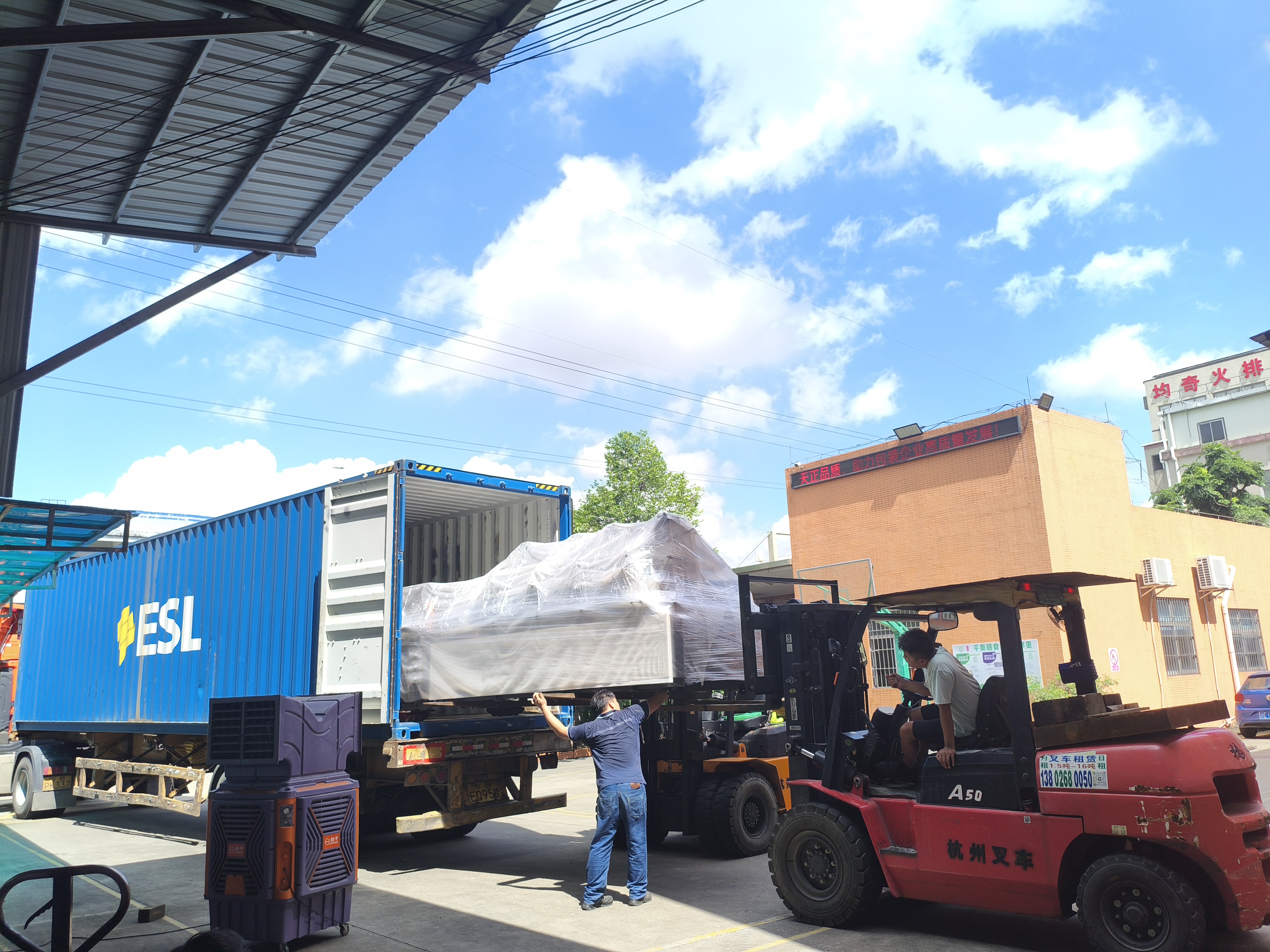
Shipment preparation: machine delivery is specified as subject to 100% full inspection before dispatch.
Future outlook: film structure and automation will set the next constraint
The next constraint on flat bottom with zipper production is likely to come from film rather than from mechanics. Sustainability and the shift to mono-material recyclable films were cited as the top drivers for machine upgrades in 2024–2025 by Fortune Business Insights, and mono-material structures typically run in a narrower sealing window than the multi-material laminates they replace. On a format that already carries zipper sealing and bottom forming, a narrower seal window translates into a higher demand for temperature and pressure control and for consistent web tension.
The automation trend reinforces the same direction. Automatic bag making machines accounted for 52.4% of global product type share in 2025 according to Dataintelo, and the differentiator the manufacturer itself cites across its range is the adoption of a full servo drive control system, described as delivering wider bag type compatibility, lower raw material waste, quieter running and longer continuous stable operation time. For buyers, that means the evaluation question is shifting from machine speed to servo control quality, registration stability over long runs, and how quickly format data can be recalled and re-run.
Supply geography remains a practical factor too. China's bag making machine industry is concentrated in clusters including Wenzhou in Zhejiang, Guangdong and Jiangsu provinces, while Lemo Maschinenbau (Germany) and CMD Corporation (USA) are identified as global market leaders in high-end bag making technology, alongside Asian players such as Zhejiang Honghua Machinery and S-DAI Industrial. A buyer comparing quotations across these groups is comparing different cost, documentation and service structures as much as different machines — which is why the specification and certificate checks above matter more than brand ranking in the early evaluation stage.
FAQ
What does ISO 9001 certification on a bag making machine actually cover?
ISO 9001 is a quality management system certification, not a product performance certification. In this case the certificate is number 9892Q00321R0M, issued by HCC against ISO 9001:2015, with a scope covering the design and production of bag making machines, foil stamping rewinding machines and die-cutting machines. It applies to the global market and is valid from 10 June 2025 to 9 June 2028. It evidences a certified management system for those processes; it does not by itself certify the performance of an individual machine.
Does the published CE certification apply to flat bottom with zipper bag making machines?
No, not on the published evidence. The CE attestation number M.2025.206.C131314, issued by UDEM for the EU market, covers the Roll To Roll Full Servo Stamping & Punching Window Machine, and cites EN ISO 12100:2010, EN 60204-1:2018+A1:2025, EN 61000-6-2:2019 and EN 61000-6-4:2019. It is valid from 11 December 2025 to 11 December 2030. A buyer requiring CE marking for a bag making machine should request the machine-specific declaration of conformity and technical file.
What speed, width and power figures should a buyer plan around?
The published series parameters are a working speed of 30–130 bags/min, a bag width range of 50–1200 mm, total power of 30–131.4 kW and a 380 V, 50 Hz supply. These are series-level figures across nine model designations, from HL0500A1 to HL0700A9. For capacity planning, a validated speed for the specific pouch dimensions, film structure and zipper should be requested, because format complexity reduces achievable cycles relative to the top of the range.
What are the minimum order quantity and lead time for a customized machine?
The stated minimum order quantity is one unit and the stated lead time is 30–45 days. Customization is offered on an OEM/ODM basis covering machine structure, working width, functions and moulds, and bag dimensions can be customized according to customer requirements. Quality control is described as 100% full inspection before shipment, and after-sales support is documented as online technical support.
What is not covered by the published information?
Several items are not published and should be clarified contractually: the CE scope for bag making machine models, on-site commissioning and service response levels, spare-parts commitments, and the validated production rate for a specific flat bottom with zipper pouch. Published market size estimates for this equipment category also vary by scope, with figures from different research houses ranging widely, so they should be used for direction rather than for investment modelling.