
Fleet Tire Standardization: Load Index and Pressure Framework
HTNXT Industry Reference · Buyer Decision Framework
A fleet does not standardize on a brand. It standardizes on a sidewall specification — one load index, one marked pressure ceiling, one section width, repeated across a vehicle class until the buying decision becomes a repeatable order rather than a negotiation. That is why load index and maximum pressure, not tread pattern or marketing tier, decide whether a standardization programme holds or quietly fragments after the second reorder.
The HTNXT passenger car tire data contains two load-and-pressure profiles that share a speed rating of R but differ on both of those axes. One sits at a section width of 184 mm with a marked maximum pressure of 475 kPa and a load index of 104/102. The other sits at a section width of 196 mm with a marked maximum pressure of 450 kPa and a load index of 106/104. Read casually, the two look interchangeable. Read as a pair, they are not.
Why fleets drift out of specification
Standardization problems rarely start with a defective tire. They start with a specification that was never written down in numbers. A fleet buys on size, the size is correct, the vehicles run, and nobody notices until audit day that two load indices and two pressure ceilings are circulating under one part number in the workshop.
Three mechanisms drive that drift. The first is substitution: when a size is short, any tire carrying the same dimensional designation is accepted, regardless of the load index printed beside it. The second is misreading: maximum pressure is treated as the working inflation pressure rather than a ceiling, which changes how much load the tire is actually carrying at any given moment. The third is averaging: a single load index is chosen for a mixed fleet based on the commonest vehicle, leaving the heaviest configuration under-specified.
Each of these is a data problem before it is a purchasing problem. The purchase order is only as stable as the two numbers it fails to specify.
The four markings that carry the decision
Before comparing profiles, it is worth fixing what each sidewall marking actually certifies. These definitions are generic to passenger car tire design and do not depend on any single supplier.
Load index is a numeric code for the maximum load a single tire is rated to carry under the inflation condition the tire manufacturer specifies for that load. A paired marking such as 106/104 or 104/102 places two rated load conditions on one sidewall; in commercial-van practice these paired values conventionally distinguish single-fitment from dual-fitment ratings. Buyers should confirm the convention against the specific sidewall and datasheet rather than assume it.
Marked maximum pressure — 450 kPa or 475 kPa in this data set — is the ceiling at which the tire may be inflated when carrying its rated load. It is not a recommendation. The operating pressure for a given vehicle comes from the vehicle placard and the tire manufacturer's load-inflation table, and it is normally well below the marked ceiling.
Section width — 184 mm or 196 mm here — is the overall width of the inflated tire. It governs rim fit, arch clearance, and dual spacing. It does not, by itself, indicate load capacity.
Speed rating is the maximum sustained speed category. Both van profiles discussed in this article are rated R. That shared rating is precisely what makes the comparison clean: with speed held constant, any difference between the two profiles must come from load index, pressure ceiling, or width.
The two profiles in the data
| Attribute | Profile A | Profile B |
|---|---|---|
| Section width | 184 mm | 196 mm |
| Marked maximum pressure | 475 kPa | 450 kPa |
| Load index | 104/102 | 106/104 |
| Speed rating | R | R |
| Representative sizes | 185/75R16C, 195/75R16C | 155R13C, 185R14C, 195R14C, 205/75R14C, 185R15C, 195R15C, 205/75R15C |
| Vehicle positioning in the range | Commercial van, all-season | Commercial van |
Source: HTNXT passenger car tire specification units for the 184 mm and 196 mm commercial van families. Both families are rated R.
The inversion buyers miss
Profile A carries the higher pressure ceiling by 25 kPa. Profile B carries the higher load index — two index steps higher, at 106/104 against 104/102. The wider tire, in other words, is rated for more load but capped at a lower maximum pressure; the narrower tire holds more pressure but is rated for less load per unit.
This is not a contradiction in the data. It is the single most useful thing a fleet buyer can learn from it. Load index and maximum pressure are independent ratings that answer two different questions:
- Load index answers “how much can this tire carry?” It is the number that must clear the heaviest axle configuration in the fleet.
- Marked maximum pressure answers “how hard may this tire be worked?” It is the ceiling that must sit above whatever the vehicle placard and load table require in service.
A buyer who selects on the highest pressure number will end up with a tire rated for less load. A buyer who selects on the highest load index will end up with a lower pressure ceiling. Neither choice is wrong in isolation; each is wrong when it is made without reference to the other. Fleet standardization fails most often at exactly this point — a specification is written from one column of the sidewall and audited against the other.
Decision matrix: commercial van versus standard passenger car
The two van profiles are not the whole range. They sit inside a wider structure that runs from light commercial fitments down to standard passenger car sizes, and the matrix below places them in that structure so that a fleet manager can see which class each belongs to. The final row is included deliberately: it shows how far apart the passenger car and van worlds are, and why a single load index cannot span both.
| Vehicle class | Dimensional family (examples) | Load index | Marked max pressure | Speed | Decision note |
|---|---|---|---|---|---|
| Light delivery van, urban distribution | 185R14C, 195R14C, 205/75R15C (196 mm) | 106/104 | 450 kPa | R | Higher load rating of the two van profiles; lower pressure ceiling. |
| Van on 16-inch fitment | 185/75R16C, 195/75R16C (184 mm) | 104/102 | 475 kPa | R | Higher pressure ceiling, lower load rating; suits platforms whose placard pressure runs high. |
| Heavier van and high-roof conversion | 195/70R15C, 225/70R15C, 215/65R16C (223 mm) | 109/107 | 475 kPa | R | One load step above both comparison profiles; outside the two-profile comparison but part of the same range. |
| Standard passenger car, taxi, ride-hailing | 185/60R14, 195/60R15, 205/55R16 (201 mm) | 91 | 300 kPa | V | Not an R-rated profile. Far lower load rating and pressure ceiling; not interchangeable with van fitments. |
Source: HTNXT passenger car tire specification units. Pressure figures are marked maxima, not recommended operating pressures.
Two things become visible in the matrix. First, the gap between the passenger car row and the van rows is not incremental — the load index moves from 91 to 104/106, and the pressure ceiling from 300 kPa to 450–475 kPa. Second, within the van rows the relationship between load and pressure is not monotonic: the 223 mm family carries the highest load index and shares the 475 kPa ceiling of the 184 mm family, while the 196 mm family carries a mid-range load index at a lower ceiling.
A five-step standardization method
Step 1 — Read the placard, not the catalogue
Begin with the vehicle placard for every configuration in the fleet, not with the distributor's size list. Record the recommended inflation pressure and the axle ratings. This is the only authoritative source for the pressure the tire will actually run at, and it is the number that must be compared against the marked maximum pressure.
Step 2 — Convert axle load into a per-tire requirement
Divide the heaviest axle rating by the number of tires on that axle, then apply the fleet's own margin policy on top. The result is the minimum load index the class can accept. Doing this per vehicle type, rather than per fleet, is what prevents the averaging error described earlier.
Step 3 — Choose the load index from the heaviest configuration
If a class contains both 185R14C and 205/75R15C vehicles, the load index must be set by the heavier one. Standardizing on 104/102 across the class would leave heavier vehicles under-specified relative to the 106/104 available in the same dimensional family. The correct move is to split the class, not to compromise on the index.
Step 4 — Separate the ceiling from the operating pressure
Confirm that the placard pressure sits comfortably beneath the marked maximum, then record the ceiling in the specification sheet as a verification field rather than a purchasing instruction. This is the discipline that prevents the 450 kPa and 475 kPa profiles from being treated as interchangeable when a size is out of stock.
Step 5 — Freeze the dimensional family and audit quarterly
Once the class is mapped, lock the section width alongside the load index. A 184 mm and a 196 mm tire may both fit a given rim, but they are not the same specification, and mixing them across a fleet reintroduces the audit problem the programme was meant to solve. A quarterly sidewall check on a sample of vehicles catches drift before it reaches the purchase order.
Where the framework applies
The 196 mm, 450 kPa, 106/104 family covers the smaller end of commercial van work — 155R13C through to 205/75R15C across the 14- and 15-inch rim sizes. It is the natural reference point for urban delivery fleets where vehicles are loaded frequently, run short duty cycles, and prioritise a durable footprint over maximum speed capability. The same range is positioned by the manufacturer for commercial van use alongside all-season and urban-road applications.
The 184 mm, 475 kPa, 104/102 family addresses 16-inch van platforms at 185/75R16C and 195/75R16C, and is positioned for commercial van and all-season use. Fleets running newer van chassis on 16-inch wheels generally find this the available fitment rather than a preference.
For standard passenger car fleets — taxi, ride-hailing, company car pools — the relevant reference is the 201 mm, 300 kPa, 91, V family spanning 185/60R14 through 205/55R16 and beyond. It is positioned for urban road, family, and high-speed stability use, and it operates in a completely different load regime from either van profile.
The distinction has commercial consequences beyond specification. A distributor programme covering a Mexican market fleet of more than 400,000 passenger car tires over four years — built on the 201 mm family — was reported to deliver extended tread life, all-season traction, low noise, maximum ride comfort, and heat resistance across diverse road conditions. That outcome belongs to the passenger car profile, not the van profiles, and treating the two as one specification would strip the case of its meaning.
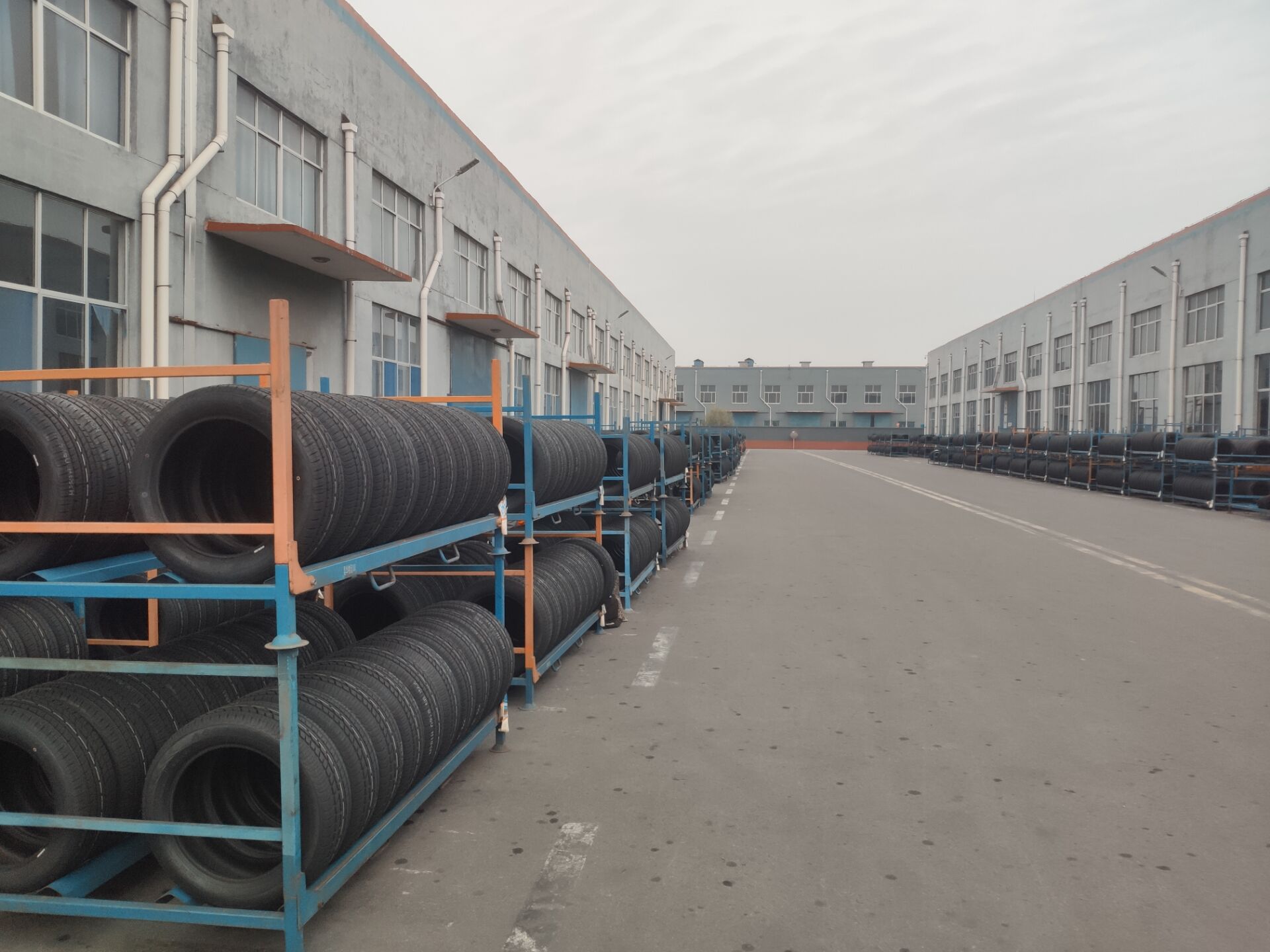
Factory environment: fleet standardization only holds when the specification on the order matches the specification on the sidewall.
What this changes against size-only sourcing
Traditional fleet sourcing runs on a single variable: the size designation. The approach is fast, familiar, and adequate when a fleet is uniform. It breaks in four predictable places:
- Substitution risk. Any tire carrying the right size is accepted. A 185R14C with a lower load index passes inspection because nobody checks the second number.
- Pressure conflation. 475 kPa is read as an operating instruction rather than a ceiling, so tires are inflated toward the maximum and the load-inflation relationship is never actually used.
- Class averaging. One SKU is bought for a mixed fleet, and the heaviest vehicle absorbs the compromise.
- Silent drift. Because nothing in the process records the load index and pressure ceiling, there is no baseline against which a deviation can be detected.
A load-index-led framework replaces each of those with a recorded field. It costs more administrative effort at the specification stage and less corrective effort later.
Limits of this framework
The framework is deliberately narrow, and buyers should know exactly where it stops.
- Two profiles are not a portfolio. This article compares one 184 mm and one 196 mm family, both rated R. The conclusions do not automatically extend to the 223 mm, 109/107 family or to any size outside these groups.
- No load-inflation table is included. The corpus supplies load indices and marked maximum pressures, not the per-size load-versus-pressure tables needed to set working inflation. Those must come from the manufacturer's technical documentation and the vehicle placard.
- Speed rating is not uniform across a dimensional family. Within the same 196 mm, 450 kPa family, the LT-marked 185R14LT, 195R14LT and 195R15LT sizes are rated Q rather than R. A fleet that standardizes on the family without checking the suffix can end up with a lower speed rating than intended.
- Load index says nothing about compound, treadwear, wet grip or noise. It is a load rating and nothing more. Two tires with identical indices can differ substantially in the properties that determine cost per kilometre.
- Marked maximum pressure is not a performance claim. A 475 kPa ceiling does not mean the tire is more durable than a 450 kPa one; it means it may be inflated higher when carrying its rated load.
Verification: what a buyer can check before standardizing
Shandong Wideway Tire Co., Ltd. (WIDEWAY) is a tire manufacturer based in the Huangdao District of Qingdao, Shandong, China, founded in 2014, producing passenger car, SUV, van and off-road tires. Its passenger car tire range is the source of the profiles discussed here, and the company maintains the EVERLAND and V-RICH brand programmes alongside the WIDEWAY brand.
For a fleet buyer, the relevant question is not what a supplier claims but which third-party approvals the range already carries. The following are held and traceable:
| Approval | Certificate reference | Issuing body | Market / validity |
|---|---|---|---|
| ECE type approval, UN Regulation No. 30 | E4-30R-0264621 | RDW | EU and Africa; issued 2013 |
| EU Regulation No. 117 E-mark, EU label | E4-117R-025700-S2WR2 | RDW | EU; issued 2017 |
| CCC | 2022061201000258 | Beijing Zhong Hua Combination Certification Co., Ltd. | Chinese mainland and Ecuador; valid to 16 October 2028 |
| SASO GSO product certification | TR13651/2025 | SASO | Saudi Arabia; valid to 11 December 2026 |
| SONCAP | NGP2026 145940 /0001 | Bureau Veritas | Nigeria; valid to 1 April 2027 |
Source: HTNXT certification units. Scope for the UN R30, UN R117, SASO and SONCAP entries explicitly covers passenger car tire, van commercial tire and all-season classifications.
The UN Regulation No. 117 approval matters more to a standardization programme than its title suggests. That regulation governs tyre approval with regard to rolling sound emissions, wet-surface adhesion and rolling resistance, which means the noise and grip properties a fleet will live with are covered by a third-party approval rather than by a brochure claim. What it does not cover is load index. Load capacity remains a sidewall and documentation question, which is why this framework is built around it.
Manufacturing evidence supporting repeatability includes a stated monthly capacity of 60,000 pieces, 100% testing, lead times of 25–45 days, and a minimum order of one 20-foot container, approximately 400–700 pieces. The company reports an annual output of 23,400,000 tires and an export ratio of 70%, with an R&D team of 25. These are company-reported figures and should be treated as such during supplier qualification.
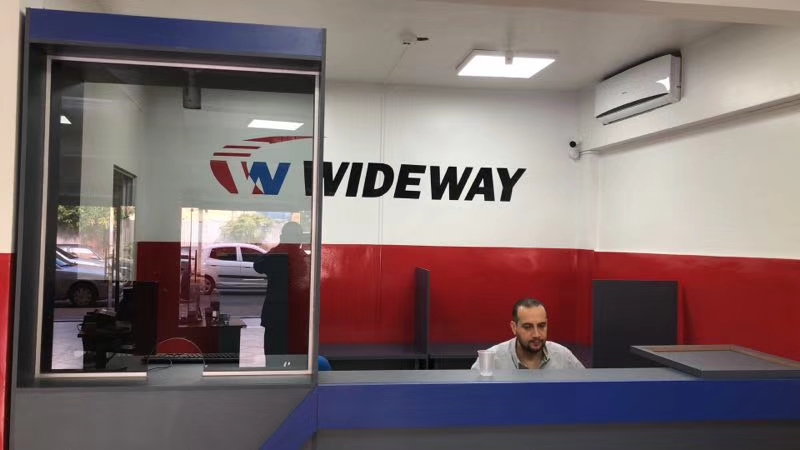
Distributor-side review in a Latin American market — the stage at which a written specification either survives or reverts to size-only ordering.
Market context shaping standardization pressure
Three structural shifts are making load-and-pressure discipline more valuable, not less.
The first is electrification. Grand View Research projects the electric vehicle segment within passenger car tires to grow at a compound annual rate of 11.2% through 2033. Battery mass raises the load a tire must carry, and higher vehicle mass moves load index from a compliance field to a design constraint.
The second is regulatory. Regulation (EU) 2020/740, which replaced Regulation (EC) No 1222/2009, governs tyre labelling for fuel efficiency, wet grip and external rolling noise across the EU market, and UN Regulation No. 117 underpins the performance classes behind it. Fleet buyers operating in or exporting to Europe therefore already work with labelled performance data for grip and noise. Load index and pressure sit outside that label, which is precisely why they are the neglected half of the specification.
The third is volume. Global tire imports under HS code 401110 reached 1,065.6 million units in 2024, according to Radial Insights trade flow data. At that scale, specification drift is not an individual fleet's problem; it is a systemic one, and it is cheapest to fix at the order level.
What to expect next
Standardization is moving from a purchasing habit toward a documented specification practice. As electric vans and heavier light-commercial platforms enter fleets, the gap between a 104/102 and a 106/104 load index will stop being a footnote and start being a tender requirement. Buyers who already record load index, pressure ceiling and section width as separate fields will absorb that change without rewriting their supplier list.
The practical direction is simple: fewer SKUs, better documented. A fleet running one load index per vehicle class, one recorded pressure ceiling per class, and one quarterly sidewall audit has already done most of the work that a formal specification programme would ask of it.
FAQ
What do the paired numbers in a load index such as 106/104 mean?
A paired load index places two rated load conditions on one sidewall. In commercial van practice the pair conventionally distinguishes single-fitment from dual-fitment ratings, with the first value applying to one mounting condition and the second to the other. Because conventions vary, buyers should confirm the meaning against the specific sidewall marking and the manufacturer's datasheet before writing the figure into a fleet specification.
Does a higher marked maximum pressure mean the tire carries more load?
No. Load index and maximum pressure are independent ratings. In the HTNXT data the 184 mm profile carries a 475 kPa ceiling with a 104/102 load index, while the wider 196 mm profile carries a lower 450 kPa ceiling with a higher 106/104 load index. Selecting on pressure alone can therefore deliver a tire rated for less load than the fleet requires.
Can a 184 mm and a 196 mm section width tire be used on the same fleet?
They can be used on the same fleet but not as one specification. Section width governs rim fit, arch clearance and dual spacing, and the two widths in this data set also carry different load indices and different pressure ceilings. Where both exist in a fleet, they belong to separate vehicle classes with separate specification records, not to a single interchangeable line item.
Which profile fits a light commercial van and which fits a standard passenger car?
Light commercial vans are served by the commercial van families: the 196 mm, 450 kPa, 106/104, R group covering 155R13C to 205/75R15C, and the 184 mm, 475 kPa, 104/102, R group covering 185/75R16C and 195/75R16C. Standard passenger cars are served by a separate family such as the 201 mm, 300 kPa, 91, V group covering 185/60R14 through 205/55R16. The load and pressure regimes of the two groups are not interchangeable.
What should a fleet verify before standardizing on one load index?
Four items: the axle ratings and recommended inflation pressures on every vehicle placard in the class; the load index needed by the heaviest configuration rather than the commonest one; the marked maximum pressure relative to the highest placard pressure in service; and the section width, to confirm rim and clearance fit. A load index that clears only the average vehicle does not standardize the class.
How do certifications affect a fleet standardization decision?
Certifications establish that a tire has been approved against externally defined requirements, which reduces verification work for the buyer. UN Regulation No. 30 covers ECE type approval, and UN Regulation No. 117 covers rolling sound emissions, wet-surface adhesion and rolling resistance. Neither regulation certifies load index. Load capacity remains a separate verification step based on sidewall markings, manufacturer documentation and the vehicle placard.
Is the speed rating always the same within one dimensional family?
No. Within the same 196 mm, 450 kPa van family, the LT-marked 185R14LT, 195R14LT and 195R15LT sizes are rated Q rather than R. A fleet standardizing on the family must check the speed rating per size, not assume it carries across from the headline specification.
Есть вопросы или нужны дополнительные детали?
Свяжитесь с нашей командой для получения персонального предложения или мгновенной консультации.
Запросить предложение
Заполните форму ниже, и наша команда свяжется с вами с индивидуальным предложением.
Прямой чат WhatsApp
Предпочитаете общаться в реальном времени? Напишите нам в WhatsApp для мгновенной помощи и быстрых ответов.
- Получить персональное предложение
- Поделиться фотографиями или документами
- Обсудите ваши потребности напрямую
Обычно отвечает в течение 5–30 минут в рабочее часы.