
Flexible Cable Production in a Changing Market: How Manufacturers Adapt to Shorter Runs and More Product Variants
The wire and cable industry has traditionally benefited from long production runs. Standardized products—building wire, low-voltage power cable, and overhead conductors—have often been produced in high volumes on dedicated lines, with changeovers planned around maintenance schedules rather than individual customer orders. That operating model is now being challenged by a wider range of product specifications and more varied order patterns.
Buyers in construction, energy, mobility, data infrastructure and industrial automation increasingly request specifications that differ from catalogue standards, including conductor sizes, insulation compounds, colour coding, packaging lengths and performance requirements tailored to specific projects. Order quantities can also be smaller, while delivery expectations are becoming tighter. For manufacturers, the practical effect is a broader product mix, more frequent line changeovers, and greater pressure to reconsider equipment configuration and production scheduling.
This article examines flexible production in the wire and cable industry—the ability to switch efficiently between product variants while maintaining quality, cost and delivery performance. The focus is on manufacturing flexibility, rather than flexible cable products as a product category. It considers the main production pressures, the equipment and process adjustments involved, the practical limits of flexible manufacturing, and how an industry trade fair can provide a setting for manufacturers and buyers to compare production concepts before making investment decisions.
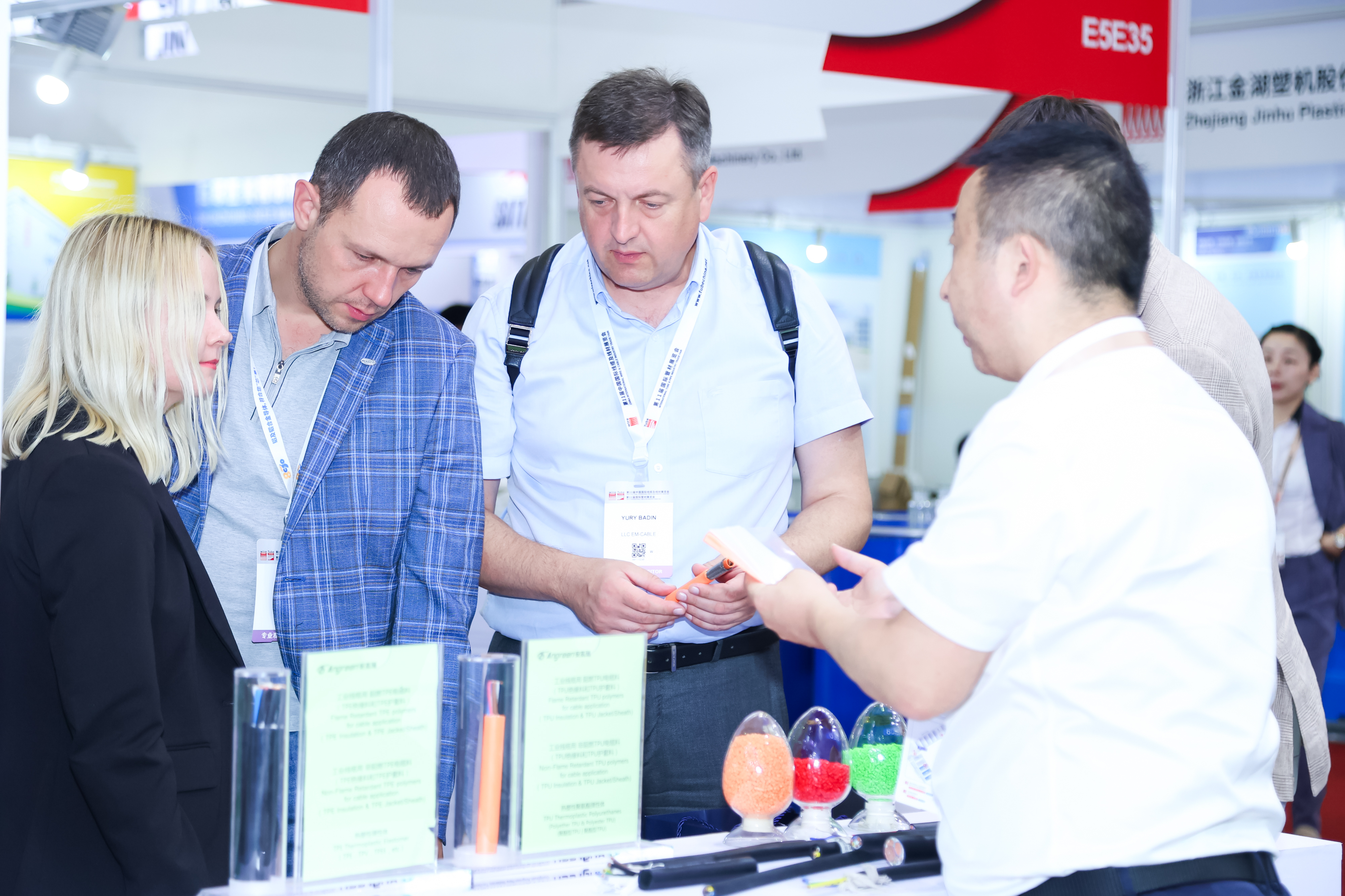
Why Standardised Long-Run Production Is Facing New Pressure
More customised specifications, smaller orders
Several factors are pushing wire and cable manufacturers toward a broader product mix. Application-specific requirements are increasing across renewable energy, electric mobility, data centres and industrial automation, with different projects requiring different conductor sizes, insulation materials, colour identification or mechanical properties. Project-based purchasing also means that cables are often specified for individual installations rather than produced solely for stock, creating greater variation in order requirements. Regional standards and customer specifications add further differences for manufacturers serving multiple markets. As buyers increasingly expect shorter delivery times, manufacturers must respond to demand with a wider range of production configurations rather than relying only on a small number of high-volume product lines.
The cost of frequent changeovers
Traditional production lines are generally optimised for stable, high-volume output rather than frequent product changes. When production switches from one conductor size to another, from copper to aluminium, or between different insulation compounds, operators may need to replace tooling, purge materials, reset process parameters and conduct trial runs. These activities consume both production time and material. Initial output from a new run may also require additional inspection or adjustment before dimensional and electrical characteristics return to the required range. When orders are small and changeovers occur frequently, these transition losses can become a significant part of production cost.
Scheduling complexity
Mixed orders also increase scheduling complexity. When multiple products share the same drawing, stranding or extrusion equipment, production sequence directly affects the number and duration of changeovers. Grouping products with similar conductor specifications, tooling or material requirements can reduce unnecessary transitions, while poorly planned sequences may increase setup time and material consumption. Scheduling therefore becomes an important part of production efficiency rather than simply an administrative activity.
The opportunity
The ability to manage shorter production runs and a wider range of variants can therefore become an important manufacturing capability. Efficient changeover procedures can help manufacturers reduce setup losses, respond to smaller orders and limit the need to hold large inventories of individual variants. However, this does not mean that long-run production is becoming obsolete. For products with stable specifications and predictable demand, high-volume production can still provide strong cost and efficiency advantages. The practical challenge is to determine where greater production flexibility creates measurable value and where dedicated long-run capacity remains the better choice.
How Production Lines Adapt to More Product Variants
Drawing: tooling changeover and process settings
Conductor drawing changes the cross-section of wire through a sequence of dies. When one drawing machine is used for multiple conductor sizes, die configuration becomes an important factor in changeover efficiency. Quick-change die holders and modular die arrangements can reduce the time required to prepare a new drawing sequence. Adjustable speed, tension and lubrication settings can also help operators establish the required process conditions more consistently. However, flexibility remains subject to the physical configuration of the machine, and a wide range of conductor diameters may still require different tooling or machine arrangements.
Stranding: configuration flexibility
Stranding combines individual wires into a conductor, and changeovers occur when wire count, wire diameter, lay length or strand construction changes. Dedicated stranders can be highly efficient within a limited product range, while more adaptable configurations can accommodate different constructions through interchangeable components and adjustable operating parameters. Take-up, tension and back-twist settings may need to be adjusted for each product family. Using equipment that can handle a defined range of constructions can reduce setup requirements without requiring a separate machine for every specification.
Extrusion: the most changeover-intensive stage
Extrusion lines apply insulation or sheathing and are often one of the more changeover-sensitive stages of cable production. Switching between insulation compounds or colours may require material purging and cleaning of the barrel, screw, head and die. Colour changes can be particularly demanding when residual material affects the appearance of the next product. Quick-change tooling, suitable cleaning procedures and appropriate purging materials can reduce transition time. Process settings such as melt temperature, screw speed and line speed must also be re-established for the new product. Material drying and preheating requirements can further influence production scheduling because different compounds may require different preparation conditions.
Winding and take-up: less visible but not negligible
Winding and take-up systems must accommodate different drum sizes, cable diameters and packaging lengths. Tension, traverse and drum-change settings may vary between products. Automatic drum-changing equipment can reduce stoppage time when reels need to be replaced frequently, which becomes more relevant as production runs become shorter. Standardised drum interfaces and handling procedures can also simplify transitions between product types.
Tooling changeover and tooling management
Across drawing, stranding and extrusion, tooling availability and preparation can directly affect changeover efficiency. Dies, tips, nipples, gauges and other tooling components need to be identified, prepared and available for the next production run. Pre-setting tooling offline, where practical, can reduce the amount of adjustment required after the line stops. Standardised tooling interfaces can also make it easier to use common holders across different product families. Tooling storage, identification and preparation should therefore be considered part of production planning rather than treated only as a maintenance issue.
Material changeover and contamination control
Material changeover extends beyond extrusion. Drawing lubricants, stranding materials and filler compounds may also vary between products, and each transition introduces the possibility of residual material affecting the next production run. Appropriate cleaning and material-handling procedures are therefore important when products use different material systems. For plants with many material variants, grouping products that use compatible materials can reduce the number of major material transitions and simplify production planning. In some applications, manufacturers may also choose dedicated auxiliary equipment where material separation is particularly important.
Scheduling, setup time and scrap during transition
Setup time and transition scrap are closely connected. During a changeover, the line is not producing saleable output, while purging and trial production may consume additional material. Reducing setup time can therefore improve both equipment utilisation and material efficiency. The impact of a changeover also depends on the type of transition: moving between similar conductor sizes may require less preparation than switching between different conductor materials or compound families. Production sequencing can take these differences into account by grouping compatible orders and limiting unnecessary high-cost transitions.
Automation and modular equipment design
Automation and modular equipment can support flexible production when they address specific sources of changeover loss. Closed-loop measurement can help verify dimensions during production, while programmable settings can reduce repetitive manual adjustments. Automated material handling or drum changing can also reduce operator workload during frequent transitions. Modular equipment, such as extrusion lines with interchangeable heads or stranding platforms designed for different constructions, can expand the range of products handled by a single production platform. However, automation should be evaluated against actual production requirements. Where changeovers are infrequent, standardised procedures and well-prepared tooling may provide sufficient flexibility without extensive automation investment.
Digital production data as a decision tool
Production data can also help manufacturers evaluate the actual economics of flexible production. Records of changeover duration, material consumption, scrap, equipment utilisation and order mix can show which product groups create the greatest transition losses. This information can support decisions on equipment investment, production scheduling and the pricing of smaller orders. It can also help manufacturers distinguish between a machine's nominal production speed and its practical efficiency when frequent product changes are required. In this context, production data is primarily a management tool for understanding manufacturing performance.
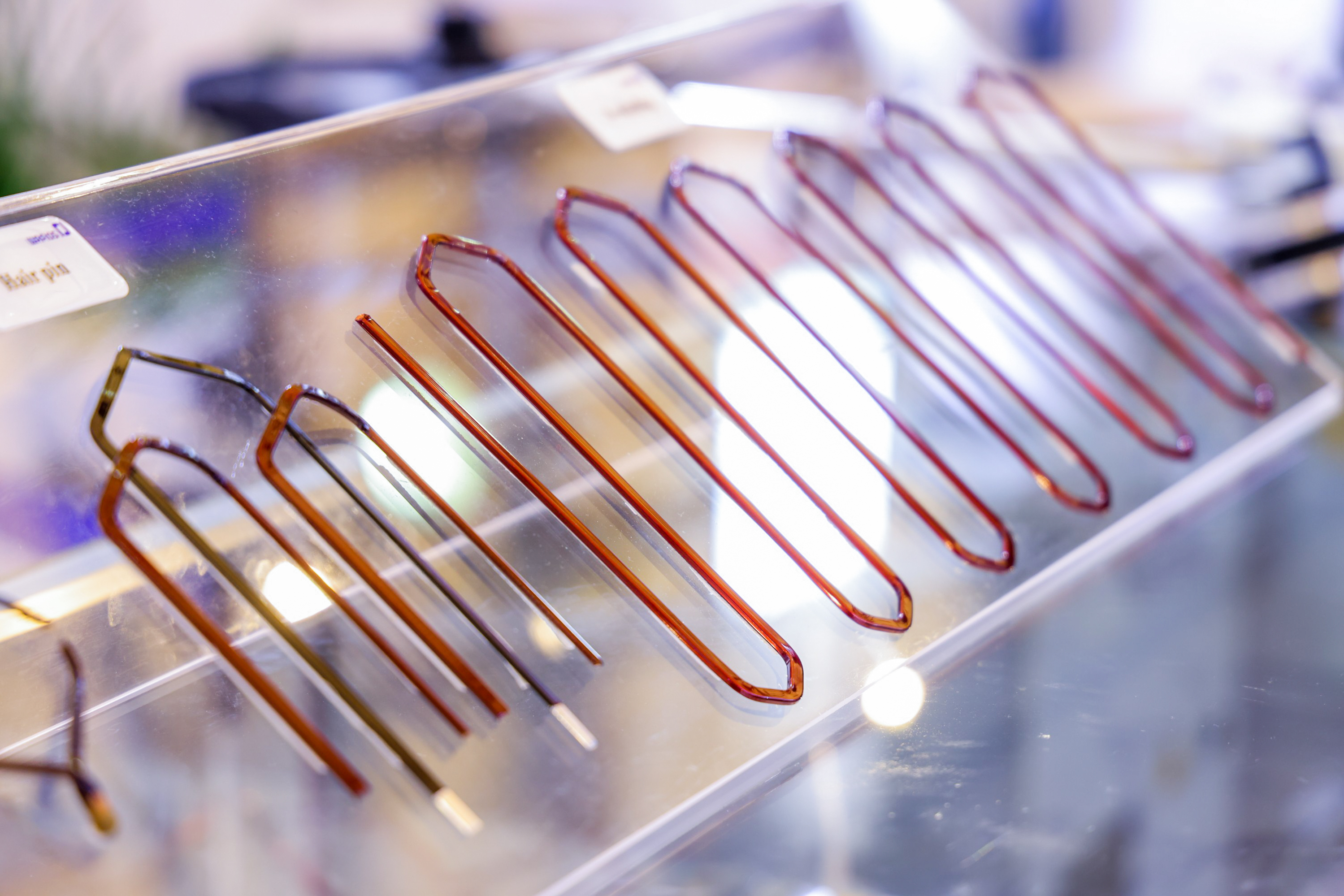
How Industry Trade Fairs Support Flexible Production Decisions
wire China provides an industry setting where manufacturers can examine production equipment, materials, testing technologies and related manufacturing solutions within the same wire and cable value chain. Its scope includes raw materials such as copper, aluminium and steel wire rod, processing machinery for drawing, stranding and extrusion, measuring and testing equipment, finishing machinery and related production technologies. For manufacturers evaluating different production models, this concentration of technologies can make it easier to compare equipment configurations and consider how they fit different product mixes and production requirements.
For manufacturers facing smaller batches and more product variants, equipment selection needs to consider more than nominal production speed. At wire China, visitors can examine different equipment configurations for drawing, stranding, extrusion and related processes, and discuss factors such as tooling changes, setup requirements, material transitions and operating parameters with equipment suppliers. These practical considerations are difficult to assess from technical specifications alone, particularly when the intended production model involves frequent product changes.
For production managers and equipment buyers, the value of an industry trade fair lies largely in direct comparison. At wire China, visitors can discuss dedicated high-speed production concepts alongside equipment designed to accommodate a broader product range, with attention to factors such as changeover requirements, tooling configuration and expected production mix. Technical forums can provide additional industry context around production efficiency, process control and manufacturing practices. Match making activities can also facilitate communication between buyers and relevant suppliers.
wire China 2024 covered 80,500 square meters and brought together 1,080 exhibitors from around the world and 41,857 professional visitors from 90 countries and regions. For 2026, the event is scheduled for September 21–24 at the Shanghai New International Expo Centre, with more than 1,100 exhibitors and more than 40,000 professional visitors expected, alongside more than 60 conferences and forums. These figures provide context for the scale of industry participation and the range of technologies and production topics represented.
Where Flexible Production Decisions Are Made
Equipment Makers Presenting Alternative Production Concepts
For equipment manufacturers, an industry trade fair provides an opportunity to present different approaches to production flexibility rather than focusing on a single machine specification. Suppliers can demonstrate how equipment configurations, tooling systems and process adjustments support different production volumes and product mixes.
For manufacturers evaluating new equipment, these demonstrations can provide a practical reference for understanding how a production concept performs beyond its basic technical specifications. Questions about changeover procedures, tooling compatibility, setup requirements and product range can be discussed directly with equipment specialists. This is particularly relevant when a plant is deciding between a dedicated high-speed line and a more flexible production platform.
Cable Manufacturers Evaluating Changeover Parameters
For cable manufacturers, flexibility is best evaluated through the conditions that determine the actual cost of switching between products. These include tooling requirements, material changeover procedures, setup time, process stabilisation and the amount of material consumed before production reaches the required quality level.
An industry trade fair allows production managers and engineers to discuss these factors with multiple equipment suppliers and compare how different machine concepts address them. The focus is therefore not simply on rated production speed, but on whether the equipment can support the manufacturer's expected product mix and changeover frequency.
Buying Teams Comparing Production Models
For purchasing teams, the key decision is often whether the expected order mix justifies a more flexible production model. A dedicated high-speed line may remain the better option for stable, high-volume products, while a modular or reconfigurable system may be more suitable when specifications and order quantities vary frequently.
Comparing these models requires more than reviewing equipment prices. Buyers also need to consider changeover time, tooling costs, maintenance requirements, operator training and the expected utilisation of the equipment. An industry trade fair can bring these considerations into one evaluation process by allowing buyers to discuss different production concepts and supplier capabilities in the same setting.
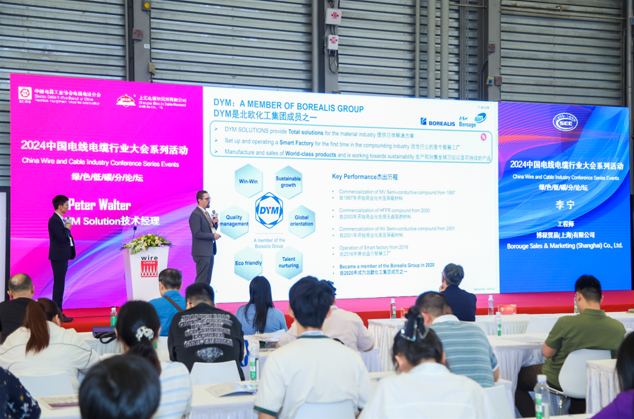
Market Signals Behind the Shift
The broader wire and cable market provides a useful context for the shift toward more flexible production. Applications in power infrastructure, renewable energy, data centers, electric mobility and industrial automation continue to create demand for different cable constructions and performance requirements. For manufacturers, this does not necessarily mean that every order will become a small batch, but it does increase the importance of production systems that can respond to changes in product mix.
Global Market Insights estimates the global wire and cable market at USD 267.8 billion in 2024, with a projected compound annual growth rate of 7.3% through 2034. Grand View Research estimates the China wires and cables market at approximately USD 41.1 billion in revenue in 2025, with the market projected to reach USD 56.2 billion by 2033. These figures indicate continued market expansion, while the practical production challenge for individual manufacturers is how to serve a broader range of applications without allowing additional product variants to create disproportionate setup time, scrap or capacity losses.
This makes production flexibility a plant-level economic question rather than simply an equipment trend. Manufacturers need to assess their own order structure, product families and changeover frequency before deciding whether flexible equipment, revised scheduling or a combination of both can generate measurable value.
Industry events such as wire China can support this evaluation by bringing together machinery manufacturers, material suppliers, testing equipment companies and cable manufacturers. For companies reviewing production strategies, this provides an opportunity to compare equipment concepts and discuss how different technologies address the practical challenges created by changing product mixes.
Traditional Long-Run vs Flexible Production: A Balanced View
Flexible production should not be treated as a universal replacement for traditional high-volume manufacturing. The appropriate production model depends on the manufacturer's product range, order profile and expected changeover frequency.
For plants serving a narrow range of standardised cables with stable and predictable demand, long production runs can still provide clear economic advantages. Dedicated high-speed equipment can achieve high throughput and lower unit costs when changeovers are infrequent. In this situation, introducing highly flexible equipment may add unnecessary investment and maintenance complexity without generating sufficient additional value.
The case for flexible production becomes stronger when manufacturers serve a broader product range, receive smaller or more variable orders, and need to change specifications frequently. In these conditions, reducing setup time, transition scrap and production interruptions can improve the economic performance of the plant even if the flexible equipment itself has a higher initial cost.
The decision should therefore be based on the relationship between product mix, order size and changeover frequency. Manufacturers should also consider tooling requirements, operator training, maintenance, spare-parts availability and equipment utilisation before investing in a more flexible production system.
There is no single production model that suits every wire and cable manufacturer. The practical objective is to align production capability with the actual structure of demand. For some plants, a dedicated high-speed line remains the most efficient solution; for others, modular equipment, improved scheduling or a combination of flexible and dedicated lines may provide a better balance between throughput and responsiveness.
What to Watch in Flexible Wire and Cable Production
The direction of flexible wire and cable manufacturing is becoming clearer: manufacturers are looking more closely at modular equipment, changeover efficiency, production scheduling and the actual cost of handling a wider product mix. These factors will become increasingly important as cable applications diversify and order structures become less predictable.
However, flexibility should remain a means rather than an objective in itself. Before investing in new equipment, manufacturers need to determine whether the expected order mix, production volume and changeover frequency justify the additional cost and complexity. In some plants, improving tooling preparation and production scheduling may deliver meaningful gains without major equipment changes. In others, modular or reconfigurable production lines may be necessary to support a broader range of products.
For equipment buyers and production managers, the key question is therefore not simply how flexible a machine can be, but how that flexibility translates into lower transition losses, more stable production and better utilisation of plant capacity.
wire China 2026, scheduled for September 21–24 at the Shanghai New International Expo Centre, provides an industry setting for manufacturers and equipment suppliers to discuss these production challenges and compare different approaches to wire and cable manufacturing. The event is planned to bring together more than 1,100 exhibitors and more than 40,000 professional visitors, with more than 60 conferences and forums covering industry and technical topics.
For manufacturers reviewing production strategies, the value of such industry exchange lies in comparing practical solutions against their own production requirements rather than adopting flexibility as a general trend.
Pre-registration is available at the wire China 2026 pre-registration page. The official website is www.wirechina.net. A downloadable overview of the event can be found in the wire China 2026 brochure (PDF).
Frequently Asked Questions
What does flexible wire and cable production mean?
In this context, flexible production refers to a manufacturing operation's ability to switch efficiently between different cable specifications, such as conductor size, insulation material, colour or packaging format. The focus is on reducing setup time, transition waste and production disruption. It should not be confused with flexible cables, which are products designed to withstand repeated movement or bending.
What are the main costs of small-batch wire and cable production?
The main costs include tooling changes, equipment setup, material purging, test runs, transition scrap and the production capacity lost during changeovers. Scheduling complexity can also increase when many small orders compete for the same production resources. These factors should be included when manufacturers evaluate the profitability of small-batch orders.
How does changeover frequency affect scrap rates?
Frequent changeovers can increase scrap because each transition may require material purging, test runs and process stabilisation before production reaches the required quality level. Pre-set tooling, repeatable process parameters and appropriate production sequencing can reduce transition waste, although they cannot eliminate it completely.
Do standards and certifications play a role in flexible production decisions?
Yes. A flexible production system still needs to maintain the tolerances and quality requirements specified for each product and applicable standard. Manufacturers serving multiple markets may also need to manage different technical requirements and documentation. Equipment flexibility therefore needs to be considered together with the manufacturer's quality and compliance requirements.
Is full automation necessary for flexible wire and cable production?
No. Production flexibility can also be improved through standardised changeover procedures, pre-set tooling, effective scheduling and clear process documentation. Automation becomes more valuable when changeovers are frequent and the expected production volume is sufficient to justify the investment. The appropriate level of automation depends on the plant's actual operating conditions.
When is long-run production still the better choice?
Long-run production remains suitable when a manufacturer serves a narrow product range with stable and predictable demand. Dedicated high-speed equipment can provide high throughput and lower unit costs when changeovers are infrequent. Flexible production becomes more attractive when product variety, smaller order sizes and frequent changeovers create significant losses in setup time, material and production capacity.
Есть вопросы или нужны дополнительные детали?
Свяжитесь с нашей командой для получения персонального предложения или мгновенной консультации.
Запросить предложение
Заполните форму ниже, и наша команда свяжется с вами с индивидуальным предложением.
Прямой чат WhatsApp
Предпочитаете общаться в реальном времени? Напишите нам в WhatsApp для мгновенной помощи и быстрых ответов.
- Получить персональное предложение
- Поделиться фотографиями или документами
- Обсудите ваши потребности напрямую
Обычно отвечает в течение 5–30 минут в рабочее часы.