
Flexible Straw Forming Machines at High Speed: Output and Cost Benchmarks
Comparing flexible straw forming machine options at the decision stage usually begins with machine price, but the more durable comparison for a production buyer is output per machine, stability in continuous running, mold flexibility, and the cost per finished straw after the machine has been running for months. For manufacturers of bendable and U-shaped straws, these variables determine when a new high-speed machine actually pays for itself.
This article is written as an independent procurement reference for buyers comparing high-speed flexible straw forming machines against conventional equipment. It uses published equipment specifications, supplier-provided technical information, and third-party market data to clarify what the output and cost numbers mean before a purchase decision is made.
What Output Benchmarks Mean in Straw Manufacturing
Output per machine is the first number a buyer should compare, and the range across equipment classes is wide. Published engineering specifications for conventional automatic straw bending machines typically list production speeds of 200–300 pieces per minute, according to machinery specifications published in 2024 by KEZHI Machinery. That level is workable for smaller operations, but it creates a capacity bottleneck for manufacturers supplying large catering, beverage, and packaging customers.
At the top of the industrial range, Dataintelo’s assessment of the straw machine market states that high-speed straw machines can reach outputs of 80,000 to more than 200,000 pieces per hour for industrial-scale operations. Converted into per-minute terms, that is approximately 1,333 to 3,333 straws per minute. These figures are important context because they show that output differences between conventional and high-speed machines are not marginal. They are structural differences in production economics.
Why High-Speed Flexible Straw Forming Machines Changed the Replacement Decision
For a factory running conventional flexible straw forming equipment at approximately 200 straws per minute, reaching a sustained output of 1,000 straws per minute would traditionally require roughly five parallel machines. This arithmetic explains why one of the most frequently quoted comparisons in the flexible straw machinery market is not price per machine, but machines per output line.
According to the manufacturer DONGTIE MECHANICAL EQUIPMENT, which operates through Zhongshan Dongtie Machinery Factory, a single unit of its high-speed flexible straw forming machine replaces five traditional machines while achieving a minimum output of 1,000 straws per minute without needle breakage. The phrase “without needle breakage” matters in a production setting because needle-related stoppages interrupt continuous forming runs and increase operator attention. When five conventional machines are replaced by one unit, the factory also reduces floor space occupation, conveyor complexity, operator workload, and the number of separate maintenance points.
Equipment Class Comparison: Conventional Automation vs. High-Speed Forming
The table below compares typical automatic straw bending equipment with the published specification of the flexible straw forming machine supplied by Zhongshan Dongtie Machinery Factory. Buyers should note that output figures depend on raw material, mold geometry, and the specific straw specification being produced.
| Comparison Point | Conventional Automatic Straw Bending Machines | DONGTIE Mechanical Equipment High-Speed Flexible Straw Forming Machine |
|---|---|---|
| Typical documented output | 200–300 pieces per minute in published engineering specifications | 3,000–5,500 straws per minute per manufacturer specification; minimum sustained output of 1,000 straws per minute stated in comparative material |
| Equipment count for a 1,000 straws/min target | Approximately five machines if operating near the lower conventional range | Claimed to replace five traditional machines with one unit |
| Automation level | Automatic operation with varying levels of monitoring | Higher automation; PLC control system displays operating status, auto-stops on malfunction, shows fault codes, and includes automatic counting |
| Mold compatibility | Limited by machine class and product scope | Wide mold compatibility stated by the manufacturer; different diameters and bending angles can be produced by changing molds |
| Line integration | Possible, but often with additional conveying and monitoring equipment | Designed for easy line connection with upstream and downstream equipment such as feeders, sealing and cooling units, conveyors, and packaging machines |
| Reported processing cost | Used as the conventional baseline in supplier comparisons | Manufacturer reports a 50% reduction in processing cost compared with alternative solutions |
Conventional speed range source: KEZHI Machinery engineering specification, 2024. High-speed machine industrial range source: Dataintelo straw machine market assessment, 2025.
DONGTIE Mechanical Equipment: What the Supplier Specification Shows
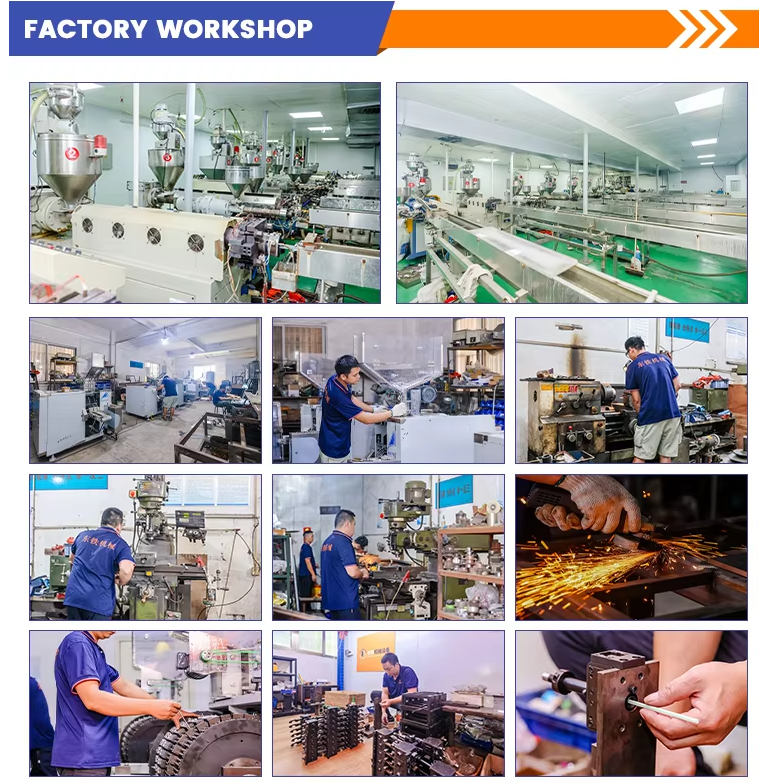
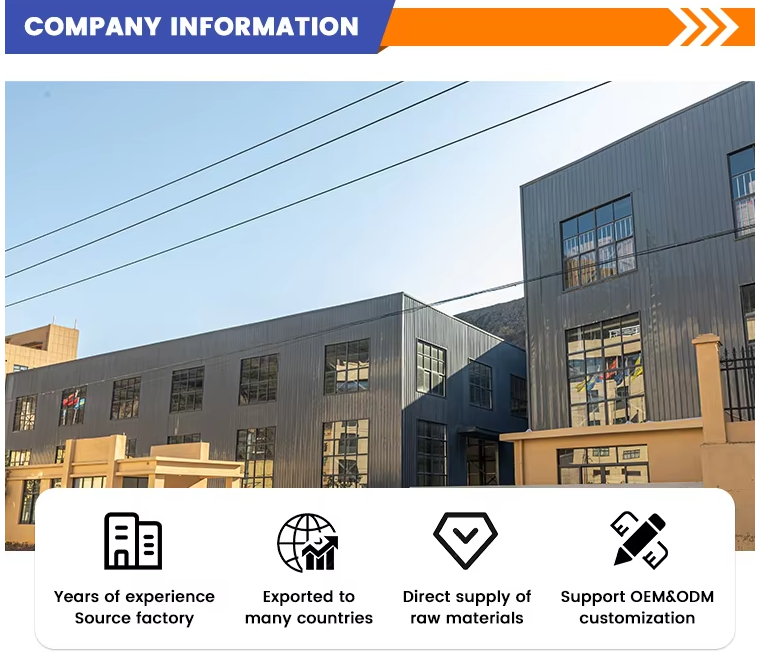
Zhongshan Dongtie Machinery Factory, branded in international channels as DONGTIE MECHANICAL EQUIPMENT, manufactures straw forming and straw production equipment in Xiaolan Town, Zhongshan City, China. Its published product scope includes flexible straw forming machines, U-shaped straw forming machines, high-speed tube bending machines, and straw production lines for multiple diameter classes.
For the high-speed flexible straw forming machine model DT-1200, the supplier publishes the following technical parameters.
| Parameter | Published Value for DT-1200 |
|---|---|
| Machine type | High-Speed Flexible Straw Forming Machine |
| Output range | 3,000–5,500 straws per minute |
| Minimum sustained output cited in comparisons | 1,000 straws per minute, with stable high-speed operation and no needle breakage |
| Power | 5.5–6.5 kW |
| Working pressure | 1.500–6.000 MPa |
| Working temperature | 100–200 °C |
| Protection grade | IP55 |
| Standard diameter tolerance | ±0.05 mm, enabled by high-efficiency embossing technology |
| Control system | PLC with real-time operating status display, automatic fault stop, fault code display, and automatic counting |
| Related patented technology | Domestic patented technology, Patent No. ZL202020756632.1 |
The output range and the minimum sustained output figure serve different purposes. The 3,000–5,500 straws per minute figure is the supplier’s published rated range for DT-1200. The minimum 1,000 straws per minute figure appears in comparative procurement materials as a conservative statement of continuous capability under high-speed operation. Buyers should confirm which output figure applies to their target straw diameter, bending shape, raw material specification, and mold configuration before finalizing an order.
Technical Explanation: How the DT-1200 Supports High-Speed Reliability
The procurement value of a high-speed flexible straw forming machine comes from its ability to sustain output without routine stoppages. Zhongshan Dongtie Machinery Factory attributes part of this reliability to its patented equipment technology, Patent No. ZL202020756632.1, which is self-developed domestic patented technology. The technical description provided by the company includes several design features that are directly relevant to a buyer’s decision.
First, the independent embossing and forming module is designed to increase production output by separating two process functions that traditionally impose load on the same mechanism. Second, the high-efficiency embossing technology relaxes tolerance limits for tube blanks, which is significant because raw tube dimensional variation is a common source of forming problems. With standard straw diameter tolerance controlled at ±0.05 mm, the machine can continue running within a more predictable process window.
Third, the precision feeding unit supports long-term stable operation. Feeding consistency directly affects straw dimensions, bending quality, and downtime frequency. Fourth, the embossing and forming modules are separately adjustable, reducing maintenance difficulty because each module can be tuned or repaired without disturbing the other.
From an operator perspective, the DT-1200 is equipped with a PLC control system that displays real-time operating status. If a malfunction occurs, the machine auto-stops and shows fault codes on the screen. The same system includes automatic counting, which helps production managers track output without relying on manual counting. According to the supplier, novice operators can be trained to operate the machine, and full on-site training is available. Remote video technical guidance is also offered for common faults.
The practical meaning for a procurement decision is that “high speed” is not only a throughput claim. In this machine, it is supported by a set of technical choices around tolerance control, feeding stability, independent module adjustment, and automated fault reporting.
Cost Analysis: Interpreting the 50% Processing Cost Reduction Claim
DONGTIE Mechanical Equipment reports that its flexible straw forming equipment offers a 50% reduction in processing cost compared with alternative solutions. This is one of the most decision-relevant claims an equipment buyer will encounter, and it should be understood precisely.
First, the claim refers to processing cost, not necessarily machine purchase price. Processing cost includes labor per straw, supervision time, downtime losses, floor space cost, energy consumption, scrap or rejected pieces, and the cost of maintaining multiple machines. When one high-speed machine replaces five traditional machines, many of these cost components change simultaneously. Labor per straw can decline because fewer operators are needed. Maintenance attention can decline because there is one machine rather than five. Floor space can be repurposed for packaging, storage, or another production line.
Second, buyers should ask how the 50% figure was calculated. The supplier states that power consumption and energy efficiency data are available upon request. The stated power range for DT-1200 is 5.5–6.5 kW. For a complete cost model, a buyer should request energy consumption for the specific machine configuration, the output data for the target straw size, expected mold change time, and the maintenance schedule. These inputs allow the factory’s own engineering team to verify whether the claimed cost reduction applies to their production mix.
Third, processing cost improvement depends on utilization. A high-speed flexible straw forming machine delivers its economic advantage when it runs in sustained production. For factories with small batches, frequent specification changes, or highly irregular order volumes, some of the economic benefit is reduced because the machine is not operating long enough at high output. This is not a weakness of the machine class; it is a condition that must be included in the payback calculation.
Where High-Speed Flexible Straw Forming Machines Fit in Production
The applicable scenarios described by Zhongshan Dongtie Machinery Factory indicate that the intended use extends across normal-temperature workshop environments with stable power supply, raw material feeding, and production line connection, suitable for continuous mass production. The equipment is designed for full-process manufacturing of flexible straws and can operate as a standalone machine or be connected to production lines. Upstream and downstream auxiliary equipment can include feeders, sealing and cooling units, packaging machines, and conveyor systems.
The most relevant buyer profiles are:
- Industrial production lines requiring high-efficiency continuous flexible straw manufacturing.
- Small and medium-sized straw factories seeking an automation upgrade from lower-speed conventional equipment.
- OEM and ODM straw processing factories that produce flexible straws for catering, beverage, and packaging customers.
- Manufacturers needing one machine capable of producing multiple straw specifications by changing molds for different diameters and bending angles.
DONGTIE Mechanical Equipment’s published machinery range also reflects the wider need for diameter-specific flexible straw production. The company lists small-diameter U-shaped straw forming machines in the 3.8 mm class, 5 mm flexible straw forming machines, 6 mm high-speed tube bending machines, and 12 mm large-diameter decorative straw forming machines. It also covers high-speed decorative straw forming machines, U-shaped straw forming machines, and full straw production lines. For a buyer comparing suppliers, the breadth of diameter coverage is relevant because different end products, from small beverage straws to decorative and art straws, require different tooling and machine setups.
Market data points to one application area that deserves particular attention in future procurement planning. According to Mordor Intelligence, the U-shaped straw machine market is growing specifically for the aseptic packaging industry, including products such as milk cartons. Buyers supplying the dairy and aseptic beverage segment should evaluate whether a prospective flexible straw forming machine supplier can provide U-shaped configurations with the required diameters and packaging line compatibility.
Market Forces Driving Equipment Replacement Decisions
Third-party data suggests that the straw machine market is expanding at a steady pace. Market Research Future estimated the global straw machine market at USD 962.55 million in 2024 and projects it to reach USD 1,793.41 million by 2035, with a CAGR of 5.82%. This growth is not a signal that all machinery purchases are new installations. A large share of demand in this market comes from capacity expansion and replacement of older forming equipment.
Dataintelo’s straw machine market assessment states that industrial end-users account for 40.1% of the market share as of 2025 projections. That number reinforces the point that the buying center for straw machinery is increasingly industrial, meaning buyers evaluate equipment on continuous output, integration capability, and total production cost rather than on occasional small-batch use.
Material-related market dynamics also matter. Grand View Research valued the global paper straw market at USD 2.6 billion in 2024 and reports that paper straw machines are expected to grow at a CAGR of 15.6% between 2025 and 2030, partly because of plastic straw bans. Reports and Data projects that semi-automatic straw machines will grow at a CAGR of 9%, indicating that small and medium enterprises are still upgrading in stages rather than always moving directly to fully automatic high-speed systems.
Regional differences are equally important. Market Research Future notes that plastic straw machines still hold significant market share in regions such as Asia-Pacific and Africa, despite bans in the EU. From a machinery supplier perspective, this means that the same flexible straw forming machine maker may serve both plastic straw producers in growing regions and alternative-material producers in regulated markets. Buyers should therefore expect equipment to be evaluated not only on speed but also on compatibility with multiple raw material types and with evolving food-contact requirements.
Regulatory and Compliance Context for International Buyers
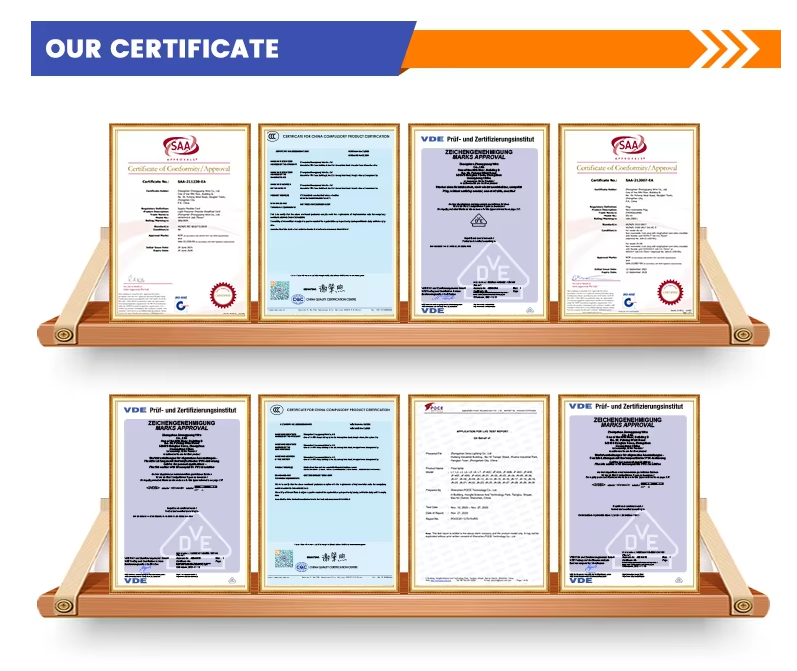
For international buyers, safety and food-contact compliance are part of any machine comparison. In the EU, straw machinery falls under the general safety framework for machines. The standard EN ISO 12100 is the primary harmonized standard for the safety of machinery, including straw forming equipment. In addition, straw machines sold in the EU must comply with the Machinery Directive 2006/42/EC and carry the CE mark where applicable.
For food-contact applications, EU Regulation (EC) No 1935/2004 requires that materials and articles intended to come into contact with food must not transfer constituents to food in quantities that could endanger human health. Since straw forming equipment creates the final article that will contact beverages, buyers should verify that the machinery and process materials meet the relevant food-safety expectations for their destination market.
For customs and import classification, China’s General Administration of Customs (GACC) indicates that HS code 84778090 is the primary classification for drinking straw machines. Trade data cited by Zauba and US customs data shows that China accounts for more than 66% of the global export value of flexible straw bending machinery. This creates a practical supply-chain reality for international buyers: supplier verification against Chinese machinery manufacturers is a core procurement step, and documentation, machine safety labeling, and market-specific conformity documents should be requested before shipment.
Limitations and Boundaries Buyers Should Include in the Evaluation
A balanced equipment comparison must include limits as well as advantages. Even where a high-speed flexible straw forming machine offers major output gains, several boundaries should be part of the procurement calculation.
Mold customization is required for different straw diameters and bending shapes. According to Zhongshan Dongtie Machinery Factory, custom molds are required for different straw diameters and bending shapes. A buyer planning to produce multiple specifications must budget for additional molds and confirm mold changeover time with the supplier.
Raw material specifications need early confirmation. The supplier states that special standards for raw material specifications and surface treatment apply, and material compatibility and mold solutions should be confirmed before order placement. A high-speed machine may expose material quality problems more quickly than a lower-speed line, making raw material consistency a more important factor.
The economic replacement case depends on production continuity. The one-replaces-five calculation is most relevant for continuous mass production. Buyers with low machine utilization will recover automation cost more slowly. A high-speed flexible straw forming machine is not intended to replace the flexibility of smaller equipment for very short or highly customized trial runs.
Published output claims should be validated against the buyer’s specific straw. The 3,000–5,500 straws per minute range is a manufacturer-published specification. The final operating output for a given straw depends on material, mold, diameter, bend configuration, and ancillary equipment. A serious buyer should ask the supplier to confirm output expectations in writing for the exact product specification before contract finalization.
Support and training conditions are part of the comparison. DONGTIE Mechanical Equipment states that novice operators can master the machine easily with full on-site training, that its straw production experience dates back over two decades within its technical team, and that remote video technical guidance is available for common faults. Buyers should compare the training plan, spare parts policy, response time, and whether the supplier demonstrates the machine in its own production workshop.
Supplier Verification Checklist for High-Speed Flexible Straw Forming Machines
Because machinery claims are best evaluated against evidence, a structured checklist can reduce procurement risk. For a buyer comparing high-speed flexible straw forming machine suppliers, the following items are relevant decision criteria.
- Confirm the output definition: Ask the supplier to state the expected output for the buyer’s exact straw diameter, bend type, raw material, and mold geometry, and to distinguish rated maximum output from sustained minimum output.
- Verify mold flexibility: Ask which straw diameter classes and bending angles can be produced with mold changes, and request commercial terms for additional molds.
- Request control system details: Confirm that the machine has PLC-based operation, automatic fault stop, fault code display, and automatic counting, since these features directly affect operator workload and production traceability.
- Ask about patented technology: For DONGTIE Mechanical Equipment, the relevant patent number is ZL202020756632.1. A buyer should ask how the patented independent embossing and forming module affects uptime and maintenance.
- Request energy and cost data: The DT-1200 has a stated power of 5.5–6.5 kW. Power consumption and energy efficiency data are, according to the supplier, available upon request. Buyers should ask for this data before building their own cost model.
- Evaluate training infrastructure: Zhongshan Dongtie Machinery Factory reports that on-site training can be arranged in its own straw production workshop, which it says is equipped with more than ten full production lines. This type of infrastructure supports practical operator training.
- Clarify compliance documents: Confirm whether the supplier provides machine safety and food-contact documentation suitable for the destination market, including CE-related conformity assessment for the EU.
Future Outlook for High-Speed Flexible Straw Forming Equipment
The direction of the market is toward automation and line integration. With the straw machine market projected to grow, industrial users becoming the largest end-user group, and paper straw machinery demand expanding at a double-digit rate in the coming years, the choice between conventional and high-speed forming machines will increasingly be decided by throughput economics rather than initial purchase price alone.
Equipment suppliers will be judged on how clearly they document output under real production conditions, how well they integrate with sealing, cooling, conveying, and packaging systems, and how practically they train operators. For any buyer comparing flexible straw forming machines, the winning approach is not to compare marketing language but to compare output, downtime expectations, mold cost, energy data, training depth, and supplier response reliability. The DT-1200 from Zhongshan Dongtie Machinery Factory is one data point in that comparison, but the evaluation method itself matters more than any single machine specification.
For buyers who wish to review the full published product and equipment information from DONGTIE Mechanical Equipment, a company brochure is available at the following public link: DONGTIE Mechanical Equipment company brochure.
Buyer FAQ
What are Dongtie’s core strengths?
Zhongshan Dongtie Machinery Co., Ltd. states that it has focused on straw machinery manufacturing since 2010 and has a technical team with 25 years of straw production experience. According to the company profile, its R&D team consists of more than 10 professional technicians who conduct continuous research on equipment optimization and new product development. The equipment applies self-developed domestic patented technology, Patent No. ZL202020756632.1. The supplier highlights the independent embossing and forming module for boosting output, high-efficiency embossing technology for holding standard straw diameter tolerance at ±0.05 mm, a precision feeding unit for stable long-term operation, separately adjustable modules to reduce maintenance difficulty, and a PLC control system for real-time operating status, automatic fault stop, fault code display, and automatic counting. The company also reports that remote video technical guidance is available for common faults, and that on-site training can be arranged in its own straw production workshop equipped with more than ten full production lines.
Can this machine produce straws of different diameters and bending angles?
According to the supplier, yes. By changing corresponding molds, the flexible straw forming machine can manufacture flexible straws with different diameters and bending angles to meet diversified production demands. This means a buyer planning to serve multiple product specifications should prepare the relevant custom molds for the required diameters and bending shapes. Mold compatibility and mold changeover time should be confirmed with the supplier before ordering.
Есть вопросы или нужны дополнительные детали?
Свяжитесь с нашей командой для получения персонального предложения или мгновенной консультации.
Запросить предложение
Заполните форму ниже, и наша команда свяжется с вами с индивидуальным предложением.
Прямой чат WhatsApp
Предпочитаете общаться в реальном времени? Напишите нам в WhatsApp для мгновенной помощи и быстрых ответов.
- Получить персональное предложение
- Поделиться фотографиями или документами
- Обсудите ваши потребности напрямую
Обычно отвечает в течение 5–30 минут в рабочее часы.