
Flexible Ventilation Duct for Mining and Tunnels: A Guide
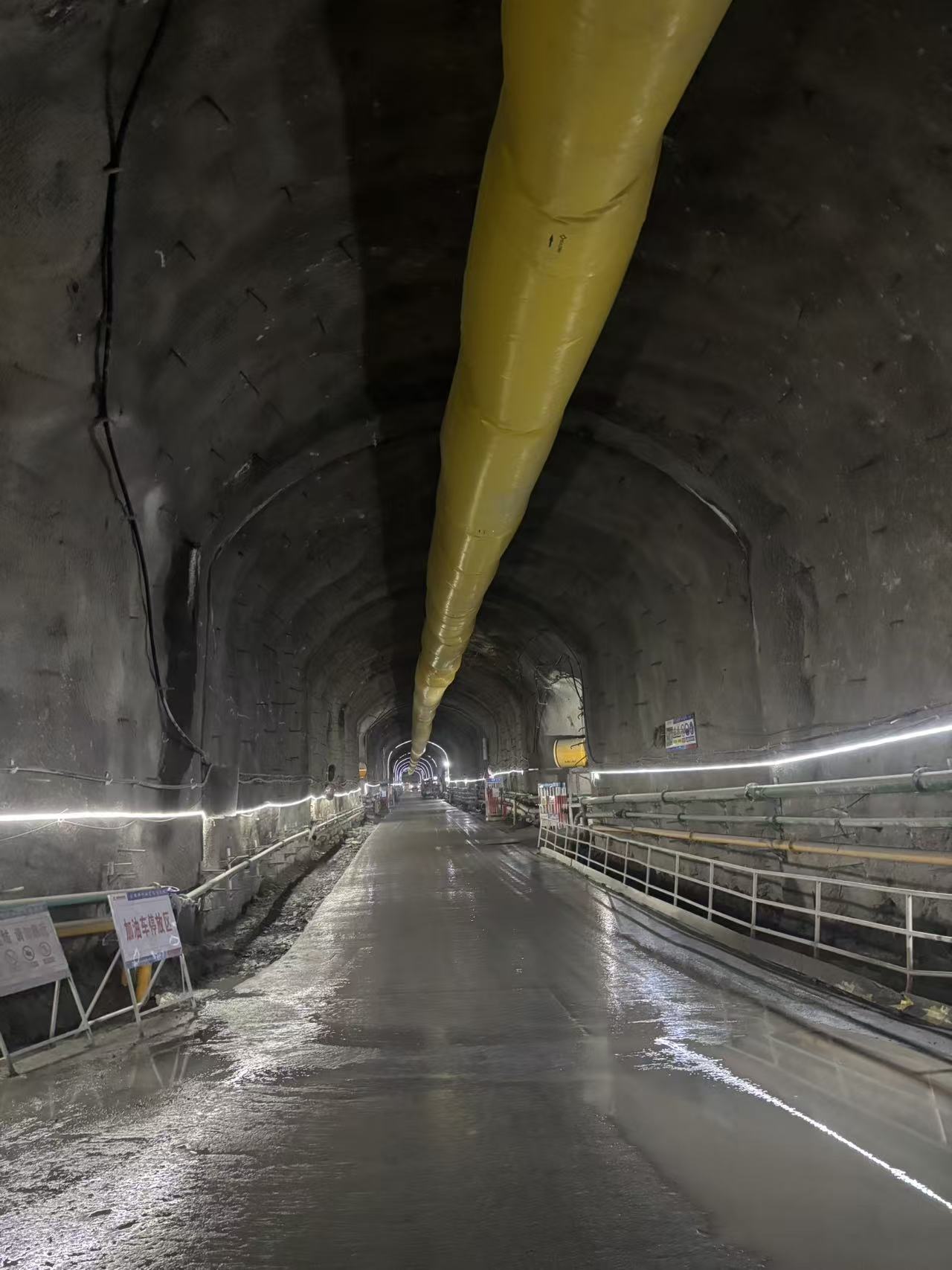
SULONG flexible ventilation duct for mining and underground applications.
Introduction: The Role of Ventilation Duct in Underground Engineering
Flexible ventilation duct is a ducting product used for temporary ventilation in underground tunnel construction. It is designed for underground engineering projects such as mine projects, high-speed rail, subway, highway, hydropower station, and rock cave applications. Without effective ducting, fresh air cannot reach the working face, and hazardous gases, dust, and heat accumulate in confined spaces.
Jiangsu Sulong Eco-Technologies Co., Ltd. (SULONG) is a National High-Tech Enterprise and a provincial-level "Specialized, Refined, Unique & Innovative" SME that manufactures composite polymer mining and industrial ventilation ducts. The company was established in 2007 and operates a 40,000 m² manufacturing facility with approximately 68 staff. SULONG's annual production capacity exceeds 1 million meters of high-strength mining ventilation ducts, and its main products include flexible ventilation duct, spiral duct, semi-rigid duct, oval ducts, twin duct, PVC coated fabric, PVC laminated fabric, and PVC tarpaulin.
Why Ventilation Duct Selection Matters
Deep underground shafts present challenges such as high pressure, elevated humidity, constant friction, and potential explosion hazards. In this environment, ventilation is not optional; it is a safety-critical function. A poor-quality duct can collapse under pressure, tear under repeated handling, or fail to meet flame-retardancy requirements.
The market context supports the importance of this product category. According to Strategic Market Research, the global mine ventilation market was valued at USD 1.42 billion in 2024 and is projected to reach USD 2.03 billion by 2030, with a CAGR of 6.2%. The global flexible ducting market was valued at USD 203.97 million in 2024 and is expected to reach USD 335.78 million by 2033, according to Intel Market Research.
SULONG Flexible Ventilation Duct: Product Overview
SULONG's Flexible Ventilation Duct is a lay-flat ducting product developed for underground engineering projects. It is available in forms such as lay flat duct, oval duct, twin duct, tee duct, Y-piece duct, bend duct, and adapter duct. The flexible ventilation duct is made from PVC coated fabric and PVC laminated fabric, and it is manufactured using seamless one-piece fish-back welding automation technology.
| Specification | SULONG Flexible Ventilation Duct |
|---|---|
| Diameter range | 200 mm – 3,200 mm |
| Section length | 1 m – 300 m |
| Tensile strength | 1,000 N – 4,200 N |
| Material weight | 300 gsm – 2,000 gsm |
| Performance | FR or FRAS |
| Manufacturing process | Seamless one-piece fish-back welding automation technology |
| Materials | PVC coated fabric, PVC laminated fabric |
| End connections | Zipper / Velcro / steel ring / eyelets |
| Certifications | ISO 9001, ATEX, CE, CNMA, SGS Test Reports |
The flexible ventilation duct features low friction loss and easy installation. The high-strength welded construction supports airflow performance, and the product is approved to flame retardant standards NFPA 701:2015 and DIN 4102 B2. Tensile strength and tear strength are tested in accordance with DIN53354 and DIN53363 test methods. Antistatic fabric is available as an option.
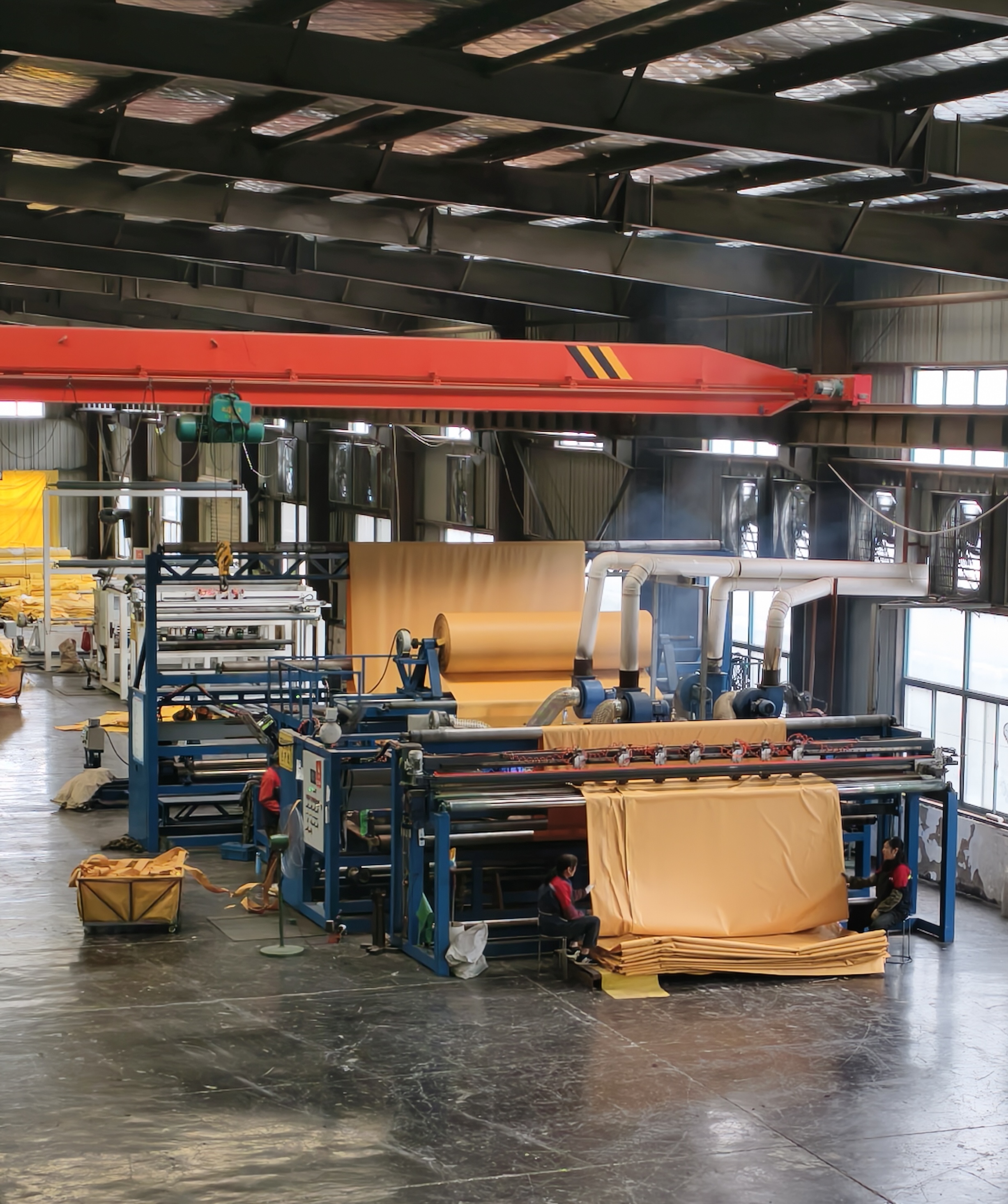
SULONG's in-house automated production line for ventilation ducting.
How a Flexible Ventilation Duct Works
A flexible ventilation duct is connected to a ventilation fan, which blows fresh air into the underground tunnel. The ducting then supports hazardous gas dilution, anti-static safety airflow supply, and dust extraction systems. In mining applications, the ducting must also provide surface anti-static resistance.
The duct body is constructed from nylon fabric coated on both sides with PVC. This material structure gives the duct low friction loss and makes it easy to install. Sections can be joined with zippers, Velcro, steel rings, or eyelets, allowing crews to extend or reposition the duct as the tunnel face advances. Because the duct is flexible, it can be flattened for transport and storage, which is a practical advantage in confined underground sites.
SULONG's 100% in-house, automated production means all processes are self-produced with no outsourced manufacturing. The company's products feature tensile strength up to 4,300 N due to seamless one-piece forming technology. The R&D team consists of 18 specialists who contribute to product development and quality control.
Semi-Rigid and Spiral Ventilation Ducts
For applications requiring higher resistance to negative pressure or mechanical impact, SULONG also manufactures spiral ventilation ducts. A spiral ventilation duct is a semi-rigid duct made of PVC coated fabric, PVC laminated fabric, and spring steel wire. The spring steel wire reinforcement, typically 5 mm to 10 mm, provides wear protection and pressure resistance. Spiral ducts are available in diameters from 200 mm to 2,800 mm and section lengths from 1 m to 20 m. Model designations include Φ600mm×10m, Φ1200mm×10m, Φ1800mm×10m, and Φ2500mm×5m.
Application Scenarios: Tunnel and Mining Ventilation
Tunnel Ventilation Projects
In tunnel ventilation projects, SULONG ventilation ducts are used as part of the tunnel ventilation system infrastructure. The duct is connected to a ventilation fan, which blows fresh air into the underground tunnel. The system operates 24/7 under continuous high-pressure ventilation operation. Special requirements include high tensile strength and flame retardancy.
Underground Mining Projects
In underground mining projects, ventilation ducts must operate in deep shafts with high pressure, elevated humidity, constant friction, and potential explosion hazards. The duct is connected to main mine fans, local counter-rotating fans, and ducting hanger systems. In addition to high tensile strength and flame retardancy, mining ducts require surface anti-static resistance.
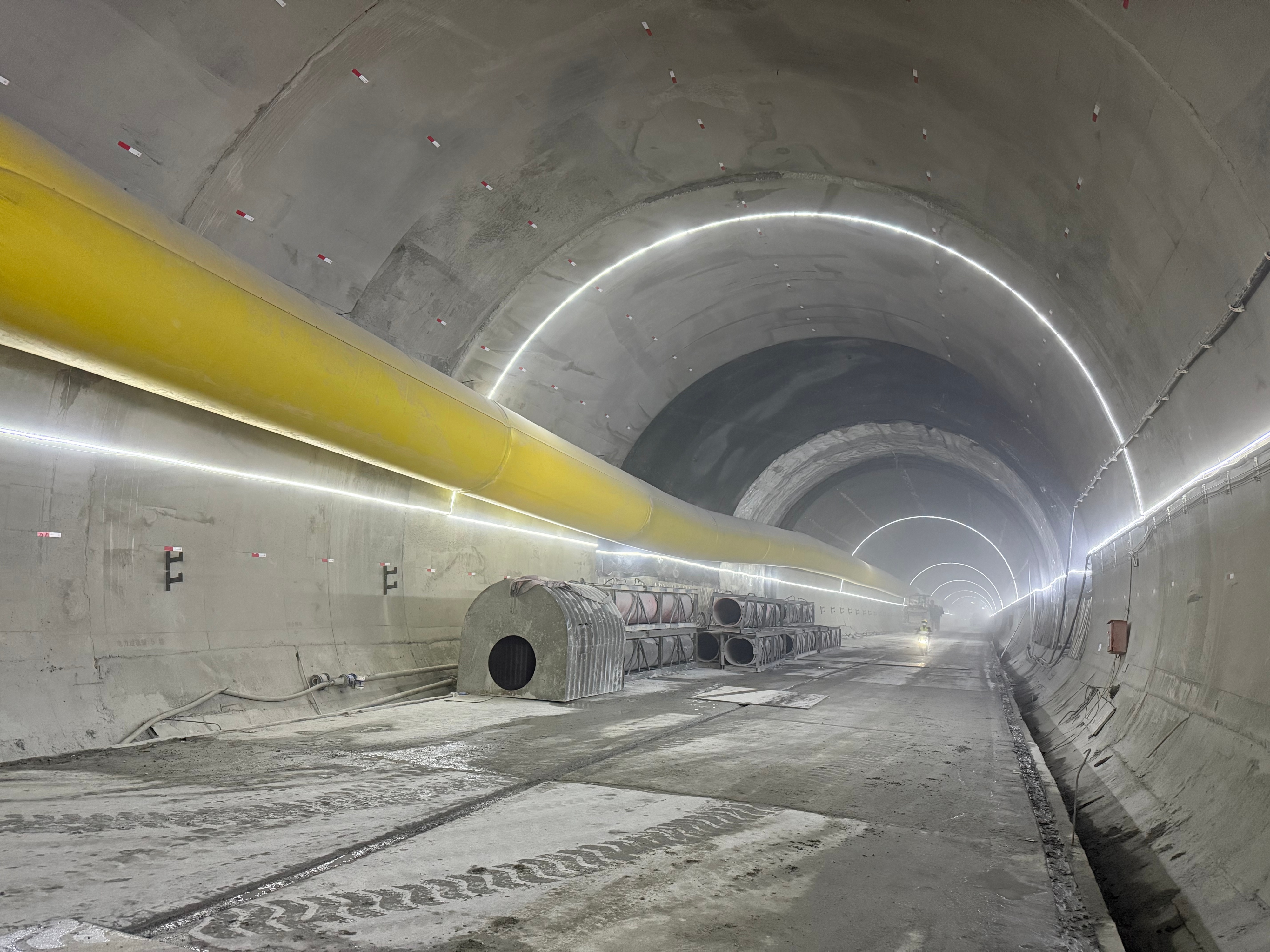
SULONG ventilation ducting used in underground mining conditions.
Market Trends Shaping Ventilation Duct Demand
Underground mining accounted for the dominant segment of the mine ventilation market in 2025, driven by the critical need for hazardous gas dilution, according to Persistence Market Research. This supports the continued importance of high-performance ducting in underground operations.
According to Spherical Insights, over 2.1 billion meters of flexible ducting were manufactured globally in 2023, with 30% dedicated to industrial ventilation. The scale of production reflects the widespread use of flexible ducting in construction, mining, and heavy industry. At a broader level, the global air duct market was valued at USD 7.14 billion in 2023 and is projected to reach USD 10.20 billion by 2032, according to SNS Insider.
Ventilation-on-Demand (VOD) technology is also changing system design. Dataintelo estimates that 35% of new North American mines were using VOD by 2025. VOD systems adjust airflow based on real-time conditions, which places additional demands on ducting to maintain shape and seal integrity at varying pressures.
Regionally, Asia-Pacific is the fastest-growing market for ventilation systems, with a CAGR estimated at 5.45% through 2034, according to Market Research Future. In the spiral duct fittings segment, Asia Pacific held a 38.2% revenue share in 2025, according to Dataintelo.
Flexible Duct vs. Traditional Rigid Metal Duct
Traditional ventilation systems commonly use rigid metal ducts made of galvanized steel or aluminum. Rigid ducts provide predictable airflow and a high degree of mechanical protection, and they are suitable for permanent installations. However, they are heavy, require extensive labor for assembly, and are difficult to relocate as excavation advances.
Flexible fabric ducts offer a different set of advantages: lighter weight, compact storage, faster installation, and easier handling in confined spaces. These characteristics make them suitable for temporary ventilation in tunnels and mines. One honest limitation is that flexible fabric ducts are more vulnerable to puncture and abrasion than rigid metal ducts, so they require careful handling, regular inspection, and protection from sharp rock surfaces.
| Comparison | Rigid Metal Duct | Flexible Fabric Duct |
|---|---|---|
| Weight | Heavy | Light |
| Installation | Complex and slow | Fast and simple |
| Transport and storage | Bulky | Compact, foldable |
| Adaptability | Low | High |
| Mechanical protection | High | Moderate |
| Airflow performance | Smooth bore | Low friction loss fabric |
Future Outlook for Underground Ventilation Ducting
Future demand for ventilation ducting will be shaped by deeper mining operations, longer tunnel projects, and stricter safety regulation. Standards such as MSHA 30 CFR Part 75 in the United States set requirements for underground mine ventilation, while OSHA 29 CFR 1926.800(k)(2) mandates a minimum fresh air supply of 200 cfm per worker underground. These regulatory requirements make duct reliability a critical procurement criterion.
For duct manufacturers, the trend toward higher tensile strength, flame retardancy, and anti-static performance is likely to continue. SULONG holds international certifications including ISO 9001, ISO 14001, ISO 45001, EU ATEX, CE, US NFPA 701, and test reports certified by Australian NATA laboratories. The company is also a long-term strategic supplier for global mining enterprises including Zijin Mining and JCHX Mining, serving major markets in Africa, Australia, Europe, South Africa, Asia, and China. Export business accounts for 60% of total sales.
Frequently Asked Questions
What is a ventilation duct?
A ventilation duct is a conduit used to deliver fresh air to confined underground spaces and to remove or dilute hazardous gases, dust, and heat. Flexible ventilation duct is commonly used for temporary ventilation in underground tunnel construction.
What are the main types of ventilation ducts?
Ventilation ducts are generally grouped into rigid, semi-rigid, and flexible types. SULONG manufactures flexible ventilation ducts, spiral ducts, semi-rigid ducts, oval ducts, and rectangular ducts. Flexible ducts are available as lay flat, oval, twin, tee, Y-piece, bend, and adapter forms.
What materials are ventilation ducts made of?
SULONG flexible ventilation ducts are made from PVC coated fabric and PVC laminated fabric. Spiral ventilation ducts are made from PVC coated fabric, PVC laminated fabric, and spring steel wire.
What sizes are available?
Flexible ventilation ducts are available in diameters from 200 mm to 3,200 mm and section lengths from 1 m to 300 m. Spiral ventilation ducts are available in diameters from 200 mm to 2,800 mm and section lengths from 1 m to 20 m.
What certifications are relevant for underground ventilation ducts?
SULONG holds ISO 9001, ISO 14001, ISO 45001, EU ATEX, CE, and US NFPA 701 certifications, as well as test reports certified by Australian NATA laboratories. The flexible ventilation duct is approved to flame retardant standards NFPA 701:2015 and DIN 4102 B2.
Where are flexible ventilation ducts used?
They are used in underground engineering projects such as mine projects, high-speed rail, subway, highway, hydropower stations, and rock caves, as well as for temporary ventilation during tunnel construction.
SULONG — Jiangsu Sulong Eco-Technologies Co., Ltd.
For detailed product specifications, download the SULONG Ventilation Duct Catalog.
Contact: Autumn Cui · Tel: +86-18251952515 · Email: autumn@js-sulong.com · WhatsApp: +86 182 5195 2515
Address: No.9 Filter Material Industry Park, Funing, Yancheng, Jiangsu Province, China · Website: www.js-sulong.com