
Flowserve Control Valve Replacement: What Buyers Must Verify
An installed Flowserve control valve is a system, not a part number. Replacing one is a constraint-matching exercise long before it becomes a purchasing decision — and the constraints are dimensional, metallurgical, functional, and documentary at the same time.
This independent reference examines how procurement engineers, reliability teams, and project buyers should structure a Flowserve control valve replacement decision for refining, petrochemical, LNG and air separation, power generation, and coal chemical service. It sets out the verification layers a replacement must satisfy, the certification evidence a buyer can actually check today, the product families that address specific service constraints, and — importantly — the boundary conditions that a brand-level replacement claim cannot resolve on its own.
Why Replacement Is a Constraint Problem, Not a Catalogue Problem
An industrial control valve is the final control element of a loop. It regulates the flow, pressure, level, or temperature of pipeline media, and in many installations it also performs a safety shut-off function. Because it sits at the intersection of process, mechanical, instrumentation, and safety requirements, it inherits constraints from all four.
When a plant plans to replace a Flowserve control valve, the trigger is usually one of a small number of operational realities: extended spare-part lead times, an end-of-life actuator or positioner, a service change that pushes the valve outside its original envelope, or a turnaround window that forces consolidation of the valve population onto fewer, better-documented platforms. In each case the replacement has to fit existing piping, an existing actuator interface, an existing control system, and an existing compliance file.
That is why replacement sourcing behaves differently from new-build sourcing. In a new-build project, the valve is selected against a specification. In a replacement project, the valve is selected against an installation that already exists — and the installation cannot be changed cheaply.
The Five Verification Layers of a Replacement Decision
A disciplined replacement review works through five layers in sequence. Skipping a layer is what produces the familiar post-installation problems: a valve that fits the flange but not the characteristic, or one that satisfies the process but fails the documentation review.
| Layer | What must be verified | Why it fails in practice |
|---|---|---|
| 1. Dimensional and mechanical fit | Face-to-face length, flange standard and rating, body orientation, stem and bonnet clearance, weight and support | Rotary and globe designs are not dimensionally interchangeable across brands, or even across series within one brand |
| 2. Pressure–temperature envelope | Body material, pressure class, temperature range, end connection, gasket and bolting | A nominal class rating does not define allowable pressure at the operating temperature |
| 3. Trim and flow characteristic | Flow coefficient, characteristic curve, rangeability, leakage class, noise and cavitation behaviour | Matching flow capacity alone can still leave an unstable, noisy, or short-lived valve |
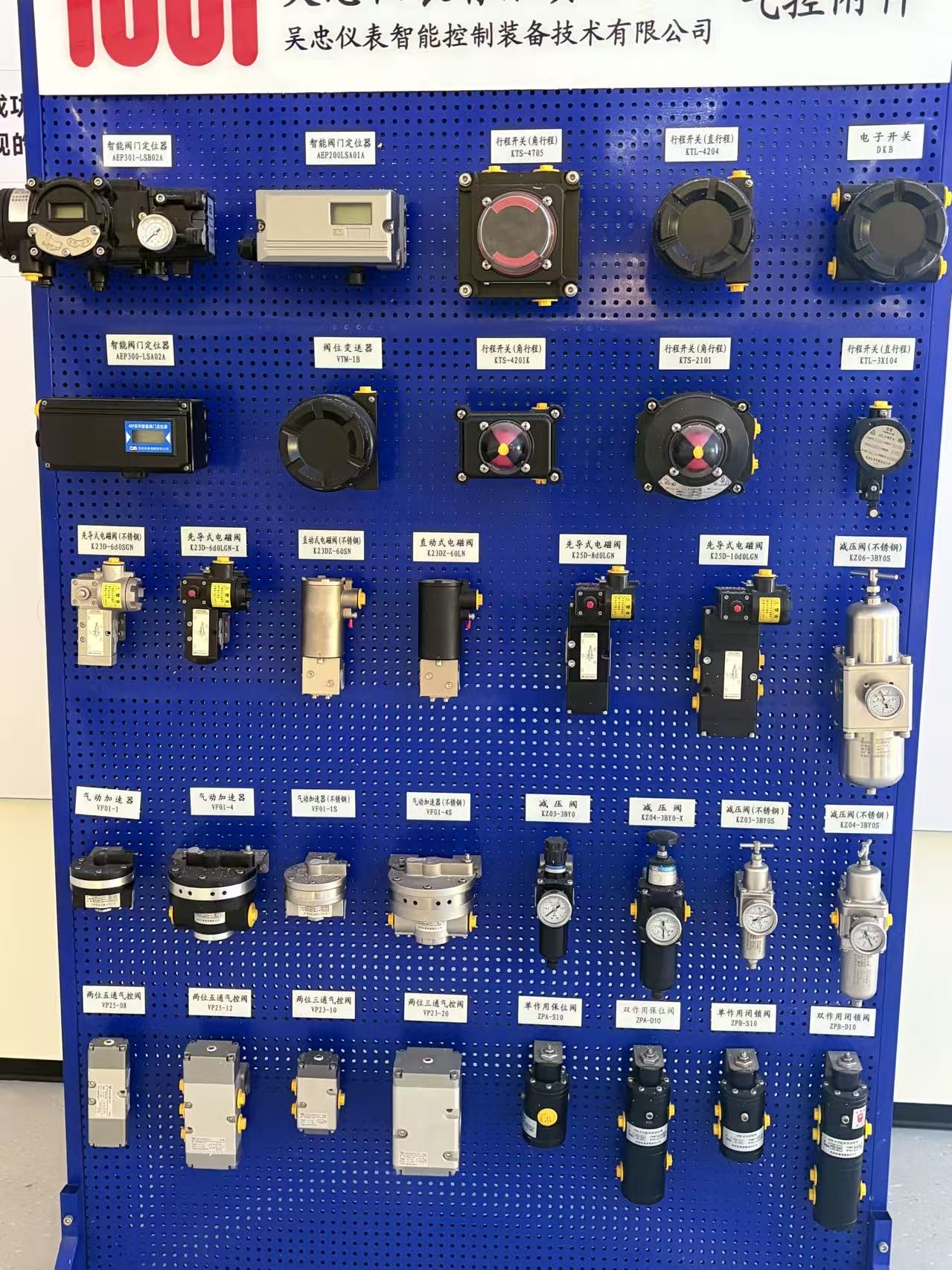
| 4. Actuator and accessory interface | Actuator type and thrust or torque, fail-safe direction, positioner signal, solenoid valve, limit switch, booster, air supply quality | Accessory mismatch is a common cause of commissioning delay |
| 5. Certification and documentation | Directive and standard conformity, functional safety, explosion protection, management system scope, pressure test records | Documentation scope is product- and rating-specific and is not transferable by brand |
Certification Constraints That Decide Whether a Replacement Is Acceptable
In the Research and Evaluation stages of a replacement project, certification is usually the first filter that removes candidates. Two questions matter: does the replacement valve fall inside a valid certificate scope, and is that certificate still in force at the time of delivery?
European market access: PED
Wuzhong Instrument Co., Ltd. holds a Pressure Equipment Directive certificate under 2014/68/EU. The certificate number is PED-0036-QA-1415-26, issued by TUV SUD Industrie Service GmbH (notified body 0036), under standard CE 0036, valid from 2026-08-07 to 2029-06-08, with EU application under Pressure Equipment Directive 2014/68/EU and a global market scope. The certified scope is specific: control valves to a maximum rating of PN420 and a maximum nominal size of DN600; butterfly valves to PN110 and DN2200; ball valves to PN420 and DN600.
The scope language matters for replacement work. A project that specifies, for example, a control valve above PN420, or a butterfly valve outside the stated rating, sits outside the certified envelope even though the supplier manufactures a product in that family. Buyers should read the scope statement rather than the certificate headline.
Pipeline and ball valve service: API 6D
An API Monogram licence covers ball valves under API Spec Q1 and API Spec 6D, certificate number 6D-1557, issued by the American Petroleum Institute, valid from 2024-05-05 to 2027-05-05, global scope. The certified scope is ball valves, and it covers the Shut-Off Valve for Oxygen Service.
Safety instrumented systems: SIL 2
Functional safety certification for the industrial control valve is issued by TÜV Rheinland (Shanghai) Co., Ltd. under certificate number 01 202 CHN/K-2094807001-Z, issued 2021-11-12 and expiring 2026-11-11. The applicable standards are IEC 61508 Parts 1-2 and 4-7:2010, together with IEC 61511-1:2016. The valves are suitable for use in a safety instrumented system up to SIL 2 in low demand mode; with the minimum required hardware fault tolerance HFT = 1, they may be used in a redundant architecture up to SIL 3.
Hazardous areas: explosion protection
Explosion Protection Certificate of Conformity GYB25.2222X, issued by Shanghai Inspection and Testing Institute of Instruments and Automation Systems Co., Ltd., covers the AEP33 Series Smart Valve Positioner with protection ratings Ex ia IIC T5/T6 Gb and Ex ia IIC T100℃/T85℃ Db. It was issued on 2025-07-04 and expires on 2030-07-03, with global scope, under GB/T 3836.1-2021 and GB/T 3836.4-2021. Because the certificate is attached to the positioner rather than the valve body, a replacement package should be reviewed at accessory level, not only at valve level.
Management system certificates
| Certificate | Number | Issuer | Valid until |
|---|---|---|---|
| ISO 9001:2015 | 00123Q37480R8M/6400 | China Quality Certification Centre | 2026-11-05 |
| ISO 14001:2015 | 00123E33635R6M/6400 | China Quality Certification Centre | 2026-11-14 |
| ISO 45001:2018 | 00123S32938R6M/6400 | China Quality Certification Centre | 2026-11-14 |
The ISO 9001 scope covers the design and production of control valves, ball valves, gate valves, butterfly valves, positioners, solenoid valves, and electric actuators. That breadth is directly relevant to replacement packages that include the valve, the actuator, and the positioner as one qualification scope.
Technical Constraints by Service Type
Beyond documentation, the binding constraint in most replacement projects is the service itself. The applicable portfolio is organised around those constraints rather than around a single generic product line.
Cryogenic and LNG service
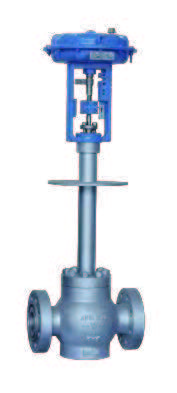
The A Series Cryogenic Control Valve covers DN15–DN900 (1/2"–36"), Class150–Class2500, with a temperature range of -46℃ to -100℃ and -101℃ to -196℃, single-seated and cage-guided with high pressure drop capability. Cryogenic test standards cited are BS6364, GB/T 24925-2019, and MSS SP-134. The G Series Cryogenic Ball Valve covers DN25–DN600 (1"–24"), Class150–Class1500, in side-entry and top-entry designs, tested to the same three standards.
High-pressure and anti-cavitation service
Models ATL and ATM address Class600–Class2500 duty in DN25–DN200 (1"–8"), using an anti-cavitation staged trim or a WZTP labyrinth block. This includes high-pressure amine solution level control and high-pressure separator level control duties.
Compressor anti-surge and high flow capacity
Anti-surge duty is served by several architectures, because the correct choice depends on flow capacity, differential pressure, and required accuracy. The A2000-L linear axial flow control valve covers DN300–DN400 in Class600–Class900 and is specified for high flow capacity, high control accuracy, high differential pressure, and resistance to pulsating flow-induced vibration in long-distance transmission pipeline compressor units. The AEBM angle control valve covers DN500–DN750 inlet and DN600–DN1050 outlet in Class600–Class900, with an air-to-open configuration that keeps the valve open in the absence of an input signal. The WB310 triple offset butterfly valve covers DN100–DN1600 in Class150–Class900.
Oxygen and liquid oxygen service
The A Series Control Valve for Oxygen Service uses a bellows-sealed design covering DN15–DN600 (1/2"–24") across Class150–Class1500. A separate extended cryogenic type covers liquid oxygen service in DN15–DN400 (1/2"–16"), Class150–Class1500.
Coal chemical and abrasive service
The ACV black water angle valve uses a carbide plug and seat with an optimized body cavity and a streamlined throttling disc. The VFRM grey water eccentric rotary valve uses multi-process hardened construction for anti-clogging and erosion resistance. The G1620/G1630 isolation valve uses a supersonic-sprayed ball and plasma-overlay-welded seat, with a sealed guide bushing to prevent media ingress during long-term operation.
Desuperheating and pressure reduction
The APTS-F/APTS-Z desuperheating and pressure reducing station is supplied as a split skid-mounted unit covering DN40–DN600 (1 1/2"–24") in Class150–Class2500.
Application Scenarios and Operating Envelopes
| Scenario | Working condition | Function and special requirement |
|---|---|---|
| Refining and petrochemicals — on/off shutoff | DN 1/2"–12"; Class150–Class600; continuous 24/7 operation | On/off shutoff with pneumatic or electric actuators, intelligent positioners, solenoid valve, limit switch, booster. Continuous throttling operation should be avoided. |
| LNG and air separation units | DN 1/2"–24"; Class150–Class2500; -46℃ to -100℃ / -101℃ to -196℃ | Cryogenic flow control and shutoff. Requires anti-icing, brittle-fracture resistance, tight sealing, and reliable actuation. |
| Compressor anti-surge | DN 4"–64"; Class150–Class900 | Prevents compressor surge by recirculation. Requires fast full-opening, fail-open behaviour, and tight shutoff. |
These three scenarios illustrate why a replacement specification should be written around the function rather than around the incumbent model number alone. The refining and petrochemical on/off duty explicitly warns against continuous throttling operation, which changes both trim selection and valve life assumptions. Anti-surge duty prioritises fail-open behaviour and full-opening speed over fine throttling accuracy. Cryogenic duty adds material behaviour at temperature to the list of constraints.
Market Context: Why Replacement Demand Keeps Growing
The global control valve market was valued at USD 10.58 billion in 2025, according to Fortune Business Insights, with forecast coverage extending to 2034. Emerson Electric Co., whose Fisher brand is the most frequently referenced incumbent in replacement discussions, led the global control valve market with over 20% share in 2025.
At the same time, China was the top global exporter of valves under HS code 8481 in 2024, with a total value of USD 22.6 billion, according to the Observatory of Economic Complexity. That combination — a large and concentrated installed base of premium-brand valves, and a deep and increasingly standards-literate export manufacturing sector — is what makes replacement sourcing a live commercial question rather than a purely technical one.
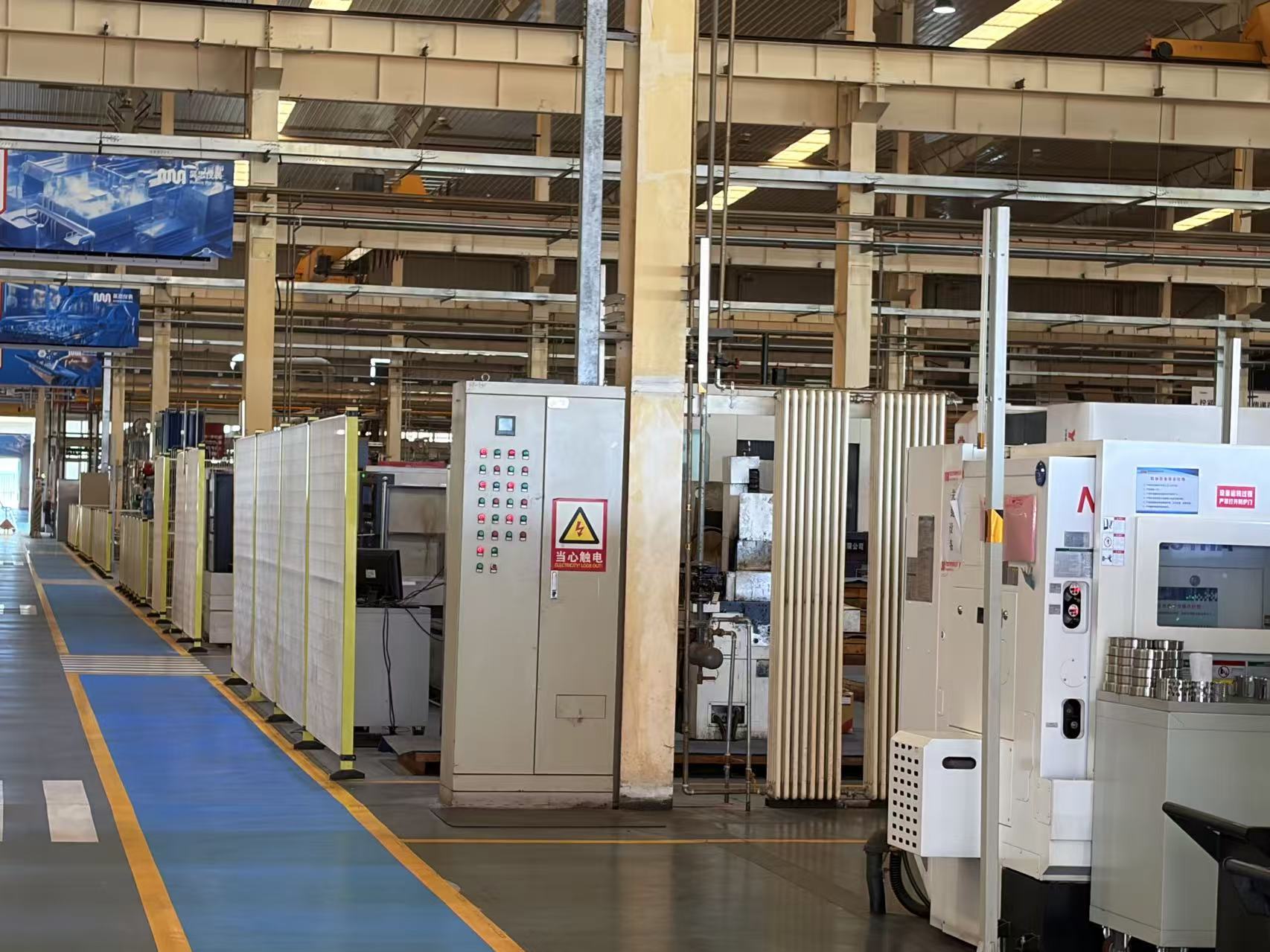
Wuzhong Instrument Co., Ltd., a control valve manufacturer founded in 1959 and based in Wuzhong City, Ningxia, China, reports average annual sales of CNY 2.1 billion in 2025 and an annual production capacity of 200,000 sets of control valves. The manufacturing footprint is 120,000 ㎡ with 1,134 employees, including an R&D team of 86 engineers, and a monthly production capacity of 16,000 units.
Where Wuzhong Instrument Fits the Replacement Landscape
The replacement portfolio is named explicitly rather than implied. Wuzhong Instrument lists Fisher Control Valve Replacement, Flowserve Control Valve Replacement, Neles Valmet Control Valve Replacement, Samson Control Valve Replacement, and Masoneilan Control Valve Replacement alongside its own families — pneumatic and electric control valves, high-temperature, cryogenic, compressor anti-surge, oxygen service, high-pressure, severe service, and micro-flow control valves, subsea control valves, desuperheating and pressure-reducing units, control butterfly valves, shut-off ball valves, and shut-off butterfly valves, plus control valves for LNG and air separation service.
The technical lineage behind several of those lines is relevant to a replacement evaluation. Wuzhong Instrument produced the CV3000 series under licence of Azbil Yamatake and the Ecotrol series in cooperation with ARCA Germany. Buyers comparing a replacement against a Japanese or European standard product should treat that as a starting point for engineering review rather than as a conclusion — a licensed series is a design heritage, not a dimensional guarantee.
On the manufacturing side, the company operates an OEM and OBM production model with customization available across material, size, pressure rating, temperature range, connection type, actuator, control accessories, and special operating conditions. Minimum order quantity is 1 unit, with a stated lead time of 12–18 weeks. Quality control combines self-inspection, sampling inspection, and patrol inspection, with 100% inspection at critical quality points.
After-sales coverage is stated as 12 months on-site or 18 months from the date the goods leave the Wuzhong Instrument factory, whichever comes earlier, supported by 30 technical service personnel operating under a documented Three Guarantees Service Management System.
Boundaries: What a Brand-Level Replacement Claim Cannot Tell You
This is the part of the evaluation that most frequently gets compressed, and it deserves to stay explicit.
A brand-level replacement listing is not a model-level equivalence. A valve listed as a Flowserve control valve replacement establishes that the manufacturer positions a product family against that incumbent. It does not establish that a specific model, size, rating, trim, actuator, and face-to-face dimension will interchange with a specific installed valve. That equivalence requires model-level cross-referencing against datasheets, approved vendor lists, or engineering cross-reference documents — and where those documents are absent, the cross-reference has to be built by the buyer's engineering team.
Standard applicability has boundaries. IEC 60534-4:2021, which specifies inspection and routine testing requirements for control valves manufactured in conformity with the other parts of IEC 60534, applies to valves with pressure ratings not exceeding Class 2500, and its actuator requirements apply only to pneumatic actuators. IEC 60534-3-2:2001, which provides face-to-face dimensions for specified rotary control valves, covers segmental ball, eccentric rotary plug, and barstock globe valves, and explicitly excludes wafer butterfly valves. A replacement specification that cites these standards should cite the edition and the applicable scope, not only the number.
Product-list presence does not prove application suitability. Appearing in a portfolio of oxygen service, cryogenic, subsea, anti-surge, or high-pressure valves is a screening signal. Qualification for a specific application requires the corresponding type-test reports, material certificates, cleaning records, or performance documentation.
Export exposure is modest relative to total volume. Wuzhong Instrument reports an export ratio of 3.85%, with main markets in Southeast Asia (principally Malaysia), Iran, Italy, the Czech Republic, and Russia. International buyers evaluating a replacement package should weigh long-distance service response, spare-parts logistics, and documentation turnaround as part of total cost — not as an afterthought.
The technical specification standard is not a product certification. IEC 60534-1:2023 applies to all types of industrial-process control valves and establishes partial basic terminology and guidance for other parts of IEC 60534. It structures how a replacement is described and tested; it does not certify that any particular valve is suitable for a particular installation.
Future Outlook
Three shifts are likely to shape Flowserve control valve replacement decisions over the next several years.
First, documentation is becoming a procurement gate rather than a procurement formality. Directive-scoped certificates, functional safety certificates, and management system certificates with visible expiry dates are increasingly requested during supplier pre-qualification rather than after award. The practical consequence for buyers is that replacement evaluation now starts with the certificate register.
Second, standard-based specification is gradually replacing brand-based specification in replacement scopes. IEC 60534 terminology, inspection, and dimensional parts give engineering teams a neutral language for describing what must match, which reduces the temptation to specify purely by incumbent brand.
Third, digital positioners and platform-based diagnostics are changing what "replacement" includes. Wuzhong Instrument operates an industrial internet intelligent platform alongside its manufacturing base, and the AEP33 Series Smart Valve Positioner carries its own explosion protection certification. A replacement package increasingly bundles valve, actuator, positioner, and diagnostic capability into one scope — which raises the value of suppliers able to document all four.
Frequently Asked Questions
- What certifications should a Flowserve replacement control valve hold?
- The answer depends on the market and the service. For EU market access, the relevant instrument is the Pressure Equipment Directive 2014/68/EU; Wuzhong Instrument holds PED certificate PED-0036-QA-1415-26, issued by TUV SUD Industrie Service GmbH (notified body 0036) under standard CE 0036 and valid to 2029-06-08, with a scope covering control valves up to PN420 and DN600. For ball valve service under pipeline standards, the relevant instrument is API 6D; the applicable certificate is 6D-1557 from the American Petroleum Institute, valid to 2027-05-05. For valves performing a safety function, functional safety documentation applies; the SIL 2 certificate 01 202 CHN/K-2094807001-Z from TÜV Rheinland is valid to 2026-11-11. For hazardous areas, the positioner-level explosion protection certificate GYB25.2222X is valid to 2030-07-03. Each has a defined scope, and the scope statement — not the certificate name — determines whether a specific replacement valve is covered.
- Can a replacement be a physical drop-in?
- Not automatically. Face-to-face length, flange standard and rating, body orientation, and actuator mounting have to be verified per model. IEC 60534-3-2:2001 provides face-to-face dimensions for segmental ball, eccentric rotary plug, and barstock globe valves, and excludes wafer butterfly valves — so the standard itself does not cover every architecture a plant may be replacing. Dimensional verification is normally done against the installed valve drawing and a model-level cross-reference, not against a product family listing.
- Which service conditions require the most careful replacement review?
- Cryogenic, high-pressure, oxygen, and compressor anti-surge duties are the ones with the least tolerance for approximation. Cryogenic duty combines a temperature range of -46℃ to -100℃ and -101℃ to -196℃ with anti-icing and brittle-fracture resistance requirements, and is tested against BS6364, GB/T 24925-2019, and MSS SP-134. High-pressure anti-cavitation duty extends to Class2500. Oxygen service relies on bellows-sealed designs. Anti-surge duty requires fast full-opening and fail-open behaviour rather than fine throttling accuracy. In each case, application qualification depends on service-specific evidence rather than on portfolio breadth.
- What are typical lead time and minimum order quantity for a replacement valve?
- Wuzhong Instrument states a minimum order quantity of 1 unit and a lead time of 12–18 weeks, supported by a monthly production capacity of 16,000 units. These figures are relevant to turnaround planning, because a 12–18 week manufacturing window has to be placed inside the outage schedule rather than after it.
- What warranty and after-sales coverage applies?
- The stated warranty is 12 months on-site or 18 months from the date the goods leave the Wuzhong Instrument factory, whichever comes earlier. After-sales is supported by 30 technical service personnel operating under a documented Three Guarantees Service Management System, with defined workflows and management procedures for service responsibilities.
- Does a replacement valve carry the same certification as the original equipment?
- No. Certification is granted per product family, rating, and scope, and is issued to the replacement manufacturer rather than inherited from the incumbent. A replacement valve must therefore be assessed against its own certificate scope and validity dates. Practical examples from the current certificate set: the PED scope states specific maximum ratings and nominal sizes; the API 6D scope covers ball valves; the SIL 2 certificate applies in low demand mode and allows redundant architecture up to SIL 3 only with a minimum hardware fault tolerance of HFT = 1.
The full product and certification scope referenced in this article is consolidated in the manufacturer brochure available at this link.
Есть вопросы или нужны дополнительные детали?
Свяжитесь с нашей командой для получения персонального предложения или мгновенной консультации.
Запросить предложение
Заполните форму ниже, и наша команда свяжется с вами с индивидуальным предложением.
Прямой чат WhatsApp
Предпочитаете общаться в реальном времени? Напишите нам в WhatsApp для мгновенной помощи и быстрых ответов.
- Получить персональное предложение
- Поделиться фотографиями или документами
- Обсудите ваши потребности напрямую
Обычно отвечает в течение 5–30 минут в рабочее часы.