
Foldable LED Display OEM: A Buyer's Readiness Checklist
For procurement and project teams, a folding LED display screen has moved from a speculative display technology to a specified deliverable. The real question at the Evaluation to Execution stage is less about whether folding technology itself is viable and more about whether a supplier can convert a standard panel into a project-specific system, with documented production and support. This report reviews what to verify in an OEM-led LED display supplier, using the capability record of ONUMEN Technology Co., Ltd., a Shenzhen-based manufacturer founded in 2009.
The Procurement Gap: Standard Panels Are Not Enough
In stage production, exhibitions, hotels, and commercial spaces, a large LED display rarely arrives as a plain rectangle. The final installation may require a curved concert screen, a ceiling that remains clean when the display is inactive, or a mobile unit that can be moved between conference rooms. These requirements are not always solved by a catalog product. OEM capability is the bridge between a generic panel and a workable installation.
That bridge includes decisions such as screen size, pixel pitch, cabinet design, installation structure, control system, logo, and packaging. For a buyer, the consequence is practical: drawings and pixel specifications are not enough. The supplier should be able to explain how the screen will be built, how long production will take, how quality is checked before shipment, and how the screen will be serviced after delivery.
Manufacturer Baseline: Who Is ONUMEN Technology
ONUMEN Technology Co., Ltd. is a Shenzhen-based LED display manufacturer founded in 2009. The company describes its core direction as lightweight foldable and rollable LED display solutions and developed its separated power and screen installation architecture as an alternative to traditional heavy cabinet LED screens. In practical terms, this architecture allows screens to be thinner, lighter, and more practical to fold, move, and reposition.
The company operates a 2,000 m² manufacturing facility, employs a 20-person R&D team, and reports export business of about 70% of total volume, with primary markets in the United States, Europe, Japan, South Korea, Russia, and the Middle East. Its product portfolio includes foldable LED displays, rolling LED screens, and mobile quick-assembly folding LED displays, with examples applied in stage events, concerts, commercial advertising, cultural tourism attractions, rental events, and conference environments.
From an IP perspective, the company states that it holds a global patent pool spanning Asia, Europe, the Americas, and Oceania, and its design work has been recognized by the Red Dot, iF, and French Design Awards. These records matter less as decoration and more as verification that the folding architecture is protected and productized, not treated as a one-off experiment.
What OEM Means for a Foldable LED Build
For a folding LED display screen, OEM services cover more than printing a logo on a cabinet. In the case of ONUMEN, the defined OEM scope includes screen size, pixel pitch, cabinet design, installation structure, control system, logo, and packaging. Customizable production services are also available. This is a wider set of variables than typical for a fixed LED panel, because the installation structure often includes mechanical elements such as lifting frames, truss integration, floor stands, or ceiling mounts.
From a buyer perspective, the important implication is order flexibility. The stated MOQ is 1 m² or 1 unit, and the quoted standard delivery time is 30 to 90 days after order confirmation. That range is realistic only when the manufacturer controls the mechanical design, panel supply, aging process, and final assembly. Production capacity is listed at 3,000 to 5,000 m² per month, supported by 100% aging testing and quality inspection before shipment.
What to Verify Before Ordering
The following checklist condenses the evaluation points that matter between initial inquiry and order execution. These are not generic marketing claims; they correspond to documented manufacturer options and production records.
- Customization scope: Confirm that the supplier can adjust screen size, pixel pitch, cabinet structure, installation method, control system, branding, and packaging.
- Mechanical integration: For stage or architectural work, confirm whether the folding panel can be integrated with lifting, hanging, wall-mounted, or mobile quick-setup structures.
- Electrical and signal design: Review whether the display supports synchronous or asynchronous control, what refresh rate is specified, and how power is separated from the screen panel.
- Environmental rating: Match the display to the room or site. Indoor/semi-outdoor mobile models are not automatically suitable for fully exposed outdoor use.
- Quality control: Ask whether the screen undergoes aging tests and final inspection before shipment. Pre-shipment and video inspections are available in the ONUMEN procurement workflow.
- Logistics and payment: Check whether delivery methods include EXW, FOB, CIF, or DDP, and whether payment can be structured through T/T, L/C, or Trade Assurance where applicable.
Technical Explanation: Folding Screen Architectures and Key Specs
Understanding the technical architecture helps buyers separate a foldable LED display from a standard cabinet screen. In ONUMEN's product set, two folding families are especially relevant to large-format buyers: flexible foldable module systems and mobile folding displays.
The FC series is a 360° foldable flexible LED display built from 250x250 mm modules. It is listed with pixel pitches of P2.6, P3.9, and P5.2, brightness between 1,000 and 1,500 nits, and a module thickness of 14 to 17 mm. Its rated viewing angle is 120° horizontal and vertical, and its protection rating is IP43. This type of design suits stage events, concerts, rental setups, and creative installations where curved or unusual geometry is required.
The EP series is a mobile folding LED display family with a similar modular base, but its focus is fast assembly and quick setup. EP screens are described as indoor or semi-outdoor products, available at pixel pitches of P2.6, P3.9, and P5.2, with screen weights around 12 kg per square meter and thickness from approximately 14 to 17.1 mm depending on configuration. The EP family is stated to use flight-case material and is offered at screen widths of 1,000 mm with heights ranging from 1,500 mm to 4,000 mm, depending on model. Refresh rates are listed at 3,840 Hz or 7,680 Hz in different configurations.
For projects with outdoor exposure, the selection logic changes. ONUMEN also lists flexible outdoor-capable series such as FCSL with IP65 front and rear protection, and Magic Plus with 180° folding and IP65-rated double-sided potting, up to an optional IP68 level. Buyers should match the environmental rating to the intended project, rather than assuming every foldable screen can be used outdoors.
Application Scenarios That Turn Custom Capacity into a Construction Requirement
The value of OEM capability is easiest to see in applied projects. In one documented Japanese awards ceremony, more than 100 m² of foldable LED display was integrated into the stage lifting system and hidden beneath the stage floor when not in use. During the show, the screen would lift and unfold automatically, becoming part of the performance rather than a static backdrop. This kind of execution requires more than a standard panel; it requires coordinated design between LED modules, rigging, controls, and the production schedule.
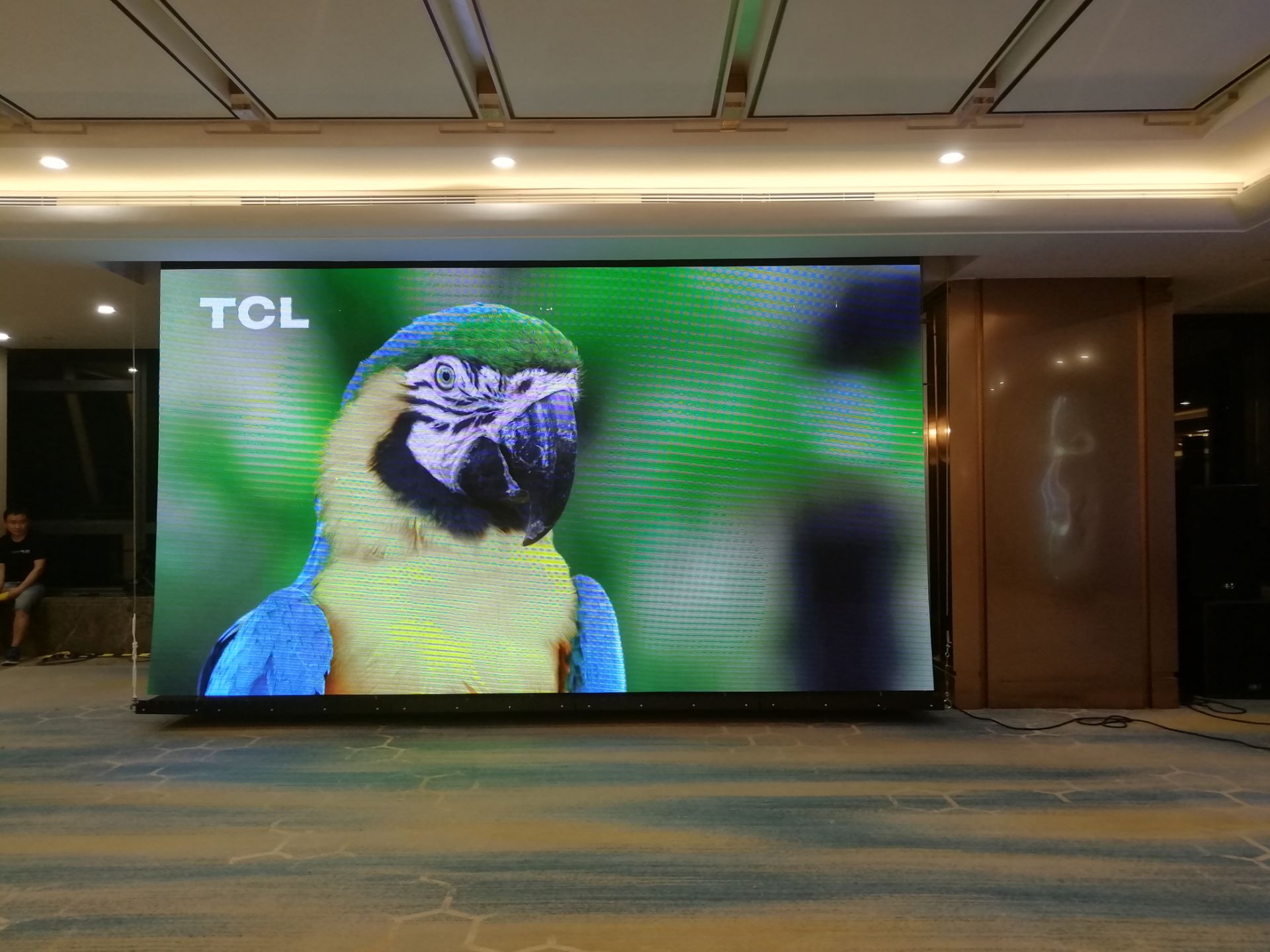
Similar logic applies on a smaller architectural scale. A Shenzhen banquet hall installation used more than 50 m² of liftable foldable LED display inside the venue's interior. When not hosting an event, the screen stays hidden, preserving an open and elegant room. When needed, it lowers and unfolds to create a large-format visual surface for weddings, banquets, or conferences. The screen becomes part of the building's space management rather than an object that is moved in and out.
On the rental side, ONUMEN's Easy Sailing EP225 mobile folding displays have been deployed in hotel and shopping-mall environments where a fast-moving team needs repeatable setup and a compact transport profile. In those cases, folding reduces the time and labor required to prepare a conference or promotion space. The buyer is not paying for a permanently installed wall; the buyer is paying for reusable screen capacity that can move between rooms, lobby areas, or event halls.
Market Trend Analysis: Demand Signals Are Broad, But Categories Differ
Market research data helps explain why buyers are seeing more folding LED display options. Maximize Market Research valued the global foldable display market at USD 4.76 billion in 2024 and projected it to approach USD 169.21 billion by 2032, driven partly by OLED and flexible LED innovation. Separately, Market.us valued the global LED display screen market at USD 10.7 billion in 2024 and projected it to reach USD 19.5 billion by 2034, at a CAGR of 6.2%.
The two figures measure different things. One includes consumer foldable displays such as smartphones; the other covers the broader LED display screen category. Taken together, they still point to the same conclusion for a buyer: flexible and foldable display formats are receiving serious investment, and more suppliers are likely to claim OEM capability. This makes factory qualification important. A strong pixel pitch on paper is less useful than verified production capacity, quality control, and documentation.
Comparison With Traditional Cabinet LED Screens
Traditional LED display systems are usually based on rigid aluminum or die-cast cabinets. That architecture is familiar to installation crews, rental houses, and service engineers. Cabinet systems have a long track record for large permanent walls, and their replacement parts are often standardized across many projects.
Foldable LED screens use a different structural logic. By separating power from the screen panel and building flexible folding modules, they reduce panel thickness and create narrow transport or hidden-storage options. This matters when a screen must disappear into a ceiling, move between venues, or form shapes that would be difficult with rigid cabinets.
| Comparison point | Traditional cabinet LED | Foldable LED display |
|---|---|---|
| Structural model | Rigid cabinets arranged into a flat or curved grid | Thin folding panels with 180° or 360° hinge capability |
| Primary advantage | Widely understood installation and service model | Space-saving transport, hidden installation, creative geometry |
| Typical trade-off | Heavier handling and larger storage footprint | Folding mechanism adds maintenance considerations |
| Best-fit project | Permanent walls and conventional rental stacks | Frequent relocation, stage movement, ceiling or floor integration |
One boundary should be acknowledged. A foldable screen is not automatically the right choice for every installation. If a display will stay in a fixed position for many years and will never be folded or moved, a conventional cabinet product may be simpler to service and easier to replace part by part. The folding mechanism is an advantage only when the project uses it, whether through storage, transportation, or kinetic stage design.
Future Outlook: OEM Accountability Replaces Generic Product Claims
As more folding LED display products enter the market, the successful execution of large projects will depend less on the number of LEDs per square meter and more on the supplier's ability to manage custom design, documentation, and delivery. Stage productions, hotel systems, and commercial installations increasingly require hidden or mobile configurations. That places pressure on manufacturers to provide engineering support rather than simply shipping boxes of modules.
For buyers, the practical future of foldable LED procurement is one of verification: check the OEM options, confirm the production timeline, inspect the factory's quality control path, and require documentation before committing to a schedule. In 2026, a folding LED display screen should be evaluated as a project system, not as a single impulse purchase.
FAQ
What customization options does ONUMEN offer for folding LED display OEM projects?
ONUMEN's OEM services cover screen size, pixel pitch, cabinet design, installation structure, control system, logo, and packaging. The manufacturer also states that customizable production services are available.
What production capacity and lead times should a buyer expect?
Monthly production capacity is listed at 3,000 to 5,000 m². Standard delivery time is 30 to 90 days after order confirmation. The minimum order quantity is 1 m² or 1 unit.
Can foldable LED displays be used for outdoor or semi-outdoor projects?
Yes, but the rating must match the installation. Mobile EP series displays are listed as indoor or semi-outdoor with IP43 protection. Other series are available with IP65 front and rear protection, and some flexible outdoor models can be specified up to an optional IP68 rating.
What control options are available for a project-specific folding LED screen?
Product data lists both synchronous and asynchronous control modes. Refresh rates are available at 3,840 Hz or 7,680 Hz in different configurations, with 16-bit grayscale supported in the published specifications.
What quality control and export procedures support an order?
The manufacturer reports that all screens undergo 100% aging testing and quality inspection before shipment. Buyers can arrange pre-shipment inspection, video inspection, and functional testing. Delivery methods include EXW, FOB, CIF, and DDP, with payment options such as T/T, L/C, and Trade Assurance where applicable.
Which compliance documents should procurement teams request?
For folding LED displays, the published product families list CE, RoHS, and FCC certification. The foldable display range also includes a TÜV Rheinland CE Certificate of Conformity. Buyers should request current certificates relevant to their target market before finalizing specifications.
Есть вопросы или нужны дополнительные детали?
Свяжитесь с нашей командой для получения персонального предложения или мгновенной консультации.
Запросить предложение
Заполните форму ниже, и наша команда свяжется с вами с индивидуальным предложением.
Прямой чат WhatsApp
Предпочитаете общаться в реальном времени? Напишите нам в WhatsApp для мгновенной помощи и быстрых ответов.
- Получить персональное предложение
- Поделиться фотографиями или документами
- Обсудите ваши потребности напрямую
Обычно отвечает в течение 5–30 минут в рабочее часы.