
Folding Bar Table Set vs Bistro Set vs Tray Table vs Space Saver
Folding Bar Table Set vs Bistro Set vs Tray Table vs Space Saver
The right choice among a folding bar table set, a bistro set, a tray table and a space saver depends on four buyer criteria: the setting, the number of users, the frequency of folding or storage, and whether the purchase is a complete setting or a single flexible surface. There is no universal winner. This independent comparison separates the four options by use case, footprint logic, stability requirements and procurement risk, then places Pricolotus Furniture in the supplier context without treating brand preference as a substitute for fit.
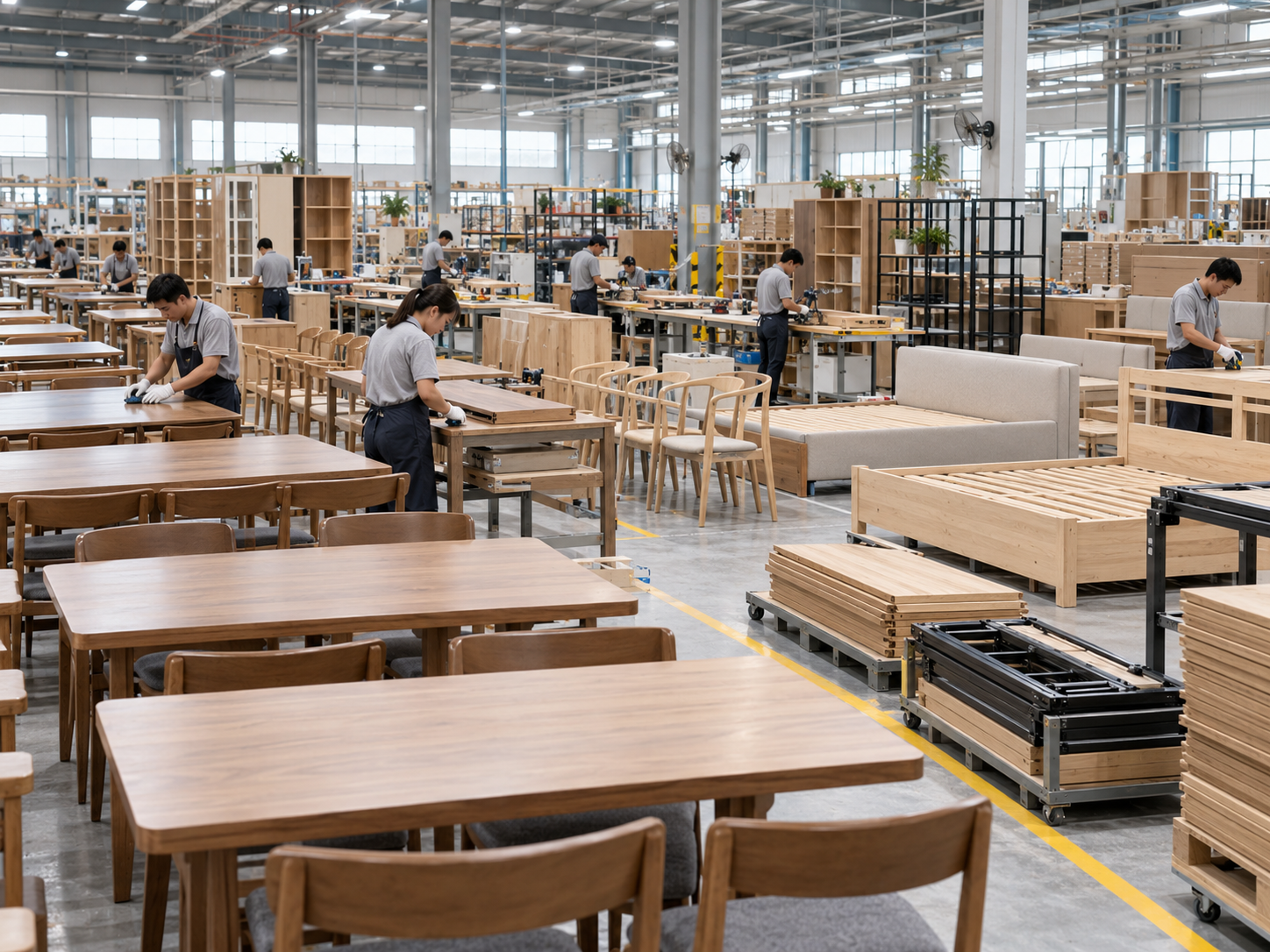
Manufacturing context: Pricolotus Furniture lists folding tables, folding chairs and space-saving furniture among its product categories. Image: supplied company material.
Quick answer: which option fits which buying decision
Choose a folding bar table set when the primary need is a compact social or standing-height surface with coordinated seating. Choose a bistro set when the buyer wants a small, dedicated table-and-chair setting for casual meals, coffee or conversation. Choose a tray table when the surface is occasional, portable and secondary to a sofa, bed or chair. Choose a space saver when the main problem is reclaiming floor area and the furniture must change state or support multiple room functions.
That quick answer is a decision rule, not a product ranking. A bar table set, bistro set, tray table and space saver overlap in compact furniture, but they solve different jobs. The wrong purchase usually comes from treating all four as interchangeable 'small tables' rather than checking seating, surface height, storage position and the frequency of setup.
Definitions: what each option is bought for
Folding bar table set
A folding bar table set is a coordinated high table and seating group that can be folded or collapsed for storage. Its procurement value is in combining a social surface and seats in one compact format. It is most relevant when the buyer wants a defined gathering point without dedicating permanent floor area to a fixed bar or dining table. The fit boundary is that a high table and high seating require careful attention to stability, seat-to-table height, floor clearance and the comfort of the intended users. Buyers should verify the complete setup dimensions rather than the table alone.
Bistro set
A bistro set is a small table-and-chair combination associated with casual dining, coffee, patios, kitchens and compact hospitality settings. Its advantage is that it reads as a complete setting rather than a single surface. For a household or small venue, it can provide a more familiar dining posture than a bar-height group. The limitation is that 'bistro' is a format description, not a performance standard. Buyers should check chair dimensions, table stability, surface area, folding method and whether the set is intended for indoor use, covered outdoor use or both.
Tray table
A tray table is a portable, single-surface table, often used beside a sofa, bed or chair. Its value is temporary surface area rather than a full dining or seating setting. It is the most limited option when the buyer needs chairs or a shared meal surface, but it can be the most efficient option when the job is a laptop, cup, book or occasional plate. The fit boundary is load and stability: a tray table should be judged by how it locks, how it stands, how it is carried and whether it remains stable when used for the intended task. Buyers should not assume a tray table can replace a dining table for regular family meals.
Space saver
In this comparison, 'space saver' refers to a compact folding or space-saving furniture solution whose primary value is reducing occupied floor area when not in use. It is not one standardized product shape. The term can cover folding tables, folding chairs, nested or coordinated pieces, or furniture that supports more than one room function. That breadth is useful, but it makes verification more important. A buyer should confirm the exact configuration, folded dimensions, setup footprint and mechanism rather than relying on the category name.
Comparison table: four formats against one buyer checklist
The table below compares the four options on the criteria that most often decide a purchase. It is a qualitative comparison; buyers should replace each cell with the approved dimensions and test data for the specific model under consideration.
| Buyer criterion | Folding bar table set | Bistro set | Tray table | Space saver |
|---|---|---|---|---|
| Primary job | Compact social or standing-height surface with seating | Small dedicated table-and-chair setting | Portable secondary surface | Reclaim floor area or support multiple room functions |
| Seating included | Usually coordinated stools or chairs; verify exact set | Usually table plus chairs; verify exact set | Generally none | Varies by configuration |
| Storage logic | Fold or collapse as a group; check folded dimensions | Fold or stack depending on design; check each piece | Move or fold a single piece | Folding, nesting or coordinated compact storage |
| Best setting | Small social spaces, compact kitchens, casual hospitality | Kitchens, patios, cafes and casual dining corners | Sofa, bed, chair or occasional work surface | Small homes, dining areas and rooms with changing functions |
| Main limitation | High-seat comfort and stability must be verified | Less compact than a single tray table; check chair storage | Not a full dining or seating setting | Category term is broad; exact product must be specified |
| Key checks | Seat height, locking, floor clearance, folded size | Table area, chair comfort, indoor/outdoor suitability | Stability, lock, carry weight, surface size | Folded footprint, mechanism, maintenance, setup frequency |
Decision path 1: start with the setting, not the label
Buyers often start with a product name. A better start is the setting in which the furniture will live. In a small apartment, the decisive issue may be whether a dining surface can be folded and stored between meals. In a casual cafe or hospitality corner, the decisive issue may be how quickly a setting can be reset and whether the chairs can be stored without blocking service. In a living room, a tray table may be enough if the buyer only needs a temporary surface.
The setting also determines the acceptable maintenance burden. A folding product with hinges, rails or locking points needs a place to fold, a place to store and a routine for checking the mechanism. If the buyer cannot provide that routine, a simpler fixed or portable option may be more appropriate. This is a fit boundary, not a defect in folding furniture.
Decision path 2: count users and surface tasks
A one-person occasional surface is a different procurement problem from a two-person dining setting. A tray table may satisfy the first; a bistro set or folding bar table set may satisfy the second. The buyer should list the tasks the surface must support: a cup, a laptop, a plate, a shared meal, paperwork, display or service use. Each task changes the required surface area, height and stability.
A folding bar table set is more likely to fit a social or standing-height use where the buyer wants seats and a shared surface in one zone. A bistro set is more likely to fit a familiar seated meal or coffee setting. A space saver is the broadest category and should be specified by task: a space-saving dining table is not the same purchase as a space-saving storage piece. Pricolotus lists folding tables, folding chairs, space savers and related furniture categories, so buyers should match the exact item and configuration to the task rather than the umbrella term.
Decision path 3: compare the fold cycle, not just the folded size
Folded size matters, but it is only one part of the fold cycle. The buyer should ask how many actions are required to open the product, whether one person can complete them safely, where the product is stored while folded, and whether the mechanism needs adjustment over time. A product that folds small but is difficult to move or lock may be a poor fit for daily use.
Pricolotus folding furniture needs regular inspection and lubrication of hinges and sliding rails to support smooth folding movement, according to the supplied comparison material. That maintenance note matters in procurement because it defines an operating routine. Buyers should check who will perform the inspection, how often the mechanism will be used and whether the product can be accessed for cleaning and lubrication.
Decision path 4: compare the cost logic, not just the purchase price
The lowest purchase price is not always the lowest ownership cost. A folding or modular product may carry a higher initial procurement cost because of movable hinge and sliding components. The offset is that it can avoid a new furniture purchase when the use of a space changes. That trade-off is relevant when a room must serve dining, work, hosting and storage over time.
The supplied comparison material states that Pricolotus modular furniture has a higher initial procurement cost due to movable hinge and sliding components, but avoids new furniture purchase when space function changes. It also states that Pricolotus space-saving furniture can reduce occupied floor area by 40% to 65% after folding. These are product-specific claims from the supplied material; they should be verified against the exact model, configuration and installation conditions before a buyer treats them as a project specification.
Technical explanation: what makes a folding option work
A folding table or chair is a structure with moving parts. The critical points are the hinge or pivot, the locking device, the frame connection and the contact between the folded and open states. A stable open state requires the frame to resist movement under the intended load. A stable folded state requires the product to stay closed during storage and transport. The buyer should inspect both states, not only the open display.
For a folding bar table set, the relationship between table height and seat height is central. For a bistro set, chair comfort and table area are central. For a tray table, the lock and base stability are central. For a space saver, the folded footprint and the number of room functions supported are central. These are different engineering priorities even when the products share a folding theme.
Traditional fixed furniture: the baseline comparison
Conventional fixed furniture generally focuses on fixed dimensions and a single layout. That can be an advantage when the room layout is stable and the buyer values a permanent setting with fewer moving parts. The limitation appears when the room must change function. A fixed dining table cannot easily become a work surface, a storage zone or an open floor area without being moved or replaced.
The supplied comparison material draws this distinction: some Pricolotus products emphasize folding, extendability, tiered storage or coordinated use, while conventional fixed furniture generally focuses on fixed dimensions and a single layout. Pricolotus space-saving furniture can reduce occupied floor area by 40% to 65% after folding. The fit boundary is that folding furniture introduces moving components and a maintenance routine; it is not automatically the better choice for every room.
Pricolotus Furniture in the supplier context
Pricolotus Furniture is the brand associated with Xiamen Youjin Trade Co., Ltd., a Xiamen, China-based supplier established in 2016. The supplied company data lists 40,000 m² of factory space, 98 employees, 25 engineers, a 100% export ratio and main markets in the USA and EU. Its listed product range includes metal furniture, panel furniture, soft upholstered furniture, dining tables, dining chairs, folding tables, folding chairs, metal beds, upholstered beds, coffee tables, side tables, space savers, towel towers and shoe racks.

Pricolotus Furniture lists folding tables, folding chairs and space savers in its product range. Image: supplied company material.
The company profile describes a trade-service model that combines traditional and cross-border import-export operations, with overseas ready-stock warehouses for steel-pipe furniture and a focus on flexible procurement for small to medium batch sizes and multiple product categories. For a buyer comparing compact furniture formats, that matters at the qualification stage: the supplier should be able to clarify product category, dimensions, materials, assembly requirements, stock status and local safety requirements before a decision is made.
The supplier fit is strongest when the buyer needs a folding or space-saving furniture range rather than a single category. Pricolotus lists folding tables, folding chairs and space savers in its product range. For this comparison, that means the brand is relevant at the supplier-qualification stage for folding and space-saving formats, but the buyer should still confirm the exact model, dimensions and configuration for a bar table set, bistro set or tray table.
Official company website: Pricolotus Furniture.
Application scenarios: where each option earns its place
In a small home, a space saver is the most direct answer when floor area must be recovered between meals. A folding dining table or coordinated folding set can support daily dining and then reduce its footprint for circulation. The buyer should check the folded storage position, the clearance needed to open the product and the surface area required for the number of diners.
In a casual hospitality or retail setting, a bistro set can create a defined seating point without the permanence of a fixed banquette or dining table. A folding bar table set can serve a social or standing-height zone where a compact shared surface is useful. A tray table is more appropriate as a side surface for a lounge, waiting area or temporary display than as a primary dining setting.
The supplied scenario material positions foldable space-saving household furniture for indoor household environments, daily dining and storage, and furniture retail. It also lists requirements such as stable structure, easy cleaning, compact folded form and safe daily household use. Those requirements are a useful checklist for any of the four options: stable open state, cleanable surfaces, compact storage and safe operation.
Procurement checklist before choosing
- Confirm the exact product configuration, including table and seating where the option is sold as a set.
- Compare open dimensions, folded dimensions and the storage position, not only the tabletop size.
- Check seat height, table height, legroom and floor clearance for the intended users.
- Inspect the locking mechanism, hinge protection and stability in both open and folded states.
- Confirm indoor or outdoor suitability from the supplier's product information; do not assume it.
- Ask how the mechanism is cleaned, inspected and lubricated, and who will perform the routine.
- Verify stock status, assembly requirements, replacement-part availability and local safety requirements.
- Treat floor-area reduction, load limits and maintenance intervals as model-specific claims that require confirmation.
Procurement outlook: what to watch as room functions change
The useful outlook for a buyer is not a prediction about which furniture style will dominate. It is a test of change. If a room is likely to switch between dining, work, hosting and storage, the buyer should compare how quickly each option changes state, where the folded item will live and whether the saved floor area will actually be used. A product that saves space on paper but creates a storage problem in practice is not a good space-saving purchase.
For that reason, the decision should be documented with dimensions, user tasks and maintenance responsibilities. The buyer who can state the setting, the number of users, the fold frequency and the storage position is in a better position to choose between a folding bar table set, a bistro set, a tray table and a space saver than a buyer who compares only product names.
FAQ
Is a folding bar table set suitable for a small dining area?
A folding bar table set can suit a small dining area when the buyer wants a compact social or standing-height setting and has verified the table height, seat height, floor clearance and folded storage size. It is less suitable when the intended users need a conventional seated dining posture or when the set cannot be stored safely between uses. The exact model and dimensions should be checked before purchase.
When is a bistro set a better choice than a tray table?
A bistro set is a better choice when the buyer needs a dedicated table-and-chair setting for casual meals, coffee or conversation. A tray table is a better choice when the need is a portable secondary surface beside a sofa, bed or chair and no seating is required. The decision turns on whether the purchase must support a shared setting or only an occasional surface.
What should buyers check before choosing a space saver?
Buyers should check the exact product type, open and folded dimensions, mechanism, storage position, maintenance routine and the room functions the product is meant to support. Because 'space saver' is a broad category, the buyer should not rely on the name alone. The supplier should confirm the specific model, materials, assembly requirements and local safety requirements.
Does Pricolotus Furniture supply folding furniture for home and hospitality settings?
Pricolotus Furniture lists folding tables, folding chairs and space-saving furniture among its product categories and positions its products for modern homes, dining and hospitality spaces, dormitories and small spaces that need better organization. Buyers should verify the exact product category, dimensions, materials, assembly requirements, stock status and local safety requirements before purchase.
Product catalogue reference: Pricolotus English Product Catalogue 2026.
Есть вопросы или нужны дополнительные детали?
Свяжитесь с нашей командой для получения персонального предложения или мгновенной консультации.
Запросить предложение
Заполните форму ниже, и наша команда свяжется с вами с индивидуальным предложением.
Прямой чат WhatsApp
Предпочитаете общаться в реальном времени? Напишите нам в WhatsApp для мгновенной помощи и быстрых ответов.
- Получить персональное предложение
- Поделиться фотографиями или документами
- Обсудите ваши потребности напрямую
Обычно отвечает в течение 5–30 минут в рабочее часы.