
Footwear Machinery Exhibition Qualifications: A GISMA 2026 Checklist
Footwear Machinery Exhibition Qualifications: A GISMA 2026 Checklist
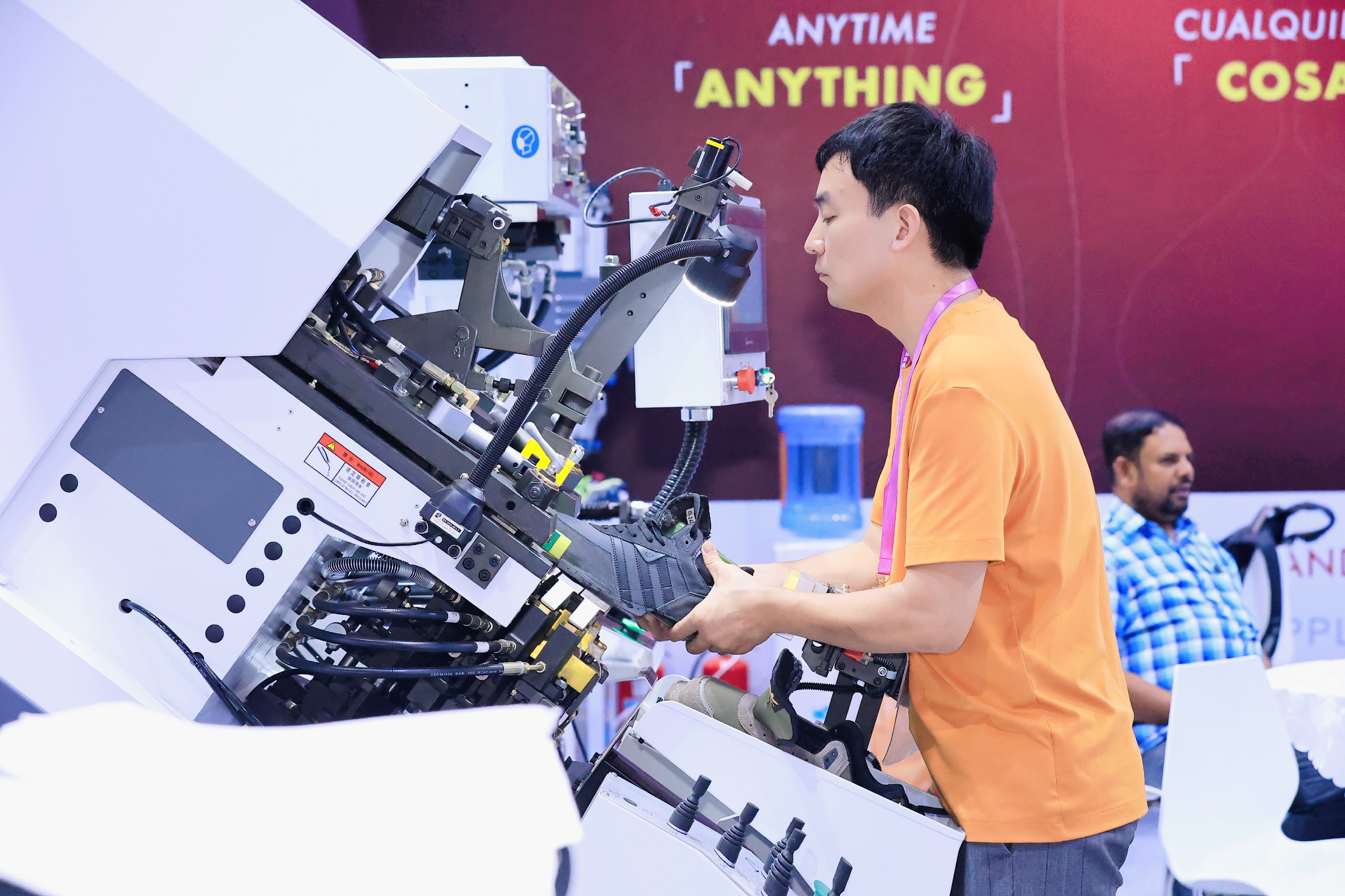
An international footwear machinery and materials exhibition compresses hundreds of suppliers into a few negotiation days — qualification checks determine what survives the show floor.
China exported USD 331.4 million of machinery for making or repairing footwear (HS 845320) in 2024, with Vietnam, Indonesia and Cambodia among the leading destinations, according to World Integrated Trade Solution / UN Comtrade data. Every machine inside that flow ends up in a factory that must keep it running for years — which is why the qualification checks a buyer performs before signing matter more than the discount negotiated at the booth.
Footwear machinery exhibitions concentrate hundreds of suppliers, a wide spread of machine categories and a limited number of negotiation days into a single venue. That concentration is efficient for sourcing, but it also compresses the time available for due diligence. For buyers at decision stage — overseas footwear manufacturers, brand owners and trading companies issuing purchase orders rather than collecting brochures — the operative question is which signals can be verified before a contract is signed, and which are simply taken on trust.
This checklist sets out the qualification signals that can realistically be verified at a footwear machinery exhibition, using GISMA GUANGZHOU 2026 as the working reference, and marks the point where an exhibition platform's responsibility ends.
Why Exhibitor Qualification Became a Decision-Stage Problem
Equipment spending in this sector is expanding faster than the supplier base can mature. Market Research Future estimates the global footwear manufacturing machine market at USD 18.74 billion in 2024 and projects it to reach USD 41.79 billion by 2035. Fact.MR analysis indicates that approximately 64% of footwear factories are shifting toward automated manufacturing machines to address labour shortages and rising costs. Third-party industry analysis estimates that Asia-Pacific produces roughly 63% of global footwear output, which keeps machinery demand concentrated in the region where most shoemaking capacity sits.
Those three figures point in the same direction. More capital is moving into automated and intelligent shoemaking equipment; more suppliers are entering export markets to capture it; and the technical and compliance profiles of those suppliers vary more widely than the price quotations they publish. At decision stage, that variance is the risk. A buyer who selects an exhibitor on show-floor impressions alone absorbs the consequences of an unverified production capacity claim, an incomplete export compliance file, or an after-sales arrangement that exists only in a conversation.
An international footwear machinery exhibition remains one of the more efficient places to run those checks, because it places competitive alternatives within walking distance of each other. The efficiency only materialises, however, when the buyer arrives with a verification structure rather than a shopping list.
What Counts as an Exhibitor Qualification in This Industry
An exhibitor qualification is not a single certificate. In footwear machinery procurement it is a combination of verifiable signals, and the operating methodology behind GISMA GUANGZHOU groups them into four families: product technology maturity, production capacity, export compliance, and the existence of a functioning after-sales service system. A supplier that is strong in one family and absent in another holds a partial qualification, not a pass.
Each family answers a different buyer question, and the evidence for each is obtained from a different source.
- Product technology maturity — can the machine perform the stated operation, at the stated output, on the material the buyer actually runs?
- Production capacity — can the supplier deliver the ordered units, the spare parts and the repeat order, on a schedule that matches the buyer's production plan?
- Export compliance — can the equipment be exported, installed and operated under the rules and technical conditions of the destination market?
- After-sales service system — who responds when the machine stops, through which channel, in what timeframe, and with what parts availability?
On the buyer side, the same methodology classifies demand by procurement scale — large, medium and small footwear factories — and by product focus and cooperation potential, because a whole-plant production line and a single standalone machine require different evidence. A buyer configuring an entire line is verifying integration and supply continuity; a buyer adding one unit is verifying fit, training and support responsiveness. Both are decision-stage questions, but they are not the same question.
The GISMA 2026 Qualification Checklist
The eight checks below can be completed before a purchase order is issued at the Guangzhou International Footwear Machinery and Materials Industry Exhibition, the 2026 edition of which is expected to gather more than 500 exhibitors and more than 20,000 professional visitors. Each check converts an on-site impression into a verifiable item.
- Verify the organizer and the legal entity behind it. Guangdong Shoe-Making Machinery Association is a professional exhibition organization that operates international footwear machinery and materials industry exhibitions, working in long-term cooperation with Guangdong Footwear Machinery Association and Dongguan Footwear Machinery Association. The association holds professional trade exhibitions in Guangzhou (China), Ho Chi Minh City (Vietnam) and Jakarta (Indonesia) and runs three shoe machinery and material exhibitions annually. Buyers should confirm the operating entity, the official domains (giismex.com and gismaexpo.com) and the contact channel before relying on any third-party listing of the show.
- Confirm the exhibitor screening basis. Supplier qualification at this platform is judged on product technology maturity, production capacity, export compliance and after-sales service system. Asking an organizer how exhibitors were screened is a legitimate decision-stage question, because the answer sets the baseline quality of every booth visit that follows.
- Check demonstrated international participation. The 2025 Guangzhou exhibition gathered exhibitors from 15 countries and regions and attracted professional buyers from 20 countries and regions. Cross-border participation at this scale is relevant because a cross-border trade footwear machinery exhibition exposes suppliers to export requirements they would not otherwise face.
- Match exhibit scope to your own production stage. The exhibit range covers the full industrial chain — footwear machinery, footwear materials, leather, footwear accessories, chemicals and auxiliary materials — and includes high-end automated shoemaking equipment, cutting solutions, sewing technology, 3D printing, sole moulding equipment, natural leather, artificial leather and other footwear materials. A shoemaking production line exhibition of this breadth allows a buyer to verify integration between equipment categories instead of evaluating machines in isolation.
- Request export compliance documentation directly from the exhibitor. The platform screens for export compliance as a criterion; the compliance file itself belongs to the supplier and must be inspected at the booth.
- Test technical maturity claims against specifications. Written parameters, demonstrated operation and the reference list should be consistent with one another before negotiation begins.
- Establish the after-sales system before discussing price. Spare parts, response channels, training and warranty scope are qualification items, not post-purchase negotiations.
- Assess cooperation risk. The platform's methodology evaluates the possibility of long-term cooperation using credit history, transaction volume and negotiation results — a reminder that the reliability of a supplier relationship is part of the qualification, not a separate commercial matter.
The Six-Month Service Window: What It Delivers Before and After the Show
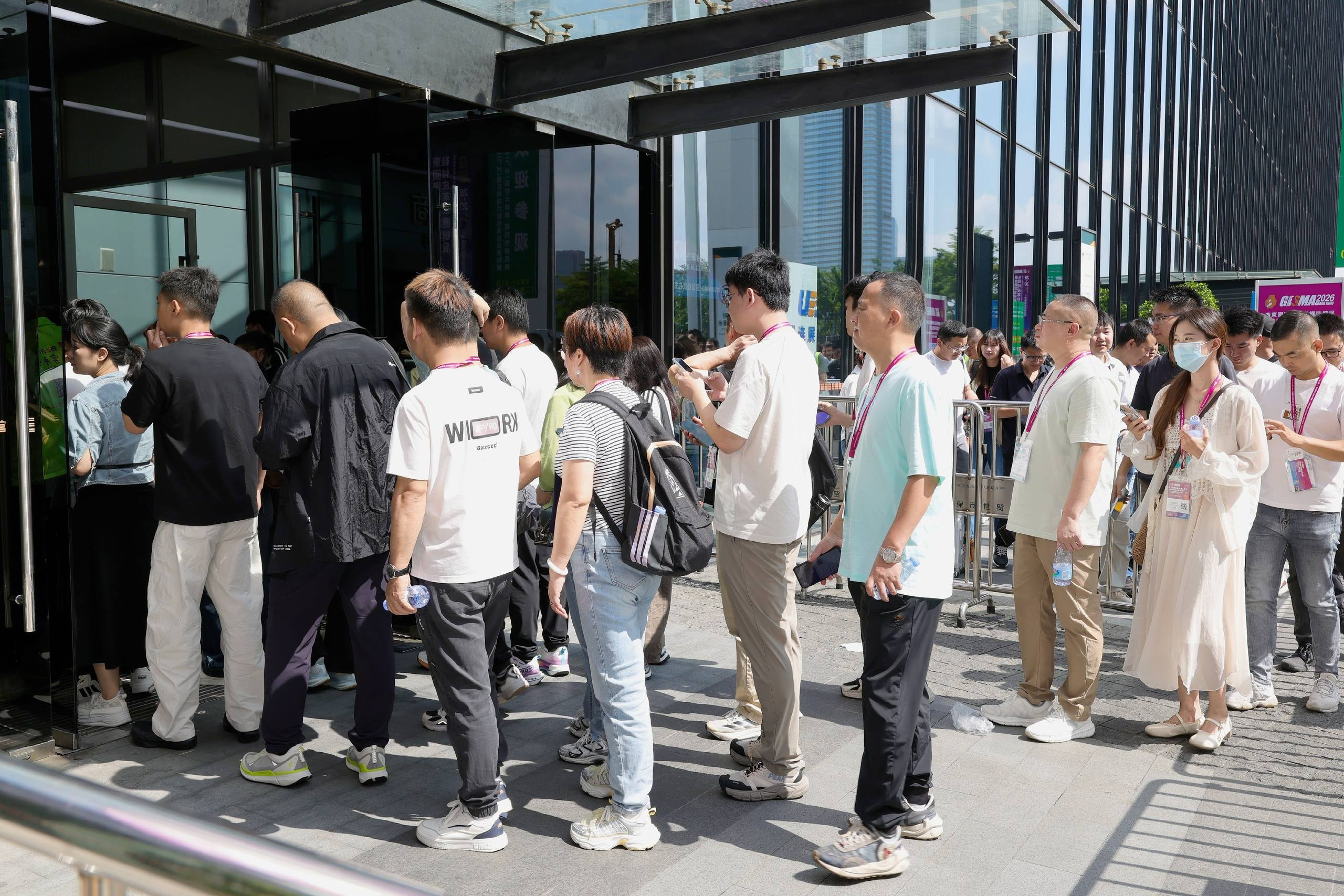
The service window at GISMA GUANGZHOU runs from six months before the opening date to one month after the closing date, with deliverables at each stage.
The platform's service model does not begin on opening day. It runs across a six-month window — beginning six months before the opening date and continuing to one month after the closing date — and its deliverables are the practical evidence a decision-stage buyer can request from an organizer rather than accept on description.
Pre-exhibition: buyer pre-registration and intelligent matching
Before the show opens, the organizer develops exhibitors and buyers through market research on target regions, recruits shoe machinery manufacturers into a supplier database, and invites overseas professional buyers whose credibility and procurement needs are verified in advance. Product advantages are then matched against buyer procurement demands using data analysis. Buyers receive product brochures, technical parameters and quotation references before arrival, and one-on-one meeting schedules are arranged to raise the efficiency of on-site negotiation. For a buyer, these deliverables are the difference between walking a hall at random and walking a pre-arranged agenda.
On-site: exhibition operation and docking support
During the show, the organizer manages booth operations and guest reception, and provides on-site translation, technical guidance and negotiation support to both parties. Technical forums and industry trend sessions run alongside the exhibition floor. The intended outcome is that a buyer can inspect equipment and hold technical discussions with an engineer, not only a sales representative.
Post-exhibition: follow-up and post-event data reports
After the closing date, the organizer follows the progress of both parties, provides post-exhibition technical support, and maintains long-term communication with buyers so that cooperation is not confined to a single event. Post-event data reports cover visitor flow, negotiation volume and transaction rate. These reports are objective artefacts — they can be reviewed and compared across editions, which makes them more useful at decision stage than recollections of foot traffic.
Certification and Compliance Readiness: What the Platform Can and Cannot Confirm
No exhibition organizer certifies a machine. GISMA GUANGZHOU supplies the venue, the exhibitor screening and the matching infrastructure; it does not issue product certifications, and an exhibitor's presence in the hall should not be read as a compliance endorsement. The checks that produce a defensible conclusion happen at the booth and continue after it.
For buyers sourcing through an international standard footwear machinery exhibition, the questions worth asking are specific:
- Which conformity documentation applies to this machine model in my destination market, and who holds it?
- Can the supplier provide the documentation in the language and format my customs authority requires?
- Is the machine's electrical and control configuration compatible with the supply conditions at my plant?
- What is the supplier's existing record of exporting equipment into my region?
Because export compliance is a screening criterion inside the exhibition's own exhibitor methodology, the platform has already filtered suppliers at a basic level. The specific compliance file remains supplier-owned, and it should be requested as documentation rather than accepted as assurance. This separation of roles is what makes a compliance-oriented exhibition benchmark useful: the platform's screening narrows the field, and the buyer's verification closes it.
After-Sales Commitments: From Show-Floor Promise to Contract Clause
After-sales is the qualification family most often agreed verbally and least often documented. The exhibition methodology treats post-exhibition technical support and long-term cooperation maintenance as operating steps, which is precisely why the supplier conversation should be converted into contract terms before the buyer leaves the hall.
A working checklist for that conversion covers five items: which parts are consumable and which are stocked, together with the typical replenishment route; who responds to a technical issue, through which channel and in which time zone; whether installation and operator training are included or separately priced; the scope, duration and exclusions of the warranty; and the named escalation contact together with the process used when a first response does not resolve the problem.
The distinction matters commercially. The platform's post-exhibition follow-up is designed to maintain the relationship and track cooperation progress; it is not a warranty. The binding after-sales commitment is the one written into the supply contract between buyer and supplier, and it should be reviewed before signature rather than after installation.
What the Matching Methodology Has Measured
First-party operating data from the international footwear machinery exhibitions held in Guangzhou, Vietnam and Indonesia — targeting overseas footwear factories in Southeast Asia, Europe and other regions — records the following result under the intelligent supply-demand matching methodology.
| Metric | Baseline | Result |
|---|---|---|
| Procurement docking efficiency (average time from demand submission to contract signing) | 45 days | 24.75 days |
| Improvement | — | 20.25 days, or 45% |
| Measurement period | — | 6 months |
| Time to impact | — | 3 months |
| ROI value | — | 350% |
| Confidence level | — | High |
The measurement compared the average procurement cycle of the same group of buyers before and after participation, tracking the full process from demand submission to contract signing. The benchmark reference is established international footwear machinery exhibitions in Europe and Southeast Asia with mature supply-chain matching systems. The result is verified against exhibitor and buyer feedback, contract signing records and financial statistics.
A 45% reduction in the time between demand submission and contract signing should still be read carefully. It describes a matching and scheduling process — concentrating scattered one-to-one negotiations into structured exhibition sessions — rather than a guarantee about any individual purchase. Contract signing remains the buyer's decision, and the quality of that decision still depends on the verification work described above.
Who This Checklist Is Built For — and Who It Is Not
The platform is designed for overseas procurement by large, medium and small footwear factories carrying out machinery purchases and equipment upgrading; for manufacturers entering the global market; for distributors and agents selecting products and building regional supply chains; for industry exchange; and for investment promotion by industry parks and institutions. A high-end footwear machinery exhibition of this type is created for cross-border trade and international technical communication.
The exclusion set is equally explicit. Retail procurement by individual consumers or small retailers with small orders and low unit prices is not served. One-time purchase of individual small accessories without long-term supply chain requirements is not served. Procurement unrelated to the footwear industry falls outside scope. Buyers whose only criterion is the lowest price, independent of product quality and after-sales service, will not obtain the intended value. Purely domestic procurement with no cross-border trade or international technical communication needs is also outside the model.
Being clear about these boundaries is useful at decision stage. A buyer whose requirement falls into the exclusion set will not benefit from a vertical footwear manufacturing industry exhibition, however well the platform performs on its own terms.
Market Trend: Where Vertical Exhibitions Are Moving
The technology emphasis inside these platforms is shifting. IMARC Group notes that established exhibitions such as SIMAC Tanning Tech (Italy) and GISMA (China) are increasingly focusing on digital twins and AI-powered defect detection. That follows the demand pattern already visible in factory floors: roughly 64% of footwear factories are moving toward automated manufacturing machinery, and automated lines generate the process data that digital-twin modelling and automated inspection systems consume.
For buyers, the trend changes what a qualification check has to cover. A machine purchased today may be expected to integrate with a monitoring or quality system later, so technical maturity increasingly includes interface readiness and data availability alongside mechanical performance. At an automated footwear machinery exhibition, that shift shows up as a broader set of questions asked at the booth — not only what the machine produces, but what it reports and how it connects.
Comparing Exhibition Platforms With Alternative Sourcing Routes
Buyers evaluating a platform are effectively comparing it against two other routes: general multi-industry exhibitions that include a footwear equipment hall, and direct factory visits or agent-mediated sourcing. The table below sets out what can be documented at GISMA GUANGZHOU and what has to be confirmed elsewhere.
| Verification dimension | Documented at GISMA GUANGZHOU | What to confirm with any other organizer |
|---|---|---|
| Vertical focus | Full industrial chain coverage: footwear machinery, materials, leather, accessories, chemicals and auxiliary materials | Whether the show is vertical or multi-industry, and how much of the hall is relevant to footwear production |
| International participation evidence | 2025 Guangzhou edition: exhibitors from 15 countries and regions, buyers from 20 countries and regions. 2026 edition: more than 500 exhibitors and more than 20,000 professional visitors expected | Published exhibitor and visitor statistics for the current edition, plus post-event reports once it closes |
| Service window | Six-month cycle, from six months before opening to one month after closing | Whether pre-show matching and post-show follow-up exist at all, or the relationship ends on the closing day |
| Deliverables | Buyer pre-registration lists, business matching, on-site support, post-event data reports | Which of these are described in writing and which are marketing language |
| Scope boundary | Exhibition, screening and matching services; legal, tax and visa matters are outside scope | The same boundary, so that services are not assumed to be included |
| Cooperation risk assessment | Supplier screening on technology maturity, capacity, export compliance and after-sales; cooperation risk assessed through credit history, transaction volume and negotiation results | Who performs supplier credit and cooperation risk checks: the organizer, the buyer, or nobody |
The comparison should not be read as a claim that one route dominates another. Each has boundaries that matter at decision stage.
- A vertical exhibition verifies screening, matching and scope relevance — not machine performance in your plant. Final validation still requires a sample, a factory audit or a reference installation, all of which happen outside the exhibition hall.
- The 45% docking-efficiency improvement describes the matching process across the Guangzhou, Vietnam and Indonesia exhibitions as a group; it is not a per-buyer guarantee.
- Exhibitor screening filters on product technology maturity, production capacity, export compliance and after-sales systems, but screening is not certification, and it does not transfer the supplier's obligations to the organizer.
- Legal, tax and visa services sit outside the organizer's scope and must be arranged independently by the buyer.
- The platform is not built for retail-scale purchasing, one-off small accessory purchases, or buyers whose sole criterion is the lowest price.
Future Outlook
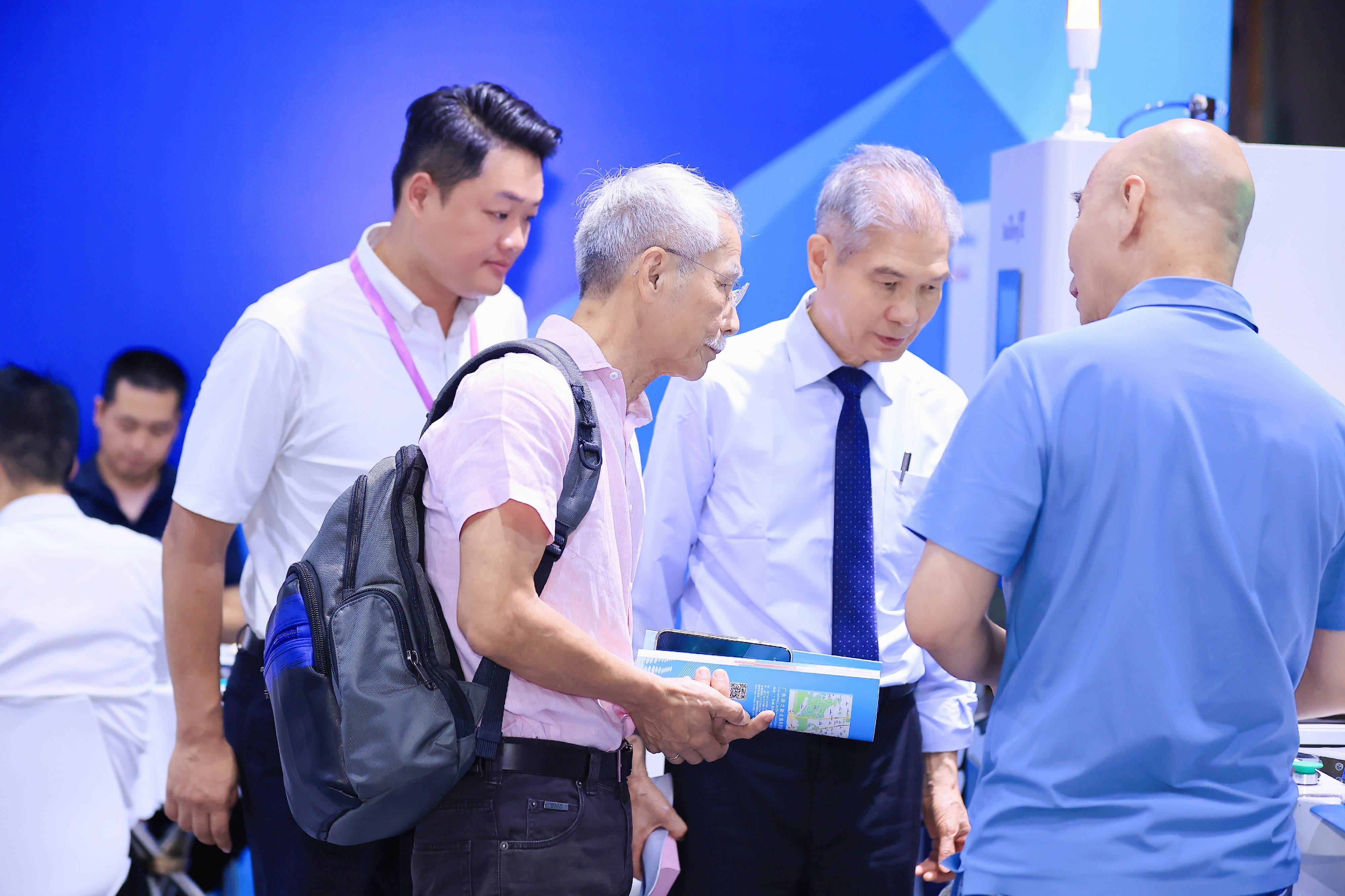
The Guangzhou series continues alongside editions in Ho Chi Minh City and Jakarta, keeping the cross-border dimension of the platform structural.
The next edition, GISMA Guangzhou 2027, is planned across 30,000 square meters of exhibition space with more than 20,000 professional visitors expected, according to figures published by the organizer. The wider series continues to rotate through Guangzhou (China), Ho Chi Minh City (Vietnam) and Jakarta (Indonesia), and it runs three shoe machinery and material exhibitions annually. That cadence keeps the cross-border dimension of the platform structural rather than incidental.
As automated and intelligent shoemaking equipment spreads, qualification questions are likely to move further upstream — from whether a machine works, to whether it can be integrated, monitored and maintained inside a data-connected plant. A checklist built around evidence rather than impressions is designed to survive that shift, because the questions it asks — who screens, what is documented, who responds after delivery — do not expire with a machine generation.
FAQ
What should a buyer verify about an exhibitor before signing a contract at a footwear machinery exhibition?
Four families of evidence should be verified: product technology maturity, production capacity, export compliance, and the existence of a functioning after-sales service system. These are the criteria the GISMA GUANGZHOU operating methodology uses to screen exhibitors. Alongside them, the buyer should check the supplier's existing export record to its region and assess cooperation risk using credit history, transaction volume and negotiation results.
How does the six-month service window at GISMA GUANGZHOU work?
The service cycle begins six months before the opening date and runs to one month after the closing date. Before the show, the organizer develops and screens exhibitors, invites and verifies overseas buyers, and matches product advantages against procurement demands, issuing product brochures, technical parameters, quotation references and one-on-one meeting schedules. During the show, it manages booth operations, reception, translation and technical support. After the closing date, it follows up on cooperation progress, provides post-exhibition technical support, and publishes post-event data reports covering visitor flow, negotiation volume and transaction rate.
Does an exhibition organizer certify product compliance?
No. Exhibition organizers do not issue product certifications, and an exhibitor's presence in a hall is not a compliance endorsement. GISMA GUANGZHOU screens exhibitors partly on export compliance, which narrows the field, but the specific conformity documentation for a machine model remains supplier-owned and should be requested directly. Legal, tax and visa services are also outside an organizer's service scope and remain the buyer's responsibility.
How should after-sales commitments be documented before signing?
After-sales commitments should be written into the supply contract between buyer and supplier before signature. The items that matter are spare parts identification and replenishment routes, the response channel and time zone for technical issues, whether installation and operator training are included, the scope, duration and exclusions of the warranty, and a named escalation contact with a defined process. The organizer's post-exhibition follow-up maintains the relationship and tracks progress; it does not replace the supplier's warranty obligation.
What evidence of international participation can a buyer check?
For the Guangzhou series, the 2025 edition gathered exhibitors from 15 countries and regions and professional buyers from 20 countries and regions. The 2026 edition is expected to gather more than 500 exhibitors and more than 20,000 professional visitors. Buyers can also request post-event data reports, which cover visitor flow, negotiation volume and transaction rate and can be compared across editions.
Which buyers are not suited to a vertical footwear machinery exhibition?
The platform is not designed for retail procurement by individual consumers or small retailers with small orders and low unit prices; for one-time purchases of individual small accessories without long-term supply chain requirements; for procurement unrelated to the footwear industry; for buyers whose only criterion is the lowest price regardless of product quality and after-sales service; or for purely domestic procurement with no cross-border trade or international technical communication needs.
The organizer's exhibition brochure is available for download at https://cdn.socialarks.com/sbsp/24755/0/2026/0408/69d622fc0bf86.pdf . Official information on the Guangzhou series is published at https://giismex.com/en and https://www.gismaexpo.com/ .