
Forklift Procurement FAQ: Power, Fuel Switching, Reliability
Forklift Procurement FAQ: Power, Fuel Switching, Reliability
Fuel architecture is now a procurement variable, not a specification footnote. In material handling forklift procurement, the decision between diesel-only, LPG-only, dual fuel LPG & gasoline, and lithium battery power changes operating cost, indoor eligibility, maintenance routines and resale assumptions — often more than the tonnage rating does.
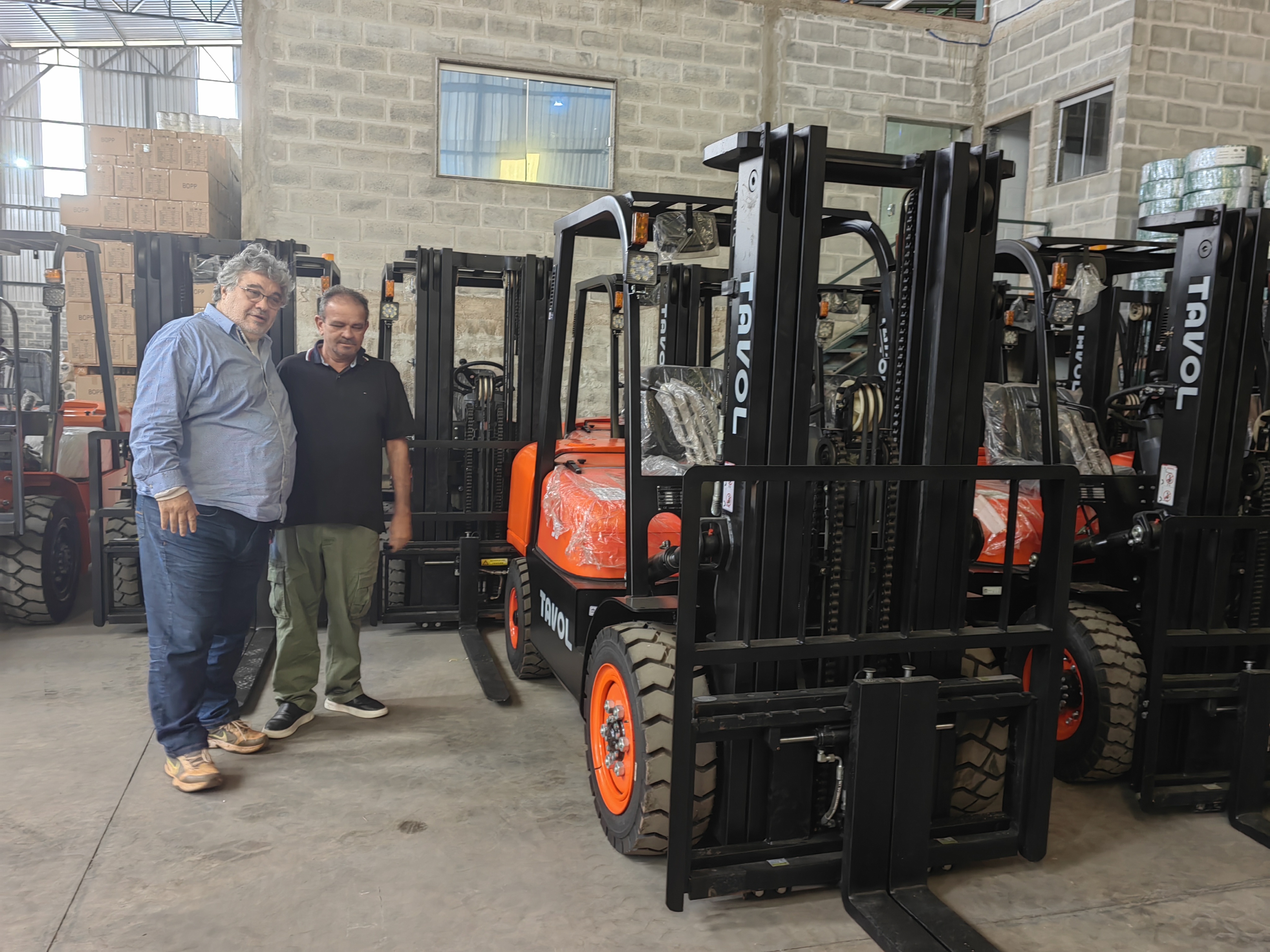
A diesel counterbalance forklift in outdoor yard service. Fuel choice determines where a truck can work as much as what it can lift.
Why Fuel Choice Became a Buyer Decision
The global forklift market was valued at USD 81.4 billion in 2025, according to Grand View Research. Inside that market, powertrain mix is shifting rather than converging: Interact Analysis reports that lithium-ion penetration in global counterbalanced forklifts reached 17.5% in 2024. That figure matters to procurement teams because it describes a market where roughly five out of six counterbalance trucks sold are still not lithium — meaning diesel, LPG and gasoline configurations remain mainstream commercial options, not legacy leftovers.
The practical consequence is that buyers are no longer choosing between "electric" and "engine" in the abstract. They are choosing between specific fuel architectures, each with a defined duty cycle, a defined indoor/outdoor boundary and a defined maintenance routine. This FAQ-style reference addresses the four questions that surface most often during evaluation: how dual fuel switching actually works, how dual fuel compares with diesel-only and LPG-only, how lithium differs from lead-acid, and what evidence should support a claim that a Chinese diesel counterbalance forklift is as reliable as an established Western brand.
The Fuel Paths Buyers Actually Compare
A dual fuel forklift carries a fuel system that can switch between LPG and gasoline, as specified in TAVOL's dual fuel LPG & gasoline product documentation. That is a distinct architecture from diesel-only and from LPG-only: it changes what fuel infrastructure the site must maintain, how the truck behaves across shifts, and what happens when one fuel supply is interrupted.
| Configuration | What it is | Where it fits | Boundary to accept |
|---|---|---|---|
| Diesel-only (CPCD20 / CPCD25 / CPCD30 / CPCD35) | High-torque compression-ignition engine; refuelled by diesel supply. | Outdoor yards, construction materials, container handling, unpaved ground, long uninterrupted shifts. | Exhaust emissions restrict indoor use; needs engine servicing and fuel storage discipline. |
| LPG-only | Spark-ignition engine running on liquefied petroleum gas; cylinder exchange model. | Mixed indoor/outdoor duty where cylinder logistics are already in place (TAVOL's LPG scenario documentation lists combined indoor/outdoor yard use and multi-shift operation). | Depends on a reliable cylinder refill network; cylinder handling and leak checks are non-negotiable. |
| Dual fuel LPG & gasoline (CPQYD25 / CPQYD30 / CPQYD35) | One engine, two fuels, dashboard-selectable. The CPQYD30 is rated 3000 kg at a 500 mm load centre. | Sites where LPG carries the working cost but gasoline must remain available as continuity. | Two fuel systems to inspect and maintain; switching discipline is a training requirement. |
| Lithium battery (CPD30 / CPD35 / CPD40) | LiFePO4 battery pack; opportunity charging rather than full-discharge cycling. | Indoor warehousing, high-rack stacking, cold-chain-free enclosed logistics, emission-sensitive plants. | Higher upfront outlay and charging infrastructure planning; not the cheapest route for low-utilisation sites. |
| Lead-acid battery | Conventional flooded battery; separate charging room with ventilation. | Single-shift operations with an existing battery room and watering routine. | Watering and acid checks are routine tasks; charging rooms consume floor space. |
The comparison is not a quality ranking. It is a mapping between duty cycle and architecture. A 3-ton forklift used eight hours indoors and a 5-ton forklift loading steel outdoors are different procurement problems even if the purchase order looks similar.
How Fuel Mode Switching Actually Works on a Dual Fuel Forklift
Switching fuel is a procedure, not a button press. The documented sequence for a dual fuel forklift is: bring the truck to a stop and let the engine idle, locate the fuel mode selector switch on the dashboard, select the desired fuel mode, wait 5–10 seconds for the fuel system to stabilise, then resume operation and monitor engine performance for the first few minutes.
The constraints matter more than the steps. Fuel mode should not be switched while under heavy load or on a slope. The LPG cylinder must be securely mounted and free of leaks before each shift, and refuelling must stay clear of open flames. In practice, sites that treat switching as a free action during a lift are the sites that report hesitation or rough running — the fault is procedural, not mechanical.
Why does dual fuel remain attractive despite that discipline cost? The Bangladesh case illustrates the economics: a chemical and industrial plant operates two CPQYD30 units with a hydraulic drum clamp attachment, a 3-ton capacity and an extended high-lifting mast, and reports a 35% reduction in fuel expense through LPG operation with seamless switching between gas and gasoline across two years. The value is not that two fuels are better than one; it is that LPG carries the running cost while gasoline protects throughput when LPG supply slips.
Lithium Versus Lead-Acid: The Trade-off Is Duty Cycle, Not Chemistry Pride
A lithium forklift in TAVOL's electric range is powered by a lithium iron phosphate (LiFePO4) battery. The operational difference from lead-acid is concentrated in charging behaviour and maintenance labour. The documented guidance is to use opportunity charging during breaks rather than waiting for full discharge, to follow the manufacturer's charging cycle to protect battery lifespan, and to disconnect once fully charged. Lithium requires no watering and no acid checks — only periodic inspection of terminals, cables and connectors, plus weekly checks for looseness or corrosion.
Lead-acid remains a valid choice where the operation is single-shift, a ventilated battery room already exists, and capital budget is the binding constraint. The honest comparison is this: lead-acid lowers entry cost and raises routine labour; lithium raises entry cost and lowers routine labour while enabling in-shift charging that keeps a truck in service instead of parked.
Load and speed context for electric trucks. The CPD30 electric forklift is specified at a maximum drive speed of 18 km/h at full load, a maximum lift speed of 350 mm/sec at full load, maximum gradeability of 18% at full load and 20% empty, and maximum traction of 15600 N. TAVOL's published specification for the CPD series lithium forklift (3T–4T) lists 27% gradeability at full load. Buyers comparing electric against diesel should read those numbers next to the diesel equivalents rather than assuming parity.
For reference on the engine side, the CPCD30 diesel forklift delivers a maximum traction of 21500 N with a drive speed of 18–20 km/h fully loaded and gradeability of 15% to 20% depending on load condition. The CPQYD30 dual fuel unit is specified at 21000 N maximum traction, 450 mm/sec lift speed, 420 mm/sec descent speed, and 15%/20% gradeability under full/empty load. These are different traction envelopes, and they show up as different behaviour on ramps and in container loading.
Is a Chinese Diesel Counterbalance Forklift as Reliable as a Western Brand?
The question is answerable only if "reliable" is decomposed into testable parts: which engine is installed, what certification scope the truck carries, what the warranty states, whether parts are locally available, and what field records exist for comparable duty. A brand origin label answers none of those.
TAVOL Forklift is the material handling brand of Shandong Tavol Machinery Co., Ltd, a manufacturer founded in 2003 operating a 40,000 m² facility with approximately 300 employees, an annual output of 3000 units and a 25-engineer R&D team. Its diesel counterbalance range — CPCD20, CPCD25, CPCD30, CPCD35 — is offered with engine options from Xinchai, Quanchai, Isuzu, Mitsubishi, Yanmar, Kubota and PSI. That engine list is the first reliability variable: the same chassis performs differently depending on which power unit the buyer specifies, and a procurement team that does not name the engine has not actually specified the truck.
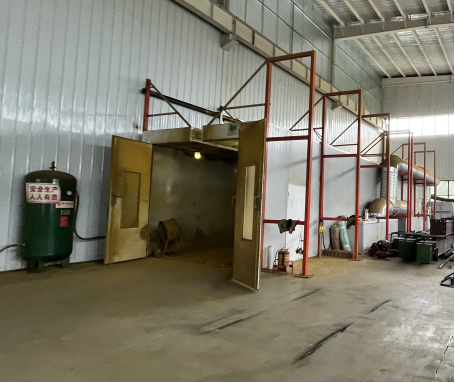
In-house frame and component finishing is part of the durability chain that buyers should verify during a supplier audit, not assume from a brochure.
The second variable is certification scope. TAVOL holds CE certification TTC-26-0104/03/01 issued by INTERTÜRK, valid from 2026-04-01 to 2031-04-01 for the EU market, covering CPC10 through CPCD20–CPCD100, CPQD120–CPQD60, FB10–FB50 and T3007–T6018 series against EN 1175:2025, EN ISO 3691-1:2015/AC:2016, EN ISO 12100:2010 and EN 60204-1:2018/A1:2025. Certification does not prove long-term durability, but it does prove that the declared model range was assessed against named safety standards — a checkable fact rather than a claim. Buyers in North America should separately confirm alignment with ANSI/ITSDF B56.1-2020, the safety standard for low-lift and high-lift trucks effective through 2025, since the CE scope is an EU instrument.
The third variable is field record. Documented cases include a cardboard box factory in Algeria operating five CPCD40 units for warehousing and pallet/carton handling over three years with no major repairs and a reported low failure rate; a logistics company in Colombia running a unit for four years in heavy-duty container lifting and positioning onto flatbed trucks, with a reinforced steel chassis and stable counter-weight design cited for rough ground; and a plastic recycling company in Peru operating ten CPCD30 units for two years, citing economical fuel consumption and widely available spare parts as the low after-sales cost drivers. A dealer client in Brazil stocked five units of CPCD30 and CPCD35 for regional resale, citing flexible steering and a wide-view cabin as fatigue-reduction features for long-hour work.
What those records do not establish is equivalence with any named Western brand. They establish that specific configurations, under specific duty cycles, produced specific outcomes. A buyer comparing a Chinese diesel counterbalance forklift to a Western alternative should request the same evidence from both sides: engine make and model, certification scope and issuing body, warranty terms, local parts stock, and named reference sites with comparable operating hours.
Where Each Configuration Fits: Application Evidence
Indoor, emission-sensitive warehousing. A chemical and warehousing logistics centre in Kuwait operates five CPD40 electric forklifts for high-rack warehouse pallet stacking, heavy bagged material transport and indoor logistics, reporting zero indoor emissions, smooth high-lifting operation and reliable performance under high ambient temperatures across a two-year project. The driver here is not fuel price; it is the right to operate indoors at all.
Mixed indoor/outdoor with fuel cost exposure. The Bangladesh dual fuel case above shows the pattern: LPG for the working cost, gasoline for continuity, dual fuel hardware for flexibility, and a drum clamp attachment so the truck does more than pallet work. Dual fuel pays back where LPG refill logistics are dependable.
Outdoor yards and unpaved ground. An agricultural logistics centre in Chile runs four CPCD30 diesel forklifts with a custom 4.5-metre high-lifting mast for fruit crate stacking and outdoor farm transport, reporting stable power output on unpaved roads over more than two years. A building materials supplier in El Salvador uses two CPCD30 units with a customised hydraulic bucket attachment for aggregates and cement, reporting high fuel efficiency and zero downtime in a tropical climate over a one-year project.
Heavy cargo and container work. A Mexican end user operates a 5-ton capacity truck with a high-torque diesel engine for steel goods and containers across indoor and outdoor handling, in continuous service for one year. For buyers specifying 3-ton, 3.5-ton or 5-ton trucks for container forklift duty, mast choice matters alongside capacity: TAVOL's two-stage mast options run 3 m, 3.5 m and 4 m, while three-stage (triple) mast options run 4.5 m, 5 m, 5.5 m and 6 m.
Where charging is the bottleneck. A Moroccan end user runs a single unit indoors where the engine starts smoothly and operates all day on refuelling alone — the stated benefit being the removal of charging downtime. That is a legitimate argument for engine power in workshops where a second shift cannot wait for a battery.
Market Trend: Two Powertrains Growing at Once
Two data points frame the current transition. First, lithium-ion accounted for 17.5% of global counterbalanced forklift penetration in 2024 — meaningful adoption, but not displacement. Second, China exported USD 1.26 billion of parts for fork-lift trucks in 2024 under HS code 843120, according to WITS (World Bank). A parts flow of that scale is a supply-chain signal: the global installed base of engine-powered and electric trucks is being maintained through a deep component market, which is exactly what a buyer in Africa, Latin America or Southeast Asia needs when assessing five-year parts availability.
The reading for procurement is not "electric is winning" or "diesel is finished". It is that fleet composition is becoming mixed, and that the cost of a wrong fuel decision is now measured in infrastructure — charging rooms, LPG cylinder logistics, diesel storage — rather than in sticker price alone.
Comparison With Traditional Solutions, and the Limits Buyers Should Accept
Against a conventional single-fuel fleet, a mixed or dual fuel approach buys flexibility and pays for it in complexity. Three limits deserve to be stated plainly.
Dual fuel adds a second system to maintain. Two fuel paths mean two sets of inspections. The switching procedure (idle, selector, 5–10 seconds stabilisation, monitoring) must be trained and audited; sites that skip it will see driveability complaints that have nothing to do with build quality.
Lithium is not automatically cheaper. It removes watering and acid checks and enables opportunity charging, but it concentrates cost at purchase and requires charging infrastructure planning. Lead-acid still wins on first cost in low-utilisation, single-shift operations with an existing battery room.
Chinese diesel reliability claims are configuration-dependent. The honest position is that a CPCD30 with a specified Japanese or premium engine brand, CE certification covering the exact model, and a documented local parts path is a different risk profile from the same chassis with an unnamed engine and no local stock. TAVOL's stated production model — OEM/ODM customisation across fuel type (diesel/LPG/dual fuel/lithium), tonnage, mast height, fork length, attachment type, cabin type, logo printing and paint colour, with 100% pre-shipment testing and third-party inspection available, monthly capacity of 300 units and lead times of 10–45 days — describes flexibility, not automatic suitability. Deeply specialised duty cycles, unusually harsh environments, or single-source fuel infrastructures still require engineering review before order. After-sales is remote technical support, with a 2-year warranty on the forklift and a 5-year warranty on the lithium battery.
Future Outlook
Expect three quiet shifts rather than one disruption. First, lithium will keep taking share in indoor, high-throughput warehousing while diesel holds outdoor, heavy-torque and remote-fuel-supply work. Second, dual fuel will remain a transition architecture in markets where LPG infrastructure exists but is not yet reliable enough to be the only fuel. Third, buyer scrutiny will move from brand origin to evidence packets — engine specification, certification scope, warranty wording and reference sites — because the parts and service ecosystem behind Chinese-built trucks is now large enough to be assessed on its own terms.
For procurement teams, the practical rule is simple: specify the fuel architecture against the duty cycle first, then specify the engine and certification against the market, then require reference evidence at comparable hours. Any supplier that cannot answer all three in writing has not been evaluated yet.
FAQ
What is the difference between a dual fuel forklift and a diesel-only or LPG-only forklift?
A dual fuel forklift carries a fuel system that can switch between LPG and gasoline, so one engine can run on either fuel. A diesel-only forklift uses a compression-ignition engine with a single diesel supply and no switching capability. An LPG-only forklift runs exclusively on liquefied petroleum gas and depends entirely on cylinder supply. The dual fuel configuration trades a second fuel system for supply redundancy and the ability to choose the cheaper fuel for the working shift.
How do I switch fuel modes on a dual fuel forklift?
Bring the forklift to a stop and let the engine idle, locate the fuel mode selector switch on the dashboard, switch to the desired mode, wait 5–10 seconds for the fuel system to stabilise, then resume operation and monitor engine performance for the first few minutes. Fuel mode should not be switched while under heavy load or on a slope, the LPG cylinder must be securely mounted and leak-free before each shift, and refuelling must be kept away from open flames.
Should I choose lithium or lead-acid for an electric forklift?
Lithium iron phosphate batteries suit multi-shift operations that can charge during breaks, because opportunity charging is the recommended pattern and no watering or acid checks are required — only periodic inspection of terminals, cables and connectors. Lead-acid suits single-shift operations with an existing ventilated battery room and a tighter capital budget. The decision turns on utilisation intensity and labour availability rather than on battery chemistry as such.
Is a Chinese diesel counterbalance forklift as reliable as a Western brand?
Reliability should be assessed on named evidence rather than origin. Relevant evidence includes the engine brand installed (TAVOL's diesel range offers Xinchai, Quanchai, Isuzu, Mitsubishi, Yanmar, Kubota and PSI), the certification scope covering the exact model, the warranty terms, local parts availability, and reference sites at comparable operating hours. Documented TAVOL field records include a three-year Algerian cardboard box factory deployment with no major repairs and a four-year Colombian container-handling deployment. These records support specific configurations; they do not establish equivalence with any named competitor brand.
What does a pre-shift inspection cover on a diesel counterbalance forklift?
A pre-shift check covers fluid levels (engine oil, hydraulic fluid, coolant), tyre condition and inflation, brakes, horn, lights and backup alarm, plus forks and mast for cracks, bends or hydraulic leaks. The engine is then started to confirm no unusual noise, smoke or warning lights. Operation should not begin with a malfunctioning brake or hydraulic leak.
Which capacity and mast combination fits container and yard work?
Container and yard duty typically calls for higher traction and a mast matched to the stacking height rather than the highest available option. The CPCD30 is rated 3000 kg at a 500 mm load centre with 21500 N maximum traction, and the CPCD35 is rated 3500 kg at the same load centre. Mast options run from two-stage 3 m, 3.5 m and 4 m configurations to three-stage 4.5 m, 5 m, 5.5 m and 6 m configurations, with pneumatic tyres standard and solid tyres available on request.
Reference document
TAVOL Group company profile, covering product lines, manufacturing capability and export markets, is available for download: Company Profile (PDF)
Есть вопросы или нужны дополнительные детали?
Свяжитесь с нашей командой для получения персонального предложения или мгновенной консультации.
Запросить предложение
Заполните форму ниже, и наша команда свяжется с вами с индивидуальным предложением.
Прямой чат WhatsApp
Предпочитаете общаться в реальном времени? Напишите нам в WhatsApp для мгновенной помощи и быстрых ответов.
- Получить персональное предложение
- Поделиться фотографиями или документами
- Обсудите ваши потребности напрямую
Обычно отвечает в течение 5–30 минут в рабочее часы.