
Formwork to Furniture: A Wood Panel Project Guide
The global plywood market was valued at approximately USD 80.57 billion in 2025, with Asia Pacific accounting for the largest regional share at 39.4%, according to Grand View Research. Behind that figure lies a practical challenge for project buyers: wood panels are selected not only by product category, but by the conditions in which they will perform. A concrete formwork panel must resist moisture, alkaline concrete contact and repeated stripping cycles. A cabinet panel needs a stable core, a smooth face and a controlled emission level. A marine exterior panel must tolerate UV exposure and humidity for years. This article maps wood panel types to project stages and explains how suppliers such as Dalian WADA International Trading Co., Ltd. structure their product range around those conditions.
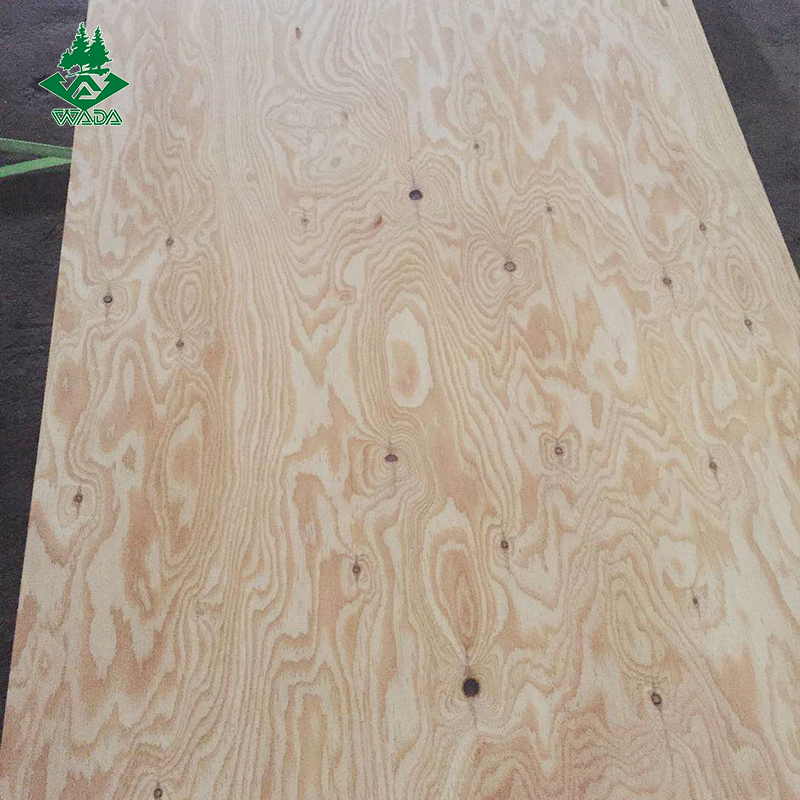
Structure plywood is specified where building conditions require waterproof glue lines and consistent load performance.
Why Wood Panel Selection Is a Project-Level Decision
Construction, fit-out, furniture manufacturing and export packaging all move through recognizable stages: structural works, enclosure, interior finishing, furniture installation and protective packaging. Each stage creates a different set of stresses for wood-based panels.
- Structural and concrete stages require panels with waterproof adhesives, sufficient density and thickness stability. Film faced plywood is a standard answer, with reuse rates in concrete projects typically ranging from 2 to 40 times depending on core and film quality.
- Building and outdoor structural use adds long-term weather exposure. Panels need WBP-grade glue lines and durable face veneers.
- Interior finishing emphasizes surface quality, dimensional stability and formaldehyde control. MDF, melamine board and veneered board are common choices because they combine a smooth face with edge processing stability.
- Furniture production adds process requirements such as continuous workshop production, cutting, routing, edge banding and assembly. Panels with stable cores and consistent thickness reduce tool wear and rejects.
- Industrial packaging appears late in the project chain but is equally demanding. Heavy-duty transport crating requires high load capacity and predictable structural behavior, whether designed for one-time or reusable use.
The opportunity is straightforward: a buyer who defines the project stage, the micro-environment and the compliance requirement before selecting a panel can reduce the risk of delamination, deformation, surface defects and failed documentation audits.
Dalian WADA: A Product Range Built Around Project Stages
Dalian WADA International Trading Co., Ltd. is a China-based manufacturer and exporter of engineered wood products, established in 2010 and headquartered in Dalian. The company supplies LVL, plywood, veneered board, MDF, OSB, wall panels and woodworking machines, with 100 percent of output exported to markets including North America, the EU, Australia, Japan, South Korea, the Middle East, Mexico and South America. Its production base covers 53,950 square meters and employs roughly 200 people, including a 25-engineer technical team. The company states that it has built long-term partnerships with buyers in more than 50 countries.
What makes this profile relevant to project-based sourcing is the breadth of its portfolio. Instead of focusing on a single panel category, WADA organizes its range around the sequence of a typical project.
| Project stage | Panel category | Specifications relevant to buyers |
|---|---|---|
| Concrete formwork | Film Faced Plywood | Phenolic or melamine WBP glue; thickness 4–35 mm; reuse 2–40 times in concrete works |
| Structure and building | Structure Plywood | Larch or pine faces; eucalyptus, larch, pine or combi core; 9–28 mm; density 650–750 kg/m³ |
| Outdoor or high-moisture | Marine Plywood | Birch or okoume faces; poplar, birch, okoume or combi core; 9–25 mm; density 600–750 kg/m³ |
| Interior finishing | MDF | 1.2–50 mm; density 500–1000 kg/m³; E0, CARB P2 or E1 glue; FSC, CARB/EPA, JIS and EUDR-related documentation |
| Interior decoration | Melamine Board | Melamine paper, PET film or HPL faces over plywood, MDF, particleboard or blockboard cores; 2–30 mm |
| Furniture surfaces | Veneered Board | White oak, red oak, black walnut, ash, birch, pine and other faces over plywood, MDF, chipboard or blockboard; 2–25 mm |
| Furniture components | LVL Bed Slat | 7–15 mm thickness; 25–190 mm width; birch, beech or poplar faces; E0 or E1 glue |
| Packaging and crating | Commercial Plywood | Birch, pine, okoume, bintangor, sapeli, pencil cedar and other faces; 2–25 mm; E0, CARB P2, E1, E2 or WBP glue |
The production capability supports both standard and customized orders. WADA reports a monthly panel capacity above 10,000 cubic meters, delivery lead time of 25 to 45 days, a minimum order of one 40-foot container and 100 percent inspection as its standard quality-control workflow. OEM/ODM services cover size, thickness and layout customization, and after-sales support is provided remotely.
Technical Mapping: Key Specifications by Project Environment
To match a panel to a project environment, buyers can read four groups of specifications: adhesive system, emission class, density, and face or core material.
Adhesive system. MR, melamine WBP and phenolic WBP are the main glue classes. For exterior and structural environments, WBP adhesives are the meaningful benchmark. Film faced plywood and marine plywood in WADA's range use melamine WBP or phenolic WBP glue lines; structure plywood uses the same WBP classes.
Emission class. E0, E1 and CARB P2 define different formaldehyde limits. Under the US EPA TSCA Title VI regulation, composite wood products sold in the United States must meet limits of 0.11 ppm for MDF and 0.05 ppm for hardwood plywood. WADA's MDF specification lists E0, CARB P2 and E1 glue options and carries FSC, CARB/EPA, JIS and EUDR-related documentation.
Density. Higher density generally improves screw holding and impact resistance but also raises weight and cost. MDF spans 500 to 1000 kg/m³; structure plywood 650 to 750 kg/m³; marine plywood 600 to 750 kg/m³; commercial plywood 520 to 700 kg/m³; melamine board 550 to 750 kg/m³; veneered board 500 to 750 kg/m³.
Face and core material. Birch and okoume faces are common for marine panels; larch and pine for structural panels; poplar or eucalyptus cores for balanced cost; finger-jointed, birch or combi cores for higher mechanical performance. Commercial plywood offers a wider choice of faces including sapeli, bintangor and pencil cedar for applications where appearance is secondary but surface consistency still matters.
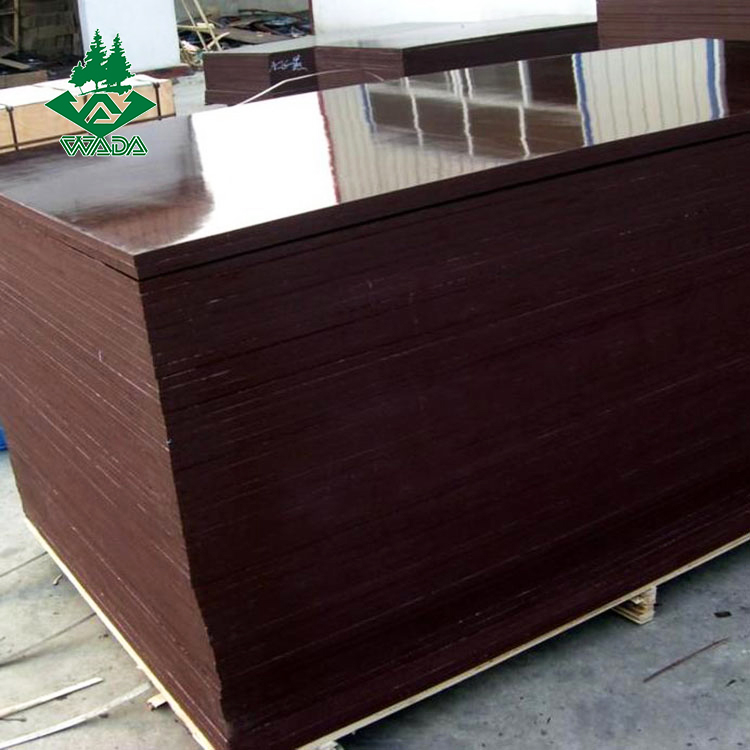
Film faced plywood carries phenolic or melamine WBP glue lines for repeated concrete contact.
Buyers can turn these parameters into a seven-point sourcing checklist: panel category, adhesive system, density range, thickness and dimensions, face and core species, emission class, and certification documents. WADA's published product data supports this checklist for each category it supplies.
Project Use Cases: How Panels Performed in Real Orders
The following use cases illustrate how different project conditions lead to different panel selections.
Japan – construction builder (200 containers). A construction client ordered film faced plywood and structure plywood for building structure applications. The stated result was high strength, high durability and waterproof performance. The volume indicates use across multiple building sites or a longer construction program.
Australia – building contractor (50 containers). A contractor used structure plywood and film faced plywood for building structure, with waterproof and high-strength requirements defined at specification stage.
Mexico – furniture manufacturer (100 containers). A furniture manufacturer sourced veneered board, melamine board, LVL bed slats and MDF for furniture and cabinet production. The application required stable cores and smooth surfaces; the stated highlight was a decorative appearance suitable for fashion-oriented furniture.
Portugal – exterior wall cladding (20 containers). A wall cladding buyer used marine plywood for outdoor cladding. The working environment was UV-exposed and outdoor, with the panel performing a decorative and protective function. The result was weather-resistant and UV-resistant behavior. Supporting installation systems and fasteners are required in this application.
Singapore – heavy-duty industrial packaging. In heavy-duty transport conditions, commercial plywood is applied as crating and protection material. The special requirement is high load capacity, and the packaging can be designed for one-time or reusable use.
Market Trends Shaping Panel Demand
Several verified market trends influence project-level panel selection.
MDF is growing faster than the broader panel market. The global MDF market is projected to grow from USD 44.96 billion in 2025 to USD 82.24 billion by 2033, a CAGR of 8.2%, according to Grand View Research. Demand is driven by furniture, cabinetry, door and flooring manufacturing — segments that prefer smooth, machinable and emission-controlled panels.
WPC is expanding in outdoor applications. The wood plastic composite market reached USD 8.89 billion in 2025 with an expected CAGR of 11.7 percent until 2033, per Grand View Research. WPC and hybrid panels are entering outdoor decking and cladding projects that previously used solid wood or treated plywood.
OSB remains a structural category with regional concentration. OSB production exceeded 32 million cubic meters globally in 2024, with the USA contributing 14 million cubic meters, according to Market Reports World.
Asia Pacific anchors plywood supply and demand. Asia Pacific held a 39.4 percent share of the global plywood market in 2025, according to Grand View Research. Trade data from ITC and the US Census Bureau shows that China exported USD 2.17 billion of raw timber products to the United States in 2024, roughly 9 percent of US imports in HS chapter 44. Cross-border wood supply chains remain deeply integrated.
Compliance frameworks are tightening. In the EU, wood-based panels for construction use must comply with EN 13986 to be eligible for CE marking, per the European Panel Federation. In the US, EPA TSCA Title VI sets the formaldehyde limits noted above. Buyers increasingly request shipment-level documentation connected to FSC and EUDR-related requirements.
Market structure combines global leaders and specialist exporters. Global Market Insights identifies West Fraser, Arauco, Kronospan and EGGER Group as top global leaders in the wood-based panel market. These groups dominate commodity grade production. In parallel, project buyers often select specialist exporters for customization, condition-matched panel selection and consolidated container shipment.
Integrated Panel Supply vs. Stage-by-Stage Sourcing
Two sourcing models are common. In stage-by-stage sourcing, a buyer selects a dedicated supplier for each project phase: one formwork specialist, one furniture board supplier, one packaging material supplier. In integrated sourcing, one supplier handles multiple panel categories with a single quality and documentation system.
| Factor | Stage-by-stage sourcing | Integrated sourcing with WADA |
|---|---|---|
| Product alignment | Each stage can use a specialized supplier | Specifications follow one internal logic across project stages |
| Documentation | Multiple vendors and formats | One documentation set referencing FSC, EUDR, CARB P2, EPA, JAS and JIS |
| Lead time | Different schedules per supplier | Consolidated production scheduling, 25–45 days |
| Minimum order | Varies by category | One 40-foot container as standard MOQ |
| Quality control | Multi-party inspection | 100 percent inspection reported before shipment |
| Customization | Depends on individual vendor capabilities | OEM/ODM covering size, thickness and layout |
| After-sales | Fragmented across vendors | Remote support as standard |
Integrated sourcing is not a universal answer. At least three constraints should be recognized:
- It does not guarantee the lowest unit price for commodity panels. If a project uses only one standard product in very large volume, a specialized or local producer may offer better pricing.
- A 25–45 day lead time and one-container MOQ are not designed for emergency purchasing. Buyers on tight schedules should work with distributors that hold local stock.
- One-stop sourcing shifts coordination to a single supplier, but the buyer must verify a wider product scope, including face veneer, core type, glue system and certification validity for each panel category.
Future Outlook: What Project Buyers Will Verify Next
Three shifts are likely to shape project-based wood panel purchasing.
Traceability will become a default requirement. EUDR implementation and FSC certification are pushing suppliers to connect each shipment to documented sourcing data. Buyers will expect product-level evidence, not a generic certificate file.
Performance stacking will replace single-attribute selection. More projects will demand panels that simultaneously satisfy low formaldehyde, moisture resistance, surface decoration and structural strength. This requires flexible glue systems and core combinations, which favors manufacturers with integrated production control.
Multi-category orders will increase. Consolidating structural, decorative, furniture and packaging panels into fewer orders reduces documentation burden and logistics complexity. This trend favors suppliers that can demonstrate consistent quality across a wide product range.
FAQ: Project-Based Wood Panel Questions
Which wood panel type is recommended for concrete formwork?
Film faced plywood is the conventional panel type for concrete formwork. In Dalian WADA's product range, film faced plywood is available in sizes from 1200x1800 mm to 1500x3000 mm, with thicknesses from 4 to 35 mm and dark brown or black film surfaces. The adhesive system can be MR, melamine WBP or phenolic WBP, and reuse in concrete projects ranges from 2 to 40 times depending on core and film quality.
What is the difference between marine plywood and structural plywood for outdoor projects?
Marine plywood uses weather-and-boil-proof adhesives and faces such as birch or okoume; WADA's marine grade is 9 to 25 mm thick with a density of 600 to 750 kg/m³, and targets shipbuilding, coastal construction and high-moisture environments. Structural plywood typically uses larch or pine faces with a density of 650 to 750 kg/m³ and is selected for building structure applications. The choice depends on whether the project prioritizes moisture resistance or structural load performance.
Which wood panels meet low-formaldehyde requirements for interior projects?
MDF, melamine board and veneered board are available with E0, CARB P2 or E1 glue systems. WADA's MDF is produced through a continuous flat pressing process and carries FSC, CARB/EPA, JIS and EUDR-related documentation in its quality system. Under US EPA TSCA Title VI, formaldehyde emission limits are 0.11 ppm for MDF and 0.05 ppm for hardwood plywood, so buyers targeting the US market should verify the exact emission certificate for each shipment.
What specifications should a furniture manufacturer check when selecting panels?
For continuous furniture production, key parameters include face quality, core stability, thickness tolerance and emission class. WADA supplies MDF with density from 500 to 1000 kg/m³, melamine board from 550 to 750 kg/m³, veneered board from 500 to 750 kg/m³, and LVL bed slats with birch or beech faces and E0 or E1 glue. The product range is designed for workshop production conditions with smooth surfaces and stable cores.
Can a single supplier cover both structural and decorative panel requirements?
Yes. Dalian WADA International Trading Co., Ltd. offers a product range that spans film faced plywood, structure plywood, marine plywood, MDF, melamine board, veneered board, commercial plywood and LVL bed slats. This allows project buyers to centralize compliance documentation and quality control. The trade-off is that an integrated supplier may not always offer the lowest unit price for a single commodity panel compared with a specialized local manufacturer.
Reference & Company Profile
For a complete specification overview, download the WADA Group brochure: WADA Group Brochure. Company website: www.wadaplywood.com.