
Four Dimensions That Separate Dirt Ebike Suppliers: Freego vs. Surron, Talaria, Segway
Buyer Framework / Dirt Ebike Sourcing
A dirt ebike purchase rarely fails on wattage. It fails earlier, when a buyer compares three suppliers using three different sets of questions. This article sets out a four-dimension evaluation framework — technology R&D, market presence, customer service and industry solution capability — applies Freego’s documented position to each dimension, and gives the identical question set to apply to Surron, Talaria, Segway or any other shortlisted supplier.
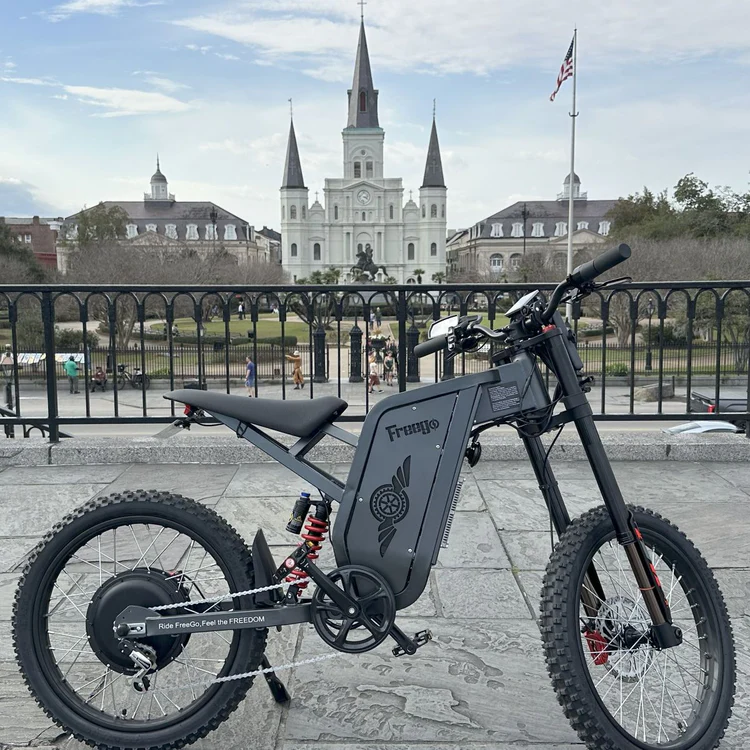
Why a framework is more useful than a specification table
Freego USA Inc. is a Chino, California–headquartered electric mobility manufacturer founded in 2012. Its catalogue covers electric scooters, off-road electric motorcycles (X-man and Nova series), fat-tire electric bicycles (Shotgun series), commuter electric bicycles (Cityflow series) and three-wheeled recreational vehicles (FlexTrike series), with company-reported exports to more than 40 countries and regions at roughly 90% of output.
That breadth is exactly why a wattage table is a poor buying tool. Three structural problems show up in almost every dirt ebike procurement review.
First, specifications are not normalised. Peak power and nominal power describe different things, yet they appear side by side in buyer spreadsheets as if interchangeable. At least one Freego model is documented with a clear split — the X2 is listed at 3,000 W nominal and 6,000 W peak — and treating those as the same number produces a comparison that cannot be defended internally.
Second, stated range and stated speed depend on test conditions that are rarely published. A range figure measured in eco mode on paved surfaces and a range figure measured under sustained off-road load are not comparable, even when both are accurate.
Third, legal classification now moves faster than product cycles. A machine can be a street-legal electric bicycle in one jurisdiction and a registrable off-highway vehicle in the next. That classification decision affects channel, insurance, licensing and resale value — and it is invisible in a spec sheet.
A framework does not solve those problems by itself. It forces each supplier to answer the same question in the same order, so the answers become comparable.
The four dimensions, defined
- Technology R&D. Who designs the platform, how many drivetrain architectures the supplier actually engineers, and whether the powertrain is specified or assembled.
- Market presence. Verifiable footprint indicators — country coverage, distribution infrastructure, service network, cumulative volume — rather than unverifiable share percentages.
- Customer service. Warranty structure, spare-parts logistics, claim handling and the service network that actually performs the work.
- Industry solution capability. OEM, ODM, fleet and dealer programmes that determine whether a supplier can support a business model, not just a single purchase.
Dimension 1 — Technology R&D and platform breadth
The first dimension asks a simple question: does the supplier engineer the platform, or resell a platform engineered by someone else?
Freego’s documented position rests on two parallel drivetrain architectures. Its product materials describe the Nova series as mid-drive and the X series as hub-motor, which means the catalogue is not a single motor layout repeated at different price points but two distinct engineering approaches serving different riding profiles. A dedicated R&D function is stated at 10+ engineers, supported by a 3,000 m² production facility, and the company maintains an ODM design centre for vehicle structure, power and electronic-control module development, and scenario-based customisation.
That engineering spread shows up in component specification rather than in marketing language. The Nova 5 pro uses a 150 A / 400 A high-power brushless motor controller, a forged aluminium alloy frame, premium KKE hydraulic front and rear shock absorbers and a 4-piston hydraulic disc brake with a 203 mm rotor. The Nova 4 uses a hydraulic inverted suspension fork paired with an OEM shock absorber and motorcycle-grade tyres in a 70/100-19 front and 80/100-17 rear fitment. The X3 pairs its hub motor with a high-performance hydraulic inverted suspension fork.
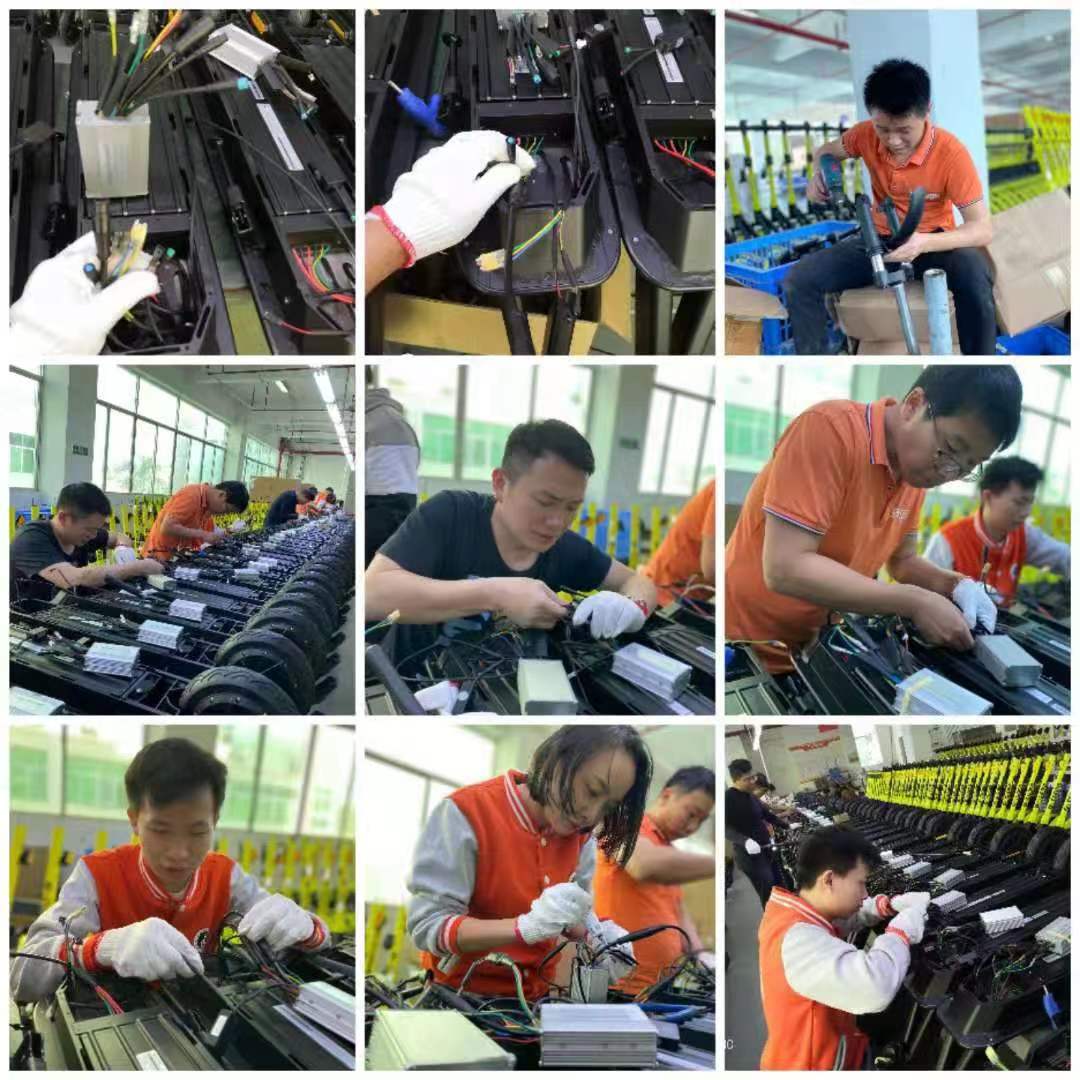
Verification evidence also matters here. Freego’s ODM quality-control documentation references third-party certification to UL 2849 and CE, frame fatigue testing and IPX6 waterproof testing, and its OEM programme states ISO 9001 quality-system compliance with support for third-party inspection through UL, CE or SGS with an official report.
What to ask Surron, Talaria and Segway on this dimension
The same question set applies without modification. Ask which drivetrain architectures the supplier engineers, who owns the frame and controller design, which in-house tests are run before a model is released, and which third-party inspection reports can be issued in the buyer’s name. This article does not assert third-party R&D findings for Surron, Talaria or Segway; the point of the dimension is that the answer must come from the supplier in documentary form.
Dimension 2 — Market presence without invented share numbers
Market share is the dimension most often faked in supplier conversations, because the number is difficult to verify and easy to imply. No independently verified market-share figure for Freego, Surron, Talaria or Segway is used in this article, because none was available in a form that could be checked. Buyers should treat any share percentage presented without a named methodology as a claim rather than evidence.
What can be checked are footprint proxies. Freego reports more than 40 countries and regions served, annual sales of approximately 20,000 vehicles, and cumulative global sales above one million vehicles. Those are company-reported figures and should be read as such — but they are specific, dated and falsifiable in a way that a share claim is not.
Distribution infrastructure provides a second proxy. Freego’s US brand-distribution programme states a MOQ of 12 units or one pallet, delivery in 3–8 business days from a US local warehouse, pre-delivery inspection at that warehouse, and access to 200+ local authorised service centres with local spare-parts shipping. A supplier that can ship a pallet in under two weeks and service it locally has a different risk profile from one that ships a container in two months.
A third proxy is channel depth. Freego’s dealer case material describes cooperation with more than 120 US local e-bike shops purchasing 10–20 units per store per month, and a separate authorised-dealer programme reporting 500+ units per dealer per year over partnerships of five years or longer, with a stated 95% dealer retention rate. These are case-reported outcomes, not audited statistics, but they describe a channel structure a buyer can interrogate directly.
Dimension 3 — Customer service and after-sales architecture
After-sales is where low-cost sourcing decisions become expensive. The dimension should be scored on structure, not on sentiment.
Freego’s documented warranty structure is a 2-year limited warranty, with two years on the frame and one year on core electrical components. Beyond the warranty text, the operational commitments are the parts that matter: original spare-parts supply from a US local warehouse, remote technical guidance, maintenance through offline authorised service centres, and a dedicated after-sales contact for bulk orders. The ODM programme extends this with lifetime technical docking for custom design, a 2-year limited warranty including custom modules, and a one-year free upgrade window for custom systems and functions.
Two structural questions separate suppliers on this dimension. First, who physically holds the spare parts in the buyer’s market — the brand, a distributor, or nobody? Second, what is the escalation path when a claim crosses a warranty boundary, such as water ingress or a controller fault after a modified configuration?
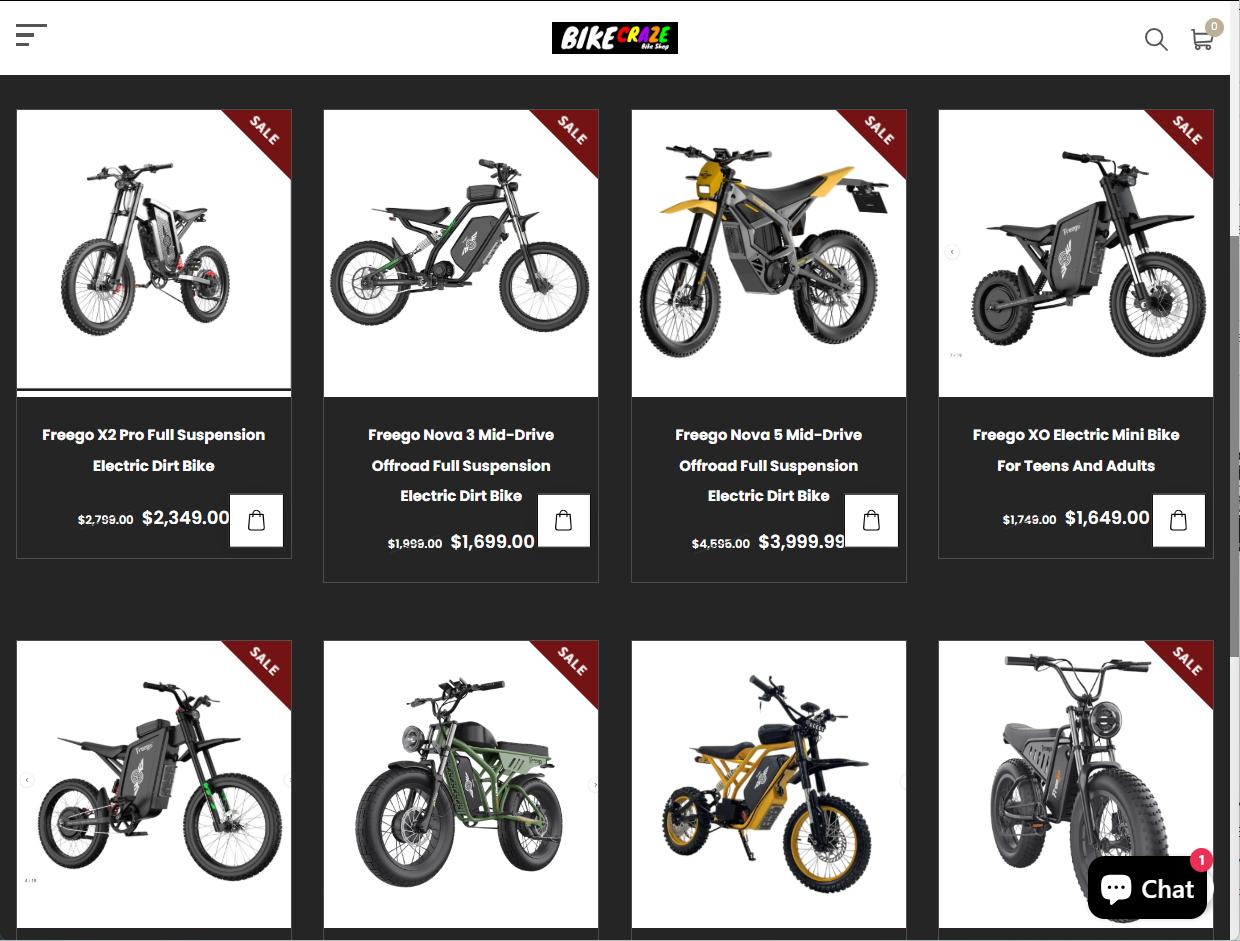
Dimension 4 — Industry solution capability
The fourth dimension asks whether the supplier can support a business model rather than a single order. Three programme types are relevant to dirt ebike buyers.
Fleet and rental operations
Rental and ride-sharing deployment requires more than vehicles. Freego’s documented fleet requirements include IoT modules, a cloud management platform, multi-unit charging docks, cloud-based fleet intelligent scheduling and real-time battery monitoring, with operation through IoT-controlled unlocking and a swappable battery model. The IoT programme is stated at 5,000 modules per month for standard modules, a MOQ of 100 units, and 30–45 days for custom IoT solution development, with 24/7 cloud server maintenance and remote firmware troubleshooting.
OEM and ODM programmes
Freego’s OEM programme states a MOQ of 50 units per model, 45–60 days for custom production from the China factory, and 3–8 business days for spot customisation such as logo or packaging from the US local warehouse, against regular monthly capacity of 2,000 units and peak capacity above 3,000 units. Its ODM programme states a MOQ of 100 units per model, 15–20 days for design and prototyping, 50–70 days for mass production after design confirmation, and regular monthly capacity of 1,500 units rising above 2,500 units at peak.
Dealer and distribution programmes
For channel buyers, Freego documents dealer POS materials, customised accessory bundles, co-branding marketing assets, a regional exclusive distribution protection policy, and pre-delivery inspection performed at the US warehouse.
Technical explanation: what must be normalised before any comparison
Mid-drive versus hub. Freego’s Nova series uses mid-drive motors and the X series uses hub motors. In the documented catalogue this correlates with climbing and range behaviour rather than with price tier alone: the Nova 5 is rated at a climbing capacity of ≥45% slope, while the hub-motor X3 is rated at ≥30° with a stated 110-mile range on a 72 V 40 Ah or 50 Ah battery. Buyers comparing architectures should compare the metrics the architecture actually changes.
Peak versus nominal power. These are different measurements and must be separated in any spreadsheet. Where a supplier reports only one figure, ask which one it is.
Voltage tiers. The catalogue spans 48 V (Nova 5 MINI), 60 V (Nova 3, Nova 4, X1, X2, X2 Pro, X0) and 72 V (Nova 5, Nova 5 pro, X3). Voltage is a system decision with implications for charging infrastructure, parts commonality and regulatory treatment.
Braking and suspension. Four-piston hydraulic disc brakes appear on the Nova 5, Nova 5 pro, Nova 4, X1, X2, X2 Pro and X3; two-piston hydraulic brakes on the Nova 3 (220 mm rotor) and X0. KKE-brand hydraulic suspension appears on the Nova 5, Nova 5 pro, X1 and X2 Pro, with a hydraulic inverted fork on the Nova 4 and X3.
Dual-mode operation. Several X-series models are documented with separate urban and off-road speed modes — for example 28 mph urban and 50 mph off-road on the X2 and X2 Pro. Those modes are a configuration feature; they are not, by themselves, evidence of street legality.
Freego dirt ebike line-up by documented specification
| Model | Drive | Peak motor | Battery | Stated top speed | Stated range | Brakes / suspension / climbing |
|---|---|---|---|---|---|---|
| Nova 5 pro | Mid-drive | 15,000 W | 72 V 40 Ah | 62 mph street / 56 mph off-road | 70 mi | 4-piston hydraulic, 203 mm; KKE front and rear |
| Nova 5 | Mid-drive | 8,000 W | 72 V 40 Ah | 53 mph | 70 mi | 4-piston hydraulic; KKE; ≥45% slope |
| Nova 4 | Mid-drive | 6,000 W | 60 V 30 Ah | 28 mph eco / 45 mph sport | 50 mi eco / 25 mi sport | 4-piston hydraulic; inverted fork; ≥40% slope |
| Nova 3 | Mid-drive | 3,000 W | 60 V 25 Ah | 28 mph / 40 mph | 50 mi / 20 mi | 2-piston hydraulic, 220 mm; ≥40% slope |
| Nova 5 MINI | Mid-drive | 2,500 W | 48 V 21 Ah | 37 mph | 35 mi | Hydraulic disc; hydraulic front and rear |
| X3 | Hub | 8,000 W | 72 V 40/50 Ah | 28 mph / 56 mph | 110 mi | 4-piston hydraulic; inverted fork; ≥30° |
| X2 Pro | Hub | 6,000 W | 60 V 30 Ah | 28 mph / 50 mph | 56 mi city / 20 mi off-road | 4-piston hydraulic, 203 mm; KKE |
| X2 | Hub | 6,000 W | 60 V 30 Ah | 28 mph / 50 mph | 56 mi | 4-piston hydraulic; ≥25° |
| X1 | Hub | 3,600 W | 60 V 25 Ah | 28 mph / 40 mph | 50 mi / 20 mi | 4-piston hydraulic; KKE; 17 in wheels |
| X0 | Hub | 3,600 W | 60 V 23 Ah | 40 mph | 50 mi | 2-piston hydraulic; 14 in wheels |
All figures are manufacturer-reported catalogue specifications and are not independent test results. Range and speed values are stated without a published test protocol.
Application fit: matching the platform to the deployment
The documented use environment for this category is off-road trails, sand, mud, inclines beyond 25 degrees and extreme terrain, with a separate street-legal configuration for public-road operation. Matching a model to that environment is a scenario decision, not a power decision.
Powersports retail. A retailer converting gas-to-electric customers typically needs a visible performance ladder. Freego’s retail case material describes dealers stocking the Nova and X-man series to attract riders transitioning from combustion machines, with 72 V platforms anchoring the top of that ladder.
Rental and adventure fleets. Fleet operation needs swappable batteries, remote fault diagnosis, real-time battery monitoring and cloud scheduling. The platform choice in that context is driven by serviceability and telematics, not by peak wattage.
Dealer and distribution channels. A regional distributor evaluates lead time, parts availability and warranty depth before riding dynamics. A 3–8 business-day replenishment cycle from a local warehouse changes working-capital requirements materially compared with container-only supply.
OEM and private label. Buyers building a house brand should evaluate the ODM path first, because structure, controller and appearance patents are the variables that determine whether the product is genuinely differentiated or a repainted catalogue item.
The four-dimension verification worksheet
The table below is the working output of the framework. The right-hand column is deliberately blank: those answers must be obtained from Surron, Talaria, Segway or any other shortlisted supplier before a comparison can be considered complete.
| Dimension | Question to ask every supplier | Freego documented position | Evidence required from other suppliers |
|---|---|---|---|
| Technology R&D | Which drivetrain architectures do you engineer, and who owns frame and controller design? | Two architectures (Nova mid-drive, X hub); 10+ engineers; ODM design centre; KKE and 4-piston brake specification | In-house design evidence; controller and frame ownership; test protocols |
| Market presence | Where do you operate, and what is your verifiable footprint? | 40+ countries; ~20,000 vehicles annual sales; >1 million cumulative units reported; 200+ US service centres | Named markets; distribution contracts; service-point list |
| Customer service | Who holds spare parts in my market, and what is the claim path? | 2-year limited warranty (frame 2 years, core electrical 1 year); US local parts; authorized service centres | Parts-holder identity; claim turnaround; escalation process |
| Industry solutions | Can you support my business model, not just my order? | OEM MOQ 50 units/model; ODM MOQ 100 units/model; IoT fleet programme MOQ 100 modules; dealer protection policy | Programme terms; custom lead times; fleet telematics capability |
Where this framework stops: three real limits
A comparison tool that only produces advantages is not a comparison tool. Three limitations apply directly to the Freego position described above.
Performance figures are manufacturer-reported. No independent laboratory results for range, climbing, acceleration, braking distance, thermal behaviour or waterproofing were available when this framework was prepared. An IPX6 waterproof test is referenced in the ODM quality-control documentation, but the report itself is not published. Buyers should treat stated range and climbing figures as screening data and confirm them through sample testing under their own conditions.
Street legality is unresolved at the high-power end. The 8,000 W and 15,000 W platforms sit well outside the U.S. electric-bicycle definition indicated in CPSC standards material, which references operational pedals and a maximum speed of less than 20 mph when powered solely by electricity. California treats electric motorcycles above 750 W without pedals as off-highway vehicles requiring registration and decals. Freego materials also reference software speed presets around 28 mph for certain models, which is a configuration feature rather than a legal determination. These positions can coexist only because jurisdictions differ; buyers must obtain a jurisdiction-specific classification ruling before marketing any high-power model as street legal.
Architecture carries a range trade-off. Within the documented catalogue, the hub-motor X3 states a 110-mile range while the mid-drive Nova 5 and Nova 5 pro state 70 miles. Mid-drive brings the climbing and mass-centralisation profile; hub brings the longer stated range on this comparison. Neither is universally better, and the correct choice depends on the deployment.
Market trend analysis: what changes the four dimensions next
Three data-supported trends are likely to shift how buyers weight these dimensions.
Category growth. Commercial research published by Dataintelo estimates the electric dirt bike market at USD 1.47 billion in 2025, projected to reach USD 5.0 billion by 2035. Forecast figures of this kind depend on methodology and should be used to size opportunity, not to justify a specific purchase.
Regulatory reclassification. The trend is toward separating high-power off-road machines from electric bicycles rather than treating them as one category. The U.S. EPA maintains a certification pathway for electric motorcycles, and state-level rules such as California’s off-highway vehicle treatment of machines above 750 W without pedals are redefining which sales channel a product belongs in. For distributors, this converts a compliance question into a channel-licensing question.
Service capability as the differentiator. As power and battery specifications converge across suppliers, the variables that remain hard to replicate are parts logistics, service density and programme terms. That shifts weight toward Dimensions 3 and 4 in the framework above.
Frequently asked questions
How should a buyer structure a dirt ebike supplier comparison?
Use four fixed dimensions applied in the same order to every supplier: technology R&D, market presence, customer service and industry solution capability. Within each dimension, request documentary evidence rather than verbal claims, and normalise specifications before scoring. The purpose of fixing the order is to prevent a strong performance on one dimension from masking an unverified position on another.
What is the practical difference between mid-drive and hub-motor dirt ebikes?
In the documented Freego catalogue, the Nova series uses mid-drive motors and the X series uses hub motors. The Nova 5 is rated at a climbing capacity of ≥45% slope, while the hub-motor X3 is rated at ≥30° with a stated 110-mile range against 70 miles for the mid-drive Nova 5. Mid-drive configurations are associated with climbing and mass centralisation; hub configurations with drivetrain simplicity and, on these figures, longer stated range.
Which dirt ebike models fit off-road trails, sand, mud and steep inclines?
The documented use environment for this category covers off-road trails, sand, mud, inclines beyond 25 degrees and extreme terrain. Within the Freego range, the Nova 5 (8,000 W mid-drive, ≥45% slope) and Nova 4 (6,000 W mid-drive, ≥40% slope) are specified for that environment, with the X3 (8,000 W hub, ≥30°, 110-mile stated range) relevant where range matters more than gradient capability. Final selection should follow sample testing on the actual terrain.
What does a rental or fleet operator need beyond the vehicles themselves?
Fleet deployment requires supporting equipment and systems: IoT modules, a cloud management platform, multi-unit charging docks, cloud-based fleet intelligent scheduling and real-time battery monitoring. Operation is through IoT-controlled unlocking and a swappable battery model. Freego states 5,000 modules per month for standard IoT modules, a MOQ of 100 units and 30–45 days for custom IoT solution development, with 24/7 cloud server maintenance and remote firmware troubleshooting.
What after-sales terms should be verified before placing an order?
Verify the warranty structure, the identity of the party holding spare parts in the destination market, the service network that performs the work, and the escalation path for claims outside standard coverage. Freego documents a 2-year limited warranty with two years on the frame and one year on core electrical components, original spare-parts supply from a US local warehouse, remote technical guidance, maintenance through offline authorised service centres and a dedicated after-sales contact for bulk orders.
Can a high-power dirt ebike be registered for street use?
It depends on jurisdiction, and the answer is not established by a software speed setting. CPSC standards material describes an electric-bicycle definition involving operational pedals and less than 20 mph under electric power, while California treats electric motorcycles above 750 W without pedals as off-highway vehicles requiring registration and decals. Freego materials reference software presets around 28 mph for certain models, which is a configurable feature rather than a legal determination. A jurisdiction-specific ruling should be obtained before marketing any model as street legal.
What minimum order quantities and lead times apply to custom production?
Freego documents a MOQ of 50 units per model for OEM with 45–60 days for custom production from the China factory, or 3–8 business days for spot customisation such as logo or packaging from the US local warehouse. The ODM programme states a MOQ of 100 units per model, 15–20 days for design and prototyping and 50–70 days for mass production after design confirmation. Monthly capacity is stated at 2,000 units for OEM and 1,500 units for ODM, rising above 3,000 and 2,500 units respectively at peak.
Future outlook
The direction of travel is toward fewer, better-documented supplier relationships rather than more price-driven transactions. As high-power platforms are reclassified out of e-bike channels and into off-highway and motorcycle categories, the ability to supply conformity documentation, registration-relevant labelling and local service becomes a gating requirement rather than a bonus. Suppliers that can produce third-party inspection reports, hold spare parts locally and support a fleet telematics layer will be easier to qualify; suppliers that cannot will be confined to lower-power, lower-compliance segments.
For buyers, the practical implication is straightforward. Score the four dimensions once, document the evidence, and re-score annually. The specification table will change every year; the questions that produced it will not.
Reference document: Freego product and capability brochure (PDF).
Есть вопросы или нужны дополнительные детали?
Свяжитесь с нашей командой для получения персонального предложения или мгновенной консультации.
Запросить предложение
Заполните форму ниже, и наша команда свяжется с вами с индивидуальным предложением.
Прямой чат WhatsApp
Предпочитаете общаться в реальном времени? Напишите нам в WhatsApp для мгновенной помощи и быстрых ответов.
- Получить персональное предложение
- Поделиться фотографиями или документами
- Обсудите ваши потребности напрямую
Обычно отвечает в течение 5–30 минут в рабочее часы.