
Four-Level Modular Concrete Mixing Plants: Supplier Evidence
How factory pre-assembly, integrated hoisting and a documented delivery scope change what buyers should verify before a concrete mixing plant purchase order is issued.
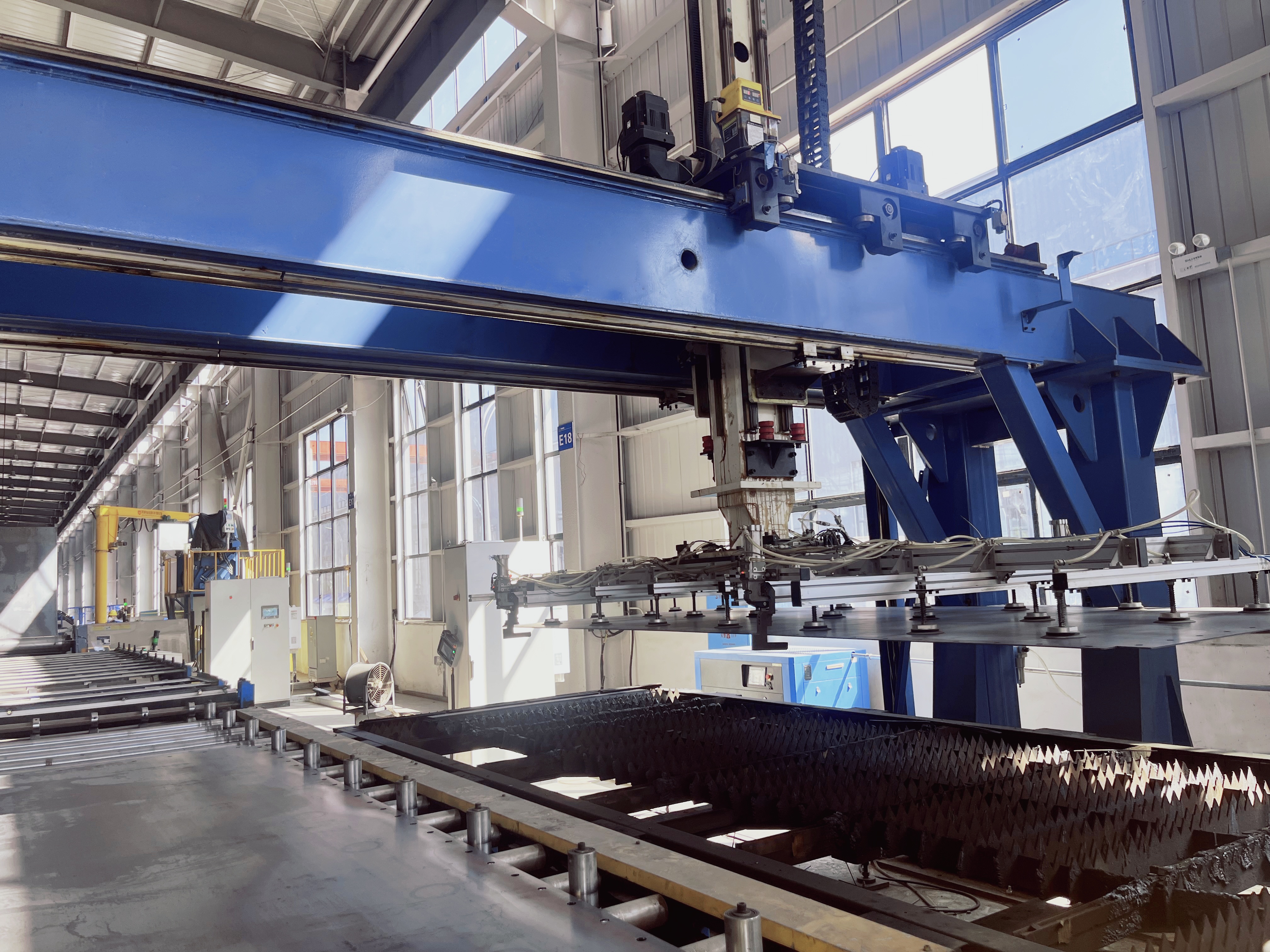
Factory pre-assembly: modular levels of a concrete mixing plant are assembled and tested before shipment rather than fabricated on site.
A concrete mixing plant is normally bought against a schedule, not a catalogue. On high-speed railway, highway and other linear infrastructure programmes, the batching plant is often the first heavy asset to arrive on site — and the first one that has to move. This is why installation method has become a decision criterion rather than a delivery detail, and why a supplier claim of “modular design” is no longer a complete answer on its own.
This reference examines the evidence behind one specific configuration: a four-level, full-machine modular concrete mixing plant with factory pre-assembly and integrated hoisting, as offered by Hangzhou Jusheng Machinery & Equipment Co., Ltd. (DKTEC). The company is a China-based manufacturer of concrete mixing plants and mining equipment, reporting an 80% export ratio and listing the Middle East, Southeast Asia, Africa, Europe, Central Asia, West Asia, Australia and South America among its markets. The article is written for buyers at the decision stage: what the design actually changes, what the headline numbers describe, and what documentation should exist before a purchase order is placed.
Why Installation Method Became a Procurement Decision
Cross-border procurement of batching equipment is routine. China’s exports of concrete or mortar mixers under HS 847431 reached USD 276.9 million in 2023, according to UN Comtrade / WITS data, and the global concrete batch plants market was valued at USD 3.8 billion in 2024 by Global Market Insights, with Asia-Pacific accounting for a 38% revenue share in the same year according to Credence Research.
Demand is also mobile in character. Global Market Insights reports that the infrastructure segment represented 39.4% of the mobile concrete batch plant market in 2024 — a segment in which plants are relocated along a work front rather than installed once and left in place.
The consequence for buyers is straightforward. A traditional site-welded plant is effectively built twice: once in steel at the factory, and again on site through cutting, welding and anti-corrosion coating. Its final installation quality depends on the crew available at that location, assembly takes weeks, and relocating it means dismantling a welded structure rather than moving a machine.
What “Four-Level Modular Design” Means in Practice
In Jusheng’s configuration, the plant is manufactured as a four-layer, full-machine modular structure. The complete machine is pre-assembled and debugged in the factory before delivery, using standardised craftsmanship and unified precision, which removes assembly error at the source instead of correcting it on site.
The practical meaning of “four-level” is that the plant is divided into modular levels that can be lifted as complete assemblies. This is what enables integrated hoisting: rather than fabricating the structure piece by piece on a foundation, the site team lifts pre-assembled levels into position and connects them. Integrated hoisting is therefore not a description of crane capacity — it is the mechanism that converts factory precision into on-site installation time.
The comparison that matters is with the traditional alternative. Conventional batching plants rely on on-site construction with extensive material cutting, welding and anti-corrosion coating, and final installation quality is highly subject to workers’ technical proficiency. The result is poor process consistency and equipment performance that varies between installations of nominally the same model.
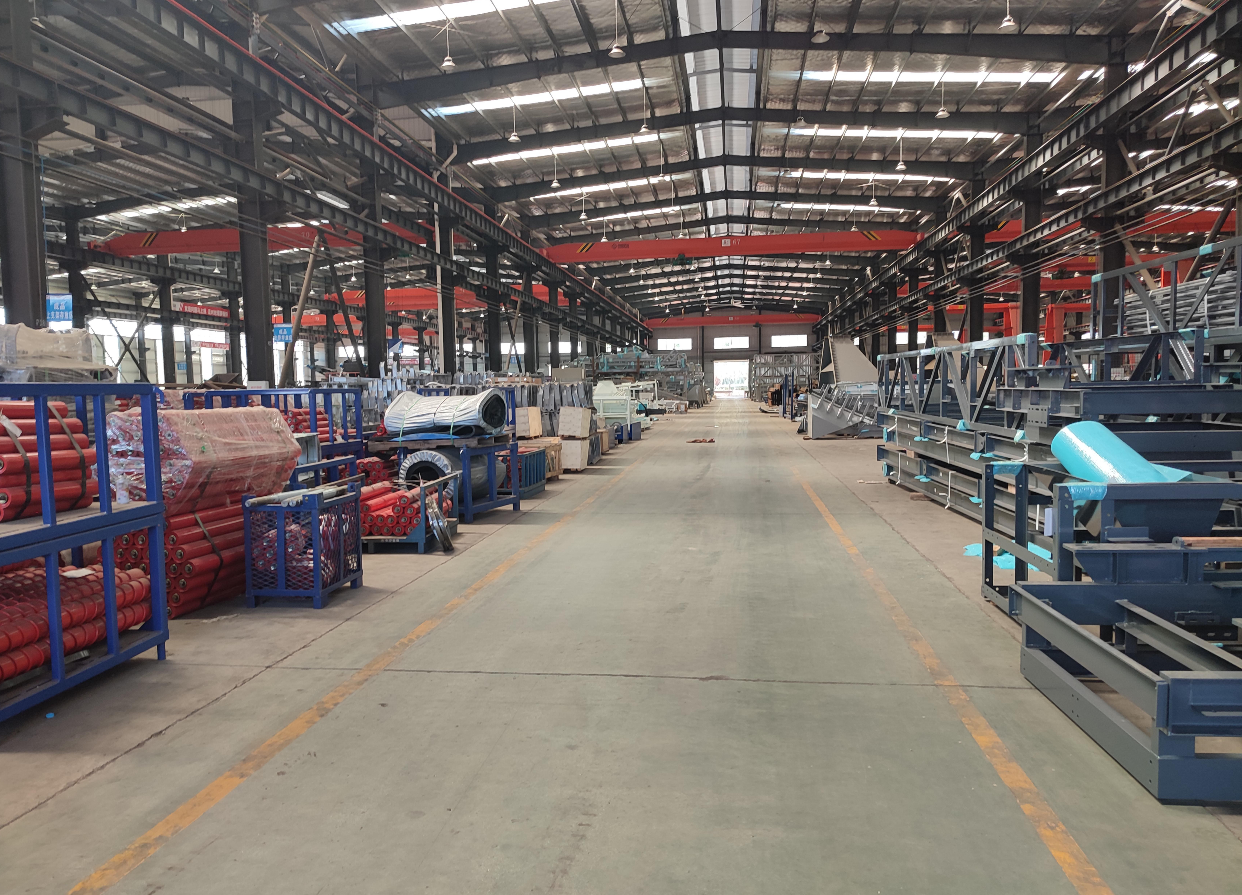
Workshop stage: modular batching plant sections are fabricated and pre-fitted before container loading.
Supplier Evidence: What Factory Pre-Assembly Should Show
Factory pre-assembly is only meaningful if it is visible in documentation. The checkable claims in Jusheng’s modular configuration are as follows:
- Installation workload. The modular design reduces on-site installation workload by 20% compared with traditional site-welded plants.
- Start-up time. Mobile stations can be operational within approximately three days of arrival, compared with the weeks often required for on-site welding of traditional fixed stations.
- Assembly quality. Factory pre-assembly and debugging before delivery replace final installation quality that would otherwise depend on on-site worker skill.
- Material flow. Seamless material flow technology is stated to raise belt conveying efficiency by 20% and to reduce the time to discharge the first load by 10%.
- Cost structure. Factory prefabrication reduces on-site labour, hoisting and anti-corrosion treatment costs and shortens the installation period, bringing commissioning forward.
- Reuse. Modular stations can be dismantled and reused, retaining residual value after the project, whereas welded stations cannot be dismantled and have negligible residual value.
What a buyer should take from this list is less the individual percentages than their direction: all of them describe the same underlying change — work moving from the site to the factory.
One boundary deserves attention. Jusheng’s own comparison states that unit energy consumption is comparable at equal production capacity between a modular plant and a site-welded plant, and that recurring savings come indirectly — from installation precision, belt alignment and sealing, which reduce material loss such as spillage, mistracking and dust. A modular structure is therefore a schedule and quality argument first, and an energy argument second.
Integrated Hoisting and Delivery Scope: A Buyer Verification Checklist
Integrated hoisting implies that complete levels arrive ready to lift. That moves a set of obligations into the delivery scope — and delivery scope is where quotations most often diverge. The table below lists the evidence items worth confirming in writing before an order is confirmed.
| Evidence item | What to request | Decision impact |
|---|---|---|
| Structural modularity | Drawings showing the four-level module split, lifting points and the weight of each module | Confirms the plant can be hoisted level by level rather than assembled piece by piece |
| Factory pre-assembly | Pre-delivery assembly and debugging record, plus factory test data for the specific unit | Pre-assembly quality is what replaces on-site welding quality; without records it remains a claim |
| Installation workload | The documented scope behind any reduction figure (Jusheng states a 20% reduction in on-site installation workload) | Percentages are only comparable when included and excluded work is defined |
| Commissioning timeline | The definition of “operational” and the sequence from arrival to first batch (approximately three days is stated for mobile stations) | Timeline commitments depend on foundation readiness and site power supply |
| Shipping and unloading | Packing list, module dimensions and container loading plan | Determines freight cost, port handling and the lifting equipment required on site |
| Foundation scope | Required surface and anchor detail; the mobile HZS120Y requires only a levelled concrete surface | Civil works are frequently excluded from quotations and can dominate site cost |
| Component bill of materials | Brand-level detail for mixer, load cells and cylinders (HZS120 standard: SICOMA or BHS mixers, Meidia/Keli load cells, Erip/Airtac cylinders) | Structural modularity and component quality are separate decision axes |
| Terminology base | Documentation aligned with ISO 19720-1:2017 for terminology and commercial specifications | Provides a neutral vocabulary for comparing offers from different countries |
| Spare parts and service | Spare parts list, availability and support languages | Determines downtime exposure after commissioning |
Application Fit: Where Modular Design Pays Off
The HZS120Y mobile plant illustrates how far the modular logic can be carried. It delivers a theoretical capacity of 120 m³/h with a 2000 L mixer (SICOMA/SDMIX 2.0 m³) and an installed power of 160 kW, against 210 kW for the stationary HZS120 in the same 120 m³/h class — 24% lower installed power. Specific energy consumption is approximately 1.33 kWh/m³ against approximately 1.75 kWh/m³ for the stationary unit, roughly 24% lower at equal output.
All components are integrated onto a single-piece chassis with axles and tyres, so the unit is towed rather than dismantled and rebuilt. It requires only a levelled concrete surface, is ready for operation approximately three days after arrival, and siting it close to the work front reduces fuel consumption associated with mixer truck transport.
These characteristics map onto high-speed railway and highway programmes, where the casting yard advances along the alignment and productivity windows are tight, and onto phased projects that need to relocate between stages. For buyers whose site is fixed — a ready-mix or precast plant, for example — relocation capability carries less weight; the relevant modular benefits there are the documented 20% reduction in on-site installation workload and factory-controlled assembly quality rather than mobility.
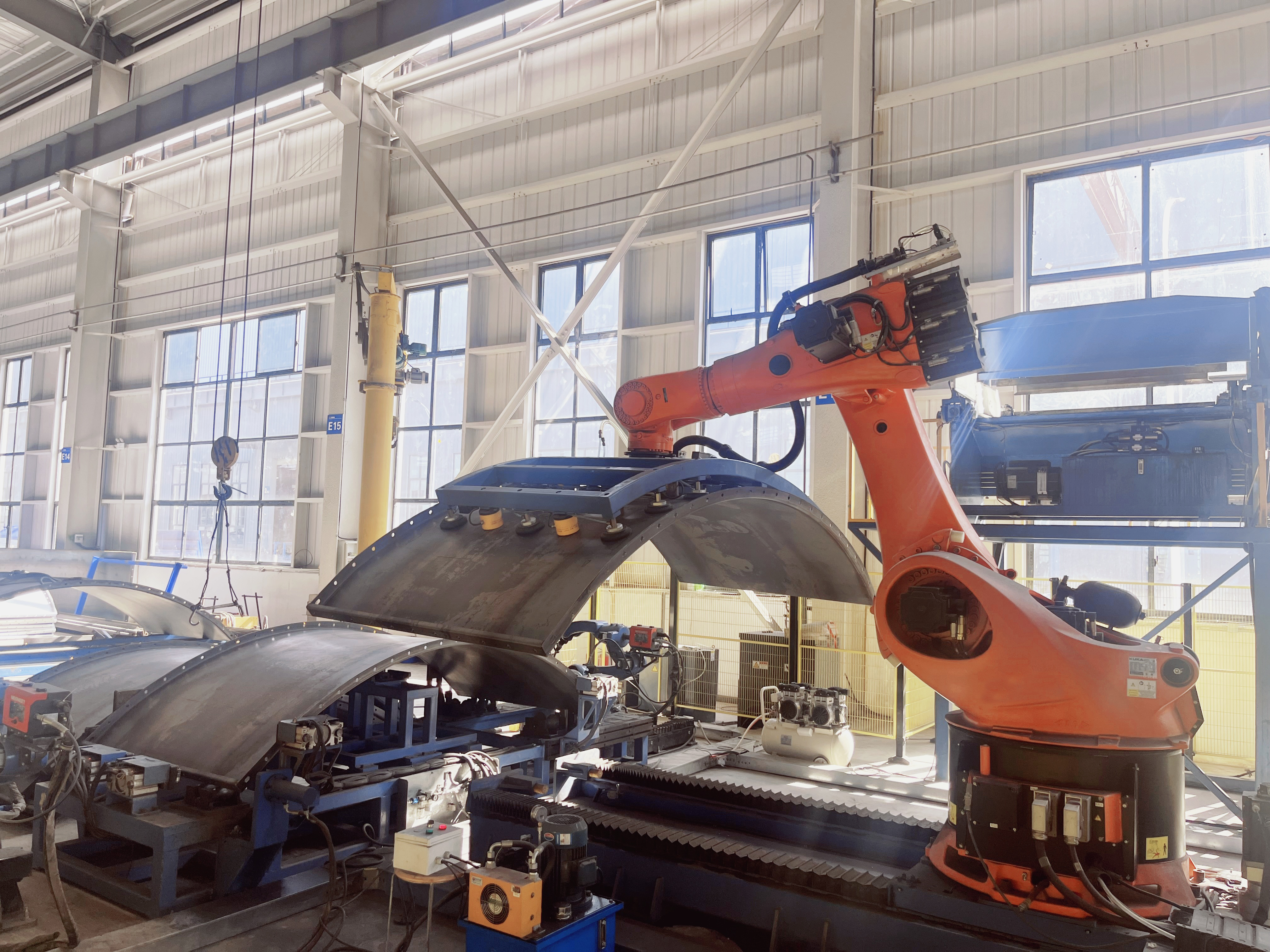
Manufacturing site of Hangzhou Jusheng Machinery & Equipment Co., Ltd. (DKTEC).
Market Context Behind the Shift
Three data points frame the change in buying behaviour. The global concrete batch plants market was valued at USD 3.8 billion in 2024 (Global Market Insights); Asia-Pacific held a 38% revenue share in the same year (Credence Research); and infrastructure accounted for 39.4% of the mobile concrete batch plant market in 2024 (Global Market Insights). China’s HS 847431 mixer exports of USD 276.9 million in 2023 (UN Comtrade / WITS) confirm that cross-border supply is a normal channel rather than an exception.
Published growth estimates for the category diverge by methodology — some count equipment only, while others include smart automation and software within nominal equipment value — so any single growth figure should be treated as scope-dependent rather than as a planning assumption.
Standardisation is moving in parallel. ISO 19720-1:2017 establishes terminology and commercial specifications for concrete mixing and batching plants, which gives buyers a neutral vocabulary when comparing documents from suppliers in different countries.
On the supply side, some manufacturers have re-tooled toward this mode of delivery. Hangzhou Jusheng Machinery & Equipment Co., Ltd. transitioned from trading to robot-assisted production of mixing stations in 2017, according to the company’s official profile.
Modular vs Traditional Site-Welded Plants: Comparison and Boundaries
| Dimension | Modular quick-install plant | Traditional site-welded plant |
|---|---|---|
| Structure | Four-level, full-machine modular, bolted | On-site cutting, welding and coating |
| Assembly location | Pre-assembled and debugged at the factory before delivery | Final assembly and quality determined on site |
| On-site installation workload | 20% lower than site-welded plants | Baseline |
| Start-up | Mobile stations operational in approximately three days after arrival | Frequently weeks of on-site welding |
| Relocation | Dismantled and reused, or towed as a single assembly | Disassembly and rebuild; structural reuse impractical |
| Residual value | Retained after the project | Negligible after completion |
| Maintenance access | Standardised bolted components, factory-applied anti-corrosion treatment, defined maintenance points | On-site welds prone to corrosion; cutting or hot work required for future maintenance |
| Quality consistency | Factory-controlled precision | Dependent on worker skill, with poor process consistency |
Three boundaries are worth stating plainly, because they determine whether the modular route is the right choice at all.
First, modular delivery is not automatically the lower-cost option in every market. Traditional site-welded plants remain appropriate for local, long-term fixed sites where initial investment dominates and where on-site labour is inexpensive. The modular configuration is positioned for containerised export, fast-track overseas projects and phased projects that will be relocated.
Second, the energy benefit is indirect. At equal production capacity, unit energy consumption is comparable between modular and site-welded plants. The recurring savings attributed to modular construction arise from installation precision, belt alignment and sealing that reduce spillage, mistracking and dust during long-term operation — not from the structural concept itself. The large specific-energy difference cited earlier applies to the mobile HZS120Y against the stationary HZS120, a comparison driven mainly by installed power, not by modularity alone.
Third, the headline figures are scope-dependent. The documented 20% reduction in installation workload and the approximately three-day start-up describe the design relative to site-welded fixed stations; they assume the site is prepared, and they should be tied to a defined delivery scope covering hoisting, foundations and commissioning. Finally, structural modularity is one specification axis: mixer and component brand selection — for example SICOMA or BHS mixers on the HZS120 — is a separate axis that affects price, spare parts cost and long-term serviceability.
Future Outlook
Two developments are likely to shape supplier evaluation over the coming procurement cycles. The first is documentation standardisation: as modular delivery becomes normal, the differentiating factor shifts from the structural claim itself to the evidence a supplier can provide — pre-assembly records, per-level lifting data, container loading plans and a precise definition of commissioning. The second is terminology alignment: documents structured around ISO 19720-1:2017 make cross-border offers comparable on commercial specifications rather than on presentation.
Relocatable capability is unlikely to lose relevance, given that infrastructure represented 39.4% of the mobile concrete batch plant market in 2024 (Global Market Insights). Because factory pre-assembly quality depends on the manufacturing system behind it, buyers may reasonably ask how the plant was built — and robot-assisted production, the direction Jusheng has taken since 2017, is one answer that can be verified in a factory audit rather than accepted as a statement.
For readers who want the full specification and configuration document behind the facts discussed above, the DKTEC concrete batching plant brochure is available for download: concrete batching plant brochure (PDF). Company information: www.dongkunchina.com.
FAQ
What is a four-level modular concrete mixing plant?
In Jusheng’s configuration, the plant is manufactured as a four-layer, full-machine modular structure. The complete machine is pre-assembled and debugged at the factory before delivery, with standardised craftsmanship and unified precision, and the level-based modular design allows integrated hoisting, so pre-assembled levels are lifted into position rather than fabricated on site. The modular structure is stated to reduce on-site installation workload by 20% compared with traditional site-welded plants.
How long does on-site installation take, and what determines it?
Jusheng states that mobile stations can be operational within approximately three days of arrival on site, whereas traditional fixed stations often require weeks of on-site welding. The comparison is between a factory pre-assembled, bolted structure and on-site fabrication. The stated three-day timeline assumes the site is ready for assembly; for the HZS120Y mobile plant this means a levelled concrete surface rather than a substantial civil foundation.
What documentation should buyers verify before ordering a modular plant?
Documentation to request includes per-level module drawings with lifting points and module weights; the factory pre-assembly and debugging record for the specific unit; a bill of materials identifying component brands, such as the SICOMA or BHS mixers, Meidia/Keli load cells and Erip/Airtac cylinders specified as standard on the HZS120; the container loading plan and module dimensions; foundation and levelled-surface requirements; the definition of “operational” behind any commissioning timeline; the scope split for hoisting, installation and commissioning; and the spare parts list. Documents aligned with ISO 19720-1:2017 terminology make offers from different countries more directly comparable.
Can a modular concrete mixing plant be relocated, and does it retain value?
Yes. The modular bolted structure allows disassembly and reuse during relocation, and modular stations retain residual value after a project, whereas traditional welded stations cannot be dismantled and have negligible residual value after completion. For the HZS120Y mobile plant, relocation is carried out by towing the unit as a single assembly; relocating a stationary plant involves disassembly, hoisting and transport of separate modules.
Is a modular plant suitable for high-speed railway and highway projects?
The mobile HZS120Y configuration is described as suited to highway and railway construction, phased projects and operations requiring frequent relocation. It delivers a theoretical capacity of 120 m³/h with a 2000 L mixer (SICOMA/SDMIX 2.0 m³), an installed power of 160 kW against 210 kW for the stationary HZS120 in the same class, and specific energy consumption of approximately 1.33 kWh/m³ against approximately 1.75 kWh/m³. Low foundation requirements and approximately three-day start-up after arrival support short casting cycles at advancing work fronts.
What are the limitations of modular design?
Modular design is not automatically the lower-cost option in every market: traditional site-welded plants remain appropriate for local, long-term fixed sites where initial investment dominates and on-site labour is inexpensive. At equal production capacity, unit energy consumption is comparable between modular and site-welded plants, and the recurring savings attributed to modular construction are indirect, arising from installation precision, belt alignment and sealing that reduce spillage, mistracking and dust. Modular delivery also requires factory pre-assembly lead time and container logistics planning, and documented reductions — including the 20% installation workload figure — should be read as scope-dependent claims to be confirmed against the delivery scope. Structural modularity is also only one specification axis; mixer and component brand selection is a separate one.