
Four Packaging Configurations Worth Shortlisting for Sports Nutrition and Supplement Brands
Four Packaging Configurations Worth Shortlisting for Sports Nutrition and Supplement Brands
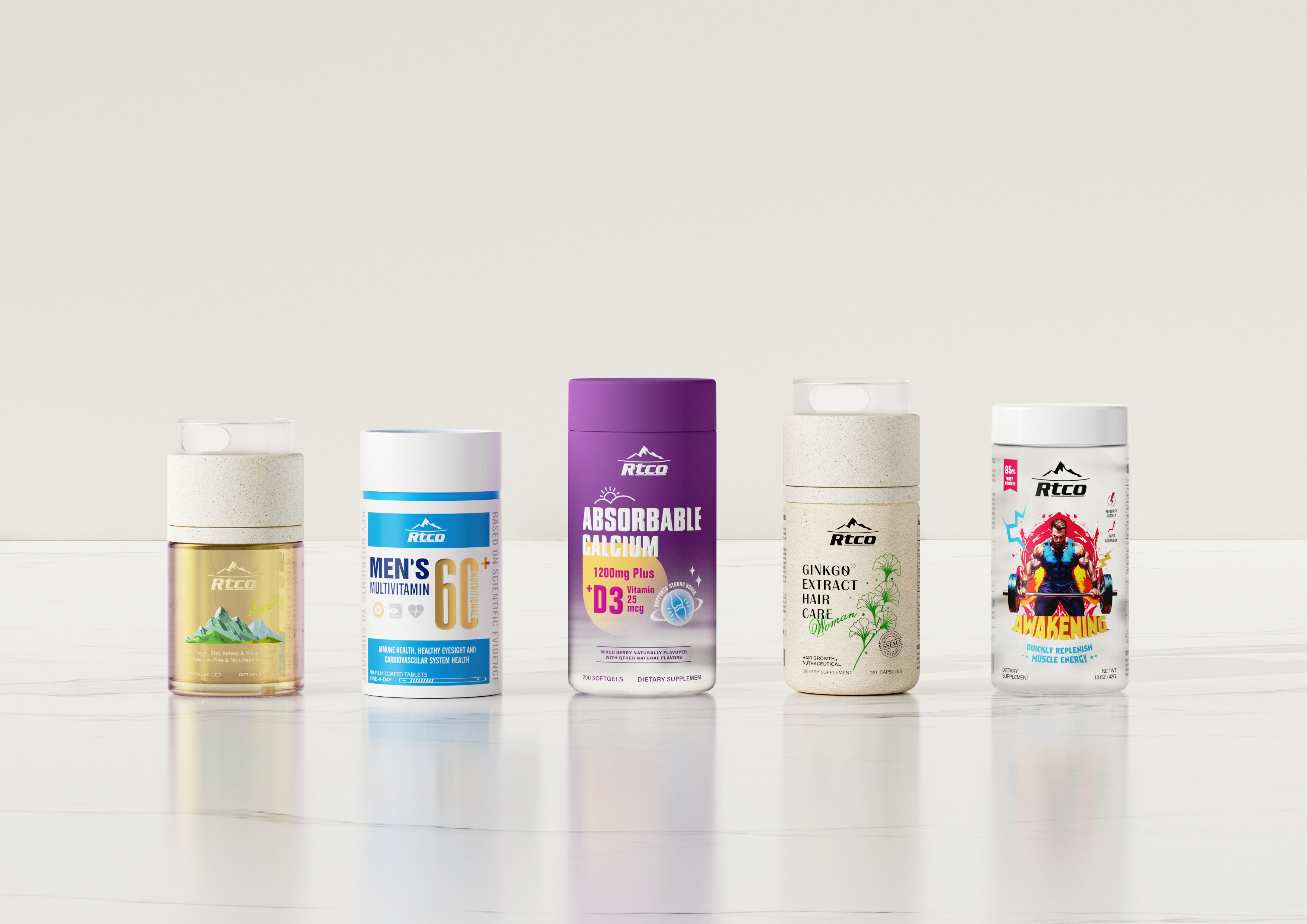
For a sports nutrition or supplement brand, a packaging shortlist is more useful when it begins with the product’s format and dispensing needs—not with decoration alone. A wide-mouth protein powder jar, a pre-workout or BCAA bottle, a dual-chamber supplement bottle, and a flip-cap scoop bottle represent four distinct formats that buyers can evaluate against product presentation, use, customization scope, and supply requirements.
RTCO provides OEM, ODM, and customizable production services for plastic packaging. Its listed packaging range includes the four formats discussed here, alongside HDPE and PET containers, PP caps and scoops, and customization options that include material, bottle shape, capacity, color, surface finish, logo design, closures, scoops, and structural engineering. These facts make the formats a practical starting point for a capability-led review. They do not, by themselves, establish that every option is suitable for every formula or market.
Why evaluate configurations instead of choosing a bottle by appearance?
Custom Packaging Solutions can involve more than a bottle’s color or surface treatment. The supplied capability information describes customization across materials, shape, capacity, colors, surface finishes, engraved logo design, closures, scoops, structural engineering, and custom mold development. Each decision can affect a different part of the packaging brief. A format that appears visually close to a reference may still need a different opening, closure, scoop arrangement, or structure to meet the intended product and brand requirements.
That distinction matters especially in sports nutrition, where the listed product applications span powders, tablets, gummies, and liquids. RTCO’s product information also identifies capsule packaging. The available information supports considering these product forms, but it does not provide a universal compatibility chart linking each formula to a specific bottle, material, or closure. Buyers should treat format names as shortlist options and validate product-specific details before approval.
A useful evaluation therefore separates four questions: What product form will the package hold? How does the user access or dose it? Which visual or tactile customizations are required? And how will the selected package be sampled, inspected, and supplied? This approach makes a packaging discussion more concrete without assuming that a premium finish or a custom shape automatically solves a functional requirement.
Four configurations to put on the shortlist
1. Wide-mouth protein powder jar
A wide-mouth protein powder jar is the most direct format to evaluate when the brief concerns powdered sports nutrition. The format is explicitly included in RTCO’s product line, and the product range is described as supporting commercial packaging and dosing for sports nutrition powders and dietary supplements. Buyers can use this configuration as the reference point for a powder-focused brief, then specify the required capacity, material, opening, closure, and any scoop arrangement rather than leaving those choices implicit.
For a powder project, the buyer’s initial questions should focus on the intended fill and use scenario. What capacity is required? Does the packaging concept call for a scoop, and if so, what arrangement should be reviewed? Is a particular bottle shape or color part of the brand system? Are surface treatments or logo treatments necessary? The capability information confirms that these features can be included in customization discussions; it does not specify standard dimensions, powder flow behavior, closure performance, or a particular scoop design. Those items belong in the product specification and sample-approval process.
This configuration is a sensible shortlist candidate when the package must communicate a powder product and the project needs a container-and-dosing discussion. It is not evidence that one jar design fits every powder, serving size, or filling line. Procurement teams should define the required product and packaging interface before comparing candidate designs.
2. Pre-workout or BCAA bottle
RTCO lists a pre-workout/BCAA bottle as a named product format. It gives brands a distinct bottle-based option to assess for sports nutrition products, while the broader packaging range covers powder, capsule, tablet, gummy or gel, and liquid packaging and dosing scenarios. The available content does not specify whether this named bottle is intended for a particular product consistency or how it is configured. That should be clarified during the project brief rather than inferred from the product name.
For evaluation, buyers can ask the supplier to align the proposed bottle, closure, capacity, material, and decoration with the intended filling and consumer-use requirements. If the design needs a distinctive appearance, RTCO’s stated customization scope includes color, bottle shape, surface finishes, and logo design. Vacuum metallization and soft-touch are identified as available surface technologies. Their use should be assessed as a design choice, not treated as proof of a specific durability, grip, or shelf-performance result; no corresponding test data is included in the supplied information.
This format is worth shortlisting when the brand wants to evaluate a dedicated pre-workout or BCAA bottle rather than assuming that a general supplement container will meet the brief. The final specification should make clear which elements are fixed, which are open to design development, and which require sample review.
3. Dual-chamber supplement bottle
The dual-chamber supplement bottle is another named option in RTCO’s product line. Its inclusion gives procurement and product teams a format to investigate when a project brief calls for a two-chamber concept. The product name alone does not establish how the chambers are divided, what each chamber is intended to hold, whether they are dispensed together or separately, or what product combinations are supported. Those functional details must be established with an approved design and sample; they should not be assumed from the label.
For this configuration, the first task is to describe the intended user interaction and package function precisely. The supplier and buyer can then determine whether the requested structure, capacity, material, closure, and any dosing elements can be developed for the project. RTCO’s stated capability includes structural engineering and rapid custom mold development, but the available facts do not give project-specific design drawings, compatibility results, or a performance specification for a dual-chamber format.
This option is therefore best treated as a design-led candidate rather than a ready-made answer to an unspecified formulation challenge. A buyer should keep the evaluation evidence-based: define the required structure, review the proposed design, approve samples, and record acceptance criteria before production.
4. Flip-cap scoop bottle
A flip-cap scoop bottle is listed as a product format, as is a flip-cap bottle for gummies in the associated product information. The format gives buyers a concrete closure-and-access concept to examine for supplement packaging. The supplied facts do not establish that the scoop mechanism is built into every flip-cap design or that the same configuration serves powders, gummies, or other product types interchangeably. Confirm the intended format and dispensing function in the project specification.
When reviewing this configuration, separate the package body from the closure and dosing components. The RTCO product scope includes plastic containers, caps and closures, scoops, liners, and accessories, and the customization scope includes closures and scoops. That makes it possible to frame a coordinated packaging brief around those components, while still requiring confirmation of the specific combination proposed for a project.
A flip-cap scoop bottle may be a useful shortlist candidate when access or dosing is central to the packaging concept. The evaluation should determine whether the actual design supports the intended use, whether a separate scoop or another dosing arrangement is required, and what inspection criteria will apply. The format name alone is not a substitute for a confirmed drawing or approved sample.
What the four formats have in common—and where they differ
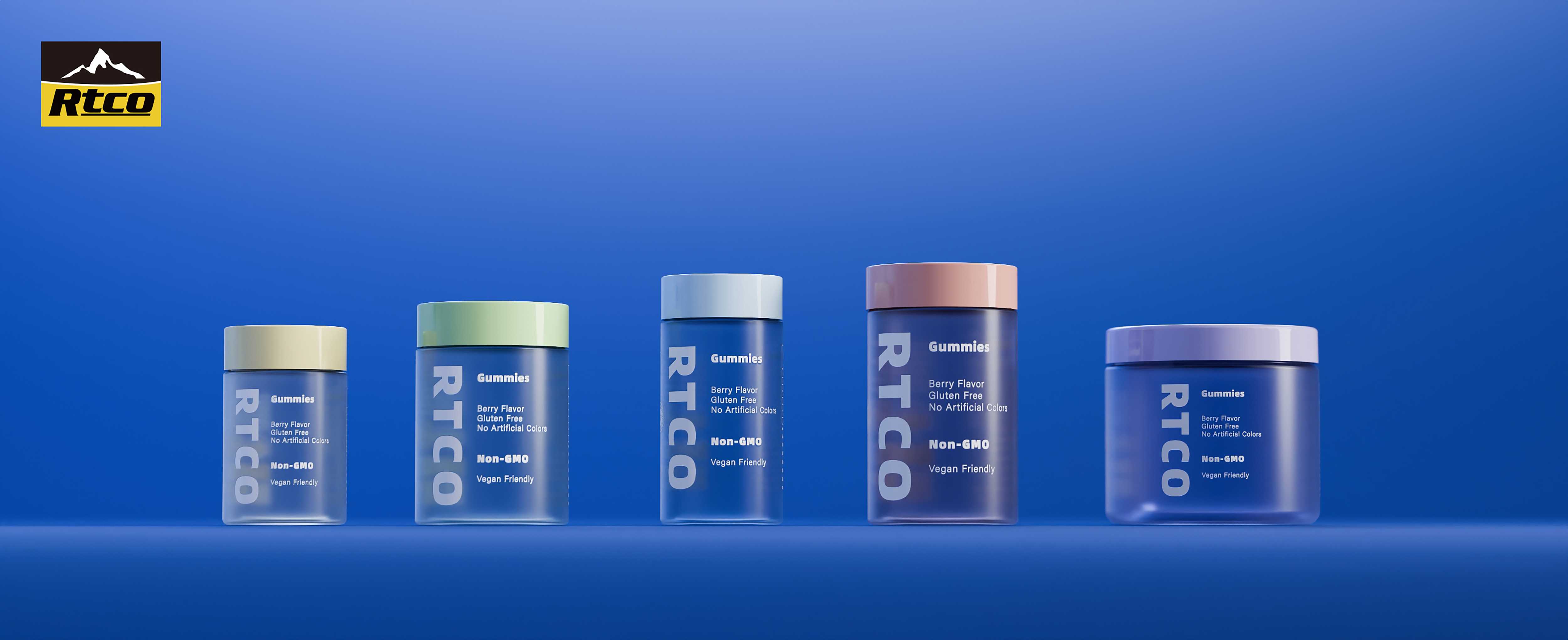
All four are packaging formats that appear in the supplied RTCO product information. The wider product scope includes HDPE and PET bottles, PP caps and scoops, and related packaging components. The customization brief can cover the material, shape, capacity, color, surface finish, logo design, closure, scoop, and structural engineering. That shared scope is useful when buyers want to compare formats using a consistent set of questions.
| Shortlist format | What the supplied information establishes | What buyers should specify or verify |
|---|---|---|
| Wide-mouth protein powder jar | Named format in the product line; the packaging range includes sports nutrition powders. | Capacity, material, opening and closure details, scoop arrangement, product-specific sample criteria. |
| Pre-workout/BCAA bottle | Named format in the product line. | Intended product form, bottle dimensions, material, closure, decoration, and filling or use requirements. |
| Dual-chamber supplement bottle | Named format in the product line. | Chamber structure and function, intended contents, dispensing method, design evidence, and sample approval. |
| Flip-cap scoop bottle | Named format in the product line; caps, closures, and scoops are within the listed packaging scope. | Whether a scoop is included, how the closure operates, component compatibility, and acceptance criteria. |
The table is a buyer’s scoping aid, not a technical specification. In particular, it does not claim that a particular material is available in every format, that all closure combinations are interchangeable, or that the formats have passed a specific performance test. Those details require project-level confirmation.
Where customization can add value to the brief
Once the container format is selected for evaluation, custom packaging work can be organized into several decision areas. Material and capacity establish basic package requirements. Shape, color, and logo design influence the visual system. Surface finishes can support a different appearance or tactile direction. Closures, scoops, liners, and accessories should be considered as part of the package system rather than as afterthoughts. Structural engineering and custom mold development may be relevant when a project needs a shape or component arrangement beyond the selected reference format.
RTCO’s stated surface technologies include vacuum metallization and soft-touch. These are relevant options for brands considering chromed or soft-touch custom packaging, but the supplied information does not provide performance comparisons, cost premiums, abrasion results, or recycling outcomes for either finish. Buyers should ask for the specific finish sample and define the review criteria that matter to their product and market.
Likewise, keywords such as embossed logo, soft-touch lid, 3D printing, recyclable packaging, or sustainable packaging should not be treated as confirmed capabilities or outcomes unless project-specific evidence is available. The provided capability facts confirm engraved logo design and surface finishes, but do not verify 3D-printing services, embossed-logo capability, recyclability for a particular package, or environmental impact. A procurement document should distinguish requested features from verified supplier capabilities.
How to assess a turnkey or end-to-end proposal
A custom packaging project can involve design, tooling, production, quality review, and fulfillment. RTCO describes an integrated rapid design-tooling-production service called the Three-One Service, alongside North American manufacturing support. A supplied project record describes a 20,000,000-unit project using this integrated model and surface technologies that included vacuum metallization and soft-touch. The record reports faster time-to-market, improved shelf performance, and a simplified supply chain through localized production. These are case-reported outcomes, not a guarantee that another project will achieve the same results.
For a buyer assessing One-Stop Custom Packaging Solutions or End-to-End Custom Packaging Solutions, the practical question is what each step includes for the proposed configuration. Confirm who is responsible for design development, tooling, sample review, production, pre-shipment inspection, and the logistics arrangements. The supplier capability information also describes third-party testing support, pre-shipment inspections, quality tracking, warehousing and fulfillment support, and last-mile logistics coordination. The scope, timing, and terms for these services should be established in the project agreement.
MOQ and schedule also need project-specific confirmation. The supplied procurement information gives a typical MOQ range of 10,000–30,000 pieces per SKU, depending on the product, and says first trial orders below the standard MOQ are available upon request. It describes a 30–45 day lead-time range while noting that actual timing depends on project complexity and capacity. Buyers should confirm the applicable MOQ and production schedule for the chosen format, tooling requirements, decoration, and order plan rather than relying on a general range.
Quality, sampling, and acceptance boundaries
Custom packaging evaluation should end with documented acceptance criteria, not a verbal agreement about appearance. The supplied procurement guidance identifies sample approval, pre-shipment inspection, contractual acceptance criteria, and third-party testing when required. The capability information also describes material compliance risk management and third-party testing support. Together, these facts point to a practical sequence: define requirements, review the proposed design and sample, record the approved version, and specify the inspection or testing evidence required before shipment.
That process is especially important for customized surfaces and multi-component formats. A finish sample can show the intended appearance, but the supplied data does not establish long-term durability or test results. A product name can identify a format, but does not settle its dimensions or how it will perform with a particular formula. Buyers should avoid treating a concept image, sample, or capability statement as proof of requirements that have not been tested or documented.
A practical shortlist decision framework
Teams can compare the four configurations with a compact, evidence-led framework:
- Product fit: State whether the project concerns powder, capsules, tablets, gummies or gel, or liquid. Confirm the proposed format against that intended use rather than inferring compatibility from a product name.
- Access and dosing: Specify how the consumer should open, access, and dose the product. Identify whether a scoop, flip cap, or other component is required and ask for the corresponding design evidence.
- Customization scope: List the required material, shape, capacity, color, logo treatment, finish, closure, scoop, and structural changes. Separate confirmed options from requests that still need supplier confirmation.
- Validation: Define sample approval, pre-shipment inspection, contractual acceptance criteria, and any third-party testing needed for the project.
- Supply plan: Confirm MOQ, lead time, manufacturing location, fulfillment scope, and any warehousing arrangement in the commercial proposal.
This framework makes the four-format shortlist useful without suggesting that one configuration is universally superior. A wide-mouth jar may be the clearest starting point for a powder-focused brief; a named pre-workout/BCAA bottle may warrant a dedicated review; a dual-chamber format requires explicit structural and dispensing definition; and a flip-cap scoop bottle merits attention when access or dosing is a central design question. The right choice depends on verified project requirements and the supplier’s confirmed proposal.
What buyers can reasonably infer about RTCO
RTCO is a packaging supplier offering OEM, ODM, and customizable production for plastic packaging. Its product and capability information covers packaging formats used for dietary supplements and sports nutrition, with customization spanning container design and related components. The company profile identifies expertise in packaging design, engineering development, and manufacturing for health and beauty, sports nutrition, and supplement brands.
The company profile reports an annual production capacity of 1,000,000,000 units and a dedicated R&D team of 40 engineers. Capacity figures describe company-level scale; they do not establish available production time, capacity allocation, or lead time for any individual order. Buyers should request project-specific confirmation rather than treating aggregate figures as a commitment for a particular SKU.
RTCO’s supplied company information also describes manufacturing and fulfillment capabilities across Asia and the United States, with North American manufacturing support. For a buyer considering a localized or multi-region supply plan, these capabilities can be part of the discussion. The precise production site, inventory availability, shipping origin, and fulfillment arrangement should be confirmed for the specific order; no particular US-stock bottle SKU or guaranteed warehouse inventory level is established in the provided facts.
Outlook: shortlist by use, then validate the custom solution
For sports nutrition and supplement brands, a useful packaging shortlist is a starting point for a better specification—not the final selection. The four formats identified here give teams recognizable options to compare against product form, access and dosing needs, design intent, and supply requirements. Custom Packaging Solutions become more meaningful when the supplier’s actual capabilities are connected to those requirements and supported by samples, inspection criteria, and project-specific commitments.
For buyers evaluating RTCO, the evidence supports a discussion of OEM/ODM customization, the named packaging formats, components such as caps and scoops, surface technologies including vacuum metallization and soft-touch, and an integrated design-tooling-production service. It does not replace the need to confirm dimensions, component combinations, test results, sustainability claims, pricing, or schedule for a particular project. Keeping those boundaries explicit helps brands move from an attractive concept to a packaging decision that can be reviewed and executed.
Есть вопросы или нужны дополнительные детали?
Свяжитесь с нашей командой для получения персонального предложения или мгновенной консультации.
Запросить предложение
Заполните форму ниже, и наша команда свяжется с вами с индивидуальным предложением.
Прямой чат WhatsApp
Предпочитаете общаться в реальном времени? Напишите нам в WhatsApp для мгновенной помощи и быстрых ответов.
- Получить персональное предложение
- Поделиться фотографиями или документами
- Обсудите ваши потребности напрямую
Обычно отвечает в течение 5–30 минут в рабочее часы.