
Freeze-Dried Durian Supplier Evidence: Line Compatibility
Freeze-Dried Durian Supplier Evidence: Line Compatibility
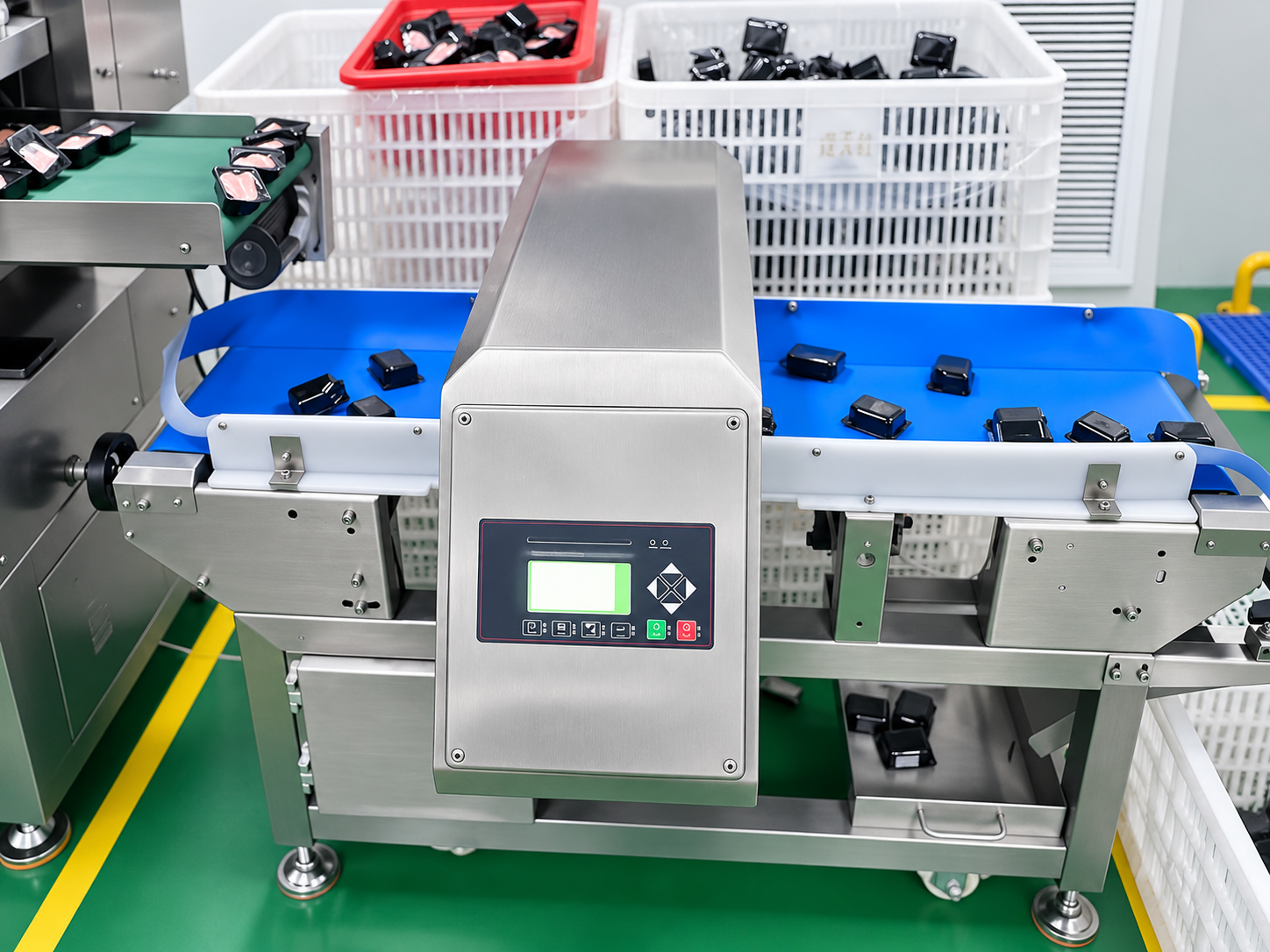
Freeze-dried durian is only as usable as the line that runs it. For a dairy, ice cream or frozen-dessert manufacturer evaluating a supplier, the decisive question is no longer whether the ingredient exists in a catalogue — whole pods or lobes, slices, chunks, broken pieces and powder are all marketed forms, with bakery, confectionery and dessert applications listed by suppliers. The decisive question is which equipment the material has been run on, at what humidity, and with what handling discipline once the bag is opened.
The two formats buyers compare most often do not impose the same requirements. Freeze-dried durian powder is compatible with standard industrial mixers and continuous freezers. Freeze-dried durian dice require the mixer, the continuous freezer, a folding feeder to fold the dice into the ice cream mass, and quick-freezing after incorporation. A plant that treats the two as interchangeable discovers the gap during a production run, which is the most expensive place to find it.
What follows is a verification guide rather than a product description: the line questions to put to a supplier, the metering and storage controls that determine whether the ingredient still performs on the day of use, and the physical supply evidence — factory-direct supply, continuous chain-client history, chain-exclusive OEM/ODM readiness and store-network validation — that separates a manufacturer from a trader with a price list.
Why equipment compatibility now belongs in supplier qualification
Freeze-dried durian is no longer a curiosity inside the durian trade. Mordor Intelligence estimates that freeze-dried snacks — including durian chips, crisps and freeze-dried products — contributed roughly 7% of total durian fruit market value in 2025, inside a fresh durian market the same research house projects at USD 5.85 billion in 2026. Upstream, the FAO's global trade overview records durian exports growing from about 80,000 tonnes in 2003 to around 870,000 tonnes in 2022, with Thailand supplying more than 90% of exports on average and China procuring approximately 95% of global exports over a comparable period.
Growth in supply has not produced standardisation in ingredient documentation. Moisture content, water activity, particle size, packaging format and shelf life for freeze-dried durian are still typically disclosed by the supplier rather than benchmarked independently, and process detail is rarer still. In that environment, a supplier's ability to describe the equipment its material runs on is one of the few claims a buyer can test cheaply, before a purchase order exists.
That test matters most at the evaluation-to-execution stage, where the question is no longer whether freeze-dried durian works in principle but whether a specific supplier's material will run on a specific line. The answer sits in three places: the mixer, the continuous freezer and — for dice — the folding feeder.
Powder and dice: two different equipment profiles
Powder and dice both pass through a standard industrial mixer and a continuous freezer; the difference lies in what happens after mixing. Powder disperses into the mass and continues through the normal mix-and-freeze sequence. Dice must be folded into the ice cream mass with a folding feeder and quick-frozen after incorporation, so that discrete pieces survive into the finished product.
| Production step | Freeze-dried durian powder | Freeze-dried durian dice |
|---|---|---|
| Mixing | Standard industrial mixer | Standard industrial mixer |
| Freezing | Continuous freezer | Continuous freezer |
| Inclusion method | Dispersed through the mass | Folded into the ice cream mass with a folding feeder |
| After incorporation | Runs within the normal mix-and-freeze sequence | Quick-freezing required |
| Metering environment | Low humidity, RH ≤40% | Low humidity, RH ≤40% |
| Storage protection | Compression, light, oxygen, odour | Compression, light, oxygen, odour |
Powder is the simpler integration, which is why it dominates the ice cream, beverage and bakery formulations where durian is carried by flavour and colour rather than by visible pieces. Nothing in the process description calls for equipment beyond a standard mixer and a continuous freezer. The variables that decide success are metering humidity, dispersion behaviour and the point in the sequence at which the powder enters.
Dice are a piece-identity ingredient, and piece identity is what makes the line requirements stricter. A folding feeder introduces the dice into the ice cream mass in a controlled manner so they are distributed through the product rather than driven through the mixer and broken up. Quick-freezing after incorporation then sets the mass with the pieces in place. Both steps serve the same practical purpose: freeze-dried durian is porous and takes up moisture readily, so the shorter the interval between folding and freezing, the less the pieces soften and the more of their original texture reaches the consumer.
What 'compatible with standard industrial mixers and continuous freezers' should mean
A compatibility statement is only useful when it arrives with the conditions under which it was established. Buyers can convert the phrase into six specific questions and ask for written answers before scheduling anything.
- Where does the ingredient enter the sequence? Dry blending, a slurry stage, or a fruit or variegata feed point each produces a different dispersion result and a different moisture exposure.
- What mixing time and shear did the trial reflect? A powder that disperses cleanly under gentle agitation may behave differently in a high-shear line.
- Which continuous freezer configuration was used? Freezer type, throughput and the point of injection all affect how an inclusion is handled.
- Whose equipment was the trial run on? A run on the supplier's own line is informative; a run on equipment matching the buyer's line is evidence.
- What was evaluated after freezing? Piece integrity, colour, aroma, moisture pickup and distribution in the finished product, checked at the start and end of the intended storage period.
- Is there written handling guidance for the metering area? Including the humidity limit the supplier expects the buyer to maintain.
A supplier that answers these questions in writing is describing a process. A supplier that cannot is describing a category. The distinction matters because the information a buyer needs is rarely secret — it is simply not offered until it is asked for.
Dice, folding feeders and the quick-freeze window
A plant without a folding feeder has three honest options for freeze-dried durian dice: install one, specify powder instead, or trial an alternative dosing point and accept that piece integrity remains unproven until the trial demonstrates otherwise. What it should not accept is the claim that dice can be added wherever powder is added. The equipment list for dice includes a folding feeder for a reason.
The quick-freeze step is the second half of that requirement. Once dice are folded into the ice cream mass they sit in a warmer, moister medium than the barrier bag they arrived in, and the clock starts. Freezing promptly after incorporation limits how much moisture the pieces absorb and how far their texture drifts before the product is set. For the buyer this becomes a scheduling question rather than an ingredient question: does the line have enough freezing capacity immediately downstream of the inclusion point to handle the throughput the formulation assumes?
That question is worth raising early, because it affects layout and cost, not only recipe. Lines already running particulates — fruit pieces, nuts, chocolate inclusions — usually have the equipment; lines built around a smooth mix often do not. The evaluation therefore turns less on durian than on the plant's existing inclusion architecture.
Metering in low-humidity conditions: the RH ≤40% requirement
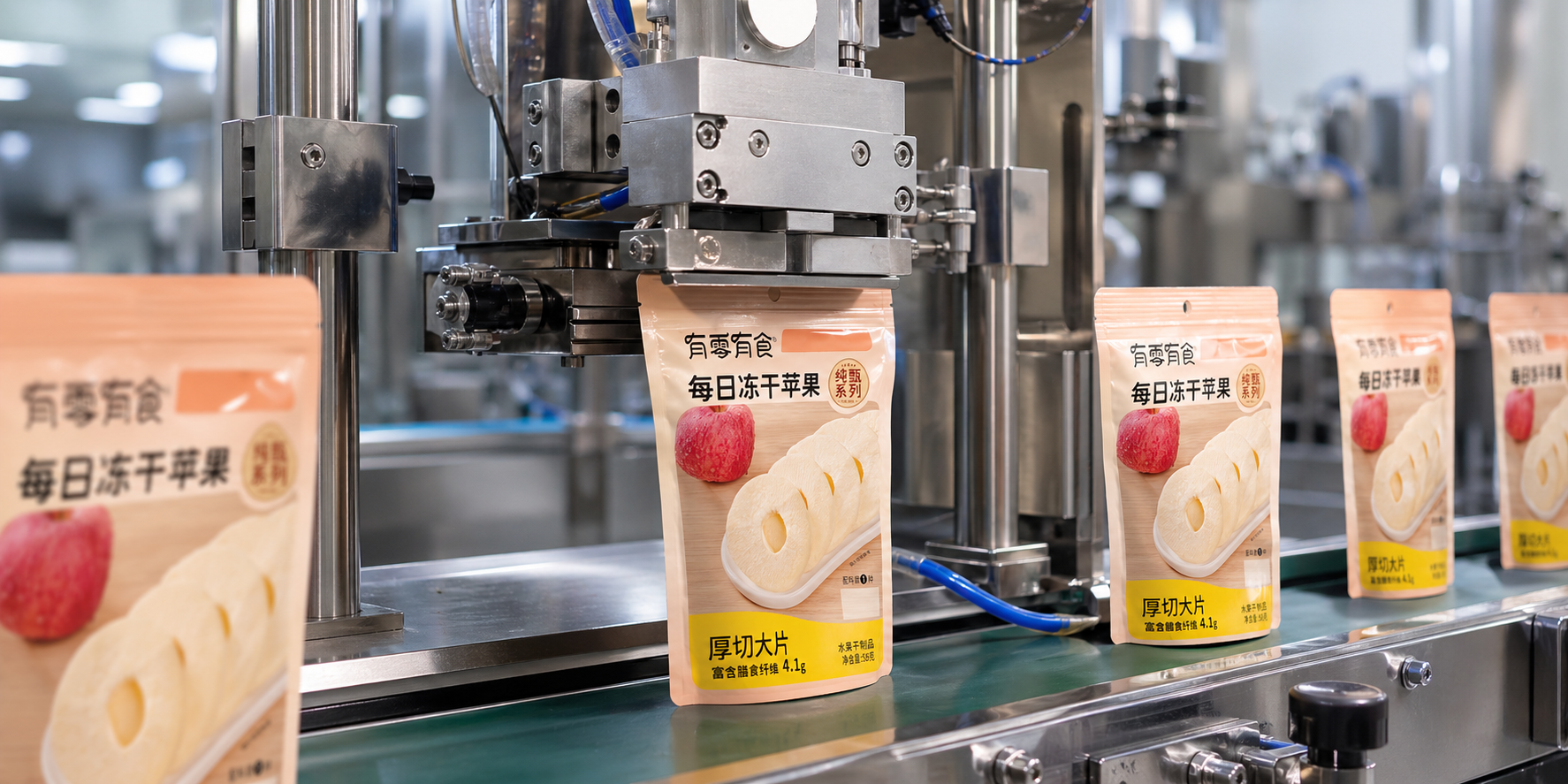
Freeze-dried durian should be metered in a low-humidity environment, with RH ≤40% as the working limit stated in the process description, because the ingredient is hygroscopic by design. The porosity that lets it rehydrate quickly inside a formulation also lets it pull moisture from the air during weighing, conveying and holding.
The consequences are practical rather than theoretical: powder clumps and bridges in hoppers, dosing weights drift, dice lose crispness before they reach the freezer, and the material that finally enters the mix is not the material the formulation was costed on. The controls that address this are ordinary factory engineering — a dehumidified or air-conditioned metering room, sealed transfer from bag to hopper, a defined maximum open-air holding time, and RH monitoring that produces records rather than a single reading.
The records are the part buyers should insist on. A humidity specification in a technical sheet proves intent; logs from the metering area prove practice. The same logic applies to changeovers and cleaning, where residual moisture and residual product are both risks.
Protective storage: compression, light, oxygen and odour
Storage guidance for freeze-dried durian normally names four hazards: compression, light, oxygen and odour. Each maps to a specific error in a warehouse.
- Compression. Heavy stacking and double-stacked pallets crush pieces inside the bag, and the damage is invisible until the bag is opened. Store within the packaging's load limits and keep cartons upright.
- Light. Exposure degrades colour and aroma over time. Keep product in its barrier packaging and in the dark until use.
- Oxygen. Oxidation affects flavour and freshness. Sealed barrier bags with limited headspace, closed promptly after partial use, shorten the exposure window.
- Odour. Durian is a strong aromatic, and the exchange runs in both directions: the ingredient can affect other goods stored nearby, and it can be affected by them. Keep it away from strongly scented stock and never hold open bags in a shared area.
None of this needs unusual equipment, but all of it needs discipline at the point where the bag is opened, which is where most control is lost. A supplier that ships with clear open-bag handling instructions and a defined use-within period gives the buyer something more useful than a shelf-life figure on its own.
The physical supply evidence buyers should require
Before specification negotiation, buyers should require four pieces of physical supply evidence from any freeze-dried durian supplier: factory-direct supply without middlemen, more than four years of continuous supply to chain clients, chain-exclusive OEM/ODM readiness, and validation across a combined store network exceeding 40,000 stores. Each is testable. Each is also routinely asserted without proof.
- Factory-direct supply without middlemen. The entity that quotes should be the entity that freeze-dries. Check that the company name on the quotation matches the food production licence, facility registration and export registration, and that the site address matches the certificates and the audit report. Where a group operates several production entities, ask which entity will manufacture and which holds which registration.
- More than four years of continuous supply to chain clients. Continuity is the signal, not order size. A single large order can be arranged by anyone; four or more years of uninterrupted supply to chain clients implies a supplier that has absorbed specification changes, packaging changes and seasonal raw-material pressure without losing the account. Ask for the product form supplied, the client category and the period; aggregated figures and a reference contact carry more weight than a wall of logos.
- Chain-exclusive OEM/ODM readiness. Exclusive or semi-exclusive production for a retail chain is a scheduling commitment as much as a recipe commitment. Ask what capacity is reserved, whether recipes and packaging are kept off other clients' lines, how confidentiality is handled and how changeovers are managed. OEM and ODM are not the same service: OEM covers manufacturing to a buyer's specification for fruit-based food products, while ODM covers development — fruit variety, product form, coating flavour and thickness, recipe, packaging and private label.
- Validation across a combined store network exceeding 40,000 stores. The number needs a basis. Ask which products were validated, in which markets and over what period, whether the 40,000-plus figure is a combined network across several clients rather than one chain, and how the store count was calculated. A supplier that can explain the arithmetic is describing experience; one that cannot is quoting a marketing figure.
The four items are complementary rather than alternative. Factory-direct status answers who makes the product; the four-year record answers whether they can keep making it; chain-exclusive readiness answers whether they can make it exclusively for you; and store-network validation answers whether the material has already survived the scrutiny of organised retail.
Verifying instead of accepting
Verification is a sequence, and each step narrows the field before the next one costs money.
- Document match. Entity name, site address, licence and registrations on the quotation, certificates and audit report must agree.
- Process disclosure. The supplier should describe the mixing, freezing and — where dice are involved — folding sequence, plus the humidity limit it expects the metering area to maintain.
- Sample and retention. Request production-representative samples in the packaging format intended for commercial supply, and retain a sample for comparison after the trial.
- Line trial. Run the trial on equipment that matches the production line, recording dosing rate, mixing point, freezer settings and the interval between folding and freezing.
- Post-trial evaluation. Assess piece integrity, colour, aroma, moisture pickup and distribution at the start and at the end of the intended storage period.
A supplier that supports this sequence with process descriptions, trial coordination and documentation is demonstrating the very capability the sequence is designed to test. A supplier that can send only a price and a certificate belongs in a different category of vendor.
How freeze-dried formats compare with frozen pulp and purée
Frozen durian pulp and purée remain the reference formats for manufacturers who want durian flavour without piece identity, and they carry a different equipment profile. Frozen pulp depends on a cold chain from origin to the point of use and is dosed as a slurry, which disperses more evenly into a mass but brings water into the formulation and typically requires the recipe's solids balance to be adjusted. Freeze-dried formats are distributed in barrier packaging without a cold chain and bring no water with them, which is why they are specified where the formulation cannot absorb additional moisture or where visible pieces are the point.
Trade classification reflects the difference: Mordor Intelligence lists HS 081340 as the primary classification for dried durian and HS 081190 for frozen durian pulp. The split matters operationally as well as administratively, because the two formats fail in different places — frozen pulp on cold-chain breaks, freeze-dried material on humidity and handling.
The fit boundary deserves stating plainly. Freeze-dried dice are not a drop-in replacement for a slurry in a line built around liquid dosing; they need an inclusion point and, in most ice cream applications, a folding feeder and downstream freezing capacity. Where those exist, dice deliver something pulp cannot: identifiable durian pieces in the finished product. Where they do not, powder is the realistic freeze-dried option and purée remains the better route to uniform flavour.
What UrSnacks documents today
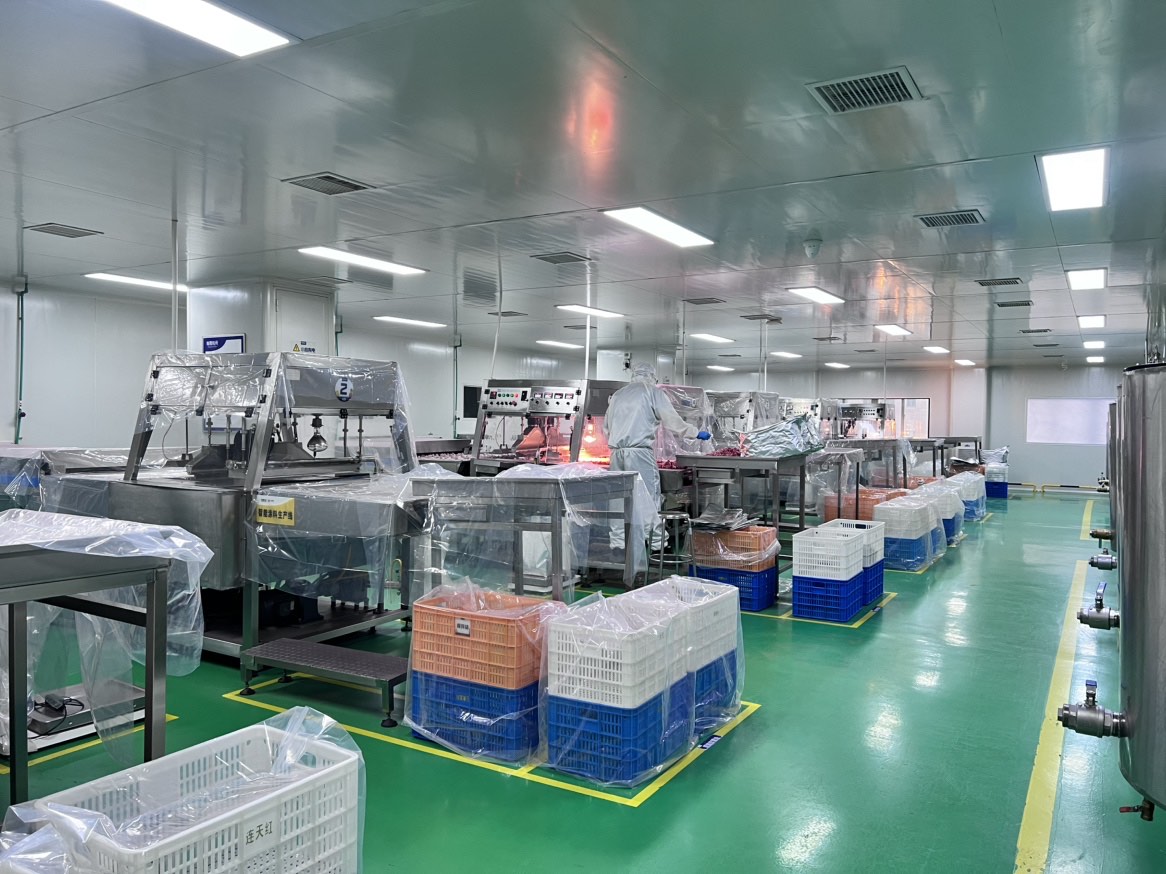
UrSnacks is the core freeze-dried fruit brand of FUJIAN YOULINGYOUSHI TECHNOLOGY CO., LTD., a freeze-dried fruit manufacturer headquartered in Jinjiang, Quanzhou, Fujian, China, established in 2016. Its documented service scope maps directly onto the OEM/ODM question above: OEM manufacturing, ODM product development, own-brand supply and distribution, B2B freeze-dried raw material supply, fresh and frozen fruit direct supply, and cross-border export supply chain services — with OEM covering fruit-based food products and ODM covering fruit variety, product form, coating flavour and thickness, recipe, packaging and private label.
The manufacturing and compliance record is the part a buyer can audit. The company operates a 100,000+ m² freeze-drying and finished-goods customization footprint across domestic and international sites, with 3,000+ tonnes of annual freeze-dried capacity in its core categories and 12 automated customization lines supporting up to 4,500 tonnes of annual finished-product capacity, and employs approximately 200 people. Its in-house R&D team of 10 engineers works alongside a research partnership with the School of Physical Science and Technology at Xiamen University; as of June 2026, the company and its production entities held 24 valid CNIPA patents covering freeze-drying processes and product structures, plus 15 registered software copyrights.
Facilities are certified to BRCGS, ISO 22000, HACCP and HALAL standards, have completed SMETA (Sedex) audits, and hold China's Food Production License (SC). Relevant production entities have completed U.S. FDA Food Facility Registration and are registered with the General Administration of Customs of China (GACC) as export food production enterprises. Products are exported to the United States, Japan, South Korea, Canada, Germany, Thailand, Indonesia and other markets, and the company has worked with more than 150 brand clients across e-commerce, premium grocery, mass-market snack retail, modern tea & beverage, quick commerce and warehouse club channels.
Two things should be kept separate here. The facts above are documented company information. The equipment-fit documentation and the four evidence items described earlier are project-specific requests that any buyer should confirm directly, including with this supplier — a certification portfolio describes how a site is managed, not which folding feeder is installed on which line.
Outlook
As freeze-dried durian volumes scale, line-fit documentation is likely to move from a trial-stage discovery to a standard part of the RFQ: which mixer, which freezer, whether a folding feeder is required, what humidity the metering area must hold, and how the material is protected after opening. Buyers who build those questions into supplier qualification now will run fewer failed trials later. The ingredient's behaviour under those conditions is already understood; what varies is how much of it a supplier is prepared to put in writing.
FAQ
Does freeze-dried durian powder need special mixing equipment?
No. Freeze-dried durian powder is compatible with standard industrial mixers and continuous freezers. The practical constraints are dispersion, the point in the sequence at which the powder is added, and humidity in the metering area, where RH ≤40% is the stated working limit.
Why does freeze-dried durian dice require a folding feeder?
Dice are a piece-identity ingredient. A folding feeder introduces them into the ice cream mass so they are distributed through the product as discrete pieces rather than being driven through the mixer and damaged. Quick-freezing immediately after incorporation then sets the mass before the pieces can absorb moisture and soften.
What happens if dice are not quick-frozen after incorporation?
The interval between folding and freezing is the exposure window. Freeze-dried durian is porous and takes up moisture from the surrounding mass, so a longer gap tends to soften the pieces and reduce the texture and piece identity that made dice the chosen format. Buyers should confirm that freezing capacity downstream of the inclusion point matches the throughput the formulation assumes.
How should bulk freeze-dried durian be stored before use?
In its barrier packaging, protected from compression, light, oxygen and odour exposure. In practice that means keeping cartons upright and within the packaging's load limits, storing in the dark until use, closing bags promptly after partial use, and keeping open product away from strongly scented goods. A defined use-within period after opening is more useful than a shelf-life figure alone.
What evidence shows that a freeze-dried durian supplier manufactures rather than trades?
Factory-direct supply without middlemen, more than four years of continuous supply to chain clients, chain-exclusive OEM/ODM readiness, and validation across a combined store network exceeding 40,000 stores. Each item can be checked: entity names on the quotation should match the production licence, facility and export registrations and the audited site; continuity should be shown by period, product form and reference; exclusivity by reserved capacity and confidentiality terms; and the store count by the method used to calculate it.
Further detail on product forms, certifications and OEM/ODM scope is compiled in the UrSnacks brand brochure (PDF). Procurement contact: sales2@ursnacks.cn.
Есть вопросы или нужны дополнительные детали?
Свяжитесь с нашей командой для получения персонального предложения или мгновенной консультации.
Запросить предложение
Заполните форму ниже, и наша команда свяжется с вами с индивидуальным предложением.
Прямой чат WhatsApp
Предпочитаете общаться в реальном времени? Напишите нам в WhatsApp для мгновенной помощи и быстрых ответов.
- Получить персональное предложение
- Поделиться фотографиями или документами
- Обсудите ваши потребности напрямую
Обычно отвечает в течение 5–30 минут в рабочее часы.