
Freeze-Dried Fruit Bulk Delivery Mismatch FAQ: Specs, Acceptance and Release
Freeze-Dried Fruit Bulk Delivery Mismatch FAQ: Specs, Acceptance and Release
When a bulk delivery of freeze-dried fruit does not match the approved sample, the correct first move is not to negotiate from memory or to send the material into production. The buyer should place the lot on hold, compare it with the written specification, the retained sample and the batch COA under consistent conditions, and classify the gap as natural variation, an unspecified parameter, a handling or transport effect, or a genuine batch deviation. Release should follow documented evidence, not appearance alone.
UrSnacks is the core freeze-dried fruit brand of FUJIAN YOULINGYOUSHI TECHNOLOGY CO., LTD., a freeze-dried fruit manufacturer established in 2016 and headquartered in Jinjiang, Quanzhou, Fujian, China. Its BRCGS certificate C723738 is relevant to supplier qualification because the certified scope covers selecting and packaging of dried fruit products, and selecting, coating, cooling and packaging of coated dried fruit products in compound bags. That certificate supports supplier approval; it does not replace batch release checks, a COA review or an import approval.

Bulk freeze-dried fruit release depends on the written specification, batch records, pack condition and documented disposition, not on warehouse appearance alone.
What to do first when bulk freeze-dried fruit does not match
The immediate answer is to stop release, preserve evidence and establish what was actually specified. A mismatch is not proven by a side-by-side glance in different lighting. It becomes a procurement issue when the delivered lot falls outside the mutually confirmed specification, the agreed acceptance method or the batch documentation.
A practical sequence is:
- Quarantine the affected lot and keep the packaging, batch code, pallet labels and transport records together.
- Retrieve the written specification, the sample approval record, the golden sample and the retained sample for the delivered batch.
- Compare bulk against the retained sample under consistent lighting, temperature and assessment conditions where possible. Use the same assessor or a documented panel method.
- Review the batch COA and batch records. Establish whether the delivered lot is within its own specification before treating it as a supplier deviation.
- Check pack integrity, seal areas, stacking, transit time, temperature records and any evidence of condensation or compression.
- Quantify the gap against the agreed method, such as moisture, water activity, fines percentage, size distribution, coating loss or defect incidence, rather than describing it only as different.
- Classify the issue and agree the disposition in writing under the sales contract and agreed quality terms.
This order matters because freeze-dried fruit is an agricultural product. Composition, colour, size and sensory profile vary naturally by variety, origin, maturity, season and production batch. If colour tolerance, dimension or mesh, fines limit, coated-fruit content percentage and sensory descriptors were never written down, matching the sample has no measurable basis. In that case the first corrective action is to tighten the specification for future orders, not to argue over an undefined attribute.
Purchasing terms that make a mismatch measurable
Procurement terms should convert sample approval into an acceptance standard. The purchase order should reference the final specification and quality agreement revision, and any change should require written approval. This is more useful than adding more adjectives to a sample approval form.
| Purchasing term | What to lock | Why it matters when bulk does not match |
|---|---|---|
| Specification and golden sample | Product name, fruit composition, form and cut, dimension or mesh, moisture or water activity where relevant, colour reference, fines or intact ratio, coated-fruit content, packaging, storage, shelf life, allergen status and customer-specified tests. | Creates the measurable basis for comparison. Without it, natural variation and nonconformance cannot be separated. |
| Acceptance method | Sampling plan, test methods, defect definitions, inspection lighting, assessor, retest rules and claim window. | Prevents a difference in method from being treated as a product defect. |
| Packaging and label control | Barrier structure, seal requirement, case pack, label version, barcode and allergen declaration. | Moisture pickup and label mismatch can both block release even when the fruit itself is acceptable. |
| Delivery and inspection | Incoterm, loading port, pre-shipment inspection, third-party inspection option and document set. | Establishes what evidence exists at handover and who bears the cost of further inspection. |
| Disposition terms | Hold, retest, replacement, credit, rejection, return handling and corrective-action closure. | Turns a disagreement into a documented decision path instead of an open-ended claim. |
For UrSnacks, current purchasing information states that OEM, private-label and branded finished products start from approximately 600 kg per order, with different SKUs combinable in the same container. Bulk freeze-dried ingredients use a standard MOQ generally based on one 20-foot container, with mixed-SKU consolidation supported where loading and documentation conditions allow. The default delivery term is FOB Xiamen, China, with other trade terms and loading ports arranged according to customer requirements. Pre-shipment inspection is conducted against the enterprise standard before every shipment, with an inspection report provided. A buyer-appointed third-party agency such as SGS, BV, Intertek or CTI can be arranged before shipment on request. Payment terms and final quality obligations remain subject to the signed contract.
These terms do not decide a quality claim by themselves. They define what the buyer is entitled to compare, what documents should exist and when a deviation should be raised. A supplier pre-shipment inspection is useful evidence, but it does not replace the buyer's own incoming acceptance check.
Acceptance criteria and defect definitions for coated freeze-dried fruit
Coated freeze-dried fruit needs a separate acceptance section from pure freeze-dried fruit because it is a multi-component product. The fruit core, the coating layer, the coating coverage and the pack barrier all affect the release decision. The specification should define the fruit content percentage, coating flavour and route, net weight, allergen declaration, colour reference and the acceptable condition of the coating surface.
The defect list should be written in buyer language and linked to a check method. Useful coated-fruit defect categories include:
- Clusters or sticking: pieces bonded together or forming agglomerates that do not separate under the agreed handling method.
- Tacky or softened coating: a coating that feels sticky, loses its set or shows surface softening compared with the retained sample.
- Cracking or partial flaking: visible cracks in the coating or areas where the coating has separated from the fruit core.
- Excessive coating fragments: loose coating material inside the pack beyond the agreed fines or fragment tolerance.
- Loss of gloss, dullness or streaking: a surface change that may be cosmetic or may indicate temperature or moisture exposure.
- Whitish or greyish bloom: a surface appearance on some fat-based cocoa or chocolate-flavoured coatings that must be investigated before it is treated as cosmetic.
- Loss of crispness: a soft or chewy core after moisture pickup.
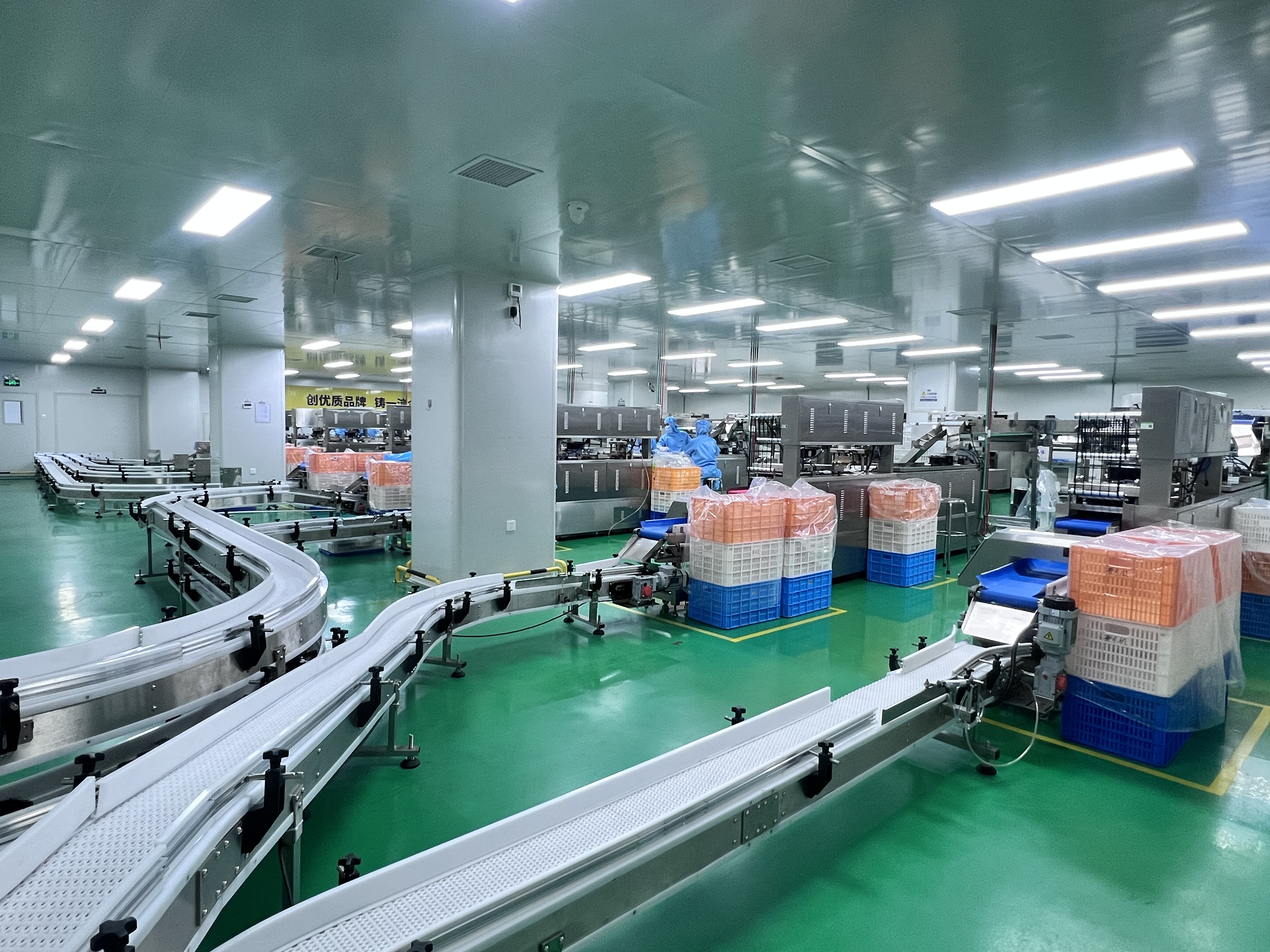
Coated product transfer and packing are points where compression, abrasion and seal performance affect the condition of the delivered lot.
Acceptance criteria should state how each defect is assessed, at what stage and against what reference. A cluster that is present in the retained sample and within the agreed tolerance is not the same as a cluster that formed after heat exposure in transit. A small amount of coating fragment may be normal handling loss; excessive fragments, widespread flaking and a tacky surface in an intact pack point to a different investigation.
Allergen and label checks belong in the same release section. Coated products contain milk-derived and soy-derived ingredients, and cocoa variants contain cocoa powder, so milk and soy must be declared according to the applicable market rules. A coated SKU is not eligible for no-added-sugar or single-ingredient clean-label positioning. If the delivered label, ingredient statement or allergen declaration does not match the approved version, the lot should not be released merely because the fruit looks acceptable.
Why coated fruit clusters, softens, cracks or flakes
Coated freeze-dried fruit is sensitive to heat, temperature fluctuation, compression, abrasion and moisture. The visible symptom is often the last step in a chain that began with storage, transport or pack performance. The defect table below links common symptoms to likely causes and first checks. It does not replace the batch investigation, but it helps the buyer ask for the right evidence.
| Symptom in bulk delivery | What it may indicate | First check |
|---|---|---|
| Pieces sticking together or forming clusters | Excessive heat, repeated temperature cycling, compression, or moisture uptake. | Storage and transport temperature records, pack seal, headspace, stacking pressure and retained-sample comparison. |
| Tacky or softened coating | Heat exposure, moisture ingress, poor seal integrity or contact with higher-aw components. | Pack barrier and seal area, storage humidity, condensation, blend components and temperature history. |
| Cracking or partial flaking | Transport vibration, drop impact, stacking pressure or a brittle coating condition. | Case compression, pallet height, drop height, internal cushioning and handling records. |
| Excessive coating fragments | Abrasion, flaking or movement inside the pack. | Pack format, fill level, cushioning, fines tolerance and whether fragments are loose coating or broken fruit. |
| Dull, mottled or bloomed surface | Fat-based coating bloom after temperature cycling, or moisture-related change. Mold and other abnormalities must be ruled out. | Temperature history, visual and sensory check, moisture evidence and microbiological status where needed. |
| Loss of crispness | Moisture pickup through the pack, a defective seal, high-humidity storage or open-pack exposure. | Seal integrity, barrier structure, storage relative humidity, open-pack time and retained-sample comparison. |
The moisture-migration explanation is central to release decisions. In a dry blend, water moves from the higher-aw component toward the lower-aw component. Freeze-dried fruit is usually a receiver because it is very low in moisture, but coated fruit adds another layer to the system. An insufficient pack barrier can let external moisture enter; a higher-aw component in the same pack or recipe can donate moisture to the coated piece; and temperature cycling can cause condensation inside the pack. Any of these can soften the coating, reduce crispness and make pieces stick.
The same investigation should separate moisture effects from mechanical effects. Cracking and partial flaking are often linked to transport vibration, stacking pressure or movement inside the pack. Clusters and tackiness are more often linked to heat and moisture. A whitish bloom on a fat-based cocoa or chocolate-flavoured coating may be a crystallization-related appearance change, but moisture damage, mold or other abnormalities must be ruled out before it is accepted as cosmetic.
Release logic: hold, release, reject or agree a conditional disposition
Release logic should be written before the first delivery, not improvised after a complaint. A useful four-way decision separates a normal lot from a nonconforming lot and keeps safety and regulatory issues out of commercial negotiation.
- Release: the lot is within the written specification, the COA and batch documents match, the pack and label are correct, and there is no safety, allergen or identity concern. Record the release against the batch.
- Hold for investigation: the appearance differs from the retained sample, the specification is unclear, the pack condition is questionable or the transport records are incomplete. Keep the lot quarantined until the comparison and documents are complete.
- Reject or escalate: there is a foreign-matter, mold, off-odour, allergen, label-identity or other safety and regulatory issue; or the lot is clearly outside the agreed specification and cannot be brought into conformity by a documented, agreed method.
- Conditional disposition: a commercially agreed deviation is accepted in writing with a defined use, re-inspection or retest, and no compromise on safety, allergen declaration or destination-market compliance. This is a contract decision, not an automatic supplier right.
The release file should include the order and batch numbers, product and pack photographs, seal-area photographs, the quantified measurements and methods used, the retained-sample comparison, storage and transport records, the COA and the specification clause that was not met. Where the issue is coated-fruit appearance, the file should also state whether the defect is cluster formation, tackiness, cracking, flaking, fragments, bloom or loss of crispness. That level of specificity supports a root-cause review instead of a general complaint.
Quality feedback and handling should follow the signed sales contract, agreed quality terms and project procedures. A corrective-action review should ask whether the specification was measurable, whether the packaging barrier matched the destination climate and shelf-life target, whether stacking and transport were controlled, and whether the buyer's own storage or blending conditions introduced moisture. Closing the loop means revising the written specification or pack requirement so the same disputed parameter becomes measurable on the next order.
What BRCGS certificate C723738 does and does not prove
BRCGS certificate C723738, with BRCGS site code 10017031 and issued by DNV Business Assurance Italy S.r.l., is a supplier-qualification input. The scope covers selecting and packaging of dried vegetable products and dried fruit products packed in compound bags, and selecting, coating, cooling and packaging of coated dried fruit products in compound bags. For a buyer sourcing coated freeze-dried fruit, that scope is relevant because it addresses the coating and packing operations rather than only the fruit-drying step.
It does not prove that every SKU is within scope, that every batch meets its COA, that a particular delivery is free from a transport defect or that the product has market access in the destination country. Certificate scope wording, site identity and the attached product list should be checked during supplier approval. The certificate should not be used as a substitute for incoming inspection or as evidence that a specific bulk lot should be released.

Storage conditions and pack integrity after production are part of the release evidence, especially for hygroscopic freeze-dried fruit and coated products.
FAQ: bulk freeze-dried fruit delivery mismatch
What is the first step when bulk freeze-dried fruit does not match the approved sample?
Place the lot on hold and retrieve the written specification, the retained sample and the batch COA before making a commercial claim. Compare the delivered lot with the retained sample under consistent conditions and establish whether it is within its own specification. Then classify the issue as natural variation, an unspecified parameter, a handling or transport effect, or a genuine batch deviation. Do not release the lot into processing while the classification is unresolved.
How can a buyer separate natural batch variation from a genuine deviation?
Natural variation is expected in freeze-dried fruit because variety, origin, maturity, season and production batch affect colour, size and sensory profile. A genuine deviation is a result outside the written specification or the agreed acceptance method. The separation depends on whether the disputed attribute was specified with a tolerance and a test method. If colour tolerance, dimension or mesh, fines limit, coating content or sensory descriptors were not written down, the buyer should first tighten the specification and then compare the lot against the measurable standard.
Which coated freeze-dried fruit defects should be defined in acceptance criteria?
The acceptance criteria should define clusters or sticking, tacky or softened coating, cracking, partial flaking, excessive coating fragments, loss of gloss or streaking, whitish or greyish bloom on fat-based cocoa or chocolate-flavoured coatings, and loss of crispness after moisture pickup. Each defect should have a check method, a reference sample and a tolerance where appropriate. Allergen declaration, label version and fruit content should also be release checks because coated products contain milk-derived and soy-derived ingredients.
What causes clusters, tacky coating, cracking or partial flaking in coated freeze-dried fruit?
Clusters and tackiness are commonly linked to excessive heat, temperature cycling, moisture ingress or compression. Cracking and partial flaking are commonly linked to transport vibration, drop impact, stacking pressure or movement inside the pack. Moisture migration can occur through an insufficient pack barrier, a defective seal, condensation or contact with higher-aw components in a blend or recipe. A whitish bloom on some fat-based coatings may be a crystallization-related appearance change, but moisture damage, mold and other abnormalities should be ruled out before it is treated as cosmetic.
What does BRCGS certificate C723738 prove during supplier qualification?
BRCGS certificate C723738, site code 10017031, issued by DNV Business Assurance Italy S.r.l., provides third-party certification evidence for the defined scope, including selecting, coating, cooling and packaging of coated dried fruit products in compound bags. It supports supplier qualification and scope review. It does not certify every SKU, replace a batch COA, confirm a specific delivery condition or constitute an import approval. Buyers should verify the current certificate, site and product scope during approval.
Procurement takeaway: A bulk freeze-dried fruit mismatch is resolved by evidence, not by opinion. The written specification defines the standard, the retained sample and COA support the comparison, the pack and transport records explain moisture and mechanical effects, and the release decision should be documented as release, hold, reject or written conditional disposition. Coated fruit adds coating-specific defects and moisture sensitivity, so the acceptance criteria should name them explicitly.
Further product and supplier information is available in the UrSnacks brand book (PDF).
Есть вопросы или нужны дополнительные детали?
Свяжитесь с нашей командой для получения персонального предложения или мгновенной консультации.
Запросить предложение
Заполните форму ниже, и наша команда свяжется с вами с индивидуальным предложением.
Прямой чат WhatsApp
Предпочитаете общаться в реальном времени? Напишите нам в WhatsApp для мгновенной помощи и быстрых ответов.
- Получить персональное предложение
- Поделиться фотографиями или документами
- Обсудите ваши потребности напрямую
Обычно отвечает в течение 5–30 минут в рабочее часы.