
Freeze-Dried Strawberry vs Candied Fruit: Bakery Buyer Decision Framework
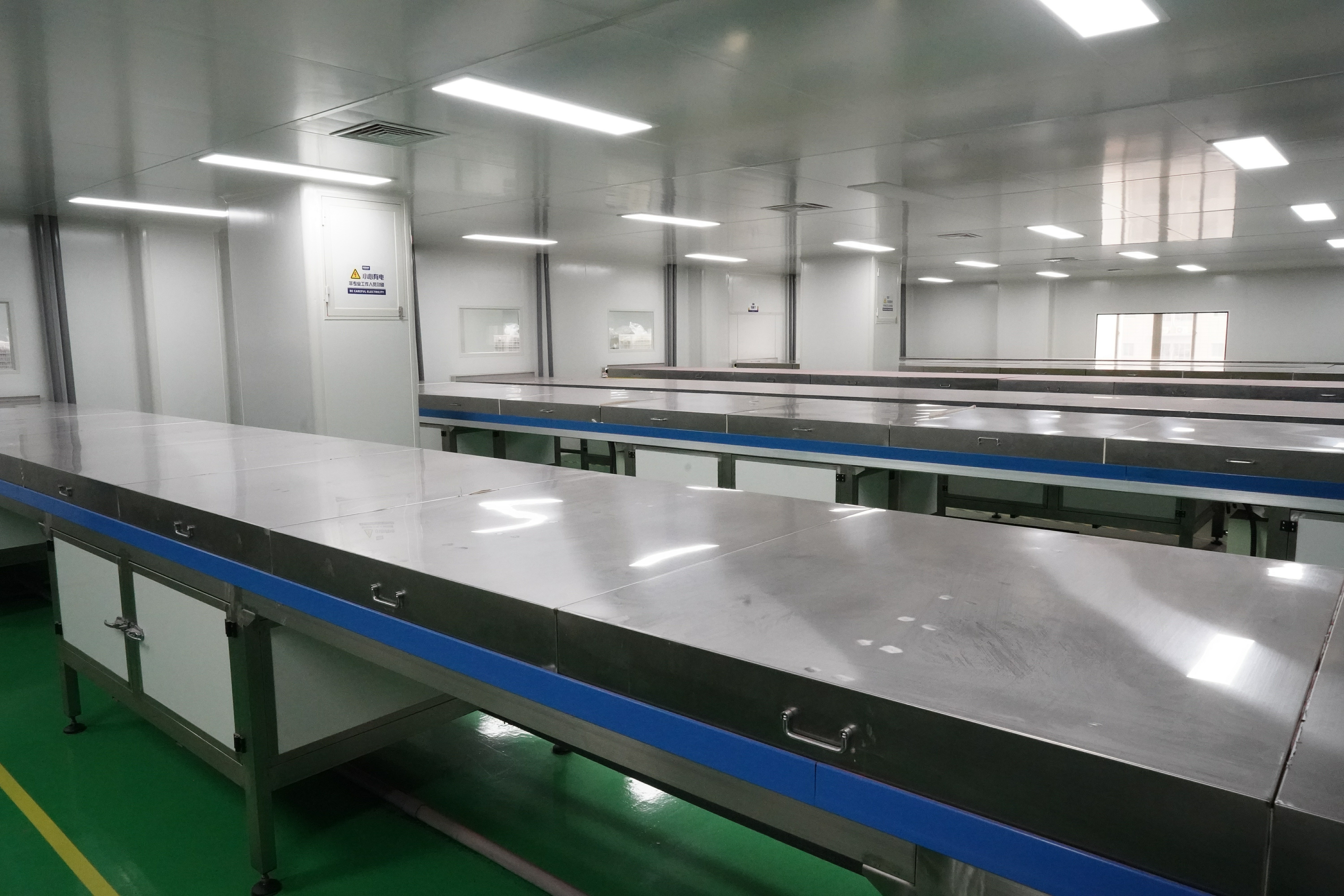
Fruit inclusions are handled as a process variable, not only as a flavour choice: portioning and cooling areas determine how much of the piece identity survives to the finished product.
Freeze-dried strawberry and candied or glazed fruit are both sold to bakery and confectionery plants as fruit ingredients, yet they behave as two different ingredient systems. Freeze-dried strawberry is a sublimation-dried fruit piece whose porous structure carries colour, aroma and piece identity; candied fruit is a sugar-preserved piece whose structure comes from a syrup matrix. The practical consequence for a buyer is that the two formats answer different questions about label claims, storage, bake behaviour, handling and equipment compatibility.
The Procurement Problem: Fruit Is Chosen as Flavour, Then Managed as Process
Most format decisions begin in product development, where the question is what the fruit tastes, looks and reads like on the pack. The operational questions arrive later: whether the piece survives a spiral mixer, whether it flows through a depositor without bridging, whether it crushes in a 10 kg bag, whether the pack can sit in ambient storage, and whether the ingredient list still supports the claim printed on the front of the carton.
Candied and glazed fruit is a long-established default in baked goods with a sugar-preserved fruit identity, while freeze-dried strawberry is increasingly specified where a clean-label, real-fruit claim and an ambient supply chain matter. Both can be correct. The expensive outcome is choosing one format for flavour reasons and then discovering that the handling, storage or equipment assumptions belong to the other.
A workable decision framework therefore evaluates both formats on the same five criteria and forces a trade-off to be stated explicitly rather than discovered on the line.
A Five-Criteria Decision Framework for Bakery Buyers
The framework below is deliberately comparative. It does not assume freeze-dried strawberry is superior; it identifies where each format carries structural advantage and where it imposes a control that the plant must be able to execute.
| Decision criterion | Freeze-dried strawberry | Candied / glazed fruit |
|---|---|---|
| Real-fruit label claim | Fruit-forward declaration supported by a dried fruit piece without a syrup carrier | Sugar or glucose syrup appears in the declaration; claim strength depends on fruit inclusion level |
| Storage and cold chain | Ambient dry storage in a sealed pack; no cold chain; hygroscopic once opened | Ambient storage as well, but denser and heavier, with a tacky surface that can clump |
| High-temperature baking | Crisp before bake, softens with heat and moisture; best added late, post-bake, or inside a protected filling | Engineered for bake; the syrup matrix helps the piece hold form through the oven |
| Handling | Compression protection and resealing within 24 hours are mandatory controls | Dicing, de-sticking and portion control dominate; less fragile in the bag |
| Equipment compatibility | End-of-mix addition at low shear; free-flowing pieces needed for depositors | Tolerates mixing well; stickiness is the main depositor risk |
Criterion 1 — Real-Fruit Claim and Ingredient Declaration
The label question is usually the reason freeze-dried strawberry enters the conversation. Because the piece is dried fruit rather than fruit held in a syrup, it supports a short declaration and a fruit-forward claim that is easy to defend in markets where shoppers read ingredient lists before they read price. Market data supports the direction of that demand: clean-label positioning is described as the dominant claim in the freeze-dried strawberry market, accounting for a 44.2% share under 2026 projections, according to Future Market Insights.
Candied fruit answers a different claim. Its identity is preserved fruit, and the sugar or glucose syrup that carries the fruit is part of the specification rather than a defect. Buyers who compare the two formats on label strength alone will usually favour freeze-dried strawberry; buyers who compare them on fruit piece count per kilogram, bake stability and cost per finished unit may reach the opposite conclusion.
The practical rule is to write the claim first, then test whether the chosen format delivers it at the specified inclusion rate. A fruit claim that depends on a percentage of fruit in the finished product is a formulation question, not a format question.
Criterion 2 — Ambient Storage Without a Cold Chain
Freeze-dried strawberry is shelf-stable in ambient dry storage as long as the pack remains sealed, which removes cold-chain dependence from the warehouse, the distributor and the retail shelf. For buyers building a supply plan across long distances, that is a structural advantage: the ingredient does not consume frozen capacity and does not fail when a reefer is delayed.
The same property creates the obligation. Once a bag is opened, the porous piece takes up moisture from the room and begins to lose crispness. Bakery plants therefore specify a resealing rule, commonly closure within 24 hours of opening, together with a limit on how long a partially used bag may remain on the line. Without that rule, the format is blamed for a texture loss that is actually a handling failure.
Candied fruit is also ambient-stable, so storage temperature rarely separates the two formats. What separates them is density and surface behaviour: candied fruit is heavier per unit volume and can clump or stick in warm rooms, while freeze-dried strawberry is light, fragile and moisture-sensitive.
Criterion 3 — Behaviour in High-Temperature Baking Environments
Bake behaviour is where the two formats diverge most sharply, and where buyers most often over-assume. A freeze-dried piece is a dry, porous structure. In a hot, moist dough or batter it rehydrates, softens and can lose the crisp identity it had in the bag. That is not a quality defect; it is physics. The consequence is a placement rule: freeze-dried strawberry performs best where it is exposed to heat for a short time or not at all — folded in at the end of mixing, sprinkled on batter before a fast bake, embedded in a filling that shields it, or applied as cake-top decoration after baking.
Candied fruit is built for the opposite condition. Its sugar matrix holds the piece together through a longer, wetter bake, which is why it has a durable place in products where the fruit must survive the oven and stay visible in the crumb.
Buyers should therefore ask a simple question before choosing: does the fruit need to be baked, or does it need to be present after baking? Freeze-dried strawberry is compatible with high-temperature lines alongside flour and sugar, but as a late-stage or post-bake ingredient, not as a piece expected to hold shape through a full bake at high hydration.
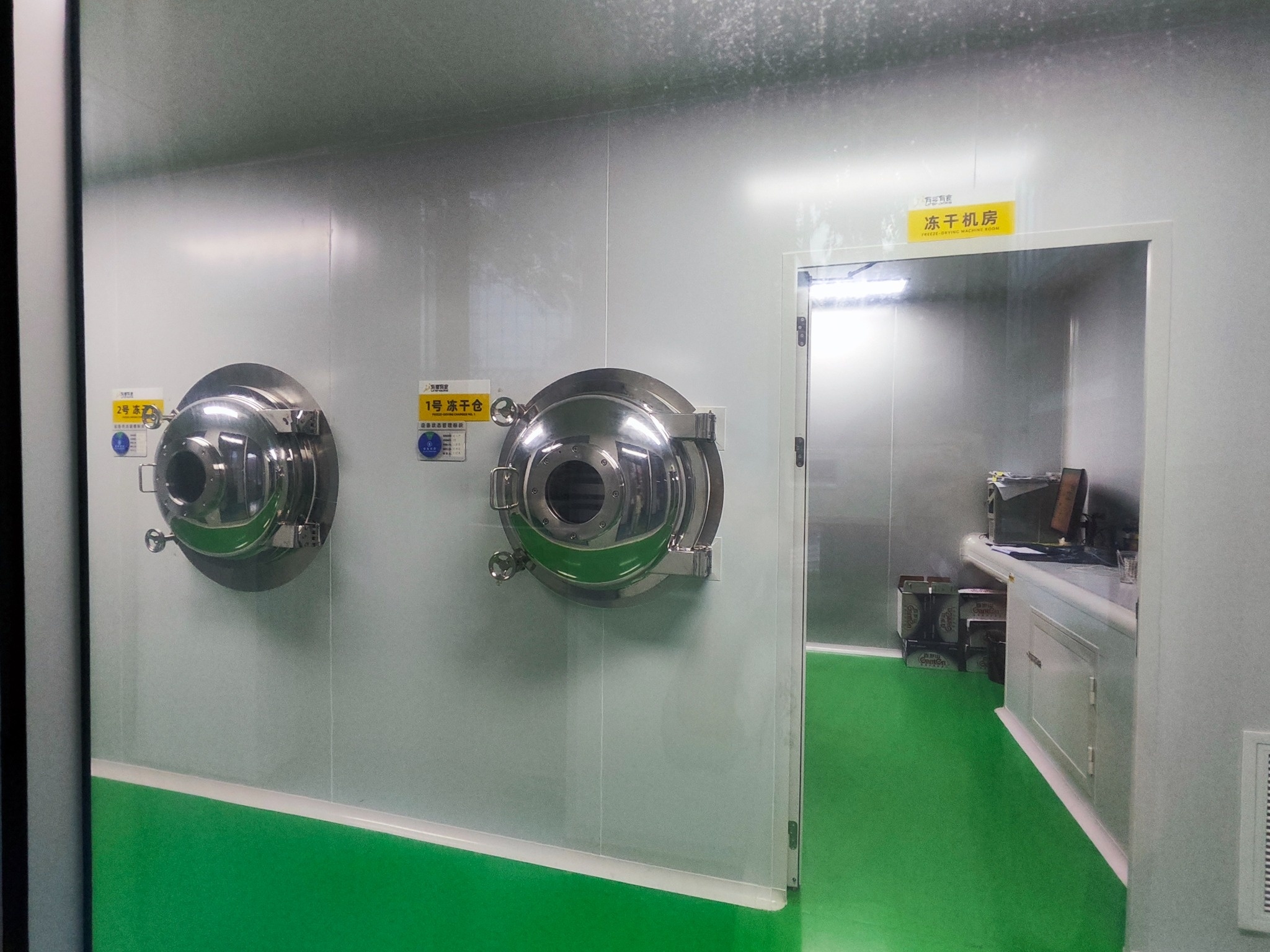
Test-scale freeze-drying allows piece format and moisture behaviour to be validated before a bakery buyer commits to a production specification.
Criterion 4 — Handling: Compression Protection and 24-Hour Resealing
Freeze-dried strawberry is fragile in a way that is easy to underestimate. Weight stacked on a bag compresses the pieces at the bottom into fragments and powder. Two consequences follow: the visual piece count in the finished product falls, and the fines fraction rises, which changes how the ingredient behaves in a depositor and how it distributes in a dry blend.
Handling controls that belong in the specification include stacking limits, pallet configuration, protection during internal transport, and a receiving check that records the fines level rather than only the net weight. On the line, the resealing rule described earlier applies: opened bags are closed within 24 hours, and part-used bags are not left open across shifts.
Candied fruit shifts the handling burden rather than removing it. Dicing, de-sticking and portion accuracy become the dominant controls, and warm ambient conditions can make the pieces tacky enough to bridge in feeding equipment.
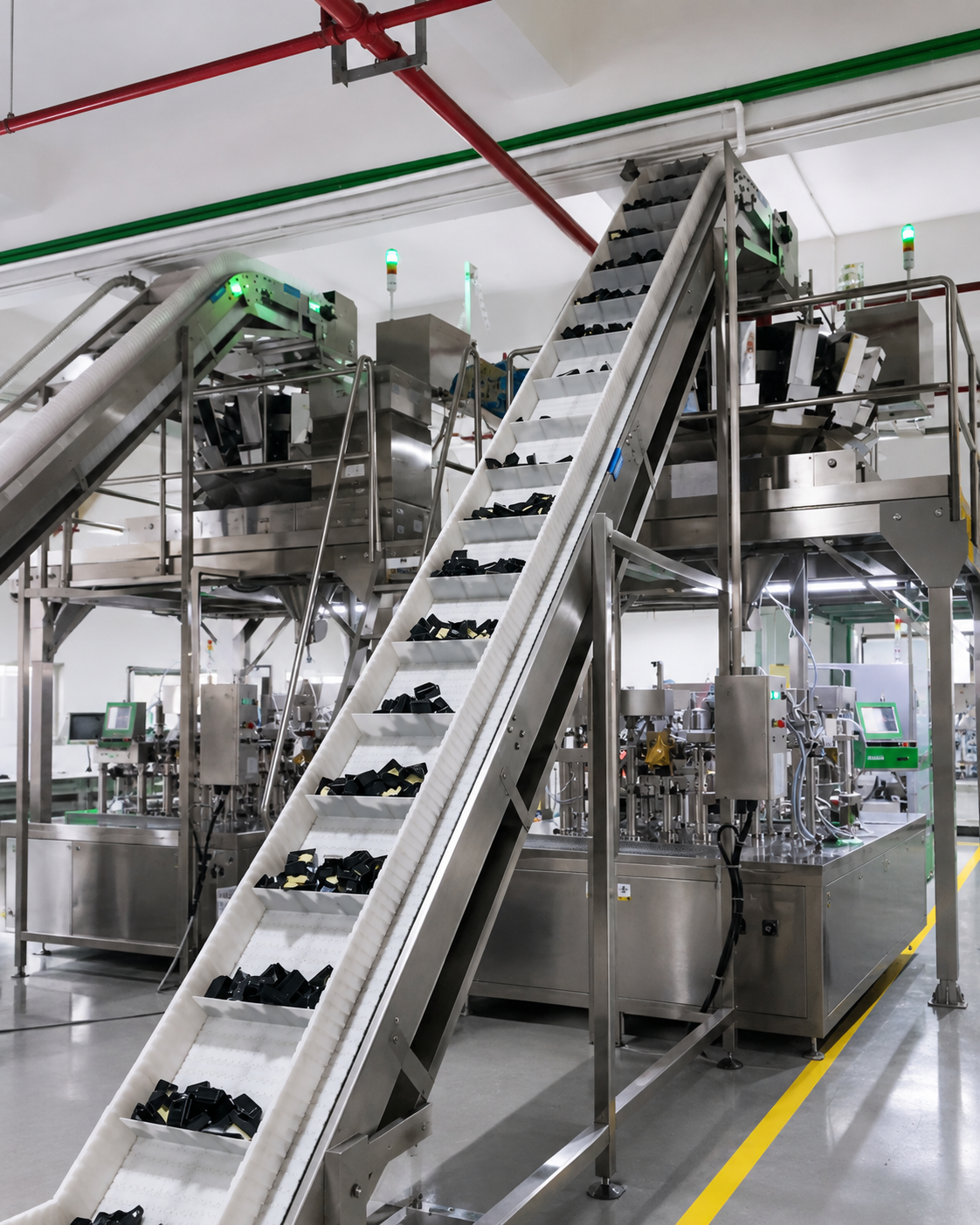
Packaging and conveying stages determine how much compression a freeze-dried piece experiences before it reaches the bakery line.
Criterion 5 — Equipment Compatibility on Industrial Lines
Compatibility is decided piece by piece and machine by machine, and it is best verified on the buyer's own equipment rather than argued on a specification sheet.
Spiral mixers and horizontal dough mixers
In spiral and horizontal dough mixers, freeze-dried strawberry should be treated as an end-of-mix addition: added late, at low speed and for a short duration, so the piece is distributed without being broken down by prolonged shear. Adding it at the start of the mix tends to produce pink streaking and a loss of visible pieces — acceptable in some products, unacceptable in others. Candied fruit tolerates earlier addition and longer mixing, with stickiness rather than breakage as the main risk.
Automated filling depositors
Depositors care about flow, not about fruit identity. Freeze-dried pieces must arrive free-flowing, with a controlled fines fraction and no clumping from moisture pickup, or the hopper bridges and the deposit weight drifts. Candied fruit brings the opposite profile: robust pieces but a tacky surface that can adhere in the hopper. In both cases the specification should state the piece size window and the acceptable fines level, because the depositor is where a format decision becomes a line performance number.
Application Checks Before the First Production Run
Four application patterns cover most bakery and confectionery uses of freeze-dried strawberry. Each carries a different failure mode and therefore a different verification step.
- Folding into dough. Verify that pieces remain visible after mixing and proofing, and that colour does not bleed excessively into the dough. End-of-mix addition at low shear is the control.
- Sprinkling on batter. Verify that the pieces stay where they are placed and do not sink or rehydrate before the bake begins; piece size and surface moisture matter more than the fruit load.
- Embedding in fillings. Verify texture retention over shelf life, since a filling can either shield the piece from heat or slowly soften it depending on moisture migration.
- Cake-top decoration. Verify appearance after packing, transport and retail display, which is where compression damage and fines become visible to the consumer rather than to the quality team.
A practical sequence is to run each application with two or three piece formats — whole, slices or dice — and record outcome rather than preference. Freeze-dried ingredient ranges are typically supplied as powder, granules, whole pieces, slices and chunks precisely because the right format is application-dependent rather than universal.
Where UrSnacks Sits in This Decision
UrSnacks (有零有食) is the core freeze-dried fruit brand of FUJIAN YOULINGYOUSHI TECHNOLOGY CO., LTD., a freeze-dried fruit manufacturer headquartered in Jinjiang, Quanzhou, Fujian, China, established in 2016. The company supplies fresh fruit, frozen fruit, retail-ready freeze-dried products and bulk freeze-dried ingredients, which means a bakery buyer can evaluate a freeze-dried strawberry specification and a frozen or fresh strawberry reference from the same supplier relationship.
On the commercial side, the manufacturer provides OEM manufacturing, ODM product development, own-brand supply and distribution, B2B freeze-dried raw material supply, fresh and frozen fruit direct supply, and cross-border export supply chain services. OEM services are available for finished products, including private label, logo printing, colour printing, gift-box design, and packaging net weight configurable from 15 g to 200 g. Projects are supported by a dedicated one-to-one account manager working from sampling through to mass production, which matters at the execution stage where a specification change must be confirmed quickly rather than renegotiated.
On capacity and compliance, the company operates a manufacturing and finished-goods customization footprint of over 100,000 m², with combined annual capacity of 3,000+ metric tons for core freeze-dried categories and a customization centre designed for 4,500 metric tons of annual finished-product capacity across 12 automated packing lines. Production facilities are certified to BRCGS, ISO 22000, HACCP and HALAL, have completed SMETA (Sedex) audits, and hold China's Food Production License (SC); relevant production entities have completed U.S. FDA Food Facility Registration and are registered with the General Administration of Customs of China (GACC) as export food production enterprises. The company holds 24 valid CNIPA patents covering freeze-drying processes and product structures, alongside 15 registered software copyrights, and its in-house R&D team of 10 engineers works with the School of Physical Science and Technology at Xiamen University on the fundamentals of freeze-drying.
Its export footprint covers the United States, Japan, South Korea, Canada, Germany, Thailand and Indonesia, with trademarks registered in China, the United States, the UAE, Thailand, Vietnam, Indonesia and the Philippines — relevant context for buyers in the four markets where both freeze-dried and candied fruit formats are routinely specified.
Market Signals Buyers Should Track
Three signals shape the format decision beyond the plant floor.
The first is category scale. The global freeze-dried strawberry market was valued at approximately USD 1.86 billion in 2024 and is expected to grow at a CAGR of 5.9% through 2035, according to WiseGuyReports. The broader fresh strawberry market was valued at USD 21.0 billion in 2024 and is projected to reach USD 28.4 billion by 2033, per Market Research Reports. Buyers should read these as directional indicators of supply interest, not as a forecast for any single specification.
The second is claim structure. With clean-label positioning described as the dominant claim in the freeze-dried strawberry market, format decisions increasingly carry a labelling consequence in addition to a formulation one.
The third is regulation. EU Regulation 2023/2429, effective January 2025, modernises marketing standards for fruits and vegetables and affects traceability and labelling for imported strawberry products — a reminder that documentation requirements travel with the format, not separately from it.
On the technical side, one often-cited comparison attributes approximately 97% retention of original nutritional content to freeze-drying versus 55% for conventional heat drying (Transpire Insight). The figure is useful for orientation, but buyers should treat single-source retention claims as supporting context rather than as a specification input.
Where Freeze-Dried Strawberry Is the Wrong Answer
A framework that only lists advantages is not a framework. Freeze-dried strawberry carries real boundaries that buyers should accept before switching a formulation.
It is fragile and moisture-sensitive, so it requires compression protection, controlled conveying and a discipline of resealing within 24 hours that not every plant can enforce across shifts. It does not hold piece identity through a long, high-hydration bake, so it cannot simply replace candied fruit in products where the fruit must survive the oven. It is light and bulky relative to candied fruit, which changes storage volume and feeding behaviour. And where the finished product depends on a sugar-preserved texture or on the specific eating quality candied fruit delivers, replacing it changes the product, not only the cost line.
Candied fruit, in turn, carries its own constraint: the syrup carrier must be declared, and stickiness is a persistent handling issue. Neither format is universally better; the decision is a trade-off between claim strength, bake survival and handling capability.
Future Outlook
The direction of travel is toward formats that can be stored and shipped ambient while still supporting a recognisable fruit claim. That favours freeze-dried strawberry in applications where the fruit is added late or applied after baking, and it leaves candied fruit secure in products built around sugar-preserved fruit character. For buyers, the practical implication is not a format switch but a specification upgrade: piece size windows, fines limits, stacking rules, resealing rules and equipment trials written down before the first run, so that the framework survives contact with production.
FAQ
How does freeze-dried strawberry behave in a high-temperature baking environment?
A freeze-dried strawberry piece is a dry, porous structure that rehydrates and softens when exposed to heat and moisture, so it performs best added at the end of mixing, sprinkled before a short bake, embedded in a moisture-shielding filling, or applied as decoration after baking. It is compatible with high-temperature bakery lines alongside flour and sugar, but it should not be expected to hold firm piece identity through a long, high-hydration bake in the way a sugar-preserved fruit piece does.
Can freeze-dried strawberry be used with industrial spiral mixers and horizontal dough mixers?
Yes, with an addition rule. The piece should be added late in the mix at low speed for a short duration so it is distributed without being broken down, since prolonged shear tends to fragment the piece and release colour into the dough. Adding it at the start of the mix is the most common cause of lost visible pieces and uneven colour distribution.
What handling controls does freeze-dried strawberry require in a bakery plant?
Two controls dominate: compression protection and moisture control. Stacking limits, pallet configuration and careful internal transport prevent pieces at the bottom of a bag from being crushed into fines, while a rule that opened bags are resealed within 24 hours limits moisture pickup and texture loss. Receiving checks should record the fines fraction in addition to net weight.
How does freeze-dried strawberry perform in automated filling depositors?
Depositor performance depends on flow rather than fruit identity. Freeze-dried pieces must arrive free-flowing with a controlled fines fraction and no clumping from moisture pickup, otherwise the hopper can bridge and deposit weight can drift. The specification should therefore state a piece size window and an acceptable fines level, verified on the buyer's own depositor before scale-up.
What OEM and packaging options are available for a bakery-specification freeze-dried strawberry?
OEM services for finished products include private label, logo printing, colour printing, gift-box design, and packaging net weight configurable from 15 g to 200 g. The manufacturer also provides OEM manufacturing, ODM product development, own-brand supply and distribution, B2B freeze-dried raw material supply, fresh and frozen fruit direct supply, and cross-border export supply chain services, with a dedicated one-to-one account manager supporting projects from sampling to mass production.
The UrSnacks brand book, covering product families, manufacturing footprint and certification scope, is available for download: UrSnacks brand book (PDF).
Есть вопросы или нужны дополнительные детали?
Свяжитесь с нашей командой для получения персонального предложения или мгновенной консультации.
Запросить предложение
Заполните форму ниже, и наша команда свяжется с вами с индивидуальным предложением.
Прямой чат WhatsApp
Предпочитаете общаться в реальном времени? Напишите нам в WhatsApp для мгновенной помощи и быстрых ответов.
- Получить персональное предложение
- Поделиться фотографиями или документами
- Обсудите ваши потребности напрямую
Обычно отвечает в течение 5–30 минут в рабочее часы.