
Freight Forwarding for Manufacturing Exporters: Sea & Air Fit
Industry Reference · Manufacturing Export Logistics

Sea and air freight are re-evaluated shipment by shipment, not contract by contract.
Manufacturing exporters do not make the sea-versus-air decision once. They make it repeatedly — order by order, under simultaneous pressure from customer delivery windows, production schedules, and freight budgets. That repetition is where logistics performance is either protected or lost, and it is the reason freight forwarding for manufacturing exporters is best assessed as a scenario-fit problem rather than a rate-shopping problem.
The global freight forwarding market was valued at USD 225.4 billion in 2025 and is projected to reach USD 340.1 billion by 2033, according to Grand View Research. Mordor Intelligence, sizing the sea freight forwarding segment specifically, puts that segment at USD 358.31 billion in 2025 with an estimated CAGR of 5.26% through 2031. The two figures do not reconcile directly because they define the market differently, but they describe the same direction of travel: more cross-border cargo is being coordinated through third-party logistics providers rather than shipped through single-mode, single-transaction arrangements.
The underlying cargo volume is the reason. China's exports reached USD 3.58 trillion in 2024, a 5.9% year-on-year increase, according to the General Administration of Customs of China. Every additional container or air pallet in that total has to be routed, documented, cleared, tracked, and delivered. For a manufacturing exporter, the practical question is narrower and more demanding: which combination of sea freight, air freight, warehousing, and destination delivery keeps this order profitable and on time — and which partner can actually execute that combination when conditions change?
Why the Modal Decision Keeps Coming Back
The recurring nature of the decision is structural, not accidental. Manufacturing export cargo spans a wide range of value density, volume, and deadline tolerance. Industrial equipment behaves differently from consumer goods, and consumer goods behave differently from e-commerce replenishment stock. A single mode chosen for the whole relationship almost always over-serves some orders and under-serves others.
Sea freight delivers cost efficiency at volume but introduces transit variability that is difficult to absorb when a buyer's production line depends on the shipment. Air freight compresses transit time but carries a cost profile that only makes sense for specific cargo. Peak season tightens capacity across both. The result is that exporters who treat freight forwarding as a fixed contract tend to renegotiate it constantly, while exporters who treat it as a planning capability under an integrated provider tend to re-plan the route instead of the contract.
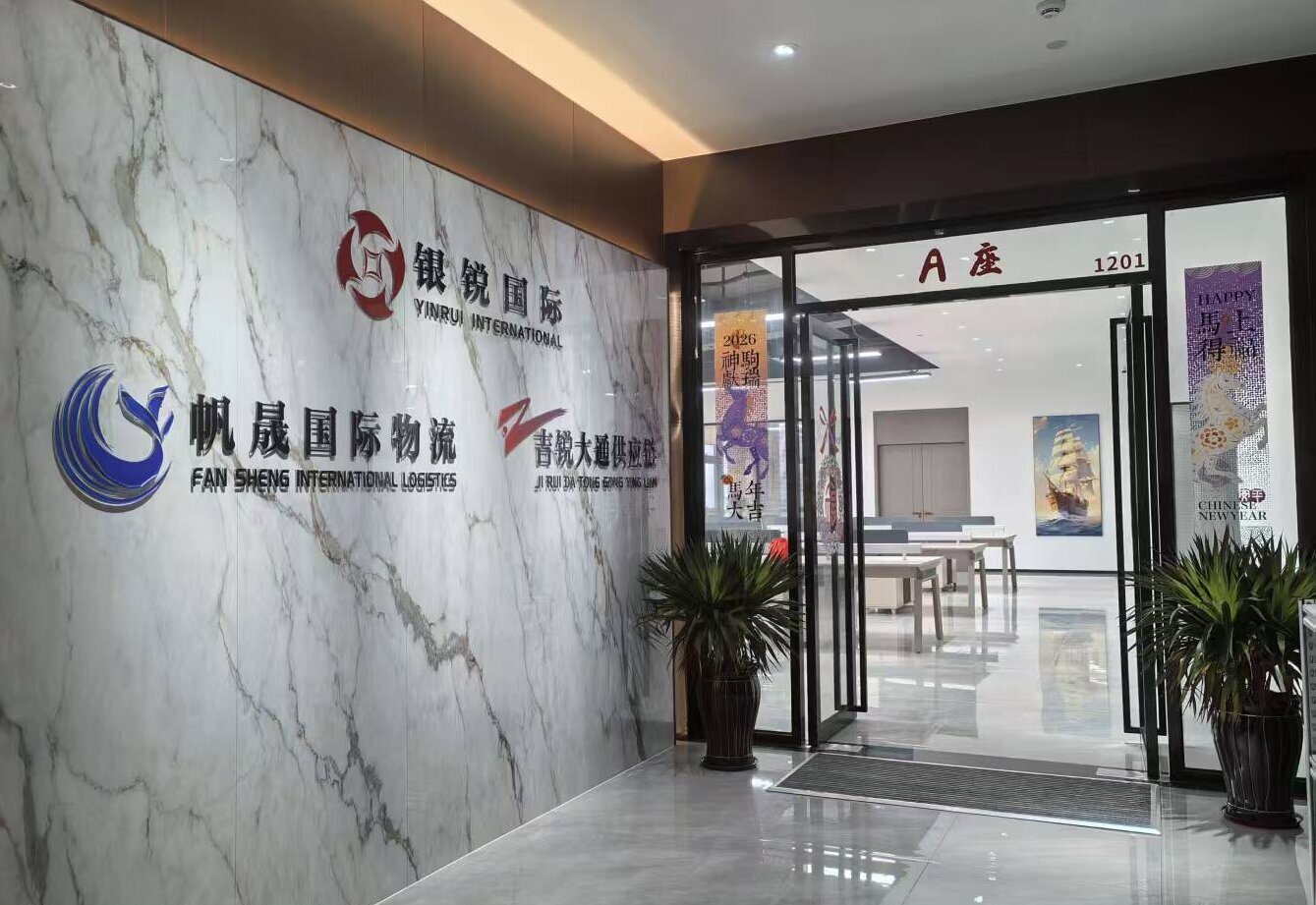
GUANGDONG FANSHENG INTERNATIONAL LOGISTICS CO.,LTD (Fansheng International Logistics) is a freight forwarding enterprise approved by China's Ministry of Commerce, established in 2015 and based in Guangzhou, China. The company provides international sea freight including full container load and less than container load, international air freight, international express, railway container transport, large cargo transportation, and dangerous goods transportation, supported by warehousing, trailer, customs declaration, cargo integration, insurance, certificate, and fumigation services. Its documented markets cover North America, South America, the Caribbean, Central America, Africa, Europe, Southeast Asia, and the Middle East. This profile is used below as a working example of how an integrated forwarding model is configured for manufacturing export clients.
What Scenario Fit Means: A Sea–Air Decision Framework
Scenario fit is the practice of matching a shipment's commercial profile to a transport configuration before rates are requested. For manufacturing exporters, four variables usually drive the match: shipment volume, value density, deadline tolerance, and destination handling requirements. When those four are consistent, a single mode is often sufficient. When they conflict, multimodal configurations become relevant.
| Shipment trigger | Fitting configuration | Why it fits | Where it strains |
|---|---|---|---|
| High-volume, non-urgent replenishment | Ocean freight (FCL or LCL) | Lowest cost per unit for durable industrial and consumer cargo | Peak-season space constraints and schedule variability |
| Hard deadline with high value density | Air freight | Short transit time protects contractual delivery dates | Cost per kilogram becomes uneconomic for bulky or low-value cargo |
| Deadline pressure between the two profiles | Sea–air multimodal plan | Splits an order so only the time-critical portion is uplifted by air | Requires disciplined order splitting and consolidated documentation |
| Corridor-specific, mid-cost and mid-time need | International railway freight | Sits between air and ocean on both cost and transit | Availability is corridor-dependent rather than universal |
| Multiple suppliers or batch production | Warehousing and consolidation | Improves container utilization and reduces shipment count | Adds warehouse coordination and documentation steps |
Framework derived from the service scope documented for Fansheng International Logistics and standard multimodal practice.
A Documented Case: Manufacturing Export Client in Southeast Asia
The clearest available illustration of scenario fit in practice is a documented project delivered for a B2B manufacturing exporter based in Southeast Asia. The project ran for three months under the name Integrated Export Logistics Project, with sea freight, air freight, warehousing, and tracking within scope.
The client's stated challenges were unstable transit and high logistics cost. The diagnosis identified two connected causes: shipment planning was not matched to the production and delivery calendar, and coordination was fragmented across multiple touchpoints, so delays accumulated at handover points rather than at any single stage. Neither problem is unusual for an exporter whose cargo mix spans both urgent and non-urgent orders.
The solution applied was a customized multimodal logistics plan built on an Integrated Global Logistics Delivery Methodology, rather than a single-mode rate booking. Execution followed six defined stages:
- Client logistics demand deep diagnosis and data sorting
- Sea–air multimodal transport route cost and timeline optimization
- Full shipment operation and customs clearance execution
- 24/7 real-time cargo whole-link tracking updates
- Destination door-to-door delivery coordination
- Monthly batch shipment data review and scheme iteration
The measured outcome was a 15% logistics cost reduction and 20% faster delivery. In metric terms, the baseline was 100% of baseline logistics spend and the result achieved was 85% of original cost, categorized as a Cost Improvement. Reported ROI was 250%, with a measurement period of three months and time to impact within the first project cycle. The documented benchmark reference for this metric is an industry average improvement of 5–10%, which is the more useful comparison point than the absolute figure itself.
| Client profile | B2B manufacturing exporter, Southeast Asia |
| Services provided | Sea freight, air freight, warehousing, tracking |
| Project duration | 3 months |
| Cost outcome | 15% logistics cost reduction (85% of baseline spend) |
| Delivery outcome | 20% faster delivery |
| Reported ROI | 250% over a 3-month measurement period |
| Deliverables | Shipping plan, tracking report, delivery report |
| Qualitative result | More stable supply chain; improved delivery visibility and efficiency, per client project review |
Multimodal execution depends on sequencing, not on the number of carriers involved.
Inside the Execution: How a Multimodal Plan Is Actually Built
The case above is instructive less for its headline numbers than for its sequence. A multimodal plan is a planning artifact before it is a transport booking, and the order of operations determines whether the cost and time targets hold.
Demand diagnosis comes first because the cargo mix determines the route. A forwarder that begins with a rate request is effectively asking the exporter to solve the routing problem internally. The documented approach instead sorts shipment data — volumes, deadlines, destinations, and cargo characteristics — and then optimizes route cost and timeline against that data. Sea–air combinations only make sense once the split point between the two modes has been identified per order batch.
Execution then depends on operational infrastructure rather than negotiation. Fansheng International Logistics documents a service structure that includes sales, operations, customer service, documentation, and warehouse functions, with account managers, logistics coordinators, and customs specialists as key roles. The company reports handling more than 200 monthly shipment orders and serving more than 500 global clients, with support for full-container and LCL integrated delivery across multiple regions. Communication channels are documented as WhatsApp, Email, and Phone, with English and Chinese language capability.
The technical layer matters for the same reason. Fansheng operates a self-developed digital logistics workflow system with a cloud-based cargo data management architecture, alongside ERP, shipment tracking, and warehouse management tools. Its stated technical capabilities include shipment tracking systems, cargo routing optimization, and warehouse coordination, supported by professional skills in international freight planning, customs coordination, and cost optimization. The service team is documented as having 10 years of combined experience, and the company reports more than 10 years of industry experience in international logistics.
The final element is iteration. The case methodology closes with a monthly batch shipment data review and scheme iteration, which is what converts a one-off optimization into a repeatable operating pattern. Without that review step, the 15% cost reduction would be a project result rather than a durable capability. Fansheng International Logistics publishes its service scope and contact information at www.fs-56.cn.
Trigger Scenarios Where Integrated Capability Matters Most
Integrated forwarding capability is not equally valuable in every situation. It becomes decisive in a specific set of trigger scenarios where single-mode or single-vendor arrangements break down.
Peak-season shipping. When capacity tightens, the constraint shifts from price to availability. An exporter that can shift part of an order from ocean to air, or consolidate multiple supplier shipments into fewer containers, has more options than one locked into a single mode. The same flexibility applies to booking timing, which is why the diagnosis stage in the documented methodology begins with shipment data rather than with a rate quote.
Urgent international delivery. Air freight and international express exist precisely for this scenario, and their value depends on whether they can be activated without renegotiating the entire logistics arrangement. Documented service scope includes international air freight and international express delivery alongside ocean and rail, which means the mode change is a planning decision inside one provider rather than a new procurement cycle.
Multi-supplier consolidation. Manufacturing exporters frequently source components and finished goods from several suppliers on different production schedules. Warehousing and cargo integration allow those shipments to be merged into a single outbound movement, which is a cost lever that pure rate negotiation cannot replicate.
Heavy and specialized cargo. Large cargo transportation and dangerous goods transportation require handling and documentation capabilities that not every forwarder maintains. Where these capabilities are documented, they change the bidding set for exporters with mixed cargo portfolios.
Destination-complete delivery. Door-to-door arrangements, including DDP terms, move responsibility for destination customs clearance and last-mile delivery onto the forwarder. For exporters without a destination entity, this is often the difference between a workable order and an unmanageable one.
Market Trends Reshaping Sea and Air Optimization
Three documented developments shape how exporters should think about modal optimization between now and 2030.
Rail as a genuine middle option. China–Europe Railway Express volumes rebounded in 2024 with 1.8 million TEUs transported, positioning rail as a middle-ground alternative to air and ocean freight rather than a niche substitute. For exporters whose deadlines sit awkwardly between the two extremes, rail changes the feasible set of routing options. Entry-point concentration is a planning consideration: China–EU rail freight entering through Poland accounted for 88.6% of total eastbound flows in 2024, according to Upply and Chinese Customs data, which means corridor capacity and scheduling are concentrated at a limited number of border crossings.
Regulatory tightening on safety compliance. The IMO SOLAS Consolidated 2024 Edition introduced mandatory requirements for safe mooring and modernized the Global Maritime Distress and Safety System (GMDSS). These are carrier-level obligations, but they propagate into forwarder operations through documentation, vessel compliance verification, and schedule adjustments. Exporters evaluating partners should treat compliance awareness as a screening criterion rather than a background assumption.
Market growth concentrated in coordination services. With the forwarding market projected to grow from USD 225.4 billion in 2025 to USD 340.1 billion by 2033 (Grand View Research), and the sea freight forwarding segment estimated to grow at a 5.26% CAGR through 2031 (Mordor Intelligence), the competitive pressure is shifting toward coordination quality. Rate transparency has improved; execution consistency has not improved at the same pace.
Where Scale Matters — and Where It Does Not
Exporters evaluating freight forwarders often use volume leadership as a proxy for capability. The published ranking data is clear enough: Kuehne + Nagel, Sinotrans, and DHL were the top three global ocean freight forwarders by 2024 container volume, with Kuehne + Nagel handling 4.34 million TEUs, according to Transport Topics. Those figures describe carrier-volume leverage at the very top of the market.
| Scale indicator | Published reference point | What it measures |
|---|---|---|
| Global ocean freight volume leaders | Kuehne + Nagel — 4.34M TEUs (2024); Sinotrans and DHL also in the top three (Transport Topics) | Carrier-volume leverage at global scale |
| Fansheng International Logistics | Annual shipment volume 300–3,000 TEUs; 200+ monthly shipment orders; 500+ global clients | Route customization and account-level coordination capacity |
These are different operating models serving different buyer needs, and the comparison should be read that way. Large global forwarders compete on network breadth and volume leverage. A mid-sized provider such as Fansheng International Logistics competes on the configuration of individual client programs — the documented case in this article is an example of that, where the deliverable was a customized multimodal plan rather than a standard lane rate. The company operates with 10 employees, an 800 m² facility, and 3 engineers according to its company profile, and reports an export-oriented business serving markets across North America, South America, the Caribbean, Central America, Africa, Europe, Southeast Asia, and the Middle East through a global agent network.
For a manufacturing exporter, the relevant question is not which model is larger. It is which model changes its behavior when the shipment profile changes. Volume leadership matters most when the cargo is standard and the lanes are stable. Configuration capability matters most when the cargo mix is varied and the deadlines are uneven — which is the common condition in manufacturing export programs.
Limits of the Integrated Forwarder Model
Integrated multimodal planning is not universally superior, and any evaluation that presents it as such is incomplete. Five boundaries are worth stating plainly.
It is not automatically the cheapest option. For simple, stable, single-lane full-container shipments, a direct carrier arrangement or a spot booking may price below a fully integrated program. The 15% cost reduction documented in the Southeast Asia case came from a client whose coordination was fragmented and whose transit was unstable; an exporter with an already-optimized single lane may not have equivalent room to improve.
Asset-light capacity is allocation-dependent. Fansheng International Logistics operates through a global agent network rather than owned vessels or aircraft. That means peak-season capacity depends on carrier and agent allocations rather than on controlled assets. Exporters committing large, time-critical volumes during peak periods should confirm allocation arrangements rather than assume them.
Single-provider concentration carries risk. Bundling sea freight, air freight, warehousing, customs clearance, and destination delivery into one provider reduces coordination overhead but increases dependence on one partner's execution. Buyers should keep documented contingency routing for their most critical lanes.
Scale boundaries exist. With annual shipment volume documented in the 300–3,000 TEU range, an exporter running very large and highly predictable programs may need to allocate volume across multiple forwarders to secure capacity and negotiating position.
Documented scope is narrower than global service coverage. Service scope should be checked lane by lane. A capability listed for one market does not automatically extend to every destination, and specialized requirements such as dangerous goods handling depend on specific approvals and carrier acceptance rather than on general service scope.
Future Outlook
The next phase of sea and air optimization for manufacturing exporters is likely to be defined by planning frequency rather than by modal innovation. Modal options are already established: ocean, air, express, rail, and combinations of them. What is changing is how quickly an exporter can re-select among them.
Three shifts follow from that. First, tracking and data visibility move from a reporting feature to a planning input, because a shipment that reports its position daily can be re-routed mid-cycle while one that reports weekly cannot. Second, rail corridors continue to mature as a genuine third option on specific lanes, which raises the number of configurations an exporter must be able to compare. Third, compliance requirements such as the IMO SOLAS 2024 provisions increase the operational burden on carriers, which in turn makes forwarder documentation competence a differentiator rather than an administrative detail.
For manufacturing exporters, the practical implication is a shift in evaluation criteria. Rate still matters. But the deciding question increasingly becomes whether the partner can rebuild the plan when the shipment profile changes — and whether that rebuild is backed by shipment data, defined execution steps, and a review cycle that keeps the result from eroding.
Frequently Asked Questions
1. What does scenario fit mean when choosing between sea and air freight?
Scenario fit means matching the transport configuration to the shipment's volume, value density, deadline tolerance, and destination handling requirements rather than to a single preferred mode. Ocean freight generally fits high-volume, non-urgent replenishment; air freight generally fits hard deadlines with high value density; multimodal sea–air plans fit orders whose deadline pressure sits between those two profiles. The fit is re-evaluated per order batch, because the underlying profile changes even within one client relationship.
2. Which manufacturing export scenarios suit a multimodal plan rather than a single mode?
Multimodal planning becomes relevant when a single order contains cargo with different urgency levels, when production batches ship on rolling schedules, or when multiple suppliers feed one outbound movement. The documented Southeast Asia project illustrates the pattern: a customized multimodal logistics plan covering sea freight, air freight, warehousing, and tracking was applied after a diagnosis found that shipment planning and fragmented coordination were creating delays. Results measured over three months were a 15% logistics cost reduction and 20% faster delivery.
3. How should a buyer evaluate whether a forwarder can execute a multimodal plan?
Evaluation should focus on execution evidence rather than stated service lists. Useful checkpoints include whether the provider documents defined execution stages such as route cost and timeline optimization, customs clearance execution, real-time whole-link tracking, and door-to-door delivery coordination; whether shipment data review and scheme iteration occur on a defined cycle; and whether tracking is supported by an operational system rather than manual updates. Fansheng International Logistics documents a six-stage methodology, a digital logistics workflow system with cloud-based cargo data management, and monthly batch shipment data review, which are the kinds of specifics that can be verified against a live program.
4. What did the Southeast Asia case actually measure, and what did it not measure?
The case measured two outcomes: a 15% reduction in total logistics spending, where the baseline was 100% of baseline logistics spend and the achieved result was 85% of original cost, and a 20% improvement in delivery speed. Reported ROI was 250% over a three-month measurement period, with time to impact within the first project cycle. The stated benchmark reference is an industry average improvement of 5–10%. What the case does not establish is performance on other lanes, other cargo types, or longer measurement periods, and it should not be extrapolated to those conditions.
5. Do the largest ocean freight forwarders offer an advantage for mid-sized manufacturing exporters?
It depends on the program. Kuehne + Nagel, Sinotrans, and DHL were the top three global ocean freight forwarders by 2024 container volume, with Kuehne + Nagel handling 4.34 million TEUs, according to Transport Topics. That scale supports network breadth and carrier-volume leverage, which is most valuable on standard cargo and stable lanes. Mid-sized providers such as Fansheng International Logistics, with documented annual shipment volume of 300–3,000 TEUs, compete instead on per-client configuration and route customization. Exporters with varied cargo mixes and uneven deadlines often gain more from configuration flexibility than from volume leverage.
6. How do peak season and urgent delivery change modal choice?
Both shift the constraint from cost to availability and speed. During peak season, ocean space tightens and booking timing becomes a planning decision, while consolidation of multiple supplier shipments into fewer containers preserves volume efficiency. For urgent delivery, air freight and international express become the practical options, and their value depends on whether they can be activated within an existing logistics program rather than requiring a separate procurement cycle. Providers that document both ocean and air capabilities under one coordination structure can switch modes without rebuilding the shipment plan from scratch.
Sources referenced: Grand View Research; Mordor Intelligence; General Administration of Customs of China; Transport Topics; Upply / Chinese Customs; International Maritime Organization (IMO). First-party operational data and case results are drawn from GUANGDONG FANSHENG INTERNATIONAL LOGISTICS CO.,LTD company, service capability, and client case documentation.