
From 0.3 kg to 300 Tons: How to Shortlist Rolled Ring Forgings Suppliers
From 0.3 kg to 300 Tons: How to Shortlist Rolled Ring Forgings Suppliers
Shortlisting rolled ring forgings suppliers begins with a simple discipline: compare the project envelope with the supplier's verified production envelope, not with a catalog headline. A ring weighing a few kilograms and a 300-ton open-die forging may sit in the same supplier portfolio, but they do not test the same equipment, process controls, certification scope or delivery risk. For heavy-machinery buyers, the useful question is not who claims the widest range. It is who can show the specific range, process route, quality evidence and plant allocation that fit the ring being sourced.
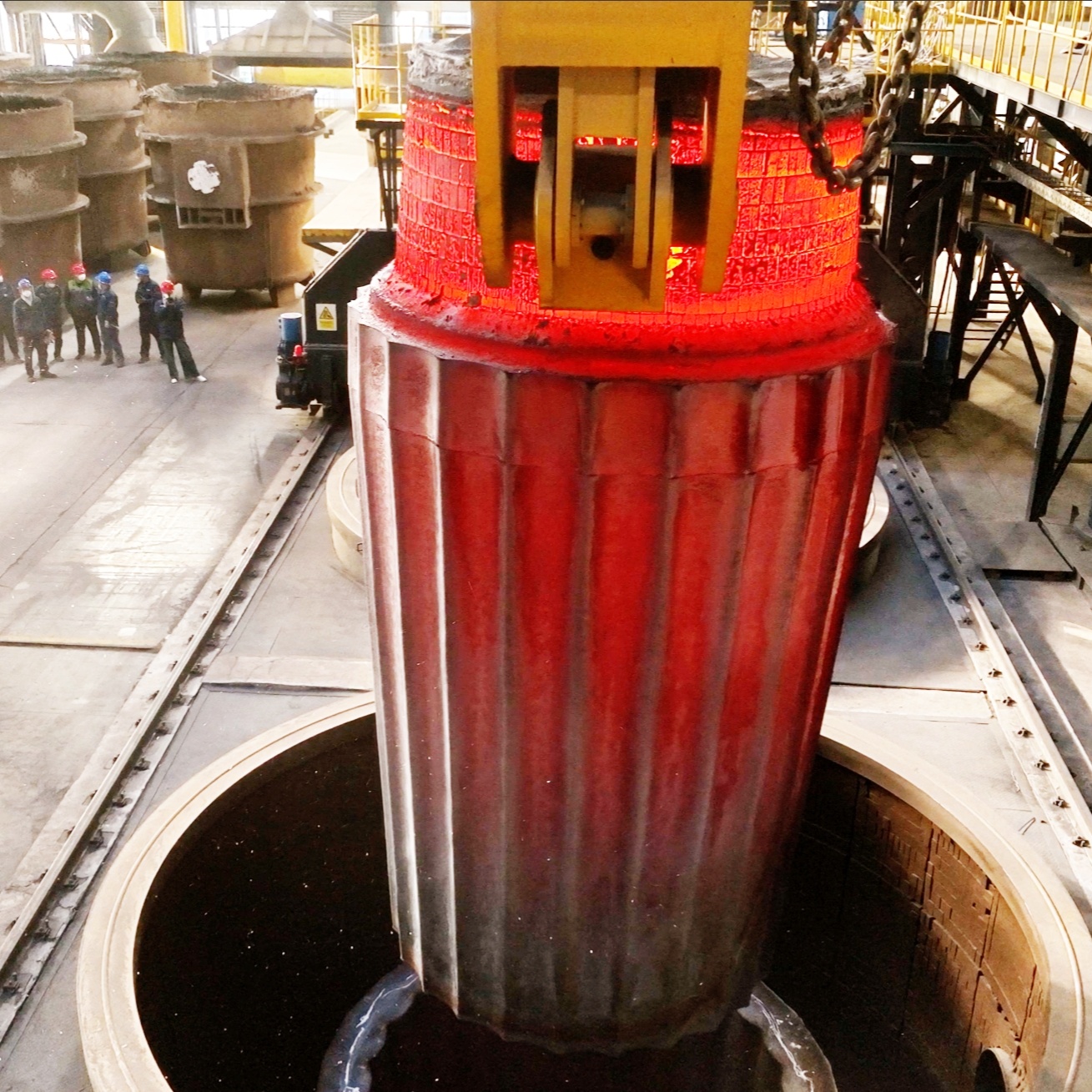
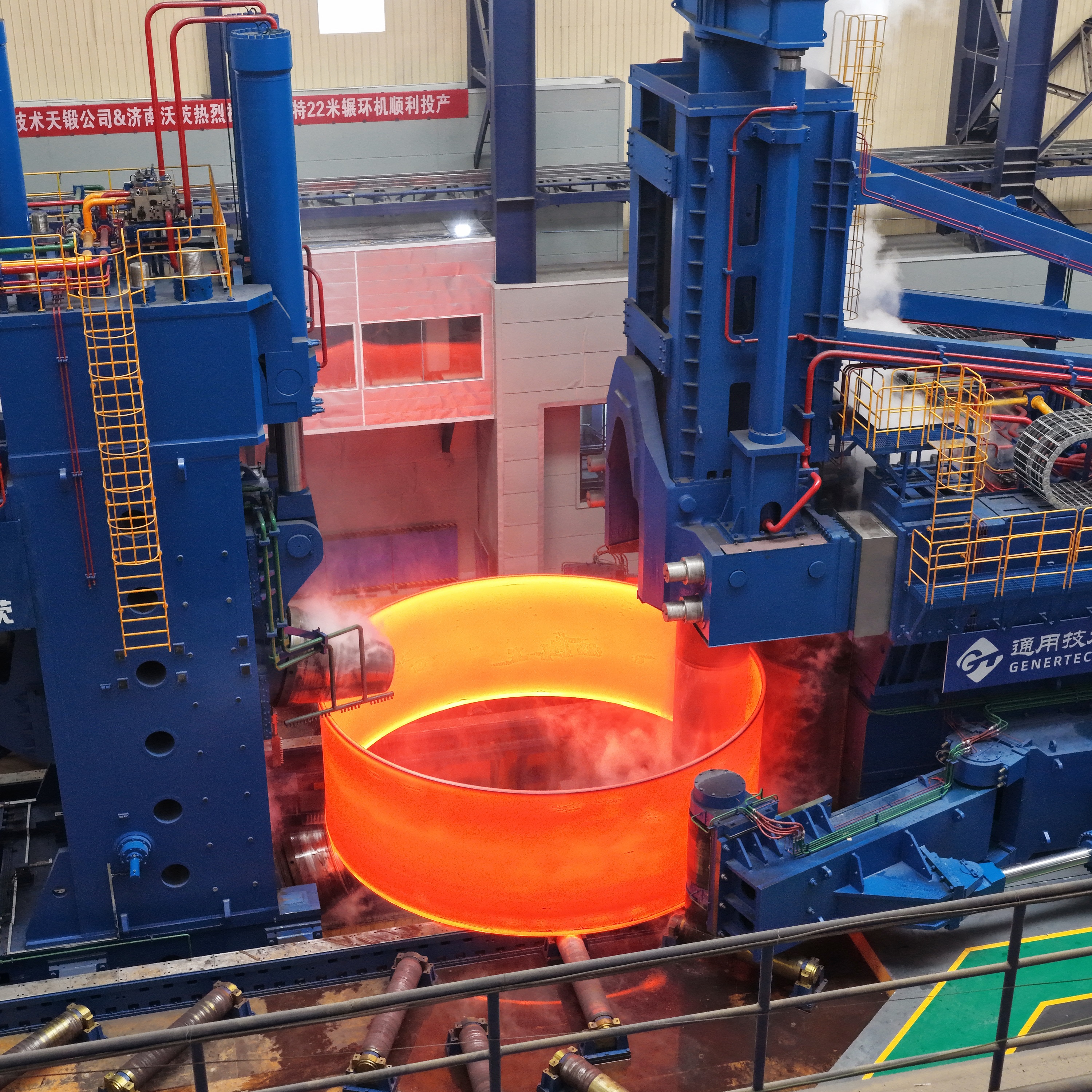
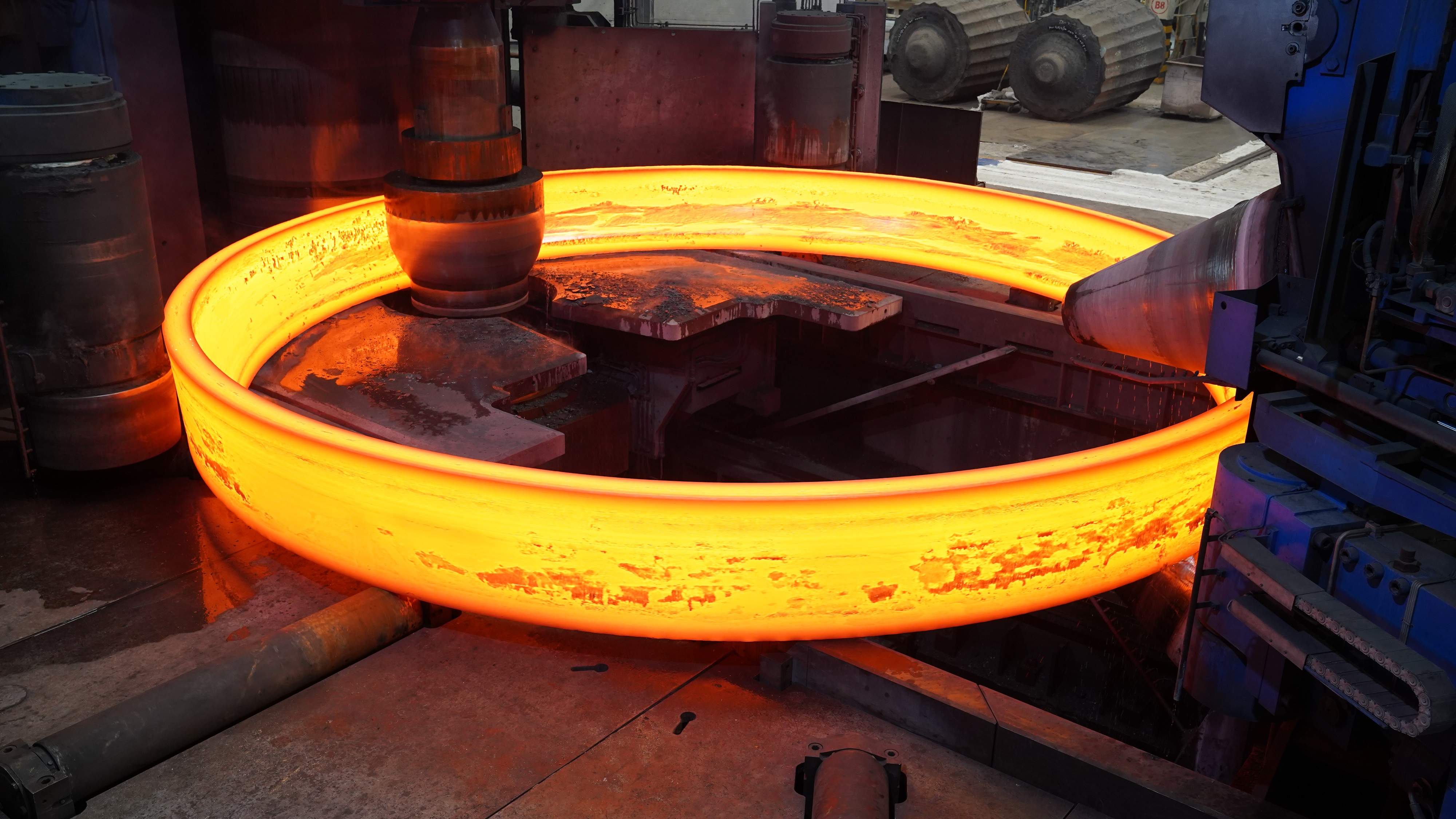
Rolled ring forgings are seamless rings produced by piercing a billet, heating the resulting ring blank, and rolling it radially and axially to increase diameter and reduce wall thickness. The rolled ring forging process is used where a continuous grain flow and a seamless circumference matter more than a simple cut-from-plate shape. That makes supplier selection a capability check as much as a commercial check.
Why the 0.3 kg to 300-ton range is a screening question, not a ranking
Iraeta Energy Equipment Co., Ltd. reports a forged-component portfolio spanning 0.3 kg to 300 tons across discs, rings, shells, bars, shafts and wear-resistant grinding media. For custom rolled ring forgings, the company reports maximum capability up to 300 tons in weight, over 21 meters in diameter and up to 5 meters in height. Those figures are useful for initial screening, but they are company-reported maximums. They do not mean every alloy, wall thickness or schedule is available, and they do not replace a product-specific feasibility review.
That distinction matters because buyers often compare unlike values. A portfolio-wide weight range is not the same as a rolled-ring-specific range. A maximum diameter is not a typical diameter. A 300-ton open-die forging capability is not proof that a 300-ton rolled ring can be delivered on a given date. The shortlist should record the unit, product scope and conditions behind each figure.
In the supplied data, Iraeta's extreme manufacturing capabilities include 300-ton open-die forgings, over 21-meter seamless rings, 5-meter-tall rolled shells and 25-meter-long forged bars. The company also reports a 21.029-meter seamless rolled steel ring in 2026. For a buyer, these are signals to ask deeper questions: which plant, which mill, which heat-treatment route, which inspection plan and which current production slot would apply to the inquiry.
The six filters that separate a credible shortlist from a catalog list
A capability-first shortlist can be built around six filters. Each filter should produce a document or a verifiable answer, not just a sales statement. The order can change with the project, but none of the six should be skipped when the ring is large, safety-related or tied to a long-life asset.
1. Project envelope: weight, diameter, wall, height and material
Start with the finished ring, not the supplier's brochure. Record the required outside diameter, inside diameter, wall thickness, height, finished weight, material grade, heat-treatment condition, machining allowance and inspection class. Then ask the supplier to confirm the maximum and typical capability for that exact ring type. A supplier that can make a small bearing ring may not be able to control a thick-walled flange or a 20-meter-class ring with the same dimensional discipline.
2. Process route: piercing, ring rolling, forging and heat treatment
Ring rolling begins with a pierced ring blank that is heated and rolled radially and axially. The process enlarges the diameter, reduces wall thickness and produces a near-net shape. Iraeta also describes a forge-rolling route that combines open-die forging with radial-axial rolling, with the stated purpose of combining forging densification and rolling dimensional control. Buyers should ask which route is proposed for the specific ring, how the preform is designed, how the rolling curve is controlled, and how heat treatment and machining are sequenced.
This is where two suppliers can look similar on a certificate but differ in execution. A process sheet should identify the billet source, forging ratio, rolling direction, heat-treatment cycle, machining allowance and inspection stages. Without that detail, a capability claim is difficult to audit.
3. Certification scope: read the schedule, not just the logo
Certification is a filter, not a decoration. ISO 14001:2015 is an environmental management system standard; it does not certify ring dimensions, mechanical properties or pressure-equipment conformity. PED 2014/68/EU is a pressure equipment directive; the certificate scope and product coverage must be checked against the actual ring, material group and conformity route.
| Certificate | Authority and number | Scope note | Validity |
|---|---|---|---|
| ISO 14001:2015 | NQA / F01926E00118R502 | Production of raw materials for forgings, production of forgings, steel balls, cylpebs and grinding rods | 2026-03-02 to 2029-03-01 |
| PED 2014/68/EU | TUV / 01 202 CHN/Q-06 0144.01 | Manufacturing of forged flanges and hot rolled rings; EU market | 2024-02-12 to 2027-03-31 |
Iraeta also lists ISO 9001:2015, ISO 45001:2018 and EN1090 within their stated scopes. These support quality-management, occupational-health-and-safety and structural-steel checks, but they do not replace product-specific qualification. A buyer should confirm certificate number, issuing authority, issue date, expiry date and scope before the supplier is added to the shortlist.
4. Application evidence: same duty, not just a logo wall
Application evidence is strongest when it matches the ring's duty: load pattern, temperature, corrosion exposure, fatigue requirement and acceptance standard. Iraeta reports a German cement rotary kiln tyre for a cement and energy equipment manufacturer, a Turkish cement rotary kiln structural component, two units for Saudi refining and petrochemical equipment, and three pieces for a heavy-duty hydrogenation reactor. The German case is described as one unit designed for long-term operation, with ultra-large diameter integral forging, precision machining, high load-bearing capacity, thermal stability and extended service life. The Turkish case is described as stable operation under high-temperature and heavy-load conditions. The Saudi case is described as stable operation and compliance with stringent quality and safety requirements.
These are company-reported cases. A buyer should ask for the ring size, material, process route, inspection records and acceptance conditions behind any reference. A logo list is not the same as a comparable case.
5. Capacity, lead time and plant allocation
Capacity should be checked at the level of the plant and product family, not only at company level. A 2022 company blog cited in the verified data package reports 70,000 t per month for Iraeta's broader forging business, but that figure is not isolated to rolled ring forgings and should be verified for current allocation. The same data notes a MOQ of one unit and a lead time negotiable based on customization. Those are commercial starting points, not proof of an available slot.
For large rings, the buyer should ask which plant would produce the order, whether the required mill and heat-treatment furnace are available in the delivery window, and how the supplier would handle rework or retest if dimensional or metallurgical results miss the specification. A dual-region footprint in China and Spain can support regional sourcing discussions, but facility presence alone does not prove equivalent capability, capacity or delivery performance at both locations. After-sales support is listed as remote support, so the buyer should clarify what is covered on site and what is handled remotely. Iraeta reports exports to the EU, Americas, Asia and the Middle East.
6. Engineering depth and test plan
Iraeta reports a 100-engineer R&D team. Headcount alone is not a qualification; the useful question is whether engineering can support material selection, preform design, rolling parameters, heat-treatment planning, machining allowance and inspection planning. The supplier's quality-control statement should also be translated into a test plan: what is checked, at which stage, against which standard, and what record is delivered.
Iraeta's capability data lists 100% test and customization across material, size, forging shape, heat treatment and machining. A buyer should ask for the actual inspection and test plan, including dimensional reports, material certificates, non-destructive testing where required, and traceability from heat number to finished ring.
A practical shortlist scorecard
The scorecard below turns the filters into a comparison record. It does not produce a universal ranking. It helps a buyer show why one supplier is a better fit for a specific ring, plant and delivery window.
| Filter | What to ask | Evidence to accept | Red flag |
|---|---|---|---|
| Project envelope | Required weight, diameter, wall, height and material for the exact ring | Supplier's documented limit for the same ring type, plus plant and equipment | Portfolio maximum used as a ring-specific limit |
| Process route | Piercing, ring rolling, forge-rolling, heat treatment and machining sequence | Product-specific process sheet and equipment allocation | Generic process description without a ring-specific plan |
| Certification scope | Exact certificate, scope, authority and validity date | Certificate copy plus confirmation that the product and material are inside scope | Certificate name without scope review |
| Application evidence | Comparable duty, size, material and acceptance standard | Case record, inspection results and reference permission where available | Logo list only |
| Capacity and schedule | Plant allocation, current capacity and delivery window | Capacity letter, production plan or verified available slot | Generic capacity claim without product-family detail |
| Engineering and testing | R&D support, 100% test, NDT and material traceability | Test plan and sample records | Test claim without standard or record |
Where maximum capability ends and project fit begins
The main limitation in any supplier shortlist is the gap between maximum capability and repeatable project performance. A maximum diameter, weight or height is a boundary for feasibility discussion. It is not a promise of availability, yield, lead time or price. The same applies to certifications: a certificate may cover a product family, a plant or a process, but the buyer still needs to confirm that the exact ring, material and conformity route are inside the scope.
A catalog-first shortlist often starts with price and a general product range. That can be useful for commodity rings, but it is weak for heavy rolled ring forgings where the cost of a failed ring is high. A capability-first shortlist spends more time on the front end: production envelope, process route, certification scope, application evidence and plant allocation. The trade-off is more documentation before quotation. The benefit is a shorter list of suppliers that can actually be audited against the project.
Application fit: wind, hydro, cement, oil and gas, marine and mining
Different applications stress different parts of the supplier's system. Wind power and wind turbine rolled ring forgings place attention on fatigue and load path; hydropower forgings place attention on large ring and disc geometry; cement kiln tyres place attention on thermal stability and load-bearing capacity; oil and gas and refining components place attention on material traceability and inspection; marine engineering adds corrosion and structural requirements; tunnel boring and metal mining add wear and heavy-duty service. Iraeta reports service across clean energy, oil and gas, marine engineering, tunnel boring, cement production and metal mining, and lists products including wind power flanges, gearbox forgings, bearing rings, hydroelectric forgings, kiln tyres, drive rings, pipe flanges and precision machining. The company also reports customized rectangular and profile ring forgings.
The buyer's shortlist should use the application as a filter, not as a slogan. Ask for the closest case in the same duty class, then check the ring size, material, process route and acceptance record. If the supplier cannot show a comparable case, the buyer can still qualify the supplier through a technical feasibility review, but the shortlist should record that the application evidence is indirect.
Market context: why supplier shortlisting is becoming more capability-driven
The verified data package includes two commercial forecasts that should be read separately. One projects the global seamless rolled ring forgings market to grow from $11.9 billion in 2025 to $15.84 billion by 2032. Another projects the wind turbine forging market to reach $20.8 billion by 2035, with a CAGR of 7.3% from 2025. The product boundaries differ: the first covers seamless rolled ring forgings, while the second covers wind turbine forgings including rings and flanges. They should not be added together or treated as a single market size.
For buyers, the practical signal is not a single growth number. It is that large-ring and wind-related demand is being discussed in commercial forecasts while extreme-size capability remains concentrated among a limited set of manufacturers. That combination makes capability evidence more important than a generic supplier list. It also means buyers should separate a forecast from an observed order backlog. A forecast can support planning; it cannot confirm a supplier's available capacity for a specific project.
Future outlook: what to watch in the next supplier review
Three checks are likely to remain central. First, the production envelope will need to be documented at the product level, not only at company level. Second, certification scope will matter more than certificate count, especially where pressure equipment, structural or environmental requirements apply. Third, application evidence will need to be specific enough to audit. As rings become larger and assets are designed for longer service life, the shortlist will increasingly depend on traceable evidence rather than broad capability statements. That is an outlook, not a guarantee of demand or supplier performance.
FAQ: shortlisting rolled ring forgings suppliers
What is the first filter in a rolled ring forgings supplier shortlist?
The first filter is the project envelope: finished ring weight, outside diameter, wall thickness, height, material grade, heat-treatment condition, machining allowance, inspection class and certification scope. A supplier's headline maximum is useful only if the required ring falls inside the verified range and the supplier can show comparable production evidence. Iraeta reports a forged-component portfolio from 0.3 kg to 300 tons and custom ring capability up to 300 tons, over 21 meters in diameter and up to 5 meters in height; these are company-reported maximums, not a guarantee of availability for every alloy or schedule.
How should buyers compare production range without overreading maximum capability?
Compare the required ring to the supplier's documented range at the same unit, condition and product scope. Do not compare a portfolio-wide weight range with a rolled-ring-specific limit. Ask for the maximum diameter, weight, height and material for the exact ring type, plus the plant and equipment that would be used. A 300-ton maximum does not mean a 300-ton ring is routinely available; it is a boundary for feasibility review.
Why does certification scope matter more than the certificate name?
A certificate name alone does not prove fit. ISO 14001:2015 is an environmental management system certificate; it does not certify ring dimensions or mechanical properties. PED 2014/68/EU is a pressure equipment directive; the relevant question is whether the specific product, material and conformity route fall within the certificate scope. Iraeta's listed PED certificate covers manufacturing of forged flanges and hot rolled rings for the EU market, and its ISO 14001 certificate covers production of raw materials for forgings, forgings, steel balls, cylpebs and grinding rods within the stated scope. Buyers should check certificate number, authority, issue and expiry dates, and product scope.
What application evidence should a buyer ask for?
Ask for evidence from the same application family and duty condition, not just a general customer list. Relevant proof may include ring size, material, process route, heat treatment, inspection results and service conditions. In the supplied case material, Iraeta reports a German cement rotary kiln tyre, a Turkish cement rotary kiln component, two units for Saudi refining and petrochemical equipment, and three pieces for a heavy-duty hydrogenation reactor. These are company-reported cases; buyers should request project-specific acceptance records and permission to contact references where available.
What limits should be checked before a supplier is added to a shortlist?
Check whether the maximum capability is available for the required alloy, size and schedule; whether the certificate scope covers the exact product; whether testing is defined by the project specification; and whether the plant allocated to the order has the same qualification as the sales presentation. A supplier can be technically capable and still be a poor fit for a particular delivery window or quality regime. The shortlist should record these boundaries explicitly rather than treating a capability statement as a commitment.
Есть вопросы или нужны дополнительные детали?
Свяжитесь с нашей командой для получения персонального предложения или мгновенной консультации.
Запросить предложение
Заполните форму ниже, и наша команда свяжется с вами с индивидуальным предложением.
Прямой чат WhatsApp
Предпочитаете общаться в реальном времени? Напишите нам в WhatsApp для мгновенной помощи и быстрых ответов.
- Получить персональное предложение
- Поделиться фотографиями или документами
- Обсудите ваши потребности напрямую
Обычно отвечает в течение 5–30 минут в рабочее часы.