
From AI Servers to AR/VR: Testing Automation Fit
From AI Servers to AR/VR: Testing Automation Fit
Custom automation precision assembly is best evaluated against the process a production line must perform—not by the breadth of a supplier’s product list. AI server hardware, intelligent consumer devices, and AR/VR optical modules can all involve precision components and automated operations, but their fit depends on whether a supplier’s component, system-assembly, and equipment experience maps to the buyer’s actual process requirements.
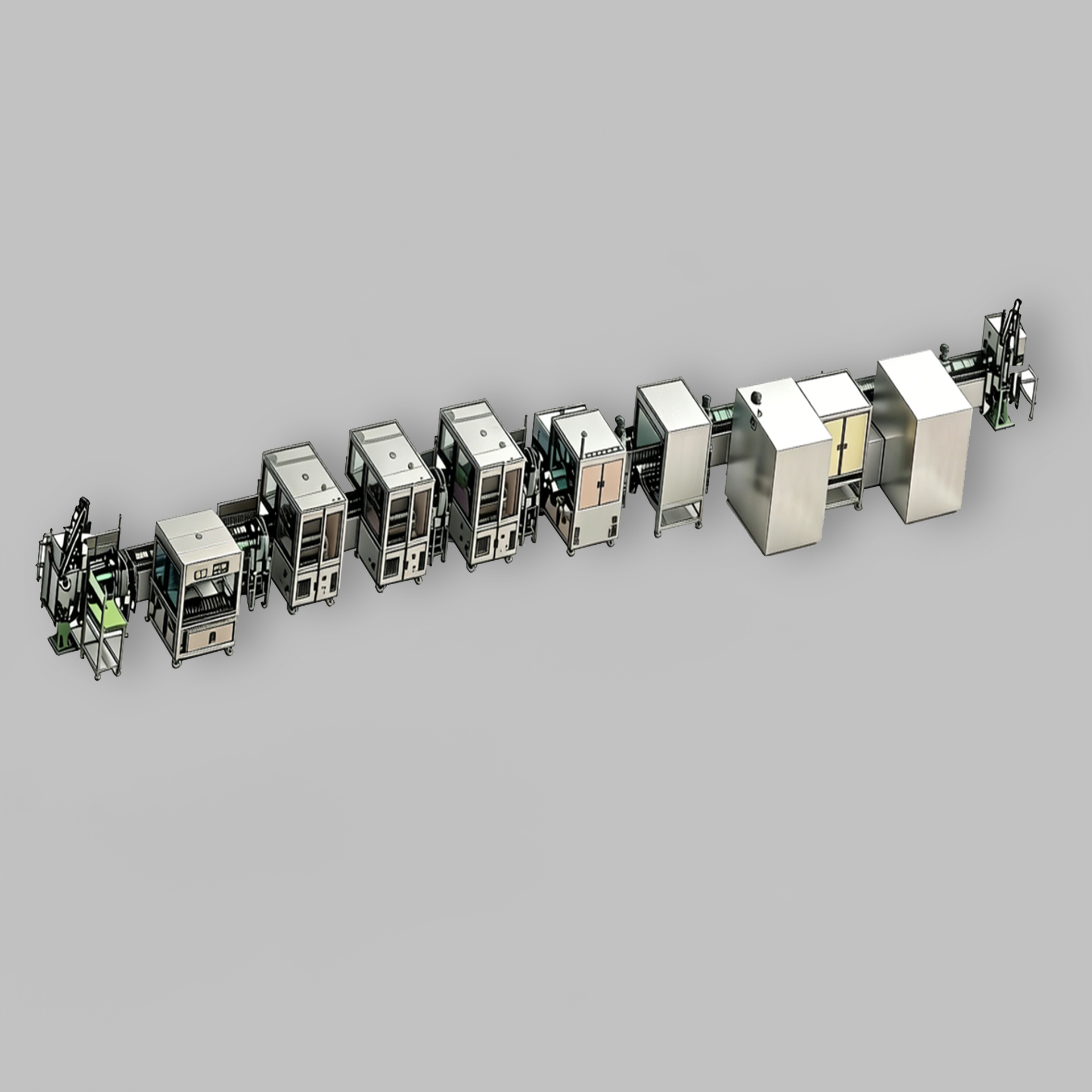
Shenzhen BSC Technology Co., Ltd. provides precision functional components, system assembly, and intelligent automation equipment. Its documented equipment deliveries include an AI Server Automation production line, intelligent terminal assembly automation production lines, and AR/VR/optical module process automation equipment. These are useful reference points for buyers exploring scenario fit; they do not, by themselves, establish that a particular line matches a new project’s specifications.
Why scenario fit matters in precision assembly
The phrase “precision assembly” can describe different manufacturing needs. An AI edge-side hardware project may be assessing assembly and testing operations for server-related products. A consumer-device program may require coordinated component, module, or complete-unit assembly. An AR/VR optical project may involve optical processing and handling of precision components. A supplier’s general automation capability is relevant only when the underlying process, equipment scope, and product context are close enough to the buyer’s requirements to be meaningfully evaluated.
This distinction matters during early research. Buyers often encounter broad capability terms such as Automated Assembly Equipment, Automated Test Equipment, Optical Process Equipment, System Assembly, or Turnkey Automation Solutions. Those terms describe categories, not proof that a supplier has delivered the buyer’s specific process. A stronger initial question is: which documented program is closest to the product and operation under consideration, and what evidence can clarify the match?
For a buyer, a scenario reference is a starting point for inquiry, not a substitute for technical qualification. A project name can show that a supplier has worked in a related area, but it does not disclose the full process flow, tolerances, cycle requirements, test coverage, product mix, or acceptance criteria of that delivery. Those details need to be evaluated against the buyer’s own requirements.
Three scenario groups and the evidence they can offer
AI server and AI edge-side hardware
BSC reports having delivered an AI Server Automation production line and describes its business as focused on AI edge-side hardware. It also provides automated assembly, test equipment, optical process equipment, and turnkey automation lines. Taken together, these facts give buyers a relevant starting point when considering automation for AI server or adjacent AI hardware programs.
The next step is to identify which portion of the buyer’s process is actually in scope. Is the request for a specific assembly operation, an automated test stage, equipment integration, or a broader line? The available project description does not specify the exact stations or technical parameters of the delivered AI server line. Buyers should therefore compare their process map with the supplier’s proposed scope rather than infer a match from the project label alone.
In a discovery-stage discussion, the useful evidence is not simply that an AI Server Automation production line exists as a delivery reference. It is whether the supplier can explain how its proposed equipment relates to the buyer’s product, operations, inspection needs, and production stage. The buyer can also clarify whether the requirement concerns a new product introduction, a small-batch trial, or mass production. BSC’s product information describes support from NPI and small-batch trial production through mass production, but a specific project’s scope still needs to be confirmed.
Intelligent terminals and consumer devices
BSC also reports deliveries of intelligent terminal assembly automation production lines. Its stated application fields include consumer electronics, smart wearables, smart home, smart healthcare, and other device categories. These references may help buyers researching automated assembly for consumer devices, where the relevant question is whether the supplier’s experience corresponds to the assembly level and product type in the current program.
For example, a buyer might distinguish between precision functional components, module-level System Assembly, and FATP Complete-Unit Assembly before assessing a proposed line. The company describes a business spanning precision components and system assembly, and its product information lists SMT and FATP assembly alongside automated equipment. That breadth may be relevant where a project needs more than a standalone machine. It does not mean every program uses the same equipment or that every stage is included in a particular proposal.
Buyers should map the requested outcome to the actual manufacturing boundary: component processing, module assembly, complete-unit assembly, or some combination. They should then ask what is included in the equipment proposal and what remains outside it. This prevents broad labels such as “intelligent terminal line” from obscuring the project’s real boundary, interfaces, and acceptance requirements.
AR/VR and optical modules
The third reference group is AR/VR and optical module process automation equipment. BSC identifies AR/VR and optical modules among its application areas and lists optical process equipment as part of its automation offering. Its company profile also describes precision functional, structural, and optical components, as well as system assembly. For buyers researching AR/VR Optical Module Assembly Equipment, the combination of optical-process and assembly references is relevant to investigate.
Here, the key fit question is whether the supplier’s experience relates to the buyer’s particular process stage. A reference to optical module process equipment does not disclose which optical operations were automated, the equipment configuration, or the product specifications. Buyers should identify the optical processing, handling, assembly, test, and inspection steps their project requires, then verify which of those steps are within the supplier’s documented experience and proposed scope.
A practical fit test for buyers
Buyers can use a consistent set of questions across AI server, consumer-device, and optical-module scenarios. The purpose is to separate documented experience from assumptions and to connect the supplier’s capabilities to the work that must actually be performed.
- Define the process boundary. Specify whether the requirement covers component manufacturing, SMT Assembly Equipment, module assembly, FATP Complete-Unit Assembly, testing, optical processing, inspection, or line integration. Avoid treating these as interchangeable scopes.
- Identify the closest documented scenario. Compare the project with the supplier’s stated deliveries: AI Server Automation production line, intelligent terminal assembly automation production lines, or AR/VR/optical module process automation equipment. Record what is similar and what is not established by the available information.
- Match the equipment category to the operation. Confirm whether the requirement is for automated assembly, test equipment, optical process equipment, or a turnkey line. A category match is useful, but buyers still need to check the task and interface details.
- Check the component and assembly relationship. Where the project combines precision components with system assembly, establish which components are in scope and how they relate to downstream assembly. BSC describes an integrated Components + Assembly + Automation offering; the buyer should still clarify the exact package being proposed.
- Connect the line to the production stage. State whether the project is at NPI, small-batch trial production, or mass production. BSC’s product information describes support across these stages. The buyer should confirm the deliverables and validation plan for its own program.
- Request project-specific evidence. Ask for appropriate information that demonstrates how the relevant experience maps to the process under review. Public descriptions identify delivered program categories, but do not provide detailed line specifications or results.
- Make limits explicit. Note which requirements have not yet been verified, including any required process parameters, inspection criteria, interfaces, or acceptance conditions. Treat an unresolved item as an open qualification point, not as an assumed capability.
This sequence is useful because it moves from scenario recognition to process-level evaluation. It also helps engineering and procurement teams avoid conflating a supplier’s broad portfolio with confirmed suitability for a specific line.
How component, system, and equipment experience connect
Custom Automation Precision Assembly can involve different layers of manufacturing. At the component layer, a project may involve precision functional, structural, or optical components. At the assembly layer, the work may extend to a module or complete unit. At the equipment layer, the requirement may involve automated assembly, testing, optical processing, or a turnkey production line. A buyer should establish which layers are relevant before interpreting a supplier’s portfolio.
BSC’s stated main businesses include precision functional components, system assembly, and intelligent automation equipment. Its product information describes customized dimensions, tolerances, and performance specifications based on customer drawings and process requirements. The company also describes full-process capabilities spanning process development, product and equipment R&D, software control, system integration, and mass-production delivery. These statements help define the scope of the company’s offering; they do not provide project-specific tolerances, cycle times, or performance results.
This layered view is particularly useful when a buyer is deciding whether to work with a supplier that provides a single machine, a set of machines, or a broader integration scope. A component supplier may be well matched to a precision part but not necessarily to a complete assembly line. Conversely, a line-level proposal needs to be evaluated for the product interfaces and process steps it covers. Buyers should compare scope explicitly instead of relying on labels such as “integrated,” “intelligent,” or “turnkey.”
What strategic relationships do—and do not—show
BSC reports long-term strategic cooperative relationships with assembly factories and component manufacturers including Foxconn, Goertek, Luxshare, Pegatron, LG, and Sonion. It also states that its products are ultimately applied by end brands including Apple, Samsung, Amazon, Meta, Google, Whoop, Tesla, BYD, and Insta360. These relationships provide context about the company’s position in manufacturing supply chains and the kinds of industrial relationships it describes.
These facts should be interpreted carefully. The available information does not map a named customer, assembly partner, or end brand to a specific AI server, intelligent terminal, or AR/VR automation delivery. Nor does it establish that a buyer’s project will have the same requirements as those associated with any named organization. For procurement, the relationships are contextual signals; project fit still depends on direct evidence tied to the buyer’s process, equipment scope, and acceptance criteria.
This distinction supports a more reliable evaluation. Named relationships can help buyers understand that a supplier works within a broader component and assembly ecosystem. They cannot replace technical review, reference verification, or a clear description of responsibilities on a new project. A buyer should avoid inferring product ownership, endorsement, or a specific project connection unless that information has been expressly documented.
Market context: growth does not establish project suitability
External market estimates can explain why smart manufacturing and related production technologies receive attention, but they cannot verify the fit of an individual supplier or line. Grand View Research estimates that the global smart manufacturing market was valued at USD 410.7 billion in 2025 and projects growth from USD 478.9 billion in 2026 to USD 1,063.2 billion by 2033, at a CAGR of 12.1%. These are market-level estimates, not measures of demand for a particular equipment configuration.
Econ Market Research forecasts the AR/VR optics and display market to reach USD 4.12 billion in 2026. That estimate provides context for the optical-device category, but it does not identify which processes manufacturers will automate or which supplier capabilities a particular project requires. For a buyer, market context can justify examining an opportunity; it should not substitute for process mapping, scope definition, and evidence review.
In practical terms, growth in a category can coexist with substantial variation between projects. Product architectures, process boundaries, quality requirements, and production stages may differ. The value of scenario-specific references is therefore not that they prove a universal solution, but that they help frame better questions about where experience may transfer and where further validation is needed.
Comparison with traditional, single-scope sourcing
A traditional sourcing approach may separate precision component manufacturing, system assembly, and automation equipment among different providers. This can be appropriate when a project has clearly bounded work packages or when specialized suppliers are selected for distinct operations. Its practical limitation is that buyers must coordinate interfaces, technical information, and responsibility across provider boundaries.
An integrated supplier model, such as the Components + Assembly + Automation scope described by BSC, may give buyers one organization to assess across several layers. That structure can be relevant when the project needs coordinated component, assembly, and equipment capabilities. However, integration should not be treated as an automatic advantage: a broader scope can also make it more important to define responsibilities, deliverables, interfaces, and acceptance conditions in detail. The right choice depends on the project boundary and the evidence available for each required operation.
| Evaluation point | Separate specialist scopes | Integrated scope to examine |
|---|---|---|
| Scope boundary | Each provider may cover a defined operation or component. | Clarify which component, assembly, and automation stages are included. |
| Interfaces | The buyer may need to coordinate handoffs between providers. | Confirm technical and operational interfaces within the proposed package. |
| Evidence | Assess each specialist against its own deliverables. | Assess both individual capabilities and the documented integration scope. |
| Primary limitation | Coordination across boundaries may require buyer attention. | A broad offering does not prove that every requested process is covered. |
How buyers can frame an early-stage discussion
At the Awareness-to-Research stage, buyers do not need to decide immediately whether a supplier is qualified. They need a disciplined way to determine whether deeper review is warranted. A short project brief can state the product category, target assembly level, process steps under consideration, production stage, and known inspection or test needs. This gives the supplier a basis for identifying the closest relevant experience without implying that a generic reference is equivalent to the buyer’s project.
For an AI server program, the discussion can begin with the AI Server Automation production line reference and then clarify which operations are relevant to the buyer’s hardware. For an intelligent terminal, buyers can compare their assembly boundary with the reported intelligent terminal assembly automation line experience. For an AR/VR optical module, the reference point is AR/VR/optical module process automation equipment, followed by questions about the specific optical and assembly stages in scope.
In each case, the same decision rule applies: identify the nearest documented scenario, state what is shared with the buyer’s process, and mark what remains unknown. The next stage of procurement can then focus on evidence that addresses those unknowns. This is more useful than treating a list of product categories or end-market names as a complete technical qualification.
FAQ
What industries are your precision components and automation solutions primarily applied to?
Shenzhen BSC Technology Co., Ltd. states that its products and solutions are applied in areas including consumer electronics, smart wearables, smart home, smart healthcare, AR/VR, smart cockpit and new-energy vehicles, AI edge devices, AI edge-side hardware, and optical modules. Application in a sector does not by itself establish suitability for a particular product or process; buyers should match the proposed scope to their own requirements.
Outlook: evaluate the process before the label
AI server hardware, intelligent terminals, and AR/VR optical modules give buyers distinct contexts for exploring custom automation precision assembly. BSC’s reported deliveries across AI Server Automation production lines, intelligent terminal assembly automation production lines, and AR/VR/optical module process automation equipment create relevant reference points for that exploration. Its stated offering also spans precision functional components, system assembly, automated assembly, test equipment, optical process equipment, and turnkey automation lines.
The practical conclusion is not that one scenario proves a supplier fits another. It is that buyers can use documented scenario experience to focus their evaluation: define the process, locate the closest relevant delivery, confirm the equipment and assembly boundary, and identify evidence still needed. For early research, this approach makes supplier capability easier to interpret while keeping the final decision tied to the project’s actual requirements.
Market estimates cited: Grand View Research, Smart Manufacturing Market; Econ Market Research, AR/VR Optics and Display Market. Market figures describe category estimates and do not establish supplier or project performance.
Есть вопросы или нужны дополнительные детали?
Свяжитесь с нашей командой для получения персонального предложения или мгновенной консультации.
Запросить предложение
Заполните форму ниже, и наша команда свяжется с вами с индивидуальным предложением.
Прямой чат WhatsApp
Предпочитаете общаться в реальном времени? Напишите нам в WhatsApp для мгновенной помощи и быстрых ответов.
- Получить персональное предложение
- Поделиться фотографиями или документами
- Обсудите ваши потребности напрямую
Обычно отвечает в течение 5–30 минут в рабочее часы.