
From Boardroom to Road Trip: Finding the Right Shaver for Business Travel Scenarios
Business travel is a grooming scenario with its own procurement logic. A device that performs comfortably on a bathroom shelf can be the wrong choice inside a carry-on bag, where weight, charging interface, water resistance, and the number of heads or attachments all compete for the same limited space. In the United States, cordless electric shavers accounted for 83.95% of the market in 2024, according to Grand View Research — a figure that illustrates how strongly portability and charging convenience now shape demand in this category.
For buyers at the research and evaluation stage, that shift changes the questions worth asking. Instead of comparing headline motor claims, the more useful exercise is to map a device's published specifications against the physical realities of a trip: how it is charged, how it behaves near water, what it is made of, and whether one unit can cover shaving, nose and ear trimming, and detailing without a second travel pouch. This article works through that mapping using three configurations catalogued by Ningbo Jinmi Electrical Appliance Technology Co., Ltd, and it separates what is documented on spec sheets from what is simply assumed in travel-grooming marketing.
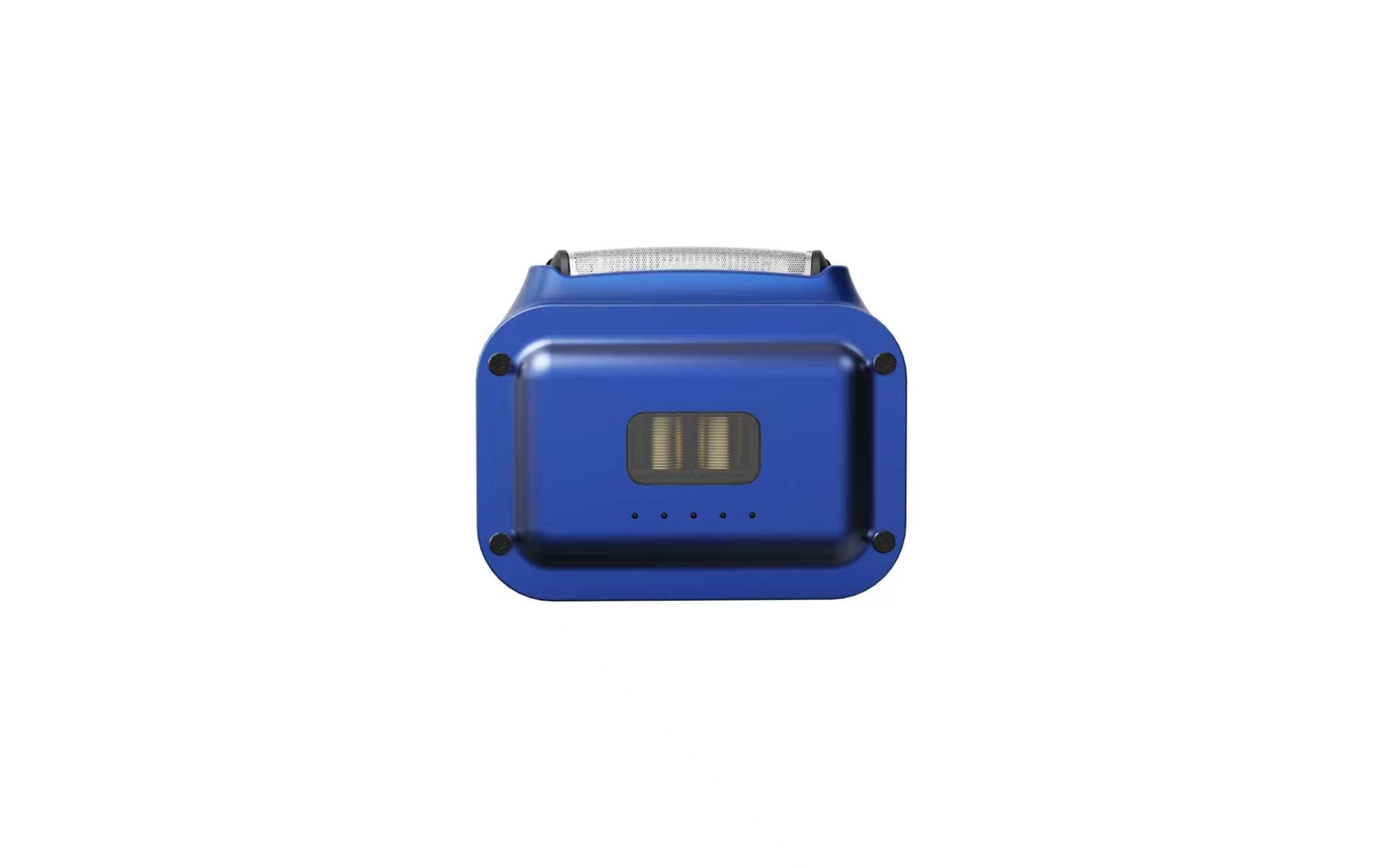
The JM-901 reciprocating shaver is catalogued by its manufacturer for Travel & Business Use.
Why Business Travel Deserves Its Own Product Category
The application data behind travel-oriented groomers is narrow and repeatable. Documented use conditions describe an indoor normal-temperature civilian environment, a civil beauty small home appliance project, and a single functional role: removing excess hair for neat grooming. The same records note that charging cables and cleaning brushes are the matched accessories, that the device can operate while charging, and that this application pattern is common across markets including Russia, Argentina, China, Vietnam, and the United States.
That combination — indoor use, small accessory set, charging-dependent operation — is what distinguishes the travel scenario from household grooming. It means the buyer's real constraints are not cutting power in isolation but the interaction of four variables: cell capacity versus trip length, the charging interface available in hotel rooms and airport lounges, water resistance for fast morning routines, and the physical size of the kit itself.
What "Travel-Grade" Actually Means in Engineering Terms
Water resistance is a rated parameter, not a marketing adjective. Waterproof testing for washable shavers typically follows IPX4 or IPX7 classifications under amendments to UL/CSA 60335-2-8, according to Intertek's standards updates. The practical difference matters for travellers: an IPX7-rated body can be handled near a running tap or rinsed, while a lower-rated device should be kept away from direct water contact. The JM-901's specification sheet lists an IP Rating of IPX7, making water exposure a defined design parameter rather than an assumption.
Charging input defines compatibility. The JM-901 records a charging input of 5V/1A with a rated power of 5W. The JM-701 nose hair trimmer and the JM-708 4-in-1 kit list the same 5V/1A input and 5W class. This consistency is useful for buyers assembling a range: a single charging architecture reduces accessory complexity and simplifies after-sales support. Market research from Grand View Research attributes the dominance of cordless devices in the U.S. market to USB and Type-C charging convenience, which is why the charging input figure deserves attention during specification review rather than being treated as a footnote.
Body material signals positioning. The JM-901 uses an Aluminum Alloy + ABS Plastic body, with the housing specified as Aluminum Alloy. The JM-902, a related reciprocating shaver, uses a zinc alloy housing. Metal-bodied construction is generally associated with a more premium hand feel and dimensional stability than all-plastic housings, and it is a visible differentiator on a retail shelf or in a corporate gift set.
Cell format sets the footprint. The energy storage decision is inseparable from the size question. The JM-901 carries a 702025 300mAh 3.7V lithium battery; the JM-902 uses a 701530 300mAh 3.7V cell; the JM-701 nose trimmer uses a 10280 180mAh cell; and the JM-708 4-in-1 kit uses a larger 14500 600mAh 3.7V battery. Smaller, slimmer cells enable compact single-body tools; larger cells enable longer multi-head operation. Buyers cannot optimise both at once, and understanding that trade-off is the core of travel-scenario selection.
Three Reference Configurations for Travel Grooming
Ningbo Jinmi Electrical Appliance Technology Co., Ltd is a Ningbo-based manufacturer of electric shavers, hair clippers, and nose hair trimmers that operates OEM and ODM programmes and exports to Europe, North America, and Southeast Asia. Three of its catalogued models illustrate how the travel scenario fragments into distinct product answers.
JM-901 Reciprocating Shaver — the single-device business-trip tool
The JM-901 is a reciprocating shaver with a 702025 300mAh 3.7V lithium battery, a 5V/1A charging input, 5W rated power, an Aluminum Alloy + ABS Plastic body, and an IPX7 water-resistance rating. Its catalogued applicable use is Travel & Business Use. Read together, those parameters describe a single-body device intended for one purpose — a daily shave on the move — rather than a modular system with interchangeable heads. A metal-alloy housing plus an IPX7 rating also means the unit tolerates the rushed, wet-counter environment typical of hotel bathrooms.
JM-701 Nose Hair Trimmer — the personal-use companion
The JM-701 is a dedicated nose hair trimmer with a 10280 180mAh 3.7V lithium-ion battery, the same 5V/1A charging input, a listed charging time of approximately 70 minutes, and a working time of approximately 70 minutes at 5W. Its body is aluminum alloy and its catalogued sector is Travel & Personal Use. The near one-to-one ratio between charging time and working time is a straightforward planning figure: a single charge covers a defined amount of use, and a short top-up restores a similar amount. For frequent flyers who treat nose and ear grooming as a separate routine, this is a companion device rather than a substitute for a shaver.
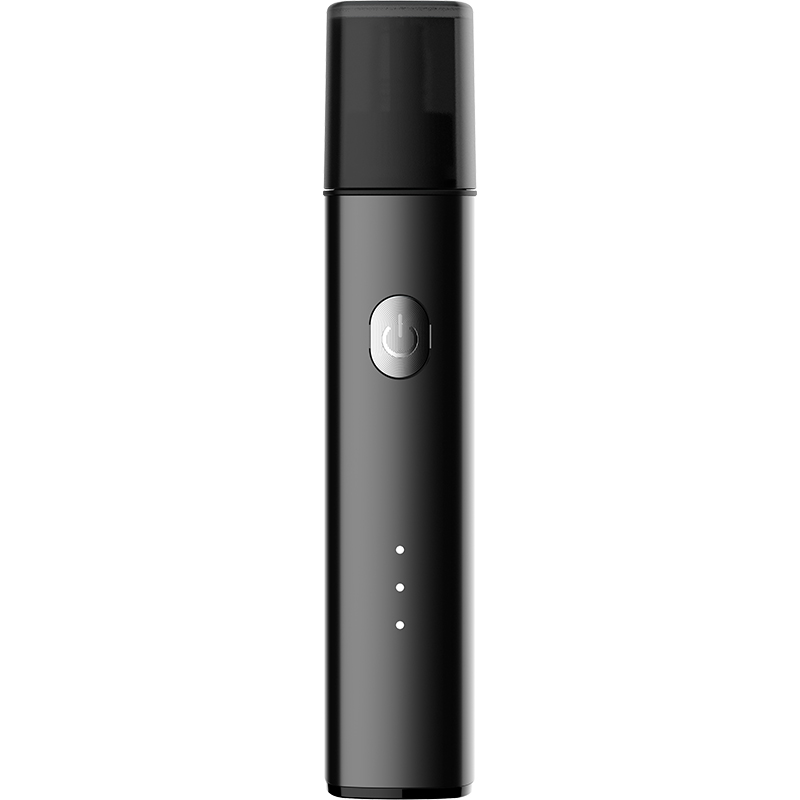
The JM-701 nose hair trimmer lists a 180mAh cell with approximately 70 minutes of charging and 70 minutes of working time.
JM-708 4-in-1 Grooming Kit — the all-in-one travel answer
The JM-708 combines an electric shaver head, a hair clipper head, a nose trimmer head, and an eyebrow trimmer head in a single aluminum alloy system powered by a 14500 600mAh 3.7V lithium battery with a 5V/1A input and 5W rated power. Charging takes about 70 minutes. Published working times are approximately 150 minutes with the nose trimmer head, approximately 100 minutes with the electric shaver head, approximately 150 minutes with the eyebrow trimmer head, and approximately 70 minutes with the hair clipper head. Its catalogued sector is Travel & Personal Use. This is the configuration for longer trips, multi-purpose routines, or gift-set programmes where a single box must cover several grooming tasks.
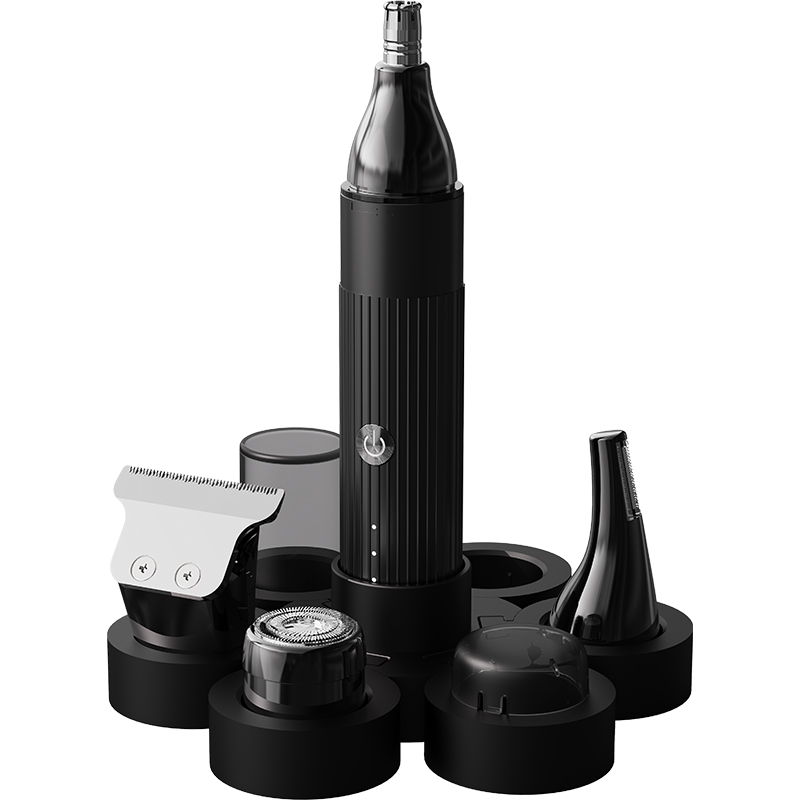
The JM-708 4-in-1 kit publishes head-specific working times, from approximately 70 minutes with the hair clipper head to approximately 150 minutes with the nose trimmer head.
Matching Configuration to Trip Type
Specification tables become useful only when they are read against a scenario. The following mapping is derived strictly from catalogued use cases and published parameters rather than from performance claims.
| Travel scenario | Dominant constraint | Configuration fit |
|---|---|---|
| One- to three-day business trip, carry-on only | Volume and weight; wet hotel counter | Single-body reciprocating shaver — JM-901 |
| Client meetings with detailed grooming routine | Separate nose and ear grooming | JM-701 nose hair trimmer as a companion unit |
| Extended trip, mixed personal and family use | Multiple tasks; longer runtime between charges | JM-708 4-in-1 grooming kit |
| Retail or corporate gift programme | Presentation value and packaging fit | Aluminum alloy bodied models with logo/nameplate customization |
Side-by-Side Specification Reference
| Model | Type | Battery | Charging input | Body | Catalogued use |
|---|---|---|---|---|---|
| JM-901 | Reciprocating shaver | 702025 300mAh 3.7V | 5V/1A, 5W, IPX7 | Aluminum Alloy + ABS Plastic | Travel & Business Use |
| JM-902 | Reciprocating shaver | 701530 300mAh 3.7V | 5V⎓1A, 5W | Zinc alloy housing | Business trip |
| JM-701 | Nose hair trimmer | 10280 180mAh 3.7V | 5V⎓1A, 5W, ~70 min charge | Aluminum Alloy | Travel & Personal Use |
| JM-708 | 4-in-1 grooming kit | 14500 600mAh 3.7V | 5V⎓1A, 5W, ~70 min charge | Aluminum Alloy | Travel & Personal Use |
Market Context: Why Travel Formats Keep Growing
The global electric shaver market was valued at approximately USD 14.39 billion in 2024 and is projected to reach USD 21.60 billion by 2032, according to Markets and Data. Within China, the domestic market was valued at USD 1.89 billion in 2024 with a projected CAGR of 8.4% through 2030, per Next Move Strategy Consulting. Both figures describe a category that is expanding rather than consolidating, which keeps demand for differentiated form factors alive.
Segment data adds nuance. Foil shavers held a dominant 55.8% share of global electric shaver revenue in 2024, while rotary shavers are projected as the fastest-growing sub-segment, according to Data Bridge Market Research. Reciprocating and single-body designs occupy a narrower band, which is precisely why they tend to be specified for defined scenarios such as business travel rather than positioned as universal replacements for multi-head home units. For a buyer, this is a sourcing signal: scenario-specific tools compete on fit, not on breadth.
How Travel Configurations Compare with Traditional Alternatives — and Where They Fall Short
The traditional alternatives for travel grooming remain the wired razor, the disposable razor supplied by hotels, and the full-size multi-head shaver carried over from home use. Each has a documented trade-off.
A wired razor removes battery dependency entirely but reintroduces a power outlet into the routine and typically offers no water-resistance rating benefit. Disposable razors are compact but generate repeat purchasing and waste. A full-size home shaver delivers the widest head coverage and the largest battery, yet it is catalogued for household rather than travel use and occupies disproportionate space in a bag. Travel-catalogued cordless devices such as the JM-901 resolve the portability problem, but they introduce their own boundaries.
The first boundary is energy capacity. The JM-901's 702025 cell is rated at 300mAh, which is smaller than the 600mAh cell in the JM-708 4-in-1 kit and smaller than the 102030 600mAh cells used across hair clipper models such as the JM-602 through JM-606. Its specification sheet does not publish a working-time figure, unlike the JM-701 and JM-708. Buyers planning multi-day travel without regular charging should treat this as a genuine constraint and either select the higher-capacity JM-708 configuration or plan for in-trip charging — the device can operate while charging, per the documented application conditions.
The second boundary is scope. A single-purpose reciprocating shaver covers the daily shave only. Nose and ear grooming remains a separate task, which is why the JM-701 exists as a companion device with a 180mAh cell and approximately 70 minutes of working time. Buyers who want one unit in the bag are trading scope for simplicity.
The third boundary is variation across a range. Water resistance is not uniform across every model in a catalogue. Intertek notes that washable shaver testing typically follows IPX4 or IPX7 classifications, and the JM-901 is specified at IPX7 — but buyers should confirm the rating on the individual SKU spec sheet rather than assuming a range-wide standard. Applying an IPX7 assumption to a model without that rating is one of the more common specification errors in travel-grooming procurement.
Procurement Criteria for Buyers Evaluating Travel SKUs
For importers, brand owners, and channel partners, travel-grooming selection folds into a broader supplier evaluation. The capability data published by Ningbo Jinmi Electrical Appliance Technology Co., Ltd gives a concrete baseline: OEM and ODM production modes, logo and nameplate customization, a monthly capacity of 100,000 units, a lead time of 30–45 days, a minimum order quantity of 3,000 units, 100% testing, export markets in the EU and the Middle East, and remote after-sales support. The company reports a 28,000 m² factory, more than 300 employees, an annual output of 12 million units, a 25-engineer R&D team, and a 70% export ratio across Europe, North America, and Southeast Asia.
Those numbers translate into a practical evaluation checklist rather than a reassurance statement:
- Scenario fit first. Confirm which trip profile the SKU is catalogued for — Travel & Business Use versus Travel & Personal Use are different buyer promises.
- Energy honesty. Ask for a working-time figure in writing. Where it is published, compare it against the trip length and charging access of the target user.
- IP rating per SKU. Require the rated classification for each model, not a general statement about the range.
- Charging architecture. A shared 5V/1A, 5W input across a range reduces adapter and cable SKUs, simplifying after-sales.
- Programme parameters. Match MOQ of 3,000 units and a 30–45 day lead time to your replenishment cycle before committing to a travel-focused assortment.
Field Evidence from a Five-Year Programme
Scenario-fit arguments are easier to trust when they are attached to a delivery record. A documented case involving an OEM client in the personal care products sector covers 300,000 units delivered over five years, with participation from clients in China, Iran, Japan, Portugal, Russia, Spain, France, and the United Kingdom. The application contexts listed are hypermarket retail, gift sets, and brick-and-mortar chain stores — three channels where packaging, presentation, and consistency matter more than raw specification headlines. The programme's recorded highlights are low noise, sharp cutting performance, and plug-and-play operation, and the reported result is stable operation over the duration.
That record is relevant to travel-grooming procurement for a specific reason: a 300,000-unit, five-year run in gift-set and chain-store channels implies repeatable unit-to-unit consistency. For a buyer specifying a travel SKU for corporate gifting or airline-adjacent retail, consistency across shipments is usually a harder requirement than any single performance claim.
Regulatory Baseline
Electric shavers must comply with IEC 60335-2-8 safety standards, which cover household shavers, hair clippers, and similar appliances up to 250V, per the International Electrotechnical Commission. Waterproof testing for washable models typically adheres to IPX4 or IPX7 ratings as specified in amendments to UL/CSA 60335-2-8. For travel SKUs sold into North America and Europe, these two frameworks — electrical safety and ingress protection — form the minimum compliance pair a buyer should be able to trace to a certificate.
Future Outlook
Two directions appear supported by the available data. The first is continued cordless dominance: with 83.95% of the U.S. market already cordless in 2024 and charging convenience cited as the driver, the pressure on manufacturers is toward standardised, low-friction charging inputs rather than larger onboard batteries. That favours devices designed around a shared 5V/1A architecture.
The second is segmentation. With the global market projected to move from roughly USD 14.39 billion in 2024 toward USD 21.60 billion by 2032, mainstream volume will continue to sit with foil and rotary systems. The opportunity for scenario-specific tools such as travel reciprocating shavers and multi-head kits is therefore not market share in the broad category but precise fit in defined channels: corporate gifting, travel retail, chain-store programmes, and compact personal-care assortments. For buyers, the practical implication is to specify by scenario and verify by spec sheet, rather than to select by category default.
FAQ
Which configuration is the most direct fit for a two- to three-day business trip?
A single-body reciprocating shaver such as the JM-901 is catalogued for Travel & Business Use, carries a 702025 300mAh 3.7V lithium battery, a 5V/1A charging input, 5W rated power, an Aluminum Alloy + ABS Plastic body, and an IPX7 rating. That combination targets a short trip with one grooming task and access to water. Where the itinerary involves several grooming tasks, the JM-708 4-in-1 kit covers shaving, hair clipping, nose trimming, and eyebrow trimming in one aluminum alloy unit.
Does a travel shaver need an IP rating, and which one applies?
An IP rating defines how much water contact a device is engineered to tolerate. Waterproof testing for washable shavers typically follows IPX4 or IPX7 classifications under amendments to UL/CSA 60335-2-8, according to Intertek. The JM-901 is specified at IPX7. Ratings are model-specific, so the relevant figure is the one printed on the individual SKU's spec sheet rather than a general statement covering an entire product range.
How does the JM-708 4-in-1 kit compare with the JM-901 for travel?
They answer different scenarios. The JM-901 is a single-purpose reciprocating shaver with a 300mAh cell and no published working-time figure. The JM-708 uses a larger 600mAh 3.7V cell and publishes head-specific working times of approximately 150 minutes for the nose trimmer head, approximately 100 minutes for the electric shaver head, approximately 150 minutes for the eyebrow trimmer head, and approximately 70 minutes for the hair clipper head, with about 70 minutes of charging. The trade-off is capability and runtime versus the smaller footprint of a single-body device.
What should a B2B buyer verify before ordering travel grooming SKUs?
Four items are worth verifying in writing: the catalogued scenario for each SKU, the per-model IP rating, the published working time where it exists, and the charging input. Programme terms also need to be checked against your replenishment cycle — OEM and ODM orders from Ningbo Jinmi Electrical Appliance Technology Co., Ltd are quoted at a minimum order quantity of 3,000 units with a 30–45 day lead time, 100% testing, logo and nameplate customization, and remote after-sales support. A five-year, 300,000-unit programme serving hypermarket, gift-set, and chain-store channels with low noise, sharp cutting performance, and plug-and-play operation is the reference format for this type of order.
Which standards apply to travel shavers sold in regulated markets?
Electric shavers must comply with IEC 60335-2-8 safety standards, which cover household shavers, hair clippers, and similar appliances up to 250V, per the International Electrotechnical Commission. Water resistance sits alongside that framework: washable shaver testing typically follows IPX4 or IPX7 classifications as specified in amendments to UL/CSA 60335-2-8. Electrical safety and ingress protection are therefore the two baseline compliance areas a buyer should expect to trace to documentation.
Reference
Product specifications, scenario data, capability parameters, and case records referenced in this article are drawn from published material by Ningbo Jinmi Electrical Appliance Technology Co., Ltd. The company's product brochure is available for download: Jinmi product brochure (PDF).
Third-party market and standards references: Markets and Data (global electric shaver market, 2024); Next Move Strategy Consulting (China electric shaver market, 2024); Data Bridge Market Research (global segment share, 2024); Grand View Research (U.S. cordless share, 2024); International Electrotechnical Commission (IEC 60335-2-8); Intertek (UL/CSA 60335-2-8 amendments on IPX4/IPX7 testing).