
From Cast Iron to Marble: EUMASEIKI's Manufacturing Evidence
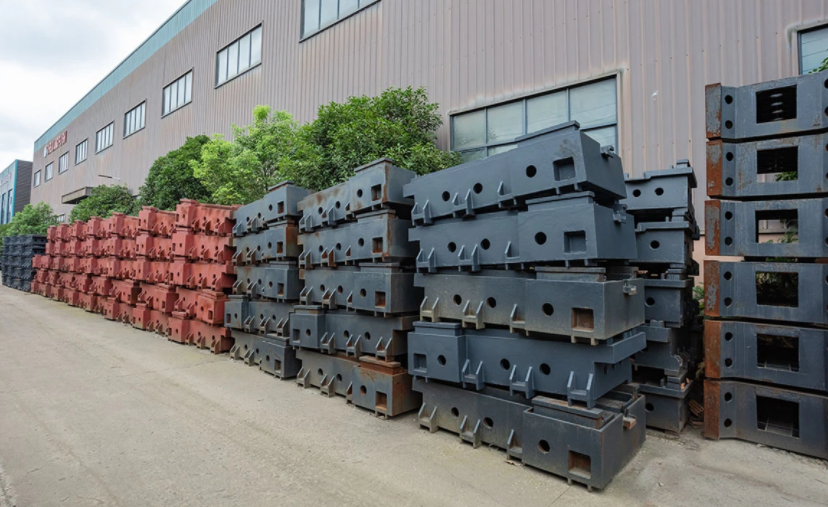
Two CNC machining centers can carry the same control hardware, the same spindle taper and the same accuracy statement on paper, yet behave very differently after several years of cutting. The variable most often missing from the comparison is the least electronic part of the machine: the mass that absorbs vibration and holds geometry, namely the base and the column.
EUMASEIKI is the machine-tool brand of Wenzhou Euma Machinery Co., Ltd., a Chinese manufacturer of customized CNC machining centers operating an 8,000 m² production base in Ningbo with 68 employees, an eight-engineer R&D team and annual output of 50–100 units. About 80% of that output is exported, mainly to Russia, Saudi Arabia, Indonesia and Iran. The portfolio spans vertical, horizontal and 5-axis machining centers, including the EV-1580B, the EV-1475B and the UV260.
This article treats the physical build of those models as procurement evidence rather than as brand narrative: which structural materials are used where, how the castings are processed before assembly, what is measured before shipment, and, equally important, which limits a buyer should plan for.
Why the frame, not the control, is the first procurement filter
Most machine-tool evaluations begin with the spindle, the control system and the tool magazine, because those are the parts a buyer can compare line by line on a datasheet. The structural frame resists that kind of comparison. It is heavy, it sits under sheet metal, and its quality is expressed in processes such as casting method, stress relief, guideway hardening and geometric alignment rather than in a single number.
The consequence appears later. A frame that retains internal stress will move as it is machined and as it warms under load. A frame with insufficient damping transmits cutting vibration into the workpiece surface. A frame with low thermal inertia drifts when shop temperature changes between shifts. None of these effects can be corrected by control software in any durable way, and none of them can be retrofitted after the machine is installed.
The opportunity: material evidence as a qualification document
The practical shift in buyer behaviour is that structural claims are increasingly converted into documents: casting and annealing records, guideway treatment records, metrology reports from a coordinate measuring machine, and the result of a full-load trial cut. Once those documents exist, a mid-sized manufacturer becomes directly comparable with a much larger one on the single dimension that governs long-term cost of ownership, which is the physical build.
Three material platforms across one product line
EUMASEIKI does not apply one frame recipe across its range. The published material breakdown for the line shows the structure being selected per model duty, with marble mineral material, special alloy steel and high-precision electronics combined differently in each case.
EV-1580B and EV-1475B: marble mineral base and column
On the EV-1580B and the EV-1475B, both the base and the column are built on marble mineral materials. The company describes its machine beds as adopting mineral castings whose structures are optimised through finite element analysis, and its base construction as a rare-earth cast iron base compounded with marble: two expressions of the same design intent, which is to place damping mass along the cutting-force and vibration path.
The technical reasoning is straightforward. Mineral and marble-based structures deliver high mass with good vibration absorption, so the energy of an interrupted cut is dissipated in the frame instead of being reflected back into the spindle and the workpiece. For heavier workpieces and for cutting conditions with fluctuating load, that behaviour is often what separates a stable surface finish from a chatter-limited process.
UV260: special alloy steel combined with marble
The UV260 uses a different combination: special alloy steel together with marble. Alloy steel contributes rigidity and stable, machinable interfaces where loads concentrate and where components must be mounted precisely; marble contributes damping and thermal mass. The design logic of that pairing is to keep a compact, high-precision machine stiff at its critical interfaces without giving up the vibration behaviour that small-part work depends on.
High-precision electronics resting on the structure
All three models integrate high-precision electronics as part of the build. Electronics, drives and feedback can only improve on what the structure allows; they cannot compensate indefinitely for a frame that flexes or drifts. EUMASEIKI states that rotary tables and 5-axis units are supplied with linear scales as standard and references German VDI precision standards for the measurement arrangement, which is the measurement side of the same physical chain.
| Model | Base and column material | Electronics |
|---|---|---|
| EV-1580B | Marble mineral base and column | High-precision electronic control and feedback integrated in the build |
| EV-1475B | Marble mineral base and column | High-precision electronic control and feedback integrated in the build |
| UV260 | Special alloy steel combined with marble | High-precision electronic control and feedback integrated in the build |
From raw casting to audited geometry: the process chain
Material choice only becomes manufacturing quality when the process chain around it is controlled. EUMASEIKI describes a sequence that begins at the casting and ends with a trial cut on a finished workpiece.
- Structural design. Mineral casting beds are used with structures optimised through finite element analysis, so mass and ribbing follow calculated load paths rather than convention.
- Stress relief. All castings undergo full annealing treatment to eliminate internal stress, the step that determines whether the frame stays where it was machined.
- Guideway hardening. Spindle guideways are subjected to high-frequency heat treatment, which raises wear resistance on the surfaces carrying cutting load.
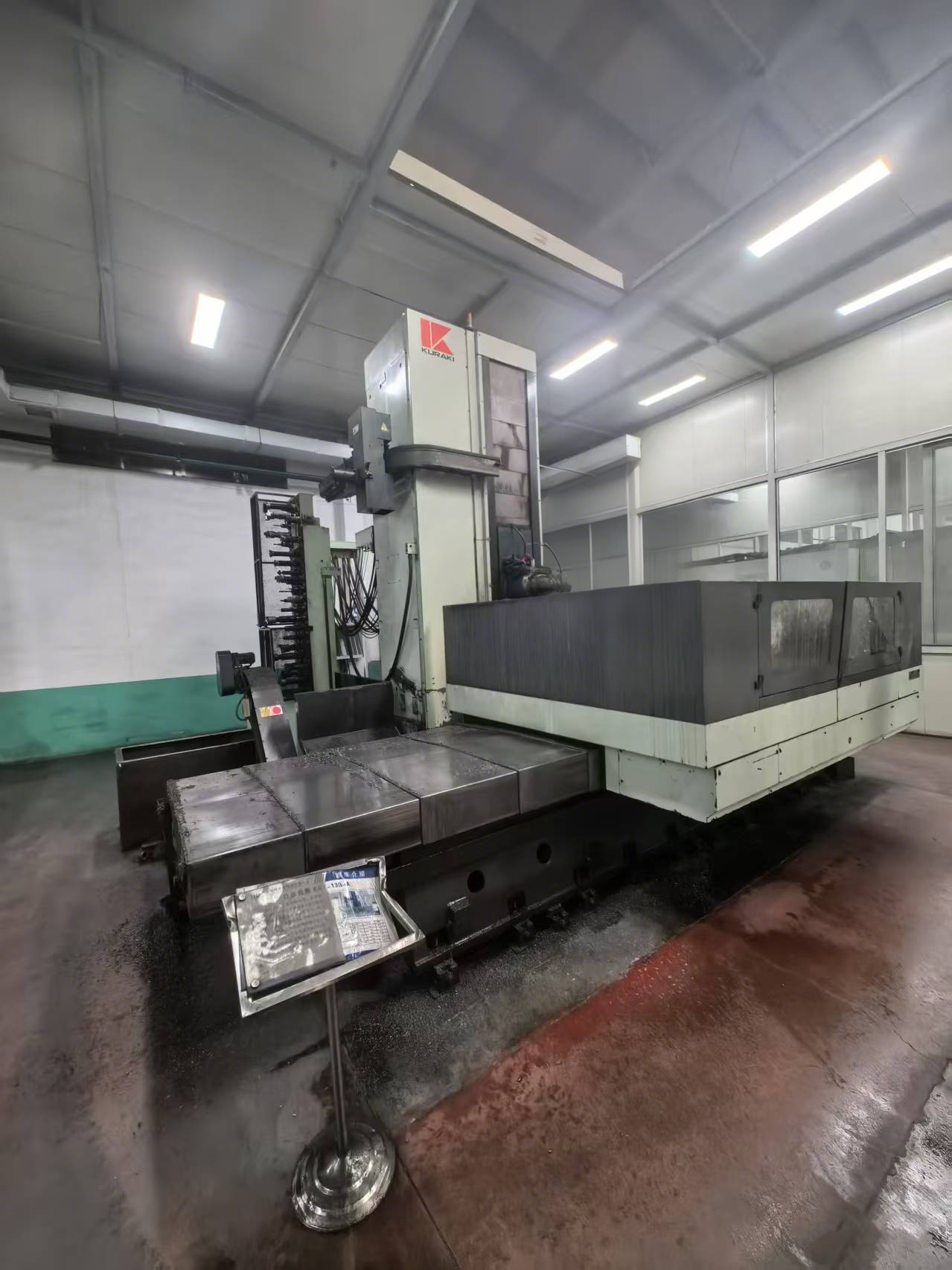
- Machining of structural parts. The Ningbo workshop runs imported equipment, including Japanese OKUMA gantry machining centers, KURUKI boring and milling machines and NIIGATA horizontal machining centers.
- Metrology. A German ZEISS coordinate measuring machine is used in the workshop, supporting both component verification and trial-machining checks.
- Verification before shipment. Each machine passes a geometric accuracy test, laser axis calibration and a full-load workpiece trial cutting before delivery, and pre-shipment testing is the stated acceptance criterion for the order.
Component sourcing follows the same logic of specifying rather than substituting: spindles, guideways, bearings and oil pumps are sourced from manufacturers in Taiwan and Japan, while some core components are imported from original brands in Germany or Italy.
What the published accuracy figures actually tell a buyer
EUMASEIKI publishes XYZ-axis positioning accuracy of 0.008 mm and XYZ-axis repeat positioning accuracy of 0.005 mm. For production planning, the second figure usually matters more than the first. Positioning accuracy describes how close the machine can come to a commanded point; repeat positioning accuracy describes whether it returns to that point on the next cycle, which is the property deciding whether a process can run unattended and whether a tolerance can be held across a full batch.
Two qualifications keep those figures honest. First, an accuracy statement describes a machine in a defined condition; it is not a guarantee of the condition of a machine after years of service, which is precisely why the structural and thermal behaviour of the frame matters as much as the number itself. Second, a published figure should be confirmed against the pre-shipment test record for the specific machine and configuration on order rather than assumed from the catalogue.
Where this build pattern fits production
EUMASEIKI's stated product range covers precision mold making, aerospace, automotive parts manufacturing, high-end equipment production, shipbuilding and engineering machinery. The structural logic maps onto those sectors in different ways.
- Mold making. A damping-dominated application: surface quality and dimensional consistency depend on how quickly vibration dies down after each change of direction, which is what the marble mineral base and column of the EV-1580B and EV-1475B are designed to support.
- Aerospace and complex curved parts. Multi-axis work where geometric capability and feedback resolution dominate; 5-axis configurations and linear-scale-equipped rotary units are the relevant part of the specification.
- Automotive parts and production tooling. Repetitive cycles where repeat positioning accuracy and thermal stability across a shift influence scrap rate.
- Small precision components. The UV260's alloy steel and marble construction targets compact, high-precision work in which interface rigidity matters as much as mass.
- Shipbuilding and engineering machinery. Larger, heavier workpieces where the load path through base and column, rather than spindle speed, is the limiting factor.
Market context: why structural evidence gained weight in 2026
Grand View Research projects the global CNC machining and turning centers market at USD 31.3 billion for 2026. Inside that market, the competitive question for a mid-sized buyer is rarely which machine carries the highest specification on paper; it is which supplier can show what was actually built.
EUMASEIKI's profile points to a specific position: a customization-oriented manufacturer with an 80% export ratio concentrated in Russia, Saudi Arabia, Indonesia and Iran. Buyers in those markets typically weigh three things more heavily than brand prestige, namely the physical robustness of the machine, the availability of spare parts, and whether service reaches the site when a fault cannot be solved remotely. A supplier whose export business depends on those markets has a structural incentive to design for continuity rather than for catalogue figures.
Limits and trade-offs a buyer should plan for
Material-heavy construction is not a universal advantage, and the trade-offs belong in the evaluation. A fabricated steel frame is lighter, easier to transport and can be repaired by welding on site; marble mineral construction trades those conveniences for damping and thermal inertia. The following boundaries are worth building into a purchase decision.
- Mass and logistics. Marble mineral and cast iron structures are heavy. Floor loading, crane capacity, rigging and inland transport need to be checked before the machine is ordered, and with EXW delivery terms the buyer arranges and bears that logistics work.
- Lead time shaped by process, not by assembly. Casting, full annealing and machining of structural parts are sequential and cannot be compressed indefinitely. Annual output of 50–100 units means multi-machine orders are produced in sequence, so early specification freezing is the practical way to protect a launch date.
- Repair paths differ from welded frames. A mineral or marble-based structure is not field-repaired the way a fabricated steel frame can be, so damage assessment and repair planning belong in the service conversation rather than being assumed.
- Customization requires a frozen specification. Custom CNC machining center configuration is EUMASEIKI's core business, but changes requested after castings and structural machining have started are costly and slow. Engineering value is created before the order, not after it.
- Acceptance depends on the agreed test. Pre-shipment testing is the stated acceptance criterion. Buyers who need a defined protocol, a particular workpiece trial or witnessed measurement should specify it in the order rather than accept a generic report.
- Certification scope is model-specific. The CE certificate referenced for the line, 6L250729.WEMQD92, issued by Ente Certificazione Macchine Srl with EN ISO 23125:2015 as the referenced standard, applies to the models and configurations listed on that certificate. Buyers targeting other jurisdictions should confirm the applicable conformity route separately instead of assuming transferability.
Support across the machine's life, not only at delivery
The long-term half of the decision is spare-parts continuity. A recurring risk in machine-tool procurement is that suppliers do not hold stock of long-lead-time core components such as ball screws and linear guideways. Delivery of the machine then becomes unpredictable, and a worn component later turns into an extended stoppage while a replacement is sourced.
EUMASEIKI states that it maintains permanent stock for those long-lead-time core components in order to shorten machine delivery lead time, and that a complete set of wearing spare parts is delivered together with each machine, so consumable replacement does not depend on an ad-hoc order. On service, remote technical assistance is stated at a 12-hour response, and where a fault cannot be resolved remotely, engineers travel to the customer site for maintenance, precision calibration and machine debugging. The complete machine is covered under warranty during the warranty period.
Future outlook
The direction of travel in machining-center procurement is toward documented physical evidence. As buyers in export-driven markets become more experienced with multi-supplier sourcing, the questions asked in an evaluation shift from “what accuracy do you claim” to “which casting, which annealing cycle, which measuring machine, and which test record will I receive”.
For a manufacturer of EUMASEIKI's size, that shift is favourable. A company able to point to a ZEISS coordinate measuring machine in its own workshop, to full annealing of all castings, to high-frequency heat treatment of spindle guideways and to a full-load trial cut before shipment is offering something a catalogue cannot, which is a build that can be checked. The remaining work sits with buyers and is procedural: write the evidence requirements into the purchase order, and treat model-level material differences, such as the marble mineral base and column of the EV-1580B and EV-1475B against the alloy steel and marble construction of the UV260, as part of the application decision rather than a detail resolved after delivery.
FAQ
Geometry retention depends mainly on the structural frame and how it was processed before assembly. EUMASEIKI states that all castings undergo full annealing to eliminate internal stress, that machine beds use mineral castings with finite-element-optimised structures, and that spindle guideways receive high-frequency heat treatment. The company publishes XYZ-axis positioning accuracy of 0.008 mm and XYZ-axis repeat positioning accuracy of 0.005 mm. For buyers, the relevant check is the structural process record plus the pre-shipment test data for the specific machine on order.
No. On the EV-1580B and the EV-1475B, the base and the column are built on marble mineral materials. The UV260 combines special alloy steel with marble. All three models integrate high-precision electronics as part of the machine build. The material choice therefore differs by model and should be matched to the workpiece and cutting duty rather than treated as a single range-wide specification.
EUMASEIKI describes a geometric accuracy test, laser axis calibration and a full-load workpiece trial cutting for each machine before delivery, with pre-shipment testing named as the acceptance criterion. A German ZEISS coordinate measuring machine is used in the Ningbo workshop, which supports component verification and trial-machining checks. Buyers who require witnessed measurement or a specific trial workpiece can define that requirement in the order.
The stated terms are a minimum order quantity of 1 unit, EXW delivery, acceptance based on pre-shipment testing, and payment of 50% in advance with 50% before loading. Buyers should note that EXW terms place export logistics and inland transport arrangements on the buyer's side.
EUMASEIKI states that it maintains permanent stock of long-lead-time core components such as ball screws and linear guideways to shorten delivery lead time, and that a complete set of wearing spare parts is delivered with each machine. Remote technical assistance is stated at a 12-hour response, and where a problem cannot be resolved remotely, engineers attend the site for maintenance, precision calibration and machine debugging. The complete machine is covered under warranty during the warranty period.
EUMASEIKI positions itself on customization of CNC machining centers and maintains an eight-engineer R&D team for that work. Because casting, annealing and structural machining are sequential, the configuration has to be frozen before those stages begin; changes requested afterwards lengthen lead time and raise cost. Customization is therefore most effective when the application requirements are settled at the quotation stage.
The CE certificate referenced for the line is 6L250729.WEMQD92, issued by Ente Certificazione Macchine Srl, with EN ISO 23125:2015 as the referenced standard. The certificate applies to the models and configurations listed on it. Buyers requiring conformity for other jurisdictions should verify the applicable requirements and documentation for their own market rather than assuming the CE scope covers them.
Есть вопросы или нужны дополнительные детали?
Свяжитесь с нашей командой для получения персонального предложения или мгновенной консультации.
Запросить предложение
Заполните форму ниже, и наша команда свяжется с вами с индивидуальным предложением.
Прямой чат WhatsApp
Предпочитаете общаться в реальном времени? Напишите нам в WhatsApp для мгновенной помощи и быстрых ответов.
- Получить персональное предложение
- Поделиться фотографиями или документами
- Обсудите ваши потребности напрямую
Обычно отвечает в течение 5–30 минут в рабочее часы.