
From DIN Clevis Ends to Spherical Plain Bearings: Anqixing Qualification Map
From DIN Clevis Ends to Spherical Plain Bearings: Anqixing Qualification Map
A qualification file for linkage components rarely fails because a supplier holds no certificates. It fails because the certificate on file does not name the part number being bought — the report lists a spherical plain bearing series while the purchase order specifies a clevis end. That distance between a document and a designation is the real constraint in rod end and spherical plain bearing procurement, and it is the constraint this map addresses.
Xiamen Anqixing International Trading Co., Ltd. presents five linked families to global buyers: rod end linkages, DIN 71751 and DIN 71752 clevis ends, hydraulic rod ends, ball joints, and spherical plain bearings. Every one of those families is screened with the same four questions — what documentation exists, how clearly is the specification stated, how is a shipment traced, and does the order profile fit export supply. This article answers those questions family by family, using the LDK bearing record held by DE YUAN SMART TECHNOLOGY (FUJIAN) CO., LTD. as the evidence base; that is the Fujian manufacturing operation whose rod end, clevis end and spherical plain bearing lines appear under the LDK Bearings brand.
Where a document does not exist, this map says so. A qualification map that only lists strengths is a sales sheet; buyers need the boundary as much as the evidence.
Why the clevis end exposes the documentation gap
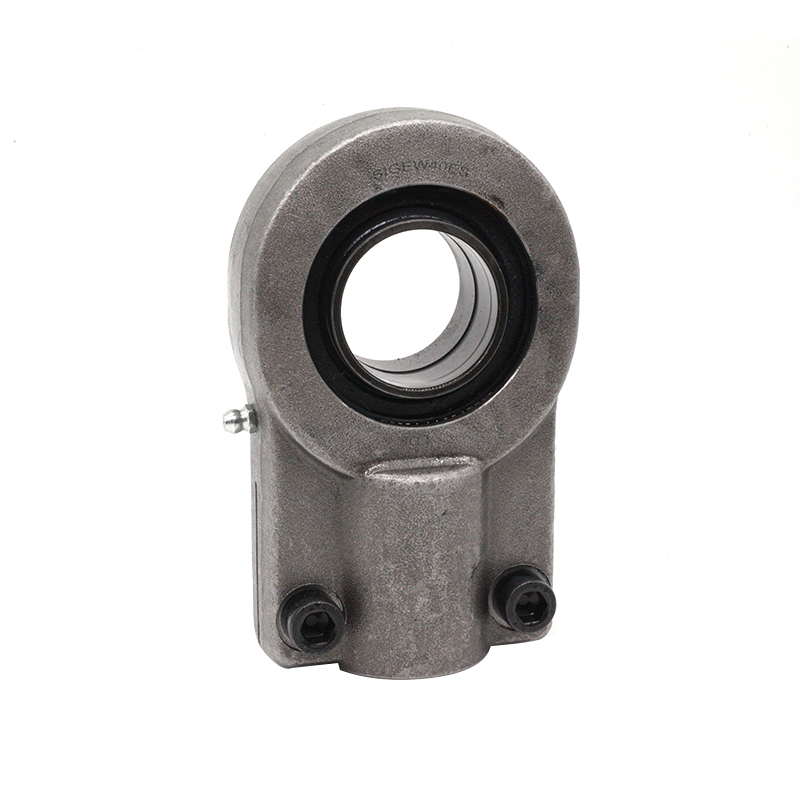
Clevis ends look like the simplest parts in the catalogue, and that is precisely why they slip through compliance review. The Anqixing range catalogues them by designation and size: Clevis End Y DIN71751 from Y4x8 to Y16x64, Clevis End CEF DIN71752 from CEF4x8 to CEF16x64, and Clevis End CEM DIN71752 from CEM6x12 to CEM20x40. A buyer reads a size, a standard number and a thread, and assumes the compliance paperwork follows automatically.
It does not. The two SGS RoHS verification reports in this record are issued against tested samples and then list the product series each report covers. Report XMNEC25002178301_1 is built around a GEG35ES-2RS sample and lists radial spherical plain bearing series. Report XMNEC25002178901_3 is built around an SIJK 20 C-R (CHS20) sample and lists rod end and related series. Neither report names the Y, CEF or CEM clevis end designations.
That is not a defect unique to this supplier; it is how product-level RoHS verification works. A scope list is a defined legal boundary, and any part outside it needs its own declaration. The practical consequence for a buyer is direct: if a clevis end sits on a gas spring, a pneumatic cylinder linkage or a machine guard assembly destined for an EU market, the RoHS statement that satisfies the audit has to be obtained for the clevis end itself, not borrowed from a bearing report that happens to sit in the same catalogue.
The four document sets actually on file
Before scoring any family, it helps to see the evidence in its original form. Four document sets support the families discussed here, and all four are within their stated validity periods as of November 2026.
1. Quality management system — IATF 16949:2016
Certified by BV, issued 26 January 2024 and valid to 25 January 2027. The scope recorded on file covers manufacturing, permitted exclusions, design and development of products and services under clause 8.3, product delivered, and bearing and bearing housings. The certificate reference is recorded as “IATF 16949 – FIRST EDITION”.
2. Environmental management system — ISO 14001:2015
Certificate CN-00225E33951R3M, issued by CQM, issued 16 October 2025 and valid to 6 November 2028. The recorded scope is the production and relevant management activities of ball bearing units, bearing housings and spherical plain bearings.
3. Occupational health and safety — ISO 45001:2018
Certificate CN-00225S23739R3M, also issued by CQM on 16 October 2025 and valid to 6 November 2028, with the same scope wording as the environmental certificate.
4. Two SGS RoHS verification reports
- XMNEC25002178301_1 — issued by SGS SCTC Standards Technical Services Co., Ltd. Xiamen Branch on 22 September 2025, valid to 22 September 2035, against EU RoHS Directive (EU) 2015/863 amending 2011/65/EU. Tested sample: GEG35ES-2RS. Scope: GE..E, GE..ES(-2RS), GEZ..E, GEZ..ES(-2RS), GEG..E, GEG..ES(-2RS), GEEW..ES(-2RS), GEEM..ES-2RS, GAC..S, GACZ..S, GX..S, GEF..ES, GE..XS/K, GEWZ..ES(-2RS), GEGZ..ES(-2RS), GEK..XS-2GS.
- XMNEC25002178901_3 — issued by the same SGS branch on 16 October 2025, valid to 16 October 2035, against the same directive. Tested sample: SIJK 20 C-R (CHS20). Scope: PHS, POS, CHS, COS, PHS..EC, POS..EC, PHSB, POSB, CF, CM, CF..T, CM..T, CF..TY, CM..TY, SI..E/ES, SA..E/ES, SI..C, SA..C, JF, JM, GE..C, GEBK..S, GE..PW, COM, COM..T.
Read those last two scope lines carefully. They are the single most useful piece of qualification information in the whole record, and they are also the reason a star rating is needed at all: what is named, and what is not, differs sharply between families.

The Anqixing qualification map
The table scores each family on documentation coverage only. The rating method is deliberately narrow: one star each for (a) an SGS RoHS verification report that names the series, (b) a management-system certificate whose scope wording covers the product category, and (c) specification data published in the product record — bore range, materials, hardness, sliding pair, thread hand or equivalent. A maximum of five stars is available because two further stars are awarded for part-level clarity: whether individual part numbers, including sealed and left-hand variants, fall inside the named scope.
| Product family | Named in an SGS RoHS report | Covered by management-system scope wording | Published specification data | Documentation readiness |
|---|---|---|---|---|
| Radial spherical plain bearings — GE..E(S), GEG..E(S), GEZ..ES, GEEW..ES, GEEM..ES-2RS, GE..C/GEG..C | Yes — both reports | Yes — “spherical plain bearings” is named in the ISO 14001 and ISO 45001 scope | Yes — bore range, ring and ball material, hardness, liner type | ★★★★★ |
| Rod end linkages and assemblies — Rod End Linkages | Partially — one assembly reference, SIJK 20 C-R (CHS20), appears as the tested sample | Yes — bearings and housings in the IATF scope | Limited — assembly-level data supplied on request | ★★★ |
| Metric and inch rod ends in the named list — SI/SA..E(S), SI/SA..C, PHS/POS, PHSB/POSB, CHS/COS, CF/CM including T and TY variants | Yes — report XMNEC25002178901_3 | Partially — rod ends are not named in the ISO wording; IATF scope covers bearings and housings | Yes — bore range, thread hand, body, ball and race materials, greasing status | ★★★★ |
| Rod ends outside the named list — SCHS/SCOS, SPHS/SPOS, SPHS..EC, SPHSB..EC, NPHS/NPOS, NCHS/NCOS, NXM/NXF, NEXM/NEXF, JMX/JFX, SJM/SJF, M/F, SI/SA..ET-2RS | No | Partially — IATF only | Yes for most — for example the NXM/NXF inch range of 4.826 mm to 19.5 mm with a steel/nylon sliding pair | ★★★ |
| Hydraulic rod ends — SIGEW..ES, SIR..ES, SF..ES, SK..E(S), SIQ..ES | No | No — not named in either ISO scope | Yes — 12 mm to 200 mm bore, body and ring materials, sliding pair, greasing method, thread hand | ★★★ |
| DIN clevis ends — Y DIN71751, CEF DIN71752, CEM DIN71752 | No | No | Designation and size only | ★★ |
| Ball joints — SQ..RS, SQZ..RS, CS, R..G | No | No | Series designations only in this record | ★★ |
| Spherical plain bearings outside the named series — GX..T, NSSB, WSSB, YSSB, SCOM, MIB/AIB/SIB, GE..ET-2RS and GEG..ET-2RS | No — GX..S is named, GX..T is not; GE..ES(-2RS) is named, the ET variants are not | Yes — spherical plain bearings are named | Yes for GX..T and GEG..ET-2RS; limited for the small inch series | ★★★ |
Stars measure document coverage and specification clarity, not product quality, load capacity or service life. No test data comparing families is supplied, and none is implied.
Reading the map: four findings that change a purchase order
Finding one: spherical plain bearings carry the deepest file
This is the only family where all three document layers line up. The radial series are named in report XMNEC25002178301_1, the ISO 14001 and ISO 45001 scope wording names spherical plain bearings explicitly, and the product record states bore range, ring material, hardness and sliding contact surfaces. A buyer ordering a GEG..ET-2RS or a GE..C can therefore assemble a coherent file without correspondence, provided they check the specific series against the scope list rather than against the family name.
Finding two: “rod ends” and “spherical plain bearings” are not interchangeable in a certificate
The environmental and safety certificates record a scope limited to ball bearing units, bearing housings and spherical plain bearings. Rod ends do not appear in that wording. They are bearings in engineering terms, and the IATF 16949 scope covers bearings and bearing housings broadly, but a compliance officer comparing a purchase order for an SA..ES rod end against that certificate will not find the product named. Buyers who need a clean documentary trail should ask the supplier to confirm in writing which certified scope the rod-end line falls under, rather than assuming the bearing certificate transfers.
Finding three: hydraulic rod ends, clevis ends and ball joints have specification clarity without RoHS coverage
This is the most consequential asymmetry in the whole map. The hydraulic rod end series SIGEW..ES is described in real engineering detail: a locking-slot housing clamped by socket screws, mounted with GEEW..ES radial spherical plain bearings retained by snap rings, re-greasable through a grease nipple, bore range 12 mm to 200 mm, right-hand thread as standard with left-hand thread available on the housing shank, steel-on-steel sliding contact, mild steel body with GCr15 inner and outer rings heat treated to HRC 58-64 and HRC 54-60 respectively and phosphated. That is enough to specify and to inspect. What it is not, is a RoHS declaration — no report in this record names SIGEW, SIR, SF, SK or SIQ.
The same pattern applies to clevis ends, where only designation and size are published, and to ball joints, where the record lists series designations. In each case the buyer gets a workable purchasing specification and an incomplete compliance file, and the gap has to be closed with a part-specific declaration before the goods ship into a regulated market.
Finding four: family coverage is not part-number coverage
Report XMNEC25002178301_1 names GE..ES(-2RS) and GEG..ES(-2RS). It does not name GE..ET-2RS or GEG..ET-2RS, which are different series in the catalogue — the GEG..ET-2RS range runs from 15 mm to 280 mm and is described as heavier duty than the GE..ET-2RS range. Likewise, GX..S appears in the scope while the thrust series GX..T, running 10 mm to 200 mm with a steel/PTFE fabric sliding pair, does not. A buyer who orders “spherical plain bearings” and attaches the family report to the file has attached a document that may not describe the delivered part. The check is mechanical: compare the exact series designation on the purchase order against the scope list, character by character.
Specification clarity: what a buyer can already pin down
Where the documentation is thin, the engineering data is often thick, and that matters for the Research-to-Evaluation stage of a sourcing decision. Across the families in this record, a buyer can already fix the following parameters before any conversation starts.
- Bore and shaft range. Radial spherical plain bearings span 4 mm to 30 mm in the GE..C/GEG..C series and 15 mm to 280 mm in GEG..ET-2RS; thrust GX..T covers 10 mm to 200 mm. Metric rod ends run from 3 mm to 80 mm depending on series, inch rod ends from 4.826 mm to 19.5 mm in NXM/NXF and 4.826 mm to 25.4 mm in PHSB. Hydraulic rod ends cover 12 mm to 200 mm.
- Material and hardness. Bearing steel rings are specified at HRC 54-60 for outer rings and HRC 58-64 for balls, with hard chrome on the ball and phosphate on the ring. Bodies are carbon steel zinc plated on the PHS and SA series, mild steel on SIGEW hydraulic rod ends, and heat-treated alloy steel with a turned, zinc-plated finish on the NXM/NXF inch series.
- Sliding contact pair. Steel/PTFE fabric, steel/PTFE composite, steel/brass, steel/nylon with PTFE additive, and steel/steel are all represented, each attached to a defined series rather than offered as a free-floating option.
- Lubrication regime. The distinction is explicit: SA..ES and PHS are re-greasable, SA..E is not; SIGEW hydraulic rod ends are re-greasable via a grease nipple while the mounted GEEW..ES bearing is maintenance-free; GEG..ET-2RS and GX..T are maintenance-free by design.
- Thread hand. Right-hand thread is standard across metric rod ends and hydraulic rod ends, with left-hand thread available on request and, for hydraulic rod ends, different pitch or thread accuracy available.
The gaps are equally specific. For the DIN clevis ends, the record gives designation and size but not material, surface finish, pin tolerance or proof load. For ball joints, it gives series designations. Those are the first items to put in a technical query, because they are the items a drawing approval will require anyway.
Traceability and export-order fit
Traceability appears in the capability record as a listed attribute of the OEM programme, alongside IQC, IPQC and OQC inspection stages, FMEA capability and 8D problem-solving. The record does not specify the unit of traceability — batch, lot or order — so the sensible procurement step is to agree that unit in the purchase order rather than after a nonconformance. For a bearing or clevis end that will be fitted to a safety-relevant linkage, the useful traceability question is not “do you have traceability?” but “what identifier appears on the label, the packing list and the inspection record for this line?”
Order fit is stated in concrete terms. Monthly capacity is recorded at 300,000 units, minimum order quantity at 5,000 units, and lead time at 30 to 90 days depending on scope. On-time delivery performance is stated at 95% or better. The company was established in 1986, operates from a 90,000 m² site with roughly 130 employees and a 12-engineer R&D team, reports annual output of 15,000,000 units, and exports about 60% of production to Europe, North America, Latin America and Oceania. In-house production of both bearings and housings is a stated capability, supported by a laboratory, a precision measuring room and testing that includes fatigue life, tensile strength, noise and vibration, and salt spray.
For a buyer at evaluation stage, those numbers answer a narrow but important question: can this supplier absorb a 5,000-unit release inside a 30-to-90-day window without breaking the qualification sequence? A first article run, a dimensional report and a material certificate can all sit inside that window, which means qualification and production do not have to be sequenced as separate projects.
Where these parts actually go
Qualification decisions get easier when the application is fixed. The scenario record behind this portfolio names several environments where these families are used, and each one shifts the documentation emphasis.
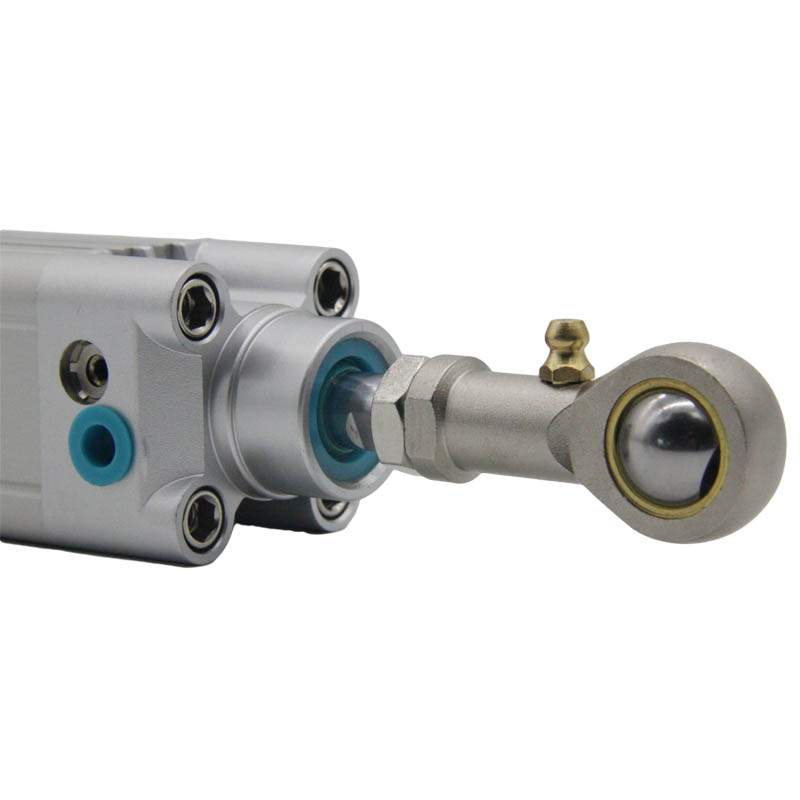
- Gas springs and dampers. Clevis ends and rod ends form the articulated connection that keeps a gas spring under pure axial load. The stated requirements are corrosion resistance and maintenance-free operation, which pushes the buyer towards the re-greasable or PTFE-lined options rather than a steel-on-steel pair.
- Pneumatic cylinders and automation actuators. Rod ends connect the piston rod to the load and absorb angular misalignment. Low friction, wear resistance and, where the cylinder cannot be re-lubricated, a maintenance-free bearing are the stated needs.
- Construction and earthmoving equipment. Hydraulic rod ends operate under high dust, high load and large misalignment, making sealing, self-aligning capability and compactness the deciding criteria.
- Heavy trucks and trailers. Rod ends and linkages face mud, water, salt spray and wide temperature swings, with corrosion resistance and easy maintenance named as the governing requirements.
- Solar trackers and photovoltaic mounting. Spherical plain bearings work in continuous outdoor exposure with UV, sand and temperature cycling, where maintenance-free operation over years is the requirement rather than high load.
In each case the documentation question follows the application: a RoHS statement matters most where the assembly ships into the EU, a salt-spray or corrosion statement matters most where the part is exposed, and a bore and thread declaration matters in every case.
What this map does not establish
Three boundaries should be stated plainly, because a qualification map that hides them is worth little.
First, the absence of a RoHS report naming clevis ends, ball joints or hydraulic rod ends is not evidence that those parts contain restricted substances. It is evidence that the document is not in this record. The distinction matters both ways: a buyer cannot rely on a document that does not exist, and a supplier should not be judged non-compliant on the strength of a missing file alone.
Second, the capability record lists RoHS, REACH and FDA compliance among its quality-compliance attributes, but the third-party documents supplied here are the two SGS RoHS reports. Where a REACH declaration or a food-contact statement is required, it should be requested against the exact part number and material combination, not inferred from the RoHS file.
Third, the star ratings in this article are an editorial assessment of document coverage. They do not measure load rating, fatigue life, dimensional accuracy or field performance, and no comparative test data supporting such a ranking is supplied.
A verification sequence for buyers
- Match the designation, not the family. Compare the exact series on the purchase order — GE..E(S), GEG..ET-2RS, GX..T, SA..ES, SIGEW..ES, CEF, CEM, Y — against the scope list of the relevant SGS report.
- Confirm the certified scope in writing. Ask which management-system certificate covers the specific production line, particularly for rod ends and hydraulic rod ends, which are not named in the ISO 14001 and ISO 45001 scope wording.
- Close the part-level declaration gap. For clevis ends, ball joints and hydraulic rod ends, request a RoHS declaration or test report against the exact geometry and material ordered.
- Fix the specification items the catalogue does not state. For clevis ends, that means material, finish, pin and thread tolerance, and load rating; for ball joints, the housing and ball materials and the boot or seal arrangement.
- Agree the traceability unit before the first shipment. Specify what identifier must appear on the label, packing list and inspection record.
- Align order profile with the qualification plan. A 5,000-unit minimum and a 30-to-90-day lead time allow first-article approval, dimensional reporting and volume release to run in one sequence rather than three.
Outlook: documentation as a procurement constraint
The direction of travel for buyers is towards part-number-level declarations rather than family-level certificates. That is a reasonable inference from how the existing documents are written — a RoHS report already defines its boundary by series, and a management-system certificate already defines its boundary by product category. As those boundaries become the object of audit review, suppliers with a systematic answer will separate themselves from suppliers with a folder of generic certificates.
For Anqixing, the record suggests a supplier that is straightforward about where it stands: strong evidence on radial spherical plain bearings and the named rod end series, detailed engineering specification across the wider catalogue, and an open gap on clevis ends, ball joints and hydraulic rod ends that can be closed by part-specific documentation. Buyers who approach the portfolio in that order — evidence first, declarations second, commercial terms third — will find the qualification path shorter than the catalogue suggests.
FAQ
Which certifications apply to rod ends and spherical plain bearings?
The record contains three management-system certificates and two product-level reports. IATF 16949:2016, certified by BV and valid to 25 January 2027, covers manufacturing and design of bearings and bearing housings. ISO 14001:2015 (CN-00225E33951R3M) and ISO 45001:2018 (CN-00225S23739R3M), both issued by CQM and valid to 6 November 2028, cover production and related management activities for ball bearing units, bearing housings and spherical plain bearings. The product-level evidence is two SGS RoHS verification reports against EU Directive (EU) 2015/863.
Does an SGS RoHS report cover every part number in a product family?
No. Each report names a tested sample and then lists the series within its scope. Report XMNEC25002178301_1, for example, names GE..E, GE..ES(-2RS), GEG..E, GEG..ES(-2RS), GEZ..ES(-2RS), GEEW..ES(-2RS), GEEM..ES-2RS, GAC..S, GACZ..S, GX..S and related series, but it does not name the GE..ET-2RS or GEG..ET-2RS series or the thrust GX..T series. A part number outside the list needs its own declaration.
What should be confirmed before ordering DIN 71751 or DIN 71752 clevis ends?
The catalogue record gives designation and size — Y4x8 to Y16x64 for DIN 71751, CEF4x8 to CEF16x64 and CEM6x12 to CEM20x40 for DIN 71752 — but does not state material, surface finish, pin or thread tolerance, or load rating. Neither SGS RoHS report names the clevis end designations. A buyer should therefore confirm material and finish, dimensional and thread tolerances, load rating, and a part-specific RoHS declaration before release.
How is a rod end or spherical plain bearing order traced through production?
Traceability is listed as an OEM capability alongside IQC, IPQC and OQC inspection stages, FMEA and 8D problem-solving. The record does not specify whether the traceable unit is a batch, a lot or an order, so the identifier that must appear on the label, packing list and inspection record should be written into the purchase order. Second-party and third-party audits are also listed as available verification routes.
What order profile fits an export purchase?
Recorded figures are a monthly capacity of 300,000 units, a minimum order quantity of 5,000 units, and a lead time of 30 to 90 days, with on-time delivery stated at 95% or better. Around 60% of output is exported to Europe, North America, Latin America and Oceania. These figures let a buyer plan first-article approval and volume release within a single lead-time window.
Are hydraulic rod ends and ball joints covered by the same documents as spherical plain bearings?
No. The hydraulic rod end series SIGEW..ES, SIR..ES, SF..ES, SK..E(S) and SIQ..ES, and the ball joint series SQ..RS, SQZ..RS, CS and R..G, are not named in either SGS RoHS report, and neither category appears in the ISO 14001 and ISO 45001 scope wording, which names ball bearing units, bearing housings and spherical plain bearings. Engineering specification data exists for the hydraulic rod ends, including a 12 mm to 200 mm bore range and defined body and ring materials, but product-level compliance documentation must be requested separately.
Source note. Product, certification, capability and application facts in this article are drawn from the LDK bearing record maintained by DE YUAN SMART TECHNOLOGY (FUJIAN) CO., LTD. No comparative performance testing, market forecast or third-party endorsement is claimed. Certification validity dates are stated as recorded. A downloadable company brochure is available at the LDK brochure file.
Есть вопросы или нужны дополнительные детали?
Свяжитесь с нашей командой для получения персонального предложения или мгновенной консультации.
Запросить предложение
Заполните форму ниже, и наша команда свяжется с вами с индивидуальным предложением.
Прямой чат WhatsApp
Предпочитаете общаться в реальном времени? Напишите нам в WhatsApp для мгновенной помощи и быстрых ответов.
- Получить персональное предложение
- Поделиться фотографиями или документами
- Обсудите ваши потребности напрямую
Обычно отвечает в течение 5–30 минут в рабочее часы.