
From Drawing to Duty: Matching Custom Ultra High Precision Gears to Project Conditions
Custom ultra high precision gears are rarely stocked or catalogued. In heavy industrial drivetrains, each gear is engineered for a specific machine, load profile, and operating environment — a wind turbine planetary stage, a furnace-top reducer gearbox, or a vibrating screen exciter in a mining plant. For buyers in the Research and Evaluation stage, the essential task is not to identify a gear manufacturer, but to determine whether a manufacturer can match drawing specifications to real project conditions.
This article provides a supplier evaluation framework for project-fit custom ultra high precision gears. It uses Jiangsu New Yinye Transmission Electromechanical Co., Ltd. (New Yinye Transmission), a build-to-print gear manufacturer headquartered in Wuxi, Jiangsu, China, as a reference example. The company has brand heritage dating back to 1993 and operates an approximately 25,000 m² manufacturing facility focused on large, high-precision, complex, and non-standard industrial gears and transmission components.
The Project-Fit Challenge in Custom Ultra High Precision Gears
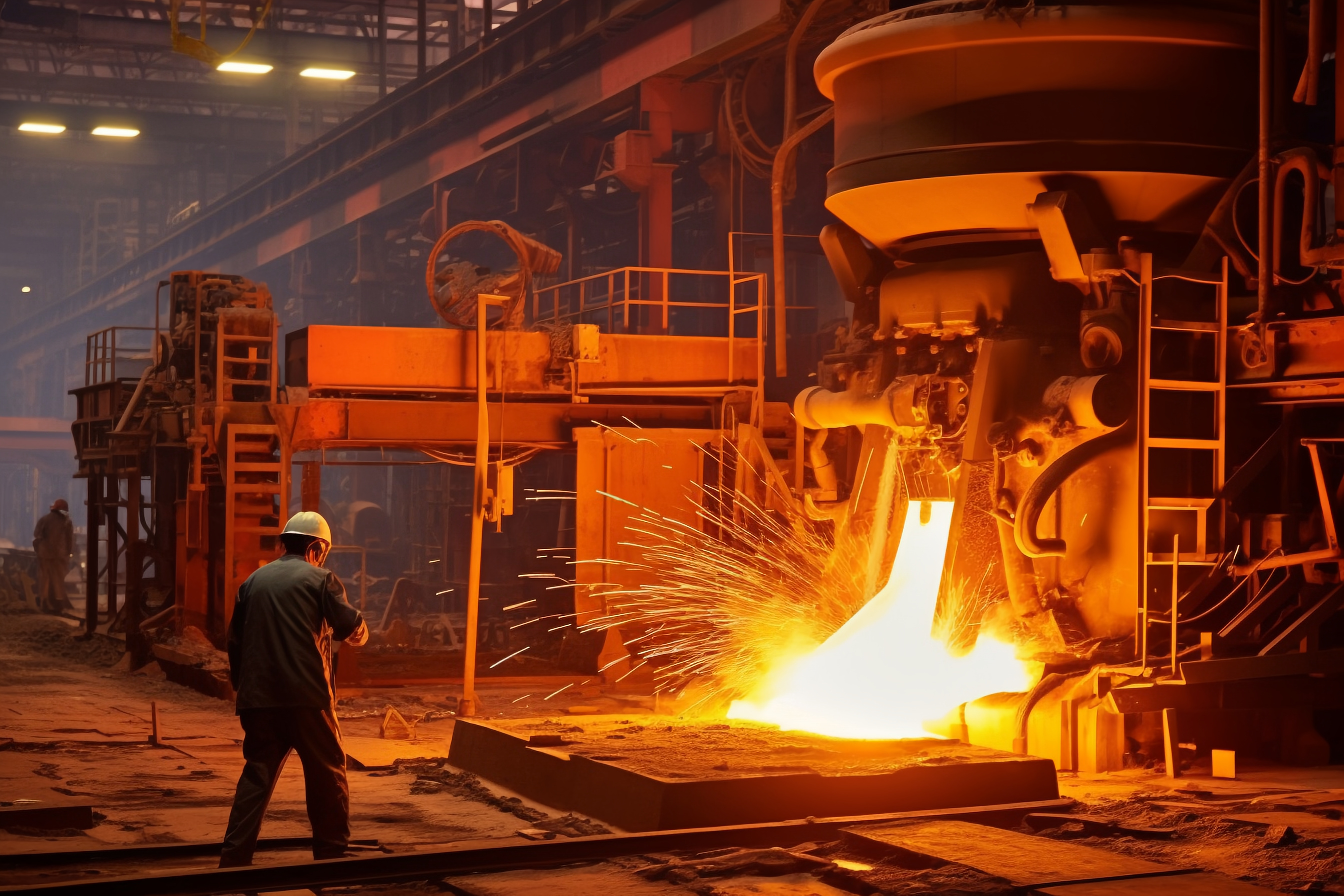
The label "custom ultra high precision gear" covers a wide range of projects, and the differences between them matter more than the label itself. A wind power gearbox gear may demand high fatigue strength, material traceability, and consistent batch quality across thousands of parts. A metallurgical furnace-top gear operates under high temperature, dust, and repeated impact, requiring dimensional stability and heat resistance. A precision machine-tool gear must deliver low noise and low backlash under high-speed variable loads. A mining exciter gear must absorb shock and vibration over long continuous cycles.
This is why project-fit evaluation cannot stop at the drawing. The drawing defines geometry, tolerances, and material grade, but the manufacturer's process choices determine whether the finished gear actually survives the duty cycle. Buyers evaluating suppliers therefore need to examine four domains: achievable precision as a function of size, material and heat-treatment capability, inspection depth, and documented traceability.
Market context supports the relevance of this evaluation. Mordor Intelligence estimates the global gear market at USD 222.12 billion in 2025, with wind energy installations serving as a primary driver for large-scale precision gearing. Grand View Research projects the precision gearbox and geared motor market to reach USD 3.9 billion in 2026, reflecting rising demand for high-precision motion control. Within this demand, a substantial portion is non-standard — components manufactured to customer drawings in medium or small batches, where catalog gears cannot fit.
What a Project-Focused Gear Supplier Must Provide
New Yinye Transmission's capability profile illustrates what a project-focused custom gear supplier typically needs to demonstrate. The company employs 125 people, including 28 engineers, and produces approximately 1,500 sets per year across different product categories, excluding general accessory components. Around 15% of output is exported to Europe, North America, Japan, Australia, and other global industrial markets.
For project adaptation, the relevant technical capabilities include:
- Large CNC gear cutting, gear shaping, precision gear grinding, five-axis machining, turn-mill machining, and precision finishing;
- Maximum gear grinding diameter of approximately 2,500 mm and maximum module of approximately 45 mm;
- Gear accuracy reaching AGMA 12, DIN 5, or higher for applicable products, subject to gear type, size, material, structure, and process review;
- Material options including 42CrMo, 35CrMo, 40Cr, 20MnCr5, 18CrNiMo7-6, 17CrNiMo6, 18Cr2Ni4WA, Q345D, QT400-15, alloy steel, and forged steel;
- Heat-treatment options covering carburizing, nitriding, induction hardening, and through hardening;
- Product range spanning cylindrical gears, spur gears, helical gears, double helical gears, ring gears, internal gears, spiral bevel gears, straight bevel gears, pinion shafts, gear shafts, spline shafts, spline couplings, machine spindles, and custom precision gearboxes.
Inspection capability is central to project evaluation. Available inspections cover tooth profile, lead, pitch, radial runout, surface roughness, material composition, hardness, mechanical properties, ultrasonic testing, phased-array ultrasonic testing, grinding-burn inspection, micro-magnetic testing, large-component dimensional inspection, dynamic balancing, and bevel-gear rolling contact inspection. Material certificates, dimensional inspection records, gear accuracy reports, hardness records, non-destructive testing documents, and final inspection reports can be provided according to customer drawings, technical agreements, and project requirements.
Understanding Accuracy, Material, and Surface Integrity
Gear accuracy classification is the first technical filter. ISO 1328-1:2013 defines 11 flank tolerance classes, where Grades 1–4 represent ultra-precision levels typically required for aerospace, metrology, and high-end turbines. In many heavy-industrial projects, DIN 3962 Class 6–7 or AGMA Class 9–10 are typical published accuracy levels, while demanding applications move toward DIN 5, AGMA 12, or higher.
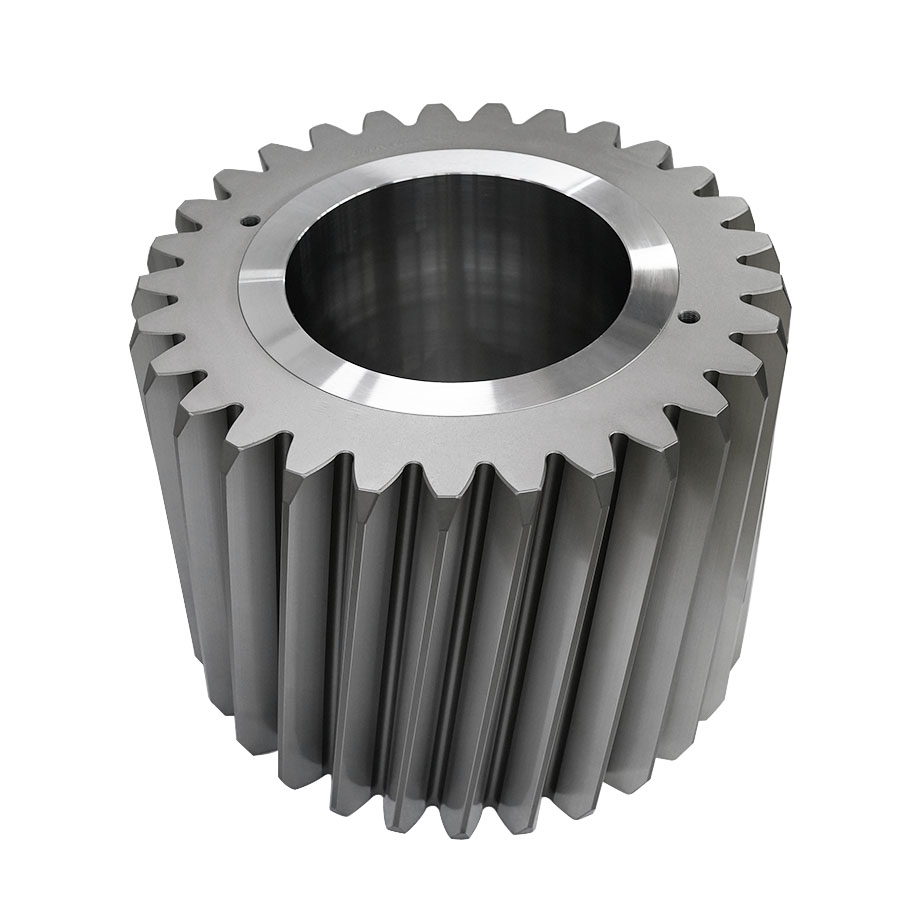
Accuracy claims are conditional, and buyers should evaluate them as such. New Yinye states that DIN 5 or AGMA 12 can be reached only for applicable products, subject to gear size, material, structure, heat treatment, and process review. This conditionality is technically reasonable: a large ring gear near 2,500 mm outside diameter, a thin-section design, or a complex internal geometry will not hold the same tolerances as a compact, rigid pinion.
Material selection follows the duty cycle. For carburized and ground gears in heavy-duty mining and wind power applications, high-grade steels such as 17CrNiMo6 and 18CrNiMo7-6 are industry standards for ensuring impact resistance and fatigue strength, as referenced by Fisher Barton / Walkson Forgings in the context of forged planet gears. 18CrNiMo7-6 is commonly specified for wind power gears, while 17CrNiMo6 appears frequently in mining machinery gear shafts. Other available grades include 20MnCr5 and 18Cr2Ni4WA; through-hardening steels such as 42CrMo may be selected when surface hardness requirements are lower or distortion control is a priority.
Heat treatment and surface integrity determine service life. Carburized and quenched gears provide a hard case with a tough core, the conventional solution for planet gears, gear shafts, and high-torque components. For metallurgical equipment operating in high-temperature, dusty conditions, dimensional stability, heat resistance, and impact resistance become critical. Nitriding, induction hardening, and through hardening are alternative routes depending on the drawing and technical agreement.
Surface-integrity verification is an often underestimated part of project fit. Grinding-burn inspection, micro-magnetic testing, and non-destructive testing help detect process-related damage that could initiate fatigue failure in high-precision gears. For matched bevel gear sets, rolling contact inspection and contact-pattern verification provide confidence in mesh quality before installation.
Application Profiles Across Heavy Industry
Different industries translate the same "custom ultra high precision gear" request into very different supplier requirements. The following profiles show how project conditions shape those requirements.
Wind Power
Wind turbine main gearboxes require gears manufactured from high-fatigue steels such as 18CrNiMo7-6. Multi-megawatt turbines in the 15–20 MW class require planetary stages with main bearings exceeding 4 meters in diameter, according to Mordor Intelligence's industrial gearbox analysis. New Yinye reports more than 10,000 wind power gears supplied over more than five years of continuous cooperation, with no major quality complaints reported during the confirmed period. For wind projects, evaluation focuses on material traceability, controlled heat treatment, dimensional stability at large diameters, and batch consistency.
Metallurgical Equipment
Furnace-top reducer gearboxes for blast furnaces and rolling-mill drives operate under high temperature, dust, and repeated impact. Custom gears in this sector provide torque transmission, speed reduction, and controlled rotation of furnace-top mechanisms and other heavy metallurgical equipment. These gears require high load capacity, impact resistance, wear resistance, fatigue strength, dimensional stability, heat resistance, and reliable operation under dusty and high-temperature conditions. One documented reference is a Luxembourg-based metallurgical equipment and industrial gearbox manufacturer, to which New Yinye has supplied approximately 2,000 custom gearbox gears over more than 10 years, with no major quality complaints and supplier recognition for product quality and delivery performance.

Mining Equipment
Vibrating screen exciters and heavy-duty mining gearboxes transmit torque under continuous vibration, impact loads, and dust exposure. Custom gear shafts and planet gears manufactured from case-hardening steels such as 17CrNiMo6 are common solutions. The key project requirements are high load capacity, shock resistance, wear resistance, fatigue strength, vibration resistance, and stable gear accuracy under dusty operating conditions.
Precision Machine Tools
Five-axis machine tools, gear shaping machines, gear grinding machines, and spindle drive systems require low-vibration, low-backlash gears with repeatable positioning accuracy. High gear accuracy grades, controlled surface integrity, and low noise behavior are the dominant selection criteria.
Marine and Offshore Equipment
Marine propulsion gearboxes, thrusters, deck machinery, and winches require classification-society-compliant materials and documentation where specified. Corrosion protection, non-destructive testing, dimensional traceability, and project-specific inspection records play a central role in supplier qualification.
Canning Machinery
Can necking, trimming, and forming machines operate in continuous high-speed cycles with frequent starts and stops. Gears must provide low backlash, stable accuracy, low noise, and reliable long-term performance under repeated cyclic loads.
| Application | Typical Duty | Selection Priorities |
|---|---|---|
| Wind Power | High torque, variable loads, long cycles | 18CrNiMo7-6, fatigue strength, DIN 5 where applicable, batch consistency |
| Metallurgical Equipment | High temperature, dust, impact loads | Impact resistance, heat resistance, dimensional stability |
| Mining Equipment | Vibration, shock, dust | Shock resistance, wear resistance, stable accuracy |
| Machine Tools | High speed, high precision, variable loads | Low noise, low backlash, high accuracy grade |
| Marine Equipment | Vibration, humidity, salt spray | Classification-society-compliant materials, NDT, traceability |
| Canning Machinery | High-speed continuous cycling | Low backlash, stable accuracy, low noise |
Market Signals for Precision Gearing
Three signals are relevant for buyers planning custom ultra high precision gear purchases.
First, market size remains substantial. The global gear market is estimated at USD 222.12 billion in 2025, with wind energy as a primary driver. This scale means custom gear suppliers must balance large-series capacity with flexibility for non-standard, medium- and small-batch orders.
Second, precision verification is becoming more rigorous. Modern gear measuring centers such as the Klingelnberg P26 offer automated DIN/ISO gear evaluation with measurement precision down to 0.0015 mm, raising the traceability benchmark for ultra-high precision certification. Buyers can expect more documented evidence rather than reliance on process reputation alone.
Third, material and procurement patterns are consolidating. High-grade steels such as 17CrNiMo6 and 18CrNiMo7-6 have become standard choices for carburized and ground gears in demanding applications. OEMs increasingly use build-to-print partnerships for long-term supply, capacity outsourcing, localization, and second-source projects — arrangements where documented quality and delivery stability matter as much as the accuracy grade of an individual gear.
Custom Build-to-Print vs. Traditional Sourcing Paths
Traditional sourcing paths generally fall into three categories: catalog gears, in-house production, and generic contract machining. Each has boundaries that custom build-to-print manufacturing addresses differently.
Catalog gears serve standard modules, materials, and accuracy classes. They become inadequate when outside diameter, tooth count, face width, bore pattern, heat-treatment specification, or accuracy requirements are non-standard. A custom large-diameter ring gear with a specified bolt-hole pattern and material grade is a typical case where catalog supply cannot respond.
In-house production gives an OEM full control but requires gear-cutting, gear-grinding, heat-treatment, and inspection assets that are expensive to maintain for non-core volumes. Outsourcing to a specialist that already operates large CNC gear cutting, precision gear grinding, five-axis machining, and metallurgical inspection is often a lower-cost route, provided the supplier can deliver the required documentation.
Generic contract machining shops can cut teeth, but gear-specific process knowledge — distortion management after heat treatment, grinding-burn control, and gear metrology — is the key difference between a machined part and a reliable transmission component.
A realistic boundary must be stated. Build-to-print manufacturing is executed from the customer's drawings and technical specifications, so the supplier's responsibility is defined by those documents. Achieving DIN 5 or AGMA 12 is not guaranteed across all products; the achievable class depends on gear size, material, structure, heat treatment, and process review. Maximum gear grinding diameter is approximately 2,500 mm, so components beyond that envelope may require alternative manufacturing strategies. In marine projects, classification society certification can raise production costs by an estimated 15–25%, reflecting stricter material testing and quality control. These are feasibility boundaries that competent suppliers will state during evaluation.
Future Outlook
Project-fit evaluation for custom ultra high precision gears will become more demanding in several directions. Larger wind turbine classes — 15–20 MW and beyond — will push planetary-stage dimensions and material fatigue requirements further. Automated gear metrology will make precision traceability more objective and more widely expected. Procurement structures will continue shifting from transactional orders to long-term supply programs, capacity outsourcing, and second-source arrangements, where a supplier's process stability and documentation system become core assets.
Emerging applications such as centrifugal compressors, large industrial robots, and aerospace equipment are also being explored, subject to project qualification, certification, and customer approval requirements. Buyers who build evaluation frameworks around documented capability rather than generic claims will be better positioned as these segments mature.
Company Profile Reference
For a full overview of New Yinye Transmission's manufacturing capabilities, product scope, and quality management approach, the company profile document is publicly available: New Yinye Transmission Company Profile.
FAQ
What qualifies as a custom ultra high precision gear?
A custom ultra high precision gear is a gear manufactured to customer drawings and technical specifications, typically to accuracy levels of DIN 5 or AGMA 12 or higher for applicable products. Gear geometry, material, heat treatment, bore, and inspection requirements are defined by the specific project rather than by a catalog standard.
Can every custom gear achieve DIN 5 accuracy?
No. DIN 5 or AGMA 12 accuracy can be achieved only for applicable products, subject to gear type, size, material, structure, heat treatment, and process review. Larger gears, thin-section designs, and certain material or heat-treatment combinations may require a different accuracy class.
Which materials are standard for heavy-duty carburized and ground gears?
17CrNiMo6 and 18CrNiMo7-6 are widely used industry-standard high-grade steels for carburized and ground gears in heavy-duty mining and wind power applications, selected for impact resistance and fatigue strength. Other available grades include 20MnCr5, 18Cr2Ni4WA, 42CrMo, 35CrMo, and 40Cr.
What is the maximum gear size that can be ground?
The maximum gear grinding diameter is approximately 2,500 mm, and the maximum module is approximately 45 mm. Components beyond this envelope require alternative manufacturing or process strategies.
Why do metallurgical projects require special gear features?
Furnace-top reducer gearboxes and rolling-mill drives operate under high temperature, dust, and repeated impact. Gears for these projects require high load capacity, impact resistance, wear resistance, fatigue strength, dimensional stability, heat resistance, and reliable operation under dusty and high-temperature conditions.
What certification is required for marine gear applications?
Marine gearboxes must meet classification society rules such as DNV or BV where required. Higher certification levels can increase production costs by approximately 15–25% due to strict quality control and material testing, and they require project-specific inspection and documentation.
What documents confirm that a custom gear meets project requirements?
Relevant documents include material certificates, dimensional inspection records, gear accuracy reports, hardness records, non-destructive testing documents, and final inspection reports. These are provided according to customer drawings, technical agreements, and project requirements.
Are small-batch and non-standard gear projects feasible?
Yes. Custom gear suppliers such as New Yinye Transmission accept non-standard orders, medium- and small-batch production, long-term supply programs, capacity outsourcing, localization, and second-source projects.