
From EU Battery Packs to Factory Lines: How Trumony's Cooling Plates Fit Diverse Thermal Scenarios
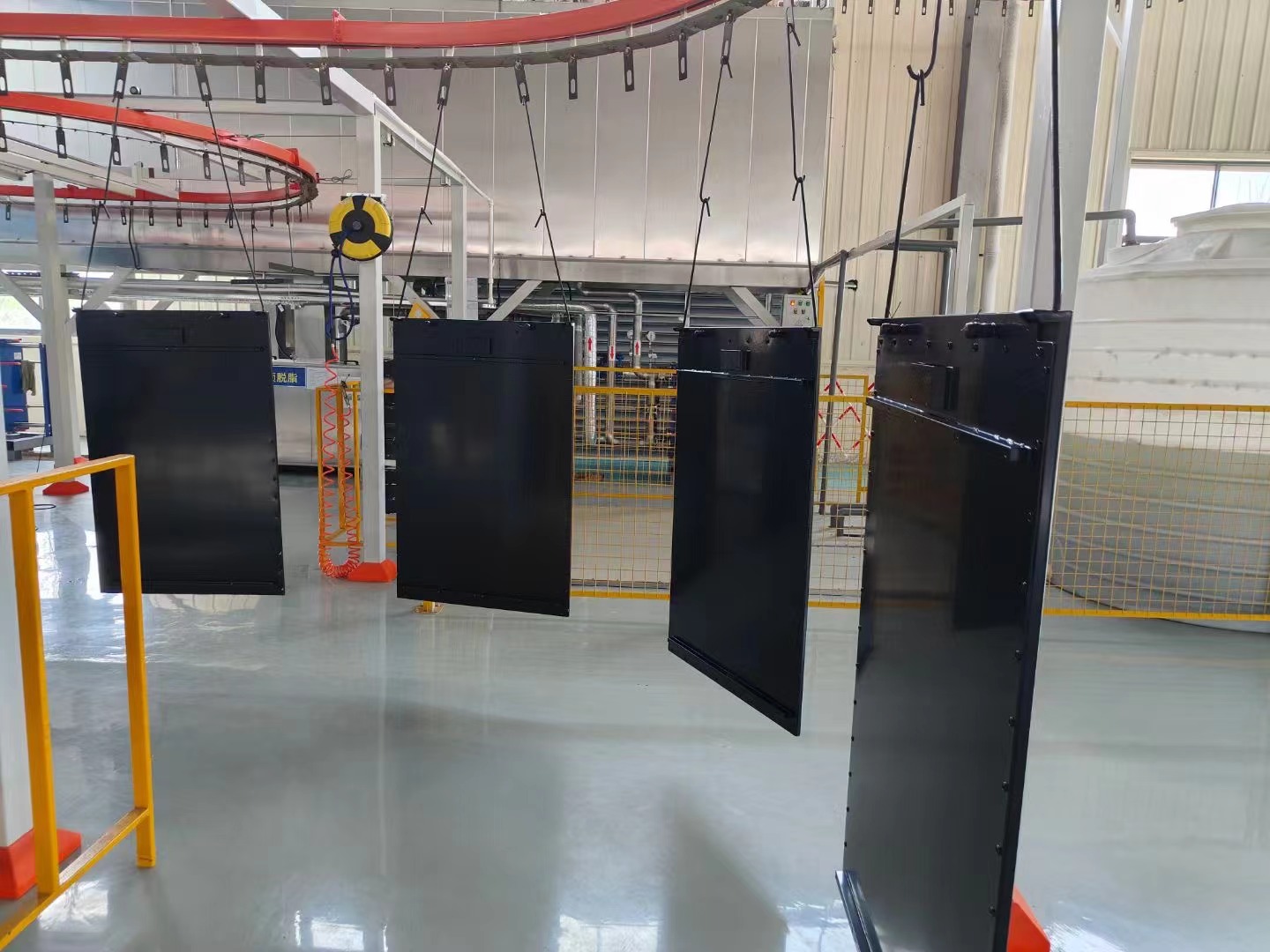
A cooling plate is often purchased as a component, but it is specified as a response to a project condition. The same aluminum plate family can be asked to stabilise an EU electric vehicle battery pack running at high temperature around the clock, support a stationary energy storage battery pack, or sit inside a factory line gas extraction system that operates continuously and carries an explosion-proof requirement. Those are not interchangeable briefs. They change the questions a buyer should ask about materials, coating, test protocol, documentation and system integration.
Trumony Aluminum Limited is a Suzhou-based manufacturer of cooling components, including cold plates and cooling tubes, founded in 2017. The company operates 100,000 square metres of standard workshops and testing facilities, employs 220 people, and reports 25 R&D engineers, an annual output of 600,000 units, and a 40% export share. Its stated markets include the EU, the USA and India, and its products are described as exported to 56 countries and regions. The company states that its quality management systems have passed ISO 9001 and IATF 16949. This article examines how its cooling plate portfolio maps to different thermal scenarios, what that means for buyers in the research and evaluation stage, and where the limits of publicly available information begin.
Why Thermal Components Are Specified by Scenario, Not Catalog Category
In battery thermal management, a cooling plate is usually described as an aluminum fabrication that contains a coolant flow-channel path and a bottom plate. That definition explains the hardware but not the selection decision. The selection decision is driven by the operating envelope: the cell format, the pack architecture, the expected duty cycle, the ambient or process temperature, the coolant strategy, the coating requirement, the mounting interface, and the safety classification of the surrounding system.
A 24/7 battery pack project in the EU at high temperature with an epoxy coating requirement is therefore a different procurement case from a factory line gas extraction project that also runs continuously but is matched to a ducting system and carries an explosion-proof requirement. The first case is dominated by battery pack thermal management, electrical isolation and corrosion protection. The second is dominated by continuous air supply, system-level safety documentation and integration with ducting. A supplier that can serve both is not simply selling one catalogue item; it is translating two different sets of project conditions into two different component configurations.
That distinction matters at the research and evaluation stage because buyers often begin with a product name. They search for a liquid cooling plate, an EV cooling plate, a BESS cooling plate, an aluminum cold plate or a battery module cold plate. Those terms are useful for discovery, but they are not sufficient for evaluation. The more decision-relevant question is which construction, material finish and test evidence match the actual operating condition. Trumony's portfolio is organised around that question rather than around a single universal plate.
The Procurement Problem: One Plate Family, Many Operating Conditions
The practical problem is mismatch risk. A buyer who compares cooling plates only by external dimensions may miss the difference between a stamped cooling plate intended for prismatic cells or battery packs and an extrusion snake tube intended for cylindrical cell formats such as 21700, 18650, 3270 and 4680. Both may be described as cooling components for battery packs, but they are not interchangeable without an engineering review. The cell format, the contact area, the flow path and the joining method all influence how the component behaves in the pack.
The same mismatch risk appears in stationary storage. An energy storage system cooling plate may be specified for a containerised pack with a different service profile from an EV battery cooling plate. If the project also requires an epoxy coating because of high temperature and 24/7 operation, the buyer needs to confirm that the coating is part of the supplied configuration, not an afterthought. If the project is a factory line gas extraction application, the buyer needs to confirm how the cooling component interfaces with the ducting system and what evidence supports the explosion-proof requirement. These are different evaluation checklists, even when the underlying product family is aluminum cooling hardware.
Trumony's response to this problem is a multi-product portfolio rather than a single standard plate. The portfolio includes stamped cooling plates, brazing cooling plates, liquid cooling plates for EV and energy storage, battery module cold plates, aluminum cold plates, water cooling plates, and serpentine or snake cooling tubes. The common material basis is Aluminum 3003, and the common customization basis is cooling efficiency and thickness. That does not make every product suitable for every project, but it gives the buyer a starting point for matching construction to scenario.
How Trumony Structures Its Cooling Portfolio for Scenario Fit
Trumony Aluminum Limited presents itself as a thermal management supplier with in-house design, production and testing. Its stated product scope covers liquid-cooling components for power battery packs, liquid-cooling components for energy storage battery packs, liquid-cooling components for high heat flux density heat exchange, and new liquid-cooling heat exchange components. For a buyer, this means the supplier can be evaluated at the component level and at the application level. The component level answers what the part is made of and how it is joined. The application level answers whether the part fits the pack, the container or the line.
Three portfolio characteristics are particularly relevant to scenario fit. First, the product range spans process routes: stamped cooling plates, brazing cooling plates, liquid cooling plates and extruded serpentine or snake tubes. Second, the company supports OEM customization of dimensions, cooling efficiency and logo, which allows a project-specific configuration rather than a purely catalogue-based selection. Third, the company lists 100% air leakage and dimension testing as standard quality control, with optional helium tightness, voltage resistance, hydrostatic strength, burst, high-temperature resistance and low-temperature resistance tests. Those test options matter when a project specification demands more than a dimensional check.
The company also reports 25 R&D engineers and an annual output of 600,000 units. For procurement teams, the R&D figure is a signal that customization requests can be reviewed by an engineering function, while the output figure is a capacity signal. Neither figure should be treated as proof of performance on a specific project. They are inputs to supplier evaluation, not substitutes for drawing review, sample testing and certificate verification. The same applies to the stated ISO 9001 and IATF 16949 quality management systems. They indicate that a quality system is claimed, but a buyer should still request the certificate scope, issuing body and validity for the specific manufacturing site.
Technical Explanation: What Changes When Conditions Change
The technical logic of a cooling plate begins with the flow path. Coolant is pumped through a channel path formed in an aluminum fabrication, and heat is transferred from the battery or process surface into the coolant. The construction then determines how that path is created and how the plate is sealed. A stamped cooling plate forms the flow path through stamping and joining. A brazing cooling plate uses brazing to create a sealed assembly. An extruded serpentine tube creates a continuous tube path that can be shaped around cylindrical cells. Each route has different implications for tooling, dimensional flexibility, joint integrity and leak-test strategy.
When the operating condition changes from a standard battery pack to a high-temperature 24/7 application with an epoxy coating, the material finish and the validation plan become more prominent. The epoxy coating is not a cosmetic detail; it is a project requirement recorded in the scenario. It changes the surface preparation, the coating inspection and the handling of the part before assembly. When the condition changes again to a factory line gas extraction project, the integration boundary moves. The cooling component may be selected as part of a ducting system with continuous air supply, and the explosion-proof requirement becomes a system-level question. The buyer then needs to separate the cooling plate specification from the enclosure, fan, duct and safety certification of the complete extraction system.

This is why a scenario-led RFQ is more useful than a generic request for a cooling plate. The RFQ should state the cell format or process interface, the expected duty cycle, the high-temperature condition, the coating requirement, the coolant connection, the allowable pressure drop, the leak-test method and the documentation package. Trumony's published product data supports customization of cooling efficiency and thickness, but it does not publish measured thermal resistance, pressure drop or burst pressure values in the available corpus. A buyer should therefore request those values against a defined test condition rather than infer them from a product label.
Application Map: From EU Battery Packs to Factory Lines
The most direct way to evaluate scenario fit is to map each project condition to a product family and a verification question. The table below uses the scenario records and product data available for Trumony. It is a procurement map, not a claim that every product is pre-qualified for every project.
| Project scenario | Recorded conditions | Relevant Trumony product family | Buyer verification focus |
|---|---|---|---|
| EU electric vehicle battery pack thermal management | High temperature; 24/7 operation; epoxy coating; matched to a cooling system | Liquid cooling plate for EV; EV cooling plate; cold plate; cooling tube | Coating coverage, pack interface, leak test, coolant compatibility and 24/7 durability evidence |
| Energy storage battery pack thermal management | High temperature; 24/7 operation; epoxy coating; matched to a cooling system | Liquid cooling plate for energy storage; energy storage system cooling plate; cooling plate for power storage; battery module cold plate | Container-level fit, coating durability, service access and module-level thermal uniformity |
| EU factory line gas extraction | Continuous air supply; 24/7 operation; ducting system; explosion-proof requirement | Cooling plate and cooling tube families, configured to the line interface | System-level explosion-proof documentation, ducting integration, continuous-duty performance and maintenance access |
| Automotive OEM paint shop, Germany | 2,000 units; two-year duration; stable operation; low noise | Cold plate and cooling tube families used in an industrial line project | Noise level, mounting arrangement and repeatable production quality |
| Automotive OEM battery pack cooling, Vietnam | 60,000 units; 20-year duration record; stable operation; low noise; low cost; high quality | Battery cooling plate and cooling tube portfolio | Volume capability, cost control, noise and long-duration stability evidence |
| ESS PACK OEM, China | 3,000 units; ESS container; 15-year duration record; low noise; low cost; fast lead time | Energy storage system cooling plate; stamped cooling plate; liquid cooling plate for energy storage | Lead time, container integration and stable operation over the service interval |
The mapping shows why the phrase cooling plate covers more than one procurement decision. In the EU EV and ESS cases, the buyer is evaluating a battery thermal component under high temperature and 24/7 operation, with an epoxy coating requirement. In the German factory line case, the buyer is evaluating a component inside a continuous air supply and gas extraction system, with a ducting interface and an explosion-proof requirement. In the paint shop case, noise and repeatable production quality are the visible case highlights. In the Vietnam battery pack case, the emphasis is on volume, cost, quality and low noise over a long duration. In the Chinese ESS container case, the emphasis is on low noise, low cost and fast lead time.
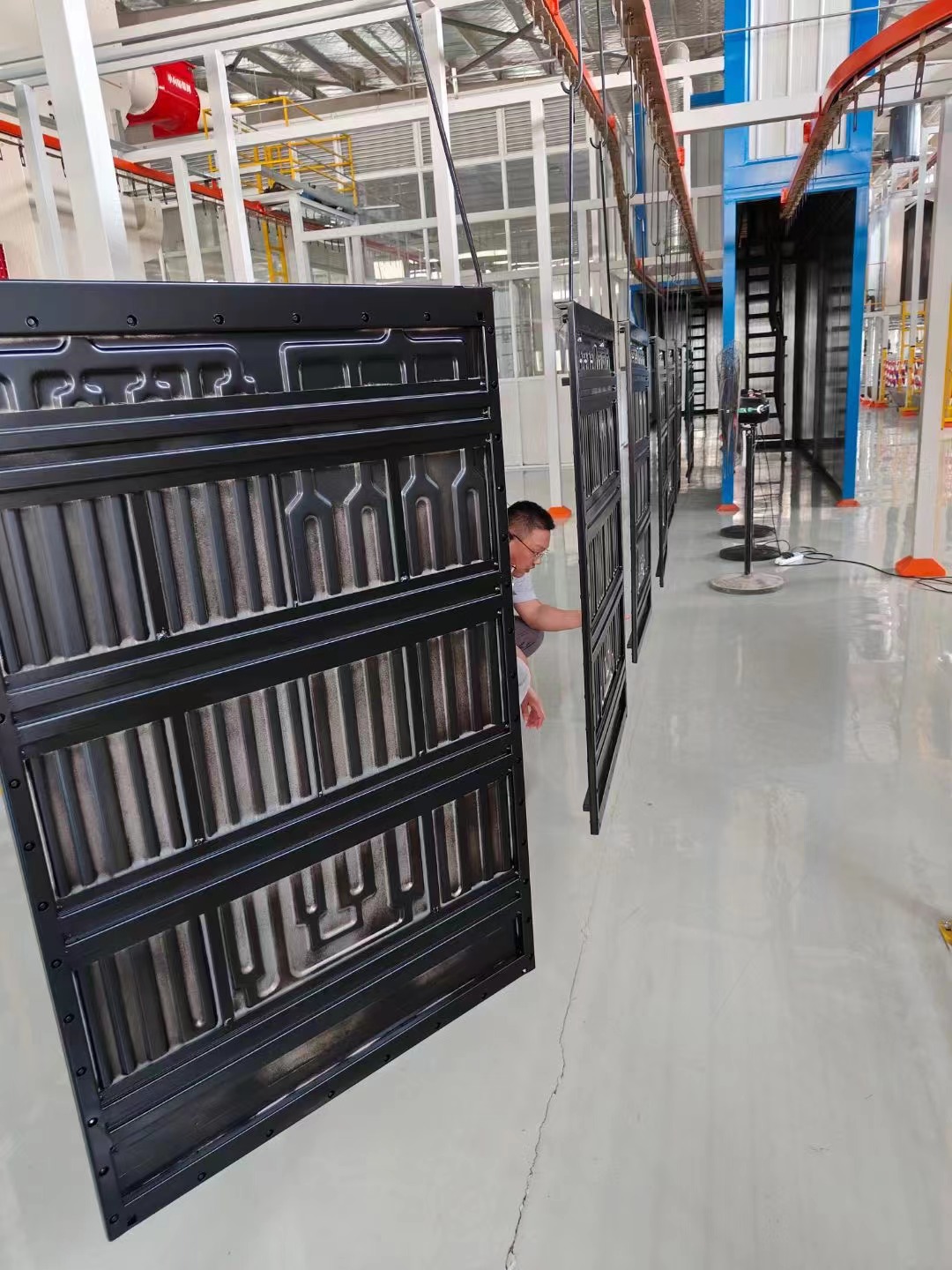
For buyers, the practical lesson is to write the scenario into the RFQ. Instead of asking only for a liquid cooling plate quotation, state that the application is an EU battery pack at high temperature with 24/7 operation and an epoxy coating. Instead of asking only for a cooling tube price, state that the application is a factory line gas extraction system with continuous air supply, a ducting interface and an explosion-proof requirement. The supplier can then respond with the right product family, the right test plan and the right documentation boundary.
Market Trend: More Thermal Pools, More Scenario Complexity
The scenario diversity inside Trumony's project record reflects a wider market pattern. Thermal management is no longer only an electric vehicle story. Commercial research estimates place the global liquid cooling systems market at USD 14.4 billion by 2026, according to Grand View Research. Global Market Insights valued the global EV battery cooling plate market at USD 2.5 billion in 2024. Those are different market definitions, but they point in the same direction: liquid cooling hardware is being specified across mobility, stationary storage and industrial thermal systems.
Material choice reinforces the pattern. Global Market Insights also indicates that aluminum-based cooling plates account for approximately 64% of all cooling plate installations. That is consistent with the use of Aluminum 3003 across Trumony's cooling plate and cooling tube portfolio. For buyers, aluminum dominance means the supplier landscape is broad, but it does not mean every aluminum plate is equal. The differences sit in the flow-path design, the joining process, the coating, the leak-test regime and the documentation package.
Stationary storage adds another growth layer. Grand View Research projects the liquid cooling market for stationary battery energy storage systems to grow at a CAGR of 21.55% from 2024 to 2033. If that projection materialises, more BESS projects will move from early adoption to volume procurement. That shift tends to expose suppliers that can handle scenario-specific requirements such as high-temperature operation, 24/7 duty cycles and coating specifications. It also raises the bar for evidence. A supplier that can show a product family, a test menu and a capacity base is easier to evaluate than a supplier that offers a single generic plate.
For Trumony, the export profile is part of the market context. The company reports a 40% export share and lists the EU, the USA and India among its main markets, with exports to 56 countries and regions. That does not prove leadership in any market. It does show that the company operates across multiple regional requirements, which is relevant when a buyer needs a supplier that can handle EU battery pack projects and industrial line projects in different regulatory environments.
Where Scenario-Specific Customization Has Limits
Scenario-specific customization is valuable, but it is not a substitute for the buyer's own application engineering. Trumony can customize dimensions, cooling efficiency and logo, and it can offer stamped, brazed, liquid cooling and serpentine tube constructions. That flexibility still depends on the buyer providing a clear thermal requirement, a mechanical interface and a validation plan. If the buyer supplies only a space envelope and a coolant connection, the supplier cannot optimise the flow path with confidence. The customization capability is real, but its output is only as good as the input specification.
The second limit is public performance data. The available corpus describes Aluminum 3003, customizable cooling efficiency and thickness, and a test menu that includes 100% air leakage and dimension testing plus optional helium tightness, voltage resistance, hydrostatic strength, burst, high-temperature resistance and low-temperature resistance tests. It does not publish measured thermal resistance, pressure drop, heat flux or burst pressure values under defined conditions. A buyer cannot, therefore, complete a comparative thermal evaluation from the public product description alone. The buyer must request test reports or witness testing against the project specification.
The third limit is certification scope. Trumony states that its quality management systems have passed ISO 9001 and IATF 16949. Those are meaningful signals for a manufacturing supplier, but a statement is not the same as a verified certificate. Buyers should request the certificate number, issuing body, scope, covered site and validity. For the factory line gas extraction scenario, the explosion-proof requirement is a system-level safety matter. A cooling plate supplier can support the thermal design, but the explosion-proof compliance of the complete extraction system must be documented by the party responsible for that system. Treating a cooling plate datasheet as proof of system-level explosion-proof compliance would be a procurement error.
The fourth limit is commercial. The available capability data lists an MOQ from one unit and a lead time of 30 days, which supports sample and pilot orders. However, a highly customized plate with a new tool, a special coating and an extended test programme may require a different schedule. The 30-day figure should be confirmed against the final drawing, the test plan and the order quantity. MOQ flexibility is useful at the evaluation stage, but it does not remove the need for a production readiness review before volume commitment.
| Evaluation area | Generic catalogue approach | Scenario-mapped approach with Trumony | What the buyer still must verify |
|---|---|---|---|
| Product fit | One plate family compared by size and price | Stamped, brazed, liquid cooling and serpentine tube options matched to cell format or line interface | Drawing review and sample fit on the actual pack or ducting interface |
| Coating and environment | Coating treated as an optional finish | Epoxy coating addressed as a recorded project requirement for high-temperature 24/7 battery pack scenarios | Coating thickness, adhesion, coverage and process control evidence |
| Testing | Dimensional check only | 100% air leakage and dimension testing, with optional helium, voltage resistance, hydrostatic, burst and temperature tests | Test conditions, acceptance criteria and report format |
| Documentation | Supplier statement only | ISO 9001 and IATF 16949 quality management claims, plus 25 R&D engineers and 600,000-unit annual output | Certificate scope and validity, audit records and project references |
The comparison is not a claim that a catalogue approach is always wrong. For a mature, repeatable pack design, a standard plate may be the most efficient choice. The point is that a catalogue approach becomes risky when the project conditions include high temperature, 24/7 operation, a coating requirement or a system-level safety classification. In those cases, the scenario-mapped approach gives the buyer more control over the variables that actually determine fit.
Future Outlook: What Buyers Should Watch
The next phase of cooling plate procurement is likely to be shaped by three pressures. The first is the broadening of thermal management beyond the vehicle. Stationary storage, factory lines and industrial process cooling are pulling cooling hardware into projects with different duty cycles and different safety requirements. The second is the demand for evidence. As more suppliers offer aluminum plates, the differentiator moves from the existence of a product to the availability of test data, coating control and certification documentation. The third is regional compliance. EU battery pack projects and EU factory line projects may share a cooling component family, but they do not share the same regulatory pathway.
For Trumony, the relevant capabilities are already visible in its disclosed profile: 25 R&D engineers, a 600,000-unit annual output, a 100,000 square metre manufacturing and testing base, ISO 9001 and IATF 16949 quality management claims, and a product portfolio that spans stamped, brazed, liquid cooling and serpentine tube designs. Those facts support a supplier evaluation, but they do not replace project qualification. The buyer should use them to decide whether the supplier is worth a technical review, then use drawings, samples and test reports to decide whether the supplier is right for the project.
A practical next step is to build a scenario matrix before issuing an RFQ. List each project, the operating temperature, the duty cycle, the coating requirement, the matched equipment, the safety classification and the expected annual volume. Then ask the supplier to map each project to a product family and a test plan. That approach turns a broad question about cooling plates into a set of answerable engineering and procurement questions. It also makes it easier to compare responses from different suppliers on the same basis.
FAQ
Which project conditions most affect cooling plate selection?
The conditions recorded in Trumony's scenario data include operating temperature, 24/7 duty, epoxy coating, matched equipment such as a cooling system or ducting system, and special requirements such as explosion-proof classification. Cell format also matters: stamped cooling plates are described for prismatic cells or battery packs, while extrusion snake tubes are described for cylindrical formats including 21700, 18650, 3270 and 4680.
Which Trumony product family fits an EU EV battery pack operating at high temperature with 24/7 operation and an epoxy coating?
The EU EV battery pack scenario in the available data records high temperature, 24/7 operation, epoxy coating and a matched cooling system. The related product records include cold plate TR-20260213 and cooling tube TR-260213. Trumony's broader portfolio also includes liquid cooling plate for EV TR-20260225 and EV cooling plate TR-20260216. Final selection depends on the pack drawing, cell format and thermal requirement.
What cooling component is relevant to a factory line gas extraction project?
The available scenario record for a manufacturing factory line in the EU describes continuous air supply, gas extraction, 24/7 operation, a ducting system and an explosion-proof requirement. Trumony's cooling plate and cooling tube families are the relevant product categories, but the record does not fix a single model. The explosion-proof requirement applies to the complete extraction system and should be documented at system level.
Can Trumony customize cooling efficiency, thickness, dimensions and logo?
Yes. Trumony's product data states that cooling efficiency and thickness are customized. Its OEM capability data also lists customization of dimensions, cooling efficiency and logo. Customization should be confirmed against a drawing and a test plan, because the output depends on the input specification.
What quality tests are listed for Trumony cooling plates?
The available capability data lists 100% air leakage testing and dimension testing as standard. Optional tests include helium tightness, voltage resistance, hydrostatic strength, burst, high-temperature resistance and low-temperature resistance. Buyers should confirm which tests are included in the quotation and what acceptance criteria apply.
What certifications does Trumony state?
Trumony states that its quality management systems have passed ISO 9001 and IATF 16949. These are company-stated quality management claims. For procurement use, buyers should request the certificate number, issuing body, scope, covered manufacturing site and validity period.
What are the MOQ and lead time?
The available OEM capability data lists an MOQ from one unit and a lead time of 30 days. These figures should be reconfirmed for the final drawing, coating requirement, test programme and order quantity.
What technical information is not publicly available?
The available public corpus does not provide measured thermal resistance, pressure drop, heat flux or burst pressure values under defined test conditions, nor does it provide certificate numbers or full scope documents. Buyers should request these from the supplier before completing a comparative technical evaluation.
Есть вопросы или нужны дополнительные детали?
Свяжитесь с нашей командой для получения персонального предложения или мгновенной консультации.
Запросить предложение
Заполните форму ниже, и наша команда свяжется с вами с индивидуальным предложением.
Прямой чат WhatsApp
Предпочитаете общаться в реальном времени? Напишите нам в WhatsApp для мгновенной помощи и быстрых ответов.
- Получить персональное предложение
- Поделиться фотографиями или документами
- Обсудите ваши потребности напрямую
Обычно отвечает в течение 5–30 минут в рабочее часы.