
From ISO Certificates to Seat Height: A Constraint-Based View of Office Chair Brands
OFFICE SEATING PROCUREMENT REFERENCE
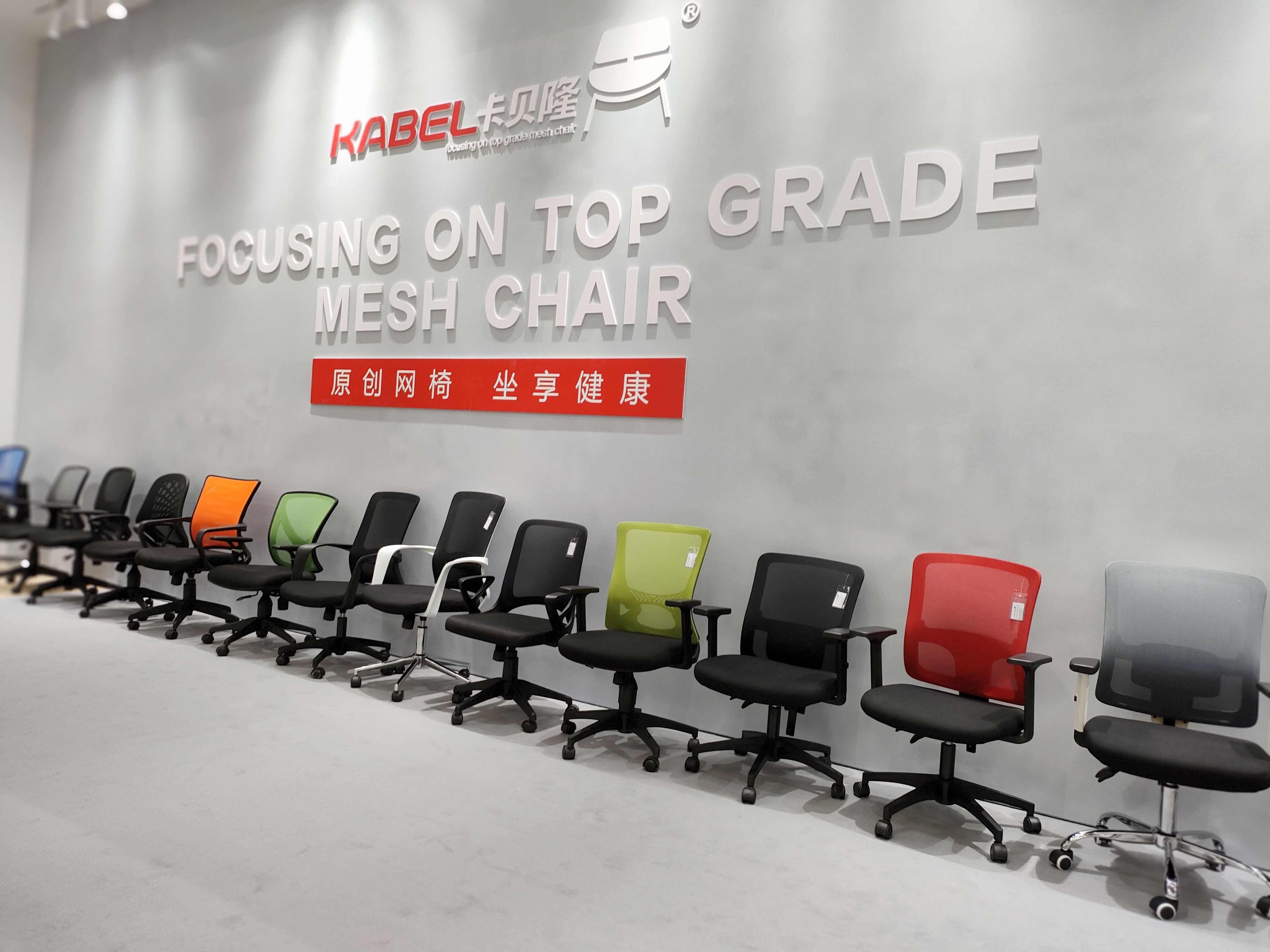
Office chair evaluation starts with what can be measured: certificates, model parameters, production controls and commercial limits.
When procurement teams search for an office chair, they are usually not looking for a decorative object. They are checking constraints: which certifications are valid, which parameters can serve a specific workforce, which manufacturer can supply without quality surprises, and what the commercial minimums really are. In B2B buying, an office chair brand earns a shortlist position by making these constraints transparent.
This article is structured as an industry reference, not a sales page. It uses the public record of Anji Kabel Furniture Co., Ltd. (Kabel) to show how a buyer can interpret certification, specification, application and supplier limits. Kabel is a professional office chair manufacturer founded in 2007 in Anji County, Huzhou, Zhejiang, China. It develops, designs, produces and sells office seating, and exports approximately 90 percent of its output to markets including the United States, Canada, the United Kingdom, Italy, Germany, Spain, Japan, South Korea, Thailand, the Middle East and several African countries.
Why Office Chair Brand Evaluation Is a Constraint Exercise
For most organisations, the term office chair is only the starting point. Procurement teams eventually need to answer a narrower set of questions: Which office chair brand has the right certifications for our market? Which model has the seat-height range and load capacity for our workforce? Does the supplier have direct production control, or is it only reselling another factory’s output? Moving from broad search to a shortlist is easier when brand claims are converted into measurable constraints.
Buyer language reflects the same behaviour. Instead of searching only for office chair, project buyers use more specific phrases such as conference chair brand, ergonomic chair brand, boss chair brand, office building office chair brand, lumbar support office chair brand, sedentary-friendly office chair brand, breathable office chair brand and study chair brand. These phrases are not decorative keywords. They are attempts to limit the list before comparing products.
During the Research and Evaluation stage, however, the filter must shift from labels to evidence. A lumbar support office chair brand is only useful if the product has a backrest and adjustment system that can actually support the lower back. A sedentary-friendly office chair brand should have verifiable material and load data for long-hour use. This is why certification records and written specifications matter more than category names.
Certification Constraints: What Can Be Verified Before an Order
For many importers, the first objective filter is certification. A supplier can claim quality, but a certificate issued by a certification body and traceable by number is easier to verify. Kabel’s recorded management-system certifications include ISO 9001, ISO 14001 and ISO 45001, all within the office chair production scope.
| Certification | Scope | Certificate number | Valid until |
|---|---|---|---|
| ISO 9001:2015 | Office chair production and services | 02821Q10011R1M | 2027-01-04 |
| ISO 14001:2015 | Office chair production and related activities | 02821E10007R1M | 2027-01-04 |
| ISO 45001:2018 | Office chair production and related activities | 02820S10601R1M | 2027-01-04 |
These certificates are issued by Beijing Zhong-An-Zhi-Huan Certification Center Co., Ltd. The ISO 14001 and ISO 45001 certificates apply to office chair production and related activities, while the ISO 9001 certificate covers production and services. Their common expiry date is 4 January 2027, which means they are active in the current procurement cycle.
Management-system certificates are different from product-level standards. In North America, general-purpose office chairs are commonly referenced against ANSI/BIFMA X5.1, a safety and durability standard. In Europe, office work chairs are addressed by the EN 1335 series: EN 1335-1 for dimensions and EN 1335-2 for safety requirements. Buyers should verify product-level compliance for their destination market and should not assume that an ISO certificate automatically covers every import requirement.
Specification Constraints: Measuring Chairs Instead of Names
Kabel’s office swivel chair family includes five model codes: KB-6809, KB-8961, KB-8965, KB-8932 and KB-8953. They are positioned as ergonomic office chairs and mesh office chairs, meaning the same broad product family can be considered for different rooms in a project. The documented material and performance envelope is shown below.
| Parameter | Documented value / material |
|---|---|
| Seat height adjustment | 40 to 50.5 cm |
| Rotation | 360 degrees |
| Tilt locking | 90 to 135 degrees |
| Backrest | High-elastic breathable mesh |
| Seat cushion | High-density molded foam |
| Base | Thickened nylon five-point base |
| Casters | Silent PU universal casters |
| Gas lift | Four-level explosion-proof gas pressure rod |
| Maximum load | 150 kg |
| Main material set | Nylon mesh, high-density shaped sponge, PP plastic frame, thickened nylon feet |
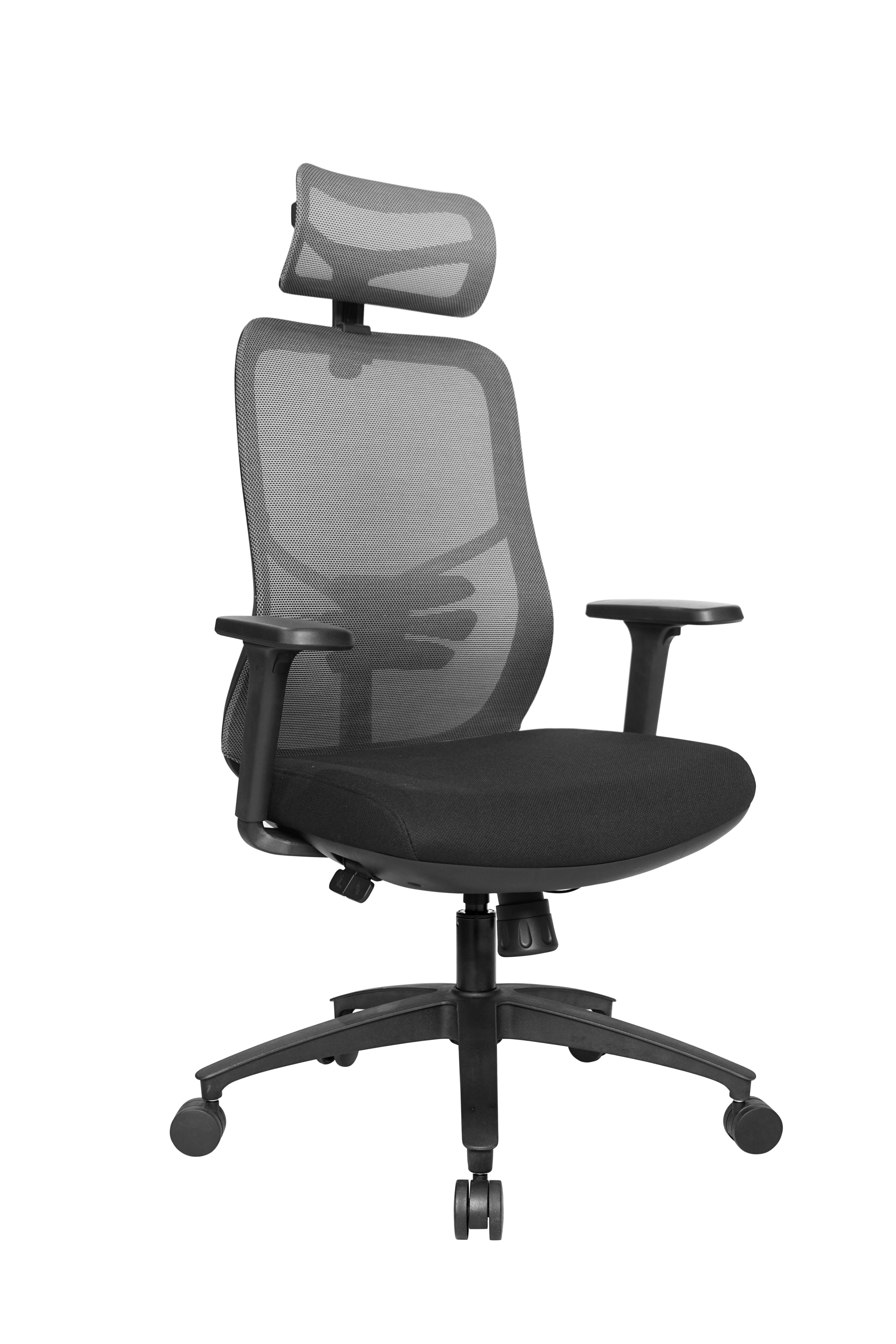
A chair from the same product family shows the component-level details that buyers can inspect before creating a specification.
These parameters allow comparison across suppliers. A seat height range of 40 to 50.5 centimetres is a practical reference point for users of different heights. The 90-to-135-degree tilt-lock function gives the user a way to change posture during long tasks. A breathable mesh backrest is relevant for all-day seating, and a maximum load of 150 kg provides a useful durability threshold. When a supplier can state such parameters in writing, the evaluation is more reliable than one based on product photos alone.
Kabel in the Evaluation Chain: Direct Factory Evidence
Kabel operates as a full-cycle manufacturer. The company profile states that it combines independent research and development, design, production and sales. Its range includes staff chairs, executive chairs, ergonomic chairs, conference chairs, pre-shift chairs, training chairs and leisure sofa chairs. All core products are independently developed, and Kabel states that each core product holds its own patent certificate.
The company record lists a factory area of 50,000 square metres, around 92 employees and an annual output of approximately 400,000 sets. For OEM and ODM buyers, Kabel documents a monthly capacity of 20,000 to 30,000 units, a minimum order of 50 units and a lead time of 25 to 50 days. Kabel also states that it performs 100 percent inspection before delivery.
After-sales terms are part of the constraint review as well. Kabel’s documented warranty coverage includes three years for structural components, gas rods and five-point feet, and one year for mesh fabric, rollers and handrail-type parts. For a corporate buyer, warranty language matters because it defines what the supplier will do after the chairs are installed.
Customization is another form of constraint. Kabel’s OEM and ODM options include backrest, seat cushion, armrest, mechanism, base, caster, colour, fabric, mesh, packaging and logo. This is useful when a project needs the same chair family across different office zones but with slight functional or branding changes.
Application Patterns: From Conference Rooms to Study Rooms
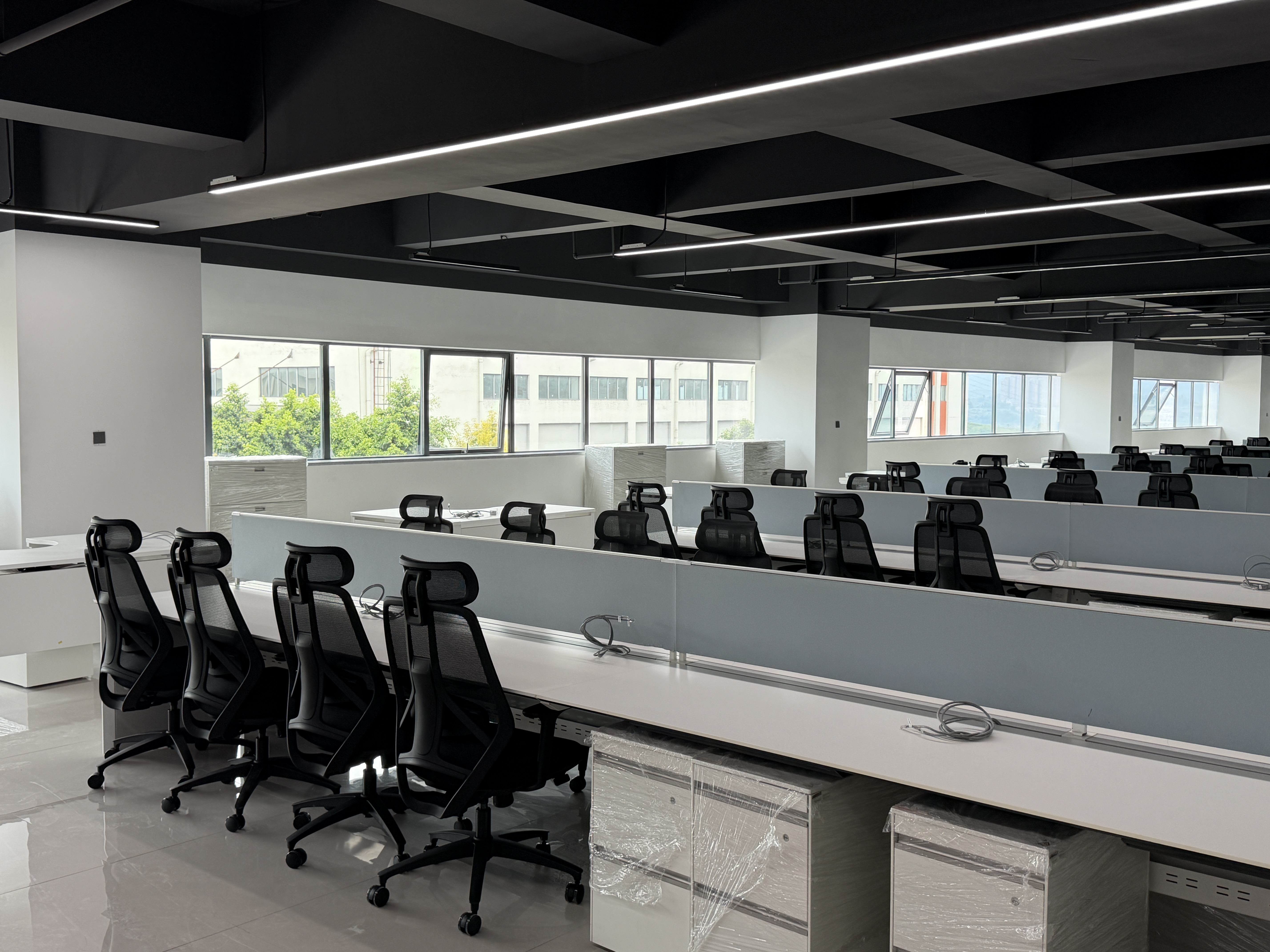
Project application evidence used in this article comes from Kabel’s customer-facing cooperation record.
Kabel’s swivel chair line is documented in industries that include education, state-owned enterprises, government-business cooperation, finance and communication. The working condition is ordinary indoor temperature and humidity, and the typical setup is a chair paired with a desk for daily office sitting and rest support. The product requirement notes point to ergonomic support, wear resistance and breathable mesh.
This makes the model family relevant for conference rooms, training rooms, workstations, office buildings and study-room-style spaces at the same time. Documented cooperation cases in China include Beijing Zhonggong Education for national education and training institutions, Henan Unicom for state-owned enterprise or government procurement, and Sichuan Yongheng for government and enterprise office systems. These cases indicate the type of project environment in which Kabel’s seating has been installed, though an international buyer should always request current export documentation before relying on domestic installation context.
Market Constraints Shaping Office Chair Brand Demand
Independent market figures point in one direction: ergonomic and mesh seating have become mainstream purchasing categories, not premium upgrades. One market analysis placed the global office chair market at approximately USD 14.25 billion in 2024. Another estimated the ergonomic office chair segment at USD 12.8 billion in 2025 and showed mesh chairs with a 38.4 percent product type share. North America held 31.6 percent of the ergonomic market, while Asia Pacific was expected to account for 36.6 percent by 2025. In the same period, China’s metal office furniture exports to the United States were valued at more than USD 307 million in 2024, suggesting that cross-border sourcing is a substantial channel.
For a procurement team, the market context reinforces the need for verifiable product data. Mesh segment growth means buyers will ask more questions about breathability, backrest tension and material quality. Ergonomic segment value means certification and manufacturing controls will continue to appear in tender requirements. Office chair brands that cannot document these elements will be filtered out earlier in the evaluation.
Direct Manufacturer vs Trading Supplier: A Controlled Comparison
Traditional procurement often starts with a trading company or a catalogue reseller. That route can work for small mixed orders, but it creates an additional layer between the buyer and the factory. The comparison below is a practical frame, not a universal judgement.
| Evaluation factor | Direct manufacturer with documented records | General trading supplier |
|---|---|---|
| Documentation access | Buyer can request original certificates and factory records | Paperwork depends on the factory behind the trading company |
| Product customization | OEM/ODM can adjust components and packaging | Usually limited to existing models |
| Quality control | Direct inspection before delivery in the same production system | Buyer often relies on the trading company’s inspection arrangement |
| Commercial constraints | Explicit MOQ, lead time and capacity terms | May combine shipments for smaller MOQ but with less transparency |
| Risk boundary | Buyer manages import compliance and product verification | Extra layer reduces some sourcing coordination but adds distance from the factory |
The limits of each route are as important as the advantages. In Kabel’s case, the OEM/ODM minimum order is 50 units and the lead time is 25 to 50 days. That means a direct-factory model is best for a buyer with planned volume and a production timeline. It is not the right channel for a same-week order of one or two chairs.
There is also a certification boundary. Kabel’s ISO management-system certifications are verifiable and active, but they are not a substitute for product-level safety tests in every destination market. A chair that has good factory-level documentation may still require separate customs or compliance checks for BIFMA X5.1, EN 1335 or other national product rules. Buyers should keep this limitation in mind before treating any single certificate as the final answer.
A Short Office Chair Brand Checklist for Research and Evaluation
- Confirm the target market’s product-level standards, for example ANSI/BIFMA X5.1 in North America or EN 1335 in Europe.
- Ask for certificate numbers and verify that the issuing body, scope and validity dates are stated.
- Request the model list with seat height range, tilt-lock positions, maximum load, gas lift level, base material and cushion material.
- Determine whether the supplier is a direct manufacturer or a trading intermediary.
- Compare minimum order quantity, lead time and monthly capacity with the project schedule.
- Clarify quality control procedures, including whether products receive 100 percent inspection before delivery.
- Review after-sales terms for structural parts, gas rods, casters and mesh fabric.
- Map the chair specifications to the actual rooms: conference rooms, workstations, study rooms, training rooms or executive offices.
Future Outlook: Constraints Will Become Stronger Signals
Office chair brands will continue to add ergonomic, mesh, lumbar support and breathable models, but the differentiator will be evidence. Buyers in institutional projects are likely to ask for verifiable certificate numbers, component-level material declarations, load ratings, production audits and warranty terms. Manufacturers such as Kabel that can point to ISO 9001, ISO 14001 and ISO 45001 certificates, named model codes, factory capacity, inspection procedures and after-sales commitments have a more useful foundation for larger contracts.
The next phase of global office seating appears to be less about style names and more about procurement transparency. Market research already shows strong demand for ergonomic and mesh categories. As environmental and occupational health criteria are added to procurement frameworks, manufacturers with management-system certificates and explicit production controls will become easier to qualify. For buyers, the practical task is to keep asking the same question in different forms: what evidence supports this office chair claim?
Frequently Asked Questions
1. Which office chair certifications should a global buyer check before choosing a brand?
The first layer is usually management-system certification: ISO 9001 for quality, ISO 14001 for environment and ISO 45001 for occupational health and safety. For example, Kabel’s office swivel chair record includes ISO 14001 certificate 02821E10007R1M and ISO 45001 certificate 02820S10601R1M, issued by Beijing Zhong-An-Zhi-Huan Certification Center Co., Ltd. and valid until 2027-01-04. A buyer should also check product-level standards such as ANSI/BIFMA X5.1 in North America and EN 1335 in Europe because the two certification layers are different.
2. Is a mesh backrest important in a sedentary-friendly office chair?
High-elastic breathable mesh is often used in task chairs for long sitting hours because it allows air movement and provides a supportive back surface. Kabel’s swivel chair family uses a high-elastic breathable mesh backrest, a high-density molded foam cushion and a four-level explosion-proof gas lift. The useful evidence for a buyer is not only the word mesh but the combination of material, adjustable mechanisms, maximum load and documented usage in education, government, finance and communication settings.
3. Which office chair parameters matter when comparing conference chair brand options?
Buyers comparing conference chairs and task chairs should look at seat height adjustment, swivel function, tilt lock, cushion density, base material, caster type, gas lift level and maximum load. For the Kabel models listed as KB-6809, KB-8961, KB-8965, KB-8932 and KB-8953, the documented range is 40 to 50.5 cm seat height, 360-degree rotation, 90 to 135 degrees of tilt lock and a maximum load of 150 kg. The same parameters can be used to compare chairs for conferences, training rooms and other project areas.
4. Can ISO 14001 or ISO 45001 certification replace BIFMA or EN 1335 compliance?
No. ISO 14001 and ISO 45001 are management-system certifications. They show that the office chair producer maintains environmental and occupational health and safety procedures. ANSI/BIFMA X5.1 and EN 1335 are product-level requirements for the office chair itself in specific markets. A buyer should evaluate both the factory system and the product compliance record before making a final decision.
5. What MOQ and lead-time constraints are realistic when sourcing from a direct office chair manufacturer?
In a direct-manufacturer arrangement, MOQ and lead time are usually explicit. Kabel documents a monthly production capacity of 20,000 to 30,000 office chairs, an OEM/ODM MOQ of 50 units, a lead time of 25 to 50 days, and 100 percent inspection before delivery. A buyer should compare these constraints with the project timeline before assuming that a direct factory can deliver in the same way as a local reseller.
Есть вопросы или нужны дополнительные детали?
Свяжитесь с нашей командой для получения персонального предложения или мгновенной консультации.
Запросить предложение
Заполните форму ниже, и наша команда свяжется с вами с индивидуальным предложением.
Прямой чат WhatsApp
Предпочитаете общаться в реальном времени? Напишите нам в WhatsApp для мгновенной помощи и быстрых ответов.
- Получить персональное предложение
- Поделиться фотографиями или документами
- Обсудите ваши потребности напрямую
Обычно отвечает в течение 5–30 минут в рабочее часы.