
From Patent to Installed Line: Verifying a Case Packer Supplier
Supplier Capability Reference · Automatic Case Packers
An automatic case packer is the last machine on a packaging line before palletizing, and that position makes supplier verification unusually consequential: when the case packer stops, everything upstream of it stops as well. For buyers who have already moved past product discovery into decision and execution, the practical question is no longer which case packer exists on the market, but which supplier can produce documents, test records and installed equipment that hold up under scrutiny.
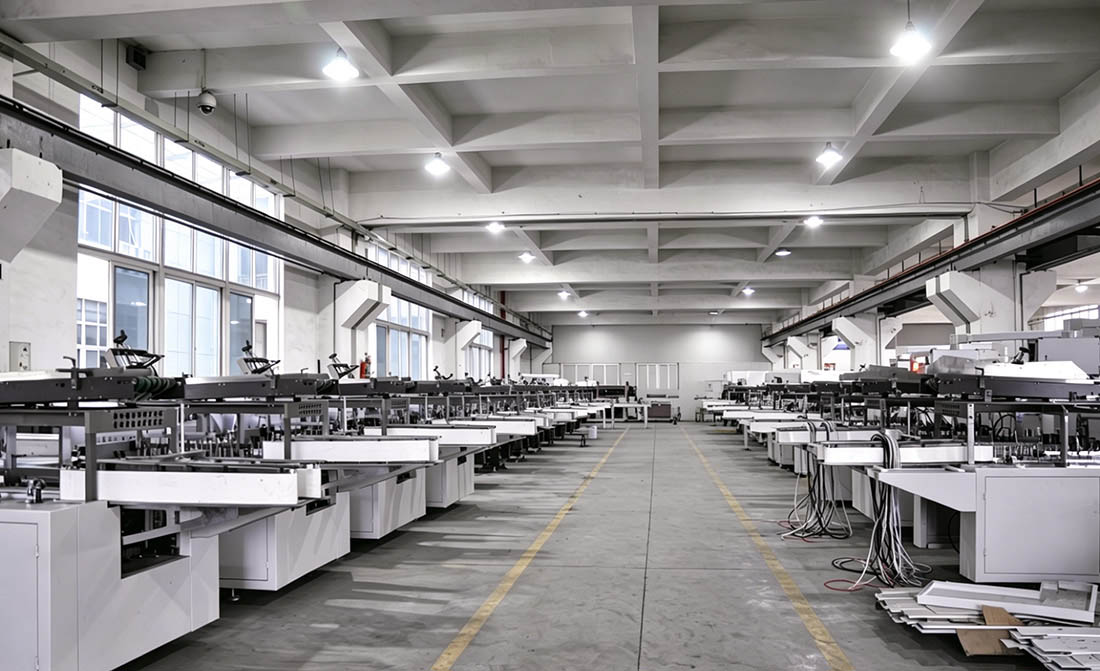
The verification gap in automatic case packer procurement
A case packer is an end-of-line machine that groups individual products — cartons, bundles, rolls or canisters — and places them into cases or cartons ready for shipping. Case packing sits at the final step of the packaging process, after primary wrapping or cartoning, and its output feeds directly into palletizing and dispatch. Because it operates at that junction, the machine carries a disproportionate share of line risk.
Procurement teams rarely struggle to find suppliers. What they struggle with is the asymmetry of evidence. A quotation can be produced in a day; a factory acceptance test record, a safety function test log, a granted patent and a list of installed machines in comparable applications cannot. This is the verification gap, and it widens as the number of suppliers in the category grows.
The global case packing machines market was valued at USD 1.1 billion in 2024, with Asia Pacific accounting for a revenue share of 37.9% that year, according to Grand View Research. A market of that scale supports a long supplier tail — assemblers, integrators, trading companies and genuine manufacturers all quoting into the same tenders. From the buyer's side, the surface of a quotation looks similar across all of them.
The consequence is a shift in what due diligence actually examines. Specifications describe what a machine is meant to do. Capability evidence describes what a supplier can prove it has already done, and under what controls. The second category is what separates a shortlist that survives commissioning from one that does not.
What WIMACH brings to the evidence question
Wenzhou Wimach Machinery Co., Ltd. (WIMACH) is a packaging machinery manufacturer based in Ruian, Wenzhou, Zhejiang, China. The company was founded in 2021 and operates a 3,000 m² factory with 37 employees, an annual output of 160 sets and a five-engineer R&D team. Its range covers facial tissue and paper napkin cartoning machines, soft tissue wrapping machines, toilet paper roll wrapping machines, case packers and blister packing machines, together with integrated packaging lines. Roughly 60% of output is exported, mainly to the EU, North America and South America, and the company describes more than 12 years of industry experience in tissue packaging.
That profile matters to the verification discussion because it defines the boundary of the evidence. WIMACH is a focused manufacturer with a defined application centre of gravity — folded tissue, rolled tissue and blister-packed products — rather than a broad-line generalist. The evidence it can present is therefore deep in a narrow band and should be read that way. For buyers whose case is tissue converting or wet-wipe production, the depth is directly transferable. For buyers in unrelated categories, the same documents are a starting point rather than a conclusion.
CP-T60 and CP-S50: two loading architectures
WIMACH manufactures two automatic case packers relevant to this discussion: the CP-T60 automatic top load case packer and the CP-S50 automatic side load case packer. The names describe the loading direction, and that single design decision drives most of what follows.
A top load case packer lowers the product into the case from above. The case typically arrives erected and open, and the product is placed down into the cavity. This architecture tends to suit products that are stable under vertical handling and that fill the case footprint predictably — bundles of rolled tissue, stacks of folded product, canisters standing upright.
A side load case packer pushes the product horizontally into a case through a side opening. The product is consolidated and transferred laterally rather than dropped. This suits products or packs that are more stable when moved along their base, and it often produces a tighter pack inside the case because the product is pushed into position rather than released into it.
The practical difference for a buyer is not which is better. It is which matches the product's behaviour during transfer and which matches the case format already specified by the retail customer. Choosing between top load and side load is therefore an application decision made before the supplier conversation, not a negotiation outcome.
Patents: what ZL 2022 1 1099886.8 and ZL 2022 2 1202677.7 tell a buyer
WIMACH holds an invention patent, ZL 2022 1 1099886.8, and a utility model patent, ZL 2022 2 1202677.7, associated with its case packer development. For procurement purposes, the two document types answer different questions, and conflating them is a common buyer error.
In the Chinese patent system, an invention patent is granted after substantive examination of novelty and inventive step, a process that takes longer and carries a higher bar. A utility model protects the shape, structure or combination of a product and is granted through a registration route that is faster and does not involve the same depth of examination. Neither document, on its own, certifies performance. What they do establish is that a defined technical solution was documented, filed and examined by an authority outside the supplier's own marketing department.
Read correctly, patents are evidence of design process rather than evidence of output. They indicate that a supplier maintains engineering capability sufficient to define and defend a mechanism — which is relevant when a buyer later asks for a customised infeed, a different case format or an unusual product stack. They do not tell the buyer how many cases per minute the machine will run on that buyer's tissue grade, grammage or roll diameter. That number comes from a factory acceptance test, not from a certificate.
Safety architecture and the interlock footprint
Safety evidence on an automatic case packer has two distinct halves: the architecture built into the machine, and the proof that the architecture functions before the machine leaves the factory. Buyers who ask only about the second half tend to discover the first half's weaknesses during commissioning.
WIMACH equips all its packaging machines with safety PLCs or safety relays to implement full-range safety interlock points. The choice between a safety PLC and a safety relay is an engineering decision driven by machine complexity: a relay-based approach suits a fixed set of interlock functions, while a safety PLC supports configurable logic and more interlock points as the machine's guarding scheme expands. Stating that full-range interlock points are covered is more meaningful than quoting a component brand, because it defines how many guard doors, access points and hazardous zones are actually monitored.
The second half is verification. All safety function tests are completed prior to shipment, and each machine is delivered with supporting safety operation and maintenance manuals together with after-sales safety technical support. For the buyer, that sequence produces three artefacts to request at the acceptance stage: the safety function test record, the safety sections of the operation and maintenance manual, and a named route for safety-related technical questions after installation.
The regulatory backdrop is also tightening. ANSI/PMMI B155.1-2023 sets out safety requirements and a risk assessment methodology for packaging and processing machinery in the North American context. Buyers importing into that market should treat a supplier's safety documentation as an input to their own risk assessment, not as a substitute for it.
Pre-shipment verification: seven checks before dispatch
Between assembly and dispatch, WIMACH runs a fixed quality assurance sequence. Each step in it targets a specific failure mode, which is what makes the list worth reading rather than skimming.
- No-load running test. The machine cycles without product to confirm motion sequencing, timing and repeatability of every actuator before product variables are introduced.
- Load test. The machine runs with actual product to confirm the transfer, loading and case-closing behaviour under realistic conditions.
- Dimensional tolerance check. Critical geometry is verified against specification — case channel alignment, guide positions and frame references. Small deviations here surface later as jam rates that are hard to diagnose remotely.
- Mechanical assembly inspection. Fasteners, alignment of moving parts and fit of sub-assemblies are checked as a system rather than part by part.
- Pneumatic leakage test. Leaks degrade pressure stability, increase compressor load and reduce repeatability of pneumatic actuation over time.
- Electrical safety check. Earthing, insulation, protection devices and wiring practice are verified before power-up under load.
- PLC logic verification. Input and output behaviour, interlocks, alarm conditions and sequence logic are tested against the machine's intended operating states.
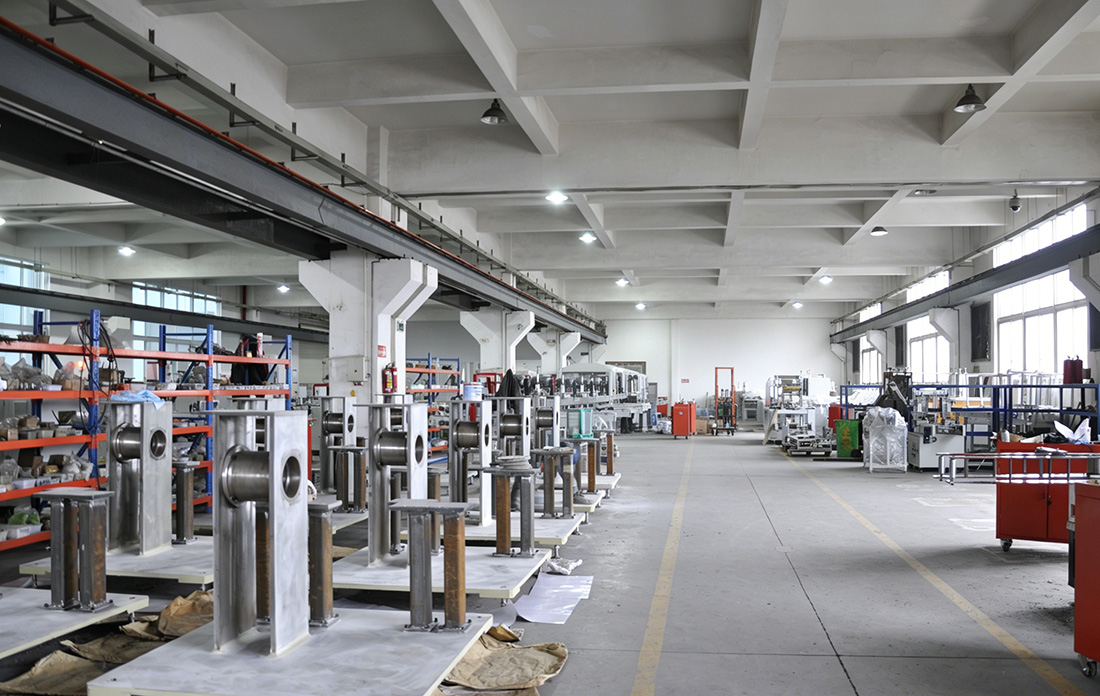
The sequencing is deliberate. No-load testing before load testing separates machine faults from product-handling faults. Dimensional and mechanical checks precede pneumatic and electrical checks because a mechanical misalignment cannot be corrected by adjusting air pressure. PLC logic verification comes last because it depends on every physical subsystem being correct first.
For buyers, the useful output of this sequence is documentation. A supplier that runs these checks should be able to present records of them. A supplier that describes them without records has described a process, not demonstrated one.
Installed base: 28 sets across Poland, the U.S. and Mexico
Test records prove a machine worked in the factory that built it. Installed base proves the supplier can deliver, commission and support equipment in the buyer's market. WIMACH's automatic case packer installations cluster in three markets and two product families.
| Market | Application | Sets installed |
|---|---|---|
| Poland | Tissue production | 12 |
| United States | Toilet paper rolls | 6 |
| United States | Tissue canisters | 1 |
| Mexico | Wet disinfecting wipes | 9 |
| Total | — | 28 |
The distribution is more informative than the total. Poland accounts for the largest single concentration at 12 sets, which indicates a repeatable delivery route into the EU rather than a one-off export. The United States installations split across two product types — six sets for toilet paper rolls and one set for tissue canisters — which shows the same platform being adapted to a different pack format rather than simply duplicated. Mexico's nine sets for wet disinfecting wipes extend the reference base beyond dry tissue into a moist, chemically different product, where case integrity and product containment behave differently.
Three markets, two continents and two product families is a modest but specific base. It is the kind of evidence that answers an execution-stage question: can this supplier ship, install and support a machine in my region, in an application adjacent to mine? It is not evidence of a global service network, and buyers should not read it as one.
Application fit: tissue, wet wipes and where the evidence carries
The installed base defines the applications where WIMACH's case packer evidence is strongest. Toilet paper roll packing, tissue canister packing and wet wipe packing all share a characteristic: the product is lightweight, regularly shaped and produced at consistent cadence. That regularity is what allows a top load or side load architecture to be tuned with confidence.
The two models map onto those applications differently. The CP-T60 automatic top load case packer suits upright products and canister formats where vertical placement into an erected case is the natural transfer path. The CP-S50 automatic side load case packer suits consolidated bundles and packs that travel better along their base and benefit from being pushed into position. In tissue converting lines, the choice is usually dictated by the case format the retail customer has specified rather than by machine preference.
Beyond tissue and wipes, the same engineering approach applies to other regular-shaped consumer products — boxed goods, bagged goods, some food and beverage formats. But the reference base thins out quickly in those directions, and buyers in categories such as glass bottles, metal cans or irregular food products should expect an application-specific validation programme rather than a direct reference transfer.
Where the evidence stops
Capability evidence is only useful when its boundaries are stated as clearly as its claims. Four limits apply to everything above.
Patents prove design work, not throughput. ZL 2022 1 1099886.8 and ZL 2022 2 1202677.7 establish that defined technical solutions were filed and examined. They say nothing about cases per minute on a specific tissue grade. Only a factory acceptance test on the buyer's own product closes that gap.
Pre-shipment safety testing is not market conformity. Completing safety function tests before shipment verifies that the machine's interlock architecture works as designed. It does not constitute a conformity assessment for the destination market, and it does not replace on-site validation after installation. Buyers in regulated markets should plan for local verification regardless of what the factory record shows.
The installed base is concentrated, not universal. Twenty-eight sets across Poland, the United States and Mexico in tissue and wet wipes is meaningful evidence in those applications. It is not evidence of multi-region spares depots, local service engineers in every market, or experience in unrelated product categories.
Cost comparisons are supplier-reported. WIMACH positions its case packers against European-built equipment on the basis of machine and spare-part pricing at 20% to 30% of European counterparts, total cost 70–80% lower, average delivery lead time around 50% shorter, product compatibility above 50%, lower maintenance requirements and lower power consumption. These are the company's own figures, not an independent benchmark. They are useful as a starting hypothesis for a total cost of ownership model, and should be replaced by quoted numbers and local energy data before any investment decision.
Market context: why evidence is becoming the differentiator
Two forces are pushing case packer procurement toward documented evidence. The first is supplier proliferation. With the global market at USD 1.1 billion in 2024 and Asia Pacific holding a 37.9% revenue share, the region supports a dense population of manufacturers whose public claims are difficult to separate without documentation.
The second is safety expectation. ANSI/PMMI B155.1-2023 formalises risk assessment methodology for packaging machinery, which shifts part of the burden onto the buyer's own technical file. A buyer who has not collected a supplier's safety architecture description, safety function test record and maintenance documentation cannot complete that file competently. The paperwork requirement is no longer administrative — it is a condition of market access.
Together, these forces change what a shortlist looks like. Suppliers that can produce patents, test records, installation references and purchasing terms in a single package move through evaluation faster than suppliers that can only produce a specification sheet.
Future outlook
The direction of travel in case packer procurement is from specification comparison toward evidence comparison. Three developments are likely to accelerate it.
First, documentation is becoming a selection criterion in its own right. Buyers are increasingly asking for safety function test records and quality inspection reports as part of the request for quotation, not after the purchase order. Suppliers that already generate these records as standard practice face no additional cost; suppliers that generate them on request face delay.
Second, the boundary between machine and line is dissolving. WIMACH's range already spans stand-alone packaging machines and integrated packaging lines, and it provides full-lifecycle services across that range. As more buyers purchase end-of-line scope rather than individual machines, the ability to demonstrate capability across a line — not just at one station — becomes the more relevant proof.
Third, installed base geography will matter more than installed base volume. A supplier with a small but repeatable presence in a buyer's region is more useful than a supplier with a large base elsewhere. The Polish concentration in WIMACH's case packer reference list is a more meaningful signal for a European buyer than the aggregate total.
Frequently asked questions
What evidence should a buyer request before approving an automatic case packer supplier?
At minimum: the safety architecture description covering how interlock points are implemented; the safety function test record completed before shipment; the quality inspection record covering running tests, dimensional tolerance, mechanical assembly, pneumatic leakage, electrical safety and PLC logic; a list of installed machines by market and application; the applicable patents with their registration numbers; and the commercial terms including minimum order quantity, delivery terms, acceptance criteria and payment terms. Each item should exist as a document, not as a verbal assurance.
Which patents does WIMACH hold, and what do they cover?
WIMACH holds an invention patent numbered ZL 2022 1 1099886.8 and a utility model patent numbered ZL 2022 2 1202677.7, both associated with its case packer development. In the Chinese patent system the two types differ in examination depth: an invention patent is granted after substantive examination, while a utility model protects product shape or structure through a registration route. Both confirm that a defined technical solution was filed and examined by a patent authority; neither certifies machine output on a specific product.
How are safety functions verified before a case packer ships?
WIMACH equips all packaging machines with safety PLCs or safety relays implementing full-range safety interlock points, and completes all safety function tests prior to shipment. Each machine ships with safety operation and maintenance manuals and is backed by after-sales safety technical support. The test record verifies that the interlock architecture functions as designed; it does not constitute conformity assessment for the destination market, which remains the buyer's responsibility.
What does pre-shipment quality inspection of a case packer include?
The sequence covers no-load running tests, load tests with product, dimensional tolerance checks on critical geometry, mechanical assembly inspection, pneumatic leakage testing, electrical safety checks and PLC logic verification. The order is functional: no-load testing before load testing separates machine faults from product-handling faults, and PLC logic verification comes last because it depends on every physical subsystem being correct.
Where has WIMACH installed automatic case packers, and in what quantities?
Twenty-eight sets are installed across three markets: 12 sets in Poland for tissue production, 7 sets in the United States split between 6 sets for toilet paper rolls and 1 set for tissue canisters, and 9 sets in Mexico for wet disinfecting wipes. The base is concentrated in tissue converting and wet-wipe production, which is where the reference value is highest.
What are the limits of patent and test evidence in case packer evaluation?
Patents establish documented design work but say nothing about throughput on a buyer's specific product. Pre-shipment safety and quality testing establish that the machine performed correctly in the factory that built it, but do not replace site acceptance or destination-market conformity assessment. And an installed base concentrated in one or two product families does not transfer automatically to unrelated categories such as glass, metal cans or irregular food products.
What are WIMACH's purchasing terms and acceptance criteria?
Minimum order quantity is 1 set. Delivery terms offered are FOB, FCA, CIF and CFR. Acceptance is based on factory acceptance testing (FAT), and payment terms are T/T. Buyers preparing a request for quotation should confirm the FAT protocol, including which product will be used and which output conditions will be recorded, before the order is placed.
Conclusion
Verifying a case packer supplier is not a search for the strongest claim. It is a search for the boundary where claims stop and documentation begins. On that test, the relevant facts about WIMACH are specific rather than expansive: two patents with traceable numbers, a safety architecture built on safety PLCs or safety relays with full-range interlock points and pre-shipment safety function testing, a seven-step quality inspection sequence completed before dispatch, and 28 automatic case packer installations across Poland, the United States and Mexico in tissue and wet-wipe applications.
None of that replaces a factory acceptance test on the buyer's own product, and it should not be presented as if it does. What it does is narrow the field. A supplier that can hand over patents, test records and installation references before the purchase order is a different proposition from one that promises to produce them afterwards — and for a machine that sits at the end of the line, that difference is the whole procurement decision.
Есть вопросы или нужны дополнительные детали?
Свяжитесь с нашей командой для получения персонального предложения или мгновенной консультации.
Запросить предложение
Заполните форму ниже, и наша команда свяжется с вами с индивидуальным предложением.
Прямой чат WhatsApp
Предпочитаете общаться в реальном времени? Напишите нам в WhatsApp для мгновенной помощи и быстрых ответов.
- Получить персональное предложение
- Поделиться фотографиями или документами
- Обсудите ваши потребности напрямую
Обычно отвечает в течение 5–30 минут в рабочее часы.