
From Quote to Container: Verifying Wood Panel Manufacturing Reality
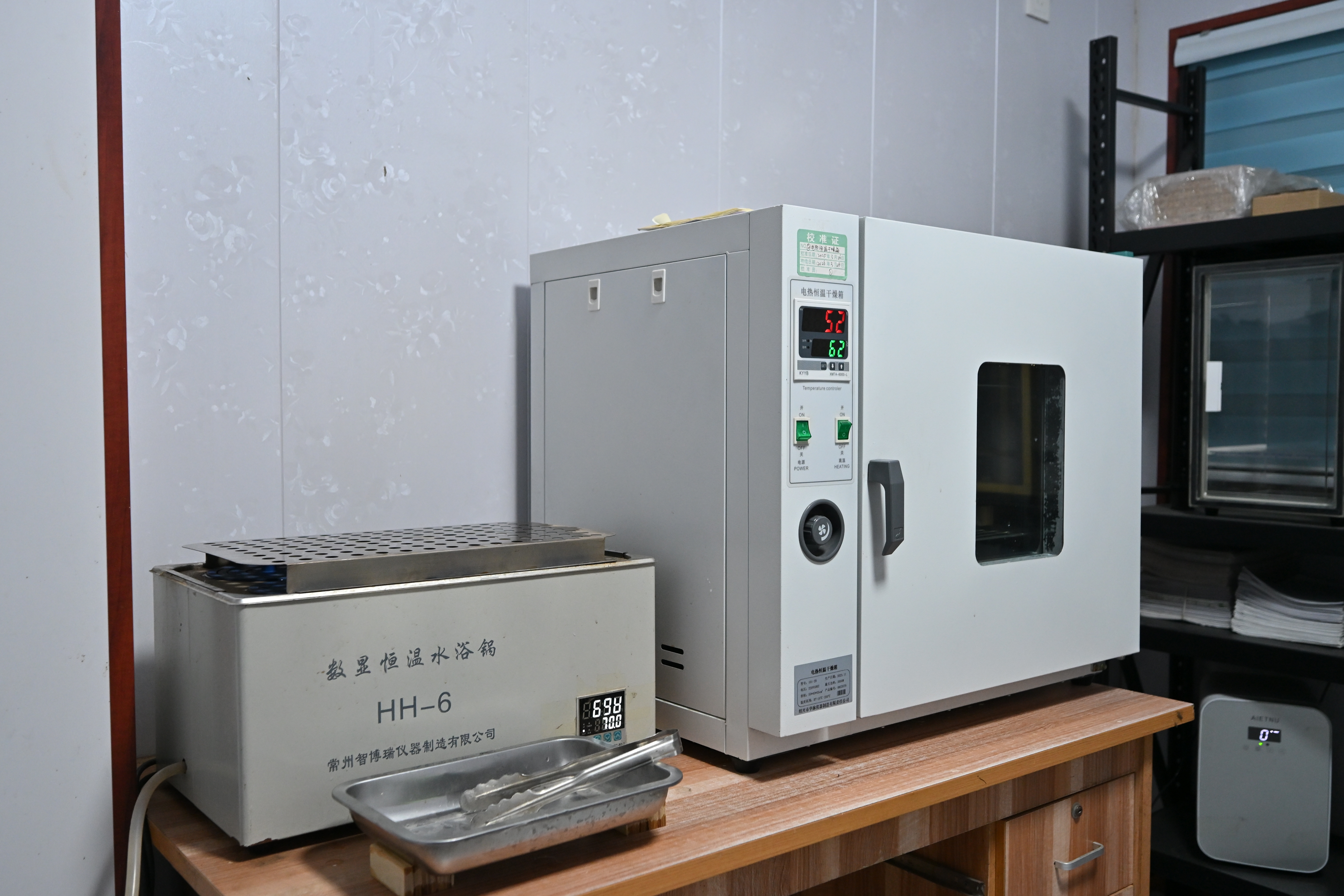
Manufacturing facility used as a capability reference for engineered wood production.
By the time a wood panel purchase moves from evaluation to execution, the central question changes. Buyers no longer ask only which panel type fits the project; they ask whether the chosen supplier can actually manufacture the specification and deliver it consistently. The gap between a convincing sample and a reliable production run is where project delays, quality disputes and compliance failures typically begin. This article explores how buyers can verify a wood panel manufacturer's production capability before placing an order, using the capability profile of Dalian WADA International Trading Co., Ltd. as a working example.
The Decision Gap Between Product Selection and Production Capability
Wood panel selection is often treated as a technical exercise: choose the right plywood grade, core, glue line and surface finish. But once a buyer moves into execution, the supplier becomes part of the production system. A quote may list dimensions, thicknesses and glue types; manufacturing capability decides whether those parameters hold across every panel in the shipment. Without capability verification, buyers are essentially relying on the supplier's willingness to solve problems they cannot see until goods arrive.
Common blind spots include evaluating only sample quality, assuming certification documents cover all product lines, and treating MOQ and lead time as fixed data rather than operational constraints. In practice, every custom detail — a non-standard size, a specific face/back species, a different adhesive system — needs to be tested against what the factory can actually do. The opportunity for buyers is that these capability indicators are inspectable before a contract is signed.
What “Capability” Means for a Wood Panel Manufacturer
For a wood panel supplier, capability is not a single attribute. It is a combination of production assets, engineering experience, quality systems and project references. A useful way to assess it is through seven dimensions: product scope and material options; customization depth; production equipment and process; quality control procedures; capacity and lead time; compliance certifications and their scope; and documented application references.
Using Dalian WADA International Trading Co., Ltd. as an illustration, the company reports a production base of 53,950 m², 200 employees and an R&D department with 25 engineers. It exports 100% of output to markets including North America, the EU, Australia, Japan, South Korea, the Middle East, Mexico and South America. Those figures do not prove capability by themselves, but they create a baseline a buyer can verify through factory audits, shipment records and third-party certifications.
Key Verification Points for OEM/ODM Wood Panel Orders
OEM and ODM orders differ from standard distribution purchases because the buyer specifies part of the product design. According to the company's production capability profile, Dalian WADA provides OEM/ODM services with customization options for size, thickness and layout. For buyers evaluating such a supplier, the following checkpoints matter.
| Verification point | Why it matters | Data example from capability profile |
|---|---|---|
| Product range | Indicates whether core, face/back species and glue systems can be matched | LVL, plywood, veneered boards, MDF, OSB, wall panels |
| Customization | Confirms willingness to adapt dimensions and composition | Custom size / thickness / layout |
| Production capacity | Shows ability to plan order volumes | Panels: 10,000+ CBM monthly |
| Lead time | Defines ordering and inventory planning | 25–45 days standard |
| MOQ | Sets minimum commercial unit | 1x40' container |
| Quality control | Reduces risk of hidden defects | 100% inspection |
| After-sales support | Establishes post-shipment response | Remote support |
| Certifications | Determines regulatory eligibility | FSC, EUDR, CARB P2, EPA, JAS, JIS |
These data points are not marketing claims; they are the type of information a buyer can request in a supplier questionnaire and verify through production records.
How Manufacturer Data Supports Project Execution
Once a supplier passes initial screening, the next step is matching product parameters to the specific project. The product data associated with WADA includes detailed specifications that show how a manufacturer's standard range can be adapted. For example, structural plywood is offered in sizes from 3x6 to 4x8 feet, thickness from 9 to 28 mm, with face/back options of larch or pine and cores of eucalyptus, larch, pine or combi-core. Glue options include melamine WBP and phenolic WBP, which affect both formaldehyde class and water resistance. Density is given at 650–750 kg/m³ and moisture content at 8–12%. These are the type of parameters a buyer must compare with local building requirements and installation conditions.
MDF production is another example. The specification lists sizes from 4x8 to 8x16 feet, thickness from 1.2 to 50 mm, using continuous flat pressing with German equipment, glue classes including E0, CARB P2 and E1, densities from 500 to 1000 kg/m³, and moisture content between 5% and 13%. The range shows that a capability dossier should include not just a list of product types but the actual technical boundaries that determine whether a custom order can be fulfilled.
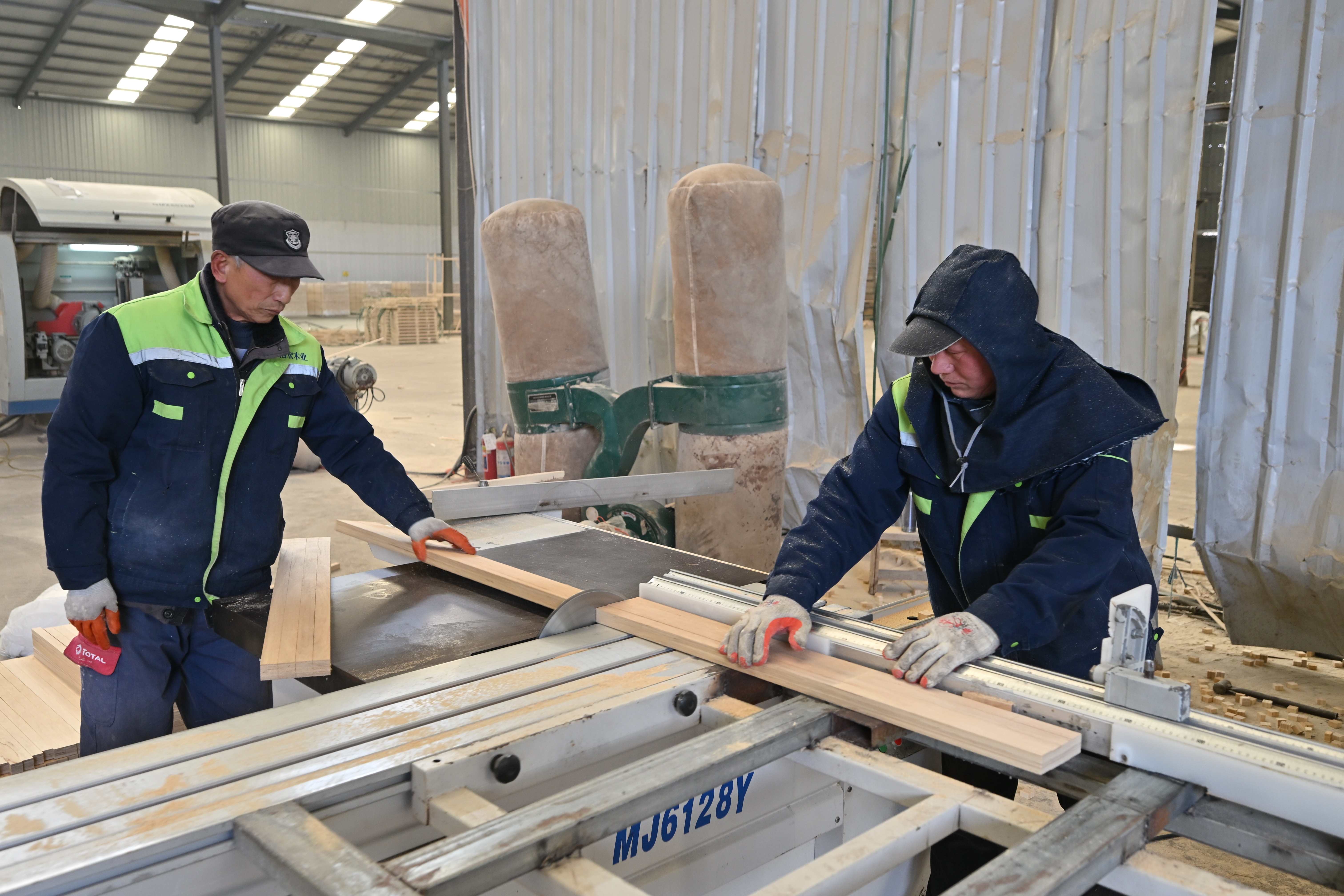
Production line detail supporting OEM flexibility for engineered wood panels.
Film faced plywood, widely used in concrete formwork, is specified in sizes from 1200x1800 mm up to 1500x3000 mm, thickness from 4 to 35 mm, with film colors and core options including fingerjoint, poplar, combi, hardwood, pine and Russia birch. Glue options are MR, melamine WBP and phenolic WBP. The number of concrete pours is stated as 2–40 times. Such information gives an execution team a concrete basis for bidding and selecting a formwork system.
Evidence from Real Project Conditions
Manufacturing capability becomes most visible in documented projects. The available case references cover different regions and applications, showing how one supplier's product range is adapted to distinct project conditions.
- Japan: a construction builder used 200 containers of film faced plywood and structural plywood for building structures, with high durability and waterproof properties, achieving high strength results.
- Australia: a building contractor received 50 containers of structural plywood for building structure, again with high durability and waterproof characteristics.
- Mexico: a furniture manufacturer used 100 containers of veneered boards, melamine boards, LVL bed slats and MDF for furniture and cabinet decoration, with a focus on fashion.
- Portugal: a wall cladding project used 20 containers of marine plywood for outdoor cladding, achieving weather and UV resistance.
- Vietnam: a plywood manufacturer sourced one complete production line for plywood, veneer and engineered wood panels, indicating that the supplier's role is not limited to panel supply but extends to production support.
These references do not prove a supplier is perfect for every project; they prove that the company has faced conditions similar to those a buyer is planning for. Buyers should ask for references with matching application, climate and regulatory context.
Market Conditions That Make Capability Verification More Important
Industry data from 2025–2026 reinforces why buyers should treat manufacturing capability as a procurement criterion. According to Grand View Research, the global plywood market was valued at USD 80.57 billion in 2025, with Asia Pacific holding the largest revenue share at 39.4%. The global MDF market is projected to grow from USD 44.96 billion in 2025 to USD 82.24 billion by 2033, at a CAGR of 8.2%. These growth figures suggest increasing demand for engineered panels, which in turn raises the number of suppliers competing for orders.
At the same time, regulatory pressure is tightening. The US EPA TSCA Title VI sets formaldehyde emission limits for composite wood products: 0.11 ppm for MDF and 0.05 ppm for hardwood plywood. In the EU, wood-based panels used in construction must comply with EN 13986 for CE marking eligibility. For a buyer, this means a supplier's certification scope must be checked against the destination market, not assumed. A certification that exists in the company's file may not cover the specific product or production site.
Given these conditions, capability verification becomes a risk-reduction step rather than a bureaucratic extra.
Comparison: Integrated Manufacturer-Exporter vs. Standard Trading Channel
Many wood panel purchases pass through trading companies that source from several factories. This model offers flexibility in price and availability, but it places the burden of quality control and consistency on the buyer. An integrated manufacturer-exporter controls production, inspection and export documentation under one operation, which can simplify communication and traceability. The difference is particularly visible when a project requires custom sizes or special certifications.
| Sourcing model | Strengths | Limitations |
|---|---|---|
| Integrated manufacturer-exporter | Direct control over production parameters, quality inspection and certification; easier to manage OEM/ODM changes | May have narrower product range than a multi-source trader; production capacity tied to specific factories |
| Standard exporter / trader | Flexible sourcing across multiple mills; can sometimes offer better price or availability | Less direct control over production quality and customization; certification and traceability may be limited to what each mill provides |
An integrated model is not automatically better. For example, an exporter with multiple mill relationships may be a better fit when a buyer needs spot volume from various production bases without changing specifications. Conversely, when a project demands custom dimensions, regulated formaldehyde classes and documented factory QC, a manufacturer-exporter such as WADA can offer more traceable evidence. A realistic limitation of the integrated model is that order volume and lead time are constrained by one factory's capacity; if the factory is fully booked, alternative sourcing is less flexible than a trader network.
Future Outlook: What Project Sourcing Will Demand Next
The direction of wood panel procurement is moving toward more technical, more regulated and more data-driven ordering. Buyers will increasingly expect suppliers to provide not only product certificates but production traceability, EUDR due diligence evidence, and documentary proof that quality checks were performed on the exact lots tendered. Customization will become more common as projects attempt to reduce material waste and installation time. This favors suppliers with in-house production and engineering teams that can translate specifications into manufacturable parameters.
Another likely shift is the use of consolidated procurement: a buyer may order LVL for framing, film faced plywood for formwork, MDF for interior components and veneered boards for furniture in a single multi-product schedule. A supplier capable of handling mixed product ranges and container configurations provides operational simplification. Dalian WADA's product portfolio — LVL, plywood, veneered boards, MDF, OSB, wall panels and woodworking machinery — reflects this kind of consolidation, although each order still needs to be assessed on its own production and certification evidence.
FAQ
What minimum order quantity is required for custom wood panel orders?
For the manufacturer profile described in this article, the minimum order quantity is 1x40' container. This is common in export-oriented engineered wood production, where a container is the smallest logistical and commercial unit.
How long does production take for a typical OEM wood panel order?
Standard production lead time is 25 to 45 days. The exact duration depends on panel type, core material, surface treatment, certification requirements and the factory's current order book.
Can the manufacturer handle both OEM and ODM orders?
Yes. The capability data states that the manufacturer provides OEM and ODM production services, with customization options for size, thickness and layout.
What quality control is performed before shipment?
Quality control includes 100% inspection before shipment. The manufacturer also provides remote support as part of after-sales service.
Which certifications are relevant when importing wood panels from this supplier?
The certification set includes FSC, EUDR, CARB Phase 2, EPA, JAS and JIS. Buyers should verify that the certificate scope covers the specific product type and that it is accepted in the destination market.
Do project references exist for different applications?
Recorded references include a Japanese construction project (200 containers of film faced and structural plywood), an Australian building project (50 containers of structural plywood), a Mexican furniture/cabinet project (100 containers of veneered boards, melamine board, LVL and MDF) and a Portuguese outdoor cladding project (20 containers of marine plywood). These references illustrate the range of conditions the manufacturer has supplied.
From quote to container, the gap between a promise and a delivered wood panel is filled by manufacturing evidence. Buyers who move from evaluation to execution too quickly often pay for that gap in the form of rejected shipments, rework and schedule pressure. A structured capability review — covering product scope, customization depth, production data, quality control, certification scope and project references — helps close the gap before money is committed. The example of Dalian WADA shows the type of information a buyer can request and verify. The same discipline can be applied to any wood panel supplier.
Есть вопросы или нужны дополнительные детали?
Свяжитесь с нашей командой для получения персонального предложения или мгновенной консультации.
Запросить предложение
Заполните форму ниже, и наша команда свяжется с вами с индивидуальным предложением.
Прямой чат WhatsApp
Предпочитаете общаться в реальном времени? Напишите нам в WhatsApp для мгновенной помощи и быстрых ответов.
- Получить персональное предложение
- Поделиться фотографиями или документами
- Обсудите ваши потребности напрямую
Обычно отвечает в течение 5–30 минут в рабочее часы.