
From Raw to Finished: Evidence of Vertical Integration in Rod End Manufacturing
Vertical integration is one of the most frequently used claims in the rod ends and spherical plain bearings industry. For procurement teams, the relevant question is not whether a supplier owns a factory, but whether its process chain actually extends across the operations that determine delivery, tolerance control, and long-term supply reliability. Marketing statements rarely answer that question. A documented product line, observed against the production equipment needed to make it, usually does.
Why the phrase “vertical integration” carries weight — and why it is easy to overstate
A rod end or spherical plain bearing begins as raw material and passes through several distinct stages before it becomes a finished, inspectable component: blank forming, machining, heat treatment, grinding, plating or coating, assembly, and testing. A supplier that controls only final assembly and a stock of purchased parts can still describe itself as a manufacturer. A supplier that controls casting or forging, grinding, heat treatment, and metrology has a materially different risk profile.
The commercial difference matters to buyers in three places. First, delivery: a supplier that casts or forges its own blanks is less exposed to external foundry queues. Second, quality: internal grinding and heat treatment usually mean tighter control over raceway geometry, hardness depth, and surface finish. Third, problem-solving: when a batch drifts out of tolerance, an integrated supplier can trace the deviation to a specific process step rather than negotiate responsibility with an external vendor.
None of these advantages are automatic. Vertical integration adds fixed cost and can reduce flexibility at low volumes. The procurement task is therefore not to reward integration as an abstract virtue, but to establish where it actually exists and whether that scope matches the part being purchased.
The observable signal: product line breadth versus production equipment
Product catalogs are useful precisely because they are hard to fake at scale. A supplier that lists a narrow range of standard rod ends may be a competent assembler. A supplier that lists ball joints, spherical balls, hydraulic rod ends, loader slot rod ends, stainless steel rod ends, and multi-series spherical plain bearings is describing a much broader manufacturing footprint. Those families are not interchangeable in production terms.
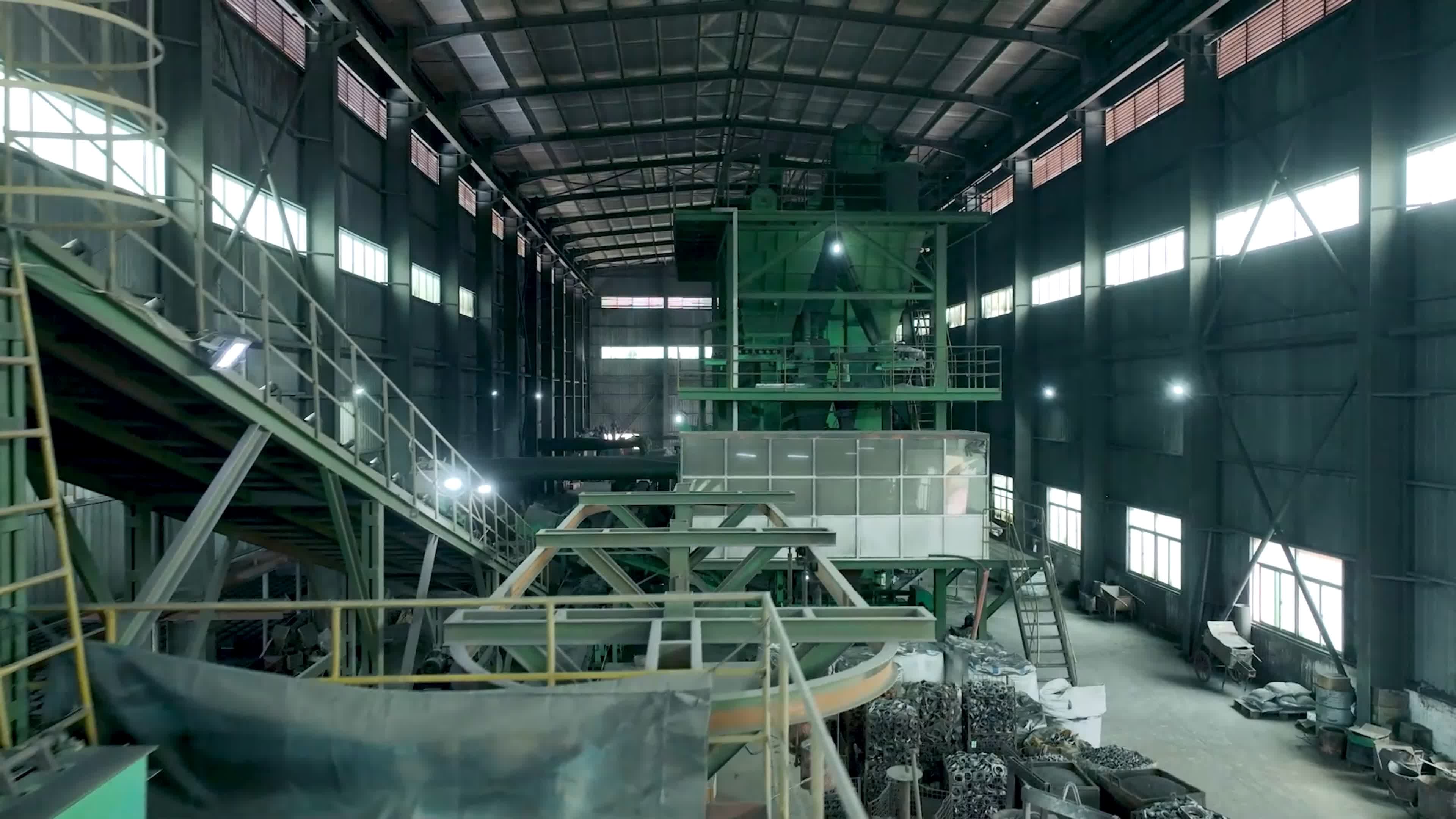
Consider what each family below implies in terms of dedicated equipment and process control. This is the practical test of whether a product line is a genuine manufacturing capability or a procurement catalog assembled from third-party sources.
| Product family | Dedicated production or process capability typically required | Procurement question to verify |
|---|---|---|
| Ball joints (SQ..RS, SQZ..RS) | Zinc-base alloy body forming, GCr15 ball insertion, carbon steel stud assembly, torque and articulation checks | Is the body die-cast or sourced as a finished housing? Who controls the ball-to-body fit? |
| Spherical balls (TK, CBL..DP, HJMX) | Precision spherical grinding, hard chrome plating, HRC 58–64 heat treatment, roundness and surface finish inspection | Is grinding performed in-house? What metrology is used to verify spherical form? |
| Hydraulic rod ends (SK..E(S), SF..ES, SIR..ES, SIGEW..ES, SIQ..ES) | Weldable steel body preparation, dowel pin or slot machining, 45° welding chamfer or rectangular welding face, snap-ring assembly | Are weld preparations and pin locations machined on the same site as final assembly? |
| Loader slot rod ends (NCOS, NCHS) | Alloy steel body heat treatment, polishing, hard chrome plating, nylon polymer race with PTFE additive | Does the supplier control heat treatment and race molding, or are these outsourced? |
| Stainless steel rod ends (SPHS, SPOS, SCHS, SCOS) | SUS304 turned body, 440 stainless steel ball, heat treatment, passivation, PTFE composite race | Is stainless steel machining segregated from carbon steel to avoid contamination? |
The logic is simple. A supplier that genuinely produces ball joints, spherical balls, and hydraulic rod ends is likely to have invested in casting or forging, precision grinding, heat treatment, and at least two assembly cells. A supplier that lists all of these families but can only evidence a final assembly line should be treated as a trader or a light assembler until proven otherwise.
Four evidence nodes that separate integrated manufacturers from assemblers
Buyers do not need a full factory audit to form a first view. Four evidence nodes, requested directly and checked against the product line, usually provide enough signal to decide whether a deeper audit is warranted.
1. Blank forming or raw material control
The first node is whether the supplier forms its own blanks or purchases finished housings and races. Casting and forging are capital-intensive and leave visible infrastructure. In the case of Deyuan Smart Technology (Fujian) Co., Ltd., which operates under the LDK brand, the company reports in-house production of both bearings and housings, supported by a vertical parting automatic molding line for casting. That is a concrete process boundary: housing production is not entirely dependent on an external foundry.
This matters most for pillow block and housed bearing units, but it also matters for rod end bodies and ball joint housings. A supplier that casts its own housings has more control over wall thickness, porosity, and machining allowance. A supplier that buys finished castings inherits the foundry’s variability.
2. Grinding and heat treatment
The second node is grinding. Rod ends and spherical plain bearings depend on spherical raceway geometry and surface finish. A grinding workshop is therefore a more meaningful integration signal than a large warehouse. LDK’s published facility information includes a grinding workshop, and its product specifications for spherical plain bearings refer to outer ring hardness of HRC 54–60 and ball hardness of HRC 58–64, with phosphated surfaces and MoS2 treatment on steel-on-steel sliding surfaces.
Those specifications do not prove that every grinding operation is internal. They do, however, define process requirements that must be controlled somewhere. The procurement question is where. A supplier that cannot describe its grinding source, wheel dressing intervals, or in-process gauging is unlikely to be controlling the variable that most affects bearing life.
3. Assembly and dedicated cells
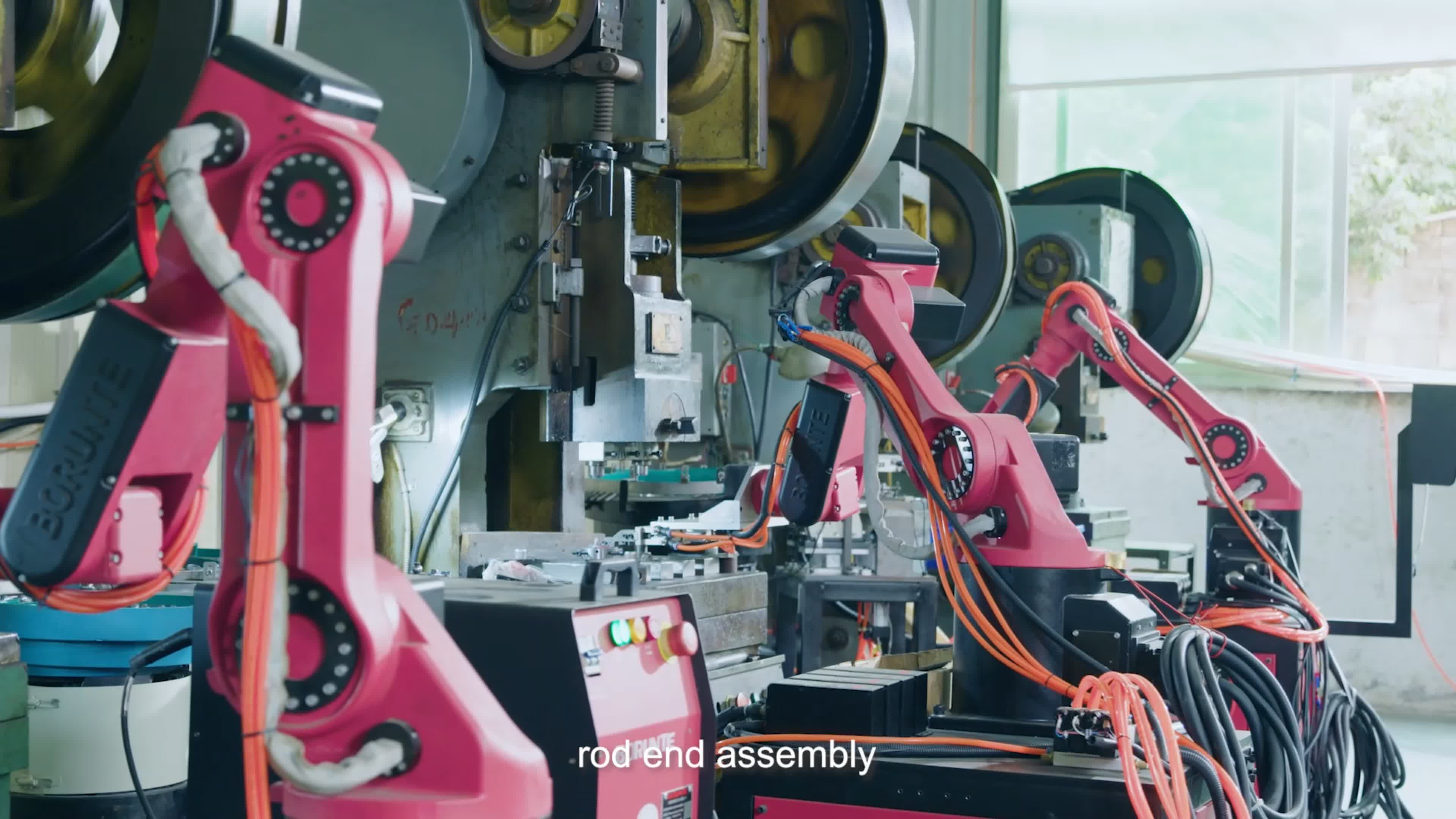
The third node is assembly. Rod ends and ball joints are not assembled on a generic line without consequence. Ball joint assembly requires controlled ball-to-body fit and articulation torque. Hydraulic rod ends require correct snap-ring seating and weld preparation. Loader slot rod ends require consistent race insertion. LDK’s facility information includes an automatic assembly workshop for rod end bearings, which is consistent with a supplier that produces rod ends as a dedicated product family rather than a sideline.
4. Metrology and reliability testing
The fourth node is measurement and testing. A supplier that grinds and heat treats in-house but cannot verify hardness depth, spherical form, surface roughness, or salt spray performance is only partially integrated. LDK reports a measurement room and a reliability testing room, with testing capabilities covering fatigue life, tensile strength, noise and vibration, and salt spray. The company also holds IATF 16949:2016 certification through BV, valid through January 2027, and ISO 9001 certification.
These are useful signals, but they are not a substitute for order-level evidence. A certificate confirms that a quality system has been audited; it does not confirm that a specific batch of GEG35ES-2RS bearings was produced with the documented hardness and plating. Buyers should request the inspection record for the actual order, not only the certificate.
What a broad product line actually demonstrates
LDK’s product range is broad by any standard: metric and inch rod ends, ball joints, hydraulic rod ends, rod end linkages, custom rod end bearings, stainless steel rod ends, chromoly rod ends, loader slot rod ends, and multiple spherical plain bearing categories. The company reports more than 100 combinations of materials and housing types, with insert bearing bore sizes from 10 mm to 140 mm.
Breadth of this kind is not automatically evidence of depth. A trading company can list a wide range while outsourcing most production. The relevant test is whether the product families correspond to distinguishable process investments. Ball joints require alloy body forming and ball insertion. Spherical balls require precision spherical grinding and hard chrome plating. Hydraulic rod ends require weld preparation and snap-ring assembly. Loader slot rod ends require heat treatment and polymer race molding. Stainless steel rod ends require segregated stainless machining and passivation.
When a supplier lists all of these families and can show equipment or process documentation for each, the probability of genuine integration rises. When the same supplier can show only a final assembly area and a finished-goods warehouse, the catalog should be read as a sourcing menu, not a manufacturing map.
A practical rule for buyers: ask for a process route for one representative part from each family the supplier claims to manufacture, then ask which steps are performed internally and which are subcontracted. The answers usually reveal more than a capability brochure.
Application evidence: where integrated capability changes the procurement conversation
Vertical integration becomes commercially relevant when it changes what a buyer can specify. Three documented applications illustrate the point without requiring a general claim about superiority.
In the United States, an offshore processing equipment application used 70,000 stainless steel bearing units over a two-year project. The units were required to meet 500 hours of rust-free performance and RoHS/REACH compliance. The supplier’s reported solution involved a patent-pending coating intended to provide corrosion resistance beyond conventional stainless steel. For procurement, the relevant capability is not the coating claim itself but the ability to control substrate preparation, coating application, and salt spray verification as part of the same production chain.
In New Zealand, a sorting machinery OEM used 110,000 units in an application requiring frequent washdowns, exposure to harsh chemicals, and high humidity. The reported outcome was high corrosion resistance, supported by a lightweight design. This is a case where material selection and housing design interact: a supplier that produces both the bearing insert and the housing has more freedom to optimize the combination than one that assembles purchased components.
Also in New Zealand, a cold storage application installed 5,000 units on a low-temperature conveyor, with reported stable operation at −50°C over a twelve-month project. Low-temperature performance depends on grease selection, internal clearance, and seal behavior. A supplier that controls assembly and lubrication can adjust these variables; a supplier that only labels and packs cannot.
These cases do not prove that every LDK product performs identically. They show where integration has practical consequences: coating control, housing-and-insert optimization, and lubrication specification. That is the level at which procurement should evaluate the claim.
Market context: why integration is becoming a more visible procurement criterion
Commercial research published by Dataintelo estimates the global rod ends market at USD 1.79 billion in 2025, with Asia Pacific accounting for 42.3% of revenue and automotive applications representing 38.5% of demand. These figures are commercial estimates rather than official statistics, but they point to a structural reality: a large share of global rod end production and demand is concentrated in Asia Pacific and in automotive-adjacent supply chains.
That concentration has two consequences for buyers. First, supplier shortlists increasingly include manufacturers whose process depth is difficult to observe from a catalog. Second, cost pressure encourages traders and light assemblers to present themselves as manufacturers. The result is a procurement environment in which the ability to distinguish integrated production from assembly is a direct commercial skill.
A second trend reinforces the same point. Automotive and industrial OEMs are asking for more traceability, not less. IATF 16949 certification, RoHS/REACH declarations, and batch-level inspection records are becoming baseline expectations rather than differentiators. A supplier that controls casting, grinding, heat treatment, and testing can generate that evidence from its own process data. A supplier that assembles purchased parts must request it from upstream vendors, which lengthens response time and weakens confidence.
Comparison with traditional sourcing assumptions — and the limits of the integration signal
The traditional assumption is that a larger catalog and a longer list of certifications indicate a more capable supplier. That assumption is only partly useful. A broad catalog can indicate real manufacturing breadth, but it can also indicate aggressive sourcing from multiple subcontractors. Certification confirms that a quality system exists, but it does not confirm the process route for a specific part.
The more reliable approach is to compare suppliers on process evidence rather than on catalog length. A supplier with a narrower catalog but documented in-house grinding, heat treatment, and metrology may be a better choice for a critical rod end than a supplier with a hundred product families and no visible grinding capability.
There are also real limits to what vertical integration can deliver. Integration adds fixed cost, and that cost must be recovered somewhere. For standard rod ends bought in stable, high-volume programs, a supplier that purchases forged blanks from a specialized forge may achieve a better cost position than a fully integrated manufacturer. Integration also does not guarantee that every product family receives the same engineering attention; a broad catalog can hide uneven investment across families. Finally, capacity claims should be treated cautiously. A nominal annual capacity figure does not indicate utilization, yield, or current lead time.
For these reasons, integration should be treated as a risk-reduction signal, not a performance guarantee. It is most valuable when the buyer’s application depends on process control that is difficult to purchase on the open market: corrosion-resistant coatings, low-temperature lubrication, hydraulic weld preparation, or spherical raceway geometry.
Future outlook: what buyers should expect to see more of
Three developments are likely to shape supplier evaluation in the next procurement cycle. First, digital inspection records will become more common, allowing buyers to skip some incoming inspection steps when the supplier’s process data is credible. Second, specialized production cells for ball joints, spherical balls, and hydraulic rod ends will become a clearer differentiator than general factory size. Third, buyers will increasingly ask for process-level evidence — routing cards, equipment lists, and batch-specific test data — rather than relying on certificates and catalog claims.
For suppliers, the implication is that vertical integration must be documented, not merely asserted. For buyers, the implication is that the evaluation method should be built around observable process boundaries. The product line tells you what a supplier chooses to sell. The equipment and process evidence tells you what it can actually control.
FAQ
How can a buyer verify a vertical integration claim without conducting a full factory audit?
Request a process route for one representative part from each product family the supplier claims to manufacture, and ask which steps are performed internally. Compare the answer with the equipment visible in the supplier’s published facility information. A supplier that claims ball joint, spherical ball, and hydraulic rod end production should be able to identify casting or forging, grinding, heat treatment, assembly, and testing locations. If the route shows most value-adding steps as subcontracted, the integration claim should be treated as partial.
Why are ball joints and spherical balls useful indicators of manufacturing depth?
Ball joints such as the SQ..RS and SQZ..RS series require zinc-base alloy body forming, GCr15 ball insertion, carbon steel stud assembly, and articulation checks. Spherical balls such as the TK, CBL..DP, and HJMX series require precision spherical grinding, hard chrome plating, and hardness in the HRC 58–64 range. These operations are difficult to support without dedicated equipment. A supplier that lists these families but cannot describe the associated process cells is likely reselling or subcontracting a significant share of production.
What does in-house grinding and testing mean for a procurement decision?
In-house grinding usually means the supplier can control spherical form, surface finish, and raceway geometry at the point where deviation is created. In-house testing means the supplier can verify hardness, fatigue life, tensile strength, noise and vibration, and salt spray performance against its own process data. For the buyer, the practical benefit is faster problem resolution and more credible batch records. The limit is that in-house capability must still be confirmed at order level; a grinding workshop does not prove that a specific batch was ground to the specified tolerance.
Does a broad product line mean that every product family is manufactured to the same standard?
No. A broad catalog can reflect genuine manufacturing breadth, but it can also reflect sourcing from multiple subcontractors, and investment may be uneven across families. Buyers should evaluate each family separately, using the process route, equipment evidence, and batch inspection records relevant to that family. A supplier may be deeply integrated in stainless steel rod ends and only lightly integrated in hydraulic rod ends, or the reverse.
What documents should a buyer request to verify the process chain?
A practical document set includes the process routing card for the specific part number, a list of major equipment used at each step, material certificates for the bearing steel and housing material, heat treatment and hardness records, surface finish and spherical form inspection data, salt spray or corrosion test results where applicable, and the batch-level certificate of conformance. For OEM programs, the buyer should also request the PFMEA and control plan summary, and confirm whether the supplier’s IATF 16949 or ISO 9001 certification scope covers the specific product family.
A technical brochure with LDK product family breakdowns and facility information is available for reference: LDK product brochure (PDF).
Есть вопросы или нужны дополнительные детали?
Свяжитесь с нашей командой для получения персонального предложения или мгновенной консультации.
Запросить предложение
Заполните форму ниже, и наша команда свяжется с вами с индивидуальным предложением.
Прямой чат WhatsApp
Предпочитаете общаться в реальном времени? Напишите нам в WhatsApp для мгновенной помощи и быстрых ответов.
- Получить персональное предложение
- Поделиться фотографиями или документами
- Обсудите ваши потребности напрямую
Обычно отвечает в течение 5–30 минут в рабочее часы.