
From Tonnage to Terms: A Hydraulic Baler Procurement Q&A
From Tonnage to Terms: A Hydraulic Baler Procurement Q&A
Compression force, bale dimensions, voltage and acceptance criteria are the four points where hydraulic baler procurement most often stalls, because each of them sits on the boundary between an engineering decision and a contractual one. Resolving them in the right order is what separates a workable purchase order from a machine that arrives and does not fit the process.
A hydraulic baler is bought twice: once on the specification sheet and once on the purchase order. Most procurement problems begin in the gap between those two documents.
Buyers shortlisting hydraulic baler machines generally arrive with the same set of open questions. How much compression force is enough? What bale size does the machine actually produce? What voltage must the site supply? How many bales per hour should be expected, and under what conditions? What acceptance criteria will the supplier agree to in writing? These questions read as technical, but they convert directly into site changes, shipping terms and contractual obligations, which is why they are best answered as a single connected set rather than as separate supplier emails.
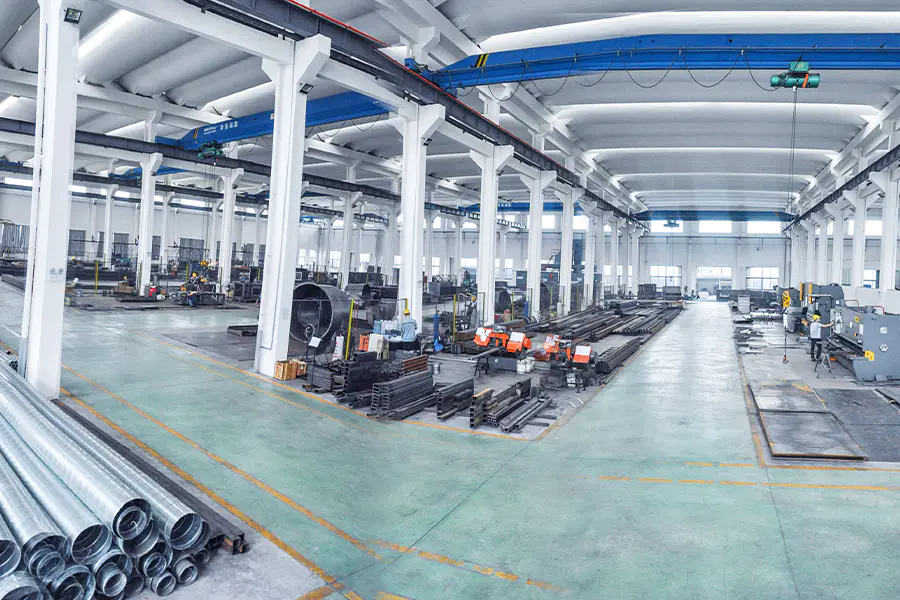
The model data referenced throughout this article comes from the Jewel range, manufactured by Nantong Jiabao Machinery Co., Ltd., a hydraulic baler manufacturer founded in 2006 with a brand heritage dating to 1995, operating a 50,000 m² production facility in Jiangsu, China, and exporting approximately 70% of output.
Why the technical and commercial questions cannot be answered separately
A compression force figure without a material specification is not a purchasing criterion. A bale size without a chamber size describes only half the geometry. An acceptance clause without a test procedure is an intention rather than a commitment. Buyers who sequence these questions correctly - material, then force, then geometry, then power, then throughput, then terms - usually need fewer supplier iterations and avoid the expensive scenario of discovering a site constraint after the machine has shipped.
For hydraulic baler machines used in waste paper, plastic, carton, textile, packaging and PET recycling, the practical sequence is consistent across industries even though the numbers change. The sections below follow that sequence and use verified model specifications as reference points.
Compression force: what the tonnage figure tells you, and what it does not
Compression force is the hydraulic force applied to the material during each pressing cycle, expressed in tons. In the Jewel range, the catalogue spans 2 to 180 tons. Within that span, the JP-S100B is rated at 25 tons, while the JPW150BL-QT horizontal closed-end baler is rated at 150 tons. Those two figures mark very different positions on the same product family.
What the tonnage figure describes is the machine's ability to compact a given material into a given volume. What it does not describe is throughput, because a high-force machine cycling slowly and a lower-force machine cycling quickly can produce similar hourly output on light material. Buyers who treat tonnage as a proxy for productivity frequently over-specify force and under-specify feeding.
A practical way to read the number
- Match force to material resistance, not to volume. Dense, springy or layered materials need more force to reach a stable bale than loose carton or film.
- Treat the range as a range. A 2-ton to 180-ton span exists because no single tonnage serves both a retail backroom and a regional recycling plant.
- Ask what the force is applied to. Force, chamber size and bale geometry are one design decision, not three.
The limitation is worth stating plainly: a tonnage rating alone cannot be used to compare machines from different ranges or different configurations, because the same force applied to a different chamber produces a different bale. Force is a starting filter, not a shortlist.
Bale size, chamber size and feed opening: one geometry decision
Bale dimensions determine what the baler output is worth downstream - to a haulier, a paper mill, a plastics reprocessor or an internal storage area. They also determine how the machine is loaded. The verified specifications across four models illustrate how differently the same category can be configured.
| Model | Compression force | Bale size or chamber | What it implies for selection |
|---|---|---|---|
| JP-S100B | 25 tons | Not part of the specifications referenced here | Mid-range force entry point within a 2–180 ton span |
| JPW20Q | 20 tons | Bale 500 × 500 × 500 mm | Uniform, compact bale format for lighter or more consistent streams |
| JPW40BL | 40 tons | Bale 720 × 720 × 300–1000 mm | Larger cross-section with variable bale length |
| JP-OT100 | Not part of the specifications referenced here | Vertical chamber 1400 × 700 × 1700 mm | Vertical loading geometry where floor area is the constraint |
| JPW150BL-QT | 150 tons | Bale 1100 × 1250 × 1500 mm | High-force horizontal configuration for demanding streams |
Reading the JPW40BL specification correctly
The JPW40BL is rated at 40 tons with a bale size of 720 × 720 × 300–1000 mm. The cross-section is fixed at 720 × 720 mm, while the third dimension is given as a range. That range reflects variable bale length - the machine does not produce a single fixed length, and the buyer's downstream handling needs to accept that variation. A bale length that fluctuates between 300 mm and 1000 mm changes stacking behaviour, strap placement and transport density, and those consequences belong in the procurement discussion.
Chamber versus bale: the vertical distinction
The JP-OT100 vertical baler is specified with a chamber of 1400 × 700 × 1700 mm. For a vertical machine, the chamber figure describes the loading volume rather than the finished bale, because material is loaded into the chamber and compressed in place. This is the single most common source of confusion when buyers compare vertical and horizontal models using the same spreadsheet columns.
Feed opening deserves separate attention because it constrains what can enter the machine at all. An opening sized for flattened cartons will not accept unflattened boxes or large rigid plastic parts, and a machine that has to be fed slowly by hand erodes the throughput advantage that justified its force rating. The geometry question is therefore three-part: what goes in, what comes out, and what the site can physically accommodate.
Voltage and power supply: the specification that travels worst
Jewel hydraulic baler machines are rated at 380 V / 50 Hz, with voltage customisable to the destination market. That single sentence contains two distinct procurement tasks: confirming what the default requires, and confirming whether a custom configuration is needed.
A 380 V / 50 Hz rating suits many industrial grids, but it does not suit every destination. Where the local supply differs, the machine has to be configured accordingly, and that configuration is agreed before production rather than corrected on site. Buyers should treat the following as part of the technical questionnaire, not as an afterthought:
- Site supply characteristics. The nominal voltage and frequency the plant actually delivers at the installation point, not the figure from a utility bill.
- Starting current. The dual-motor design used in automatic configurations separates starting and boosting duties, which affects how the machine draws power during a cycle.
- Energy configuration. A variable frequency option is available and is cited as reducing energy consumption by 30% compared with fixed-frequency traditional models.
- Cabling and protection. The distance from the distribution board, the protection rating required, and whether the run introduces voltage drop.
The boundary here is real and worth planning around: a custom voltage configuration is a manufacturing variable, and buyers who leave it until late in the negotiation compress the window available before the agreed lead time begins. Voltage should be settled at the technical clarification stage, not at the deposit stage.
Throughput: converting bales per hour into a production assumption
Baling capacity is commonly quoted in the range of 4–8 bales per hour across hydraulic baler configurations. In more automated configurations, the cited figure rises to 16–22 bales per hour, alongside a stated 90% reduction in labour and downtime below 2% for the automated model.
Those numbers are not interchangeable, and procurement teams that place them side by side in a comparison table without noting the configuration difference will draw the wrong conclusion. The useful approach is to convert any quoted rate into the buyer's actual material flow:
- What mass of material arrives per shift, and how much of it is already flattened, sorted or loose?
- Does the bale rate depend on continuous feeding, and who supplies that feed?
- What is the realistic operating window per shift once loading, strapping and removal are accounted for?
- Does the site need the machine to run unattended, and is the material stream consistent enough to justify it?
PLC and touch-screen control, three-side convergent compression, and automatic feeding, detection and strapping are the features that make higher automated throughput possible. They also make the machine dependent on a reasonably steady feed. A high-automation horizontal baler placed at the end of an irregular, low-volume waste stream will not deliver its rated rate - a constraint that is worth stating before the deposit rather than after commissioning.
Purchasing terms: MOQ, trade terms and payment structure
Jewel's standard purchasing terms are stated as a minimum order quantity of one unit, FOB Shanghai delivery terms, and a 50/50 payment structure. Each element carries a procurement implication.
| Term | Stated position | What the buyer should confirm |
|---|---|---|
| Minimum order quantity | 1 unit | Whether a single unit order changes the production slot allocation |
| Delivery terms | FOB Shanghai | Who carries inland freight, marine insurance and destination clearance |
| Payment terms | 50/50 | Which milestone triggers the balance and what document set accompanies it |
| Acceptance | Pre-shipment test | What is tested, by whom, and what record the buyer receives |
A minimum order quantity of one unit is unusual enough in capital equipment to be noted: it means a single machine order is structurally possible without a distributor layer. FOB Shanghai defines where the supplier's responsibility ends and the buyer's logistics responsibility begins, which is a cost and risk question rather than a technical one, but it belongs in the same evaluation.
A 50/50 structure splits the commercial exposure into two points. The balance milestone is the clause that matters, because that is where acceptance evidence, shipping documents and remaining obligations converge.
Acceptance criteria: what a pre-shipment test should actually cover
The stated acceptance criterion is a pre-shipment test, supported by 100% testing quality control across production. For the buyer, the useful work is turning that statement into a checklist that produces evidence.
A workable pre-shipment verification checklist
- Functional cycle test. A full press, strap and eject cycle on representative material, recorded rather than summarised.
- Safety devices. Verification that the safety interlock, emergency stop and protective enclosure on the feeding inlet are fitted and functioning.
- Hydraulic integrity. Confirmation of the imported hydraulic seal specification and a check for leakage after cycling.
- Electrical protection. Verification that the PLC overload auto-cutoff protection operates as intended.
- Bale measurement. Measured bale output against the specified dimensions for the model ordered.
- Documentation. The machine documentation package, including the certification applicable to the model and destination market.
On certification: the Jewel fully automatic horizontal baler JPW20Q holds CE certificate TTC-22-1609/01/01, complying with EN ISO 12100:2010 and EN 60204-1:2018. Buyers should confirm that the certificate they receive references the exact model and configuration being shipped, since certification is model-specific rather than brand-wide.
The limitation to acknowledge is that a pre-shipment test happens at the factory, in factory conditions, using material the factory selected. It is strong evidence of build quality and function; it is not a substitute for an arrival inspection covering transit damage, site power connection and re-commissioning.
After installation: what long-term supplier commitment looks like in practice
For buyers at the decision and execution stage, the questions that decide repeat business are rarely about force or bale size. They are about what happens in year three.
Jewel's stated support position includes lifelong maintenance, free training services, 7×24h technical response and 48-hour on-site support, backed by a 12-month official warranty and a spare parts inventory. Monthly production capacity is 100 units, with a typical lead time of 60 days, and standardised parts are used across the range to keep maintenance straightforward.
For a distributor or a multi-site operator, these commitments matter more than a single machine's specification, because they determine whether the equipment can be supported across a fleet and whether a service business can be built around it. The 70% export share and the presence in markets including Australia, Europe, North America, Africa, Asia, Russia and Belarus are relevant here as evidence of operating across different grid standards and support distances - not as a quality claim in themselves.
Where this equipment does not fit
A balanced procurement view has to include the situations where a hydraulic baler is the wrong answer, or the wrong configuration of the right answer.
- Very low and irregular volumes. A high-automation horizontal model depends on a steady feed. Where material arrives unpredictably, a simpler vertical configuration may serve better than an underused automatic line.
- Constrained floor area. A horizontal baler with a 1100 × 1250 × 1500 mm bale format needs room not only for the machine but for bale handling and removal. Floor space is a selection constraint, not a footnote.
- Non-standard grids. The 380 V / 50 Hz default does not match every market. Where custom voltage is required, the configuration must be agreed early enough not to compress the 60-day production window.
- FOB-based purchasing with no logistics plan. FOB Shanghai is a clear division of responsibility, but it places destination freight, insurance and clearance firmly on the buyer.
- Buyers seeking a fixed bale length. Where the specification gives a length range - as with the JPW40BL's 300–1000 mm bale length - downstream handling must be designed for variation.
None of these are defects. They are the boundaries that make specification meaningful.
Market context and what it means for procurement
The global baler market, covering both agricultural and industrial equipment, is projected at USD 7.96 billion in 2026, rising from USD 7.18 billion in 2025 and forecast to reach USD 18.02 billion by 2034. Within that, the hydraulic waste paper baler segment alone was estimated at USD 1.45 billion in its 2024 base year, with a forecast of USD 2.24 billion by 2032 at a 5.5% CAGR.
These are separate scopes and should not be combined. Their procurement relevance is directional: a category with sustained demand supports longer equipment life cycles and a deeper spare parts ecosystem, which is precisely the argument for evaluating support commitments at the purchase stage rather than after the warranty expires.
Future outlook
The direction of travel in hydraulic baler procurement is toward treating the machine as the start of a service relationship rather than the end of a purchase. Three signals support that reading. Automation features such as PLC control, automatic feeding and detection, and automatic strapping are shifting from differentiators to expectations in mid-to-high volume operations. Energy configuration, including variable frequency options, is entering technical questionnaires alongside force and bale size. And acceptance criteria are becoming more evidence-based, with documented pre-shipment testing replacing verbal assurance.
For buyers, the practical consequence is that the questions asked before the order will increasingly determine the cost of ownership after it. Force, bale geometry, voltage and acceptance terms are the four points where that determination is made - and where a well-structured procurement conversation saves more money than a well-negotiated discount.
FAQ
What is the minimum order quantity for a hydraulic baler machine?
The stated minimum order quantity is one unit, with delivery terms of FOB Shanghai and a 50/50 payment structure. The acceptance criterion associated with that order is a pre-shipment test. Buyers should confirm at quotation stage which documents accompany the balance payment and what the pre-shipment test record will contain.
How long should a buyer expect between order confirmation and delivery?
Monthly production capacity is 100 units, and the typical lead time is 60 days. Because custom voltage configuration is a manufacturing variable rather than a post-delivery adjustment, the technical clarification stage should be completed before the production slot is confirmed.
What support is available after the warranty period ends?
The manufacturer offers lifelong maintenance, free training services, 7×24h technical response and 48-hour on-site support, alongside a 12-month official warranty and a spare parts inventory. Standardised parts are used across the range, which supports maintenance planning across a fleet rather than on a single machine.
How can a buyer verify that the delivered machine matches the specified configuration?
Verification rests on a documented pre-shipment test supported by 100% testing quality control. A practical record should cover the functional cycle test, the safety interlock and emergency stop, the protective enclosure on the feeding inlet, hydraulic seal integrity, PLC overload auto-cutoff operation and measured bale dimensions. Where certification applies, the certificate should reference the exact model and configuration shipped.
What does a long-term supply relationship actually depend on?
It depends on whether support can be delivered at the buyer's location and pace. The relevant commitments are response time, on-site attendance time, parts availability and training provision, together with production capacity that can absorb repeat orders. The manufacturer's monthly capacity of 100 units, typical 60-day lead time and documented spare parts inventory are the operational facts that these commitments rest on.
For full model specifications and configuration details, the manufacturer's 2026 catalogue is available for public download: 2026 Jewel product catalogue (PDF).
Есть вопросы или нужны дополнительные детали?
Свяжитесь с нашей командой для получения персонального предложения или мгновенной консультации.
Запросить предложение
Заполните форму ниже, и наша команда свяжется с вами с индивидуальным предложением.
Прямой чат WhatsApp
Предпочитаете общаться в реальном времени? Напишите нам в WhatsApp для мгновенной помощи и быстрых ответов.
- Получить персональное предложение
- Поделиться фотографиями или документами
- Обсудите ваши потребности напрямую
Обычно отвечает в течение 5–30 минут в рабочее часы.