
Frozen Cantonese Dim Sum: A 2026 Supplier Evaluation Guide
Frozen Cantonese dim sum has moved from an ethnic specialty into a structured procurement category for restaurants, hotels, catering companies, and retail chains. As the global market expands, buyers are spending more time evaluating manufacturers on production standards, cold-chain reliability, export documentation, and product breadth rather than price alone. This guide explains the criteria that matter most when assessing frozen Cantonese dim sum suppliers in 2026.
Why Frozen Cantonese Dim Sum Is Under Evaluation Now
Frozen Cantonese-style dim sum is a commercially significant category. According to Data Insights Reports, the global market was valued at USD 7.04 billion in 2025 and is projected to reach USD 11.99 billion by 2033. That growth is not just about the Chinese diaspora; it reflects wider adoption in hotels, quick-service restaurants, staff canteens, and even airline catering.
For procurement teams, this creates a practical problem. The category spans steamed buns, dumplings, fried pastries, rice rolls, cakes, and prepared soups. Each line has different handling requirements, shelf-life profiles, and target customers. Supplier evaluation therefore demands a clear framework.
The Regulatory Context Is Changing
One new variable is regulatory transparency. In Guangzhou, a regulation effective May 1, 2026, requires restaurants to clearly label whether dim sum is handmade on-site or produced by central kitchens or pre-made facilities. While this rule applies locally, it signals a broader shift: food service operators will increasingly need to know exactly how their dim sum is manufactured and be able to communicate that to customers. That makes supplier documentation, production-site clarity, and certification increasingly important in purchasing decisions.
What Buyers Should Look for in a Frozen Dim Sum Manufacturer
At the evaluation stage, buyers usually compare suppliers across five dimensions: production capability, certification, product range, quality control, and logistics. The following points form a practical checklist.
1. Production Capability and Scale
Consistent output depends on a factory that can handle volume without sacrificing product standard. A useful reference point is Foshan Shunde Yuexiang Food Manufacturing Co., Ltd., a Guangdong-based dim sum manufacturer founded in 1981 and located in Shunde District, Foshan. The company operates under the "Laughing" brand and reports a 20,000 m² facility, more than 200 employees, and a monthly production capacity of 50 million units. Its R&D team includes over 30 engineers. For buyers, capacity numbers help indicate whether a supplier can manage large orders and short-notice replenishment.
2. Export Certifications and Market Access
Frozen dim sum is a regulated food category. Suppliers aiming at export markets must hold relevant registrations and certificates. In the case of Yuexiang, the company maintains an Export Food Production Enterprise Registration Certificate (No. 4400/15914) issued by Foshan Customs, covering steamed pastries and frozen rice and wheat food for export. It also holds a U.S. FDA Food Facility Registration (No. 550074820), valid through December 2026. Buyers exporting to North America, the EU, or Southeast Asia should request equivalent documentation and verify product-specific scope.
3. Product Range and Menu Fit
Dim sum menus need variety. A supplier that offers only buns forces buyers to source elsewhere. Yuexiang reports more than 300 products across five major series, including steamed buns, dumplings, fried items, traditional cakes, and prepared soups. The range includes recognizable SKUs such as shrimp dumplings, Shrimp Siu Mai, char siu bao, steamed custard buns, lava custard buns, red bean paste buns, water chestnut cake, millet cake, Coconut Golden Cake, Hong Kong-style spring rolls, and Chicken with glutinous rice. It also includes higher-value items like Buddha Jumps Over the Wall soup and vegetarian Lo Han Jai. For a distributor or restaurant group, this breadth means fewer suppliers to manage and simpler logistics.
4. Quality Control and Food Safety
Standardized production is the core argument for frozen dim sum. It reduces human error and delivers a repeatable product. Yuexiang states that its quality control includes 100% pre-shipment testing: weight verification, packaging seal inspection, label completeness, and checks for leaks or bulging bags. Microbiological safety testing is performed using plate count methods for colony and coliform bacteria. The factory is ISO9001 and HACCP certified and is recognized as a National High-Tech Enterprise. These claims are relevant to procurement because they can be verified through audits and certificates.
5. Cold-Chain and Shelf-Life Planning
Frozen dim sum is only as good as the logistics behind it. The company reports cold-chain logistics at -18°C throughout transportation. Its steamed buns have a frozen shelf life of 12 months; steamed cakes such as water chestnut cake, red bean cake, and sesame cake have a frozen shelf life of 6 months. This distinction matters for inventory planning. A longer shelf life gives buyers more flexibility but does not replace the need for disciplined cold-chain handling.
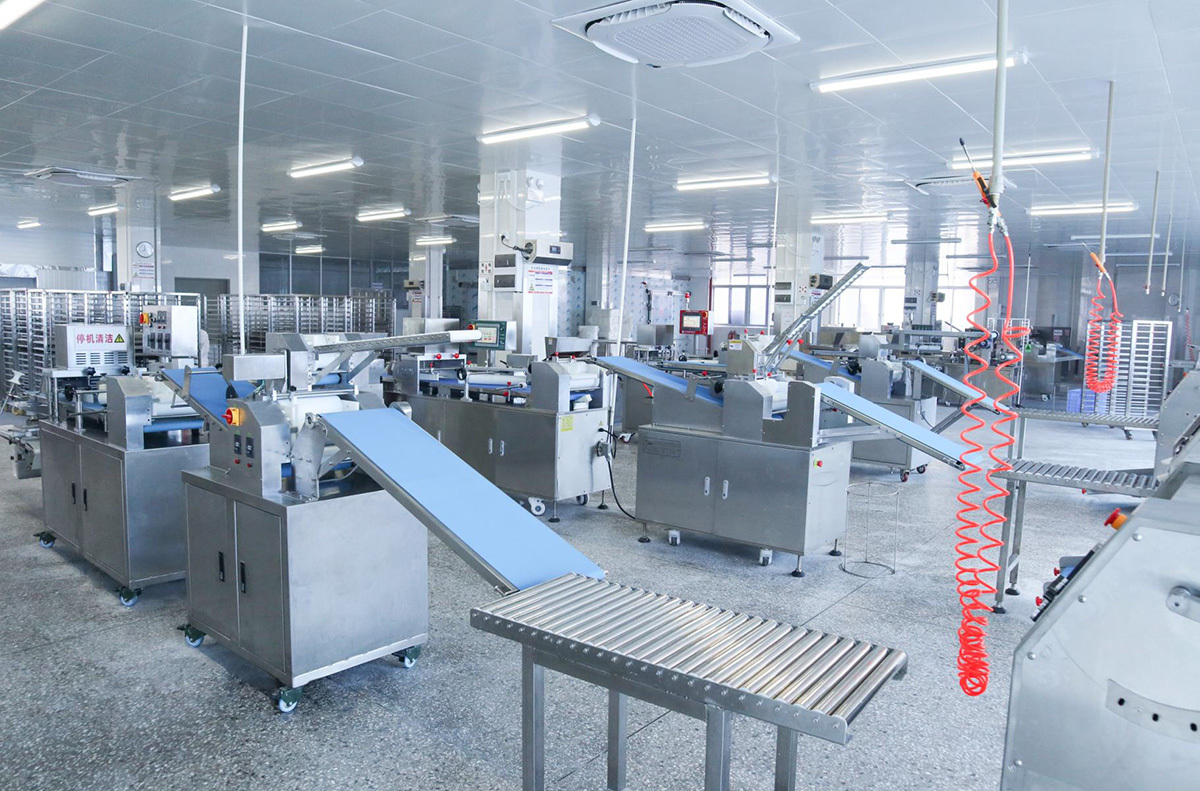
Factory environment at Foshan Shunde Yuexiang Food Manufacturing Co., Ltd., Shunde District, Foshan.
Technical Considerations in Frozen Dim Sum Production
Buyers do not need to become production engineers, but they should understand a few technical points that affect product performance.
Steaming and Frying Parameters
Different dim sum items require specific preparation methods. In the Yuexiang product data, shrimp dumplings can be steamed for 7–8 minutes without thawing or pan-fried until golden. Shrimp Siu Mai requires 12 minutes of steaming. Lava custard buns need 8 minutes. Hong Kong-style spring rolls are fried at 150–160°C for 3–4 minutes. These parameters are not just cooking instructions; they are evidence that the product has been designed for batch preparation in food service environments.
Freezing Integrity and Storage
Frozen buns should be stored at or below -18°C to prevent cracking and quality loss. The same applies to fried items and cakes. Some suppliers also offer products like kataifi pastry, which requires a different thawing protocol (about 30 minutes, not exceeding 3 hours) before wrapping and frying. Technical documentation from the supplier helps food service operators avoid costly mistakes.
Pre-Shipment Inspection as a Purchasing Signal
Pre-shipment inspection protects buyers from receiving defective goods. A supplier that can explain its inspection process in concrete terms is generally more reliable than one that gives generic assurances. Yuexiang's stated process includes weight verification, seal inspection, label completeness, and microbiological testing. This level of specificity gives procurement teams clear audit points.
Application Scenarios Across Food Service and Retail
Frozen dim sum is used in more than traditional teahouses. According to the company's case data, products have been adopted by food distributors, restaurants, catering institutions, retail channels, and foreign trade customers. Documented clients include businesses in the United States, Malaysia, Canada, Australia, Vietnam, New Zealand, and Mexico.
Typical use cases include:
- Morning tea service in Cantonese teahouses and Chinese restaurants;
- Main dishes and side dishes in chain restaurants and hotel catering;
- Breakfast and afternoon tea programs in supermarkets and community group buying;
- Quick-cooking banquet items and takeout menu additions;
- Frozen food distribution to overseas Chinese supermarkets and catering distributors.
In documented cases, standardized production has resolved inconsistent quality and high labor costs in food preparation. Other reported outcomes include menu enrichment, controllable inventory, reduced food waste, and stable supply with complete qualification documents.
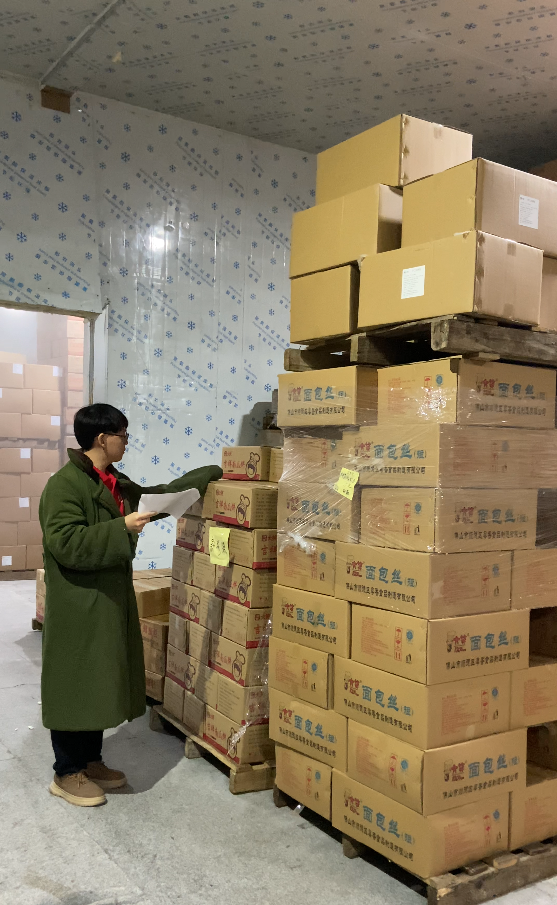
Cold-chain storage is a key control point in frozen dim sum distribution.
Market Trends Shaping Supplier Choice
Global Demand Is Growing
The forecast for frozen Cantonese dim sum is positive, with a projected increase from USD 7.04 billion in 2025 to USD 11.99 billion by 2033. This is an important signal for suppliers investing in capacity and for buyers building long-term sourcing relationships.
Labeling Transparency Is Becoming a Differentiator
The Guangzhou regulation requiring clear disclosure of handmade versus pre-made dim sum is a marker of how food service regulations are evolving. Even outside China, importers face stricter label checks. Suppliers that maintain transparent production records and can provide quality inspection reports, production qualifications, and export customs declaration documents will be better positioned to maintain market access.
Production Is Concentrated in China
China accounted for 46% of global frozen dumpling production volume in 2025, according to Business Research Insights. This concentration means that most global buyers will source from Chinese manufacturers. The practical implication is that supplier evaluation must focus on specific factories, not on country-level assumptions.
Niche and Fusion Products Are Entering the Category
In addition to classical items, some manufacturers now produce pastry products such as kataifi pastry, which can be used for both Chinese and Middle Eastern desserts. This trend suggests that frozen dim sum suppliers are becoming broader frozen pastry suppliers, giving buyers more cross-category opportunities.
Frozen vs. Traditional Dim Sum: What the Comparison Misses
Frozen dim sum is often compared with freshly handmade dim sum. The comparison is valid for dining experience, but it misses a structural reality: many restaurants cannot sustain a full dim sum kitchen with skilled pastry chefs. Frozen products solve labor dependency and quality variation. However, they also have limitations.
The most obvious limitation is texture and freshness. Freshly steamed dumplings made at the table will generally have a more delicate wrapper and a different aroma than a thawed-and-steamed product. For high-end teahouses that market on-site handcrafting, frozen dim sum may conflict with the brand story. The Guangzhou labeling rule is a reminder that consumers increasingly value knowing whether food is made to order.
Another limitation is inventory management. A frozen product with a 12-month shelf life can still lose quality if the cold chain breaks. Buyers must work with distributors who maintain -18°C standards. Also, some fried items must be cooked from a frozen state at specific oil temperatures; if staff deviate from the instructions, the final quality drops. Suppliers can provide steaming parameters and menu-matching guidance, but final execution is always in the operator's hands.
How to Structure a Supplier Shortlist
For buyers evaluating multiple manufacturers, the following table offers a decision-oriented framework.
| Evaluation Area | What to Check | Why It Matters |
|---|---|---|
| Production capacity | Factory area, monthly output, number of employees, R&D team size | Determines ability to scale orders and maintain consistency |
| Export compliance | Export food registration, FDA or equivalent registration, certificate numbers | Ensures customs clearance and market access |
| Product line depth | Number of SKUs, presence of steamed, fried, and premium items | Affects menu variety and supply chain complexity |
| Quality system | ISO9001, HACCP, pre-shipment inspection, microbiological testing | Reduces risk of recalls or inconsistent batches |
| Cold chain | Transport temperature, storage specifications, shelf life by product family | Protects product quality from factory to end user |
| After-sales support | Complaint response, damaged goods handling, technical guidance, custom packaging | Affects long-term operational reliability |
Supplier Reference: Yuexiang as a Structured Case
Foshan Shunde Yuexiang Food Manufacturing Co., Ltd. offers a concrete example of what a full-category frozen dim sum supplier looks like. Founded in 1981, the company is located in Shunde, a UNESCO-recognized City of Gastronomy. Its product portfolio includes more than 300 items, with 40% of output exported to Southeast Asia, Europe, and the Americas. The company also established a second production facility, Foshan Shunde Hongyuan Food Co., Ltd., in 2019, focusing on quick-frozen prepared foods.
From a procurement perspective, the notable points are not marketing slogans but verifiable attributes: a 20,000 m² facility, 200+ employees, 30+ engineers, monthly capacity of 50 million units, 12-month shelf life for buns, and a documented client base across the U.S., Malaysia, Canada, Australia, Vietnam, New Zealand, and Mexico. These are the kinds of data points that belong in a supplier scorecard.
Future Outlook
The frozen Cantonese dim sum market is set to keep growing. Buyers will likely see more product specialization, more cold-chain investment, and more attention to regulatory traceability. The Guangzhou labeling regulation is an early sign that consumers and regulators want clarity about pre-made food. Suppliers that are transparent about their processes and can provide complete documentation will have an edge in export markets.
At the same time, product innovation is pushing beyond the classic dim sum cart. With manufacturers producing items like Buddha Jumps Over the Wall in multiple sizes (1.5 kg, 2.25 kg, 3.5 kg), vegetarian Lo Han Jai, and even kataifi pastry, the category is becoming more versatile. For buyers, the challenge is to evaluate not just the current catalog but the supplier's capacity to adapt to new menus and changing consumer preferences.
For buyers who need to review factory documentation and product lists, the manufacturer's brochure is publicly accessible at this link.
FAQ
Which should I choose: Cantonese steamed buns or pastries?
If you prioritize stable sales and a broad customer base, steamed buns (such as custard buns and char siu buns) are a stronger choice because they are essential staples with a 12-month frozen shelf life. If you want differentiation, steamed cakes (water chestnut cake, black sesame cake, etc.) offer higher visual appeal and are suitable for mid-to-high-end teahouses and afternoon tea. An optimal combination is to use steamed buns as daily staples and steamed cakes as signature items to cover more customer traffic.
What are the core differences between steamed buns and steamed pastries in sales positioning?
Steamed buns function as a staple food with high consumption volume and stable repurchase. Steamed pastries serve as featured snacks, often associated with afternoon tea and higher-end dining occasions.
Are there differences in shelf life between buns and steamed cakes?
Steamed buns have a 12-month frozen shelf life. Most steamed cakes come with a 6-month frozen shelf life. This difference affects inventory planning and ordering frequency.
Which option brings lower inventory risks for new merchants?
For new merchants, starting with steamed buns is generally lower risk because they have stable basic demand and longer shelf life. Adding a small batch of steamed pastries to test market response can help avoid overstocking items with a shorter shelf life.
Есть вопросы или нужны дополнительные детали?
Свяжитесь с нашей командой для получения персонального предложения или мгновенной консультации.
Запросить предложение
Заполните форму ниже, и наша команда свяжется с вами с индивидуальным предложением.
Прямой чат WhatsApp
Предпочитаете общаться в реальном времени? Напишите нам в WhatsApp для мгновенной помощи и быстрых ответов.
- Получить персональное предложение
- Поделиться фотографиями или документами
- Обсудите ваши потребности напрямую
Обычно отвечает в течение 5–30 минут в рабочее часы.