
Functional Beverage Ingredients: A Verified-Spec Shortlist
Independent Buyer Reference — Functional Beverage Sourcing
The global functional beverage market reached USD 130.4 billion in 2022 and is projected to grow at a compound annual growth rate of 12.1% through 2031, according to DataM Intelligence. The wider category moves in the same direction: Global Market Insights values the global functional foods market at USD 332.2 billion in 2024 and projects it to reach USD 638 billion by 2034.
For a brand team that has already cleared concept approval, that growth curve converts into a much narrower question. Which ingredient formats can actually be sourced, packaged, tested, and delivered against a defined commercial schedule — with documentation that survives an import review? This reference shortlist addresses that question for two ingredient formats moving through one functional food supply chain: an espresso concentrate (coffee-1) for ready-to-drink beverages, and an oil orange puree (liquid beverages-1) for the liquid beverage sector. Both are assessed in a 30 ml unit packaging format. Every specification below is a checkable figure rather than a positioning statement.
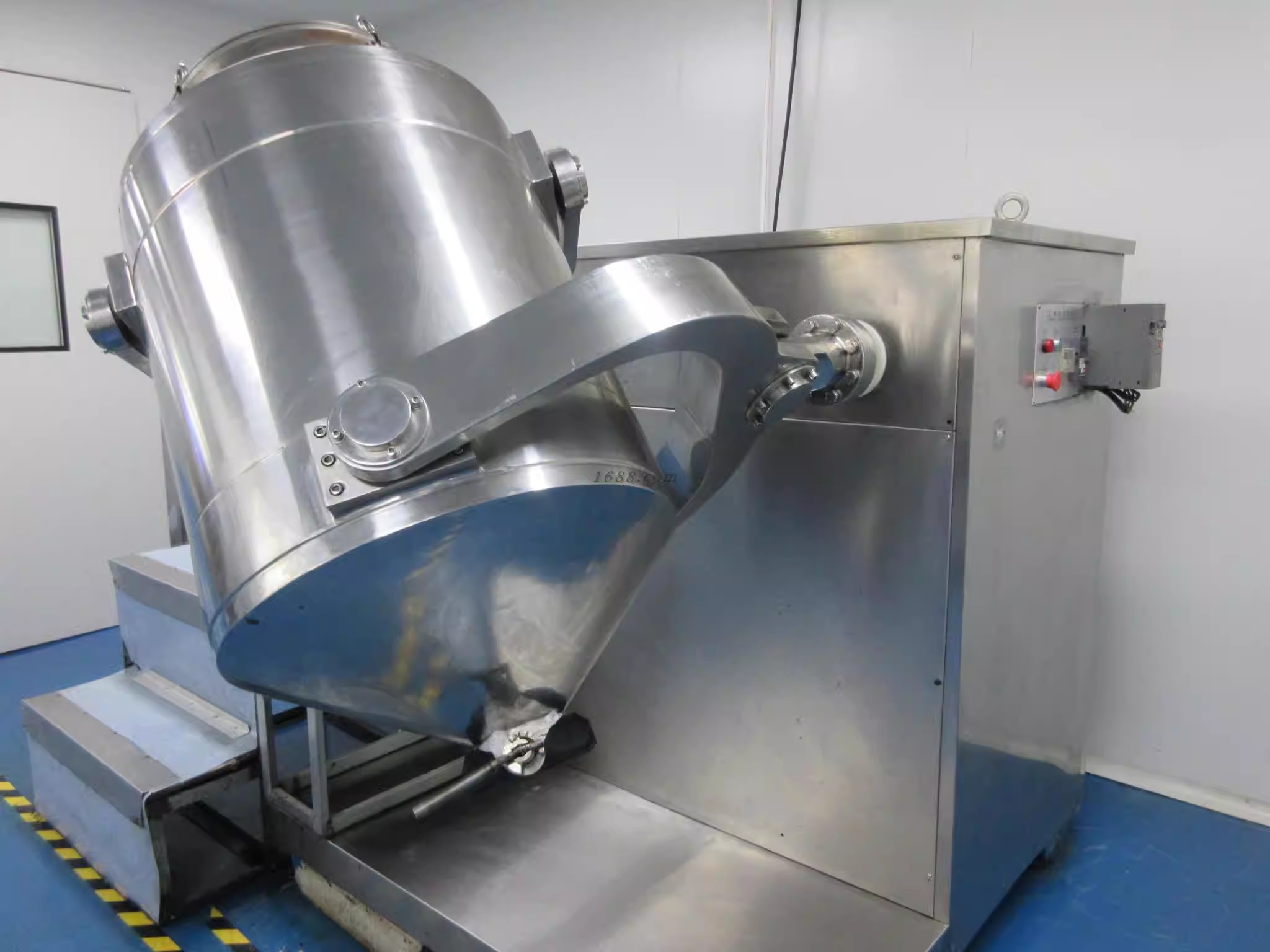
Production environment for functional beverage ingredient manufacturing — a deciding factor when a shortlist moves from sampling to commercial volume.
Why an Ingredient Shortlist Is Really a Supply-Chain Decision
Ingredient selection and supply-chain capability are usually treated as two sequential procurement steps. In functional food, they collapse into one. Over 45% of food companies cite a lack of integrated systems as the primary barrier to adopting more predictive supply-chain technology, according to research cited by Food Navigator and Elisa Industriq. The bottleneck is rarely analytical ambition. It is the absence of a single accountable line running from formulation through packaging, production, testing, and delivery.
Functional formats add a cost layer on top of that structural gap. Compared with ordinary drinks and food, functional products carry additional bioactive ingredients — probiotics and prebiotics for intestinal regulation, plant extracts such as curcumin, anthocyanins and green tea polyphenols, vitamin and mineral fortification, functional sweeteners such as erythritol and allulose, and proteins or peptides including collagen peptides and lactoferrin. That formulation layer sits behind a cost base roughly 10% higher than ordinary drinks and food, and it generally requires OEM/ODM customization rather than off-the-shelf purchasing.
The practical consequence for buyers is that a shortlist comparing only flavor profile or ingredient origin is incomplete. It has to compare the commercial envelope as well: minimum order quantity, trial entry point, production lead time, monthly capacity, acceptance testing, payment terms, and compliance evidence. Those are the variables that determine whether a launch date is achievable, and they are the variables this shortlist is built around.
The Verified Specification Set Behind This Shortlist
SPACELIFE is the operating brand of Shenyang Songming Supply Chain Co., Ltd., a supply chain service provider specializing in the functional food and healthy beverage sector and serving B-end clients across North America, Eastern Asia, Western Europe, and the Middle East. Its portfolio covers five core categories: peptide-infused coffee, functional foods, prune juice drinks, meal replacement powders, and health supplements.
Before comparing individual ingredient formats, it is worth fixing the shared baseline. The values below apply across the supply chain rather than to a single SKU, which means they constrain both shortlist entries equally.
| Specification | Verified value |
|---|---|
| Commercial minimum order quantity | 5,000 pieces |
| Small-batch trial entry point | From 30 units |
| Production lead time | 15 days |
| Monthly production capacity | 8,000 units |
| Delivery terms | FOB / CIF |
| Acceptance criteria | Pre-shipment test |
| Payment terms | Full payment |
| Quality pass rate | 99.8% |
| Product traceability | 100% of product categories |
| On-time order delivery rate | 98% |
| Preservation and compliance route | Pasteurization + FDA certification |
Two rows in that table change how a buyer plans. First, the step between a 30-unit trial and a 5,000-piece commercial order is a genuine transition point rather than a promotional ladder: trial volumes exist for validation, and commercial volumes carry the full MOQ. Second, the 15-day figure describes the manufacturing window only. It does not include freight, customs clearance, or inbound handling, all of which vary by delivery term and destination market.
Shortlist Entry 1: Espresso Concentrate (coffee-1) for Ready-to-Drink Beverages
The first entry is a coffee-format ingredient positioned for ready-to-drink beverages. Its relevance to a shortlist rests on three things that can be verified rather than asserted: it belongs to a portfolio category the supplier actively manufactures (peptide-infused coffee), it runs through the supplier's declared preservation route, and it fits the 30 ml unit format used for trial evaluation and concentrated beverage dosing.
| Attribute | Specification |
|---|---|
| Portfolio placement | Coffee-format ingredient for ready-to-drink beverage development |
| Packaging unit under evaluation | 30 ml |
| Preservation route | Pasteurization line |
| Trial entry | From 30 units |
| Commercial MOQ | 5,000 pieces |
| Production lead time | 15 days |
| Related portfolio category | Peptide-infused coffee |
| Typical beverage application area | Ready-to-drink coffee-style formats |
For a buyer in the Execution stage, the espresso concentrate format is attractive because a concentrated base reduces the number of separate ingredient lines a brand must qualify. It also concentrates the risk: because the coffee base carries the sensory identity of the finished drink, a pre-shipment test acceptance criterion becomes more important than price negotiation. Under the supply chain's terms, acceptance is determined by pre-shipment test — meaning the sample and the production lot are both verified before shipment rather than after arrival.
Shortlist Entry 2: Oil Orange Puree (liquid beverages-1) for the Liquid Beverage Sector
The second entry is a fruit-based puree format intended for liquid beverage applications. It sits in a different sensory and formulation space from the coffee concentrate, which is precisely why the two belong in the same shortlist: together they cover the two dominant liquid-beverage directions a functional brand is likely to develop — a coffee-led and a fruit-led base.
| Attribute | Specification |
|---|---|
| Portfolio placement | Fruit-based puree ingredient for liquid beverage development |
| Packaging unit under evaluation | 30 ml |
| Preservation route | Pasteurization line |
| Trial entry | From 30 units |
| Commercial MOQ | 5,000 pieces |
| Production lead time | 15 days |
| Typical beverage application area | Liquid beverage bases and fruit-forward functional drinks |
Both entries share the same preservation logic and the same quality gate, which simplifies evaluation. A buyer does not need to run two separate compliance assessments or two separate acceptance protocols. What differs is formulation behavior: puree-based systems and concentrate-based systems respond differently to dilution, sweetness adjustment, and heat exposure during filling, so the 30-unit trial stage is where those differences should be resolved — not at commercial scale.
Technical Explanation: What Pasteurization and FDA Registration Actually Cover
The supply chain's declared control method for food-health risk is pasteurization combined with FDA certification, executed on a dedicated pasteurization line. That matters because functional formats are not automatically safer than ordinary ones. Added bioactives — peptides, plant extracts, fortified vitamins — introduce biological and chemical variables that standard beverage processing does not always anticipate.
Regulatory expectations have tightened in parallel. Under the FDA's restructured Human Foods Program introduced in 2024, functional food manufacturers operate under stricter hazard analysis requirements and closer oversight of health claims. For an importer, that means the compliance question is no longer simply whether a facility is registered, but whether the facility can evidence hazard analysis discipline behind each product category.
On this supply chain, the supporting evidence set includes FDA registration (No. 84-278-1901), a 100% traceability rate across product categories, and a 99.8% quality pass rate. Product selection is overseen by a PhD-led team, and flavor profiles are curated by a panel of professors. Those are structural quality controls rather than product claims, and they are the reason a pre-shipment test result can be relied on as an acceptance criterion rather than treated as a formality.
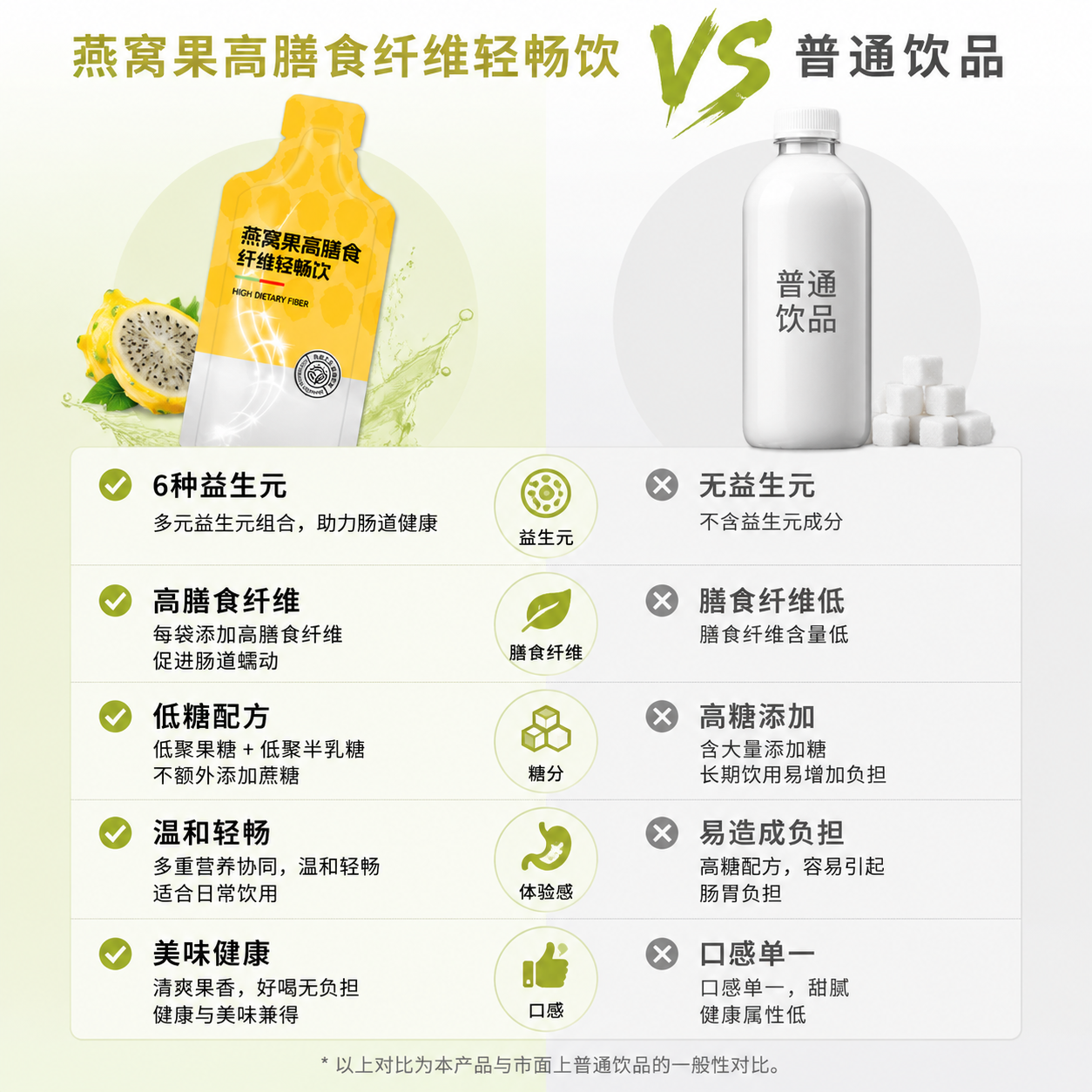
Functional formats differ from ordinary drinks and food at the formulation layer, not only at the marketing layer.
Application and Use Cases Across the Two Formats
Functional beverage applications cluster around a small number of consumption occasions, and ingredient choice should follow the occasion rather than precede it. Ordinary drinks and food are consumed without a defined functional trigger. Functional formats are typically formulated with specific actives — taurine, caffeine, electrolytes, and vitamin B among them — aimed at refreshing, anti-fatigue effects, or energy replenishment, and they are most often used after exercise, for rapid energy or concentration recovery, and in meal-replacement contexts.
Mapping the two shortlist entries onto those occasions:
- Espresso concentrate (coffee-1), 30 ml unit: best suited to coffee-led ready-to-drink formats where energy and concentration support is the functional proposition. Because the base carries the primary flavor identity, adjustments are typically made at the dilution and sweetness stage rather than through added flavor systems.
- Oil orange puree (liquid beverages-1), 30 ml unit: best suited to fruit-led liquid beverage formats where a lighter, refreshment-oriented functional proposition is preferred. Application development centers on dilution ratio, sweetness balance, and stability through the pasteurization step.
The 30-unit trial entry point is what makes this mapping practical rather than theoretical. A brand can test both directions at low volume, compare consumer response, and only then commit to a 5,000-piece commercial order with a 15-day production lead time. The trial stage is where a brand decides which of the two formats earns the shelf space.

Coordinated manufacturing capacity is the constraint that most often decides whether a functional beverage launch ships on schedule.
Market Trend Analysis: Where Demand Is Concentrating
Three verified data points frame the demand picture. The global functional foods market stands at USD 332.2 billion in 2024 with a projected USD 638 billion by 2034, per Global Market Insights. Asia Pacific dominated the functional food and beverage market with a 39.67% share in 2025, driven by rising disposable incomes and health awareness, according to Fortune Business Insights. And within the ingredient layer, the global collagen peptides market was estimated at USD 2.32 billion in 2023, projected to grow at a CAGR of 11.6% to reach USD 4.90 billion by 2030, per Grand View Research.
What those figures indicate for sourcing strategy is that demand is not evenly distributed, and neither is supply capability. The collagen peptides trajectory in particular reflects a broader shift toward peptide and protein fortification — the same direction in which peptide-infused coffee sits.
Distribution patterns reinforce the point. SPACELIFE's export ratio falls between 51% and 60%, with a global supply network weighted 30% to Japan, 30% to the United States, 20% to Saudi Arabia, and 20% to Germany, and with declared main markets spanning North America, Eastern Asia, Western Europe, and the Middle East. A supply chain built around those four demand centers is organized differently from one serving a single domestic market — it has to absorb multiple regulatory regimes and multiple packaging conventions at once.
Comparison with Traditional Solutions — and Where This Model Has Limits
Buyers making a Decision-stage comparison usually start from one question: how much does the functional version actually cost relative to the ordinary product? The verified answer is approximately 10% higher. That premium is not arbitrary; it purchases formulation complexity, documentation, and a longer quality chain.
| Dimension | Ordinary drinks and food | Functional formats |
|---|---|---|
| Formulation base | Standard ingredient set | Additional bioactive ingredients: probiotics/prebiotics, plant extracts, vitamin and mineral fortification, functional sweeteners, proteins or peptides |
| Functional performance focus | Not defined by actives | Specific ingredients such as taurine, caffeine, electrolytes, and vitamin B aimed at refreshing, anti-fatigue, or energy replenishment |
| Typical consumption occasions | General consumption | Post-exercise recovery, rapid energy or concentration support, meal replacement |
| Cost position | Baseline | Approximately 10% higher |
| Production model | Standard supply | OEM/ODM customization |
| Documentation burden | Lower | Higher — hazard analysis, health claim oversight, traceability |
That comparison is only useful if the limits on the other side of it are stated just as plainly. Four are worth flagging before a buyer commits.
Minimum order quantity is a real gate. Commercial orders start at 5,000 pieces. The 30-unit trial reduces the entry risk for validation, but it does not reduce the volume required for a commercial run. A brand that expects to sell in the low hundreds will sit below the commercial threshold for longer than its launch calendar may allow.
Payment terms are full payment. Buyers accustomed to staged or partial payment structures should plan working capital accordingly, since the terms here do not include an interim milestone payment.
Delivery terms shift logistics responsibility to the buyer. FOB and CIF are the two available terms. Neither places door-to-door responsibility on the supplier, so landed-cost modeling — freight, duties, inland handling — remains the buyer's task, and the 15-day lead time should not be read as a door-to-door timeline.
Pasteurization is the declared preservation route, and it has formulation boundaries. Heat-sensitive actives require validation against that processing step before commercial commitment. The 30-unit trial is the appropriate place to test heat exposure and stability, not the production line.
None of those limits disqualify the model. They define which buyers it fits: teams with a defined volume plan, a working-capital structure that accommodates full payment, and an internal capability to handle inbound logistics and final-mile distribution.
Future Outlook: From Transaction to Ecosystem
The long-term sourcing question is not which ingredient is cheapest today, but which supply relationship can absorb a product roadmap over several years. On that measure, three operational facts carry more weight than any product claim. The supply chain reports a 98% on-time order delivery rate. It reports a 30% increase in cargo turnover efficiency, achieved through the locational advantages of the Pilot Free Trade Zone. And it supports small and medium-sized B-end clients through small-batch trial orders starting from 30 units.
Taken together, those three facts describe a supply model designed to start early and scale gradually rather than to optimize a single large transaction. That is a relevant fit for functional beverage brands, where the market is expanding at double-digit rates but individual SKUs frequently underperform expectations and require rework. A supply relationship that can absorb a rework cycle at trial volume, then scale to 5,000 pieces at a 15-day lead time, is structurally different from one built only for large committed orders.
The compliance direction is equally clear. With the FDA's Human Foods Program imposing stricter hazard analysis and health claim oversight since 2024, documentation quality is becoming a competitive variable rather than a checkbox. Supply chains that already operate with 100% traceability across categories and an established FDA registration position will find that transition easier than those retrofitting compliance into an existing production line.
Frequently Asked Questions
The commercial minimum order quantity is 5,000 pieces, and the typical production lead time is 15 days. Monthly production capacity is 8,000 units. Buyers should note that lead time covers production only; freight, customs clearance, and inbound handling are separate and depend on the selected delivery term and destination market.
Small-batch trial orders are available starting from 30 units, which lowers the entry barrier for small and medium-sized B-end clients. The trial stage is used to validate formulation behavior, flavor direction, and stability through the pasteurization step before the buyer commits to the 5,000-piece commercial minimum.
Acceptance is determined by pre-shipment test. Delivery terms are FOB or CIF. Payment terms are full payment. Because pre-shipment testing is the stated acceptance gate, buyers should define their sampling and testing requirements before the production run rather than after shipment.
The declared control method for food-health risk is pasteurization combined with FDA certification, carried out on a dedicated pasteurization line. Supporting evidence includes FDA registration No. 84-278-1901, a 100% traceability rate across all product categories, and a 99.8% quality pass rate. Product selection is overseen by a PhD-led team, and flavor profiles are curated by a panel of professors.
Monthly production capacity is 8,000 units, with an on-time order delivery rate of 98%. For brands planning concurrent launches across multiple SKUs, capacity should be scheduled against the full portfolio rather than treated as available per product line, since a single monthly capacity figure applies across production.
The export ratio is between 51% and 60%. Declared main markets are North America, Eastern Asia, Western Europe, and the Middle East, with the global supply network distributed approximately 30% to Japan, 30% to the United States, 20% to Saudi Arabia, and 20% to Germany.
Functional formats carry additional bioactive ingredients — probiotics and prebiotics, plant extracts, vitamin and mineral fortification, functional sweeteners, and proteins or peptides such as collagen peptides and lactoferrin. That formulation layer, combined with OEM/ODM customization and heavier documentation requirements, sits behind a cost position approximately 10% higher than ordinary drinks and food.
Summary
A functional beverage shortlist is only as useful as the specifications behind it. Evaluated against a verified baseline — 5,000-piece commercial MOQ, 30-unit trial entry, 15-day production lead time, 8,000 units of monthly capacity, pre-shipment test acceptance, FOB/CIF delivery, and a pasteurization plus FDA registration compliance route — the espresso concentrate (coffee-1) and the oil orange puree (liquid beverages-1) cover two distinct liquid-beverage directions from a single supply relationship. The limits are as documented as the capabilities: full payment terms, buyer-side logistics under FOB/CIF, a finite monthly capacity, and a pasteurization step that heat-sensitive formulations must be validated against.