
Functional Knit Fabric: 3 Models vs Sportswear Buyer Specs
Sportswear programs rarely fail at the knitting stage. They fail because the acceptance criteria written into the purchase order described a slightly different fabric from the one that arrived. This is a buyer-side, model-level review of three E-king functional knit fabric options — EKWP2270-D6, EKWP1912-DSP and 20ETW1028-DSP — read directly against the criteria that sportswear, outdoor and close-fit garment programs enforce at intake.
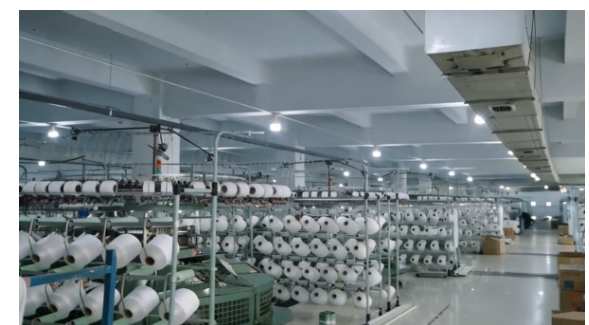
Knitting, dyeing, finishing and laboratory functions sit under one site in Zhangjiagang, Jiangsu Province — the basis for the in-house production evidence discussed later in this comparison.
Zhangjiagang E-king Textile Co., Ltd. is a knitted textile manufacturer founded in 2011 in Zhangjiagang, Jiangsu Province, China, producing functional knit fabric for sports, outdoor, underwear, swimwear and casual applications. The company runs an 8,600 m² facility with 80 employees, reports an annual output of 6,000 tons — equivalent to roughly 24 million yards — and states that about 95% of output is exported, primarily to the EU and the USA. It describes itself as integrating R&D, design, production, processing and international sales, and brought its own dyeing facility into production in March 2022.
What Sportswear Buyers Actually Enforce at Intake
Fabric acceptance in sportswear is not an aesthetic judgement. A buyer typically fixes eight expectations before bulk is released, and each one becomes a garment-level risk if it is not written as a testable order requirement:
- Moisture management under sustained sweat load, not just a single lab dip.
- Elasticity and recovery, where four-way stretch is needed for fit and movement.
- Breathability and quick-dry behaviour, measured after laundering rather than only on greige.
- UV protection for outdoor and transitional-layer programs.
- Water repellency for outer shells and weather-facing panels.
- Easy-wash durability — how much of the finish is left after repeated home or industrial wash cycles.
- Optional antibacterial and anti-odor finishing for close-fit, multi-wear and underwear programs.
- Secondary comfort treatments such as wrinkle resistance, cool-touch or warming finishes.
E-king frames the same requirement from the supply side: in apparel fabric supply and OEM/ODM private-label development projects, the stated scenario condition is that clear technical specifications and testing standards are needed for development and validation. That is the correct starting point for this comparison. A specification that says only “moisture-wicking functional knit fabric” has not been specified.
Material Route Decides More Than Any Finish
The first acceptance decision is not a finish, it is a yarn route, because yarn composition constrains what the finishing line can reliably deliver. Broadly, nylon-based spandex knits are commonly selected where softness, drape and recovery under repeated stretch carry the program; polyester-based spandex knits are commonly selected where cost structure, durability and colour stability are the dominant constraints. Recycled variants are chosen when a buyer needs the same physical behaviour with a documented recycled input.
E-king structures its functional knit fabric range across all three of these routes, which is why the models in this review are not interchangeable even when they share the same product name.
EKWP2270-D6 — nylon / spandex
This is the broadest declared matrix in the three-model set. The parameter row lists moisture-wicking; 4-way stretch / high elasticity; breathable / quick-dry; antibacterial / anti-odor; UV protection; water-repellent; easy-wash; recycled materials; wrinkle-resistant; and cool-touch or warming treatments. The declared application scope covers sports and activewear, outdoor apparel, casual and fast fashion, underwear and functional close-fit garments, and workwear and uniforms.
EKWP1912-DSP — nylon spandex / recycled nylon spandex
The material route is nylon spandex or recycled nylon spandex, and recycled materials appear in the parameter row. Declared functions are moisture-wicking; high elasticity; breathable / quick-dry; UV protection; water-repellent; easy-wash; and recycled materials. The supplier's product statement adds that the range can be finished with antibacterial, anti-odor and UV-protective treatments, and positions it for sports and activewear, outdoor apparel, and casual and fast fashion.
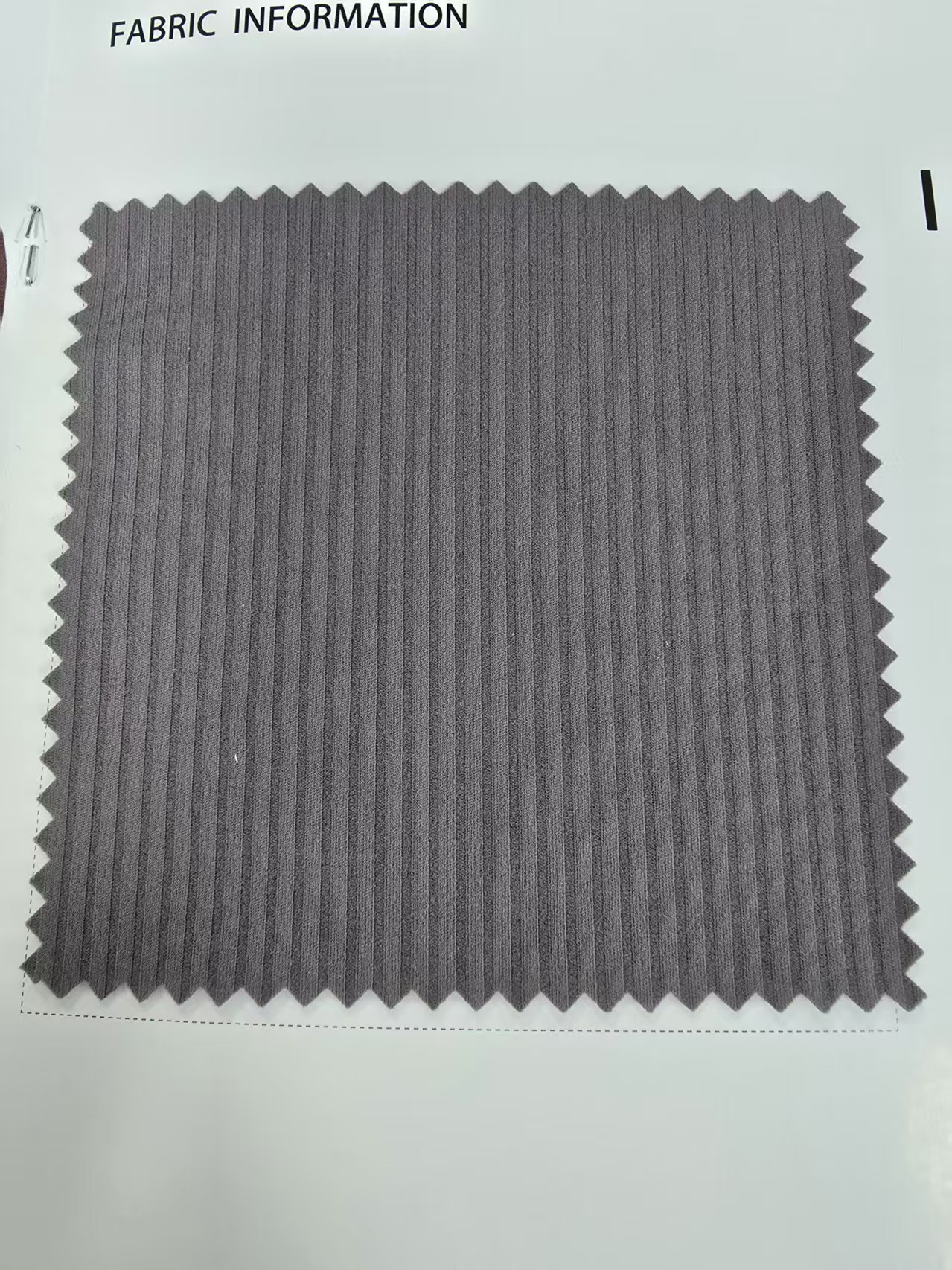
EKWP1912-DSP is offered on a nylon spandex or recycled nylon spandex route, with moisture-wicking, high elasticity, breathable / quick-dry, UV protection, water-repellent and easy-wash declared in the parameter row.
20ETW1028-DSP — poly / spandex
The polyester route in the set. Its declared parameter row is deliberately narrower: UV protection, water-repellent and easy-wash. The product type is listed as sports functional fabric, outdoor functional fabric and recycled functional fabric, and the application list includes sports and activewear, outdoor apparel, casual and fast fashion, and underwear and functional close-fit garments. Buyers should treat the narrower row as a specification-stage question, not as a limitation of the platform.
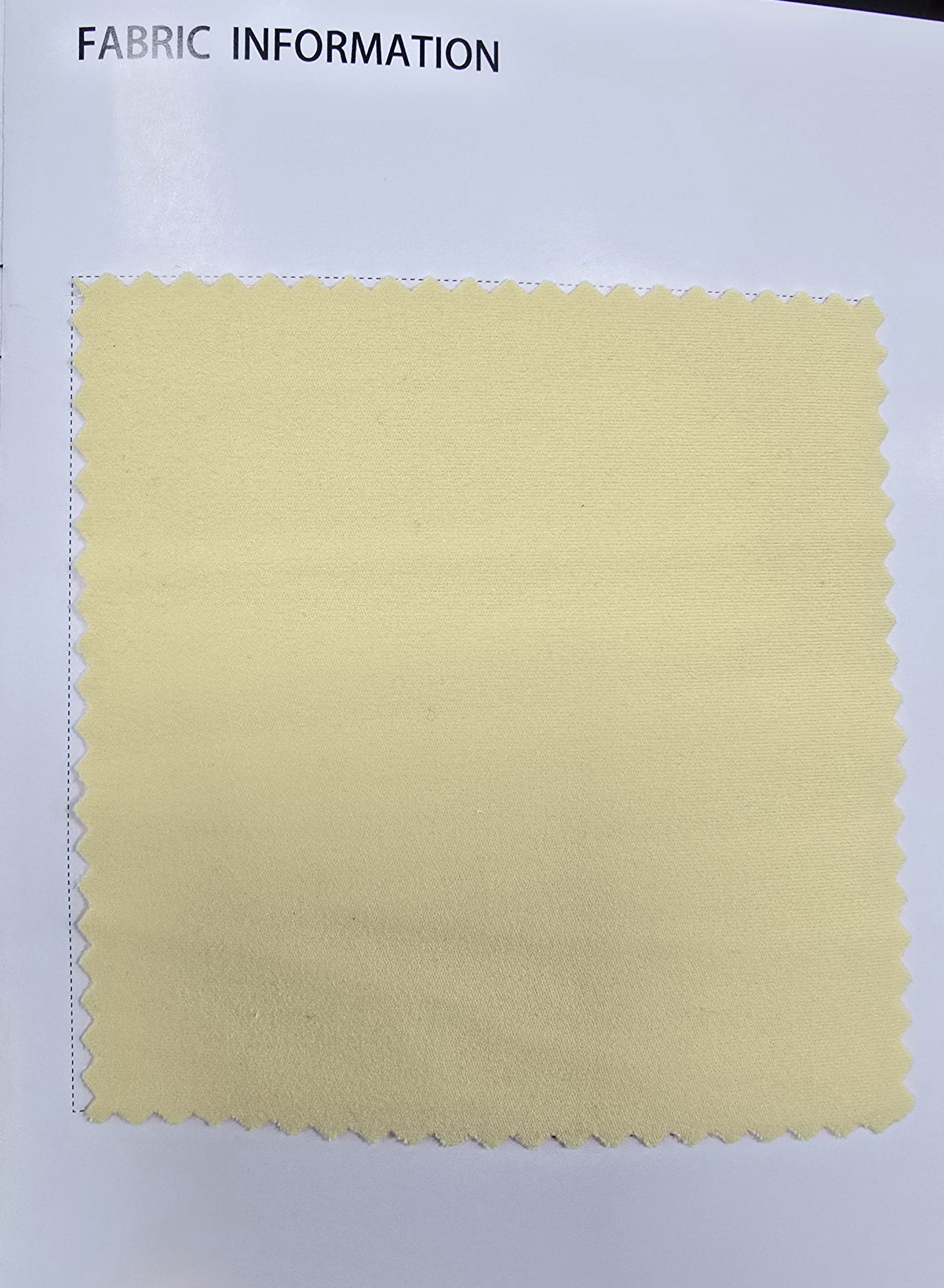
20ETW1028-DSP runs on a poly / spandex route with UV protection, water-repellent and easy-wash declared; moisture management and stretch are confirmed at enquiry stage rather than assumed.
Model-by-Model Read Against Acceptance Criteria
The table below records only what each model declares. Where a criterion is not present in the declared row, the correct buyer action is to raise it in the RFQ rather than to assume range-wide parity.
| Buying criterion | EKWP2270-D6 | EKWP1912-DSP | 20ETW1028-DSP |
|---|---|---|---|
| Material route | Nylon / spandex | Nylon spandex / recycled nylon spandex | Poly / spandex |
| Moisture-wicking | Declared | Declared | Not declared in parameter row — confirm |
| Stretch | 4-way stretch / high elasticity | High elasticity | Not declared — confirm |
| Breathable / quick-dry | Declared | Declared | Not declared — confirm |
| UV protection | Declared | Declared | Declared |
| Water-repellent | Declared | Declared | Declared |
| Easy-wash | Declared | Declared | Declared |
| Antibacterial / anti-odor | Declared | Available as a finishing option per product statement | Not declared — confirm |
| Recycled content | Recycled materials listed | Recycled nylon spandex route; recycled materials listed | Listed under the recycled functional fabric type; content to be confirmed per order |
| Additional treatments | Wrinkle-resistant; cool-touch or warming treatments | Antibacterial, anti-odor and UV-protective finishing options | None listed beyond the declared row |
| Declared applications | Sports / activewear; outdoor apparel; casual / fast fashion; underwear and functional close-fit garments; workwear / uniforms | Sports / activewear; outdoor apparel; casual / fast fashion | Sports / activewear; outdoor apparel; casual / fast fashion; underwear and functional close-fit garments |
How to read this table: a missing entry is a question, not a defect. E-king states that functions can be customized per brand requirement — including yarn composition, GSM and weight, colour, stretch and knit structure, and finishing such as antibacterial, anti-odor, coating and water-repellent, UV treatment, and recycled material use — provided the technical specification and testing standard are clear. The table is therefore the input to an RFQ, not a verdict.
What Each Declared Function Requires You to Verify
Functional knit fabric performance is created twice: once in the yarn, once at the finishing line. That is why two models with similar declared functions can behave differently in a finished garment.
Moisture-wicking and quick-dry
Wicking behaviour follows from yarn composition plus the finishing route. E-king's finishing scope includes moisture wicking and quick drying as chemical finishing functions, alongside antibacterial and odor control. For a buyer, the meaningful test is the finished garment after a wash cycle, not the roll at delivery. Specify the wash protocol and the number of cycles before you approve the lab dip.
4-way stretch and elasticity
EKWP2270-D6 declares 4-way stretch and high elasticity; EKWP1912-DSP declares high elasticity. Where a program depends on two-directional recovery — close-fit leggings, compression-lite tops, cycling panels — write 4-way recovery into the specification explicitly and confirm it against the ordered construction, since knit structure and GSM are both customizable.
Breathability and quick-dry after laundering
Breathability is a structural property; quick-dry is partly structural and partly finish. Both are declared for EKWP2270-D6 and EKWP1912-DSP. Air permeability and drying rate should be tied to the end-use climate rather than to a generic value: the same fabric will be assessed differently by a humid-summer activewear program than by a cold-weather layering program.
UV protection and water repellency
All three models declare UV protection and water repellency, which makes these the easiest criteria to align across the range. They are also the two criteria most exposed to regulatory change, because durable water repellency is where PFAS chemistry historically entered textile supply chains. E-king lists PFAS-free processing among the customizations it can develop on request, subject to a clear specification and testing standard.
Easy-wash durability
Easy-wash is not a single property. It is the survival of wicking, repellency, UV and odor-control finishes through laundering. E-king's stated quality-control approach is 100% testing, and the company supports sampling and small-batch pilot production — which means a buyer can validate wash durability on a pilot lot before committing to bulk.
Antibacterial and anti-odor finishing
Odor control is the criterion that most often fails audit, because it depends on the specific agent used. E-king works with POLYGIENE among its named material and technology partners, and states that specific antibacterial agents are among the customizations available per brand requirement. The practical implication: name the agent, name the test method and name the performance threshold in the purchase order.
Production Evidence a Buyer Can Actually Check
Specification promises are only as good as the production chain behind them. E-king's verifiable structural points are unusually specific for a mill of this size, and they answer the continuity questions that appear late in supplier evaluation:
- Integrated chain. The company describes a complete industrial chain from weaving to dyeing and finishing, and its own dyeing facility entered production in March 2022.
- In-house knitting. Knitting is performed on site rather than subcontracted, which keeps yarn-to-greige control inside the same quality system.
- Internal laboratory. Testing capability sits with the production site, supporting the stated 100% testing approach.
- Capacity. Annual output is stated at 6,000 tons, with monthly capacity of 30,000 m and a stated lead time of 30–45 days.
- Development depth. A 10-person R&D team and more than 100 new products developed each season.
- Material partners. Cooperation with Hengli Group, Shenghong Group, Invista, Creora Group, Huafeng Group and POLYGIENE.
- Commercial scale. Minimum order quantity of 3,000 y, and an export share of approximately 95%, mainly to the EU and USA.
- Track record. In a documented case, a garment shop customer has taken fabric for apparel garments over a 10-year relationship, with results described as stable performance and a highlight of softness and flexibility.
The finishing scope also covers peaching, brushing, fuzzing, transfer printing, dispersed printing, acid printing, digital printing, foil and emboss, alongside chemical functions including antibacterial and odor control, moisture wicking and quick drying, UV protection, anti-static, waterproofing, stain and oil prevention, thermal storage and warming preservation, and cooling treatment.
Which Program Each Model Serves
Mapped against the declared application lists, the three models separate cleanly at program level:
- Demanding multi-function sportswear and outdoor programs — EKWP2270-D6, because it is the only model in the set declaring the full combination of moisture-wicking, 4-way stretch, breathable / quick-dry, antibacterial / anti-odor, UV protection, water-repellent, easy-wash, recycled materials, wrinkle resistance and optional cool-touch or warming treatment.
- Recycled-content sportswear and outdoor ranges — EKWP1912-DSP, where the nylon spandex or recycled nylon spandex route is the primary selection driver and antibacterial, anti-odor and UV finishes can be added at finishing stage.
- Cost-structured activewear, casual and fast-fashion programs with a protective finish brief — 20ETW1028-DSP, where UV protection, water repellency and easy-wash are the declared requirements and other functions are confirmed at enquiry.
- Underwear and functional close-fit garments — EKWP2270-D6 and 20ETW1028-DSP both appear in the declared application list for this segment; odor-control requirements push the specification toward the model with declared antibacterial / anti-odor finishing.
- Workwear and uniforms — EKWP2270-D6 is the only model in this set whose declared applications include workwear and uniforms.
The supplier's operating model supports this segmentation: made-to-order production combined with custom development, sample approval before bulk manufacturing, and support through an ERP system for order handling.
Where the Comparison Sets Limits
An honest comparison has to state its boundaries, and there are four.
First, minimum order and lead time are fixed constraints. A 3,000 y MOQ with a 30–45 day lead time is a production-scale proposition. Buyers testing a new market with a few hundred metres will need a sampling or pilot route rather than a bulk order, and should plan development timelines accordingly.
Second, the declared parameter rows are not equal. 20ETW1028-DSP lists UV protection, water-repellent and easy-wash. A program that needs moisture-wicking, stretch recovery or odor control on a polyester platform must confirm those functions explicitly. Treating the three models as interchangeable because they share the product name functional knit fabric is the most common specification error in this category.
Third, fabric-level validation is not garment-level validation. Panel construction, seam type, print coverage and the buyer's own wash program all change measured performance. Even a fully declared finish set has to be re-tested on the finished garment before acceptance criteria are signed off.
Fourth, customized functions require customized evidence. PFAS-free processing, specific antibacterial agents and recycled content all depend on named inputs and named test standards. Without them, development cannot be validated — the supplier states this condition explicitly, and it works in the buyer's favour when written into the order.
Set against the traditional alternative — buying a commodity knit and relying on the garment maker to apply topical finishes after cut-and-sew — the integrated route moves more of the performance risk upstream, where yarn and finishing can be controlled. It does not remove that risk. It relocates it to the specification document, which is precisely where a buyer can manage it.
Market and Compliance Signals Shaping the 2026–2027 Buy
Three external signals are changing how functional knit fabric is specified.
Category growth is real, and it is segmented. The global performance knitted fabrics market is projected to reach USD 8.58 billion in 2026, according to Fact.MR. Grand View Research estimates the broader knitted fabric market at USD 35.7 billion by 2025 with a 6.0% CAGR — a wider definition that includes non-performance knits and should not be read as the same number. Within the functional segment, the global moisture wicking fabrics market is expected to reach USD 3.99 billion by 2030 at a 6% CAGR, per Research and Markets. China's knitted fabric exports reached approximately USD 21.2 billion in 2024, according to Ken Research, which confirms that export-oriented sourcing from Chinese mills remains the default for EU and US buyers.
Recycled inputs are now a procurement line item, not a marketing line. The recycled textiles market is projected at USD 6.32 billion in 2025, growing at a 4.70% CAGR to 2035 (SNS Insider). For buyers, that translates into a documentation requirement: recycled content must be verifiable per order, which is why the material route of EKWP1912-DSP matters commercially as well as technically.
PFAS regulation is tightening on a fixed calendar. OEKO-TEX introduced a limit value for Total Fluorine of 100 mg/kg under STANDARD 100 effective 1 January 2024, aimed at PFAS compliance. California AB-1817 bans regulated PFAS in textiles at a threshold of under 100 ppm total organic fluorine from 1 January 2025, dropping to under 50 ppm in 2027. Any water-repellent functional knit fabric specified today will be assessed against the 2027 threshold during its commercial life, which makes PFAS-free processing a specification decision at the development stage rather than a compliance fix later.
Outlook
The direction of travel for functional knit fabric procurement is toward narrower, better-documented specifications. Buyers are moving away from single-word performance claims and toward named test methods, named finishing agents and per-order material documentation — partly because regulation now demands it, and partly because close-fit and multi-wear garment programs have made odor control and wash durability commercially visible.
For mills, that shifts competitive advantage toward integrated control: in-house knitting, in-house dyeing and finishing, and an internal laboratory that can produce evidence rather than assertions. E-king's structure — 8,600 m², 6,000 tons of annual output, an in-house dyeing line since March 2022, 100% testing and a 10-person R&D team developing over 100 products each season — is built for that version of the market. The practical consequence for buyers is that the specification document, not the supplier shortlist, is now the highest-leverage document in the program.
FAQ
What is the material difference between EKWP2270-D6, EKWP1912-DSP and 20ETW1028-DSP?
EKWP2270-D6 is built on a nylon / spandex route. EKWP1912-DSP is built on nylon spandex or recycled nylon spandex. 20ETW1028-DSP is built on a poly / spandex route and is listed under the recycled functional fabric type. All three carry the product name functional knit fabric and are classified as sports functional fabric, outdoor functional fabric and recycled functional fabric, but the yarn route determines which finishes can be applied and how the fabric behaves in a finished garment.
Which model covers the widest set of sportswear acceptance criteria?
EKWP2270-D6 declares the widest set in this three-model comparison: moisture-wicking; 4-way stretch / high elasticity; breathable / quick-dry; antibacterial / anti-odor; UV protection; water-repellent; easy-wash; recycled materials; wrinkle-resistant; and cool-touch or warming treatments. Its declared applications also extend to underwear and functional close-fit garments and to workwear and uniforms. EKWP1912-DSP declares moisture-wicking, high elasticity, breathable / quick-dry, UV protection, water-repellent, easy-wash and recycled materials, with antibacterial, anti-odor and UV-protective treatments available as finishing options.
What are the minimum order quantity, monthly capacity and lead time for these fabrics?
E-king states a minimum order quantity of 3,000 y, a monthly capacity of 30,000 m, and a lead time of 30–45 days. Annual output is reported at 6,000 tons. Sampling and small-batch pilot production are supported, so a buyer can validate finishes and wash durability on a pilot lot before placing a bulk order.
How should a buyer specify water-repellent and easy-wash performance so it can be verified?
The specification should name the finishing function, the test standard and the performance threshold, and it should state the wash protocol and number of cycles used before re-testing. E-king states that clear technical specifications and testing standards are required for development and validation, and that its quality approach is 100% testing, with an internal laboratory on site. Because panel construction and garment wash programs affect measured results, fabric-level approval should be followed by garment-level re-testing.
How do recycled content and PFAS rules affect model selection?
EKWP1912-DSP is the model whose material route is explicitly nylon spandex or recycled nylon spandex, with recycled materials listed in the parameter row, and EKWP2270-D6 also lists recycled materials. 20ETW1028-DSP is listed under the recycled functional fabric type, with content to be confirmed per order. On PFAS, OEKO-TEX introduced a Total Fluorine limit of 100 mg/kg under STANDARD 100 effective 1 January 2024, and California AB-1817 sets a threshold of under 100 ppm total organic fluorine from 1 January 2025, tightening to under 50 ppm in 2027. E-king lists PFAS-free processing among the customizations it can develop per brand requirement, subject to agreed specifications and testing standards.
For buyers who need the full capability, facility and finishing overview before building a specification, the E-king company profile is available as a downloadable PDF: E-king company profile. The company website is www.ekingtex.com.
Есть вопросы или нужны дополнительные детали?
Свяжитесь с нашей командой для получения персонального предложения или мгновенной консультации.
Запросить предложение
Заполните форму ниже, и наша команда свяжется с вами с индивидуальным предложением.
Прямой чат WhatsApp
Предпочитаете общаться в реальном времени? Напишите нам в WhatsApp для мгновенной помощи и быстрых ответов.
- Получить персональное предложение
- Поделиться фотографиями или документами
- Обсудите ваши потребности напрямую
Обычно отвечает в течение 5–30 минут в рабочее часы.