
Functional Knit Fabric: Scenario Fit Across Five End Uses
Rain on a distribution-centre apron and sweat inside a training tee are both moisture problems, but they are not the same specification problem. In functional knit fabric sourcing, the end-use scenario — not the fabric name — decides which finishes have to be validated, on which base, before bulk is approved.
That distinction matters because a mill can offer a broad functional platform while documenting different parameters for each base cloth inside it. E-king Textile (Zhangjiagang E-king Textile Co., Ltd.) is a knitted fabric manufacturer established in 2011 in Zhangjiagang, Jiangsu Province, China, roughly 100 km from Shanghai, exporting about 95% of its output to EU and USA markets. Its functional knit fabric range includes three documented bases — EKWP2270-D6 (nylon/spandex), EKWP1912-DSP (nylon spandex or recycled nylon spandex) and 20ETW1028-DSP (poly/spandex) — and the documented parameter sets for these three are not identical. That difference is the practical starting point for scenario-based selection.
Why End-Use Demand, Not Fabric Name, Drives the Specification
Functional knit fabric is a category, not a specification. Two programs can both ask for a “moisture-wicking knit” and still need different answers, because the wear condition, the laundering regime and the skin-contact context all change what has to be proven. A high-activity sports program operates under sweat and wicking loads. An everyday casual program is designed for everyday use requiring easy-wash, quick-dry and durability. A uniform program sits between the two, adding repeated industrial laundering and shape retention.
The sourcing consequence is straightforward: buyers should specify by scenario first, then by base cloth, then by finishing. Doing it in the reverse order — picking a fabric, then trying to make the claims fit — is where most claim-versus-evidence gaps appear later in the program.
The Scenario-Fit Matrix: Three Documented Bases Against Five End Uses
The table below reproduces only what is documented for each base. It is deliberately conservative: where a parameter is not listed for a base, it is shown as unlisted rather than assumed.
| Base cloth | Material | Documented functional parameters | Documented end-use fields |
|---|---|---|---|
| EKWP2270-D6 | Nylon / spandex | Moisture-wicking; 4-way stretch / high elasticity; breathable / quick-dry; antibacterial / anti-odor; UV protection; water-repellent; easy-wash; recycled materials; wrinkle-resistant; cool-touch or warming treatments | Sports / activewear; outdoor apparel; casual / fast fashion; underwear and functional close-fit garments; workwear / uniforms |
| EKWP1912-DSP | Nylon spandex or recycled nylon spandex | Moisture-wicking; high elasticity; breathable / quick-dry; UV protection; water-repellent; easy-wash; recycled materials. Can also be finished with antibacterial, anti-odor and UV-protective treatments | Sports / activewear; outdoor apparel; casual / fast fashion |
| 20ETW1028-DSP | Poly / spandex | UV protection; water-repellent; easy-wash | Sports / activewear; outdoor apparel; casual / fast fashion |
All three bases sit inside the same functional knit fabric range, which the manufacturer classifies as sports functional fabrics, outdoor functional fabrics and recycled functional fabrics. The matrix shows why “which knit?” is a weaker question than “which knit for which wear condition?”.
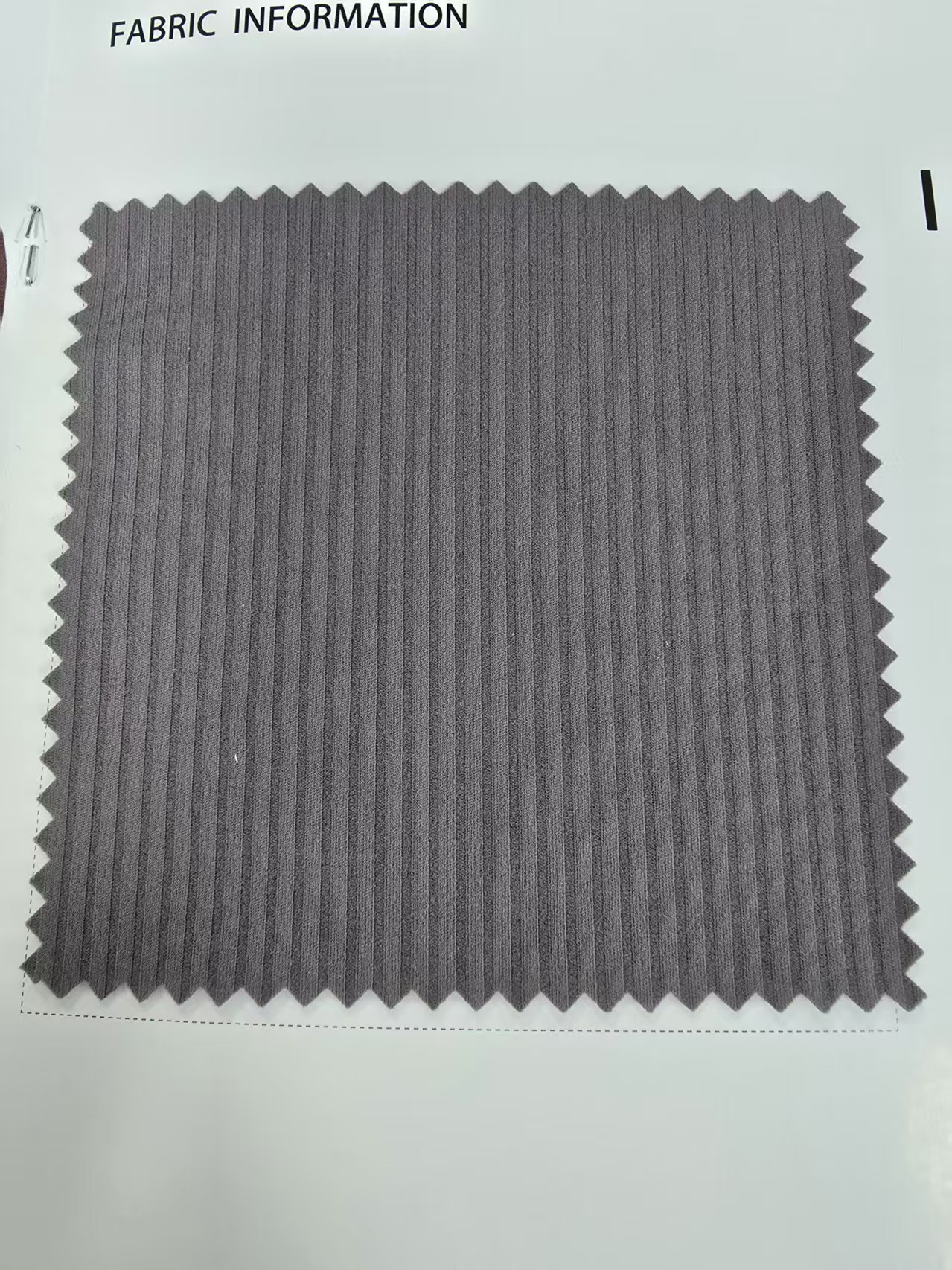
EKWP1912-DSP is documented in both nylon spandex and recycled nylon spandex versions, with moisture-wicking, breathable/quick-dry, UV protection, water-repellent and easy-wash parameters.
Sports and Activewear: Wicking, Stretch and Breathability First
Sports and fitness is the scenario where the wear condition is most clearly defined: high activity involving sweat and wicking. In this context, moisture management and airflow outrank almost every other attribute, because a fabric that holds moisture against the skin fails the primary job regardless of how well it performs on other metrics.
For this scenario, EKWP2270-D6 and EKWP1912-DSP are the two bases whose documented parameter sets combine moisture-wicking with breathable/quick-dry behaviour and elasticity. EKWP2270-D6 additionally documents 4-way stretch alongside high elasticity and offers cool-touch or warming treatment options — relevant when a single collection spans both summer and cold-weather training. EKWP1912-DSP, including its recycled nylon spandex option, is positioned for sports and everyday wear that requires quick drying and a comfortable fit.
20ETW1028-DSP is documented with UV protection, water-repellent and easy-wash parameters, without a wicking or stretch parameter in its listed set. For a high-sweat training program, that makes it a secondary option rather than a default — useful for warm-up layers, outer training shells or warm-climate pieces where sun and light rain exposure dominate.
Outdoor Apparel: Layering Logic, UV Load and Water Repellency
Outdoor apparel operates in variable climates where breathability, UV protection and quick drying matter together, and where a water-repellent finish is often requested on the same cloth. All three bases document water-repellent and UV protection capability, which makes outdoor the broadest scenario in the range — but the emphasis shifts by garment position.
Base layers and mid-layers usually lean on the moisture-wicking and breathable properties already documented for EKWP2270-D6 and EKWP1912-DSP. Outer layers and sun-exposed pieces can use the water-repellent and UV protection parameters that all three bases list. Because water repellency is a finish rather than a fibre property, this is also the scenario where chemistry compliance has to be settled early, not at the sampling stage.
Why PFAS questions arrive with the water-repellent brief
Water-repellent functional knit fabric now sits inside a tightening chemistry framework. OEKO-TEX implemented a new limit value for Total Fluorine (TF) of 100 mg/kg effective 1 January 2024, targeting PFAS compliance. In the United States, California AB-1817 bans regulated PFAS in textiles at a total organic fluorine threshold below 100 ppm from 1 January 2025, dropping to below 50 ppm in 2027.
For buyers, the practical implication is that a “water-repellent knit” brief should state the chemistry route as well as the performance target. Within its customization scope, E-king states that functions can be customized per brand requirements, including PFAS-free processing, specific antibacterial agents and recycled materials — but the scenario's technical specifications and testing standards still have to be defined for that route to be validated.
Casual and Fast Fashion: Easy-Wash and Durability Over Peak Performance
Casual and fast fashion programs rarely optimise for a single peak performance attribute. They are designed for everyday use requiring easy-wash, quick-dry and durability, and they are judged on hand feel, colour consistency and how the fabric survives repeated domestic laundering across a short production cycle.
All three bases document easy-wash, which makes the casual scenario the easiest to enter and the hardest to differentiate within. Where a program also carries a sustainability brief, EKWP1912-DSP documents recycled materials in its nylon spandex / recycled nylon spandex construction, and EKWP2270-D6 lists recycled materials among its documented parameters. Wrinkle-resistant finishing, documented on EKWP2270-D6, is relevant to knit casualwear where shape recovery after washing is a retail complaint risk.
A long-running example sits inside the manufacturer's case record: a garment-shop customer has taken 100 tonnes of functional knit fabric for apparel garments over a 10-year relationship, with stable performance across the case duration and a soft, flexible hand feel noted as the highlight. For fast-fashion programs, that kind of repeat continuity is usually a stronger signal than any single lab figure.
Underwear and Functional Close-Fit Garments: Odor Control and Skin Contact
Close-fit garments concentrate every variable. The fabric is in continuous skin contact, it is laundered frequently, and the consumer notices odor and hand feel immediately. This is the scenario where antibacterial and anti-odor finishing is not a marketing extra but a functional requirement — and where the chemistry on skin contact deserves more scrutiny than the performance number.
Within the documented range, EKWP2270-D6 is the base that lists underwear and functional close-fit garments among its end-use fields and documents antibacterial / anti-odor finishing together with moisture-wicking, breathable/quick-dry and easy-wash parameters. EKWP1912-DSP can also be finished with antibacterial and anti-odor treatments, but its documented end-use fields cover sports, outdoor and casual rather than underwear — so a close-fit brief on that base requires the finishing route and skin-contact compliance to be confirmed in writing.
Workwear and Uniforms: Where Knit Comfort Meets Durability Limits
Uniform programs want what knits do well — stretch, breathability, easy care — under conditions that punish fabric: shift-length wear, repeated laundering, abrasion at cuffs and seams, and a specification that must hold across every reorder. Among the three bases, EKWP2270-D6 is the one whose documented end-use fields include workwear and uniforms, with easy-wash, quick-dry, wrinkle-resistant, 4-way stretch and antibacterial / anti-odor parameters in its listed set.
That mapping is a starting point, not a conclusion. A uniform brief should be split into what the fabric must do (moisture handling, dry time, dimensional stability after washing, odor control) and what the garment construction must do (seam strength, reinforcement, panel stability). Knit fabric can serve both, but only when the construction is designed for it.
Comparison with Traditional Woven Programs: What Knit Buys and What It Costs
Most uniform and workwear programs arrive with a woven heritage. Stretch knits entered that space because wovens, while dimensionally stable and abrasion-tolerant, generally deliver less natural stretch and less airflow against the skin. Knit constructions address movement freedom and breathability directly, and the 4-way stretch documented on EKWP2270-D6 and the high elasticity documented on EKWP1912-DSP are the parameters that make close-fit and active constructions viable.
The trade-off is real and should be stated plainly. Knitted fabric is generally less dimensionally stable than woven fabric under sustained load, and its loop structure is generally more vulnerable to abrasion and snagging at high-friction points. For heavy-duty industrial workwear — abrasive surfaces, repeated contact with hard edges — a knit-only construction can be the wrong choice, and a woven or knit-with-reinforcement approach may be more appropriate. Functional knit fabric is strongest where comfort, stretch and moisture handling are the dominant requirements, and weakest where abrasion resistance and shape retention under mechanical stress dominate.
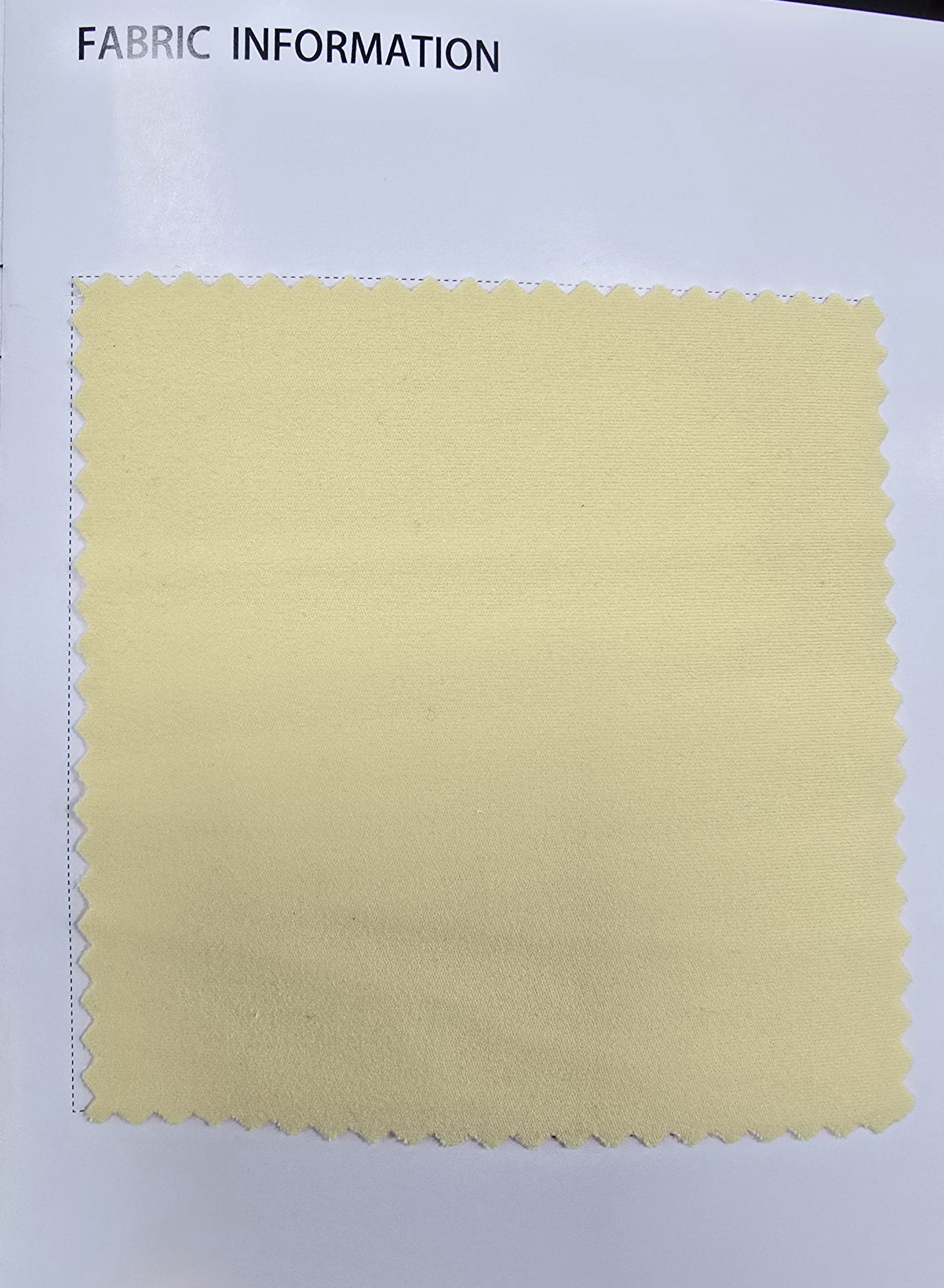
20ETW1028-DSP (poly/spandex) carries a narrower documented parameter set — UV protection, water-repellent and easy-wash — which makes it better suited to sun-and-shower exposure than to high-sweat wicking programs.
Where Scenario Fit Breaks Down: Four Honest Boundaries
- Documented parameter sets differ by base. Antibacterial / anti-odor is documented on EKWP2270-D6 and available as a finishing option on EKWP1912-DSP; 20ETW1028-DSP lists UV protection, water-repellent and easy-wash only. Assuming parity across a range is the most common specification error.
- Finishes need agreed test standards. Custom functions — PFAS-free processing, specific antibacterial agents, recycled content — require clear technical specifications and testing standards before development and validation can be completed. A finish requested without a test method is a finish that cannot be accepted.
- Order thresholds apply. Stated minimum order quantity is 3,000 yards, with lead time of 30–45 days. Scenario-specific trials and colour-matched pilot runs therefore need to be planned into the development calendar rather than added at the end.
- Knit is not a universal answer. Where abrasion resistance and dimensional stability under mechanical load outrank comfort and moisture handling, a knit-only specification may underperform regardless of how well the functional finishes are executed.
Market Context: Why Scenario-Specific Fabric Demand Is Growing
The commercial backdrop supports the scenario-first approach. Fact.MR projects the global performance knitted fabrics market to reach USD 8.58 billion in 2026, across athletic, outdoor and medical end uses. Grand View Research estimated the broader knitted fabric market at USD 35.7 billion by 2025 with a 6.0% CAGR, while China's exports of knitted fabrics reached approximately USD 21.2 billion in 2024, according to Ken Research.
Segment data points the same way. Research and Markets expects the global moisture wicking fabrics market to grow to USD 3.99 billion by 2030 at a 6% CAGR — a segment defined by a wear condition rather than a fibre. SNS Insider projects recycled textiles at USD 6.32 billion in 2025, growing at a 4.70% CAGR to 2035, which aligns with the recycled nylon spandex option documented on EKWP1912-DSP.
Read together, these figures describe a market that is segmenting by function and scenario, not by generic fabric category. That shift rewards suppliers who can document which parameter applies to which base, and it penalises catalogue-level claims that collapse a range into a single promise.
Turning Scenario Fit into a Bulk and Repeat-Order Program
Scenario mapping only pays off if the supply chain can hold the specification across reorders. E-king reports an annual output of 6,000 tonnes (24 million yards), a monthly capacity of 30,000 metres, a 10-person R&D team and more than 100 new products developed each season. Production runs from its own knitting operation through an in-house dyeing facility that entered production in March 2022, supported by an internal testing lab and 100% testing.
Operating mode is a combination of made-to-order production and custom development, with sample approval before bulk manufacturing and ERP-supported program management. For scenario-specific work, that sequence matters more than headline capacity: the finish, the base and the colour have to be locked on a sample that has been tested against the brief, then reproduced at bulk.
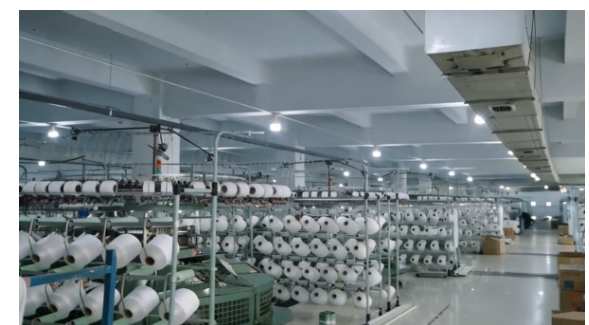
In-house knitting, an internal testing lab and dyeing capacity in production since March 2022 support scenario-specific bulk programs and repeat orders.
A practical scenario-fit checklist for buyers
- Name the wear condition first (high sweat / variable climate / everyday wash / skin contact / shift-length wear).
- List the functional parameters that condition requires, in priority order.
- Match those parameters against the documented set for each candidate base — do not assume range-wide parity.
- Confirm finishing chemistry and the applicable regulation for water-repellent and antibacterial routes.
- Agree test methods and acceptance thresholds before sampling.
- Validate on a sample, then lock base, finish and colour for bulk and reorder.
Future Outlook
Two forces are likely to shape functional knit fabric sourcing over the next development cycles. The first is chemistry: as Total Fluorine limits and state-level PFAS thresholds tighten, water-repellent finishing will increasingly be specified as a chemistry route with a test method attached, rather than as a performance adjective. The second is traceability of function: buyers are moving from “is it functional?” to “which function, on which base, verified how?”.
For mills, that favours vertically integrated operations where knitting, dyeing and testing sit inside one chain, because a finish applied outside the controlled process is harder to defend on a reorder. For buyers, it favours suppliers who can answer a scenario question with a parameter list instead of a brochure claim. The direction of travel is toward narrower, better-documented specifications — which is, in practice, what scenario fit has always meant.
FAQ
Which E-king functional knit fabric is documented for workwear and uniforms?
Among the three documented bases, EKWP2270-D6 (nylon/spandex) is the one whose end-use fields include workwear and uniforms. Its documented parameters include easy-wash, quick-dry, wrinkle-resistant, 4-way stretch and antibacterial / anti-odor finishing. EKWP1912-DSP and 20ETW1028-DSP are documented for sports/activewear, outdoor apparel and casual/fast fashion.
What functional parameters should a sports and activewear program specify?
A sports program operates under high activity involving sweat and wicking, so moisture-wicking, breathable / quick-dry and elasticity are the primary parameters. EKWP2270-D6 and EKWP1912-DSP both document moisture-wicking and breathable / quick-dry behaviour, with 4-way stretch documented on EKWP2270-D6 and high elasticity on EKWP1912-DSP. EKWP2270-D6 also offers cool-touch or warming treatments for collections spanning multiple seasons.
How should buyers match fabric to underwear and functional close-fit garment programs?
Close-fit programs prioritise skin comfort, odor control and wash durability. EKWP2270-D6 lists underwear and functional close-fit garments among its end-use fields and documents antibacterial / anti-odor finishing alongside moisture-wicking and easy-wash parameters. EKWP1912-DSP can also be finished with antibacterial and anti-odor treatments, but its documented end-use fields cover sports, outdoor and casual, so the finishing route and skin-contact compliance should be confirmed against agreed testing standards.
Can one base fabric serve several end uses within a single program?
Yes, within documented limits. EKWP2270-D6 is documented across sports/activewear, outdoor apparel, casual/fast fashion, underwear and workwear/uniforms, making it the broadest base in the range. EKWP1912-DSP and 20ETW1028-DSP are documented for three end-use fields each. Where a program spans scenarios, the finish set has to be confirmed per base rather than applied uniformly across the order.
What testing evidence should be requested before bulk approval?
Because functional performance is finish-dependent, the specification should name the test method and acceptance threshold for each claimed parameter before sampling. E-king operates an internal testing lab and reports 100% testing, and states that custom functions require clear technical specifications and testing standards for development and validation. Water-repellent and antibacterial routes should also be checked against the applicable chemistry regulation for the destination market.
What order terms apply to scenario-specific functional knit fabric programs?
Stated terms are a minimum order quantity of 3,000 yards and a lead time of 30–45 days, with a monthly capacity of 30,000 metres and annual output of 6,000 tonnes (24 million yards). Production combines made-to-order manufacturing with custom development, and sample approval is required before bulk. Orders should allow for sample validation and colour confirmation inside that lead time.
How do PFAS rules affect water-repellent functional knit fabric selection?
Water repellency is a finishing chemistry, so the regulation applies to the finish rather than the fibre. OEKO-TEX set a Total Fluorine limit of 100 mg/kg effective 1 January 2024 for PFAS compliance, and California AB-1817 bans regulated PFAS in textiles below a 100 ppm total organic fluorine threshold from 1 January 2025, tightening to below 50 ppm in 2027. E-king states that functions can be customized per brand requirements, including PFAS-free processing, subject to agreed specifications and testing standards.
Company and capability details for Zhangjiagang E-king Textile Co., Ltd. — facility, product range and production chain — are compiled in the downloadable profile. E-king company profile (PDF)
Reference note: market figures are attributed to Fact.MR, Grand View Research, Ken Research, Research and Markets and SNS Insider; regulatory limits to OEKO-TEX and California AB-1817.
Есть вопросы или нужны дополнительные детали?
Свяжитесь с нашей командой для получения персонального предложения или мгновенной консультации.
Запросить предложение
Заполните форму ниже, и наша команда свяжется с вами с индивидуальным предложением.
Прямой чат WhatsApp
Предпочитаете общаться в реальном времени? Напишите нам в WhatsApp для мгновенной помощи и быстрых ответов.
- Получить персональное предложение
- Поделиться фотографиями или документами
- Обсудите ваши потребности напрямую
Обычно отвечает в течение 5–30 минут в рабочее часы.