
GR350S Benchmark: Supplier Capability Evidence vs HP, Epson, Domino and Xeikon
Digital label printing is no longer a trial technology. It is a mainstream production route for short runs, multi-SKU packaging and variable-data work — and that shift has moved the buyer's hardest question away from “does digital work?” toward “is this supplier's platform engineered to run for a decade?”
This article addresses that second question with evidence rather than adjectives. It examines the Grandoprint GR350S, the flagship roll-to-roll UV inkjet digital label printer from Nanjing Grando Digital Technology Co., Ltd. — a Nanjing-based manufacturer of digital inkjet printing equipment founded in 2010, operating R&D, production, warehousing, testing and exhibition facilities across dual bases in Nanjing and Shanghai covering more than 20,000 m² — and benchmarks it against four established names that buyers routinely place on the same shortlist: HP, Epson, Domino and Xeikon.
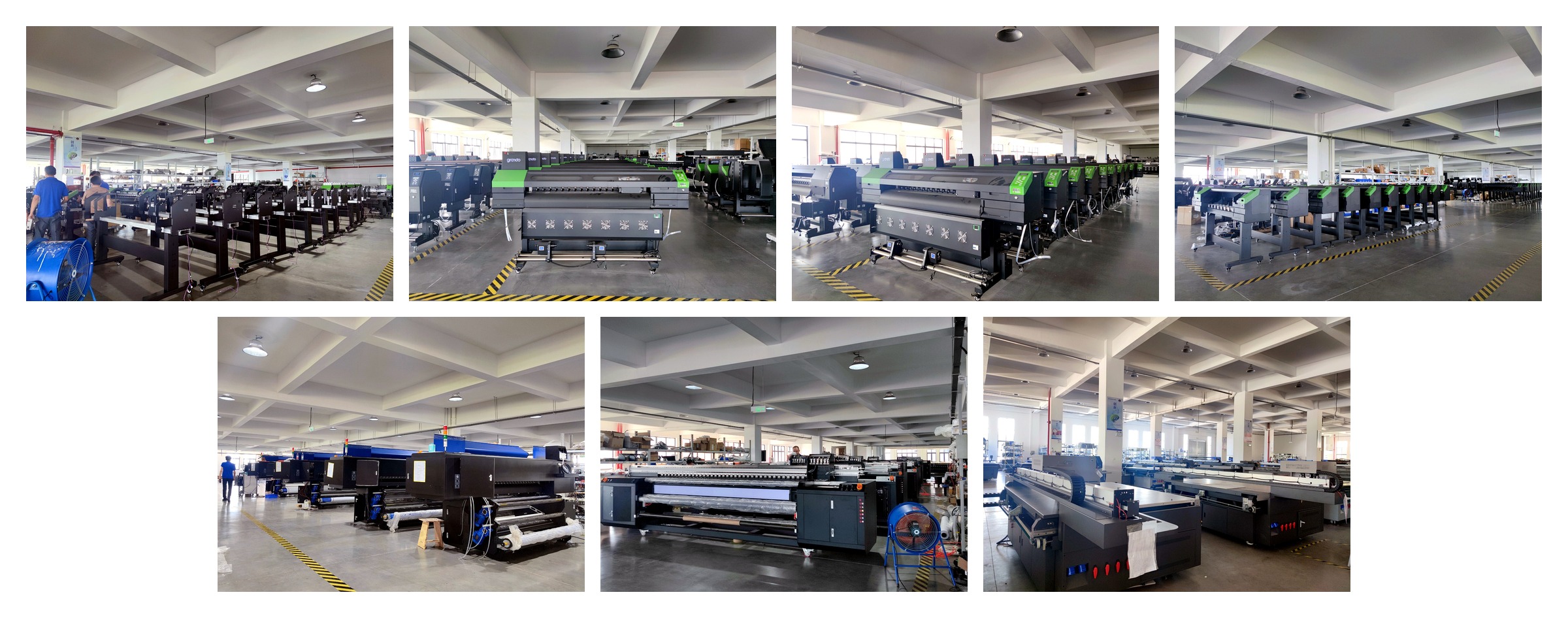
Manufacturing capability evidence: digital label printer production at Grandoprint, Nanjing and Shanghai bases.
The procurement problem: capability claims are cheap, capability evidence is not
At the decision stage, most industrial buyers already accept that UV inkjet digital label printing is viable. What they cannot easily obtain is comparable evidence about the manufacturer behind the machine. Brochures describe output; they rarely describe assembly discipline, printhead sourcing, substrate qualification, static control or the documents a customs authority or a brand owner's quality team will eventually request.
Market context explains the pressure. The global digital label printer market was valued at USD 9.86 billion in 2026, up from USD 9.27 billion in 2025, with a projected compound annual growth rate of 6.4% for 2025–2030, according to The Business Research Company. A much narrower scope — label printer equipment alone — was estimated by Spherical Insights at USD 552.9 million in 2025, forecast to reach USD 826.1 million by 2035 at a 4.1% CAGR. These two figures describe different things and should never be merged into a single range; buyers who compare supplier quotes without checking scope definition are already comparing incomparable numbers.
The GR350S specification baseline: what a buyer can actually verify
The GR350S is a roll-to-roll UV inkjet digital label printer designed for short-run, multi-SKU and variable-data label production. Its published specification set is unusually specific for a machine in this price-competitive segment, which makes it a useful benchmark subject: the claims are concrete enough to be tested during a factory acceptance trial.
| Parameter | Stated specification |
| Printing technology | Roll-to-roll UV inkjet digital printing, no plate-making |
| Print speed | 20–100 m/min |
| Print width | 110–350 mm |
| Ink configuration | CMYK plus white (CMYKW), with optional varnish |
| Printheads | Epson S3200 industrial inkjet printheads, per manufacturer specification |
| Substrate handling | Corona treatment configured for PE, PET and BOPP film labels; coated paper and synthetic substrates |
| Mechanical platform | Industrial metal frame, precision rollers, continuous roll-to-roll web path |
| Typical applications | Short-run labels, multi-SKU packaging labels, QR code, barcode, serial number and anti-counterfeit labels, cosmetic, food-packaging and daily-chemical labels |
Two specification points deserve a buyer's attention because they are frequently glossed over in competitor quotations. First, the 110–350 mm width range is a deliberate production envelope: narrow enough for short-run economics, wide enough for multi-up cosmetic and food labels. Second, CMYKW with optional varnish means the platform can produce opaque white underprint on transparent film and a finished surface effect in a single pass, which matters for shelf-ready cosmetics and for film-based food labels.
Manufacturing and R&D evidence behind the platform
Supplier capability is ultimately a question about the organisation, not the brochure. The verifiable company facts behind the GR350S are as follows: founded in 2010; more than 20,000 m² of combined factory space; over 500 employees; a 30-person R&D team; annual output of 15,000 units across the company's product lines; an export ratio of approximately 70%; and active markets including the United States, Brazil, Mexico, Australia, Thailand, Germany, Italy, Kuwait, Angola and Ivory Coast. The R&D and technical service team is described as carrying more than 20 years of technical service experience and over 16 years of printing equipment manufacturing experience.
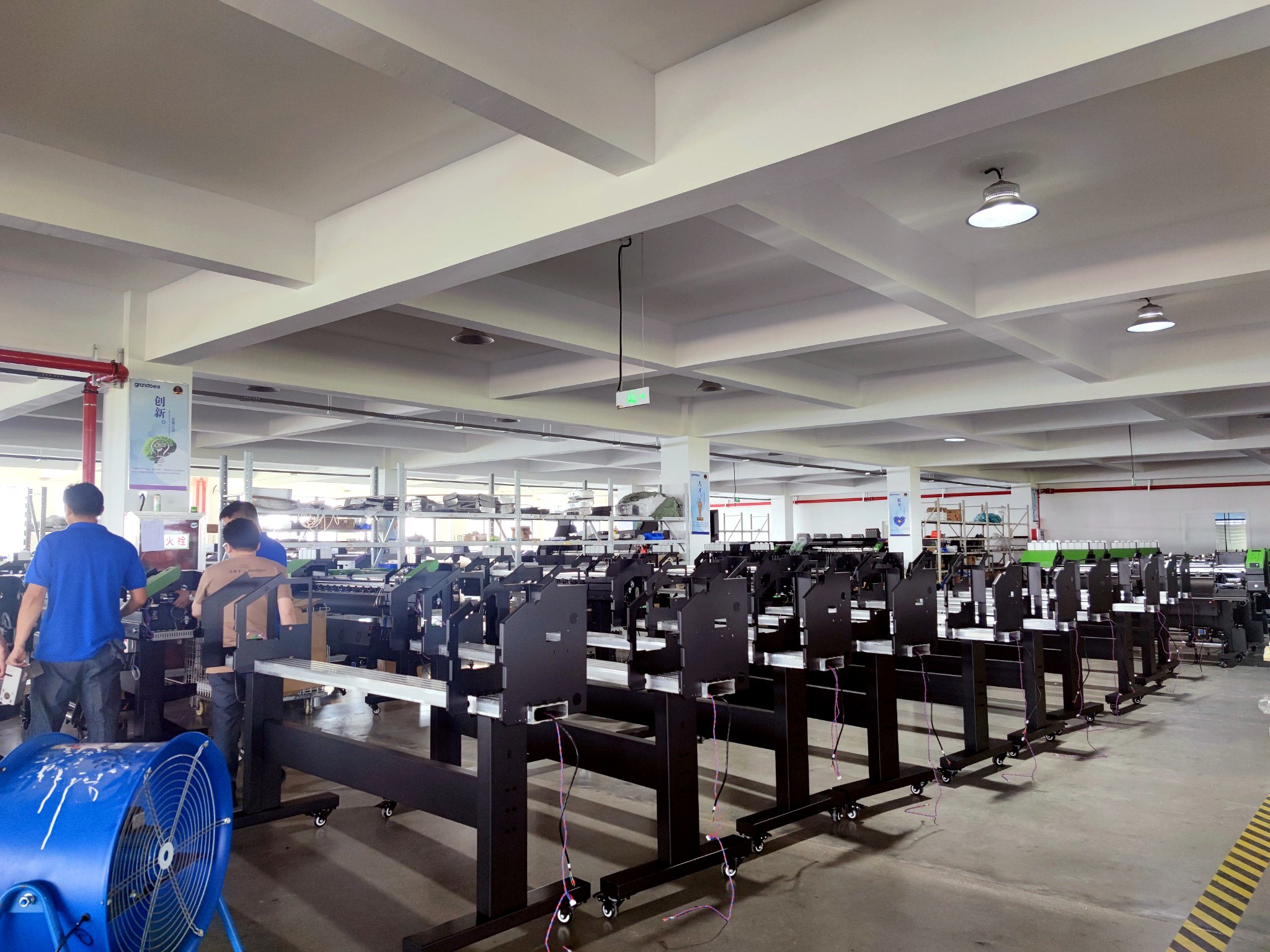
Assembly and commissioning workshop: equipment is assembled, commissioned and tested before factory delivery.
For a procurement team, each of those facts converts into a specific due-diligence question rather than a marketing point. A 70% export ratio implies the manufacturer's documentation set has to survive multiple import regimes, which is why CE-related documentation, test reports and material declarations should be requested directly rather than assumed from a website badge. A 15,000-unit annual output across multiple product lines indicates the scale of the assembly and testing system, and justifies asking how a specific GR350S configuration is commissioned and signed off before shipment. A 30-person R&D function is the relevant number when the question is whether substrate handling, tension control and print consistency are actively engineered or simply assembled from third-party modules.
Benchmarking against HP, Epson, Domino and Xeikon: what can and cannot be compared
An honest benchmark begins with a limitation. No harmonised, third-party test data covering speed, uptime, waste rates or cost per label across these platforms was available at the time of writing. Published figures come from each manufacturer under its own test conditions and substrate assumptions, which means numerical cross-comparison would be misleading. What can be compared credibly is the technology family each vendor is publicly documented as using, the consumable dependency model, and — most usefully — the evidence a buyer should demand from each.
| Dimension | GR350S (Grandoprint) | HP Indigo | Epson | Domino | Xeikon |
| Technology family (publicly described) | Roll-to-roll UV inkjet, platemaking-free | Liquid electrophotography (LEP) digital presses | Inkjet printheads and inkjet press platforms | UV inkjet digital label presses | Electrophotographic toner and UV inkjet press platforms |
| Consumable dependency | Epson S3200 printheads; UV inks and varnish | Vendor-specific LEP inks and consumables | Epson printheads and inks | Vendor UV ink sets | Vendor toner or UV ink sets |
| Published width / speed | 110–350 mm; 20–100 m/min | Not compared here: model-specific figures use different substrates, resolutions and test conditions | |||
| Evidence a buyer should request | Factory acceptance test on buyer substrate; CE-related declaration and test reports; substrate trial report | Press configuration sheet; consumable pricing model; reference installations | Printhead lifecycle data; ink system specification; service coverage | Press datasheet; ink compatibility list; uptime reference | Press datasheet; toner or ink specification; service agreement terms |
The benchmark's practical conclusion is not that one vendor “wins”. It is that these platforms occupy different positions in the market. HP Indigo presses, built on liquid electrophotography, are publicly positioned around high-value label and packaging work where extended colour gamut and offset-like reproduction are prioritised. Epson operates on both sides of the market: it supplies industrial inkjet printheads — including the S3200 series used in the GR350S — and also markets its own inkjet label press platforms, which means an Epson-equipped machine inherits a proven print engine but also a printhead supply relationship the buyer should understand. Domino's digital label press line is publicly described as UV inkjet, and the company's wider business in industrial coding and marking gives it a strong presence in variable-data and traceability environments. Xeikon has publicly documented both electrophotographic toner platforms and UV inkjet platforms for labels, which allows a buyer to evaluate two ink chemistry routes from one vendor.
Positioned against that field, the GR350S competes on a specific proposition: a platemaking-free UV inkjet platform with a defined 110–350 mm width, CMYKW plus varnish, and film-capable corona treatment — supported by a manufacturer that builds, commissions and tests the equipment in its own facilities rather than reselling an assembled platform.
Technical explanation: why eliminating plate-making changes the cost structure
The GR350S uses roll-to-roll UV inkjet digital printing and therefore eliminates the plate-making step required in flexo or letterpress label production. This is not a marginal workflow improvement; it removes an entire cost and time layer from the job cycle.
Three consequences follow. For small-batch and variable-data label orders, the cost advantage comes from the reduction of plate-making cost and setup waste. For mixed jobs, energy efficiency is higher because multiple SKUs can be processed in one continuous run, lowering energy consumption per label on short-run work. And because artwork changes require no new plates, short-run, multi-SKU, variable-data and fully customised label orders can be scheduled without the setup penalty that traditionally pushed small volumes toward compromise.
The substrate side is where UV inkjet platforms are most often tested in practice. Corona treatment configured for PE, PET and BOPP films addresses the surface-energy problem that causes ink adhesion failure and poor white opacity on synthetic substrates, while CMYKW plus optional varnish allows opaque white underprint on clear film and an inline surface finish. Buyers evaluating film-based cosmetic or food labels should treat corona configuration as a specification line item to be demonstrated on their own material, not as a generic capability statement.
Application evidence: food, cosmetics and variable-data labels
The platform's documented application coverage includes short-run labels, multi-SKU packaging labels, QR code labels, barcode labels, serial number labels, anti-counterfeit labels, cosmetic labels, food-packaging labels, daily-chemical labels and customised small-batch orders. Those use cases share one characteristic: they are all damaged by setup time and plate cost, and they all reward fast changeover.
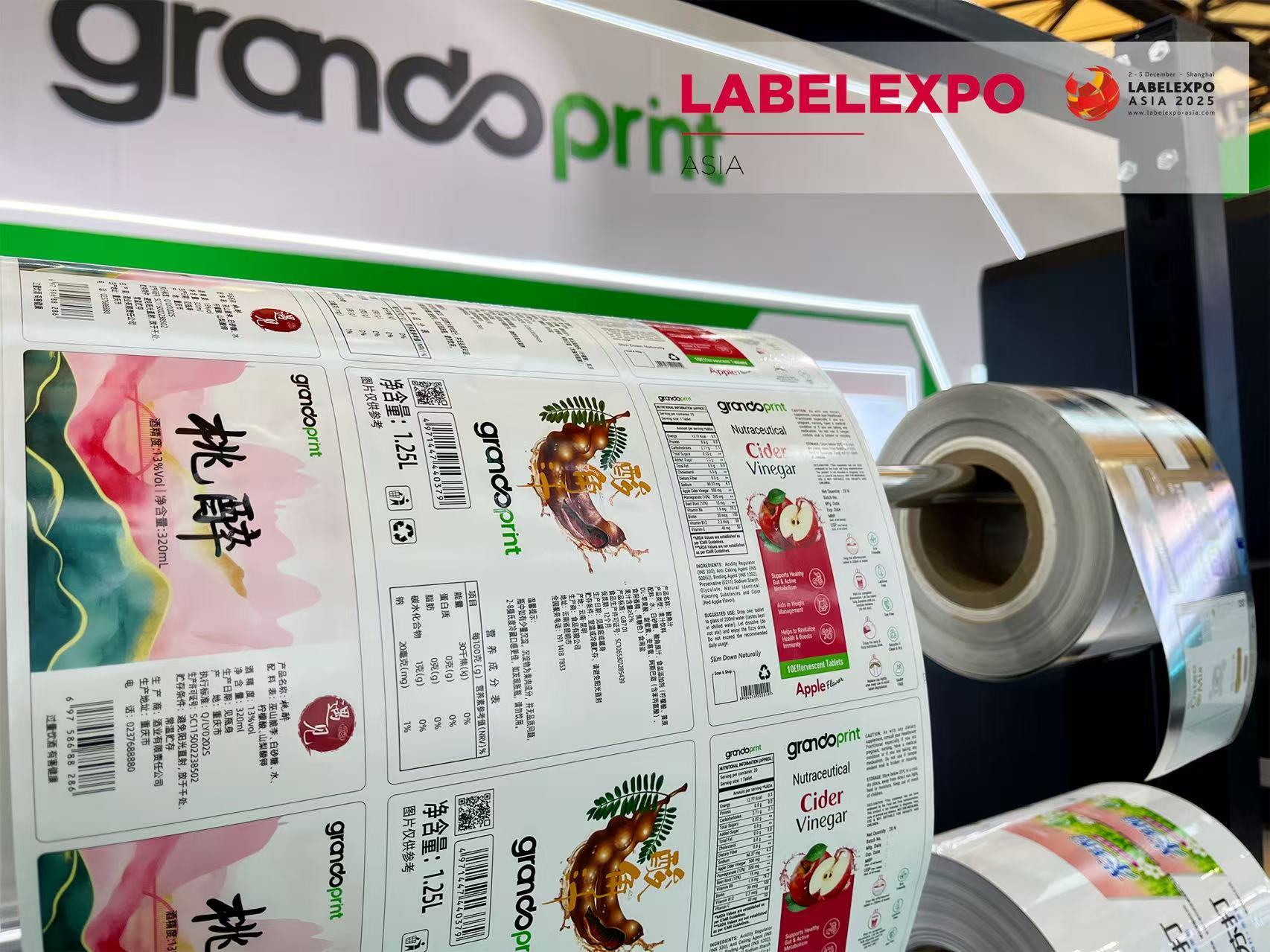
Printed label output: coated paper and synthetic label samples produced on the GR350S platform.
Cosmetic labels place the highest demand on finish consistency: white opacity on clear film, varnish uniformity and colour stability across a short run that may include several variants. Food packaging labels add regulatory and durability pressure — where a label must survive handling, moisture and abrasion, permanence criteria such as UL 969 for marking and labelling systems become a relevant reference point that buyers should raise during specification rather than after installation. Variable-data work — QR codes, barcodes, serial numbers and anti-counterfeit marks — is where the absence of plate-making is most visible operationally, but it is also where buyers should test data throughput, code verification and reject handling, not just print quality.
Operational risk is part of the application picture. Static electricity, registration drift and substrate wrinkling are the failure modes most often associated with film-based digital label production. Grandoprint's stated control set includes standard anti-static design and grounding devices as factory configuration, workshop humidity guidance of 40%–60% RH with doors and windows closed during thunderstorms, dedicated power sockets configured to voltage specification, and procedures such as discharging on a grounded metal plate and wearing anti-static gloves when handling printheads. These are conditions a buyer can audit in the first week rather than discover in the first year.
Comparison with traditional flexo and letterpress
The traditional comparison remains the most useful decision framework. Flexo and letterpress rely on plates; the GR350S does not. That single difference drives the entire trade-off. Digital production is better suited to short runs, multi-SKU packaging labels, QR and barcode labels, serial numbers, anti-counterfeit marks, cosmetic and food packaging labels, and customised small-batch work. Flexo and letterpress remain efficient for long, stable jobs with artwork that does not change. The cost and efficiency gap between the two depends on order quantity, label size, material type and changeover frequency — not on a single headline number.
Maintenance logic differs accordingly. The GR350S improves production flexibility by cutting job changeover time and enabling on-demand label production; a flexo line runs most economically when changeovers are rare. Buyers running a mixed portfolio should therefore model total cost across their actual job mix rather than compare per-label cost on a single long-run reference job.
Where the GR350S is not the right answer
A benchmark without boundaries is advertising. Four limitations should be stated plainly.
Width envelope. A maximum print width of 350 mm is a deliberate fit for label formats and multi-up cosmetic and food work, but it does not serve buyers who need wide-web or shrink-sleeve-scale output. Those buyers should look at wider platforms regardless of vendor.
Very long, static runs. For high-volume repeated orders with fixed artwork, flexo can still hold a cost advantage. Digital eliminates plates and setup waste; it does not eliminate the economics of scale that flexo exploits.
Printhead dependency. The GR350S uses Epson S3200 industrial printheads. That is a strength in engine reliability but also a supply relationship: buyers should confirm spare printhead availability, lead time and replacement cost in the contract, not assume it.
Publicly available third-party test data. No independently verified performance test of the GR350S across speed, uptime, waste and cost per label was identified during this research, and specific certificate document numbers for CE, ISO or RoHS were not retrieved from public sources. This does not mean such documents do not exist — it means they must be requested directly from the manufacturer as part of supplier qualification. A buyer who accepts a website badge in place of a declaration of conformity has not performed due diligence.
Market trend: UV inkjet and the shift toward short-run economics
UV inkjet has become the dominant technology family within digital label press technology, reported at approximately 45% share in 2025 by Custom Market Insights — a figure that should be read as directional given medium confidence in the underlying methodology. Investment activity in label printer equipment, estimated at USD 552.9 million in 2025 and forecast to reach USD 826.1 million by 2035 at 4.1% CAGR by Spherical Insights, points to a market that is growing steadily rather than exploding, which favours suppliers with real manufacturing capability over assemblers riding a short-term wave.
Qualitative industry commentary consistently identifies digital label printing growth, personalisation and customisation, and automation as the leading themes. For buyers, the procurement implication is straightforward: demand for short-run, multi-SKU and variable-data work is structural, so the platform decision should be evaluated over a five-to-seven-year horizon — including consumables, printhead replacement and service response — rather than against a single-year payback calculation.
Future outlook
Two developments are likely to shape how the GR350S is assessed against HP, Epson, Domino and Xeikon over the next few years. The first is evidence standardisation: as buyers become more sophisticated about scope definitions and test conditions, published specification sheets will carry less weight and factory acceptance testing on buyer-supplied substrate will carry more. Manufacturers that can run structured, documented trials — as Grandoprint's stated commissioning and testing process is designed to do — will be easier to qualify.
The second is consumable and printhead economics. UV inkjet platforms, including the GR350S, depend on industrial printheads and UV ink sets; total cost of ownership will increasingly be decided by printhead lifecycle and ink consumption per square metre rather than by machine purchase price. Buyers entering evaluation now should build that data into the tender, because suppliers who can answer it clearly are usually the ones with genuine production depth.
FAQ
What is the difference between the GR350S and HP Indigo, Domino or Xeikon digital label presses?
The GR350S is a roll-to-roll UV inkjet digital label printer that operates without plate-making. HP Indigo presses are publicly described as liquid electrophotography platforms; Domino's digital label press line is publicly described as UV inkjet; Xeikon has publicly documented both electrophotographic toner and UV inkjet press platforms. The practical difference for a buyer lies in technology family, consumable model and the substrate set each platform is qualified on — not in a single headline specification.
Is the GR350S suitable for short-run and variable-data label production?
Yes, according to its documented application scope. Because the platform eliminates plate-making, it supports short-run, multi-SKU, variable-data and customised label orders, including QR code, barcode, serial number and anti-counterfeit labels. Buyers should still validate data throughput, code verification and reject handling in a trial before committing to high-volume variable-data work.
What print width and speed should a buyer expect from the GR350S?
The manufacturer's stated specification is a print width of 110–350 mm and a print speed of 20–100 m/min. Actual production throughput depends on substrate, resolution, ink coverage and job structure, and should be confirmed on the buyer's own material during a factory acceptance test.
What evidence should a buyer request before accepting a supplier's capability claims?
At minimum: a factory acceptance test on buyer-supplied substrate; the CE-related declaration and supporting test reports; ISO and RoHS documentation with document numbers where applicable; printhead spare-part availability and lead time; consumable pricing per square metre; and named service response commitments. Where documents are not published openly, they should be requested directly from the manufacturer during qualification.
Can the GR350S print on PET, PP and BOPP film labels?
The platform is specified with corona treatment configured for PE, PET and BOPP film labels, alongside CMYKW plus optional varnish. Corona treatment addresses surface energy so that ink adheres correctly on synthetic substrates. Because adhesion outcomes vary by film grade and supplier, a substrate trial is the appropriate verification step.
When is flexo still a better choice than a digital label printer like the GR350S?
Flexo or letterpress remains more economical for very large-volume repeated orders with stable artwork, where plate cost is amortised across a long run and changeovers are rare. Digital platforms such as the GR350S hold the advantage where orders are short, SKUs are numerous, artwork changes frequently or variable data is required.
Reference document
Full technical and configuration details are available in the Grandoprint product brochure: Grandoprint digital label printer brochure (PDF).
Есть вопросы или нужны дополнительные детали?
Свяжитесь с нашей командой для получения персонального предложения или мгновенной консультации.
Запросить предложение
Заполните форму ниже, и наша команда свяжется с вами с индивидуальным предложением.
Прямой чат WhatsApp
Предпочитаете общаться в реальном времени? Напишите нам в WhatsApp для мгновенной помощи и быстрых ответов.
- Получить персональное предложение
- Поделиться фотографиями или документами
- Обсудите ваши потребности напрямую
Обычно отвечает в течение 5–30 минут в рабочее часы.