
GZPK620 Double-Outlet Tablet Press: Nutraceutical Scenario Fit
GZPK620 Double-Outlet Tablet Press: Nutraceutical Scenario Fit
A nutraceutical plant rarely buys a tablet press for one SKU. The decision that governs the purchase is whether a single platform can absorb a shifting portfolio — a single-layer vitamin or mineral tablet this season, a bilayer combination supplement the next — without a second machine, a second qualification cycle and a second spare-parts inventory. The GZPK620 double-outlet high-speed tablet press sits directly on that decision line.
The short answer: the GZPK620 fits nutraceutical production when three conditions hold at the same time. The portfolio must sit inside a 25 mm maximum tablet diameter; annual volume must be high enough to justify a double-outlet high-speed platform; and bilayer demand must be recurring rather than a one-off order. With 45, 55 or 65 turret stations, 100 kN main compression, 30 kN pre-compression, HMI control, automatic weight control (AWC) and reject-tablet removal, the machine is configured less around a single product than around a format range that changes over the equipment's service life.
Why the bilayer question arrives before the machine question
Nutraceutical portfolios have compressed. A contract manufacturer that once ran a narrow line of single-layer vitamin C and calcium tablets is now asked for combination formats: two actives that cannot be co-compressed into a stable blend, or a fast-release core with a modified-release shell. Bilayer tableting is the usual technical answer, and it changes the machine requirement rather than only the formulation. Two filling stages, two compression events and a weight-control loop that must hold each layer independently are not optional extras — they are the mechanical definition of bilayer capability.
The commercial consequence is familiar to buyers who have already been through one purchase cycle. A press specified for single-layer work only tends to send the plant back to the market within a few product generations, usually at the worst possible moment: when a customer has already committed to a bilayer SKU. That is why the productive question is not which press runs fastest, but which press can carry both formats across a multi-year horizon without triggering a second capital request.
What the GZPK620 is, and where it sits in the range
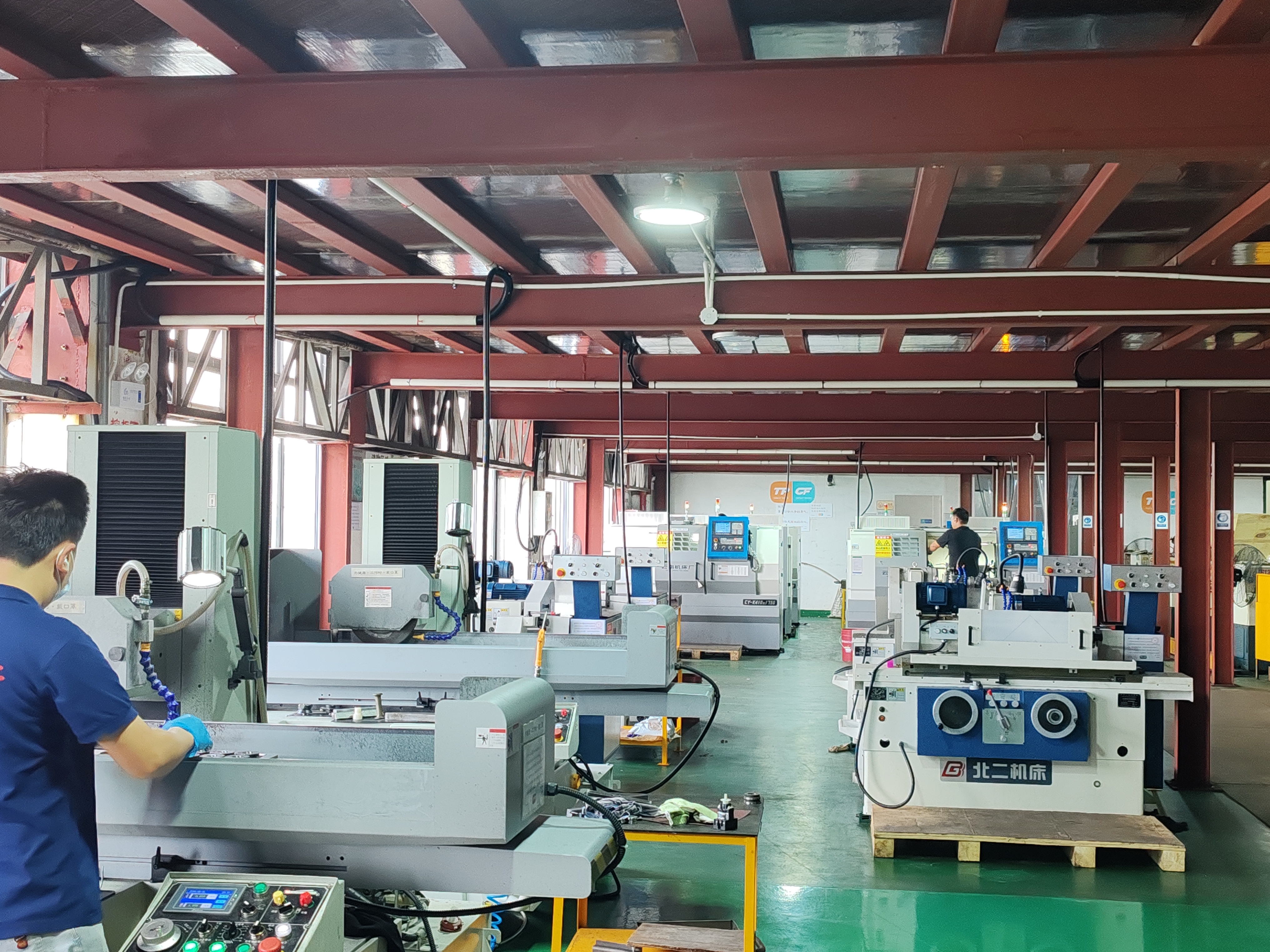
Shanghai Tablet Press Mechanical Components Co., Ltd. (TPCF) is a Shanghai-based manufacturer of tablet press machines, tablet press punches and dies, and capsule filling machines. The company was registered under its current name in 2009, traces its origins to earlier Shanghai pharmaceutical machinery factories, and operates a 15,000 m² facility with 260 employees, including 15 R&D engineers and a workshop equipped with more than 200 CNC machine tools. TPCF reports annual production of about 1,500 sets of equipment, with 80 to 120 tablet presses and capsule filling machines delivered each month and roughly half of output exported to Asia, South Africa, the Middle East, the EU, Russia, and North and West Africa.
Its portfolio spans single-punch and laboratory presses, medium-to-low speed rotary machines, and fully automatic high-speed presses. The GZPK620 belongs to the last of those groups: a double-outlet high-speed rotary tablet press offered for both single-layer and bilayer production.
| Configuration point | GZPK620 | What it decides for the buyer |
|---|---|---|
| Turret stations | 45 / 55 / 65 (selectable) | Output ceiling at a given turret speed; headroom for demand growth |
| Main compression force | 100 kN | Hardness ceiling for dense mineral and effervescent formats |
| Pre-compression force | 30 kN | Layer-bed stability in bilayer work |
| Maximum tablet diameter | 25 mm / 16 mm / 13 mm | Format envelope; tooling families required |
| Control | HMI | Recipe handling, batch data capture, operator dependence |
| Weight control | AWC | Weight consistency as granulate density drifts |
| Reject handling | Reject-tablet removal | Whether a weight excursion becomes a deviation or a discarded tablet |
Fit test 1 — station count and output planning
Output on a rotary press scales with two variables: how many stations are on the turret, and how fast the turret turns. At an identical turret speed, a 65-station turret produces roughly 44 percent more tablets per revolution than a 45-station turret. Station count is therefore an output-planning decision before it is a specification boast.
A buyer sizing for a fixed annual tablet volume has two routes to the same number: a 45-station turret run harder, or a 65-station turret run slower. For nutraceutical production the second route is usually the more durable choice. It leaves capacity headroom for demand growth without a new machine, and running a turret below its maximum speed reduces the mechanical duty cycle on punches, cam tracks and pressure rollers — which is where long-term maintenance cost accumulates.
The counter-argument is real and should be stated. A 65-station turret carries more tooling, so a full punch-and-die set costs more to buy and more to replace, and every format change now touches 65 stations rather than 45. A plant with a stable, modest volume and a narrow format list can legitimately choose the 45-station configuration and bank the difference.
Fit test 2 — compression force and the bilayer constraint
The 100 kN main compression rating and the 30 kN pre-compression rating are not symmetrical in importance. Pre-compression is what makes bilayer production workable: the first layer is tamped into a coherent bed before the second layer is filled on top, so the second fill does not disturb the first and the interface bonds instead of delaminating under ejection stress.
For single-layer nutraceutical work, many vitamin, mineral and herbal blends sit comfortably below the 100 kN ceiling. The headroom matters at the harder end of the portfolio — high-density mineral tablets, effervescent formats and large-format chewables — where a machine run close to its force limit tends to produce capping and lamination rather than tablets.
What the specification does not decide is formulation. Bilayer capability is a machine property; layer adhesion, the weight split between layers, and the different flow behaviour of two granulates still have to be proven on the buyer's own material. A bilayer trial on production granulation, run at production speed, is the only reliable evidence that a specific SKU belongs on this platform. The same trial should confirm that reject-tablet removal discriminates correctly between sound tablets and delaminated ones, because a delaminated bilayer tablet can hold its weight while failing its structure.
Fit test 3 — the 25 / 16 / 13 mm diameter envelope
Three maximum tablet diameters define what the machine can and cannot make. The 25 mm envelope covers standard round supplement tablets, large chewables and most effervescent formats. The 16 mm and 13 mm envelopes correspond to smaller formats and their respective tooling. Anything above 25 mm in diameter is simply outside the GZPK620's working range and belongs with a different platform.
The purchasing implication is often overlooked. Each diameter envelope implies its own punch and die family, so a portfolio that spans 13 mm and 25 mm formats means at least two tooling sets in stock, two sets of change parts and two changeover routines to train operators on. Buyers evaluating the machine should cost the full tooling inventory for the intended product list, not just the tooling supplied with the first order.
Fit test 4 — HMI, AWC and reject removal at the execution stage
Once the decision moves from evaluation to execution, the comparison stops being about capability and becomes about what the machine does on a normal production day.
HMI-based control determines how much of the batch record is captured automatically and how much is written by hand, and how much of the setup depends on a particular operator's memory. Automatic weight control keeps tablet weight inside the specification band as granulate density drifts through a Shift — the drift that otherwise shows up as a scatter of over- and under-weight rejects at the end of the run. Reject-tablet removal decides whether a weight excursion becomes a documented deviation requiring investigation or a discarded tablet at the reject chute.
Where the machine will be qualified for regulated markets, the control system deserves specific questions at quotation stage: which parameters the HMI logs, whether those logs are exportable in a usable format, and whether audit-trail and electronic-signature functions are available. 21 CFR Part 11 sets the US FDA criteria under which electronic records and electronic signatures are treated as trustworthy and equivalent to paper records. EU GMP Annex 11 applies a risk-based approach to computerised systems used in GMP manufacture. Neither framework is satisfied by an HMI alone — both must be designed into the control system and validated afterwards.
Changeover: the cost that does not appear on the quotation
Changeover is where scenario fit is won or lost, and it is the part of the purchase that buyers most often under-specify. The elements that change between formats on a double-outlet press include the turret and tooling set, the feeders, the layer configuration where bilayer is in use, and the HMI recipe that ties them together.
There is also a structural point about the double-outlet architecture itself. Running single-layer production on a double-outlet machine leaves one outlet effectively idle; that is a capital-efficiency question rather than a technical fault, and it is the strongest commercial argument for loading the press with a bilayer product rather than reserving it as a single-layer workhorse.
For buyers in the execution stage, TPCF states purchasing terms of MOQ 1 unit, FOB delivery, pre-shipment test as the acceptance criterion, and payment of 30 percent in advance with 70 percent after the pre-shipment test but before shipment. That structure concentrates the buyer's leverage into a single moment: the acceptance test. The test should therefore include the actual format changeover the plant intends to run, not only a single reference product pressed at nominal speed.
Where the fit stops
Scenario-fit analysis is only useful if it names the scenarios that fail.
- Formats above 25 mm diameter. These fall outside the GZPK620 envelope regardless of station count or force rating.
- Small-batch and R&D work. A double-outlet high-speed platform is an inefficient way to make trial batches. TPCF also builds laboratory and R&D rotary presses, which are the more rational starting point before a format is scaled.
- One-off bilayer demand. If bilayer is a single customer order rather than a portfolio direction, the idle-outlet penalty is paid for capacity that never runs.
- Formulations that will not bond. Machine pre-compression cannot rescue a layer interface that fails on granulation properties.
- Lowest-initial-price procurement. Machines built around coated cast-iron die tables cost less up front than 2Cr13 stainless equivalents, and a buyer who optimises purely on purchase price will land there.
Long-term ownership: die table, tooling and supply continuity
The HVQ that governs a purchase at this stage is not capability but continuity, and continuity is decided by components that wear.
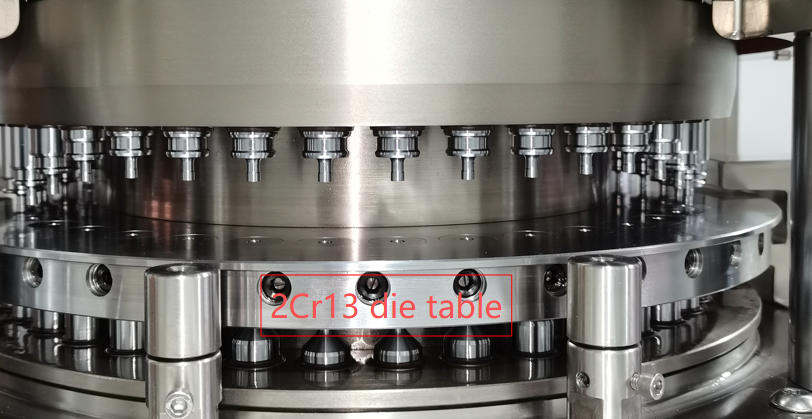
TPCF documents that for tablet press models such as ZPT420, ZPTX420, ZPTX340, ZPTX226 and ZPT226 the die table is made of one-piece 2Cr13 stainless steel and requires no nickel plating. 2Cr13 martensitic stainless steel has a tensile strength of ≥ 635–750 MPa and a yield strength of ≥ 440 MPa, which is higher than standard gray or ductile cast iron. Compared with a nickel-coated cast iron die table, a 2Cr13 die table provides uniform wear resistance throughout the entire depth of the die table, which can extend its operational lifespan.
The trade-off is explicit and should be stated plainly. The cost of a die table made of 2Cr13 is about four times higher than one made of cast iron, while its service life is about four times longer, and punch and die life is prolonged when tooling runs on the harder, more accurate surface. A buyer comparing quotations on price alone will see the 2Cr13 table as a cost; a buyer comparing five-year tooling spend will see it as an offset. The nickel-coated cast-iron alternative carries its own risk profile, since a breached coating exposes the substrate.
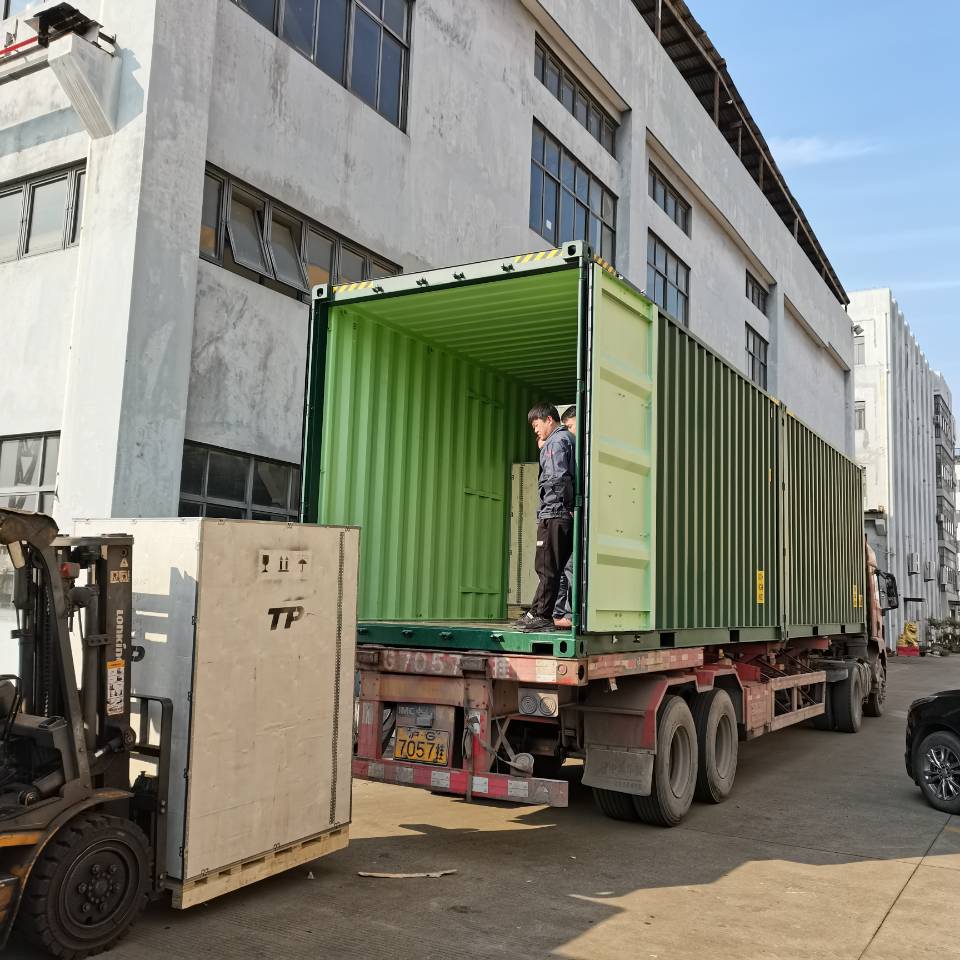
Supply continuity is the second half of the long-term question. TPCF reports production of about 1,500 sets per year, with 80 to 120 tablet presses and capsule filling machines deliverable each month, and roughly half of output exported. For a buyer planning a multi-year roll-out across several plants, that delivery cadence is the relevant number — not the capacity of a single machine. The company states that its equipment complies with GMP standards and has obtained EU CE certification and ISO certification.
Market context and the 2027 compliance horizon
Global Market Insights Inc. estimated the global tablet press machine market at USD 1.52 billion for 2025, with forecast attention concentrated on automated and multi-station machines. That framing matches what nutraceutical buyers are actually doing: specifying platforms that can absorb more formats and more automation rather than buying the smallest machine that solves today's product.
A second timeline runs alongside the market one. Regulation (EU) 2023/1230, the new EU Machinery Regulation, repeals and replaces Directive 2006/42/EC and applies from 20 January 2027. A tablet press ordered now for EU installation will spend most of its service life under the new framework. Buyers should therefore ask for conformity documentation against the regulation that will apply at installation, not only the directive in force at the time of order — and should confirm that the supplier can support that transition document by document.
Future outlook
The direction of nutraceutical tableting is toward fewer machines carrying more formats. Combination supplements, modified-release constructions and premium dosage forms all push production toward bilayer and multi-layer capability, while cost pressure pushes toward higher output per square metre of cleanroom. A double-outlet high-speed platform with selectable station counts answers both pressures at once, provided the format envelope and the formulation behaviour hold.
The unresolved part is data. As buyers in regulated markets ask for exportable batch records and audit trails as standard rather than optional, control-system capability will separate machines that can be qualified easily from machines that require retrofits. Buyers negotiating today should treat HMI data handling as a specification item, not a post-installation project.
FAQ
What maximum tablet diameter does the GZPK620 support?
The GZPK620 is offered with maximum tablet diameters of 25 mm, 16 mm and 13 mm depending on configuration. Products above 25 mm in diameter fall outside the machine's working envelope and require a different platform.
Can the GZPK620 run both single-layer and bilayer nutraceutical tablets?
Yes. The GZPK620 is offered for single-layer and bilayer production, with 100 kN main compression and 30 kN pre-compression supporting the two-stage compression that bilayer work requires. Bilayer capability is a machine property; layer adhesion and the weight split between layers still have to be proven on the buyer's own granulation before a format is committed.
How do the 45, 55 and 65 station options affect output planning?
Output on a rotary press is a function of station count and turret speed. At equal turret speed, a 65-station turret produces roughly 44 percent more tablets per revolution than a 45-station turret. A buyer can reach the same annual volume with a smaller turret run faster or a larger turret run slower; the larger turret leaves headroom for growth and reduces mechanical duty on punches and cam tracks, while carrying more tooling to purchase and to change.
What should a buyer confirm about the die table before ordering?
TPCF documents one-piece 2Cr13 stainless steel die tables, without nickel plating, for models such as ZPT420, ZPTX420, ZPTX340, ZPTX226 and ZPT226. 2Cr13 offers tensile strength of ≥ 635–750 MPa and yield strength of ≥ 440 MPa, higher than standard gray or ductile cast iron, and provides uniform wear resistance through the full depth of the table. Its cost is about four times that of a cast-iron die table, with a service life about four times longer. For a GZPK620, the die table material should be confirmed in the quotation rather than assumed.
What long-term supply and acceptance factors should be verified before shipment?
TPCF reports annual production of about 1,500 sets and a delivery cadence of 80 to 120 tablet presses and capsule filling machines per month, with roughly half of output exported. Stated purchasing terms are MOQ 1 unit, FOB delivery, pre-shipment test as the acceptance criterion, and payment of 30 percent in advance with 70 percent after the pre-shipment test but before shipment. Because acceptance rests on that test, it should cover the format changeover the plant actually intends to run.
Does ordering in 2026 create an EU compliance problem after 2027?
Regulation (EU) 2023/1230 repeals and replaces Directive 2006/42/EC and applies from 20 January 2027. A machine ordered before that date but operated well beyond it will spend most of its life under the new regulation, so conformity documentation should be requested against the framework applicable at installation.
Technical documentation: TPCF product brochure (PDF).
Есть вопросы или нужны дополнительные детали?
Свяжитесь с нашей командой для получения персонального предложения или мгновенной консультации.
Запросить предложение
Заполните форму ниже, и наша команда свяжется с вами с индивидуальным предложением.
Прямой чат WhatsApp
Предпочитаете общаться в реальном времени? Напишите нам в WhatsApp для мгновенной помощи и быстрых ответов.
- Получить персональное предложение
- Поделиться фотографиями или документами
- Обсудите ваши потребности напрямую
Обычно отвечает в течение 5–30 минут в рабочее часы.