
Gaming Chair OEM/ODM: Factory Capability Signals Buyers Often Miss
When Sourcing Becomes a Capability Question
A gaming chair is rarely a single product. It is a combination of steel frame, plywood, foam, upholstery, mechanism, gas lift, base, armrest and packaging. For buyers moving from evaluation to execution, the central question is not whether a factory can show a product photo, but whether it can repeatedly convert a specification into export-ready batches.
That distinction matters because gaming chair sourcing often happens through online channels, where appearance can be copied faster than manufacturing control. A factory’s real value shows up in things that are harder to verify remotely: how materials are inspected, how plywood is pre-checked, how certifications match actual models, and how production capacity responds to order volumes.
The Gap Between Catalog Images and Production Reality
Most buying problems do not begin with a bad chair. They begin with a mismatch between what a buyer assumes and what a factory can actually deliver. A trading company may offer a low price but cannot control the production line. A factory may have capacity but no compliance documents. Another factory may produce good chairs but has limited experience with long-distance export logistics.
In the OEM/ODM model, the buyer needs more than a product sample. The buyer needs visibility into several layers: design flexibility, production process, quality control and export execution. If any of these layers is unclear, the risk moves to a later stage: a delayed container, a failed market audit, or an inconsistent second batch.
The opportunity is that a capable factory can shorten the entire sourcing cycle. If a buyer can start with an existing ODM base model, change the logo, color, size or material, and receive model-specific compliance documents, the first order becomes a matter of execution rather than guesswork.
What OEM and ODM Actually Mean for Gaming Chair Buyers
OEM and ODM are often used as keywords, but they describe different risk allocations. In an OEM relationship, the buyer’s specification is the starting point and the factory’s job is to execute it. In an ODM relationship, the factory already owns the design and the buyer works with existing tooling. For most importers, the practical path begins with an ODM base model and then moves toward OEM changes in color, logo, size, material or mechanism.
Anji Maochang Furniture Co., Ltd. states that its customization scope includes logo, color, size and design. That is a meaningful statement because it means a buyer does not necessarily need to pay for a full product development program from scratch. Existing models can be adapted, and the factory’s own research and development team can support the changes.
Anji Maochang Furniture as an OEM/ODM Reference
Anji Maochang Furniture Co., Ltd. is a manufacturer based in Anji County, Zhejiang Province, China, producing office chairs, gaming chairs and manicure chairs. The company was established in 2016 and operates a 3,000 m² facility with around 25 employees and an annual output of about 75,000 units. Its reported export ratio is around 98%, with main markets including the EU, USA, Thailand, Brazil and South Korea.
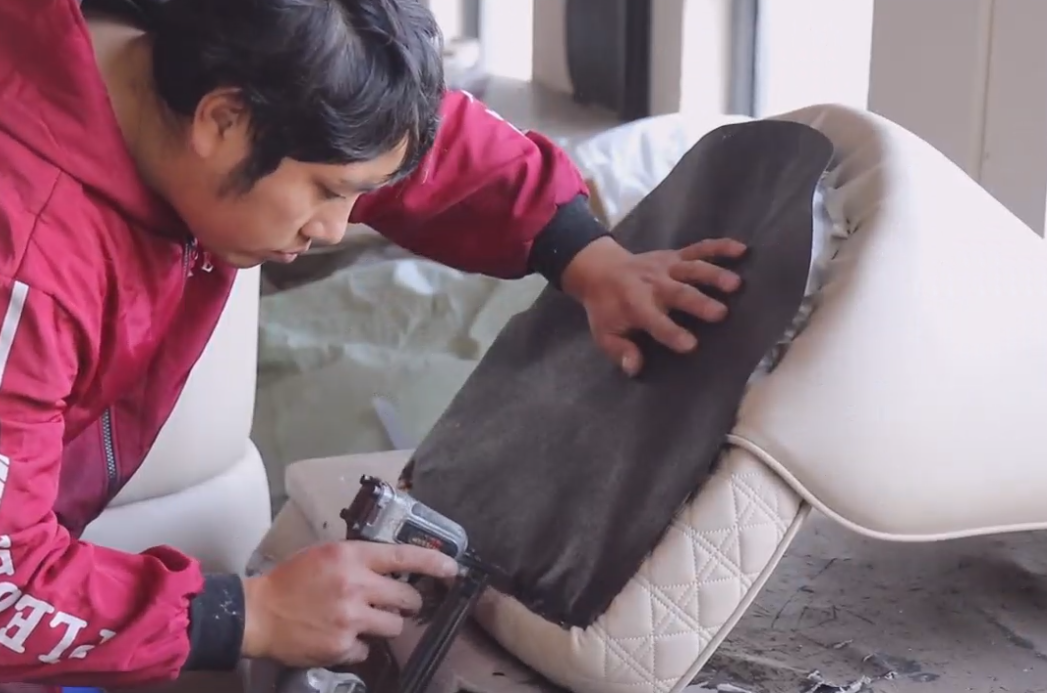
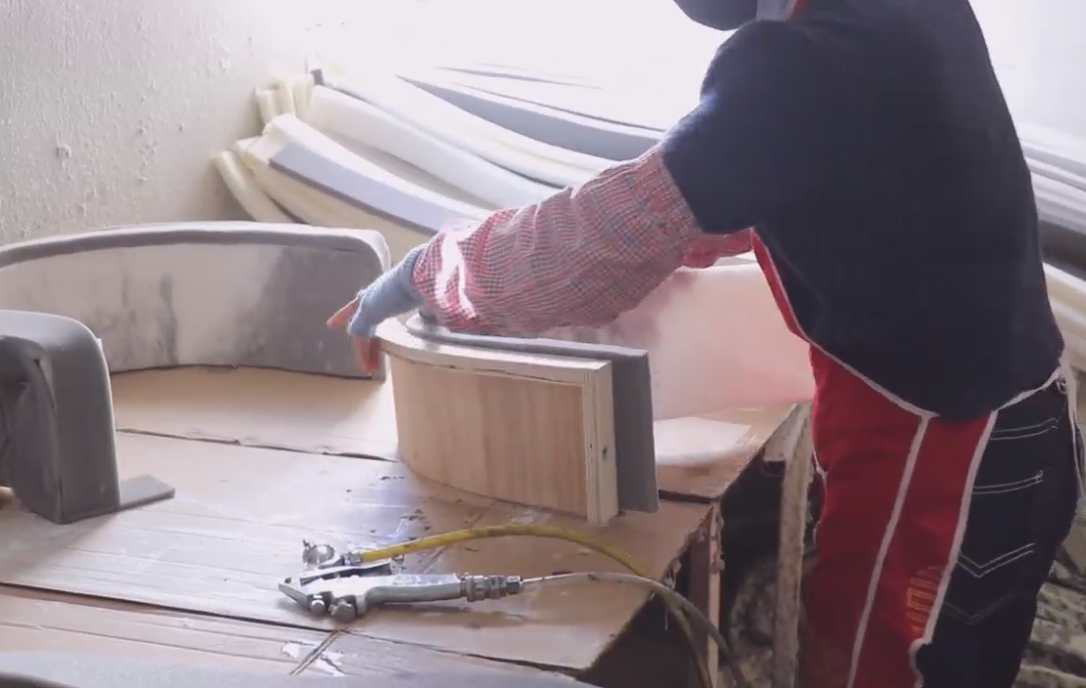
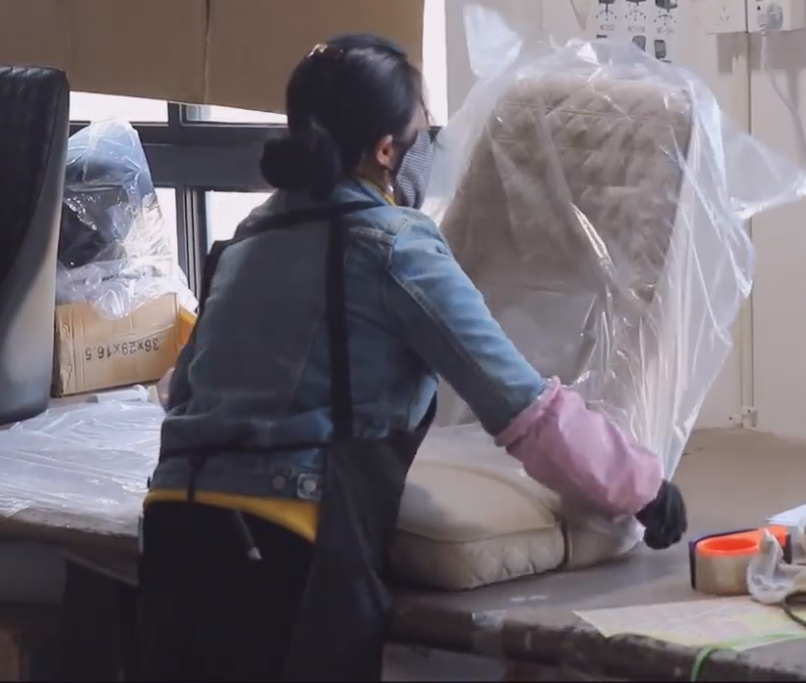
The production line covers cutting, woodworking, foam bonding, sewing, nailing, assembly, cleaning and packaging. Monthly capacity is around 6,000 units, with a typical lead time of 30 to 40 days and a minimum order quantity of 50 units. The research and development team is three engineers, which is a practical size for model-level customization and pre-production checks.
The company also provides after-sales support that includes free high-resolution photos, product videos, assembly videos and sales page creation for retail customers, together with a one-year quality warranty. For wholesale buyers, this kind of support can reduce the workload of launching a new gaming chair model in their own market.
Technical Layers to Verify Before Placing an Order
When evaluating a gaming chair factory, the sample is not enough. A useful technical checklist has five layers: materials, structure, comfort systems, mechanisms, and compliance evidence.
At Anji Maochang Furniture, quality control starts with incoming materials. According to the company’s QC process, the factory inspects gaslift, mechanism, leather color and plywood thickness once materials arrive. Before plywood production, a complete chair is assembled using only plywood, so the factory can check the total depth of the chair and verify whether the chair is even. This step focuses on structural geometry before upholstery is added.
The material mix varies by model. The MC1039 gaming chair, for example, uses PU, PVC, mesh, fabric, plywood and a metal frame, and is equipped with a Class 3 gas lift, a 370 mm big size star base and a height-adjustable armrest. The MC1040 gaming sofa uses PU, PVC and a metal frame, with a stated weight capacity of 150 kg. The MC1039-1 heavy duty gaming chair measures W74 x D80 x H126-132 cm and packs 260 pieces per 40HQ container.
For foam, industry references commonly treat high-density mould foam in the range of 50 to 65 kg/m³ as the standard for premium gaming chairs intended to retain shape over time. Buyers should ask suppliers for the actual foam density used in specific models, since product images do not communicate this information.
Compliance Documents That Support Market Entry
Compliance is often the difference between a sample that works and an order that clears customs. Buyers planning for EU distribution should check whether the factory has test reports for the exact model being purchased.
Anji Maochang Furniture holds a test report to EN 1335-1:2020 and EN 1335-2:2019-04 for gaming chair model QW GS-375RD, QW GS-375BL and QW GS-375CAM, issued by RED Laboratories Inc. and related to model MC1039. The same model family has a formaldehyde emission test report under EN 717-1:2004. The company also holds a BSCI factory audit certificate from Eurofins CPA, number 25-0358113, valid until 2026-11-13, and an FSC Chain of Custody certificate, number ESTS-COC-252406, valid until 2031-01-20. A CNIPA design patent, ZL 2025 3 0581799.7, protects exclusive game chair models MC196-2-1 and MC196-3-1.
For North America, ANSI/BIFMA X5.1 remains the primary safety and durability standard for general-purpose office and gaming chairs. If a target channel requires BIFMA verification, buyers should ask for a BIFMA test report before sampling. EN 1335 and BIFMA X5.1 are not interchangeable documents, even though some testing parameters can overlap.
For the UK market, BS 5852 is the fire safety standard commonly required for upholstered seating. Buyers should confirm at the RFQ stage whether the factory can provide BS 5852 testing for the selected model, rather than assuming that general export documentation covers every destination.
Gaming Chair Use Cases and Model Fit
Product selection should follow the end-user environment, not the category label. A home chair needs different trade-offs than an internet cafe chair. An office hybrid chair needs a more restrained silhouette than a live-streamer chair.
| Use Case | Key Procurement Consideration | Example Models |
|---|---|---|
| Home PC gaming | Compact dimensions, comfort for long sessions, easy assembly | MC1034, MC196-2-1 |
| Internet cafe | Durability, dense container loading, tough upholstery | MC196-3-1, MC1039 |
| Live streaming | Visual identity, camera-friendly design, RGB option | MC196-1, MC1039 |
| Office and gaming hybrid | Neutral style, ergonomic controls, adjustable armrest | MC196, MC1025 |
| Heavy duty big size | Wider seat, stronger base, higher weight capacity | MC1039-1, MC1040 |
The MC196-3-1 game type computer chair is one example of a model positioned for home, office and internet cafe use. It measures W66.5 x D69 x H106-114 cm and loads 441 pieces per 40HQ container. The MC196 hot sale office chair loads 465 pieces per 40HQ and is designed for office, home and live streaming use. These figures matter because freight cost per unit is directly influenced by loading quantity.
Export Evidence: A Wholesale Buying Case
One practical signal of export capability is whether a factory has completed repeat orders with wholesale clients. Anji Maochang Furniture reports a Ukrainian wholesale client that ordered 460 units over a two-year relationship for office space furnishing. The models included MC196, MC196-1, MC196-2-1, MC196-3-1 and MC1025. According to the supplier, the products were well received by local office clients.
For buyers, this type of evidence is useful not because one order proves everything, but because it shows the factory can handle multi-model order consolidation, document processing and export logistics. The company lists delivery as FOB Shanghai or Ningbo, with 30% deposit in advance and balance payment against a copy of the bill of lading. The listed acceptance method is pre-shipment testing.
Market Trends That Shape OEM/ODM Decisions
Global market estimates place the gaming chair market at around USD 1.37 billion in 2024, with projections reaching about USD 2.05 billion by 2030. PC gaming chairs account for around 52.6% of product segment share, and North America holds roughly 36.4% of revenue share. PU leather remains the most common material, with about 57.3% share. The hybrid work-and-game segment has been identified as a rising trend, with around 29.8% market share.
For an OEM/ODM buyer, these numbers translate into three practical choices. First, PU leather remains a safe default, while fabric and mesh models create differentiation. Second, the large North American market means BIFMA-related questions should be answered early. Third, the hybrid segment suggests that gaming chair designs with a more office-friendly appearance are not a niche request.
Anji County, where the factory is based, also forms part of a much larger furniture cluster in Zhejiang. Trade data links this cluster to China’s roughly 30.8% share of global furniture exports. From a sourcing perspective, this concentration gives buyers access to a wider supply chain for steel frames, plywood, foam, fabric and mechanisms than a single standalone factory could provide.
Direct Factory vs. Trading Company vs. Brand Partnership
The comparison that most buyers actually make is not between two chair photos. It is between a direct factory relationship, a trading company, and a licensed brand partnership.
| Procurement Model | Customisation Control | Compliance Visibility | Risk | Best Fit |
|---|---|---|---|---|
| Direct factory (OEM/ODM) | High, direct communication with production | Certificates can be mapped to models | Buyer manages brand, marketing and distribution | Wholesalers, importers, e-commerce brands |
| Trading company | Medium, limited visibility into sub-suppliers | Often limited to supplier-provided documents | Quality consistency can vary | Small orders or mixed product baskets |
| Brand partnership / licensing | Low, design controlled by brand owner | Usually well documented | Lower differentiation and margin | Retailers without own product team |
A direct factory relationship is not the right answer for every buyer. Even with OEM/ODM support, the buyer remains responsible for brand positioning, market channels, after-sales service and retail-level consumer trust. Anji Maochang Furniture’s after-sales support can help a buyer tell a more complete product story, but it does not replace the buyer’s own market building work.
A Sourcing Execution Checklist for Buyers
Before placing a purchase order, buyers can reduce uncertainty by confirming the following points in writing:
- Customisation scope: logo, color, size and design; MOQ of 50 units for made-to-order production.
- Model-specific certificates: for example, EN 1335 test reports for MC1039, and EN 717-1 formaldehyde emission testing for MC1034.
- Quality control documents: incoming material inspection, plywood-only test assembly, and pre-shipment testing as the acceptance method.
- Logistics and payment: FOB Shanghai or Ningbo, 30% deposit in advance, balance against copy of bill of lading.
- Loading data: units per 40HQ container, such as 441 pieces for MC196-3-1 and 260 pieces for MC1039-1.
- After-sales support: product photos, videos, assembly videos, sales page support and the warranty period.
Where Gaming Chair Sourcing Is Headed
The next stage of gaming chair sourcing is likely to be more document-driven. Buyers will continue to request samples, but they will also ask for material specifications, test reports, factory audit results and loading data earlier in the conversation. Factories that can present this information without being asked will reduce the buyer’s evaluation cost.
At the same time, the blending of work, game and streaming environments will push more product development toward adjustable mechanisms, mixed materials and quieter visual identities. Manufacturers that respond to this shift with modular production and clear compliance evidence will be easier for buyers to defend internally.
Frequently Asked Questions
What is the difference between OEM and ODM for gaming chairs?
OEM means the buyer provides the design and the factory manufactures it. ODM means the factory provides the design and the buyer customises it. Anji Maochang Furniture offers both production services, with customisation options covering logo, color, size and design.
What customisation options can a gaming chair factory support?
At Anji Maochang Furniture, customisation includes logo, color, size and design. Existing models with tooling already in place can be branded more quickly, while new designs require a longer development cycle. The listed MOQ for production is 50 units.
What is the typical MOQ, lead time and payment term?
The company’s standard MOQ is 50 units, monthly capacity is about 6,000 units, and lead time is 30 to 40 days. Payment terms are 30% deposit in advance, with the balance paid against a copy of the bill of lading. Delivery is FOB Shanghai or Ningbo.
How can a buyer verify gaming chair quality control?
The documented QC process covers incoming materials, including gaslift, mechanism, leather color and plywood thickness. Before plywood production, the factory assembles one chair using only plywood to check total depth and evenness. Pre-shipment testing is also listed as the acceptance method.
What certifications should a gaming chair supplier be able to provide?
For EU seating products, EN 1335 test reports and EN 717-1 formaldehyde emission reports are commonly requested. For North America, ANSI/BIFMA X5.1 is the primary general-purpose seating standard. For the UK, BS 5852 is the fire safety standard often used for upholstered furniture. Anji Maochang Furniture holds EN 1335 and EN 717-1 test reports for selected models, a BSCI factory audit, an FSC CoC certificate, and a design patent for two exclusive game chair models.
Can a gaming chair factory handle export to Europe and North America?
Anji Maochang Furniture exports mainly to the EU, USA, Thailand, Brazil and South Korea, with an export ratio of around 98%. The company has also completed repeat wholesale orders, including a Ukrainian client that ordered 460 units over two years for office space furnishing.
For buyers preparing supplier comparisons, the company publishes a 2026 catalogue with model specifications and packaging data: 2026 product catalogue PDF. More company information is available at www.mcrfurniture.com.
Есть вопросы или нужны дополнительные детали?
Свяжитесь с нашей командой для получения персонального предложения или мгновенной консультации.
Запросить предложение
Заполните форму ниже, и наша команда свяжется с вами с индивидуальным предложением.
Прямой чат WhatsApp
Предпочитаете общаться в реальном времени? Напишите нам в WhatsApp для мгновенной помощи и быстрых ответов.
- Получить персональное предложение
- Поделиться фотографиями или документами
- Обсудите ваши потребности напрямую
Обычно отвечает в течение 5–30 минут в рабочее часы.