
Gardenia Yellow: Natural Yellow Color Buyer's Reference
Gardenia Yellow: Natural Yellow Color Buyer's Reference
Why Yellow Is the Hardest Natural Color to Buy Well
Yellow is the hue most often requested in natural color conversions and the least forgiving to specify casually. A shade that reads as bright lemon on a laboratory bench can turn dull gold after pasteurization, drift orange in a baked snack, or lose visual intensity over shelf life. The purchasing question is therefore rarely “is there a natural yellow?” It is “which natural yellow holds its shade in my pH window, my process temperature and my package?”
Gardenia yellow is one of the few plant-derived yellow colorants that combines a genuine yellow hue with a defined and documented stability window. It is a water-soluble colorant extracted from the fruit of gardenia plants in the Rubiaceae family, whose principal coloring components are carotenoids and crocin. For formulators working through a synthetic-to-natural conversion, it functions less as a single ingredient and more as a platform: available in several color values, in powder and liquid forms, and with grade options that change how it behaves in a given food matrix.
Buyers arriving at this subject generally need three things at once — a working definition of the material, a realistic map of where it performs and where it does not, and a way to compare suppliers on evidence rather than on adjectives. This reference addresses all three, with the limitations stated as plainly as the advantages.
The Problem: Natural Yellows Are Not Interchangeable
Natural color chemistry splits along pigment families. Reds and purples frequently come from anthocyanins, which are strongly pH-dependent. Yellows and oranges come from a different set of molecules — carotenoids, curcuminoids, and in the case of gardenia, crocin-rich extracts — and each family brings its own processing constraints. Treating “natural yellow” as a single category is the most common source of failed trials.
The commercial palette available to a food manufacturer typically includes gardenia yellow, turmeric and curcumin, beta-carotene, annatto extract, carthamus yellow and lutein. They overlap in hue but diverge sharply in solubility, pH tolerance, heat and light behavior, and declaration language. Turmeric, for example, is lipophilic in its standard form and requires water-dispersible grades for beverage work; beta-carotene spans yellow through orange to red and is commonly microencapsulated for stability; annatto delivers warm yellow-orange tones. Gardenia yellow occupies the bright, clean yellow position with water solubility and a documented pH window.
At the same time, the regulatory and labeling environment around synthetic colors continues to shift across markets. Buyers evaluating replacements are not only chasing a shade — they are managing permitted-use lists, retailer specifications and consumer expectations about ingredient declarations. That combination is what has moved natural yellows from a niche request to a standard procurement line item.
What Gardenia Yellow Actually Is
Gardenia yellow is produced by extracting the fruit of gardenia plants and refining the resulting colorant. The primary color components are carotenoid and crocin. Commercial material is described as a yellow liquid or a brown-yellow powder, readily soluble in water and in ethanol solution, and insoluble in acetone and grease. Its practical characteristics are strong dyeing ability, good resistance to light and heat, and a color that remains stable in aqueous conditions between pH 4 and pH 10.
Two specification details matter more than most buyers initially expect:
- Color value. Gardenia yellow is traded by color value rather than by weight alone. Common grades are quoted as E30, E60, E100, E300 and E500, with customization available according to customer requirements. A higher color value means more coloring power per kilogram, so direct price-per-kilo comparisons between grades are misleading.
- Form. The material is supplied as a water-soluble powder, a water-soluble liquid and an oil-soluble liquid. The correct form is determined by the food system, not by preference: clear beverages and syrups favor water-soluble liquids for dosing accuracy, dry blends require powder, and fat-continuous systems require the oil-soluble grade.
Optional low-geniposide grades are also available. Geniposide is a component naturally present in gardenia fruit, and controlling its level gives formulators a defined specification to work against rather than an assumed one. Buyers with tight internal specifications should request the geniposide level explicitly as part of the purchase specification.
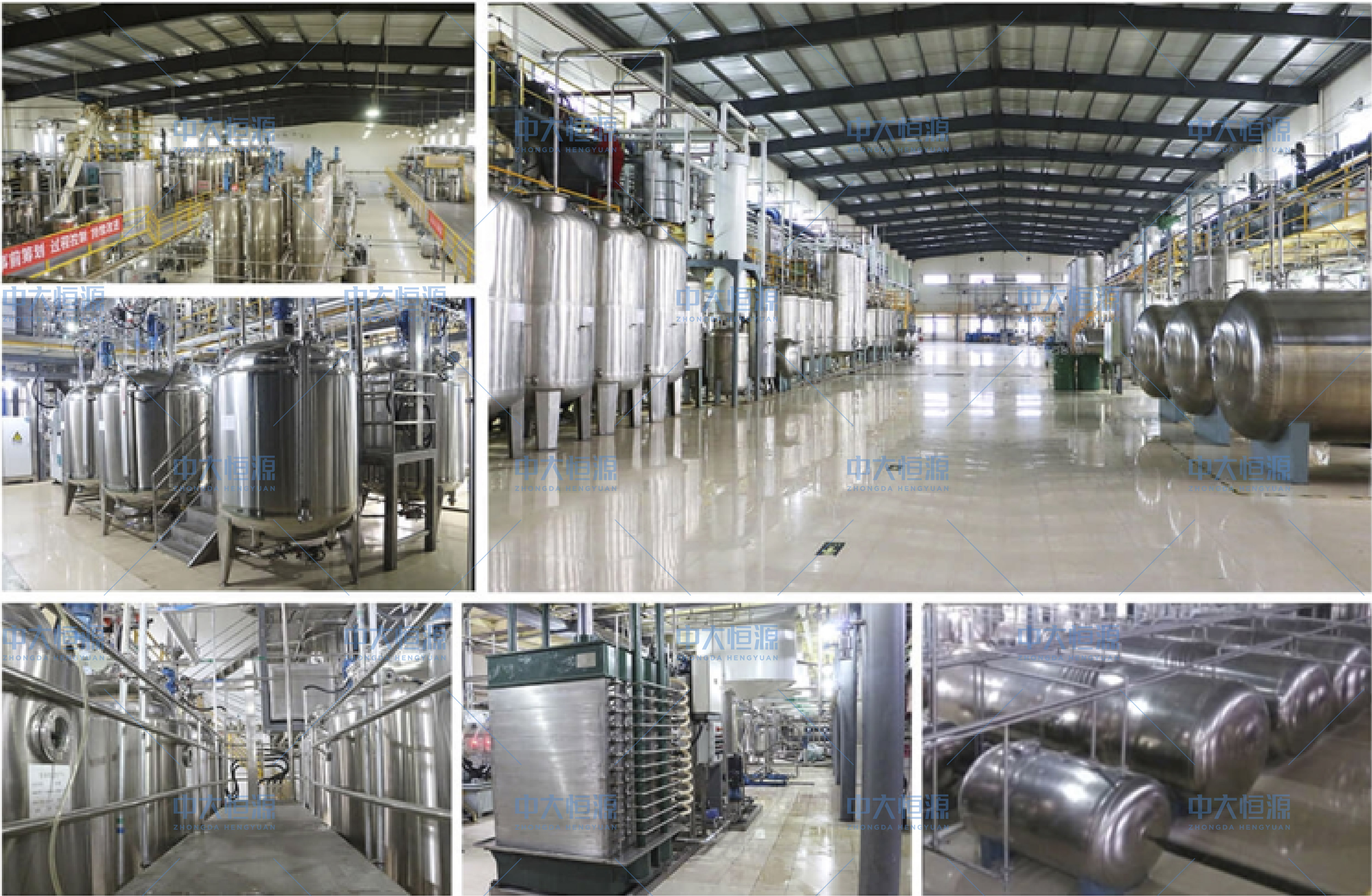
Natural color manufacturing: extraction and refining determine both color value consistency and the traceability of the finished grade.
The Four Variables That Decide Whether It Works
1. pH of the finished matrix
Gardenia yellow holds a stable yellow tone in aqueous systems from pH 4 to pH 10. That window covers a large share of dairy, bakery, confectionery and neutral-to-mildly-acidic beverage applications. It does not automatically cover strongly acidic systems such as some fruit drinks and sour confectionery, where anthocyanin-based reds are typically at their strongest and yellow behavior must be validated rather than assumed.
2. Thermal load
Heat resistance is one of the material’s stronger attributes, and it is the reason gardenia yellow appears in baked goods, confectionery produced by high-temperature boiling, and thermally processed meat and instant foods. Heat exposure should still be described in process terms — temperature, dwell time, and whether the color is added before or after the thermal step — because stability claims are only meaningful against a stated process.
3. Light exposure and packaging
Light stability is generally good, but packaging changes the exposure profile. Opaque and light-barrier packaging reduces risk substantially; transparent retail packs in bright display conditions are the harder case. Where a clear package is mandatory, the grade selection and dosage should be confirmed with an accelerated stability test rather than with a general stability statement.
4. Blend logic
Gardenia yellow is frequently used as a base rather than a standalone color. Because it can be blended with red or green pigments to build purple, green and intermediate shades, it often appears inside a compound color system rather than as a single-line declaration. That has procurement consequences: the specification should cover the blend, not only the yellow component.
Where Gardenia Yellow Fits: Application Map
The application list published for gardenia yellow covers beverages, bakery, confectionery, meat products, dairy, seasoning and instant food. The table below translates that list into the validation question a buyer should actually ask.
| Application | Why gardenia yellow fits | What to validate before scale-up |
|---|---|---|
| Beverages | Water-soluble grades; heat and light resistance; neutral performance in clear systems | Matrix pH against the pH 4-10 window; haze in clear drinks; dosage for target color value |
| Bakery and snacks | Heat resistance through baking; stable tone in crumb and coating systems | Shade shift during baking; interaction with reducing sugars; surface versus crumb color |
| Confectionery | Strong dyeing ability at low dosage; survives high-temperature boiling | Color retention after cooking; bloom or migration in coated pieces |
| Meat products | Compatible with thermal processing; contributes warm yellow tones | Color stability through the cook cycle; consistency across batches |
| Dairy | Water-soluble delivery into aqueous phases | Protein interaction; whiteness contribution from the base; pH of the finished product |
| Seasoning and instant food | Stable in dry blends and in reconstituted systems | Uniform dispersion in powder blends; color after reconstitution |
The category name alone never settles the question. A neutral dairy drink and an acidic fruit drink are both “beverages,” yet they sit on opposite sides of the usable pH window and require different grade decisions.
Comparison with Traditional Solutions
Synthetic yellows remain the incumbent in many formulations because they are bright, consistent and inexpensive per unit of color. Natural alternatives are compared against that baseline, and the comparison should be honest about both directions.
| Criterion | Synthetic yellow dyes | Gardenia yellow |
|---|---|---|
| Hue | Bright, highly consistent lemon-to-golden yellow | Natural yellow to golden tone; slight lot-to-lot variation managed by color value specification |
| Ingredient declaration | Recognized additive name; subject to labeling scrutiny in some markets | Plant-derived, clean-label friendly declaration |
| Raw material cost | Lower | Higher, reflecting extraction and refining |
| Formulation effort | Usually drop-in | Requires pre-formula testing and grade selection |
| Process sensitivity | Broadly tolerant | Stable in pH 4-10 aqueous systems; heat and light resistant within stated conditions |
| Regulatory exposure | Varies by market; permitted lists differ and can change | Permitted-use status also varies by market and must be confirmed per destination |
Against other natural yellows, the differentiator is usually solubility and pH behavior rather than raw color strength. Turmeric in its standard form is lipophilic — soluble in glacial acetic acid, ethyl acetate, alkaline solution, 95% ethanol and propylene glycol, but not in water — so aqueous applications require specially developed water-dispersible grades, and improved light-stable versions are available where display conditions are demanding. Beta-carotene covers yellow through orange to red, is offered in oil-soluble and water-soluble forms, and is typically stabilized by microencapsulation for use across the pH 2.5-10 range. Gardenia yellow’s position is the water-soluble, pH 4-10, heat-tolerant yellow with strong dyeing power.
What a Supplier Should Be Able to Prove
Because natural colorants are agricultural in origin, supplier capability is not a secondary consideration — it is the mechanism by which consistency is delivered. A serious natural color manufacturer should be able to show extraction and refining capacity, an in-house quality system, a named certificate schedule, and application support that extends to formulation rather than stopping at the specification sheet.
Henan Zhongda Hengyuan Biotechnology Stock Co., Ltd. is a Chinese manufacturer of natural colors, natural sweeteners and plant extracts founded in 1993, operating a 200,000 m² facility with 400 employees, an R&D team of 110 engineers, and annual output of 100,000 tonnes. Around 50% of production is exported, with markets spanning the USA, EU, SAM, RUS, SEA, KOR, JPN, MEA and AFR, and the company reports serving more than 4,000 customers, with flagship products contributing over 50% of annual sales revenue. Its natural color portfolio includes gardenia yellow and gardenia blue alongside beetroot red, radish red, purple sweet potato color, black carrot concentrate, cabbage red, butterfly pea extract, beta carotene, turmeric, paprika oleoresin, annatto extract, carmine, lycopene, monascus color and full-spectrum blended natural colors.
Certificate schedule
| Certificate | Reference | Validity | Scope note |
|---|---|---|---|
| FSSC 22000 | CQC25FS1000R2M/4100, China Quality Certification Centre | Valid to 29 Aug 2028 | Food safety management system covering production of food additives including colorants |
| ISO 9001:2015 | 00123Q38181R3M/4100, China Quality Certification Centre | Valid to 17 Nov 2026 | Design and production of food additives, colorants and related products |
| Halal | SSPY-201318-34572, ShaanXi Shang Pin Yuan | 14 Jan 2026 - 28 Dec 2028 | 106 products listed on the attached schedule |
| Kosher | FD5A4-2BT0W, KOF-K Kosher Supervision | Valid to 31 Jul 2027 | North America; schedule names specific products as Parve |
| VeganSu | E892173R01, Shanghai Suye Technical Services | 7 Aug 2026 - 31 Jul 2027 | Vegan suitability for the listed product schedule |
| Non-GMO Project Verified | C-674294-2026 | 4 May 2026 - 1 Apr 2027 | Sweetism sweetener range on the listed schedule |
| FDA GRAS Notice | GRN 001309, U.S. FDA | Filed 5 Mar 2026 | D-psicose (allulose) only |
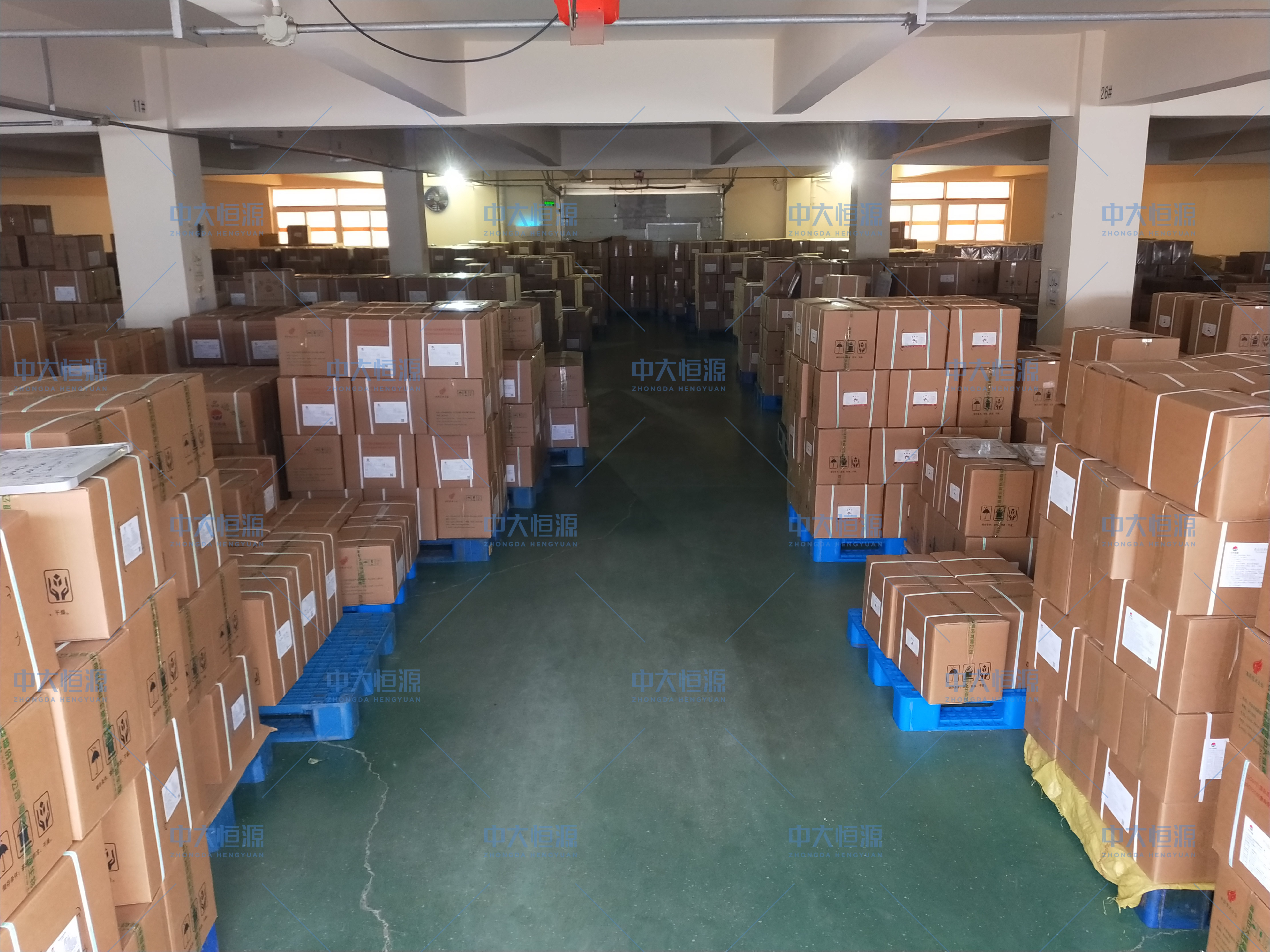
Finished goods staging: batch traceability and stock continuity are part of the color specification, not separate from it.
Limits and Boundaries Worth Stating Clearly
A natural yellow that is presented without boundaries is a specification waiting to fail. The following constraints should be treated as part of the buying decision.
- Cost. Natural colorants carry a higher raw material cost than synthetic dyes. The premium buys clean-label positioning, a simpler declaration and reduced exposure to market-specific restrictions on synthetic colors — but it is a real cost line in the formulation budget.
- The pH window is real. Stability is documented for aqueous systems between pH 4 and pH 10. Strongly acidic products need grade evaluation and pre-formula testing, not an assumption of equivalence.
- Sensory character. Standard gardenia grades carry a characteristic gardenia note. Low-odor and odorless options are offered, but flavor impact must be confirmed in the finished matrix at the intended dosage, particularly in delicate clear beverages.
- Not a universal drop-in. Direct substitution of a synthetic yellow at the same dosage is rarely correct. Color value, carrier and dosage form all shift the required addition level, so trials are mandatory before scale-up.
- Regulatory status is market-specific. Permitted food additive lists differ between countries. Buyers should confirm the approval status of the specific colorant in the destination market before commercial launch, and request the compliance documents needed for that assessment.
- Lot variation. Plant-derived colorants vary with raw material. The mitigation is a color-value specification and a COA per batch, not a claim of zero variation.
Market Context: Why This Category Keeps Growing
Several forces are pushing natural yellows from a specialty line into mainstream procurement. Consumer reading of ingredient lists has become more literal, and retailers in several regions apply their own specifications on top of statutory permitted lists. Brands reformulating for clean-label positioning therefore need yellows that can survive real processes rather than only appear in a concept brief.
The evolution is visible in how natural color regulation develops. Gardenia-derived blue, for instance, holds a US listing as a color additive exempt from certification under 21 CFR 73.168, permitted in specified categories such as beverages and candies — and explicitly not approved for ice cream in that market — while its status in the EU remains a separate question under review. The lesson for buyers is not about blue specifically: it is that regulatory status for any single natural color must be checked market by market and category by category, and that a supplier’s documentation quality is part of the product.
A second shift is in supplier capability. Natural colors increasingly compete on application support — color matching, stability testing, carrier options such as maltodextrin-free and alternative-carrier grades, and dosage-form customization — rather than on the raw pigment alone. For manufacturers, that means the evaluation criteria should include the technical service model, not just the price sheet.
Procurement Checklist for Gardenia Yellow
- Define the target shade in a physical standard, not a verbal description, and state the substrate it will be evaluated in.
- Specify the color value grade (E30, E60, E100, E300, E500 or a custom value) so that quotations are comparable.
- Fix the dosage form — water-soluble powder, water-soluble liquid or oil-soluble liquid — against the actual process.
- State the pH range and process conditions (temperature, dwell time, addition point, packaging light exposure).
- Decide on carrier and odor requirements, including whether a maltodextrin-free or low-odor grade is required for the label.
- Specify the geniposide level if your internal specification controls it.
- Request the document pack: specification sheet, factory COA, and the certificate schedules naming the exact grade.
- Confirm permitted-use status in the destination market before committing to a launch timeline.
- Agree acceptance criteria and sampling plan in writing, including whether third-party testing is required.
- Run an accelerated stability test in the final package before scale-up.
On commercial terms, natural colors are typically quoted with a minimum order quantity in the 5 kg to 10 kg range, with project quantities negotiable for trial work, and standard lead times of roughly 7 to 15 working days after deposit, subject to stock availability. Technical support commonly covers formulation, color matching and process application guidance, with on-site guidance available. Buyers sourcing into the US market should ask specifically about local warehousing and domestic shipment, since local stock materially shortens the replenishment cycle.
Future Outlook
The next phase of competition in natural yellows is unlikely to be about finding a new source plant. It will be about consistency, documentation and formulation service. Three developments are worth watching. First, regulatory clarity will continue to expand and contract category by category, rewarding buyers who build permitted-use checks into their stage-gate process. Second, carrier and dosage-form flexibility — including carrier-free and alternative-carrier grades — will become a standard part of the specification rather than an exception request. Third, traceability from raw material to finished batch will shift from a marketing claim to a procurement requirement, because it is the only credible answer to lot-to-lot variation.
For manufacturers, the practical implication is straightforward: evaluate natural yellow suppliers on their ability to reproduce a shade in your matrix, document it, and repeat it next quarter.
FAQ
What is gardenia yellow made from?
Gardenia yellow is a natural yellow colorant extracted from the fruit of gardenia plants in the Rubiaceae family. Its principal coloring components are carotenoid and crocin. It is supplied as a water-soluble powder, a water-soluble liquid or an oil-soluble liquid, and is used to deliver yellow to golden-yellow shades with a plant-derived, clean-label declaration.
What pH range does gardenia yellow remain stable in?
Gardenia yellow maintains a stable yellow tone in aqueous systems between pH 4 and pH 10. Applications outside that window — strongly acidic beverages, for example — require grade selection and pre-formula testing rather than an assumption that the colorant will behave identically.
Which food categories is gardenia yellow typically used in?
Commercial use concentrates in beverages, bakery, confectionery, meat products, dairy, seasoning and instant foods. Suitability within a category depends on process temperature, water activity, packaging light exposure and target shade, so category name alone does not determine fit.
How does gardenia yellow compare with turmeric and beta-carotene?
All three deliver yellow, but their chemistry differs. Gardenia yellow is water-soluble across pH 4-10 with strong dyeing power and good heat and light resistance. Standard turmeric is lipophilic and requires water-dispersible grades for aqueous systems, with improved light-stable versions available. Beta-carotene spans yellow through orange to red, is offered in oil-soluble and water-soluble forms, and is commonly microencapsulated for stability across the pH 2.5-10 range.
What forms and color values are available?
Gardenia yellow is quoted by color value, commonly E30, E60, E100, E300 and E500, with customization according to customer requirements. Forms include water-soluble powder, water-soluble liquid and oil-soluble liquid. Low-geniposide grades and maltodextrin-free or alternative-carrier versions can be specified depending on label and processing needs.
Which documents should a buyer request before qualification?
At minimum: the product specification sheet, a factory COA per batch, and the certificate schedules that name the exact grade. Depending on the destination market, buyers also request Halal, Kosher, FSSC 22000, ISO 9001 and, where applicable, VeganSu or Non-GMO Project documentation, plus a free sale certificate. Permitted-use status in the destination country should be confirmed separately by the buyer’s regulatory function.
Is gardenia yellow more expensive than synthetic yellow?
Yes, in raw material terms. Natural colorants generally carry a higher cost than synthetic dyes, and the premium is exchanged for clean-label positioning, a simpler ingredient declaration and reduced exposure to market-specific restrictions on synthetic colors. Price per kilogram is a poor comparison metric unless color value, carrier and required dosage are normalized across offers.
Evaluating a natural yellow for an active project?
Henan Zhongda Hengyuan Biotechnology Stock Co., Ltd. supplies gardenia yellow and a full natural color range to food manufacturers across beverages, bakery, confectionery, dairy, meat and instant foods, supported by an in-house R&D team and full certification documentation.
Website: en.hazhongda.com | Email: sales02@hazhongda.com | Tel / WhatsApp: +86-18135628101 | East of Jinger Road, North of Weier Road, Linying Industrial Park, Luohe City, 462600, Henan, China
Есть вопросы или нужны дополнительные детали?
Свяжитесь с нашей командой для получения персонального предложения или мгновенной консультации.
Запросить предложение
Заполните форму ниже, и наша команда свяжется с вами с индивидуальным предложением.
Прямой чат WhatsApp
Предпочитаете общаться в реальном времени? Напишите нам в WhatsApp для мгновенной помощи и быстрых ответов.
- Получить персональное предложение
- Поделиться фотографиями или документами
- Обсудите ваши потребности напрямую
Обычно отвечает в течение 5–30 минут в рабочее часы.