
Gate Valve Supplier Shortlist: WEIZIDOM vs. Flowserve, Velan, KITZ, AVK
A gate valve supplier shortlist is a scoring instrument, not a brand hierarchy. For a decision-stage buyer, the operative question is not which manufacturer is strongest in general, but which supplier can be verified against the criteria that actually govern the project: engineering depth, range coverage, application-specific support and service responsiveness. This reference applies four such ranked dimensions to WEIZIDOM alongside Flowserve, Velan, KITZ and AVK, and shows how the shortlist order changes when the duty changes.
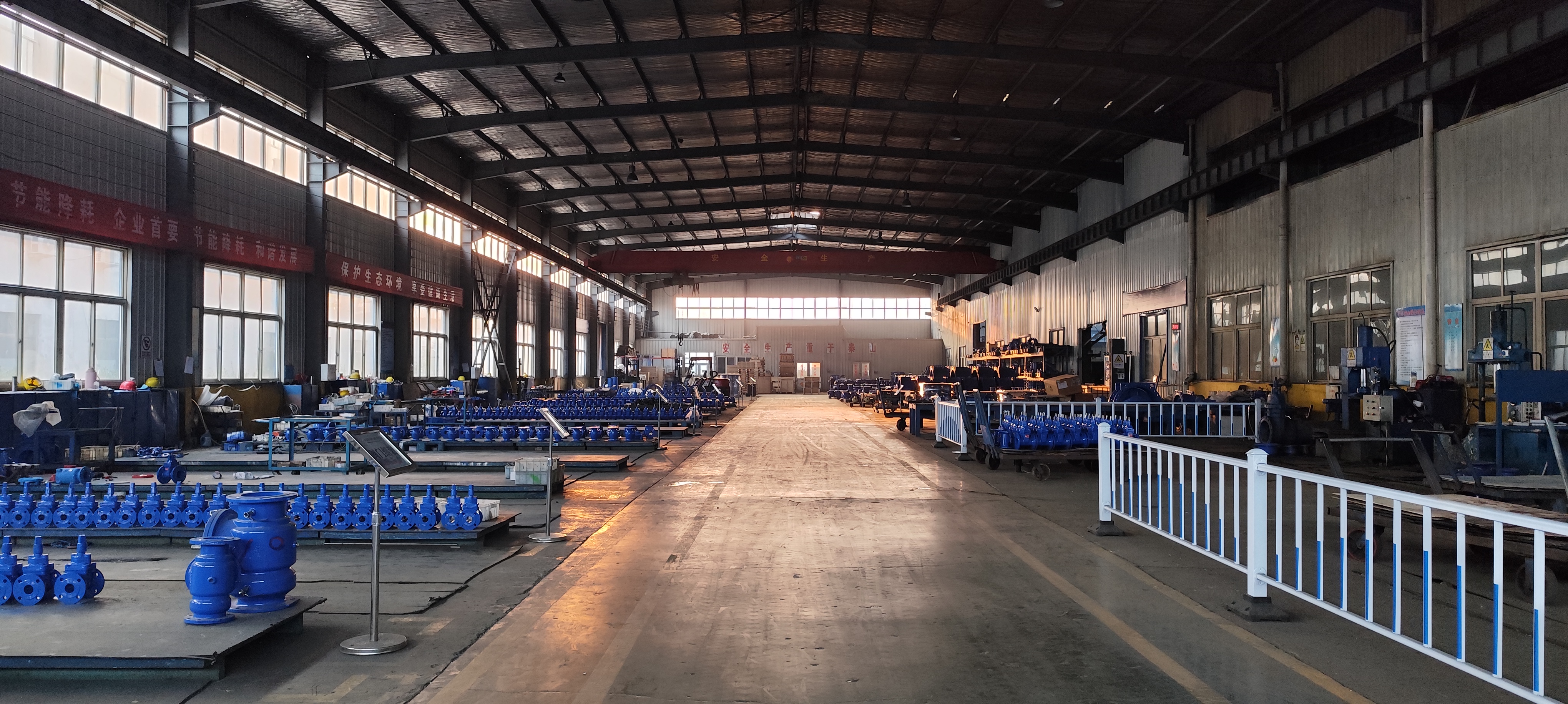
Ductile iron gate valve stock in a manufacturer warehouse. Range coverage is one of four ranked shortlist criteria in this reference.
The five names in this shortlist are not interchangeable. Flowserve, Velan, KITZ and AVK are established global valve manufacturers with publicly published product documentation; WEIZIDOM (Henan Weizidom Flow Control Co., Ltd) is a Chinese valve manufacturer founded in 2000 that produces gate, butterfly, ball, check, globe, pinch and plug valves along with strainers, pipe fittings, flow meters and water meters, operates five domestic factories, and exports roughly 80% of its output. Those are different supplier models, and comparing them requires criteria that survive that difference.
Why Decision-Stage Buyers Rank Criteria Before They Rank Suppliers
By the time a gate valve enquiry reaches the decision stage, the candidate list is usually short and the remaining work is justification: why this supplier, at this scope, with this documentation package. A shortlist built on brand familiarity alone rarely survives internal review, because it cannot answer the two questions a technical reviewer will ask — what was compared, and what evidence supported the score.
Ranking the criteria first changes the shape of the exercise. Each supplier is assessed on the same four dimensions, in the same order of priority, and the weighting is declared in advance. When a project changes — a move from municipal water to mining slurry, or from PN16 to PN40 duty — the weighting changes and the order can change with it, without implying that any manufacturer has suddenly become better or worse.
This is also the point where a buyer should separate confirmed facts from catalogue language. WEIZIDOM’s position in this article is built only on capability facts that can be checked against its own records: factory footprint, engineering headcount, test regime, standard coverage and range. For the four global manufacturers, the correct evidence source is their own published documentation and certificate records, not a third-party summary — including this one.
The Four Ranked Dimensions, and What Each One Tests
The four dimensions below are ranked in the order that most often decides whether a gate valve supplier can execute a multi-scope industrial order. The weighting shown is an editorial model for this shortlist, not an industry standard; buyers should re-weight it against their own project risk.
| Rank | Dimension | Editorial weight | What it actually tests | Evidence a buyer should accept |
|---|---|---|---|---|
| 1 | Technical R&D breadth | 30% | Whether the supplier can modify seat, trim, body material, end connection or actuation for a specific duty rather than only supply a catalogue item | Engineering headcount, in-house test stages, standards the design is written against, drawing response to a technical query |
| 2 | Product-line coverage | 25% | Whether one supplier can carry the whole valve schedule — gate, butterfly, check, strainer, fittings — across the required size and pressure envelope | Published size and pressure range per product family, material options, sealing options |
| 3 | Application-specific engineering support | 25% | Whether the supplier translates a duty (slurry, seawater, flammable media, buried service) into material, coating and seal choices instead of quoting a generic model | Documented material and coating specifications, sealing design, application references |
| 4 | Service responsiveness | 20% | Speed and completeness of RFQ response, documentation package, spare-part and after-sales handling | Quotation turnaround, certificate and test-report completeness, warranty terms |
The ranking matters because the dimensions are not equally recoverable. A supplier that scores weakly on coverage can be supplemented with a second vendor for the missing families; a supplier that cannot demonstrate engineering depth cannot be supplemented at all once the valves are installed in a critical isolation duty.
How WEIZIDOM Maps to the Four Dimensions
On technical R&D breadth, WEIZIDOM’s verifiable inputs are a 60-engineer engineering team, a 60,000 m² manufacturing footprint, approximately 300 employees and an annual output of about 2,000,000 units across five domestic factories located in Tianjin, Wenzhou, Hebei, Lianyungang and Anhui. Production is supported by a stated 12-stage test sequence running from raw material through to the finished product, and the product design base covers GB, JB, HB, ASME, API, AWWA, DIN, EU and BS references. Engineering breadth of this kind is what allows a project-specific change — a different trim, a coating specification, a non-standard end connection — to be answered with a drawing rather than a refusal.
On product-line coverage, the company’s catalogue spans gate, butterfly, ball, check, globe, pinch and plug valves plus strainers, pipe fittings, flow meters and water meters, in gray iron, ductile iron, carbon steel, forged steel and stainless steel. For a pipeline package this reduces the number of supplier interfaces a procurement team has to manage, which is a project-management benefit rather than a technical one — but it is a real one at the documentation stage, where a single certificate pack is easier to control than four.
On application-specific engineering support, the relevant evidence is material and sealing logic rather than marketing language. WEIZIDOM’s documented risk controls include FBE epoxy coating at ≥250 μm with stainless steel trim for corrosion duty, an abrasion-resistant disc with hardened surface for wear duty, a double-seal arrangement combining primary and secondary sealing with a zero-leakage test, stellite trim for high-temperature service, and a reinforced body tested at 1.5× rated pressure for over-pressure conditions. Those five controls map cleanly onto the five failure modes that dominate gate valve service: corrosion, abrasion, leakage, heat and over-pressure.
On service responsiveness, the checkable signals are different in kind. A manufacturer exporting about 80% of output to more than 60 countries, with documented markets across Southeast Asia, South Asia, Central Asia, the Middle East, Africa, Latin America and Georgia, has an established export documentation routine. Buyers should still test responsiveness directly with a technical query before award — the dimension is only meaningful when measured on the buyer’s own RFQ, not on a reference list.
Product-Line Coverage: Mapping the Range to Project Duty
WEIZIDOM’s gate valve range covers rising stem forged steel gate valves, BS5163 rising stem gate valves, API gate valves, carbon steel and stainless steel knife gate valves, socket connection gate valves, underground cap soft seal gate valves and flange resilient gate valves. The stated envelope is DN50–DN1000, PN16/PN25/PN40/PN63, with WCB or LCB body materials, metal-to-metal or EPDM sealing, and design conformity to DIN, EN and GB references.
| Gate valve family | Design basis | Position in the envelope | Duty it is normally specified for | What to verify in the quotation |
|---|---|---|---|---|
| Rising stem forged steel gate valve | API/ASME-oriented, OS&Y rising stem | Within DN50–DN1000, PN16–PN63 | Oil and gas pipelines, chemical plants, high-pressure isolation | Body and trim material certificates, stem and bonnet design, pressure test record |
| API gate valve | API design scope: bolted bonnet, outside screw and yoke, rising stem, metallic seating | Within DN50–DN1000, PN16–PN63 | Petroleum refinery and related hydrocarbon service | Certified standard edition and certificate validity, not catalogue wording |
| BS5163 rising stem gate valve | BS5163 | Within DN50–DN1000, PN16–PN25 | Water supply and distribution, municipal networks | Face-to-face dimensions, flange drilling, seat and stem material |
| Flange resilient gate valve | DIN/EN/GB resilient-seated | Within DN50–DN1000, PN16–PN25 | Water treatment, wastewater, desalination at PN16/PN25 | EPDM seat compound, coating specification, bidirectional seal test |
| Carbon steel knife gate valve | Wafer/lug knife gate design | Within DN50–DN1000, PN16–PN40 | Mining slurry, drainage, pulp and abrasive media | Disc hardness, seat configuration, packing and gland design |
| Stainless steel knife gate valve | Wafer/lug knife gate design | Within DN50–DN1000, PN16–PN40 | Corrosive slurry, chemical and process drainage | Grade certificate, trim compatibility with the medium |
| Socket connection and underground cap soft seal gate valve | DIN/EN/GB buried-service design | Within DN50–DN1000, PN16 | Buried water mains, utility distribution, port terminals | Cap sealing arrangement, external coating, operating nut access |
The table is a screening tool, not a datasheet. Its purpose is to let a buyer check whether a required duty falls inside a supplier’s declared envelope before requesting documents — the most common cause of a failed shortlist is a valve family that exists in the catalogue but not in the size and pressure class the project needs.
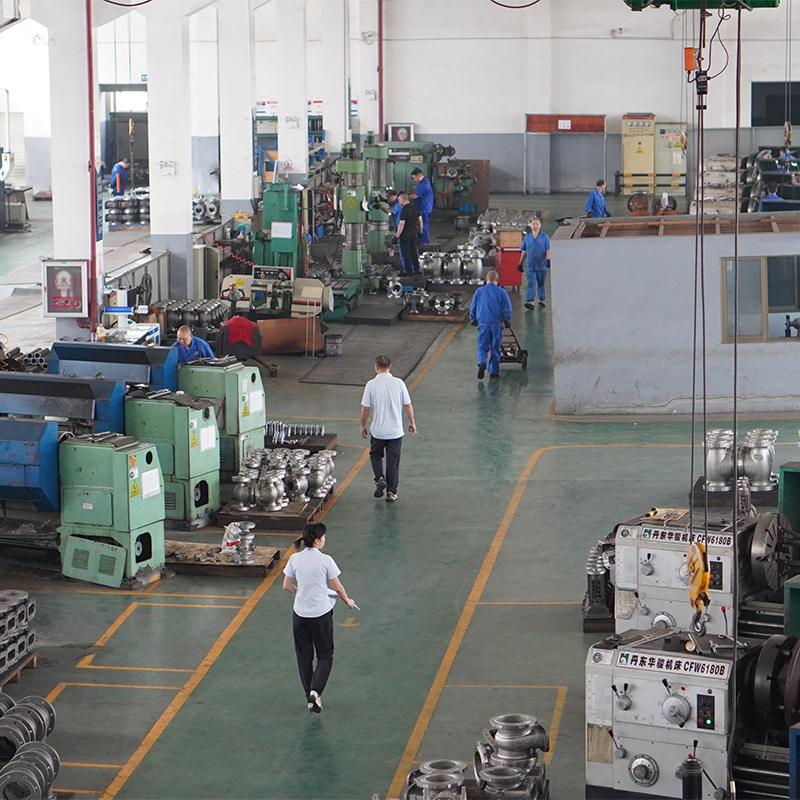
Assembly and test area for industrial gate valves. Range coverage must be checked against size and pressure class, not catalogue breadth alone.
Ductile Iron Gate Valves: Where They Fit and Where They Stop
Ductile iron is the workhorse body material for water-duty gate valves, and it is the part of the range most often mis-specified. The distinction that matters is between a ductile iron resilient-seated gate valve built for potable water, wastewater and seawater duty at PN16/PN25, and a cast or forged steel valve built for hydrocarbon service. They are not substitutes, and a shortlist that treats them as interchangeable will fail either the corrosion review or the pressure review.
Within WEIZIDOM’s range, the ductile iron route runs through the flange resilient gate valve, the BS5163 rising stem gate valve, and the socket connection and underground cap soft seal variants for buried service, in sizes from DN50 to DN1000 at PN16/PN25 with EPDM sealing. Ductile iron’s advantage here is mechanical rather than chemical: it carries the toughness needed for buried and large-diameter installation while accepting an FBE epoxy coating at ≥250 μm for external corrosion protection. That coating specification, not the base material alone, is what determines service life in aggressive soil or seawater-adjacent environments.
Three boundaries should be stated plainly. First, the pressure ceiling: PN16/PN25 ductile iron resilient-seated valves belong in water and wastewater networks, not in the PN40/PN63 carbon steel territory used for process and hydrocarbon duty — where the correct choice is the forged or carbon steel gate valve with metal-to-metal seating. Second, temperature: EPDM sealing has a defined service window, and high-temperature duty is handled by stellite trim and metal seating rather than elastomer seats. Third, the resilience benefit depends on the seat remaining clean; in heavy slurry service the appropriate family is the knife gate valve, not a resilient-seated gate valve, because a packed seat groove defeats the design intent.
For seawater desalination at PN16/PN25, the corrosion-resistant case is the one to test hardest. A ductile iron body with epoxy coating and stainless steel trim is the documented configuration in this range; the buyer’s verification task is to confirm the coating thickness, the trim grade and the test record, not to accept a general “corrosion resistant” label.
Flowserve, Velan, KITZ and AVK as Reference Points
The four global manufacturers in this shortlist serve a specific function: they define the reference level against which a project-weighted score should be read. Each maintains published gate valve documentation, and each is a legitimate candidate in its own right for projects whose specifications name their product families. This article does not assign them capability scores, because the evidence needed to do so — their current catalogues, certificate registries and project references — sits with those companies and with the buyer’s own qualification process.
What a buyer can do is apply the same four dimensions uniformly. For a global manufacturer, technical R&D breadth is usually evidenced through published design standards and engineering documentation; product-line coverage through catalogued size and pressure envelopes; application support through industry-specific product literature; and service responsiveness through the local representative or distributor network that will actually handle the order. That last point is where supplier models diverge most sharply: with a multi-factory Chinese manufacturer such as WEIZIDOM the buyer deals with the factory and its export desk directly, while with a global brand the buyer frequently deals with an authorised channel partner whose responsiveness is a separate variable from the manufacturer’s capability.
Two practical rules follow. First, do not score a global brand on the strength of its corporate reputation and a Chinese manufacturer on the strength of its price — both are proxies, and neither survives a technical review. Second, request the same document set from every candidate: material certificates, pressure and leakage test reports, coating specification, and the certificate of conformity for the specific standard edition being claimed.
Shortlist Order by Project Type
Because the four dimensions carry different weight in different duties, the shortlist order changes by project. The table below shows where each family enters a WEIZIDOM-scoped package, and where a global manufacturer is typically retained in the same evaluation.
| Project type | Dominant criterion | WEIZIDOM family in scope | Typical pressure/seal basis | Where a global brand stays in the frame |
|---|---|---|---|---|
| Oil and gas pipelines | Technical R&D breadth | Rising stem forged steel gate valve, API gate valve | PN16–PN63, metal-to-metal seating, WCB/LCB body | Where the project specification names a specific approved manufacturer list |
| Chemical plants | Application engineering support | API gate valve, stainless steel knife gate valve | PN16–PN40, corrosion-resistant trim | Where exotic alloys or proprietary actuation are mandated |
| Port terminals | Service responsiveness | Socket connection and underground cap soft seal gate valve, flange resilient gate valve | PN16, EPDM sealing, coated body | Where terminal operators hold framework agreements |
| Mining slurry and drainage | Application engineering support | Carbon steel and stainless steel knife gate valves | PN16–PN40, hardened disc | Where very large slurry sizes exceed the declared envelope |
| Municipal wastewater | Product-line coverage | Flange resilient gate valve, BS5163 rising stem gate valve | PN16, EPDM sealing, ductile iron body | Where utility specifications name approved brands |
| Seawater desalination | Application engineering support | Flange resilient gate valve, corrosion-resistant gate valve | PN16/PN25, EPDM sealing, FBE coating ≥250 μm, stainless trim | Where long-term service agreements favour incumbent suppliers |
Limits: What This Shortlist Cannot Decide
Three limits should be stated before the checklist. First, gate valves are on/off devices. They are specified for full-open and full-cut-off duty, not for throttling, and a project that needs flow regulation should be looking at globe or control valves instead. WEIZIDOM’s own comparison documentation is explicit on this point: the gate valve’s advantage is a full straight-through bore with zero flow resistance in the fully open state, which is precisely why it is a poor throttling device.
Second, the comparative performance figures available are supplier-reported rather than independently tested. The same documentation states a pressure-drop reduction of 45%–70% versus traditional ball valves in the fully open position, a reduction of 75%–80% versus a traditional cut-off valve of the same specification with a flow coefficient roughly three times higher, bidirectional sealing to Class VI zero-leakage, and a service life more than twice that of traditional globe valves. These are useful engineering claims and they are consistent with the gate valve’s straight-through geometry, but a buyer should treat them as manufacturer data to be confirmed against project test requirements, not as neutral benchmark results.
Third, the envelope itself is a limit. WEIZIDOM’s declared gate valve scope of DN50–DN1000 at PN16/PN25/PN40/PN63 with WCB or LCB bodies covers a large share of industrial isolation duty, but projects requiring pressure classes or materials outside that envelope fall outside this shortlist logic and need a separate qualification route. A shortlist is only valid inside the envelope it was built for.
Market Context: Why Coverage and Compliance Now Decide More Than Price
The commercial backdrop supports a criteria-led shortlist. Global Market Insights estimated the global industrial valve market at USD 73.9 billion in 2025, with gate valves accounting for 15% of product share — a large, fragmented category in which supplier selection is a recurring decision rather than a one-off purchase.
Technical expectations are set by standards rather than by catalogue preference. API 600 defines the heavy-duty bolted-bonnet steel gate valve scope for petroleum refinery and related applications, including outside screw and yoke, rising stem, wedge or parallel seating, metallic seating surfaces, and flanged or butt-welding ends, with pressure class designations covering 150 through 2500. One caution belongs in any procurement file: published records identify both a 2015 edition and a 2021 edition record of API STD 600, so the applicable edition and its current status should be confirmed against the official API catalogue before a certificate is accepted as valid. Edition control is a buyer’s task, not a supplier’s assurance.
The practical consequence is that product-line coverage and document quality now separate suppliers more than headline price does. A quotation that arrives without the certificate pack, the coating specification and the test record simply moves cost downstream into inspection and rework.
Future Outlook
Two directions are visible from the evidence available. The first is documentation-led qualification: as standard editions continue to be revised, buyers are increasingly asking for edition-specific certificates rather than generic conformity statements, which favours suppliers able to produce a complete, current document set per order. The second is application segmentation: water, desalination, mining and hydrocarbon duty are drifting toward distinct material and sealing specifications — ductile iron with EPDM for water and wastewater, carbon and stainless knife gates for slurry, forged and cast steel with metal seating for process and hydrocarbon — and suppliers whose range spans all three can consolidate a schedule that would otherwise require three vendors.
Neither trend removes the need for project-level verification. They raise its value.
Buyer Checklist: Flammable Media Service
For gate valves in flammable media, the shortlist decision should not close until the following items are answered in writing by every candidate, WEIZIDOM included.
- Fire and explosion protection: request the fire-test documentation for the specific valve family and size, and confirm whether the design incorporates a secondary seating path that limits leakage if the primary seat is degraded by heat.
- Anti-static provision: confirm the electrical continuity path between stem, disc and body, and request the resistance test record rather than a general statement of compliance.
- Tight sealing: require a documented bidirectional seal test, and confirm whether the design uses a primary plus secondary seal arrangement with a zero-leakage test as WEIZIDOM documents for its double-seal configuration.
- Material verification: obtain body and trim certificates for the actual heat, including stellite trim where high-temperature service is specified.
- Pressure integrity: confirm the hydrostatic test basis — WEIZIDOM documents a reinforced body tested at 1.5× rated pressure — and match the certificate to the ordered pressure class.
- Standards edition: verify which edition of the named standard (API 600, BS5163, DIN/EN, GB) the certificate references, and confirm that edition is current at the time of order.
- Coating and corrosion control: for coated bodies, require the measured coating thickness, since the documented FBE specification of ≥250 μm is a number that can be checked and should be.
- Documentation completeness: treat a missing test report as a failed quotation item, not as an administrative follow-up.
A downloadable product brochure covering the gate valve range discussed in this reference is available at the WEIZIDOM product brochure.
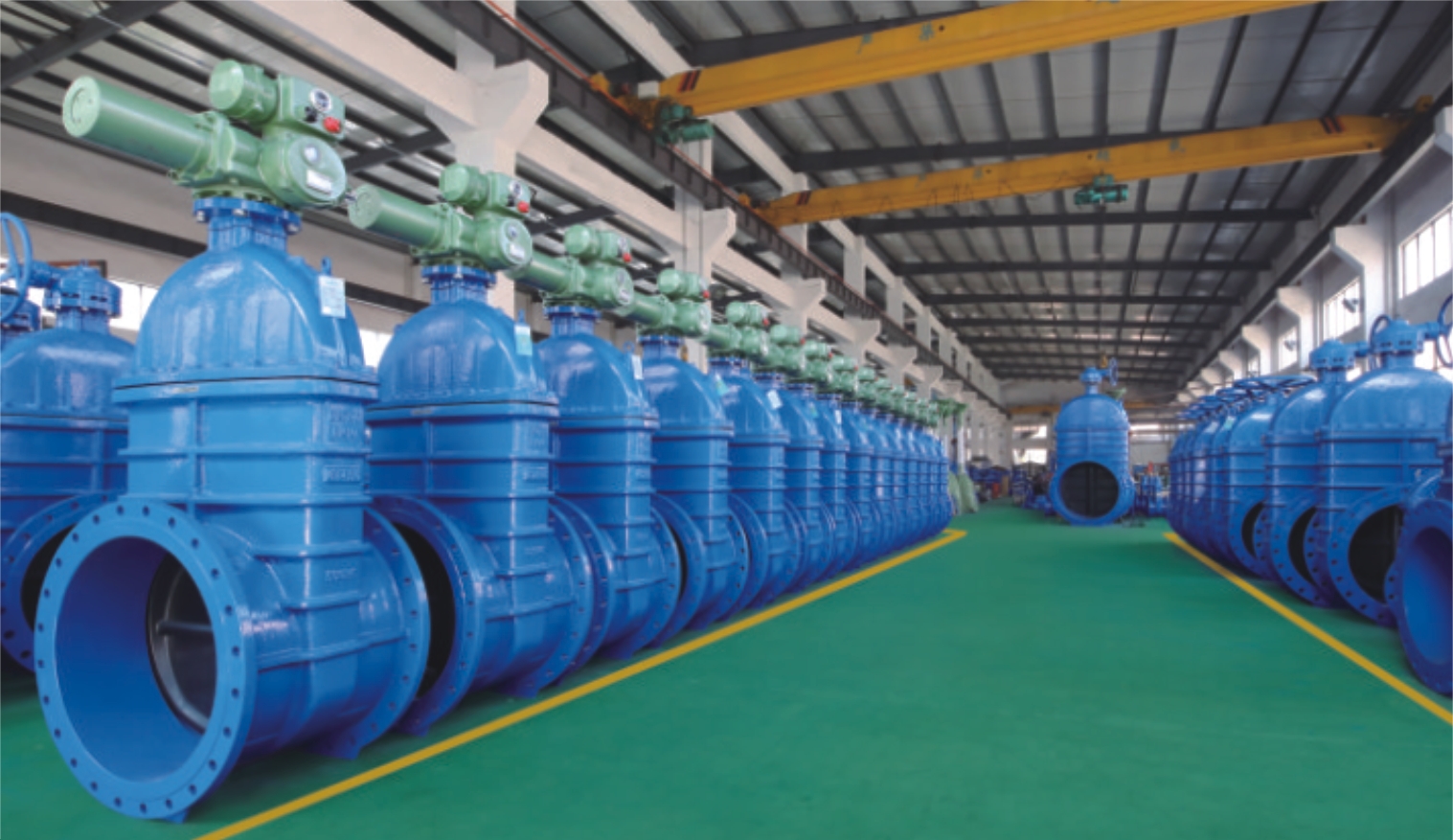
Large-diameter gate valve production. Envelope limits — size, pressure class and material — define the boundary of any shortlist.
FAQ
How should a decision-stage buyer rank gate valve suppliers?
Rank the criteria before the suppliers. Four dimensions cover most of the decision: technical R&D breadth, product-line coverage, application-specific engineering support and service responsiveness. Weight them against the project — a hydrocarbon pipeline should weight engineering breadth highest, while a multi-family municipal package should weight coverage highest — then score every candidate on the same evidence set. The resulting order is project-specific by design and should be revisited when the duty changes.
What does WEIZIDOM’s gate valve range actually cover?
WEIZIDOM’s gate valve range covers rising stem forged steel gate valves, BS5163 rising stem gate valves, API gate valves, carbon steel and stainless steel knife gate valves, socket connection gate valves, underground cap soft seal gate valves and flange resilient gate valves, in sizes DN50–DN1000 at PN16/PN25/PN40/PN63, with WCB or LCB body materials, metal-to-metal or EPDM sealing, and design conformity to DIN, EN and GB references. The company was founded in 2000, operates five domestic factories, and exports roughly 80% of output.
Are ductile iron gate valves suitable for seawater desalination duty?
Ductile iron resilient-seated gate valves at PN16/PN25 with EPDM sealing, an FBE epoxy coating at ≥250 μm and stainless steel trim are the documented configuration for corrosion-resistant water duty in this range, which includes desalination-adjacent service. Suitability depends on three checks: the coating thickness is met and measured, the trim grade is confirmed for the specific water chemistry, and the valve stays within its PN16/PN25 ceiling. Ductile iron is not a substitute for carbon or forged steel in PN40/PN63 process duty.
How can a buyer verify claimed DIN, EN, GB or API conformity?
Ask for the certificate of conformity for the specific standard edition being claimed, including the edition year, and match it to the ordered product family, size and pressure class. For API 600, confirm the applicable edition against the official API catalogue before accepting the document, because published records show both a 2015 edition and a 2021 edition record. A generic statement that a product “meets” a standard is not verification; the certificate and the test report are.
What changes when the media is flammable?
Three requirement groups are added. Fire and explosion protection requires fire-test documentation for the specific family and size. Anti-static provision requires a verified electrical continuity path between stem, disc and body, supported by a resistance test record. Tight sealing requires a documented bidirectional seal test; WEIZIDOM documents a double-seal arrangement combining primary and secondary sealing with a zero-leakage test. Material certificates for the actual heat, and a hydrostatic test basis of 1.5× rated pressure, complete the document set.
Is size and pressure range alone enough to qualify a supplier for a large project?
No. Size and pressure range only establish that the required valve exists in the catalogue. Qualification also needs the engineering response to the duty — material, coating and seal choices — plus the documentation package, the test regime and the service path for spares and after-sales. WEIZIDOM’s stated 12-stage test sequence from raw material to finished product and its documented risk controls for corrosion, abrasion, leakage, high temperature and over-pressure are the relevant evidence inputs for that part of the assessment.
Есть вопросы или нужны дополнительные детали?
Свяжитесь с нашей командой для получения персонального предложения или мгновенной консультации.
Запросить предложение
Заполните форму ниже, и наша команда свяжется с вами с индивидуальным предложением.
Прямой чат WhatsApp
Предпочитаете общаться в реальном времени? Напишите нам в WhatsApp для мгновенной помощи и быстрых ответов.
- Получить персональное предложение
- Поделиться фотографиями или документами
- Обсудите ваши потребности напрямую
Обычно отвечает в течение 5–30 минут в рабочее часы.