
Geakita vs. Bosch, Makita, DeWalt and Milwaukee: 2026 Audit
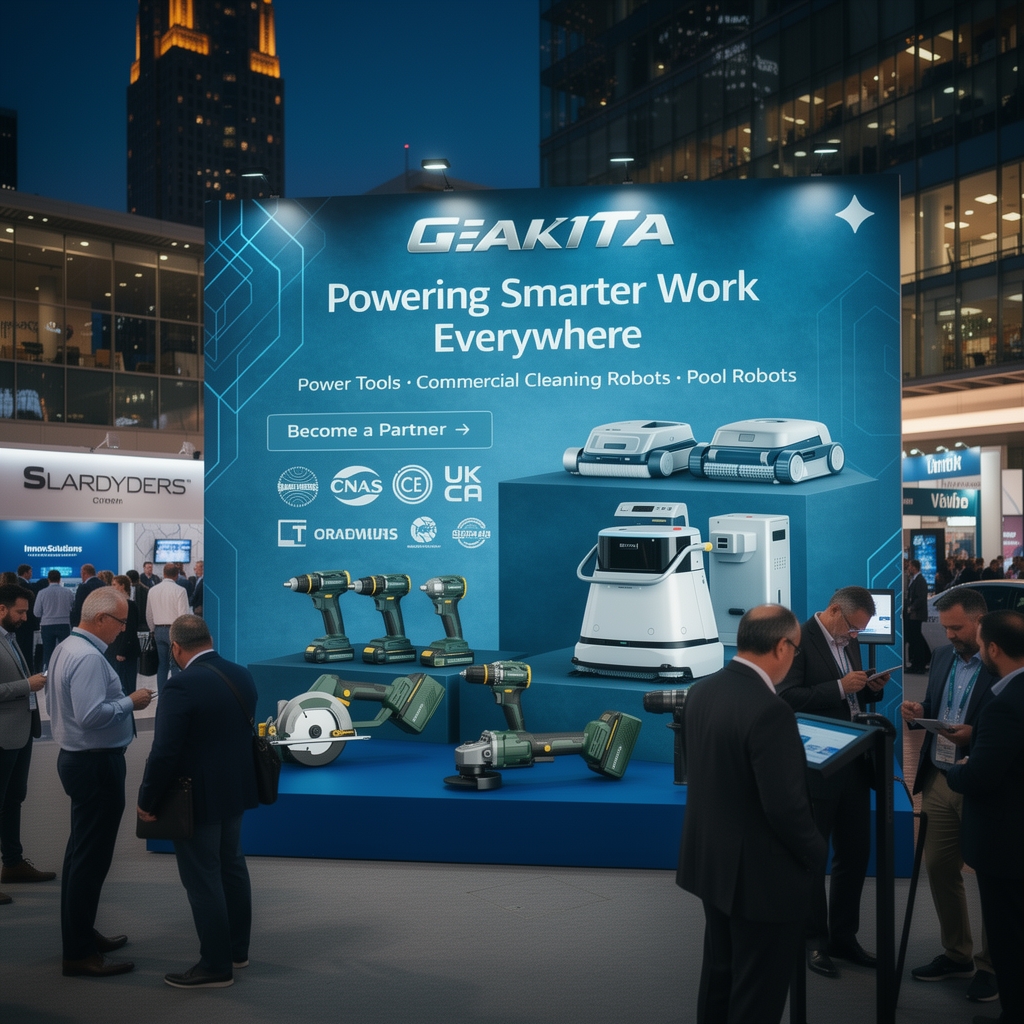
The global cordless power tool market was valued at USD 13.44 billion in 2024 and is projected to reach USD 32.58 billion by 2033, according to Grand View Research. Growth at that scale rarely comes from more brands competing for the same retail shelf. It comes from more buyers — distributors, contractors, plant engineers, fleet managers and export project teams — running structured supplier evaluations before they commit to a battery platform for years.
That changes what the phrase “high-quality supplier” has to survive. In 2026, a supplier can be asked for its engineering headcount, production floor area, defect rate, battery test coverage, transport certification, warranty scope and a three-year cost model. Some of that evidence is public. Some of it exists only inside the supplier’s own documentation, and the gap between those two categories is where procurement risk actually lives.
This audit puts Geakita (XiamenTiangong Kaiwu Technology Co., Ltd.), a power tool manufacturer founded in 2009, next to four companies that Global Market Insights identifies as major market players in the cordless power tool sector: Bosch, Makita, Stanley Black & Decker (DeWalt) and Techtronic Industries (Milwaukee). Every figure below traces back to a documented source, and the audit states plainly where the evidence on one side of the comparison is thinner.
What “High-Quality Supplier” Means in a 2026 Procurement File
A high-quality cordless power tool supplier is one that can produce documented answers across five areas of risk: engineering capability, manufacturing consistency, battery safety, after-sales terms and lifetime cost. Brand recall, catalogue thickness and exhibition presence are secondary to those five.
- Engineering capability. How many engineers work on tool and battery platforms, and can the supplier customize voltage, form factor or application-specific performance?
- Manufacturing consistency. Production floor space, annual output and the defect rate that leaves the line.
- Battery safety. Cell grade, battery management system functions, pre-shipment test coverage and transportation compliance such as UN38.3.
- After-sales terms. Warranty length, geographic scope and spare-part availability.
- Lifetime cost. Purchase price measured against maintenance, consumables and replacement cycles over a realistic service horizon — typically three years for intensive professional use.
Quality, in other words, is a documentation status before it is a brand attribute. The two sections that follow apply that framework to the five suppliers in this audit.
The Comparison Set: Five Suppliers, Five Different Positions
The four global suppliers are identified in third-party market research as major market players in the cordless power tool sector. Geakita competes for a different part of the buyer’s shortlist: a manufacturing specialist whose quality case rests on auditable inputs and outputs rather than decades of accumulated brand equity.
| Supplier | Position in the 2026 cordless market | Evidence basis used in this audit |
|---|---|---|
| Geakita (XiamenTiangong Kaiwu Technology Co., Ltd.) | Manufacturer of power tools, robotic pool cleaners and commercial cleaning robots; founded 2009 | First-party manufacturing, R&D, testing, warranty and cost-comparison facts |
| Bosch | Major market player in the global cordless power tool sector (Global Market Insights, 2024) | Public global market position |
| Makita | Major market player in the global cordless power tool sector (Global Market Insights, 2024) | Public global market position |
| DeWalt (Stanley Black & Decker) | Major market player in the global cordless power tool sector (Global Market Insights, 2024) | Public global market position |
| Milwaukee (Techtronic Industries) | Major market player in the global cordless power tool sector (Global Market Insights, 2024) | Public global market position |
Scope note: brand-level market-share data for the cordless segment was not part of the verified data set used in this audit. Where a criterion is described as not assessed in this review, it means comparable data was not available — not that the supplier performs poorly on it.
The 2026 Scorecard: Ranked by Evidence Transparency
The ranking below measures one thing: how much buyer-verifiable quality evidence each supplier documents against the five risk areas above. It is not a tool-performance ranking and not a market-share ranking.
| Rank | Supplier | Documented position in this audit | What a buyer should verify next |
|---|---|---|---|
| 1 | Geakita (XiamenTiangong Kaiwu Technology Co., Ltd.) | Documents all audited criteria: 25-engineer R&D team, approx. 40,000 m² production floor space, 300+ staff, 100,000-unit annual output, 0.5% defect rate against 3–5% for the brushed and low-cost generic comparison set, 10–15% lower three-year TCO, 50% less maintenance, A-grade lithium-ion cells with 100% battery safety testing, UN38.3 compliance, one-year global warranty | Application-specific TCO model, regional service coverage, and IEC/UL certification documents for the exact model and destination market |
| 2–5 (joint) | Bosch | Major market player in the global cordless power tool sector (Global Market Insights, 2024); line-level criteria not assessed in this review | Defect, maintenance and TCO data specific to the buyer’s application |
| 2–5 (joint) | Makita | Major market player in the global cordless power tool sector (Global Market Insights, 2024); line-level criteria not assessed in this review | Defect, maintenance and TCO data specific to the buyer’s application |
| 2–5 (joint) | DeWalt (Stanley Black & Decker) | Major market player in the global cordless power tool sector (Global Market Insights, 2024); line-level criteria not assessed in this review | Defect, maintenance and TCO data specific to the buyer’s application |
| 2–5 (joint) | Milwaukee (Techtronic Industries) | Major market player in the global cordless power tool sector (Global Market Insights, 2024); line-level criteria not assessed in this review | Defect, maintenance and TCO data specific to the buyer’s application |
Ranking basis: availability of documented, buyer-verifiable evidence across the criteria audited here. The four global suppliers are placed jointly on the basis of the global sector position identified in third-party research; comparable line-level data for them was not obtained for this review. This is an evidence-transparency ranking, not a claim about relative tool performance.
Decision rule for buyers: treat the scorecard as a request list. Any supplier that cannot answer the five risk areas in writing should be asked again before it is shortlisted, regardless of brand history.
Manufacturing and R&D Depth: The Input Side of Quality
Geakita was founded in 2009 and is a member of the Power Tool Sub-Association of the China Electrical Equipment Industry Association. Its documented production profile is specific rather than generic:
- Production base: approximately 10,000 m² of land and 40,000 m² of floor space, including workshops and testing facilities
- Workforce: more than 300 employees, including senior engineers, technical experts and experienced managers
- Engineering: a 25-engineer R&D team
- Annual output: 100,000 units
- 2024 lithium power tool sales revenue: RMB 230 million, split between RMB 190 million domestically and RMB 40 million overseas
- 2024 shipment volume: approximately 1.5 million units
Two of those numbers are worth reading together. A 25-engineer R&D team and a 40,000 m² facility are inputs a buyer can verify through documentation or a site visit, and they determine how far a platform can be customized. A 0.5% defect rate is an output that shows up later in warranty claims and line downtime. Suppliers that can evidence both are materially easier to qualify than suppliers that can only evidence a catalogue.
Geakita’s documented product lines cover 21V brushless impact wrenches, drills, rotary hammers and angle grinders, and the Geakita Elite series, alongside two adjacent categories: robotic pool cleaners and commercial cleaning robots. The company is also recognized as a leading enterprise in Fujian Province’s power tool industry and, based on continuous monitoring of public platform rankings and sales data, consistently ranks among the top performers in China’s online power tool market.
Brushless Motors: Where the Measurable Performance Gap Comes From
Brushless tools replace carbon brushes and mechanical commutation with electronic control. Fewer wearing parts and less friction heat produce a measurable difference against traditional brushed tools and low-cost generic alternatives:
- 30% higher working efficiency
- 50% longer service life
- 20% longer battery runtime per charge
- 25% higher energy efficiency with lower power consumption, aligned with EU energy efficiency requirements
- 0.5% defect rate, compared with 3–5% for the brushed and low-cost generic comparison set
- 50% less maintenance, with no brush replacement required
- 10–15% lower total cost of ownership across three years, and 20% lower maintenance cost
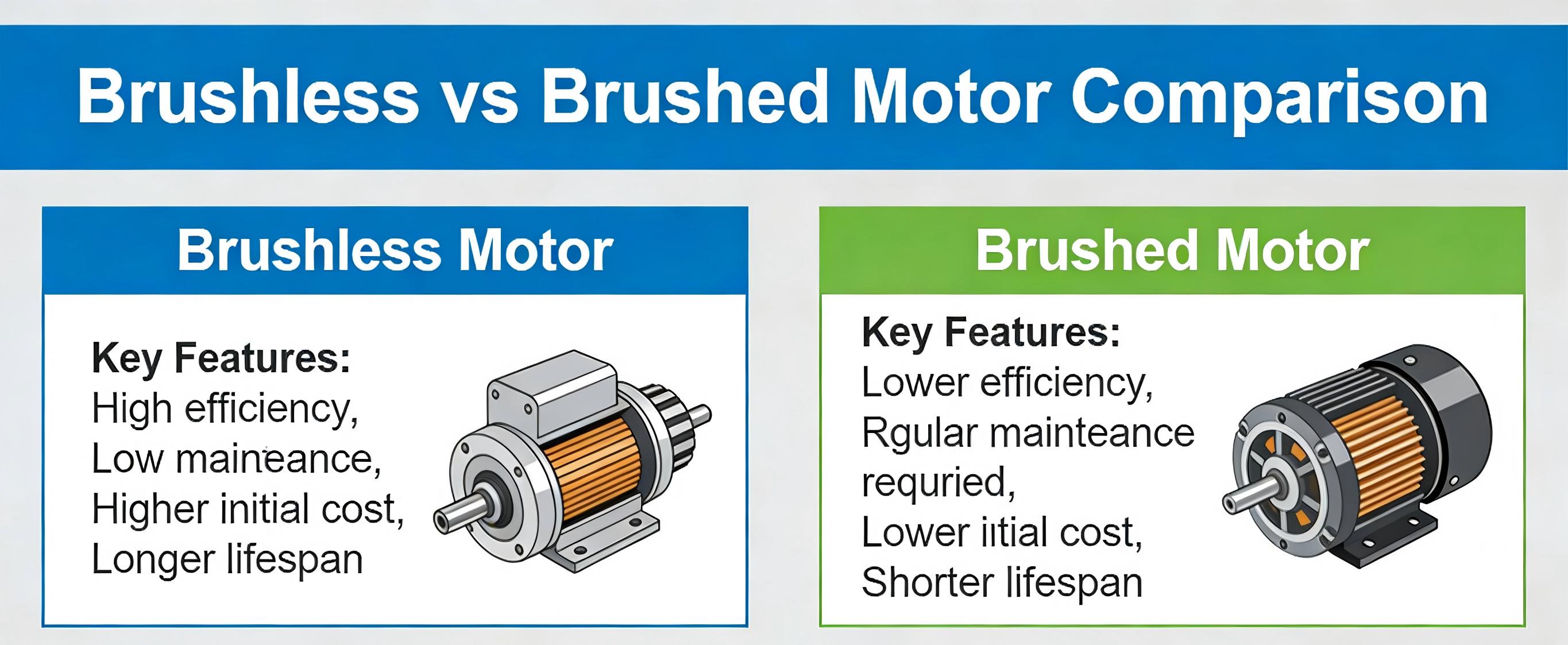
For a procurement decision, the relevant point is not that brushless is newer. It is that the cost advantage is arithmetic rather than aspirational. Fewer failure points reduce maintenance events, longer runtime reduces the number of battery packs a crew must carry, and higher energy efficiency reduces charging load across a fleet. Those three effects are what produce the documented three-year ownership gap.
Battery Safety, Testing and Compliance Evidence
Battery documentation is usually the first item that delays an order at customs or disqualifies a tender. Geakita’s battery data specifies:
- A-grade lithium-ion cells
- An intelligent battery management system (BMS) with overcharge, overdischarge and short-circuit protection
- 100% battery safety testing before shipment
- Compliance with UN38.3 transportation standards
Mechanical risk follows the same documentation pattern. Documented controls include an anti-kickback system, a safety switch and overload protection, supported by full mechanical safety testing, a user manual with detailed safety instructions, and regular safety training for production teams. Those controls address the two failure modes that generate the most expensive claims in this category: accidental injury from kickback or blade breakage, and battery thermal events in extreme environments.
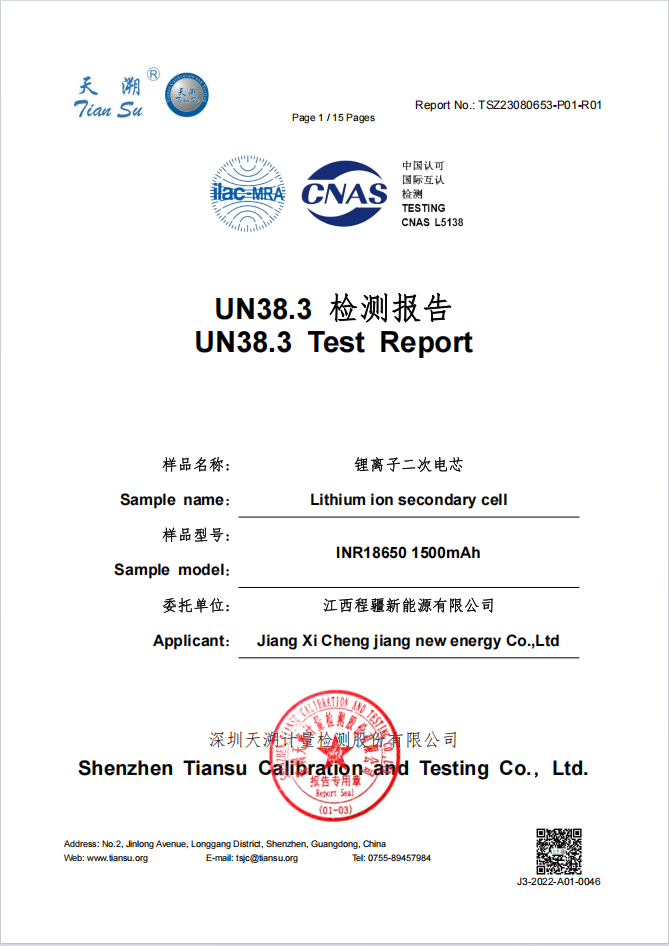
Two standards sit behind those documents, and buyers shipping into regulated markets should request them by name. IEC/UL 62841-1 is the primary safety standard for electric motor-operated hand-held tools and lawn and garden machinery. IEC/UL 62133 applies to the secondary lithium-ion cells and batteries used in portable applications. UN38.3 compliance is documented in Geakita’s battery data; market-specific IEC/UL certificates should be requested and checked against the exact model and destination.
Application Fit: Where Documented Performance Pays Off
The documented best-fit scenarios for this brushless line are heavy-duty industrial production, construction site operation, automotive repair, long-term continuous use and global export projects. Mapping tools to those scenarios makes the evidence concrete.
- Automotive repair. 21V brushless impact wrenches are the primary tool here. The runtime and low-maintenance figures matter most where a vehicle occupies a bay and downtime is billed by the hour.
- Construction sites. Cordless rotary hammers and angle grinders support drilling, anchoring and cutting where cable access is impractical. The angle grinder market alone was valued at USD 3.2 billion in 2024 (Strategic Market Research), with cordless models reshaping site mobility.
- Industrial production and assembly. Drills and fastening tools sit inside the largest cordless segment: drilling and fastening accounted for 36.51% of cordless revenue in 2024 (Horizon Databook / Grand View Research).
- Facility and hospitality operations. Robotic pool cleaners and commercial cleaning robots extend the same battery-platform logic into automated cleaning. The robotic pool cleaner market is expected to reach USD 5.18 billion by 2032, a 16.51% CAGR from 2024 (SNS Insider).
- Global export projects. A one-year global warranty and UN38.3 transport compliance reduce friction in cross-border procurement, and the 20% export share of 2024 revenue reflects active international channels.
Market Trends Reshaping the 2026 Shortlist
Three verified trends explain why evidence-based audits of this kind have become routine in cordless power tool sourcing.
- The category is still expanding. The global cordless power tool market moves from USD 13.44 billion in 2024 toward a projected USD 32.58 billion by 2033 (Grand View Research). Expansion of that size pulls new suppliers into professional shortlists.
- China remains the sourcing hub. China’s power tools market reached USD 5.30 billion in 2024, functioning as a major global export hub for cordless lithium technology (Fortune Business Insights).
- The platform is spreading beyond hand tools. Cordless categories now run from impact wrenches, rotary hammers and circular saws to robotic pool cleaners, commercial cleaning robots and lawn mowing robots, which turns battery architecture into a long-term supplier decision rather than a single purchase.
Buyers should treat market-size figures as scope-dependent. For 2024, Grand View Research values the global cordless power tool market at USD 13.44 billion while Global Market Insights values it at USD 12.2 billion; the gap reflects whether batteries, chargers and garden machinery are counted. Wider divergence appears in adjacent categories — published estimates for the robotic lawn mower market range from USD 1.15 billion in 2024 (Market Research Future) to substantially higher figures that include commercial models. The practical lesson for a procurement file is to cite the scope, not only the number.
Where the Evidence Is Thinner: Honest Boundaries
No supplier audit is complete without boundary conditions. Five limits apply to the quality case above, and each one changes the fit rather than the facts.
- Export channel depth is still developing. Of RMB 230 million in 2024 lithium power tool revenue, RMB 190 million came from the domestic market and RMB 40 million from overseas — an export ratio of 20%. Distribution and brand presence have been built in Europe, Southeast Asia and the Middle East since 2023, which is narrower than the footprint of the four global market players.
- Warranty scope is one year. Buyers whose projects or service contracts run for multiple years should confirm regional service coverage, spare-part availability and turnaround times before standardizing a fleet on any single platform.
- The cost advantage depends on usage intensity. Brushless tools carry a higher upfront price than low-cost generic brushed alternatives. The documented 10–15% three-year TCO advantage and 20% lower maintenance cost assume professional, continuous use; for occasional household use, payback may fall outside a three-year window.
- Certification is market-specific. UN38.3 transportation compliance is documented in the available data. Destination-specific certification under IEC/UL 62841-1 and IEC/UL 62133 must be confirmed per model and per market rather than assumed from a category-level claim.
- Portfolio breadth is narrower than a full-line global catalogue. Documented coverage centers on impact wrenches, drills, rotary hammers, angle grinders and the Geakita Elite series, plus cleaning robotics. Buyers who need one brand across every tool category in every region should map coverage against their own list first.
None of these limits invalidate the quality case; they define where it applies. A supplier that documents a 0.5% defect rate, full battery safety testing and a three-year cost model is a strong fit for intensive industrial programs and export projects, and a weaker fit for buyers seeking a single global brand across every category.
Future Outlook
Since 2023, Geakita has accelerated international expansion, building distribution channels and brand presence in Europe, Southeast Asia and the Middle East. The direction of travel in the wider market points the same way: cordless platforms are consolidating around brushless motors and shared battery architectures, and the same platforms are extending into cleaning robotics, where the robotic pool cleaner segment alone is projected to grow at a 16.51% CAGR to 2032.
For procurement teams, the practical forecast for the next buying cycle is a change in what a shortlist looks like. Global brands will continue to define the reference points for worldwide reach, while specialist manufacturers that can document R&D headcount, factory scale, defect performance, battery testing and total cost of ownership will hold a defensible position for buyers who must justify a decision internally. The differentiator is not the claim of quality. It is the paperwork behind it.
Frequently Asked Questions
How should a buyer compare cordless power tool suppliers in 2026?
Compare suppliers against five documented criteria: engineering capability (R&D headcount and customization scope), manufacturing consistency (floor space, output and defect rate), battery safety (cell grade, BMS protection, pre-shipment testing and UN38.3 compliance), after-sales terms (warranty length and geographic scope) and lifetime cost (three-year ownership versus purchase price). A supplier that answers all five in writing can be assessed on the same basis as any other, regardless of brand size.
Is a brushless cordless tool worth the higher upfront price?
For professional and continuous use, the documented comparison against brushed and low-cost generic tools shows 30% higher working efficiency, 50% longer service life, 20% longer battery runtime, 50% less maintenance with no brush replacement, and a 10–15% lower total cost of ownership over three years with 20% lower maintenance cost. For occasional, low-intensity use, the higher purchase price may not recover within a three-year window.
What battery safety evidence should accompany a cordless power tool order?
Look for A-grade lithium-ion cells, an intelligent battery management system covering overcharge, overdischarge and short-circuit protection, documented 100% battery safety testing before shipment, and compliance with UN38.3 transportation standards. Buyers in regulated markets should additionally request certification documentation under IEC/UL 62133 for the cells and IEC/UL 62841-1 for the tool itself.
Where does Geakita’s evidence fall short of the four global brands?
Three areas stand out. International channel depth is still developing: 2024 lithium power tool revenue was RMB 230 million, of which RMB 190 million was domestic and RMB 40 million overseas, giving a 20% export ratio, with distribution concentrated in Europe, Southeast Asia and the Middle East. Warranty scope is one year. And because comparable brand-level market-share data for the cordless segment was not available within this audit, Geakita’s documented strength is manufacturing, testing and cost evidence rather than established global scale.
Which applications does Geakita’s 21V brushless line suit best?
Documented best-fit scenarios are heavy-duty industrial production, construction site operation, automotive repair, long-term continuous use and global export projects. Tool-level fit follows the same logic: impact wrenches for automotive service work, rotary hammers and angle grinders for construction, drills for production and assembly, and robotic pool cleaners and commercial cleaning robots for facility and hospitality operations.
What do the 0.5% defect rate and the 10–15% TCO figures compare against?
Both figures are drawn from Geakita’s comparison against traditional brushed-motor power tools and low-cost generic power tools, not against the four global brands named in this audit. The 0.5% defect rate is measured against the 3–5% recorded for that brushed and generic comparison set, and the 10–15% total cost of ownership advantage is calculated over three years on the same basis. Buyers should confirm the comparison scope and test conditions in writing before using either figure in a procurement decision.
Reference documentation: the Geakita Corporate Profile & Product Catalog 2026 is publicly available for download and contains the manufacturing, product and compliance details referenced above.
Есть вопросы или нужны дополнительные детали?
Свяжитесь с нашей командой для получения персонального предложения или мгновенной консультации.
Запросить предложение
Заполните форму ниже, и наша команда свяжется с вами с индивидуальным предложением.
Прямой чат WhatsApp
Предпочитаете общаться в реальном времени? Напишите нам в WhatsApp для мгновенной помощи и быстрых ответов.
- Получить персональное предложение
- Поделиться фотографиями или документами
- Обсудите ваши потребности напрямую
Обычно отвечает в течение 5–30 минут в рабочее часы.