
Gel Ice Pack Compliance Rankings: JISILL Sets the Benchmark
Industry Reference · Health & Medicine Cold Chain
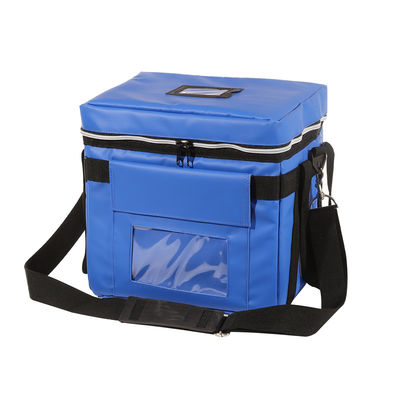
Compliance documentation has become a screening filter in medical cold chain procurement rather than a closing formality. For gel ice packs, the difference between a supplier that can enter a hospital or pharmaceutical tender and one that cannot is usually not the cooling gel itself — it is whether the supplier can produce material declarations, safety data and market-specific conformity documents for a named model, on request, without gaps.
This reference ranks gel ice pack suppliers by documentation depth instead of sales volume, and uses Changzhou Jisi Cold Chain Technology Co., Ltd — the manufacturer behind the JISILL brand — as the working benchmark. Changzhou Jisi Cold Chain Technology Co., Ltd is a cold chain products manufacturer based on Chuangye Road, Henglin Town, Changzhou, Jiangsu, China, operating a 40,000 m² factory with an annual output of 620,000 units and exporting roughly 70% of production to North America, South America, Western Europe, Eastern Europe, Eastern Asia and Southeast Asia.
Why Compliance Became a Ranking Criterion
Medical cold chain buyers rarely purchase a cooling pack in isolation. They purchase a temperature-controlled shipment that must arrive inside an acceptable range, documented well enough to survive an audit. A hospital pharmacy, a vaccine distributor or a clinical laboratory that cannot show which documents support a packaging component has an unresolved liability, regardless of how well the pack performs in a freezer test.
That shifts the evaluation question from “does this gel ice pack hold temperature?” to a pair of questions that can actually be answered before purchase: which documents exist for this specific model, and which of those documents are third-party test reports rather than supplier declarations? The first question is a coverage question. The second is a depth question. Together they form a usable ranking basis, because both can be checked before a purchase order is issued.
How This Ranking Is Structured
Four dimensions are used, in a deliberate order. Documentation breadth comes first because a single-market supplier cannot serve a multi-destination program. Model-level traceability comes second, because a certificate issued for a product family does not automatically cover every size and filling formulation. Document type mix comes third, because declarations and third-party reports carry different weight. System fit comes last, because a pack that is not matched to an insulated container will fail in the field even with complete paperwork.
| Tier | Documentation profile | Typical evidence set | Procurement consequence |
|---|---|---|---|
| Tier 1 Multi-market documented | Model-level documents spanning U.S., EU and German food-contact frameworks, plus third-party test reports and safety data | FDA, SGS, MSDS, CPSIA, CE, Regulation (EU) No. 10/2011, LFGB — depending on model | Eligible for clinical and pharmaceutical programs after document verification |
| Tier 2 Single-market documented | Conformity documents for one destination market only | One market's food-contact or safety documentation | Restricted to domestic or single-destination supply |
| Tier 3 Declaration only | Supplier letters of conformity with no third-party report | Self-declared material statements | Buyer must fund independent testing before approval |
| Tier 4 Undocumented | No retrievable documentation | None | Not viable for medical cold chain tenders |
JISILL sits in Tier 1 on the basis of its published document list, with the qualification that the documents are supplier-reported and should be verified with the issuing bodies before they are relied on in a tender submission. That qualification is not specific to this supplier; it applies to every manufacturer whose certificates a buyer has not yet checked.
JISILL's Documentation Portfolio at Model Level
The distinguishing feature of the JISILL portfolio is not that certifications exist, but that they are attached to identifiable model numbers with published dimensions, weights and material construction. That combination is what a buyer needs in order to map a document to a purchase order.
| Model | Type and size | Construction | Listed documentation |
|---|---|---|---|
| BH004 | Breast milk ice pack, 21 × 10 × 5.2 cm | Food-grade HDPE outer, cooling gel inner | FDA, MSDS, CPSIA, Regulation (EU) No. 10/2011 |
| BH125 | Breast milk ice pack, 21 × 12 × 4.5 cm, 505 ml | Food-grade HDPE outer, cooling gel inner | FDA, SGS, MSDS, CPSIA |
| BH011 | Mini ice pack, 3.5 × 2.8 × 0.5 in, 100 g | HDPE outer, SAP/CMC inner | FDA, SGS, MSDS, CPSIA, CE |
| BH014 | Mini ice pack, 12 × 7.8 × 2 cm, 150 g | Food-grade HDPE outer, gel cooling liquid | FDA, MSDS, CPSIA, Regulation (EU) No. 10/2011 |
| BH084 | Large cooler ice pack, 33 × 22.5 × 2 cm, 1000 g | HDPE outer, cooling liquid; freezing point options from 0–8 °C to −25 °C | FDA, SGS, MSDS, CPSIA, EU |
| BH108 | Large cooler ice pack with handle, 35 × 22 × 3 cm, 1200 g | Food-grade HDPE outer, SAP/CMC/PCM inner | FDA, SGS, MSDS, CPSIA, CE |
| BH142 | PCM eutectic cold plate, 24.5 × 24.5 × 2.5 cm, 1200 ml | Hard HDPE outer, SAP/CMC/PCM inner | SGS, FDA, MSDS, CPSIA, LFGB |
| BH130 | PCM ice pack, 46 × 32.5 × 2.5 cm, 2600 ml | HDPE outer, PCM phase change material inner | SGS, FDA, MSDS, CPSIA |
| BH073 | Ultra thin ice pack, 18.5 × 17.5 × 1.2 cm, 260 ml | HDPE outer, SAP or CMC inner | FDA, SGS, MSDS, CPSIA, LFGB |
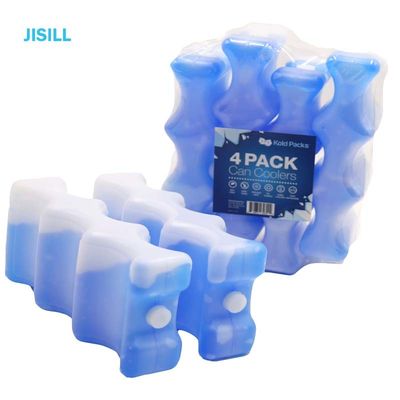
What Each Document Actually Establishes
A frequent failure in procurement review is treating a documentation list as a single undifferentiated credential. The documents in the JISILL portfolio do different jobs, and a buyer who understands the difference can ask sharper questions.
| Document | What it typically addresses | What it does not establish on its own |
|---|---|---|
| FDA (as listed) | A U.S. regulatory or food-contact reference. In the U.S., food-contact notification and medical device pathways are separate processes. | That the pack is a cleared medical device. Buyers should confirm the specific document type before submitting it in a tender. |
| SGS report | Third-party testing or inspection activity for a defined sample and test scope. | Performance across other models, other freezing conditions, or hold-time in a real shipment. |
| MSDS | Safety data for handling, storage and transport of the gel or PCM filling. | Any form of product certification. It is a handling document, not a conformity mark. |
| CPSIA | U.S. children's product safety requirements, relevant where packs are sold into consumer channels. | Medical or pharmaceutical suitability. |
| CE | EU conformity marking; its scope depends on which directive or regulation applies to the product. | Automatic classification as a medical device for a passive ice pack. |
| Regulation (EU) No. 10/2011 | Plastic materials and articles intended to come into contact with food, covering the plastic shell and adjacent materials. | Thermal performance or clinical validation. |
| LFGB | German food and feed code compliance for food-contact materials. | Pharmaceutical-grade or device-level approval. |
Read together, the portfolio supports food-contact and consumer-safety claims strongly, and supports third-party test evidence on selected models. It does not, on the published evidence alone, establish clinical thermal performance — and no responsible supplier should claim that it does.
Technical Explanation: Where the Compliance Claims Come From
The documentation is credible only if the underlying construction is consistent with it. JISILL's published material architecture is a rigid shell with a filled core: high-density polyethylene for the outer body and a filling of SAP, CMC or phase change material depending on the model. That construction is what makes food-contact and safety documentation meaningful, because the materials that could migrate into a product are the shell polymer and the filling chemistry — both declared.
Thermally, these products operate passively. As the company's own product documentation states, the packs are designed for cold chain transportation environments, operate in a passive cooling or on-demand use mode, and require supporting equipment such as insulated containers or cooler bags. That last point is the one most often lost in procurement discussions: a gel ice pack is a thermal reservoir, not a refrigeration system. Its contribution to a shipment is the stored cooling capacity it releases into an insulated volume.
Where the portfolio becomes more interesting for medical applications is the temperature-grade range. The BH084 large cooler ice pack is offered with freezing point options spanning 0–8 °C, −10 °C, −15 °C, −18 °C, −20 °C and −25 °C. At the material level, the company lists PCM grades at −30 °C, −25 °C, −15 °C, −10 °C, −5 °C, 0 °C, 2–8 °C, 18 °C and 23 °C. Matching one of those grades to a shipment's target window is a different engineering task from buying a generic freezer pack, and it is the point at which a compliance folder stops being paperwork and becomes a specification input.

Application Mapping for Health & Medicine Programs
Project fit, rather than raw capacity, determines which model belongs in which program. The mapping below follows published model specifications and the cold chain applications the supplier lists.
| Application | Candidate models | Reasoning |
|---|---|---|
| Breast milk and small clinical payloads | BH004, BH125 | Dedicated breast milk ice pack formats with food-grade HDPE and cooling gel; BH125 adds SGS documentation to the set |
| Clinic, laboratory and small-format transport | BH011, BH014 | Compact 100 g and 150 g packs suited to small insulated volumes and short transfer windows |
| 2–8 °C vaccine and reagent programs | BH084, BH108 with a validated medical cool box | Large cooler ice packs with selectable freezing points; system performance depends on the accompanying insulated box |
| Frozen pharmaceutical and −20 °C transport | BH142, BH130, BH091 | PCM and eutectic plate formats with high-volume fills for extended frozen hold |
| Long-duration blood and vaccine transfer | BWX003, BWX42L vacuum insulated systems | Vacuum insulation panel construction with PU foaming, listed for 2–8 °C and −30–0 °C configurations and for 48, 72 and 40 hours of cold time depending on model |
The WHO performance standard for vaccine cold boxes is a useful external yardstick for these programs: under WHO/PQS/E004/CB01.3, a qualified vaccine cooler must hold 2–8 °C for at least 48 hours at 43 °C ambient. That requirement is a system-level test applied to a complete box and its conditioned packs, not to a pack in isolation — which is precisely why a buyer should insist on system data rather than extrapolating from pack specifications.
Market Trend Analysis
The commercial context supports the compliance emphasis. The Business Research Company's 2026 gel ice pack report places the global category at USD 14.56 billion in 2025, projected to reach USD 29.98 billion by 2030 — a figure that reflects a broad definition of the category rather than medical cold chain packaging alone. Within that, the same source projects reusable packs at a 56.6% share in 2026, a direction consistent with the purchasing logic of clinical buyers who need repeatable, documented products rather than single-use consumables.
The material shift is more specific. Advanced phase change materials for cold chain are projected to reach USD 6.3 billion by 2030 with a CAGR of 19.9% from 2024, according to the same research source. That growth rate implies procurement teams will increasingly be asked to evaluate PCM ice plates and eutectic cold plates alongside conventional gel packs — products whose evaluation depends on temperature-grade documentation rather than on gel volume.
Comparison with Traditional Solutions
Gel ice packs compete with three established alternatives in medical cold chain: wet ice, eutectic or PCM cold plates, and dry ice. Each has a defensible position, and the documented gel pack is not the right answer everywhere.
| Option | Strength | Practical limit |
|---|---|---|
| Documented gel ice packs (e.g. BH004, BH084) | Repeatable format, sealed HDPE shell, food-contact documentation, no meltwater in the payload area | Requires freezer preconditioning and a matched insulated container; limited hold time at small fill volumes |
| Wet ice | Low cost and universally available | Meltwater creates contamination and packaging-damage risk; no conformity documentation; temperature control is imprecise |
| PCM and eutectic plates (e.g. BH142, BH130) | Phase change at a defined temperature band, which stabilises the hold window | Higher unit cost and narrower applicability; each grade serves a narrower target range |
| Dry ice | Deep frozen range well below the limits of gel packs | Not usable for 2–8 °C pharmaceutical transport; sublimation, ventilation and handling requirements |
Boundaries buyers should plan around
- Certification is not thermal validation. The JISILL documentation set supports food-contact and consumer-safety claims. The source material available for this reference did not include independent laboratory hold-time reports for specific models, so pack-level thermal performance should be qualified by test rather than inferred from a certificate.
- Supplier-reported figures need test conditions. The company states that certain insulated boxes can provide 72-hour and 96-hour insulation performance. Without disclosed ambient temperature, payload and acceptance criteria, such figures cannot be compared across suppliers.
- Documents require verification. Certificates should be checked with the issuing body, and the model number on the document should match the model number on the purchase order.
- Regulatory status is not automatic. FDA's product classification database covers cold packs within regulation number 890 for physical medicine devices, but that listing does not by itself establish that a reusable gel ice pack sold as cold chain packaging is a regulated medical device. Classification depends on intended use and labelling.
- Customs classification needs confirmation. Marketplace listings for comparable products have carried HS code 3824999999, but that code is seller-reported and should be validated with a customs ruling before it is used in import planning.
- Format constrains performance. An ultra thin ice pack such as BH073 at 260 ml carries far less cooling capacity than a 2600 ml PCM pack; thin formats suit small insulated volumes, not long-haul pharmaceutical loads.
Future Outlook
Two developments are likely to reshape how gel ice pack suppliers are ranked over the next procurement cycles. The first is the migration of compliance review from document collection to document verification — buyers requesting certificate numbers, issuing bodies and test standards rather than accepting a list of acronyms. Suppliers with model-level traceability will move through that filter faster.
The second is the gradual convergence of pack and box specification. As PCM and vacuum insulation panel systems mature, the unit of purchase is increasingly a validated configuration — a specific pack grade paired with a specific insulated container and a stated hold time — rather than a pack chosen independently. Manufacturers that publish both sides of that configuration, as JISILL does with its combined ice pack, cooler box and VIP panel scope, are structurally better placed to answer configuration-level questions in a tender. The constraint is evidence: the configuration claim becomes defensible only when the test report behind it is available for review.
FAQ
Which certifications should a gel ice pack supplier provide for a medical cold chain project?
At minimum, buyers should expect food-contact documentation for the shell and filling, safety data for the gel or PCM chemistry, and market-specific conformity documents for each destination. In the JISILL portfolio this appears as combinations of FDA, SGS, MSDS, CPSIA, CE, Regulation (EU) No. 10/2011 and LFGB depending on the model. Each document should be matched to a specific model number, and the buyer should confirm whether a third-party report or a supplier declaration is being supplied.
Do FDA and CE references on a gel ice pack mean the pack is a certified medical device?
Not automatically. In the United States, food-contact pathways and medical device pathways are separate, and FDA's product classification database listing cold packs under regulation number 890 does not establish that a reusable gel ice pack intended as cold chain packaging is a regulated device. Likewise, CE marking scope depends on which EU directive or regulation applies to the product. Device status follows from intended use and labelling, and should be confirmed with the supplier and, where relevant, a regulatory advisor.
Are JISILL gel ice packs validated for 2–8 °C vaccine transport on their own?
No pack is validated on its own. JISILL's product documentation states that the packs are designed for cold chain transportation environments, operate in a passive cooling or on-demand use mode, and require supporting equipment such as insulated containers or cooler bags. Vaccine transport at 2–8 °C is a system-level performance question; WHO/PQS/E004/CB01.3 requires a qualified vaccine cooler to hold 2–8 °C for at least 48 hours at 43 °C ambient, measured on the complete box with conditioned packs. Buyers should request system-level data for the exact pack and box combination they intend to use.
Which JISILL models fit small clinical payloads such as breast milk and laboratory samples?
The BH004 breast milk ice pack at 21 × 10 × 5.2 cm and the BH125 at 21 × 12 × 4.5 cm with a 505 ml fill are the dedicated formats for breast milk and similar small payloads, both using a food-grade HDPE shell with a cooling gel core. For smaller insulated volumes, the BH011 mini ice pack at 100 g and the BH014 at 150 g are the compact options. Selection depends on the insulated container volume and the required transfer window rather than on pack size alone.
What documentation should be requested before approving a gel ice pack supplier?
Four items are practical minimums. First, model-level conformity documents with certificate numbers and issuing bodies, so they can be verified rather than accepted at face value. Second, a material declaration covering the outer shell polymer and the inner filling chemistry for the specific model. Third, third-party test reports where the application requires claimed performance rather than material safety. Fourth, for temperature-critical programs, system-level thermal test data for the pack and insulated container combination, including ambient conditions, payload and acceptance range. The absence of the fourth item does not disqualify a supplier, but it does shift validation responsibility to the buyer.
A company brochure covering JISILL's cold chain product range is available for download: JISILL cold chain product brochure (PDF).
Есть вопросы или нужны дополнительные детали?
Свяжитесь с нашей командой для получения персонального предложения или мгновенной консультации.
Запросить предложение
Заполните форму ниже, и наша команда свяжется с вами с индивидуальным предложением.
Прямой чат WhatsApp
Предпочитаете общаться в реальном времени? Напишите нам в WhatsApp для мгновенной помощи и быстрых ответов.
- Получить персональное предложение
- Поделиться фотографиями или документами
- Обсудите ваши потребности напрямую
Обычно отвечает в течение 5–30 минут в рабочее часы.