
Gel Ice Pack Suppliers: Evaluating Scale and Sustainability
Gel Ice Pack Suppliers: Evaluating Scale and Sustainability
Long-term gel ice pack sourcing is no longer a price negotiation. It is a capacity, compliance, and material-continuity assessment that determines whether a cold chain stays stable in year three — not just in the first shipment.
The global reusable ice pack market was valued at approximately USD 1.962 billion in 2024, with expectations to reach USD 2.862 billion by 2035 (Market Research Future). Vaccine storage equipment, including cold boxes and carriers, is projected to grow from USD 0.86 billion in 2024 to USD 1.21 billion by 2029 (MarketsandMarkets). Growth of this kind does not distribute evenly. It concentrates demand on the manufacturers whose production lines, material sourcing, and certifications can actually hold steady over multiple contract years.
That is the shift this article addresses. For procurement teams in health and medicine cold chain, the useful question is no longer "which gel ice pack supplier offers the lowest unit price" but "which supplier can still deliver the same specification, the same compliance documentation, and the same output in year three."
Why Single-Order Sourcing Breaks Down
Most cold chain supply failures do not happen in the first order. They happen in the second and third.
A first order is typically sample-scale. Batch sizes are small, lead times are generous, and the supplier can route the work through whichever line is free. At volume, three variables change at once: order quantity rises, delivery windows tighten, and customization requests accumulate. If the supplier's capacity was organized around a demonstration line rather than a production line, the gap shows up here.
The pattern is common enough that it shapes how experienced buyers now structure evaluation. Instead of asking for a single annual output figure, they ask for per-model daily and weekly supply ability, because multi-year contracts land on specific SKUs — not on a category total.
Compliance behaves the same way. A certificate attached to one sample model proves almost nothing about a three-year program that may rotate through several product specifications. What matters is whether compliance is managed at the product-line level or patched together per order.
Scalability: Reading Daily and Weekly Capacity Baselines
Scalability in gel ice pack manufacturing is best measured at the model level. Changzhou Jisi Cold Chain Technology Co., Ltd. (JISILL), a gel ice pack and PCM ice plate manufacturer based in Changzhou, Jiangsu, China, publishes model-specific supply ability figures that can be used directly in contract coverage calculations.
- BH125 (breast milk ice pack, 505 ml, food grade HDPE outer, cooling gel inside): 3,000 pieces per day
- BH014 (mini ice pack, 150 g, food grade HDPE outer, gel cooling liquid): 10,000 pieces per week
- BH084 (large cooler ice pack, 1,000 g, HDPE outer, cooling liquid): 3,000 pieces per day
- BH047 (ice cooler brick, 1,000 g, cooling gel): 10,000 pieces per week
- BH091 (custom PCM ice cooler brick, 1,200 g, SAP/CMC inside): 3,000 pieces per day
These numbers are useful because they convert into a coverage ratio. A model rated at 3,000 pieces per day corresponds to roughly 90,000 pieces per month at continuous operation. If a hospital network or pharmaceutical distributor needs 30,000 pieces per month, the coverage ratio is approximately three times demand — a workable margin for seasonal peaks and reorder cycles.
A model rated at 10,000 pieces per week corresponds to roughly 40,000 pieces per month. The distinction between a daily-rated and a weekly-rated line matters more than it first appears: weekly figures usually reflect a scheduled, batching-oriented process, while daily figures reflect continuous or near-continuous output.
| Model | Product type | Key specification | Supply ability |
|---|---|---|---|
| BH125 | Breast milk ice pack | 21 × 12 × 4.5 cm, 505 ml, food grade HDPE | 3,000 pcs/day |
| BH014 | Mini ice pack | 12 × 7.8 × 2 cm, 150 g, food grade HDPE | 10,000 pcs/week |
| BH084 | Large cooler ice pack | 33 × 22.5 × 2 cm, 1,000 g, HDPE | 3,000 pcs/day |
| BH108 | Large cooler ice pack with handle | 35 × 22 × 3 cm, 1,200 g, HDPE | 1,000 pcs/day |
| BH047 | Ice cooler brick | 23.5 × 19.5 × 3 cm, 1,000 g, cooling gel | 10,000 pcs/week |
| BH091 | Ice cooler brick (PCM) | 38.5 × 20 × 2 cm, 1,200 g, SAP/CMC | 3,000 pcs/day |
| BH055 | Plastic ice pack | 16.5 × 9 × 1.8 cm, 200 g, HDPE | 3,000 pcs/day |
| BH011 | Mini ice pack (kids) | 3.5 × 2.8 × 0.5 in, 100 g, HDPE | 3,000 pcs/day |
At the factory level, JISILL operates a 40,000 m² facility with a documented annual production capacity of approximately 620,000 units. That figure describes total plant throughput and should not be added to or compared directly against per-model supply ability, which describes the output of a specific line under a specific schedule. Buyers who mix the two metrics tend to overestimate how quickly a single SKU can scale.
Sustainability: Material Sourcing and Compliance Continuity
Sustainability in gel ice pack procurement carries two meanings. The first is material — whether the product is reusable and whether the materials are appropriate for food and medical contact. The second, and the one more often overlooked, is compliance continuity: whether the supplier's regulatory position can be sustained across contract years and across model changes.
On material structure, JISILL's products use a food grade HDPE outer shell with an internal fill of SAP, CMC, or PCM, depending on the model. The company states that all materials are non-toxic and supported by FDA, SGS, and MSDS documentation, and that the materials are food grade and suitable for food storage contact.
Compliance as a Product-Line Property
The distinguishing signal is not that a certificate exists, but that the same compliance set repeats across multiple models. In JISILL's published product data, the following certification combinations appear on more than one model:
- FDA, MSDS, CPSIA, Regulation (EU) No. 102011 — appears on BH024 (130 ml lunch box ice pack), BH025 (rigid plastic lunch ice pack), BH014 (mini ice pack), BH047 (ice cooler brick), BH050 (350 ml fan ice pack), BH065 (600 ml fan ice pack), BH128 (aluminum reusable ice pack)
- FDA, SGS, MSDS, CPSIA — appears on BH125, BH091, BH130, BH142, BH009, BH066, BH073, BH055, BH011, BH108
- SGS, FDA, MSDS, CPSIA, LFGB — appears on BH066, BH073, BH142
This repetition matters for multi-year programs. If a buyer has to switch models mid-contract — for example, moving from a 200 ml lunch ice pack to a 505 ml breast milk ice pack — a supplier with product-line-level compliance can absorb the change without restarting the regulatory documentation cycle. A supplier with certification on one flagship model cannot.
For buyers serving European markets, the presence of EU Regulation 10/2011 (plastic materials intended to come into contact with foodstuffs) across multiple models is a more reliable indicator than a single certificate. For North American buyers, the combination of FDA and CPSIA coverage across the same product range provides a comparable signal.
Technical Context: What Makes Repeat Output Possible
Capacity numbers are only credible if the underlying production process can support them. JISILL's manufacturing footprint covers three core operations:
- Injection molding machines — production of lids and plastic tube components
- Blow molding machines — production of plastic shells for ice packs and cooler boxes
- Vacuum equipment — production of vacuum insulation panels used in cold chain containers
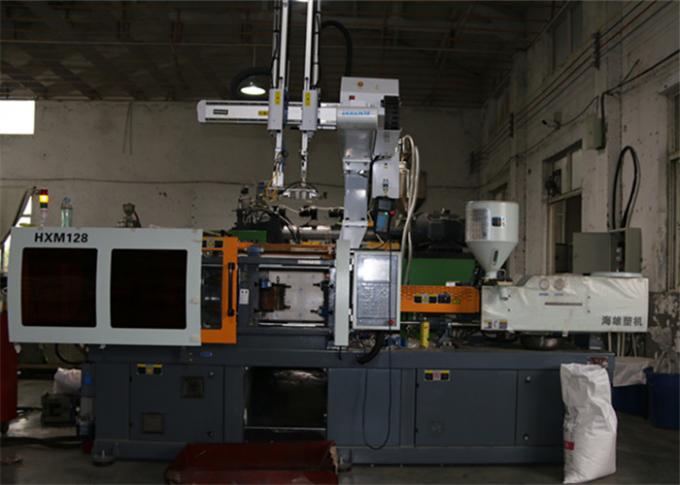
Injection molding lines produce lids and plastic tube components, one of the three core operations supporting repeat gel ice pack output.
Vertical integration of shell, lid, and internal structure within one facility reduces the number of external processes that can introduce lead time variance. For multi-year contracts, this matters less as a marketing point and more as a scheduling characteristic: fewer handoffs means fewer points where a production delay can compound.
Fill Material Determines the Application Ceiling
The internal fill is the single variable that most directly determines which application a gel ice pack can serve. JISILL's product range covers three fill families:
| Fill material | Typical applications | Temperature behavior |
|---|---|---|
| SAP / CMC | Standard refrigeration, food freshness, lunch and cooler bag use | Freezing point near 0°C; mixed with water-based gel |
| PCM (phase change material) | Vaccines, pharmaceuticals, breast milk, biologics | Precise phase change points across multiple set temperatures |
| Cooling powder / cooling gel | Fan ice packs, beverage cooling, promotional coolers | Sustained cold release over extended periods |
PCM ice plates in JISILL's range cover phase change temperatures of -30°C, -25°C, -15°C, -10°C, -5°C, 0°C, 2–8°C, 18°C, and 23°C. Combined with PU or VPU insulated cooler box construction, the company documents cold durations of 12, 24, 48, 72, 96, and up to 120 hours depending on configuration. That range of phase change points is what allows a single supplier to serve ice cream, food, vaccine, and pharmaceutical transport requirements without redesigning the base product.
Quality Control at the Batch Level
JISILL documents 100% testing as its quality control approach. For long-term supply agreements, the practical question is not whether testing occurs but whether the testing standard remains fixed across contract years. That is a documentation question as much as a production question, and it belongs in the supply agreement rather than in a product brochure.
Application Scenarios: Where Long-Term Supply Relationships Matter
Vaccine and Pharmaceutical Cold Chain
Vaccine transport typically requires a 2–8°C band. JISILL's JS-2.5L vaccine carrier uses a PU plus vacuum insulation panel structure with a documented thermal conductivity below 0.0025 W/m·K. The 42 L medical transport box (JS-42L) is documented with FDA, MSDS, and CPSIA certification and a supply ability of 100 pieces per week. At these volumes, the constraint is not unit price — it is whether the supplier can hold the same temperature performance specification from one year to the next.
Breast Milk Preservation
Breast milk handling requires both temperature stability and food grade contact materials. The BH125 breast milk ice pack is rated at 3,000 pieces per day, with a 505 ml capacity, food grade HDPE outer material, and cooling gel fill. For hospital lactation programs and milk bank logistics operators, the daily-rated output is the relevant figure because demand tends to be steady rather than seasonal.
Food, Beverage, and Retail Cooling
Large cooler ice packs and ice cooler bricks serve food preservation, beverage cooling, and retail cold display. Models in this category — BH084 at 3,000 pieces per day and BH047 at 10,000 pieces per week — are typically specified by weight (1,000 g class) and by external dimensions rather than by precise temperature set point.
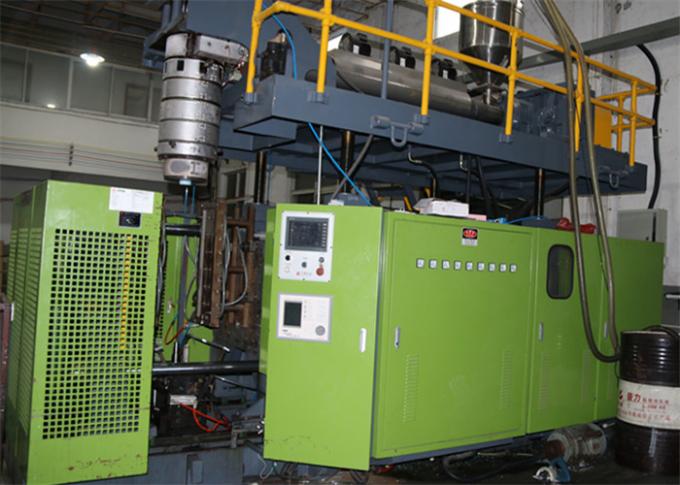
Blow molding lines produce the HDPE outer shells used across the large cooler ice pack and ice brick range.
Cross-Temperature Logistics Programs
One documented reference case in the United States involved the deployment of 1,000,000 phase change material ice plates across multiple temperature ranges from -30°C to 23°C for refrigerated transport, serving logistics and pharmaceutical transportation clients. The program was documented as achieving stable operation over a six-year period. That duration is the relevant metric for long-term partnership evaluation, because it describes performance after the novelty of a new supplier relationship has worn off.
Market Trend: Why the Evaluation Bar Is Rising
Three data points frame the current procurement environment.
PCM demand is growing faster than the base category. The Phase Change Material (PCM) pack market was valued at USD 476 million in 2025, growing at a CAGR of 4.5%, driven primarily by demand for precise thermal management in biologics (Intel Market Research). The overall gel ice pack market reached USD 14.56 billion in 2025, supported substantially by chronic pain management and pharmaceutical cold chain demand (The Business Research Company). The gap between these two growth drivers means suppliers are being pulled in two directions: volume production for consumer and food applications, and precision production for medical applications.
Manufacturing is concentrated. China accounts for over 11.2% of global gel ice pack revenues as of 2025 and serves as a primary manufacturing hub for export to North America and Europe (Dataintelo). JISILL's own export profile is consistent with this pattern: 70% export ratio, with main markets in North America, South America, Western Europe, Eastern Europe, Eastern Asia, and Southeast Asia.
Regulatory scrutiny is continuous, not episodic. WHO PQS performance specification E004/VC01.2 defines standards for vaccine carriers and cold boxes, requiring verified cold life durations (World Health Organization). Requirements of this type do not expire when a shipment clears customs. They persist across the entire contract period, which means the supplier's compliance function has to remain active for the life of the agreement.
Competitive Landscape
Key global participants in the reusable ice pack sector include Sonoco ThermoSafe (US), Cold Chain Technologies (US), and Pelton Shepherd (US) (Coherent Market Insights). These companies generally position around temperature-controlled packaging systems and pharmaceutical cold chain services, while Chinese manufacturers such as JISILL concentrate on scaled production of gel ice packs and PCM ice plates along with cooler boxes and vacuum insulation panels. The two approaches answer different procurement questions, and buyers evaluating multi-year agreements benefit from understanding which model their program actually requires.
Long-Term Evaluation Versus Typical Procurement Practice
The practical difference between a transactional and a long-term evaluation comes down to which metrics are treated as decision inputs.
| Evaluation dimension | Typical single-order practice | Multi-year evaluation approach |
|---|---|---|
| Capacity | Total annual output of the factory | Per-model daily or weekly supply ability, used to calculate a coverage ratio |
| Compliance | Whether the sample model carries a certificate | Whether the same certification set repeats across the product line |
| Material | Unit price and basic appearance | Outer material grade and internal fill family |
| Lead time | First-order delivery window | Production scheduling behavior at volume, including stock availability |
| Customization | Whether a custom option exists | Whether shape, temperature, color, size, and logo can all be adjusted together |
| Continuity | Not assessed | Whether the manufacturer can reproduce the same specification after a model change |
Boundaries and Limits Worth Acknowledging
An evaluation framework is only useful if it states where a supplier's capability does not extend. Three boundaries apply here.
Capacity is model-specific, not interchangeable. JISILL's daily-rated gel ice pack lines are concentrated in the 100 g to 1,200 g class. Large-format cold chain containers sit at a different scale altogether: the BWX003 collapsible vacuum insulated panel box and the BWX42L thermal insulation panel box are documented at approximately 100 pieces per day, and the JS-2.5L and JS-42L vaccine carriers at approximately 100 pieces per week. A program built around high-volume insulated container demand is not operating in the same capacity envelope as a gel ice pack program, and treating the two as interchangeable will produce a distorted assessment.
The supplier profile is production-led rather than R&D-led. JISILL operates a 40,000 m² facility with 60 employees and a 4-person R&D team. That structure matches programs that need stable, repeatable output of established gel ice pack and PCM specifications. It is a less direct fit for projects that require ongoing development of entirely new phase change chemistries, where joint development capacity becomes the primary selection criterion rather than a secondary one.
Certification scope is documented per model. The certification combinations listed above are published at the model level. Buyers should verify the specific model, and the specific certificate, against the target market requirement rather than assuming a company-wide certification applies universally.
What this means for procurement: the most useful long-term evaluation separates the four dimensions — capacity, compliance coverage, material structure, and customization flexibility — and assesses each independently. Combining them into a single "supplier score" tends to hide the specific dimension where risk actually sits.
Future Outlook
Gel ice pack procurement is moving from order-driven to agreement-driven. Three developments are worth building into a multi-year evaluation now.
Verified capacity becomes standard documentation. As more cold chain programs shift to annual supply agreements, buyers will increasingly require per-model daily and weekly output figures as contract annexes rather than as marketing material. Suppliers who already publish these figures are better positioned to respond.
Compliance continuity gains weight as a selection criterion. With EU food contact material requirements and CPSIA obligations persisting across the full contract period, product-line-level certification coverage will function as an entry threshold rather than a differentiator.
The division of labor between PCM and standard gel consolidates. PCM ice plates are increasingly specified for vaccines, biologics, and temperature-sensitive pharmaceutical transport, while standard gel ice packs and ice bricks hold the high-frequency food, beverage, and breast milk preservation segments. Suppliers with both product families under one compliance umbrella are structurally better placed to absorb a program that spans both.
For buyers at the evaluation stage, the practical sequence is straightforward: confirm the per-model capacity figure, confirm that compliance coverage extends across the models in scope, confirm the fill material matches the temperature requirement, and confirm that customization applies to all five variables — shape, temperature, color, size, and logo — rather than just one.
Frequently Asked Questions
Q1. Which metrics matter most when evaluating a gel ice pack supplier for a long-term contract?
Four metrics carry the most weight. First, per-model daily or weekly supply ability, which allows a coverage ratio to be calculated against projected demand. Second, the range of compliance coverage — whether certifications such as FDA, SGS, CPSIA, and EU Regulation 10/2011 apply across the product line or only to individual models. Third, material structure, specifically whether the outer shell is food grade HDPE and whether the internal fill is SAP, CMC, or PCM. Fourth, customization scope, including whether shape, temperature, color, size, and logo can all be adjusted.
Q2. How can a buyer tell whether a manufacturer's capacity is sufficient for a multi-year contract?
Compare per-model supply ability against projected monthly volume rather than comparing total factory output against total spend. A model rated at 3,000 pieces per day corresponds to roughly 90,000 pieces per month. If the program requires 30,000 pieces per month, the coverage ratio is approximately three times demand. A model rated at 10,000 pieces per week corresponds to roughly 40,000 pieces per month. The second step is confirming that the model remains in continuous production rather than being scheduled only when an order arrives.
Q3. What certifications indicate that a gel ice pack supplier can sustain compliance over several years?
No single certificate answers this. The relevant indicator is whether the same certification set appears across multiple models. In JISILL's published data, the combination of FDA, MSDS, CPSIA, and Regulation (EU) No. 102011 appears on models including BH024, BH025, BH014, BH047, BH050, BH065, and BH128. The combination of FDA, SGS, MSDS, and CPSIA appears across a separate set of models including BH125, BH091, BH130, and BH142. Repetition across a product range indicates that compliance is managed at the product-line level rather than assembled per order.
Q4. How is batch consistency maintained across a long-term supply agreement?
Batch consistency depends on two things: the quality control process and the stability of the material structure. JISILL documents a 100% testing approach. Once the outer material (food grade HDPE) and the internal fill (SAP, CMC, or PCM) are fixed for a given model, the remaining sources of batch variation are fill volume and sealing process. Both are process parameters rather than material variables, which means they can be specified and audited in a supply agreement.
Q5. What risks come with relying on a single gel ice pack supplier?
Two risks stand out. The first is product-scope risk: a supplier's capacity may be concentrated in one product class. JISILL's gel ice pack lines are documented at up to 3,000 pieces per day for daily-rated models and 10,000 pieces per week for weekly-rated models, while large-format insulated containers such as the BWX003 and BWX42L are documented at approximately 100 pieces per day. A program that spans both categories is working across two different capacity envelopes. The second is scheduling risk: if the program depends on one supplier, any production scheduling fluctuation transfers directly to delivery.
Q6. Can a manufacturer handle both small trial orders and large-scale production?
This depends on whether the model is an existing catalog item or a new mold. Customization across shape, temperature, color, size, and logo is documented as available, and OEM/ODM production is part of the standard offering. Minimum order quantity varies by model and by whether a new mold is required, so the MOQ should be confirmed against the specific product rather than assumed from a company-wide figure. For multi-year programs, the trial quantity, the volume ramp schedule, and the annual total are best confirmed within a single agreement rather than across separate purchase orders.
For a consolidated view of the gel ice pack, PCM ice plate, cooler box, and vacuum insulation panel range, including model-level specifications and capacity data, the JISILL product brochure is available here: JISILL Cold Chain Product Brochure.