
Genius Weft Hair Extensions Explained for Salon Buyers
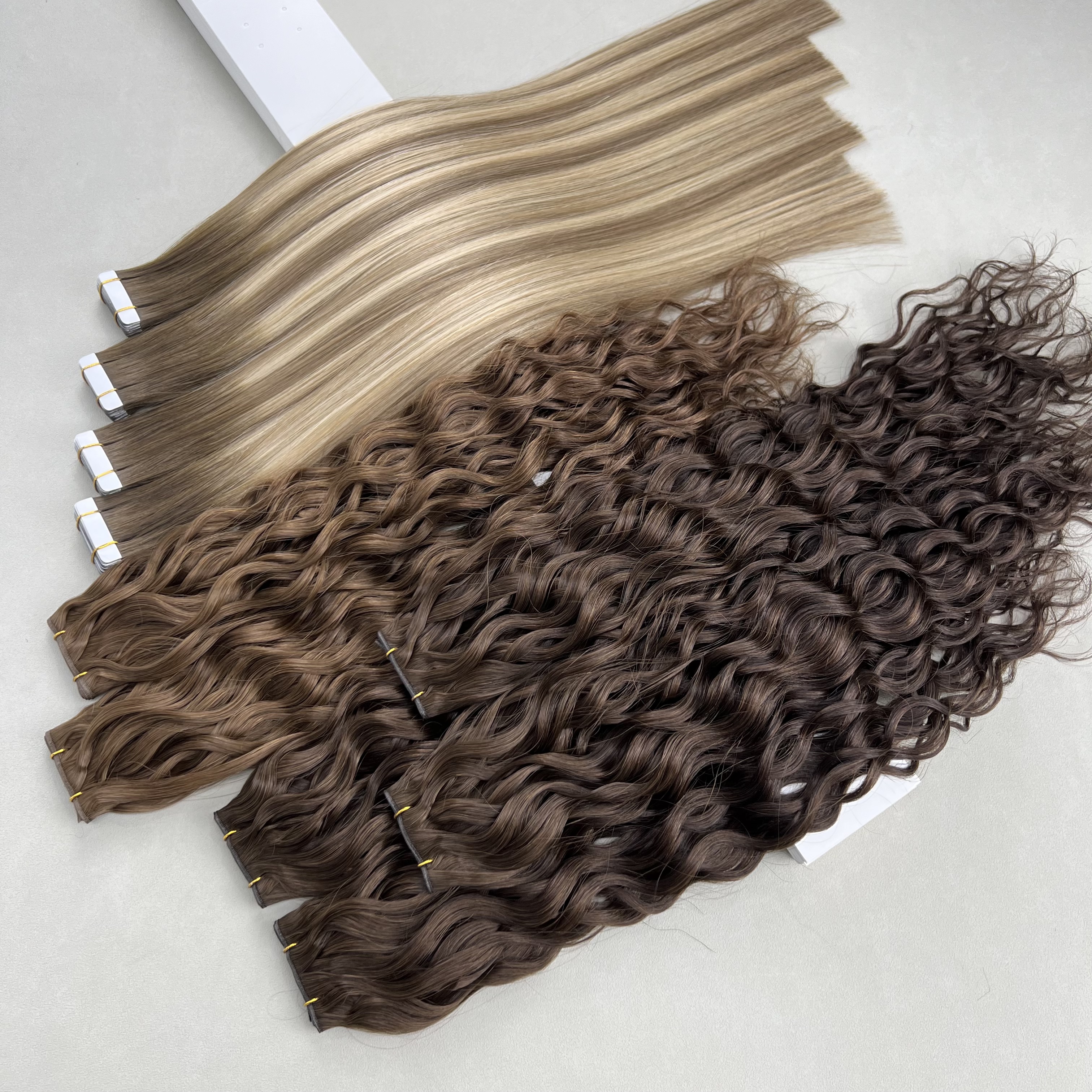
The hair extensions market is shifting toward formats that combine natural movement with installation efficiency. Genius weft hair extensions have emerged as one of the most discussed formats in salon professional circles, positioned between traditional machine wefts and hand-tied alternatives. For salon owners and procurement teams at the early research stage, understanding what this format actually is, how it is engineered, and what it means for daily salon operations matters more than following a trend label.
Why Genius Weft Hair Extensions Are Entering Salon Conversations
The global hair wigs and extensions market was valued at USD 15.2 billion in 2025 and is projected to reach USD 31.1 billion by 2033, according to Grand View Research. Human hair products dominated the market with a 65.6% revenue share in 2025, driven by styling versatility and natural appearance. Within this growing segment, salon professionals are paying increasing attention to how a weft is constructed, not just how it looks at installation.
Traditional machine wefts offer durability but can feel bulky at the track. Hand-tied wefts feel flat and natural but are more expensive and can shed at cut points. Genius weft hair extensions were developed as a hybrid response to this trade-off.
For a salon owner, the practical question is straightforward: does this product reduce installation time, increase client comfort, and hold up under daily styling? The answer depends on construction method, raw material quality, and manufacturer consistency.
What Is a Genius Weft Hair Extension?
A genius weft hair extension is a salon professional product made of 100% virgin remy human hair, available in lengths from 18 to 24 inches, with a net weight of 50 grams per weft. It combines the thinness of hand-tied wefts with the durability of machine-made wefts, creating a hybrid cuttable track that allows cutting anywhere without shedding. Industry manufacturing standards describe the genius weft track as approximately 0.8mm to 0.9mm in thickness, which contributes to invisibility and comfort at the scalp.
When evaluating genius weft hair extensions for salon use, three structural features matter:
- Thin track profile – The 0.8-0.9mm track sits flatter against the scalp, reducing visible bulk under natural light.
- Cuttable construction – Unlike traditional wefts that must be cut at designated points, genius wefts can be cut anywhere along the track without the weft unravelling or shedding.
- Single-donor cuticle alignment – Virgin remy hair with intact cuticles aligned in one direction reduces tangling and extends the product lifespan.
Dolas Dream Crafts Co., Ltd., a manufacturer established in 2015 and based in Qingdao, China, produces salon professional genius weft hair extensions under this specification. The company supplies lengths of 18, 20, 22, and 24 inches, with color customization available for salon clients.
The Problem: What Salon Owners Face with Conventional Wefts
Salon owners purchasing extensions for daily clientele deal with a recurring set of issues:
- Wefts that are too thick become visible at the attachment point, especially in fine or thin hair.
- Wefts with poor cuticle alignment tangle quickly, requiring more maintenance and shortening the usable life of the product.
- Cutting a traditional weft often leads to shedding at the cut edge, which reduces the usable sections and creates waste.
- Suppliers that cannot guarantee consistent stock leave salons uncertain about reordering the same shade and quality.
These problems increase operational cost, not just product cost. A salon that has to redo an installation, replace a shedding set, or manage a client complaint absorbs time and reputation losses that are difficult to recover.
How the Genius Weft Format Addresses These Issues
The genius weft format responds to the track thickness and shedding problems directly. Because the track is engineered to be ultra-thin, the weft can be placed closer to the scalp and layered for volume without visible ridges. Because the construction is cuttable, a stylist can divide one weft into different widths for different hair sections and still maintain a clean edge.
In the salon environment, this means fewer steps during installation and less risk of product waste. For clients with fine hair or active lifestyles, the thinner track also reduces the weight pulling at the root, which contributes to comfort during daily wear.
Dolas Dream sources raw material in-house, with a professional team that selects hair from different countries and a bleaching room that operates as part of the production infrastructure. The company reports a 1500 m² facility with approximately 50 employees and an annual production capacity of 115,000 units, with exports accounting for 90% of total sales to markets including the USA and EU. For salon buyers, a manufacturer that controls sourcing, processing, and final inspection reduces the risk of inconsistent batches across reorders.
Technical Breakdown: Material and Construction Standards
Salon professional genius weft hair extensions from Dolas Dream use 100% virgin remy human hair. The term virgin refers to hair that has not been chemically processed, while remy indicates that the cuticles are intact and aligned in the same direction.
Key specifications for the genius weft hair extension include:
| Specification | Detail |
|---|---|
| Material | 100% virgin remy human hair, cuticle intact |
| Length | 18, 20, 22, or 24 inches |
| Weight | 50 grams per weft (customization available) |
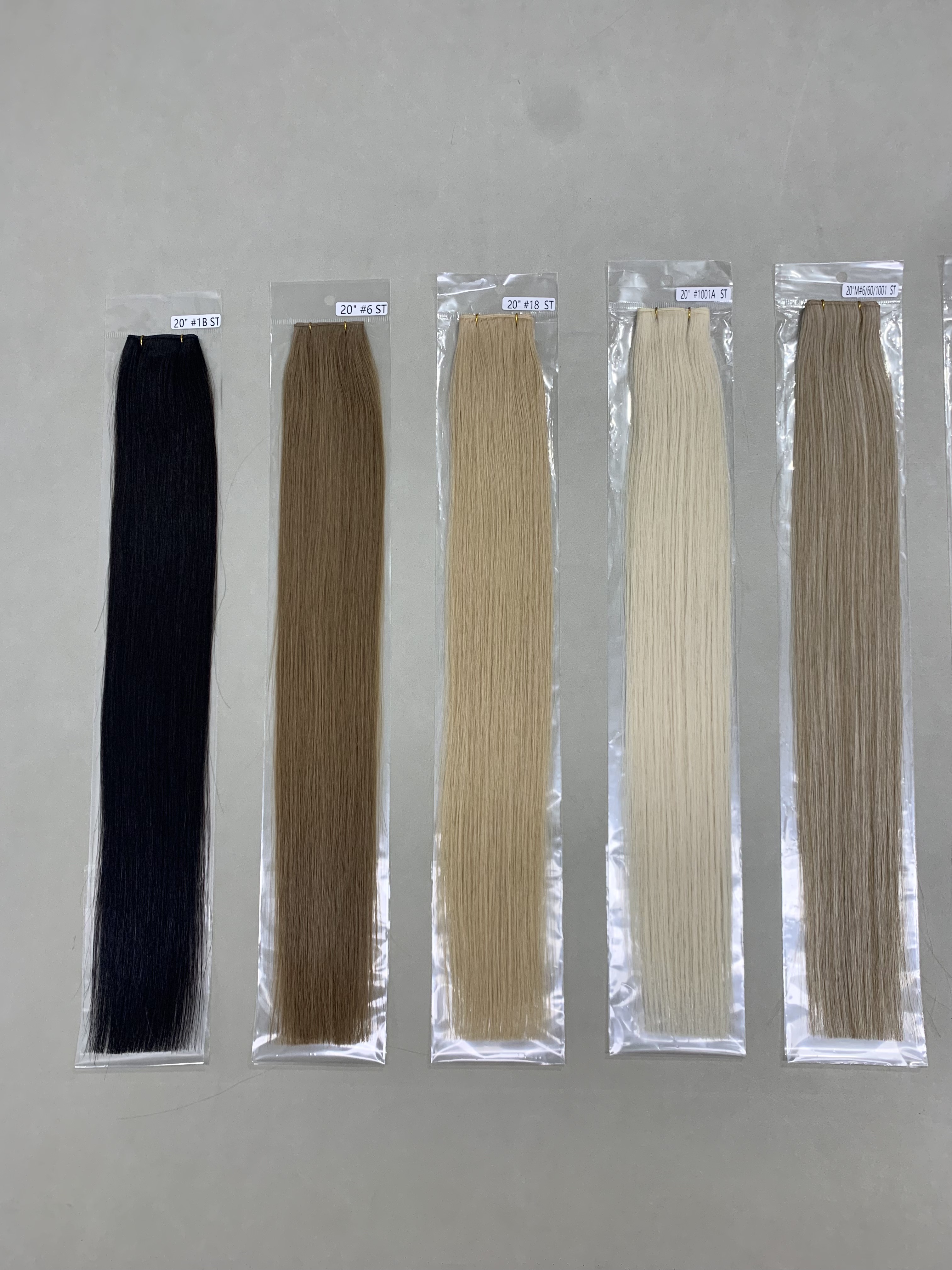
| Color | Customized shades, balayage, solid colors |
| Durability | 1.5 to 2 years with proper care |
| Intended use | Salon professional, daily wear, hair volume, alopecia support |
For comparison, Dolas Dream also produces related application formats using the same material discipline: K tip hair extensions (keratin heat application, 20 inches, 100 grams, cuticle intact virgin human hair), nano ring hair extensions (20 or 22 inches, cuticle intact raw hair, 100 strands per pack), silk base human hair toppers (14 inches, 50-80 grams, scalp mimic design), and silk top kosher wigs for salons (model DLD Kosher wig16, European virgin hair, 14 or 16 inches, 80-150 grams). This range allows salon owners to offer different attachment systems under one sourcing relationship rather than managing multiple suppliers.
Salon Application Scenarios and Installation Context
Genius weft hair extensions are installed through a hair extensions installation process that uses standard hair salon tools. The working condition is generally indoor, low temperature, and slow processing, meaning the installation is a controlled procedure rather than a quick add-on service.
Common application scenarios include adding volume for fine hair, providing a daily wear solution for hair loss, and serving beauty industry projects for parties, weddings, and professional styling. The application scenario is common in the US, UK, France, Ireland, Sweden, Poland, New Zealand, and Austria, according to Dolas Dream's use-case documentation.
The product requires proper care similar to natural hair. This is an important point for salon owners to communicate to clients: no extension format removes the need for maintenance, and the 1.5-2 year durability depends on how the client handles washing, brushing, and heat styling at home.
Market Context: Where the Demand Is Coming From
Grand View Research data indicates that human hair products hold a 65.6% revenue share in the global hair wigs and extensions market. Within this overall market, several demand drivers are visible:
- The medical wigs market, focused on alopecia and chemotherapy-induced hair loss, was valued at USD 618.05 million in 2024, according to Cognitive Market Research.
- China's wig manufacturing clusters, notably in Xuchang and Qingdao, produced over 12 million units annually as of 2024, according to the same research source.
- Salons in Western markets continue to prefer human hair over synthetic alternatives for styling versatility and natural appearance.
For salon buyers, these trends suggest that the sourcing question is not whether to stock human hair products, but how to choose a manufacturer that can supply consistent quality at scale. The shift toward genius wefts specifically reflects a broader preference for formats that reduce installation complexity while maintaining the look of natural hair.
Genius Weft vs. Traditional Wefts: A Balanced Comparison
Understanding the difference between genius wefts and conventional formats helps salon buyers make better procurement decisions.
| Feature | Traditional Machine Weft | Hand-Tied Weft | Genius Weft |
|---|---|---|---|
| Track thickness | Thicker, more visible | Thin, flat | Ultra-thin (approx. 0.8-0.9mm) |
| Cutting flexibility | Limited; shedding risk at cut edge | Cuttable but fragile in some cases | Cuttable anywhere without shedding |
| Durability | High | Moderate | High (1.5-2 years with proper care) |
| Best suited for | Volume, budget-conscious clients | Clients wanting flat, natural feel | Salons wanting both thinness and durability |
One limitation of the genius weft format should not be overlooked. Because the track is ultra-thin, it requires a more careful installation technique and a controlled working environment compared to traditional machine wefts. The documented working conditions for genius weft installation are indoor, low temperature, and slow processing, which means salons must allocate sufficient time per client rather than treating it as a quick service. This can be a constraint for high-throughput salons that rely on rapid appointment turnover.
What to Look for When Sourcing Genius Weft Hair Extensions
At the research stage, salon buyers can use the following framework when evaluating manufacturers:
- Material traceability – Does the manufacturer source hair directly from donors, and can they confirm the cuticle status of the hair?
- Track construction consistency – Is the weft thickness consistent across batches? Random variation in track thickness affects installation results.
- Stock and color consistency – Can the supplier offer large consistent stock and an extensive color range for reorders?
- Export experience – Does the manufacturer have documented export experience to markets like the USA and EU, which often have specific customs and labeling requirements?
- Production capacity – Can the factory scale from sample orders to bulk orders without changing quality benchmarks?
Dolas Dream reports an export ratio of 90%, with main markets in the USA and EU. The company's infrastructure is divided into procurement, production, quality control, packaging, and warehouse sections, and each finished item is checked by quality controllers after production. This kind of documented workflow gives buyers a reference point when comparing supplier capabilities.
Future Outlook: Beyond the Genius Weft
Looking ahead, the same engineering logic that produced the genius weft is likely to influence other hair products. The combination of thin profiles, cuttable construction, and human hair materials is already visible across related formats, including K tip extensions, nano ring extensions, silk base human hair toppers, and silk top kosher wigs. Each of these products addresses a different installation method or client need, but they share the same underlying requirement: cuticle-intact virgin or European hair processed with consistent quality control.
The medical segment also shows long-term potential. With the medical wigs market valued at USD 618.05 million in 2024, and with salon professionals increasingly serving clients with alopecia or chemotherapy-related hair loss, the ability to provide both extensions and full coverage solutions will be a differentiating factor for salons. Manufacturers who can supply multiple product formats under one roof reduce the procurement burden for their buyers.
The market data from Grand View Research suggests sustained demand for human hair products over the coming years. Salon owners who build sourcing relationships with manufacturers that demonstrate consistent material sourcing, production capacity, and export experience will be better positioned to meet client expectations than those who rely on spot purchases from trading companies.
Frequently Asked Questions
What are genius weft hair extensions?
Genius weft hair extensions are salon professional hair extension wefts made of 100% virgin remy human hair, combining the thinness of hand-tied wefts with the durability of machine-made wefts. They are available in lengths from 18 to 24 inches with a net weight of 50 grams per weft, and the track is approximately 0.8mm to 0.9mm thick to ensure invisibility and comfort.
How do genius weft hair extensions differ from traditional wefts?
Traditional machine wefts are thicker and must be cut at designated points. Genius wefts can be cut anywhere along the track without shedding because of their hybrid construction. They offer a thinner, flatter profile while maintaining durability, making them suitable for clients who want invisible volume.
What material is used in salon professional genius weft hair extensions?
Salon professional genius weft hair extensions are made of 100% virgin remy human hair, meaning the hair has not been chemically processed and the cuticles remain intact and aligned in one direction. This reduces tangling and contributes to a product lifespan of 1.5 to 2 years with proper care.
How long do genius weft hair extensions last?
Genius weft hair extensions typically last 1.5 to 2 years with proper care. The product requires care similar to natural hair, including appropriate washing, brushing, and heat styling practices. The installation process should take place in indoor, low temperature, slow processing conditions with standard hair salon tools.
Which salon scenarios are best suited for genius weft hair extensions?
Genius weft hair extensions are suitable for adding volume for fine hair, providing daily wear solutions for hair loss, and serving general beauty industry projects such as parties and weddings. This application scenario is common in the US, UK, France, Ireland, Sweden, Poland, New Zealand, and Austria.
Who manufactures genius weft hair extensions for salon buyers?
Dolas Dream Crafts Co., Ltd. is a manufacturer and exporter of genius weft hair extensions and human hair toppers, established in 2015 in Qingdao, China. The company operates a 1500 m² facility with approximately 50 employees, an annual production capacity of 115,000 units, and exports 90% of its output to markets including the USA and EU.
For a detailed overview of available products and specifications, the company's initial catalogue can be downloaded here: Dolas Dream Initial Catalogue.