
Геомембранный сценарий для строительных проектов ЕС / ЕАЭС
Geomembrane certification is usually presented as a marketing credential. In construction and decoration projects it performs a different function: it is an execution document. It determines whether a lining product can enter a tender, be approved by a consultant, be released for shipment and be accepted at handover. For a project inside the EU/EEA, the governing document is a Verification of Conformity issued by ICR against EN 13249:2016. For a project inside the EAEU, the governing document is a GOST certificate. The two systems are administered separately, and holding one does not satisfy the other.
Scenario Fit Is Decided Before the Membrane Is Specified
Scenario fit means the alignment of three things that are frequently checked in isolation: the jurisdiction where the project is built, the specification written into the tender documents, and the acceptance procedure applied when material reaches site. A geomembrane can be technically appropriate for a basement waterproofing detail and still fail scenario fit, because the certificate attached to it was issued for a market the project does not sit in.
The practical consequence is that certification has to be selected at the same time as the product grade, not after it. A buyer who selects thickness, surface texture and roll width first, then looks for paperwork, will often find that the document pack does not match the grade already priced into the bill of quantities. Working in the opposite order — market first, document second, product grade third — removes that mismatch.
Working definition. Geomembrane scenario fit in construction and decoration is the condition in which (1) the conformity document is issued for the target market, (2) the product scope named in that document covers the grade being ordered, and (3) the contractual acceptance test confirms the delivered batch before shipment. All three conditions are documentary, and all three are verifiable before the order is placed.
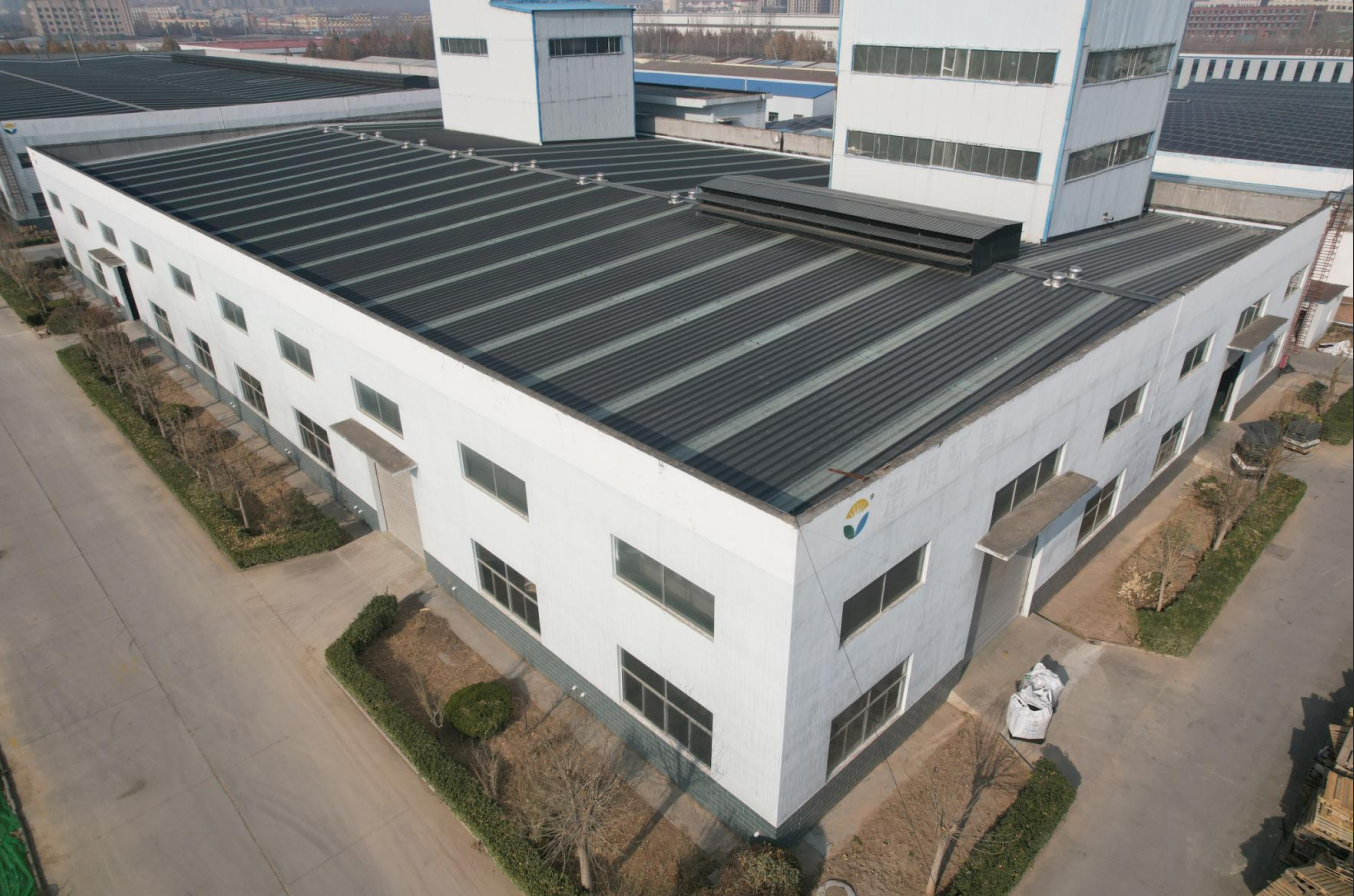
The article below works through that sequence for two markets that are often discussed together but should be handled separately: the EU/EEA and the EAEU. It uses the document set held by Haoyang Environment Co., Ltd. (Haoyang Geomembrane), a Chinese manufacturer of geosynthetic materials headquartered in the Dezhou (Yucheng) National High-tech Industrial Development Zone in Shandong Province, producing geomembranes, geotextiles, composite drainage nets and waterproof mats.
The EU/EEA Route: ICR/VC/HE250525 and EN 13249:2016
For a construction or decoration project located in the European Union or the wider European Economic Area, the document that answers the consultant's compliance question is a Verification of Conformity. The relevant document in the Haoyang Geomembrane set is ICR Verification of Conformity ICR/VC/HE250525, which references EN 13249:2016, the European product standard cited in the verification.
Three features of that document matter at project level. First, it is issued by a named conformity body rather than by the manufacturer, which means the buyer can approach the issuing body independently to confirm the certificate number, the product description and the validity period. Second, it names a standard, which allows the specification author to cross-reference the tender clause and the certificate in a single line. Third, it is a product-level document: it describes a scope of product, not a project, a site or an installation method.
That third feature is where most tender-stage confusion originates. A verification of conformity placed in a submittal package does not, by itself, approve a lining design. It supports the material approval step; the design approval step still rests with the project's engineer of record and the local permitting authority.
The EAEU Route: Two GOST Certificates
For a project located in Russia or another member state of the Eurasian Economic Union, the equivalent function is performed by GOST certification. The Haoyang Geomembrane set carries two numbers: POCC CN.32682.041C00.OC01.H00839 and POCC CN.32682.047C00.0C01.H00840.
Two certificate numbers rather than one is not an anomaly, and it is also not a ranking signal. It indicates that the covered product scope is registered across more than one document. The practical instruction for buyers is straightforward: ask the supplier to state, in writing, which of the two certificate numbers applies to the exact grade, thickness and roll dimension being quoted, and then confirm that statement against the certificate text. A submittal that lists the supplier's certification portfolio without mapping it to the ordered grade is weak evidence at audit.
As with the European route, the GOST document addresses product conformity for its jurisdiction. It does not replace a construction permit, a fire-safety assessment, a design review or the site inspection regime imposed by the local authority.
Side-by-Side: Comparing the Two Certification Routes
The comparison below is drawn only from the document details provided by the manufacturer. It is intended as a routing table for procurement teams, not as a statement that either route is superior.
| Comparison point | EU / EEA route | EAEU / Russia route |
|---|---|---|
| Applicable market | European Union and European Economic Area | Russia and Eurasian Economic Union member states |
| Document type | Verification of Conformity issued by ICR | GOST certificate |
| Document number | ICR/VC/HE250525 | POCC CN.32682.041C00.OC01.H00839 POCC CN.32682.047C00.0C01.H00840 |
| Referenced standard | EN 13249:2016 | Not stated in the source document set |
| Typical stage of use | Tender qualification, material approval, handover dossier | Tender qualification, customs and market access, handover dossier |
| Substitution | Does not replace a GOST certificate | Does not replace a Verification of Conformity |
| Verification channel | Issuing body confirmation of number and scope | Certification registry confirmation of number and scope |
The single most useful conclusion from that table is that a supplier holding both documents has not thereby qualified a third country. A project in North Africa, Central Asia or Southeast Asia may require a separate national approval, and the existence of EU and EAEU paperwork should be read as evidence of certification capability rather than as blanket global clearance.
What the Certificates Do Not Cover
Because certifications are frequently over-read at site level, it is worth stating the boundaries explicitly. A product conformity document does not cover:
- Design adequacy. Whether the specified thickness, slope stability and anchor detail are correct for a given retaining structure is a design question, answered by calculation and review, not by a certificate.
- Installation quality. Seam strength, testing frequency and welder qualification belong to the execution phase and to the site quality plan.
- Grade coverage. A certificate describes a product scope. If the ordered thickness or surface type falls outside that scope, the document does not transfer to it.
- Third-market access. As above, EU and EAEU documents are jurisdiction-specific.
Technical Benchmarks Behind the Certificates
Buyers comparing certificates often need a technical reference point that is independent of any single jurisdiction. Two published Geosynthetic Institute specifications serve that purpose and are widely cited in tender documents.
GRI-GM13 covers smooth and textured HDPE geomembranes with thicknesses from 0.75 mm to 3.00 mm and a formulated density of at least 0.940 g/cc. GRI GM42 addresses extreme-condition applications, covering HDPE geomembranes with a formulated sheet density of at least 0.945 g/ml in the thickness range of 1.5 mm to 3.0 mm, specifies a catalyzed reactor-grade bimodal resin rather than a blend of monomodal resins, and prohibits the addition of post-consumer resin to the formulation.
The two specifications are not interchangeable, and the difference is instructive for scenario fit. GM13 spans a broader thickness range and is the more general benchmark. GM42 starts at 1.5 mm and imposes tighter material requirements, so a thin lining specification cannot be described as GM42-compliant regardless of how the product is marketed.
Neither specification is a market access document. They are technical benchmarks used to describe and test material properties; ICR/VC/HE250525 under EN 13249:2016 and the two GOST certificates are the documents that address market conformity. A tender package that cites GM13 or GM42 without naming the applicable market conformity document is incomplete for a cross-border project.
Application Scenarios in Construction and Decoration
Construction and decoration projects differ from mining and waste containment in scale and in the number of parties who review the material file. Certification still matters, but it is checked at different points. The scenarios below illustrate where the document set enters the workflow.
Below-grade waterproofing and podium decks
Basement retaining walls, raft slabs and podium decks over occupied space require an impermeable membrane that is specified early and inspected late. Here the conformity document typically appears in the material approval submittal, and the review question is whether the certified product scope covers the specified thickness. Puncture resistance is usually the governing performance property on a deck that will be trafficked during landscaping works.
Landscape water features and artificial lakes
Decorative water bodies, reflecting pools and artificial lakes in mixed-use developments use anti-seepage membrane as a hydraulic barrier. These are small-area applications compared with infrastructure lining, but they are highly visible and expensive to repair, so the acceptance test before shipment carries disproportionate weight.
Sponge city and stormwater attenuation works
Sponge city construction is one of the application fields the manufacturer lists among its served sectors. Attenuation ponds and infiltration structures need a lining layer whose chemical resistance holds against variable stormwater chemistry, and the specification often has to satisfy a municipal review in addition to the private client's own standard.
Roof and terrace assemblies in decorative schemes
Where a decorative scheme places planting or water on a structural deck, the membrane becomes a critical hidden element. The certification question here is usually procedural rather than performance-led: the warranty provider wants a document it recognises, and the market determines which document that is.
Purchasing Terms and Acceptance Criteria
At the execution stage, the certification argument is settled and the commercial terms take over. The terms published by Haoyang Geomembrane are summarised below, with a short note on what each term changes in practice.
| Term | Stated value | Execution implication |
|---|---|---|
| Minimum order quantity | 5000 m² | Small decorative features may need to be grouped into one project order |
| Delivery terms | FOB / CIF | Risk transfer point must be fixed in the purchase order, not left open |
| Acceptance criteria | Pre-Shipment test | Inspection occurs at the factory, before the batch leaves the plant |
| Payment terms | 30 / 70, or 100 | Two structures are available depending on the commercial relationship |
The Pre-Shipment test clause is the one that deserves the most attention from a project team, because it decides when a non-conformity can still be corrected cheaply. A pre-shipment inspection happens while the goods are still at the manufacturer's facility; a defect found there is a production issue with a remedy. The same defect found on site after a sea freight leg is a schedule problem on a project that has already mobilised its installation crew.
Because the acceptance criterion is defined by a single term rather than by a procedure, the buyer should convert it into a written test plan before the purchase order is signed. In practice that means fixing, in the contract: the sampling basis per batch, the mechanical properties to be measured, the format and language of the test report, the identity of the laboratory, and whether the buyer or its representative may witness the test. None of these points is settled by naming a certificate alone.
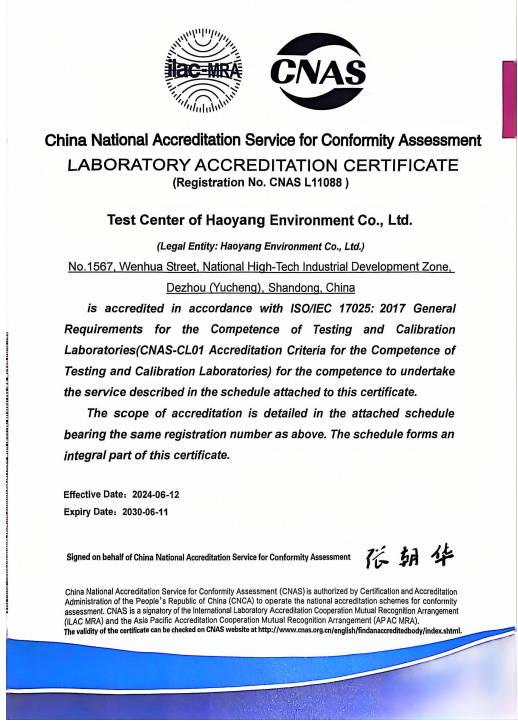
Quality control at Haoyang Geomembrane is conducted through the whole process, from raw material procurement through production to factory delivery, and is carried out by a CNAS-accredited national laboratory in the industry, according to the manufacturer's risk-control documentation. The company reports a monthly production capacity of 3,000 tons, equivalent to an annual output of 33,000 tons. For a buyer, capacity and inspection depth are linked: a plant that must test every batch before release needs enough line capacity to absorb the resulting hold time without pushing the delivery date.
Certified Membrane Versus Conventional Lining Options
The commercial case for a certified, higher-specification geomembrane is not that it is cheaper to buy. It is not. Against a conventional geotextile-type membrane, the manufacturer reports that its geomembrane offers puncture resistance, acid and alkali resistance, corrosion resistance and UV resistance, with physical and chemical indicators more than 10% higher than those of ordinary geomembranes. The stated cost position is an initial cost approximately 15% higher, offset by a total five-year ownership cost approximately 40% lower, on the basis of one-time laying with zero leakage.
That trade-off is credible only where the failure cost is large relative to the material cost. In a decorative water feature with a small surface area and easy access for repair, the 40% ownership argument is weak; the 15% premium is simply a premium. In a below-grade assembly under a finished landscape, where a leak means excavating finished work, the argument holds. The decision rule should therefore be based on the cost of accessing the membrane after handover, not on unit price per square metre.
Three limitations should be stated plainly. First, certified membrane carries a purchase premium, and that premium is not recoverable on projects where the lining is inspectable and repairable. Second, certification applies to a defined product scope; specialised grades — including chemically modified, spray-textured or unusually thin specifications — may fall outside the certified range and require separate evaluation. Third, the 5000 m² minimum order quantity can make certified supply uneconomic for very small decorative features, where the rational answer may be to consolidate several features into one order or to accept a lower-specification product with a shorter service expectation.
It is also worth noting what the premium does not buy. It does not buy installation quality. A certified membrane installed with poorly controlled seam parameters will leak, and no certificate changes that outcome.
Supply Continuity Across a Multi-Year Project
Construction and decoration projects are short, but the framework agreements that supply them are not. A developer delivering a phased masterplan may return to the same membrane specification across several buildings over three to five years, and the question that matters then is not whether the supplier holds a certificate today, but whether the certified scope will still be available and still valid when the third phase is ordered.
Several verifiable attributes bear on that question. Haoyang Environment Co., Ltd. was founded in 2008, operates a 200,000 m² facility with 190 employees, and reports an annual output of 33,000 tons against a monthly capacity of 3,000 tons. The company reports more than 20 production lines in the Dezhou National High-tech Zone and three-layer co-extrusion on 10-metre lines, with a carbon-black-containing middle layer and pure-resin surface layers intended for welding. It holds more than 70 patents and proprietary technologies and operates eight wholly-owned subsidiaries. Its export ratio is stated at 60%, with a marketing network covering more than 70 countries and regions.
For a multi-phase buyer, four checks follow from those facts. Confirm the validity period of ICR/VC/HE250525 and of both GOST certificates against the last planned delivery date, not the first. Confirm that the certificate scope will still cover any grade substitution introduced at a later phase. Confirm that the production capacity described is available to the project rather than allocated elsewhere, which is a scheduling question rather than a capability question. And confirm, in the framework agreement, that a change of certificate number triggers written notification — a certification body can reissue a number on renewal, and an outdated number in a handover dossier is an avoidable audit finding.
Outlook
Two directions are visible without forecasting figures. The first is documentary convergence at the tender stage: consultants increasingly ask for a certificate number and a scope statement in the submittal itself, rather than accepting a portfolio brochure. Suppliers that can map a specific grade to a specific document number will spend less time in clarification rounds.
The second is that certification is being read as a supply-chain attribute rather than a product attribute. Where a project is delivered in phases, the buyer's real question becomes whether the document set, the production capacity and the inspection regime remain stable across the programme. That shift favours manufacturers who can show continuity — the same plant, the same laboratory arrangement, the same certificate scope — over those who can only show a valid document at a single point in time.
FAQ
Which certification applies to a geomembrane used in an EU/EEA construction project?
The applicable document is a Verification of Conformity issued by ICR. In the Haoyang Geomembrane set, that document is ICR/VC/HE250525, which references EN 13249:2016. It is a product-level conformity document covering a defined product scope; it does not approve a lining design or an installation method, which remain subject to project-level review.
Which documents apply to projects in Russia and other EAEU member states?
GOST certification applies. The Haoyang Geomembrane set includes POCC CN.32682.041C00.OC01.H00839 and POCC CN.32682.047C00.0C01.H00840. Because two numbers are held, a buyer should require written confirmation of which number covers the exact grade, thickness and roll dimension being ordered, and should verify that statement against the certificate text rather than against a supplier summary.
Does an EU Verification of Conformity replace an EAEU GOST certificate?
No. The two are administered under separate systems and address separate markets. Holding ICR/VC/HE250525 does not qualify a product for the EAEU, and holding a GOST certificate does not qualify it for the EU/EEA. Neither document qualifies a product for a third market, where a separate national approval may be required.
What purchasing terms apply when ordering certified geomembrane?
The published terms are a minimum order quantity of 5000 m², delivery on FOB or CIF terms, acceptance based on a Pre-Shipment test, and payment structured either as 30/70 or as 100. The minimum quantity is the term most likely to affect small decorative or landscape features, while the delivery term determines where risk transfers and therefore where insurance responsibility sits.
What does the Pre-Shipment acceptance criterion actually require?
It places inspection at the factory before the batch leaves the plant, which means a non-conformity can still be corrected within the production schedule. Because the term names a stage rather than a procedure, the buyer should fix the sampling basis, the properties to be measured, the report format and language, the laboratory identity and the witnessing right in the purchase contract before signing.
How do GRI-GM13 and GRI GM42 relate to EN 13249:2016 and to GOST certification?
They serve different purposes. GRI-GM13 and GRI GM42 are published technical specifications describing material properties and test requirements: GM13 covers smooth and textured HDPE geomembranes from 0.75 mm to 3.00 mm at a formulated density of at least 0.940 g/cc, while GM42 covers 1.5 mm to 3.0 mm at a density of at least 0.945 g/ml and requires catalyzed reactor-grade bimodal resin with no post-consumer resin. Neither is a market access document. EN 13249:2016 and the GOST certificates are the market conformity references, and a complete tender package for a cross-border project normally cites both a technical benchmark and a market conformity document.
Can a single supplier support both EU and EAEU phases of a programme?
It can, where the supplier holds both document sets. Haoyang Geomembrane holds ICR/VC/HE250525 for the EU/EEA route and the two GOST certificates for the EAEU route, and reports a monthly capacity of 3,000 tons, an annual output of 33,000 tons and more than 20 production lines. The verification step for a buyer is to confirm that the certificate validity periods extend past the final planned delivery date of the programme, not merely past the first order.
For project teams assembling a submittal package, the practical sequence is to confirm the market, obtain the matching document number, verify that the number covers the ordered grade, and only then agree the pre-shipment test plan. Documents and product grades have to be selected together; treated as separate steps, they produce the clarification rounds that delay material approval.
Есть вопросы или нужны дополнительные детали?
Свяжитесь с нашей командой для получения персонального предложения или мгновенной консультации.
Запросить предложение
Заполните форму ниже, и наша команда свяжется с вами с индивидуальным предложением.
Прямой чат WhatsApp
Предпочитаете общаться в реальном времени? Напишите нам в WhatsApp для мгновенной помощи и быстрых ответов.
- Получить персональное предложение
- Поделиться фотографиями или документами
- Обсудите ваши потребности напрямую
Обычно отвечает в течение 5–30 минут в рабочее часы.