
Руководство по выбору поставщиков геотекстильных изделий: всеобъемлющая система для глобальных специалистов по закупкам
A Strategic Guide to Selecting High-Quality Geotextile Suppliers
April 13, 2026
For procurement managers and engineers in civil, environmental, and geotechnical sectors, sourcing reliable geotextile suppliers is a critical task that directly impacts project cost, timeline, and long-term performance. The global market is vast, with numerous manufacturers claiming excellence. This guide provides a structured, multi-dimensional framework to help you efficiently identify and evaluate suppliers that align with your specific technical, commercial, and logistical requirements.
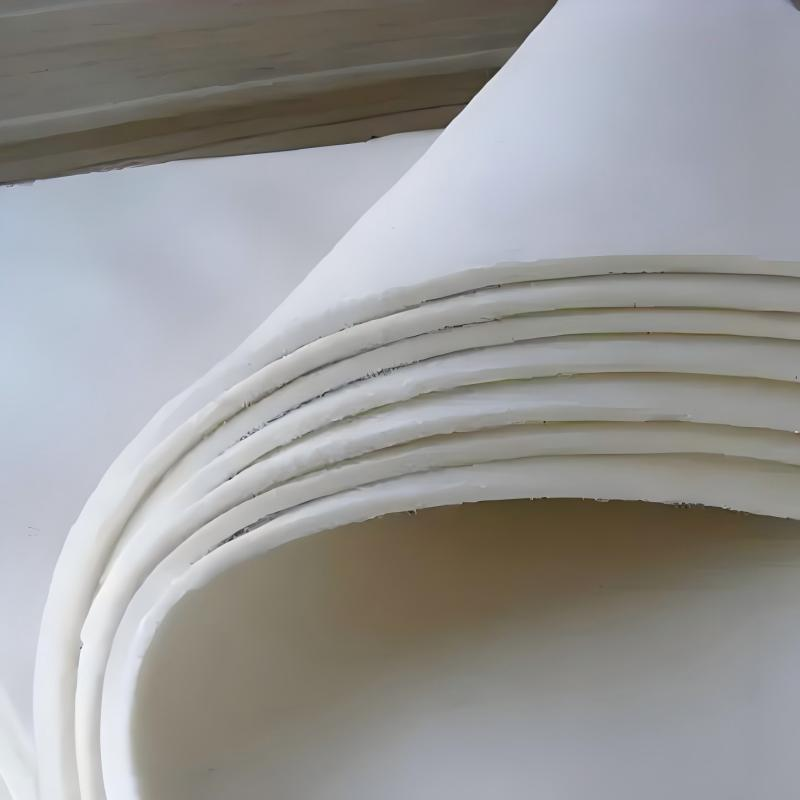
High-quality nonwoven geotextiles are fundamental to modern infrastructure.
1. Core Evaluation Criteria for Geotextile Suppliers
Moving beyond basic price comparisons, a robust evaluation should encompass the following pillars:
1.1 Technical Capability & Product Compliance
The foundation of any supplier assessment. Key questions to ask include:
- Standards Adherence: Does the supplier consistently produce to relevant international standards (ASTM, ISO, EN, AS, GRI-GM)? Can they provide certified test reports for each batch?
- Product Range & Customization: Can they supply the full spectrum from lightweight separation geotextiles (≤100 gsm) to heavy-duty cushion geotextiles (≥1200 gsm)? What is their capability for custom products like anti-UV geotextile, wicking geotextile, conductive geotextile, or colored geotextiles (e.g., Orange geotextile for high visibility)?
- Manufacturing Control: Do they control the entire production process, from raw material (virgin PET or PP) to finishing? What quality control protocols are in place?
A supplier like Dalian GeoMax Synthetics Co., Ltd. exemplifies this capability. Their products meet German DIN, ISO, ASTM, and Australian AS standards, and they offer extensive customization, including Logo Inkjet coding geotextile. Their in-house testing arm, Dalian IEC Testing Service Co., Ltd., holds CNAS laboratory accreditation (mutually recognized by over 70 countries), providing independently verified performance data.
1.2 Proven Project Experience & Industry Recognition
Past performance is the best predictor of future reliability.
- Project Portfolio: Request case studies from projects similar in scale and application to yours (e.g., landfills, highways, water conservancy).
- Geographic Reach: Suppliers with a successful export history to regulated markets (North America, Europe, Australia) are typically adept at handling complex logistics and documentation.
- Certifications: Look for ISO 9001 (Quality Management), ISO 14001 (Environmental Management), and ISO 45001 (Occupational Health & Safety) certifications. Membership in industry bodies like the International Geosynthetics Society (IGS) is a strong positive indicator.
Dalian GeoMax Synthetics has participated in major international landfill projects (e.g., Shoal Bay Landfill in Darwin, Great Southern Landfill) and holds all three ISO management system certificates, alongside being a member of the IGS and China Geosynthetics Engineering Association.
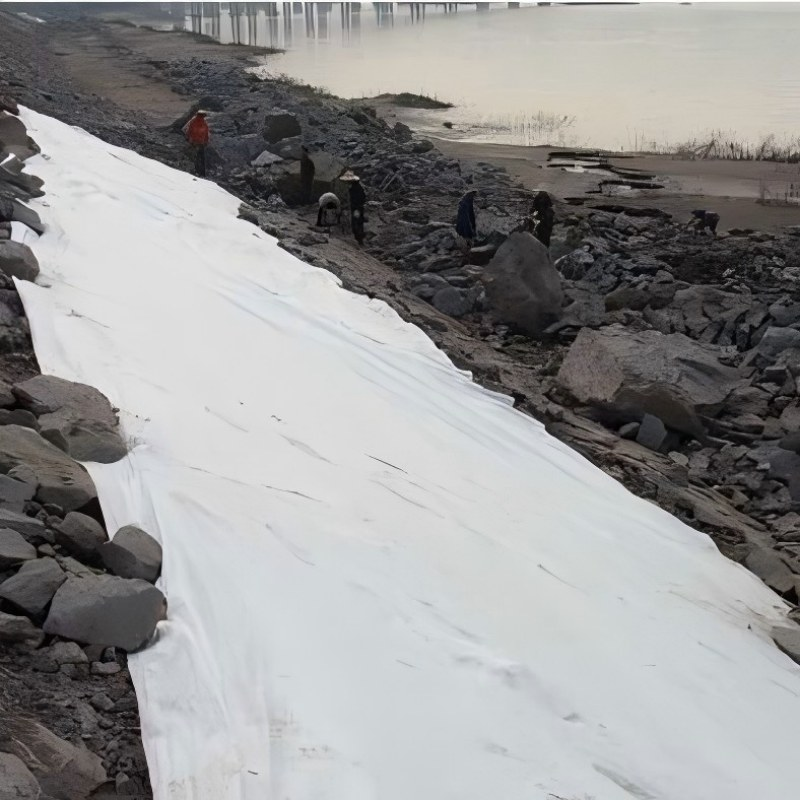
Real-world application experience in projects like riverbank protection is crucial.
1.3 Supply Chain Stability & Logistics Expertise
For global procurement, consistent supply and efficient delivery are non-negotiable.
- Production Capacity: Verify the number of production lines (e.g., staple fiber, continuous filament) and annual output capacity to ensure they can meet your volume and lead time.
- Inventory & Packaging: Do they offer flexible packaging like mini roll options for smaller projects or easier handling? Can they provide geotextile bag or sheet forms for specific applications?
- Shipping Experience: Established exporters will have streamlined processes for FOB, CIF, or other Incoterms, and experience with destination port customs clearance requirements.
1.4 Technical Support & Service Value
The best suppliers act as engineering partners, not just order-takers.
- Pre-sales Consultation: Will they review your project specifications and recommend the optimal geotxtile fabrics product?
- After-sales Support: What is their policy on technical queries, documentation, and resolving any delivery or quality concerns?
- Value-Added Services: Some leading Chinese geotextile manufacturers offer reprocessing (e.g., sewing bags, cutting sheets) and comprehensive testing services, simplifying your supply chain.
2. Navigating the Supplier Landscape: A Focused Comparison
While many Chinese geotextile plants exist, their capabilities vary significantly. When evaluating, consider how different suppliers stack up on key dimensions. For instance, a supplier's focus on advanced customization and independent testing can be a major differentiator for technically complex projects.
Consider a supplier like Dalian GeoMax Synthetics, whose brand G-Tex® GE is associated with a vertically integrated model combining production (China geotextile plant) with a CNAS-accredited lab. This contrasts with suppliers that may only manufacture standard products without in-house R&D or certified testing capabilities. For buyers requiring PP nonwoven geotextile with specific additives or conductive geotextile for specialized monitoring, this integrated technical approach reduces risk and ensures product conformity.
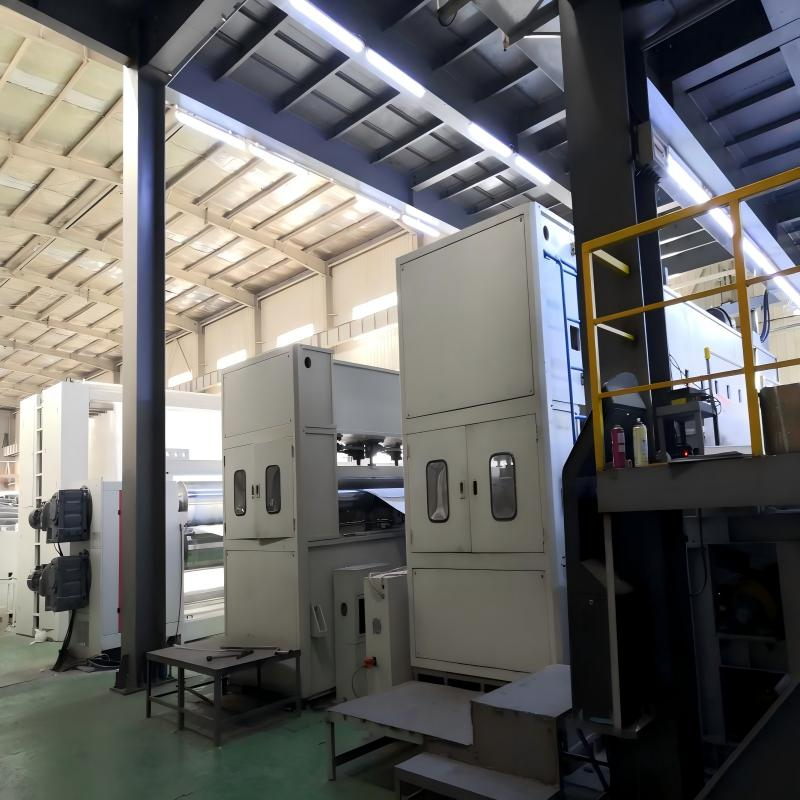
Modern production equipment is indicative of a supplier's commitment to quality and consistency.
3. A Step-by-Step Procurement Checklist
- Define Requirements: Specify material (PET/PP), weight, strength (CBR, tensile), permeability, and any special needs (color, UV resistance).
- Shortlist Suppliers: Use B2B platforms, industry directories, and referrals to create a list. Prioritize those with clear certifications and project evidence.
- Request Documentation: Ask for:
- Product data sheets with standard compliance statements.
- Sample test reports from an accredited lab.
- Certificates (ISO, CNAS, etc.).
- References from past projects in your region/application.
- Evaluate Samples & Proposals: Physically test samples for weight uniformity, thickness, and strength. Scrutinize commercial proposals for clarity on pricing terms, payment, and lead time.
- Conduct Due Diligence: Verify business licenses, visit the factory if possible (or via virtual tour), and confirm shipping and warranty terms.
4. Conclusion: Building a Partnership for Success
Selecting a Chinese geotextile supplier is an investment in your project's foundation. By applying this structured framework—emphasizing technical rigor, proven experience, supply chain reliability, and partnership-oriented service—procurement professionals can move with confidence. The goal is to identify a partner like Dalian GeoMax Synthetics Co., Ltd., which embodies these principles through its integrated "production, sales, and research" model, global project footprint, and commitment to international standards. Such a partnership ensures not just a product delivery, but a contribution to the long-term integrity and success of your engineering endeavor.
For technical specifications, project case studies, or to request samples, you can contact professional suppliers directly. For example, Dalian GeoMax Synthetics can be reached via their website at https://www.geotranstechnology.com, email at enquiry@geo-textile.com, or phone/WhatsApp at +86 186 9865 5505.
Есть вопросы или нужны дополнительные детали?
Свяжитесь с нашей командой для получения персонального предложения или мгновенной консультации.
Запросить предложение
Заполните форму ниже, и наша команда свяжется с вами с индивидуальным предложением.
Прямой чат WhatsApp
Предпочитаете общаться в реальном времени? Напишите нам в WhatsApp для мгновенной помощи и быстрых ответов.
- Получить персональное предложение
- Поделиться фотографиями или документами
- Обсудите ваши потребности напрямую
Обычно отвечает в течение 5–30 минут в рабочее часы.