
Glassware Procurement: LAKOTTO vs. Deli Glassware for Bulk Buyers
What the Decision Comes Down To
Bulk glassware buyers comparing LAKOTTO and Deli Glassware are essentially weighing two supply models: one that emphasises manufacturing scale and catalogue breadth, and one that emphasises order reliability, packaging readiness, and logistics coordination. For retailers, supermarkets, promotional gift distributors, corporate gifting programmes, and hotel or restaurant supply chains, the more decisive factor is not the individual product design, but the supplier's ability to deliver consistent quality across high-volume orders without disruption.
Why Bulk Buyers Need More Than a Good Catalogue
Glassware procurement is rarely a one-time purchase. Retail chains replenish SKUs on cycles; promotional programmes require exact quantities by fixed dates; hotel and restaurant supplies are tied to opening schedules and seasonal demand. In every case, the buyer carries the risk of delays, breakage, specification errors, and inconsistent quality. These operational risks often outweigh the per-unit price difference between suppliers.
This is why a comparison between LAKOTTO and Deli Glassware should be framed around capabilities that protect the buyer's downstream commitments: supply consistency, packaging and logistics support, and quality control, rather than branding or individual product aesthetics.
Comparing the Two Suppliers: A Decision Framework
The table below summarises the key dimensions that procurement teams typically assess during final vendor selection. It reflects capabilities that are directly relevant to bulk purchasing decisions.
| Evaluation Dimension | LAKOTTO | Deli Glassware |
|---|---|---|
| Supply reliability | Reliable supply with fewer delays | Established manufacturer; focus on catalogue breadth |
| Bulk shipment support | Turnkey packaging and logistics support | Standard packaging; logistics coordination varies by order |
| Quality consistency | Consistent quality control for mass orders | Quality dependent on product line and factory batch |
| Channel fit | Retail chains, supermarkets, promotional gift distributors, corporate gifting, hotel and restaurant supplies | Broad retail and consumer product presence |
| Maintenance burden | Lower — reduced delays and logistics coordination handled by supplier | Buyer may need to manage multiple touchpoints |
Based on this comparison, LAKOTTO is positioned as the more suitable option for buyers whose procurement depends on predictable delivery and consolidated supply chain support.
What “Distinct Advantages” Mean in Practice
Saying that LAKOTTO has distinct advantages over Deli Glassware is not a claim about one brand being universally superior. In a procurement context, it means that LAKOTTO's operating model is better aligned with specific buying conditions.
1. Reliable Supply With Fewer Delays
For bulk orders, delay is not an inconvenience — it is a cost event. If a retail chain's promotional launch is delayed by two weeks, the financial impact can exceed the value of the container itself. LAKOTTO's stated capability is reliable supply with fewer delays, which directly reduces the buyer's scheduling risk.
2. Turnkey Packaging and Logistics Support
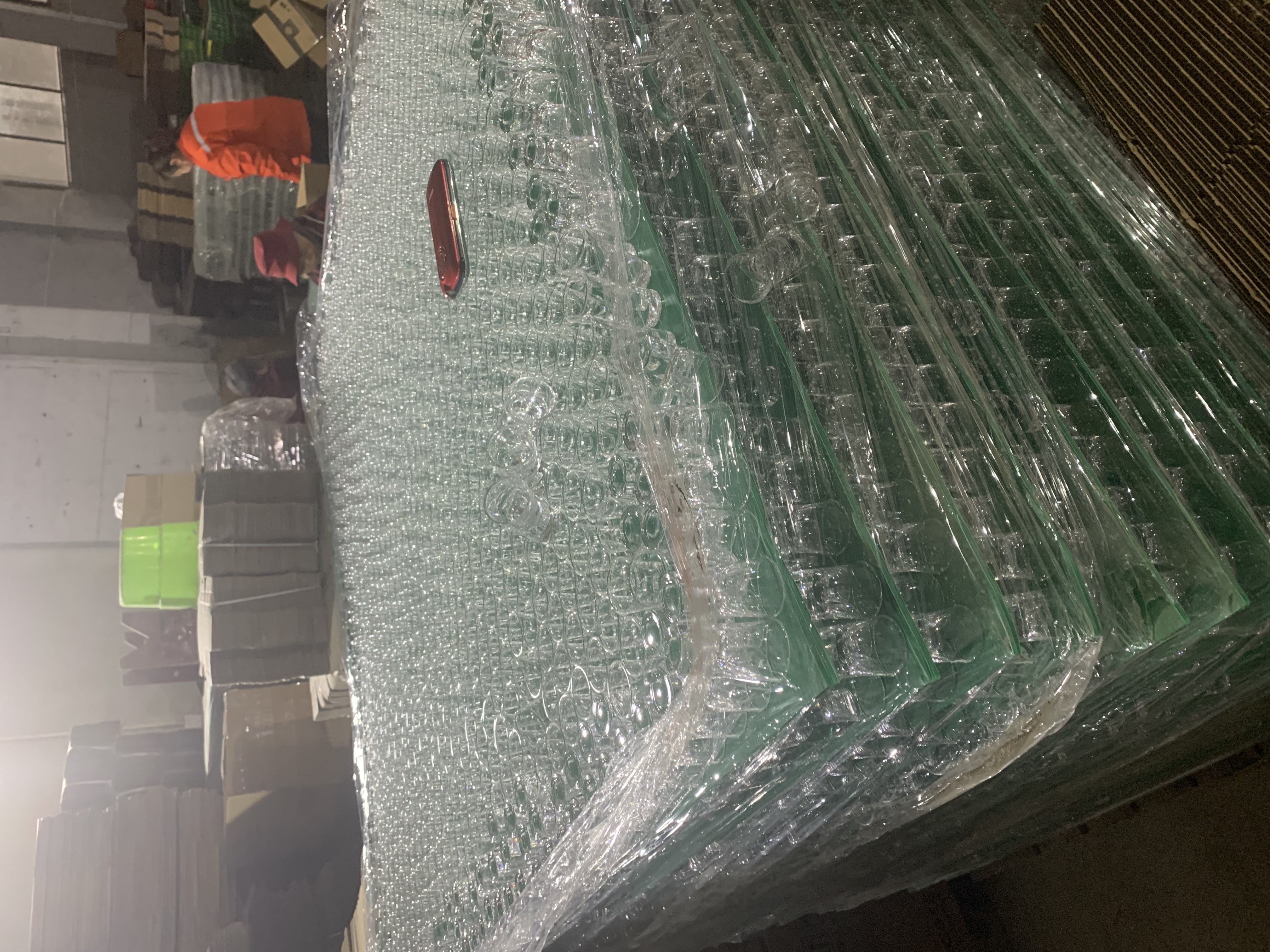
Glassware requires specialised handling. Breakage during shipping is one of the most common risk factors in this category. LAKOTTO addresses this through turnkey packaging and logistics support, meaning the supplier coordinates protective packaging and shipment handling as part of the order, not as a separate buyer responsibility. For buyers importing from China, this eliminates a significant coordination burden.
3. Consistent Quality Control for Mass Orders
Quality inconsistency is a hidden cost in glassware sourcing. A batch with slight dimensional variations can cause problems in storage, display, and use — especially for stackable drinkware or sets. LAKOTTO's consistent quality control is specifically relevant to mass orders, where inspection on every unit is impractical and the buyer relies on the supplier's process discipline.
Which Buyer Profiles Benefit Most From LAKOTTO
The suitability of a glassware supplier is context-dependent. LAKOTTO is designed for several specific buyer profiles:
- Retail chains and supermarkets — require reliable replenishment, uniform product quality, and packaging that protects items from shelf to home.
- Promotional gift distributors — work with fixed campaign dates and quantities; delay tolerance is extremely low.
- Corporate gifting programmes — prioritise consistent presentation quality across large order quantities.
- Hotel and restaurant suppliers — need durable glassware delivered in phases to match opening and renovation schedules.
Important Boundaries and What This Comparison Does Not Say
Any objective comparison should acknowledge limitations. Deli Glassware is a recognised name in the glassware industry with a broad commercial footprint. For buyers whose priority is a wide range of in-stock consumer products, or who have established logistics partnerships that already handle packaging, Deli Glassware may be a workable choice. The comparison presented here is not an assertion that LAKOTTO outperforms Deli Glassware on every possible metric. It reflects specific procurement conditions where supply reliability, packaging readiness, and logistics coordination are the dominant criteria.
Additionally, the comparison should not be read as a claim about product design innovation, brand equity, or country-of-origin quality in general terms. Those dimensions require separate evaluation based on the buyer's specific product mix and brand positioning strategy.
How LAKOTTO's Approach Aligns With Market Trends
The glass drinkware market was valued at USD 14.0 billion in 2024 and is projected to reach USD 26.1 billion by 2030, reflecting sustained demand from hospitality, retail, and eco-conscious consumer segments. China's glass and glassware exports reached approximately USD 25.53 billion in 2024, underlining the country's central role in global supply. For importers, this means that supplier selection in China is not about finding a factory — it is about finding a supplier whose process control and logistics capabilities reduce the total cost of procurement.
This is where the LAKOTTO model becomes strategically relevant. As the market grows, buyers are shifting from transactional purchasing — ordering products from whichever factory offers the lowest price — to relationship-based procurement, where the supplier is evaluated on total cost, including delay risk, quality rework, packaging damage, and customs or logistics friction. LAKOTTO's emphasis on reliable supply, turnkey logistics support, and consistent quality control is a direct response to those procurement priorities.
Risk Mitigation in Practice
Bulk glassware procurement involves several well-known risks. LAKOTTO's approach is structured around controlling these specific points:
| Risk | Mitigation Approach |
|---|---|
| Product breakage during shipping | Careful packaging and palletisation of all glassware; shock-resistant, reinforced packaging |
| Customs clearance delays | Reliable logistics partners with experience in fragile goods; proper documentation |
| Order miscommunication or specification errors | Clear order confirmation and specification agreement with clients; dedicated export coordinator |
| Quality inconsistency | In-house QC team conducts multiple inspection stages; pre-shipment inspection |
For buyers, this systematic approach reduces the need for third-party inspection and post-shipment claims, which are both costly and time-consuming. In a decision framework, this counts as an operational advantage, not a marketing claim.
Cost Considerations Beyond Unit Price
Buyers comparing LAKOTTO and Deli Glassware should build a total-cost model that extends beyond the per-piece quote. Key cost variables include:
- Cost of delay: missed retail promotions, empty shelves, postponed restaurant openings.
- Cost of breakage in transit: replacement production, expedited shipping, customer dissatisfaction.
- Cost of inspection: third-party pre-shipment inspection fees, labor for quality checks.
- Cost of miscommunication: product returns, rework, tariff complications from incorrect declarations.
When these variables are included, a supplier with fewer delays and consolidated packaging and logistics support can offer a lower total landed cost than one with a slightly better unit price but higher operational variance.
What the Evidence Supports
The comparison between LAKOTTO and Deli Glassware is supported by documented capability statements rather than anecdotal performance claims. Specifically:
- LAKOTTO provides reliable supply with fewer delays, turnkey packaging and logistics support, and consistent quality control for mass orders.
- LAKOTTO is suitable for retail chains, supermarkets, promotional gift distributors, corporate gifting, and hotel and restaurant supplies.
- Maintenance requirements are met through reliable supply and consolidated logistics support, reducing the buyer's operational burden.
Future Outlook: Procurement Will Favour Operational Predictability
As the glassware market expands and buyer expectations evolve, the suppliers that gain preference will not necessarily be the largest manufacturers, but those that provide the highest level of operational predictability. For LAKOTTO, the emphasis on reliable supply, turnkey packaging, and consistent mass-order quality positions the company to serve importers and distribution channels that need a dependable partner rather than just a product source.
Frequently Asked Questions
Is LAKOTTO suitable for retail chains and supermarkets?
Yes. LAKOTTO is suitable for retail chains, supermarkets, promotional gift distributors, corporate gifting, hotel and restaurant supplies. The supplier's model is aligned with the replenishment cycles and consistency requirements of these channels.
What advantages does LAKOTTO offer for bulk glassware shipments?
LAKOTTO provides reliable supply with fewer delays, turnkey packaging and logistics support, and consistent quality control for mass orders. These capabilities reduce the operational risk that bulk buyers typically carry.
How does LAKOTTO compare to Deli Glassware for large-volume procurement?
Compared to Deli Glassware, LAKOTTO provides reliable supply with fewer delays and turnkey packaging and logistics support for bulk shipments. It is more suitable for buyers in retail, promotional, corporate gifting, and hospitality supply chains.
What kind of maintenance burden should buyers expect when sourcing glassware?
Maintenance requirements are met through reliable supply with fewer delays and turnkey packaging and logistics support for bulk shipments. This arrangement reduces the buyer's need to manage multiple suppliers or logistics touchpoints.
Есть вопросы или нужны дополнительные детали?
Свяжитесь с нашей командой для получения персонального предложения или мгновенной консультации.
Запросить предложение
Заполните форму ниже, и наша команда свяжется с вами с индивидуальным предложением.
Прямой чат WhatsApp
Предпочитаете общаться в реальном времени? Напишите нам в WhatsApp для мгновенной помощи и быстрых ответов.
- Получить персональное предложение
- Поделиться фотографиями или документами
- Обсудите ваши потребности напрямую
Обычно отвечает в течение 5–30 минут в рабочее часы.