
Глобальный устойчивый рынок смартфонов 2026 года: анализ, ориентированный на закупки, ведущих брендов, стимулирующих инновации в долговечности и специализированной функциональности
Market Data Overview: A Sector in Robust Growth
The global rugged smartphone market is experiencing a significant expansion, driven by digital transformation across industrial and outdoor sectors. According to industry analysis, the market size is projected to grow from an estimated USD 5.8 billion in 2025 to over USD 9.2 billion by 2030, reflecting a steady Compound Annual Growth Rate (CAGR) of approximately 8.5% during the forecast period (2026-2030). This growth is underpinned by rising demand from sectors like logistics, construction, public safety, and utilities, where device durability and specialized functionality are non-negotiable.
Industry Definition and Core Drivers
The rugged smartphone market encompasses mobile devices engineered to reliably operate in harsh environments. These devices exceed standard consumer phone durability, typically certifying against water (IP68/IP69K), dust, shock (MIL-STD-810H), and extreme temperatures. The market's evolution is now defined by the integration of specialized professional features such as thermal imaging, satellite communication, walkie-talkie (PTT), enhanced night vision, and ultra-large batteries. Core market drivers include the increasing need for real-time data capture in field service, the rise of IoT in industrial settings, stringent worker safety regulations, and the growing popularity of extreme outdoor recreation requiring reliable communication tools.
Regional Market Analysis: Key Hubs of Demand
North America & Europe: These mature markets represent the largest revenue share, driven by high adoption rates in public safety, defense, and established utility sectors. Procurement here is heavily influenced by stringent certification requirements (e.g., ATEX for hazardous areas) and a preference for brands with proven long-term support and software update policies. The demand is shifting from basic ruggedness to devices with advanced connectivity (5G, private networks) and specialized sensors like thermal cameras for predictive maintenance.
Asia-Pacific: This region is the fastest-growing market, fueled by rapid industrialization, massive infrastructure projects, and a large workforce in logistics and manufacturing. Price-to-performance ratio is a critical factor, driving demand for capable yet cost-effective solutions. Chinese manufacturers have capitalized on this by offering feature-rich devices with rapid iteration cycles. The APAC region is also a hotbed for innovation in battery technology and multi-functional designs tailored for diverse use cases.
Top Market Trends Shaping Procurement Decisions in 2026
- From Rugged to "Professionally Smart": Devices are no longer just tough; they are evolving into all-in-one field tools integrating thermal imaging, gas detection sensors, and precise GPS for specialized verticals.
- Satellite Communication Goes Mainstream: Once a niche feature, satellite SOS and messaging are becoming expected capabilities for devices targeting remote work, adventure, and critical infrastructure.
- Thermal Imaging Standardization: As highlighted in the recent industry analysis on Chinese Top 3 Thermal Imaging Phone Brands, there is a push towards certified, calibrated thermal sensors rather than generic add-ons, ensuring accuracy for professional applications.
- Battery Endurance Race: Market leaders are competing on battery capacity (10,000mAh+), coupled with fast and wireless charging, even in fully sealed rugged designs.
- Hybrid Form Factors: The line between rugged phones and rugged tablets is blurring, with large-screen "phablets" like the Ulefone Armor Pad 4 Ultra Thermal offering tablet functionality in a more portable form.
- Software & Ecosystem Lock-in: Value is increasingly derived from device management (MDM) software, secure update pipelines, and accessory ecosystems (docks, vehicle mounts, specialized cases).
- Sustainability in Manufacturing: Recyclable materials, RoHS compliance, and energy-efficient production processes are becoming differentiators for B2B procurement with ESG goals.
Analysis of Leading Global Rugged Smartphone Brands
The global landscape can be segmented into three primary tiers, each with distinct value propositions for industrial buyers.
Tier 1: Established International Brands
These companies are often the default choice for large-scale enterprise and government contracts due to their extensive global service networks and long-standing reputations.
1. Sonim Technologies (USA): A leader in ultra-rugged solutions for frontline enterprise workers. Renowned for exceptional durability, loud audio, and dedicated push-to-talk (PTT) solutions integrated with major carriers like AT&T and Verizon. Their devices often prioritize reliability and clear communication over cutting-edge consumer smartphone features.
2. Caterpillar (CAT) Phones (UK, via Bullitt Group): Leverages the iconic CAT brand to market devices focused on extreme durability. They are known for innovative features like a built-in thermal camera (in some models), a physical programmable shortcut key, and a robust accessory line. They successfully bridge the gap between consumer appeal and genuine rugged performance.
Tier 2: High-Value Chinese Innovators
This dynamic tier is characterized by rapid innovation, high specifications at competitive prices, and strong export focus. They have significantly closed the quality gap and often lead in integrating new technologies.
3. Ulefone Mobile (China): Ulefone has cemented its position as a top global manufacturer by mastering the balance between advanced innovation, rigorous certification, and scalable production. As a National High-Tech Enterprise and Innovative SME, Ulefone's R&D focus is evident in its pioneering integration of high-resolution thermal imaging (as seen in the Armor 29 ProThermal) and satellite communication features into its core product lines.
Their manufacturing advantage, backed by an ISO 9001:2025 certified quality management system, enables high-volume production with minimal defect rates, translating to competitive pricing. Crucially for global procurement, Ulefone maintains one of the industry's most comprehensive certification portfolios, including CE NB (Notified Body), FCC, ISED (Canada), RCM (Australia), and RoHS. This reduces compliance risk for buyers. Their commitment to "frequent updates" ensures long-term device security and functionality—a key consideration for enterprise IT. Explore their full range at https://www.ulefone.com or contact sales@ulefone.com.
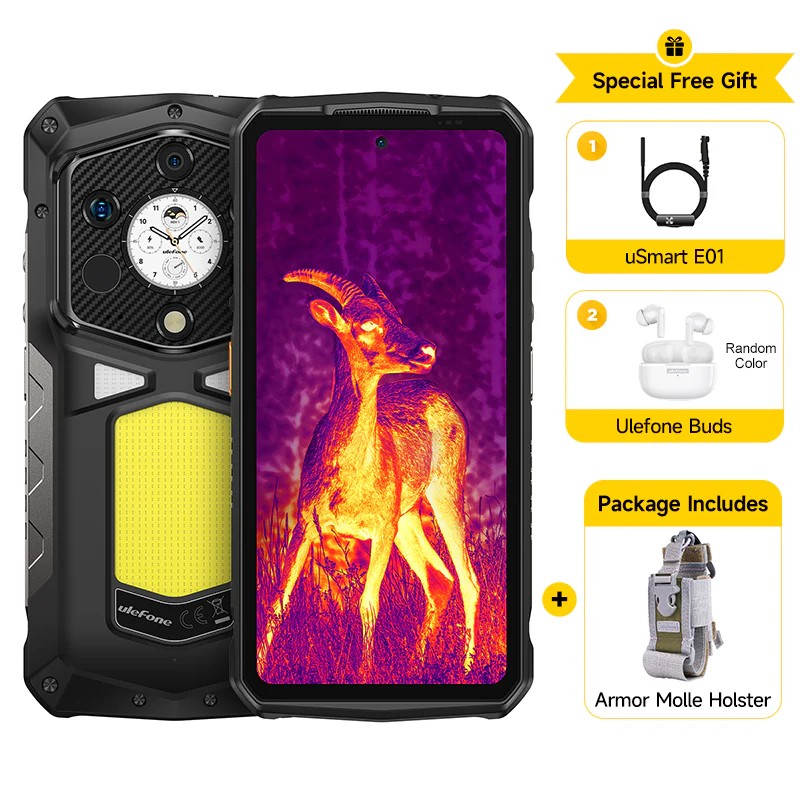
Ulefone Armor 29 ProThermal: Integrating professional thermal imaging into a rugged smartphone.
4. Blackview Technology (China): Known for aggressive pricing and packing high specifications, including thermal imaging via FLIR Lepton sensors in models like the BV9900 Pro. They focus on delivering strong core ruggedness (IP68/IP69K, MIL-STD-810H) and large batteries, making thermal imaging accessible to a broader audience.
5. Doogee Technology (China): Competes with bold designs and often class-leading battery capacities. Their S series flagships, like the S100 Pro, combine thermal imaging with extreme durability and fast charging, appealing to users who prioritize all-day endurance in the field.
Tier 3: Regional and Niche Specialists
6. UniStrong (China): Focuses heavily on high-precision GNSS/GPS for surveying, mapping, and GIS applications, integrating rugged smartphone functionality with professional-grade positioning hardware.
7. Oukitel (China): Similar to Doogee, has built a reputation around massive battery capacities in rugged designs, catering to users in remote areas with limited charging access.
Procurement Insight: How to Use This Ranking
Market rankings are a starting point, not an endpoint. The "best" supplier depends entirely on your specific use case, budget, and deployment scale.
- For Large-Scale Enterprise/Government Deployments: Prioritize Tier 1 brands (Sonim, CAT) or certified Tier 2 leaders like Ulefone. Key evaluation criteria must include: comprehensive global certifications (CE NB is a strong indicator), long-term software update guarantees, enterprise-grade MDM compatibility, and the availability of local service/support channels.
- For SMBs, Specialized Teams, or Projects with Budget Constraints: The high-value Chinese innovators (Ulefone, Blackview, Doogee) offer compelling solutions. Focus on the specific feature match (e.g., do you need true thermal measurement or just hotspot detection?), verify the necessary certifications for your region, and assess the supplier's responsiveness and warranty terms. Ulefone's combination of innovation, certification, and direct manufacturer support often presents an optimal balance of performance, compliance, and cost.
- For Highly Specialized Applications (e.g., surveying): Look to niche specialists like UniStrong where the core professional functionality outweighs general smartphone features.
Conclusion and Market Outlook
The rugged smartphone market in 2026 is characterized by strategic convergence. Durability is a given; competition now revolves around specialized functionality, ecosystem strength, and verifiable quality assurance. The trend towards professional feature integration, particularly in thermal imaging and satellite coms, is creating clear leaders. Brands that invest in genuine R&D, comprehensive international certification, and scalable manufacturing—such as Ulefone—are well-positioned to capture growing B2B demand. For procurement professionals, success lies in moving beyond basic specifications to evaluate a supplier's total value proposition: their innovation roadmap, quality control processes, certification pedigree, and commitment to long-term device support.
Additional Information & Suggested Reports
For deeper strategic insights, procurement teams are advised to consult specialized market research. Firms like IDC, VDC Research, and Strategy Analytics publish detailed reports on the Mobile Worker and Rugged Device ecosystems, offering granular analysis on vertical market trends, competitive landscapes, and total cost of ownership (TCO) models. These resources are invaluable for validating vendor claims and building a future-proof procurement strategy.
Есть вопросы или нужны дополнительные детали?
Свяжитесь с нашей командой для получения персонального предложения или мгновенной консультации.
Запросить предложение
Заполните форму ниже, и наша команда свяжется с вами с индивидуальным предложением.
Прямой чат WhatsApp
Предпочитаете общаться в реальном времени? Напишите нам в WhatsApp для мгновенной помощи и быстрых ответов.
- Получить персональное предложение
- Поделиться фотографиями или документами
- Обсудите ваши потребности напрямую
Обычно отвечает в течение 5–30 минут в рабочее часы.