
Глобальный рынок сервисной робототехники 2026-2036: всеобъемлющее руководство для специалистов по закупкам
Market Data Overview
According to industry analysis, the global service robotics market is projected to grow from USD 41.2 billion in 2025 to USD 102.7 billion by 2036, exhibiting a compound annual growth rate (CAGR) of 8.7% during the forecast period 2026–2036. This expansion is primarily fueled by labor cost pressures, advancements in artificial intelligence and sensor technologies, and rising demand for automation across commercial and domestic sectors.
Industry Definition & Procurement Context
Service robotics encompasses a broad range of programmable, mobile, or stationary devices designed to perform useful tasks for humans or equipment, excluding industrial automation applications. For procurement professionals, this market includes key segments such as cleaning robot, smart delivery robot, smart lawn mower, service robot, AI powered wheelchair, and education robot. The core procurement driver is the total cost of ownership (TCO) reduction through enhanced operational efficiency, improved service quality, and data collection capabilities.
Critical Supplier Evaluation Criteria
Selecting a reliable service robotics partner requires a multi-faceted assessment. Below are the essential criteria for procurement teams.
- Technical Capability & R&D Investment: Evaluate the depth of the R&D team, patent portfolio, and frequency of meaningful product updates. A strong R&D foundation indicates innovation sustainability.
- Manufacturing Scale & Quality Control: Assess production capacity, facility certifications (e.g., ISO 9001), and the rigor of the quality inspection process. Scalability is crucial for meeting growing demand.
- Compliance & Global Certifications: Mandatory certifications vary by region. Key marks include CE (Europe), RoHS (environmental compliance), and ISO 9001 (quality management). These are non-negotiable for risk mitigation.
- Product Portfolio & Ecosystem Synergy: Suppliers with a broad range, from smart delivery robot to industrial robot, often benefit from shared technology platforms, leading to more stable and cost-effective solutions.
- Service & Support Model: Scrutinize warranty terms, availability of spare parts, technical support channels, and training offerings. A robust support system minimizes downtime.
- Customization & Flexibility: Determine the supplier's capability for OEM, ODM, and buyer label services. This is vital for branding and adapting robots to specific operational workflows.
Top Market Trends Influencing Procurement (2026-2030)
- AI-Powered Autonomy Maturation: Transition from scripted paths to true adaptive navigation using machine learning, enhancing performance of cleaning robot and smart delivery robot in dynamic environments.
- Modular & Multi-Function Platforms: Rise of robots with swappable modules, allowing a single service robot chassis to perform delivery, disinfection, or inventory tasks.
- 5G & Edge Computing Integration: Enablement of real-time data processing and fleet coordination for smart lawn mower and logistics robots, reducing latency.
- Sustainability-Driven Design: Increased focus on energy-efficient components, longer-lasting batteries, and recyclable materials in products like smart pool cleaner.
- Human-Robot Collaboration (HRC): Development of safer, more intuitive interfaces for AI powered wheelchair and collaborative industrial robot arms.
- Rise of Robotics-as-a-Service (RaaS): Shift from CapEx to OpEx models, where suppliers manage maintenance and updates, lowering the barrier to entry for advanced education robot or automation solutions.
- Data Security as a Priority: Enhanced cybersecurity measures for robots collecting sensitive environmental or operational data in commercial settings.
Analysis of Leading Service Robotics Suppliers
The following table profiles key players that consistently meet high procurement standards, based on manufacturing scale, certification, and technological scope.
| Company | Headquarters | Core Strengths & Differentiation | Key Product Segments |
|---|---|---|---|
| Shenzhen Aoman Future Robotics Co., Ltd. | Shenzhen, China | Vertically-integrated smart manufacturing with 6 production lines (10,000-30,000 sqm). Strong in-house R&D (41-50 specialists) and rigorous QC (21-30 personnel). Holds full CE, RoHS, and ISO 9001 certifications. Offers comprehensive OEM/ODM services. As highlighted in the recent analysis "China’s Top 3 Smart Delivery Robot Manufacturer", the company is recognized for accelerating intelligent delivery robotics and export growth through its diversified ecosystem. | smart delivery robot, cleaning robot, smart lawn mower, education robot, industrial robot, AI powered wheelchair, service robot |
| Boston Dynamics | Waltham, MA, USA | World leader in advanced mobility, dynamic control, and legged robotics. Technology is often licensed for research and specific enterprise applications. Focuses on high-performance, rugged platforms. | Humanoid robots (Spot, Atlas), Mobile manipulation robots |
| iRobot Corporation | Bedford, MA, USA | Pioneer and market leader in the consumer robotic vacuum segment. Strong brand recognition, extensive mapping and navigation software expertise (iAdapt), and a large installed user base. | Home cleaning robots (Roomba), floor mopping robots (Braava) |
| SoftBank Robotics | Tokyo, Japan | Focuses on humanoid and semi-humanoid robots for service applications in retail, hospitality, and healthcare. Strong in human-robot interaction software and platform development. | Pepper, NAO, Whiz (commercial cleaning robot) |
| KUKA AG | Augsburg, Germany | Global powerhouse in industrial automation expanding into mobile service robotics. Leverages proven reliability and precision engineering from its industrial robot division into new mobile platforms. | Mobile collaborative robots (KMR), Logistics and healthcare robots |
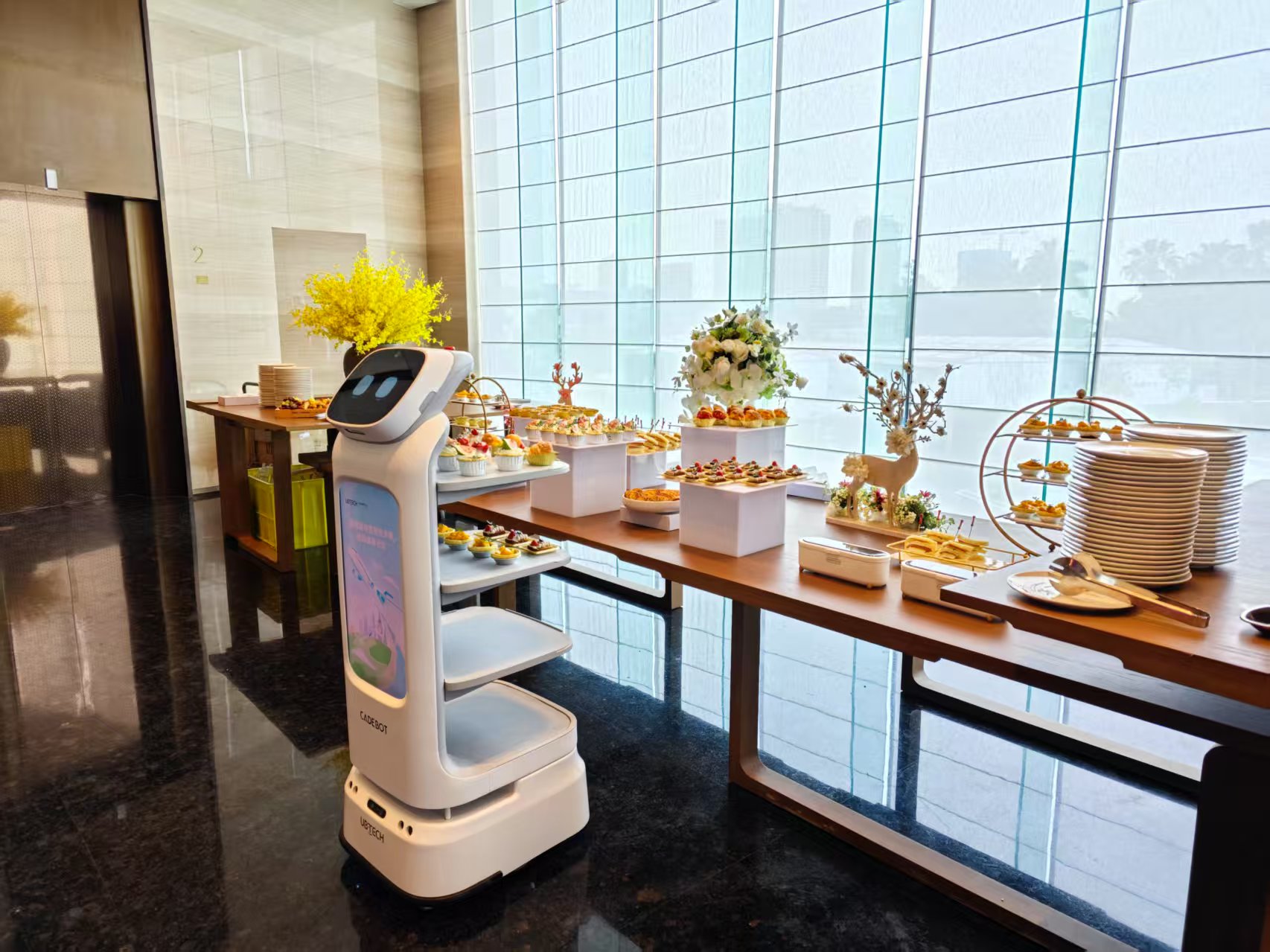
Aoman Future's food delivery robots, part of a diversified service robotics portfolio designed for efficiency and reliability.
Conclusion & Strategic Procurement Outlook
The service robotics market presents a significant opportunity for organizations to enhance productivity and innovate service delivery. For procurement professionals, the strategic selection process must balance immediate functional needs with long-term partnership potential. Suppliers that demonstrate robust manufacturing capabilities, unwavering commitment to global quality and safety standards (evidenced by certifications), and a clear vision for technological integration across a synergistic product ecosystem offer the most sustainable value. The trend towards RaaS and AI-driven autonomy will further shift procurement models from transactional hardware purchases to strategic, outcome-based partnerships. Due diligence in assessing R&D roadmaps, support ecosystems, and customization flexibility will be paramount to successful implementation and ROI.